22 Front Yard Landscaping Ideas No Grass Needed
A patchy front lawn can become a weekly problem. You water it, mow it, feed it, and repair thin spots. Yet it may still turn brown or fail under trees.
The good news is that your yard does not need traditional turf to look green and welcoming. The best front yard landscaping ideas no grass needed can add color, improve drainage, cut mowing, and give you more useful space.
You are not limited to a yard filled with plain rocks. You can use flowering ground covers, native plants, mulch, stepping stones, shrubs, courtyards, and rain gardens. Some choices suit hot, sunny yards. Others work better in deep shade or on a steep slope.
Outdoor water use is another reason to rethink a large lawn. The EPA reports that residential outdoor water use in the United States accounts for nearly 8 billion gallons each day, mainly for landscape irrigation.
These 22 ideas will help you compare materials, maintenance needs, costs, and common problems before you remove your grass.
Plan Your Front Yard Landscaping Without Grass First
Removing your lawn before making a plan can create new problems. Water may flow to the wrong area. Weeds may fill bare soil. Your new path may also feel too narrow once plants grow.
Start by measuring the yard. Mark the driveway, front door, existing path, trees, utility boxes, downspouts, slopes, and low areas.
Next, watch the sunlight. One side of your yard may receive full sun while the area under a mature tree stays shaded all day. This matters because plants that need strong light will struggle in deep shade.
Think about how people use the space. Do children cross the yard? Does a delivery driver need a clear path? Would you like a small seating area? High-traffic areas need firm surfaces, such as pavers or compacted stone.
A 20-by-30-foot yard could include a wide entry path, one small tree, broad planting beds, and a simple focal point. You might use half the space for plants, about one-third for paths or seating, and the rest for drainage or decoration. Treat this as a starting idea, not a strict rule.
Before digging, check:
- Underground utility locations
- Property lines
- Water flow after heavy rain
- HOA landscaping rules
- Local permit needs
- The mature size of each plant
A strong plan helps you avoid buying plants or materials that do not fit your site.
Replace the Lawn With Mulch and Layered Planting Beds
Best for: Tight budgets, simple makeovers, and yards with existing shrubs
Cost level: Low to moderate
Maintenance: Seasonal weeding, pruning, and mulch care
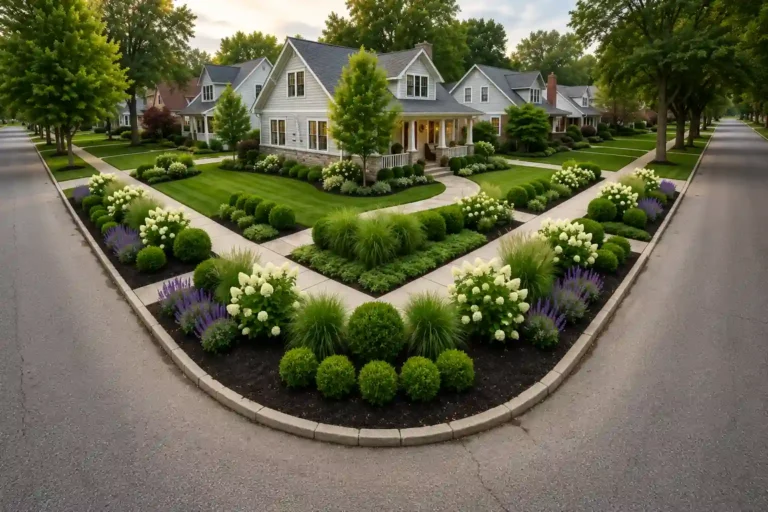
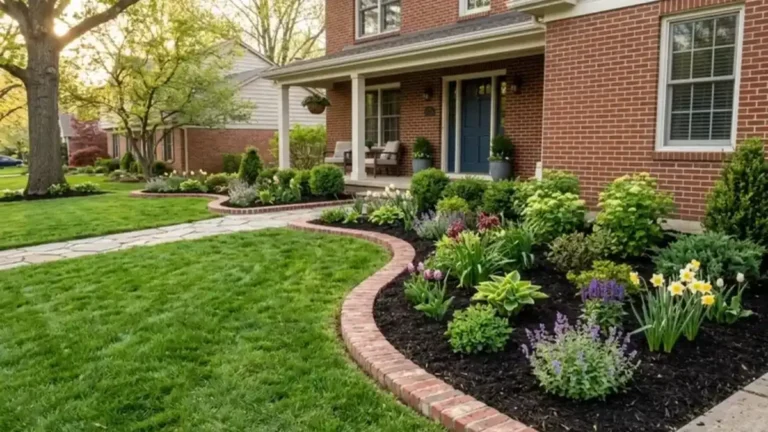
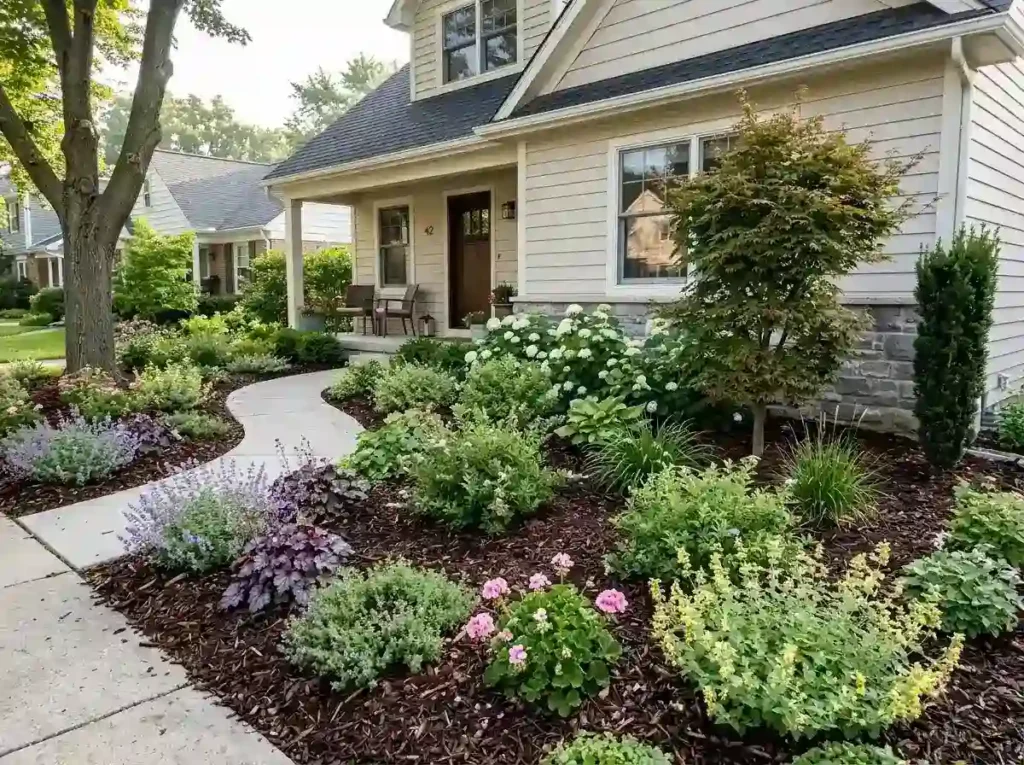
Broad mulch beds are one of the easiest ways to remove grass without rebuilding the whole yard. They create a clean background for shrubs, flowers, small trees, and ground covers.
Do not limit the mulch to a thin strip beside the house. Extend the beds into the yard to create depth. Place low plants near the path. Add medium shrubs behind them. Use one or two taller plants near corners or blank walls.
Choose bed shapes that fit your home. Straight lines can suit a modern house. Soft curves often work well around cottages and traditional homes.
Mulch helps cover bare soil and may slow weed growth. It still needs care. Wind and rain can move it, and weeds may appear as the layer gets thin.
Keep mulch away from siding and tree trunks. A thick pile against a trunk can hold moisture where it does not belong.
Build a Gravel Garden With Planted Islands
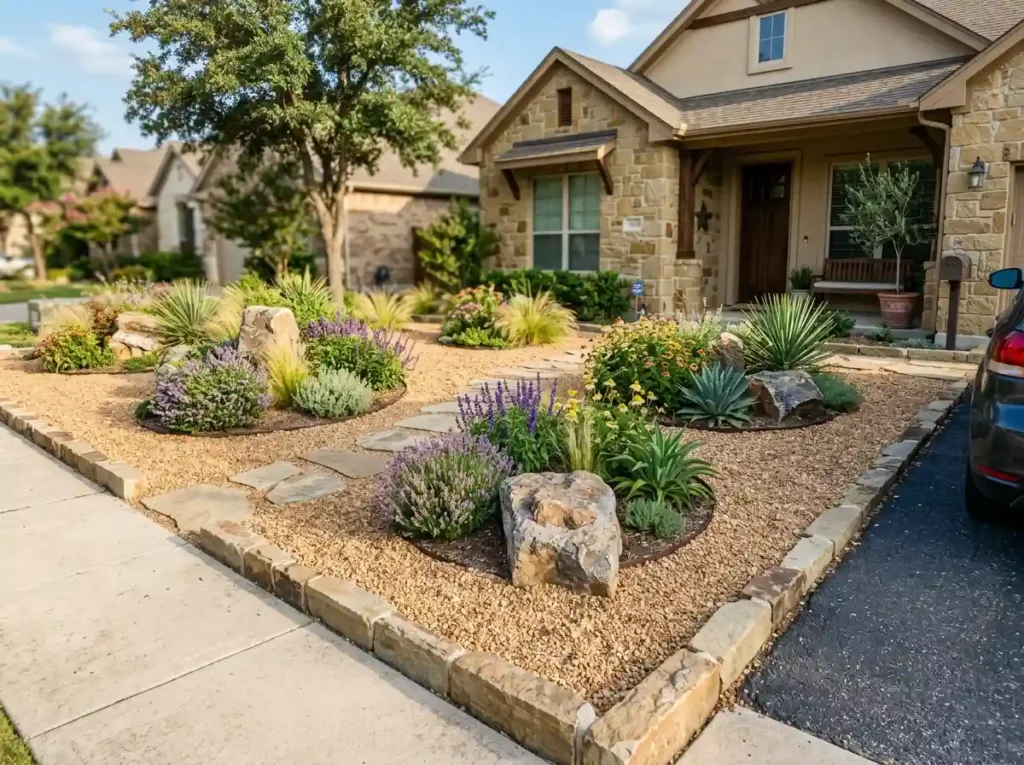
Best for: Sunny yards and homeowners who want less mowing
Cost level: Moderate
Maintenance: Leaf cleanup, weed control, and occasional raking
A gravel garden can look neat, but gravel should support the design instead of becoming the whole design.
Create planted islands throughout the space. Use compact shrubs, flowering plants, ornamental grasses, or local drought-tolerant plants. A few large rocks can give the yard a natural shape.
Match the gravel to your home. Warm tan stone can work well with brick or stucco. Gray gravel may suit concrete, black trim, and modern siding.
Add strong edging beside the driveway and sidewalk. Without it, loose stones can spread onto walking areas.
Gravel is often called low maintenance, but it is not free from work. Leaves collect between stones. Dust can dull the surface. Weeds may grow in soil that gathers above the landscape fabric.
It can also become hot in full sun. Use enough plants to soften large stone-covered areas and provide some shade.
Create a Decomposed Granite Courtyard
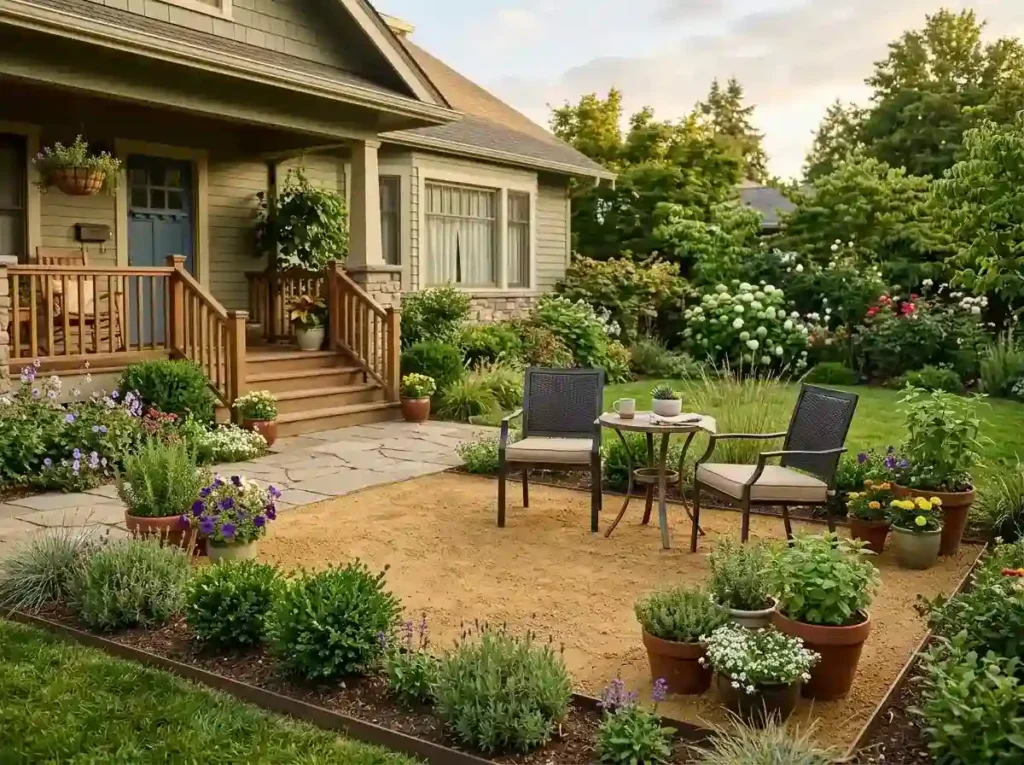
Best for: Small yards, dry climates, and casual seating areas
Cost level: Moderate
Maintenance: Light raking and occasional surface repair
Decomposed granite has a softer look than poured concrete. When installed over a prepared base, it can create a firm area for chairs, a bench, or a small table.
Place the courtyard close to the porch or front path. This makes the space feel connected to the house instead of dropped into the middle of the yard.
Frame it with planting beds. A few shrubs can provide privacy. Pots filled with herbs or seasonal flowers can add color.
The base matters. Granite spread over soft or uneven soil may sink, move, or hold puddles. Strong edging also helps keep the material in place.
Loose surfaces can be harder to cross with wheelchairs, walkers, or narrow stroller wheels. Consider firm pavers for the main route when easy access is important.
Use Oversized Containers as Main Features
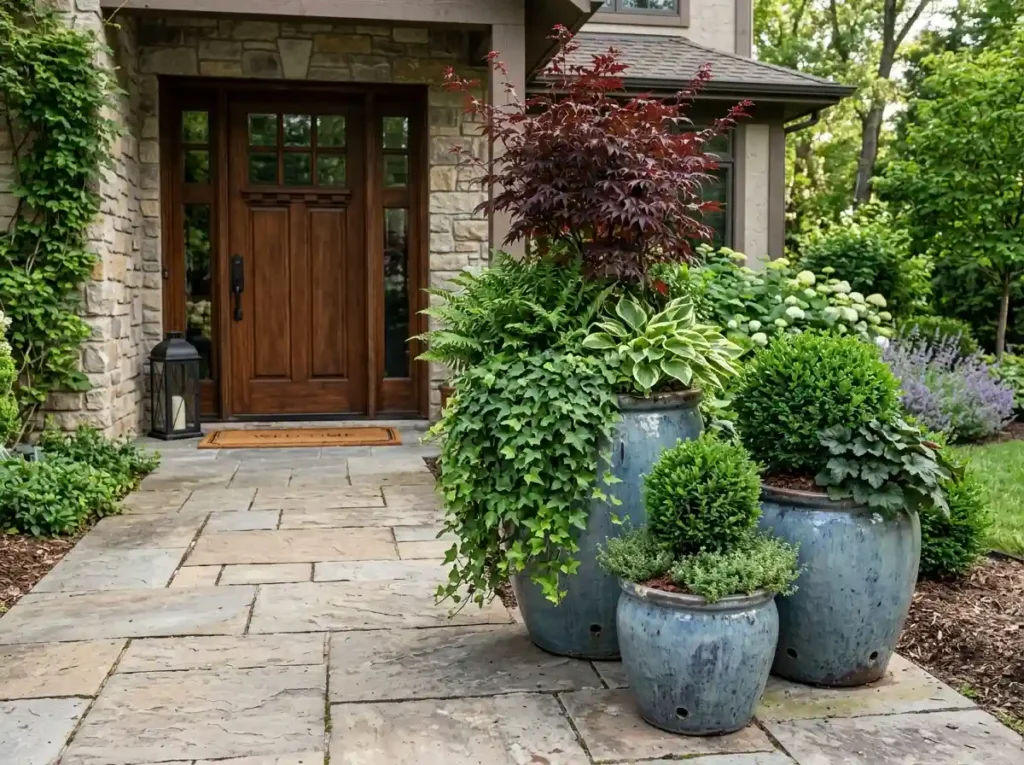
Best for: Small front yards, rental homes, and paved entrances
Cost level: Low to moderate
Maintenance: Regular watering and seasonal plant care
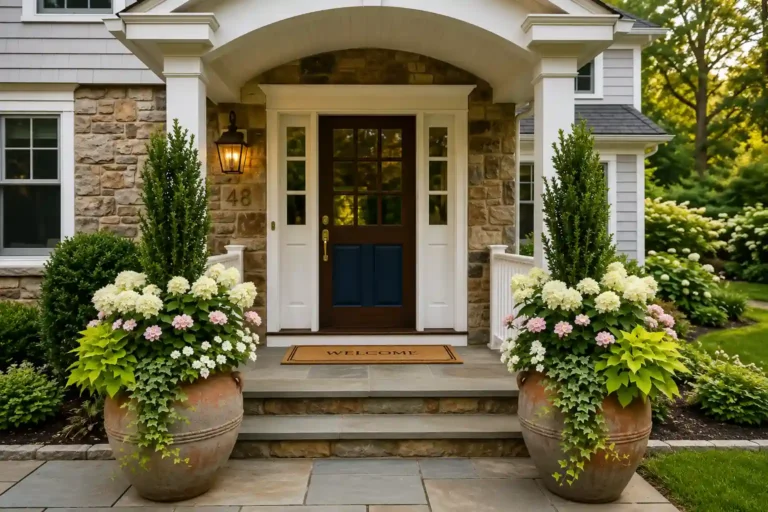
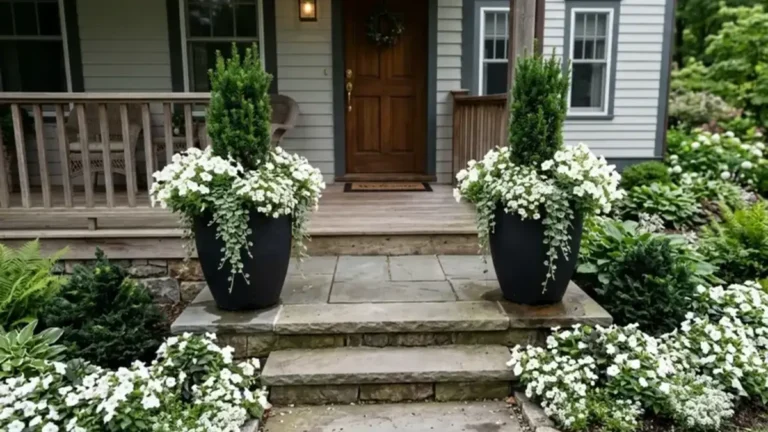
Large containers add height and color without requiring major construction. They work well beside steps, at path turns, or near the front door.
Use two or three matching container styles. Too many unrelated pots can make the entrance look cluttered.
A simple container design can include one tall plant, several medium plants, and a trailing plant near the edge. You can also fill large pots with compact evergreen shrubs for year-round shape.
Choose containers that fit the scale of the house. Tiny pots may disappear beside a wide porch. Very large pots can block a narrow path.
Check drainage holes before planting. Waterlogged soil can damage roots. In cold areas, use pots that can handle freezing weather or move them into storage before winter.
Containers need more frequent watering than plants growing in the ground, so place them where you can care for them easily.
Turn a Shady Lawn Into a Woodland Garden
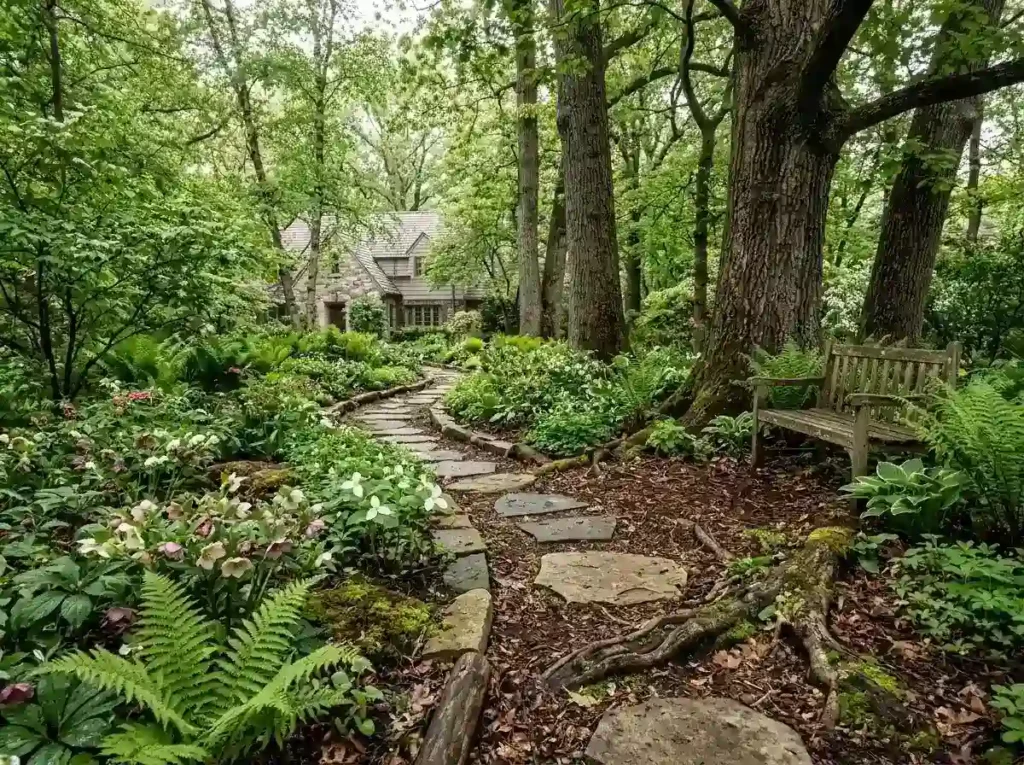
Best for: Yards under mature trees or beside north-facing walls
Cost level: Moderate
Maintenance: Leaf cleanup, pruning, and weed control
Grass often becomes thin beneath large trees because it must compete for light, water, and root space. A woodland garden works with those conditions rather than fighting them.
Use shade-tolerant ground covers, ferns, compact shrubs, and seasonal woodland flowers. Mix smooth, broad leaves with narrow or textured leaves to create interest.
A path made from stepping stones can keep feet off delicate plants. Add a small bench if the space feels private and calm.
Keep healthy trees when possible. They provide shade, height, and a mature look that can take years to replace.
Avoid cutting large roots or adding a deep layer of soil around the tree. Major root damage can weaken it. When planting beneath an established tree, use small plants and dig carefully.
A woodland yard may look more natural than a clipped lawn. Clear edges and a visible path will help it feel planned.
Plant a Creeping Thyme Carpet
Best for: Sunny, dry areas with light foot traffic
Cost level: Moderate
Maintenance: Weeding and watering during establishment
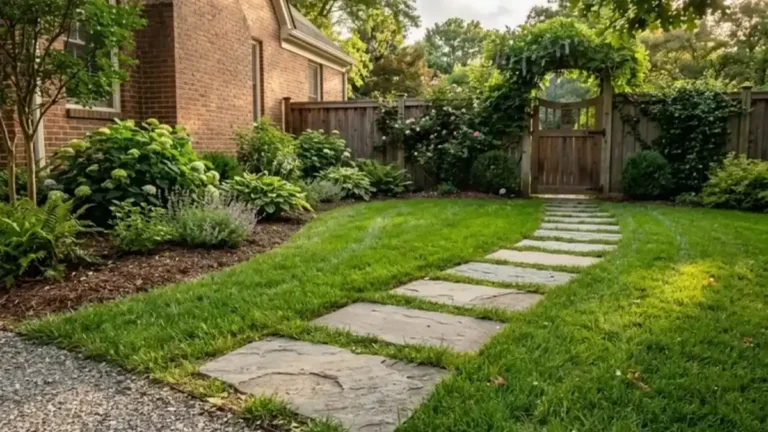
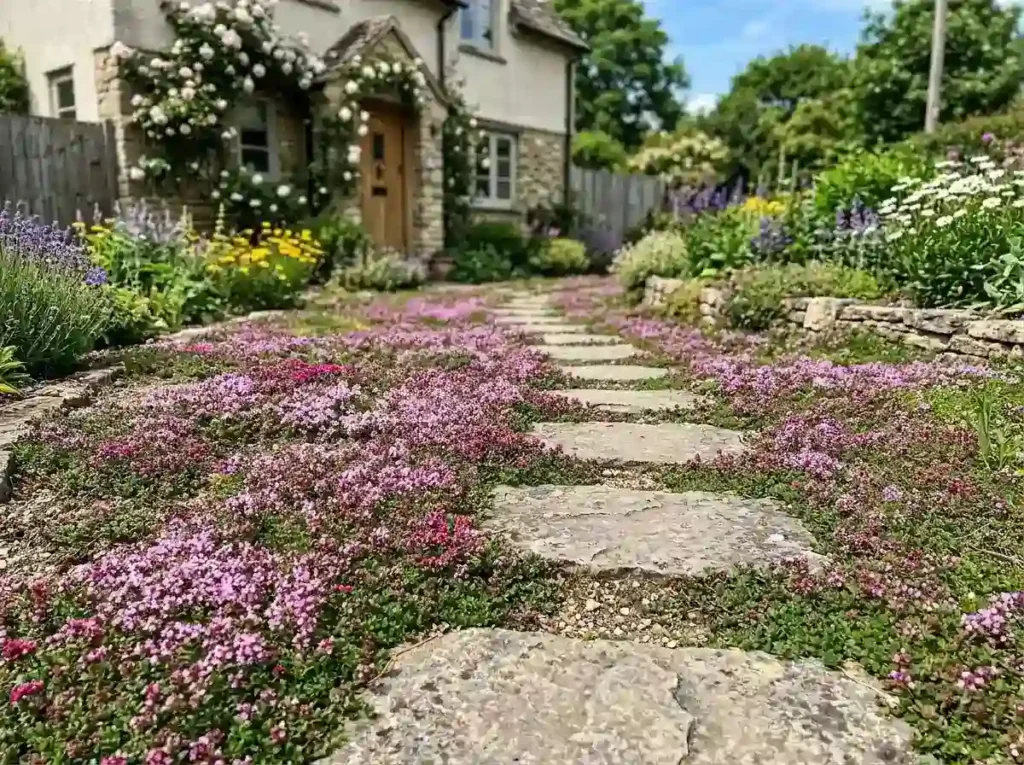
Creeping thyme creates a low mat of small leaves and seasonal flowers. It can soften stone paths and fill spaces between stepping stones.
This plant usually performs best in sunny soil that drains well. Wet ground can cause weak growth or root problems.
Use thyme in areas where people walk from time to time. It may not recover well from daily running, games, or heavy delivery traffic.
Space young plants based on their expected mature spread. Wider spacing costs less at first, but the bed will take longer to fill.
Creeping thyme does not suit every climate or soil type. Check a local nursery or Extension office before planting a large area.
A stone path through the planting can carry regular foot traffic while keeping the soft, green look.
Use Clover as a Lawn Alternative
Best for: Informal yards and homeowners who still want a soft green surface
Cost level: Low to moderate
Maintenance: Occasional mowing, watering, and edge control
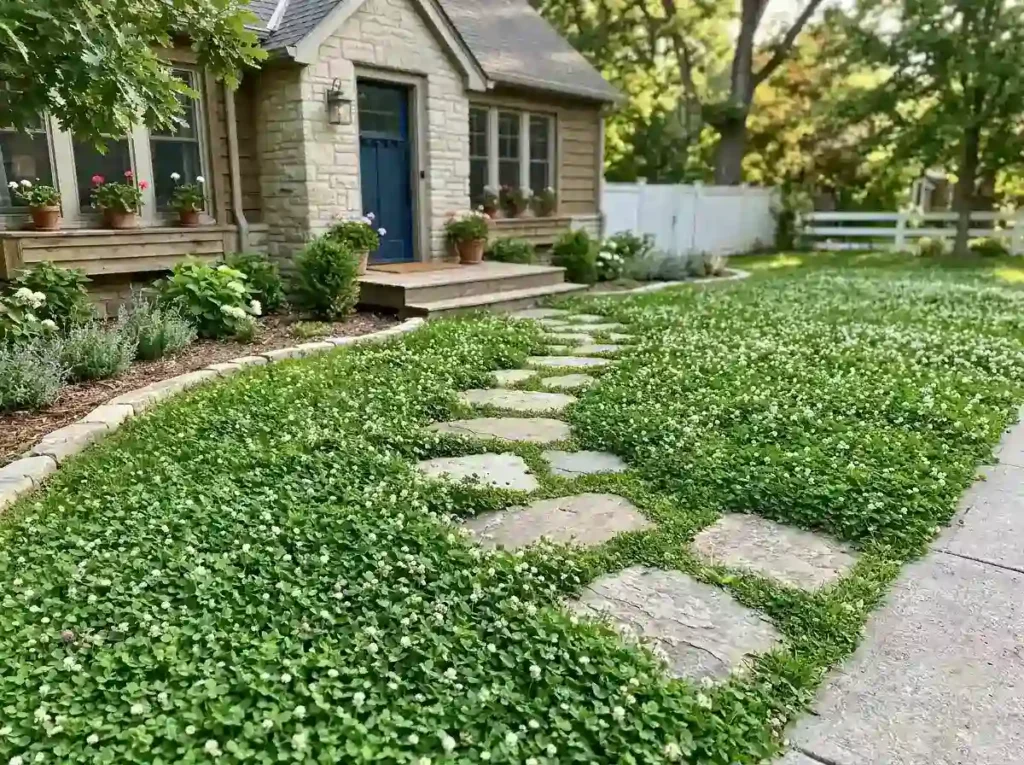
Clover can create a green surface with a softer and more casual look than a standard lawn.
It may work alone in some locations or as part of a mixed low-growing planting. The right choice depends on climate, local rules, and how you use the yard.
Add stepping stones through routes that receive daily traffic. This helps reduce wear and keeps muddy shoes out of the house.
Clover flowers can attract bees. That may be a benefit in a pollinator garden, but it requires care in areas where children play barefoot.
Some neighborhoods may view clover as a weed. Check HOA rules before replacing the full front lawn.
Clover is still a living surface. It needs water during dry periods, and it may spread outside the area you planned.
Create a Moss Garden in Deep Shade
Best for: Cool, damp, shaded areas with very little foot traffic
Cost level: Moderate
Maintenance: Moisture care and removal of unwanted plants
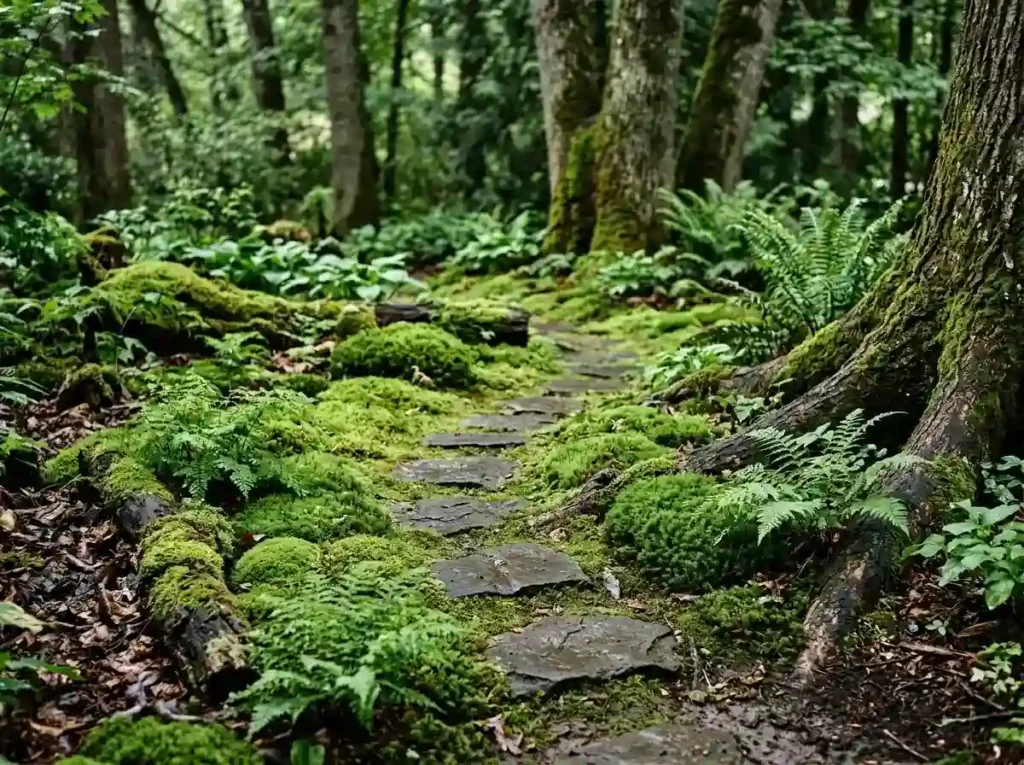
Moss can create a rich green surface where grass keeps failing. It looks especially natural around stones, ferns, tree roots, and old logs.
This idea needs the right site. Moss often struggles in hot, exposed soil. It may also dry out in areas with strong afternoon sun.
Do not assume that every shaded yard can support moss. Soil condition, moisture, and local weather all matter.
Use flat stepping stones for the main path. Moss may become damaged under regular foot traffic. Damp moss near steps or smooth paving can also become slippery.
A moss garden looks best when it fits the setting. Pair it with woodland plants rather than bright desert stone or sharp modern borders.
Install a Native Ground-Cover Mix
Best for: Homeowners who want regional plants and seasonal change
Cost level: Moderate
Maintenance: Higher at first, then often more stable after establishment
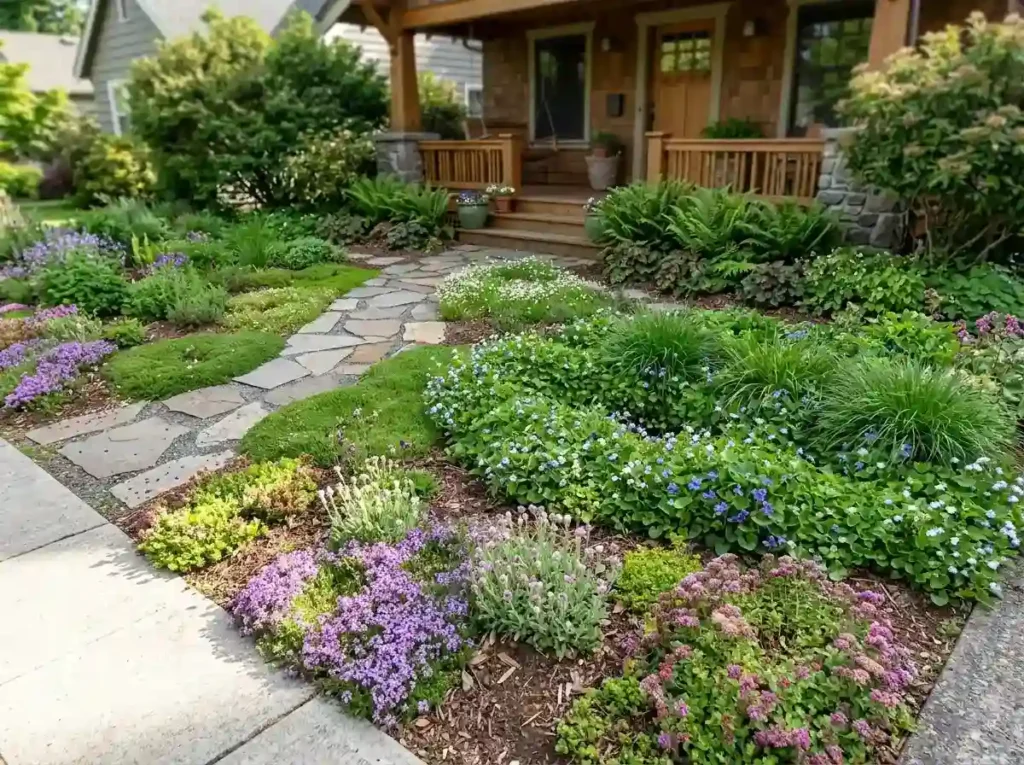
Instead of planting one species across the entire yard, combine several low-growing plants suited to your area.
Place plants based on site conditions. A dry, sunny edge may need a different species than a low area that holds moisture.
Use taller ground covers near the back of a bed. Keep low plants beside paths and driveways so they do not block the route.
A mixed planting can provide flowers at different times of year. It can also reduce the empty look that appears when one species stops blooming.
Native does not always mean easy. Young plants still need watering, weed control, and time to spread. Some may also grow larger than expected.
Use a regional native plant database or ask a local plant expert for suitable choices. The Lady Bird Johnson Wildflower Center provides a searchable native plant database and recommended plant resources.
Use a Sedge Matrix for a Meadow-Like Look
Best for: Modern homes, woodland edges, and low-traffic areas
Cost level: Moderate
Maintenance: Seasonal trimming and weed control
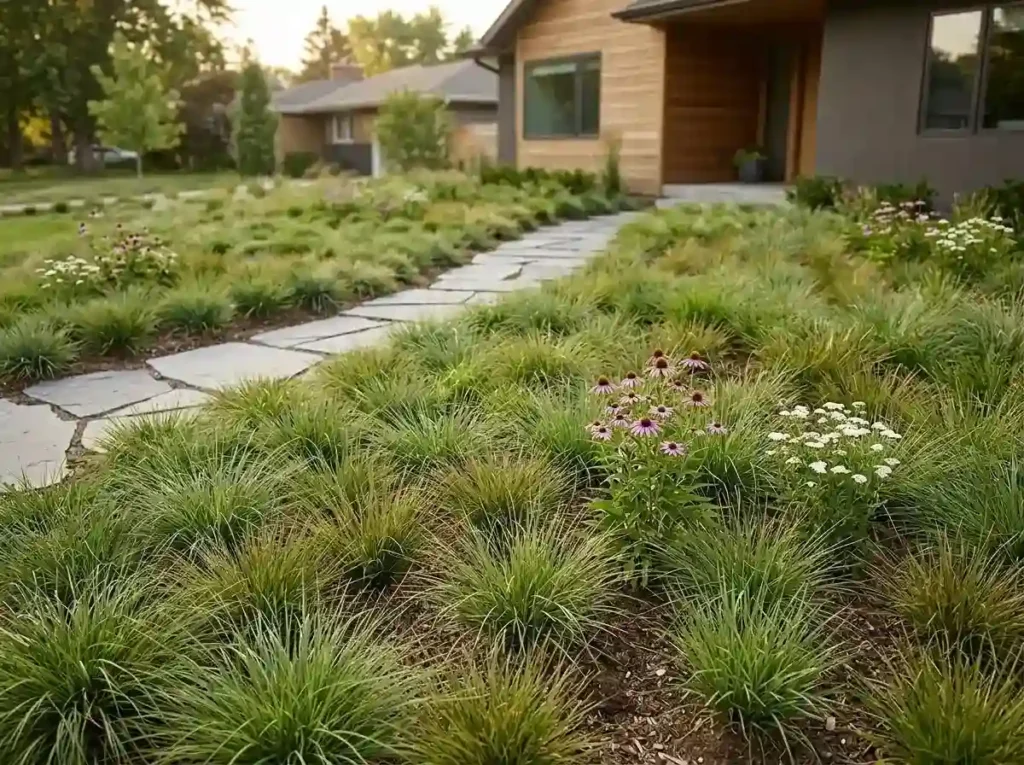
Sedges are grass-like plants, but they belong to a different plant family. Different species can suit dry sun, deep shade, or moist soil.
Plant sedges in repeated groups to create a connected carpet. This looks calmer than mixing many unrelated plants in small patches.
Add flat pavers or a narrow path through the planting. The path shows people where to walk and keeps the yard from looking neglected.
You can mix a few seasonal flowers between the sedges. Keep the flower groups simple so the soft meadow effect remains clear.
The correct species matters. Do not buy a sedge based on appearance alone. Check its light, water, soil, and mature-size needs.
Which Living Ground Cover Fits Your Yard?
| Ground cover | Best setting | Foot traffic | Main concern |
| Creeping thyme | Sunny, dry soil | Light | Poor drainage |
| Clover | Open, informal yards | Light to moderate | Local rules |
| Moss | Cool, damp shade | Very light | Heat and drying |
| Native ground covers | Site-specific areas | Varies | Establishment time |
| Sedges | Conditions vary by species | Light | Plant selection |
No ground cover works everywhere. Match the plant to the site rather than trying to change the whole site for one plant.
Design a Native Xeriscape
Best for: Dry climates and sunny front yards
Cost level: Moderate
Maintenance: Establishment watering, pruning, and weed control
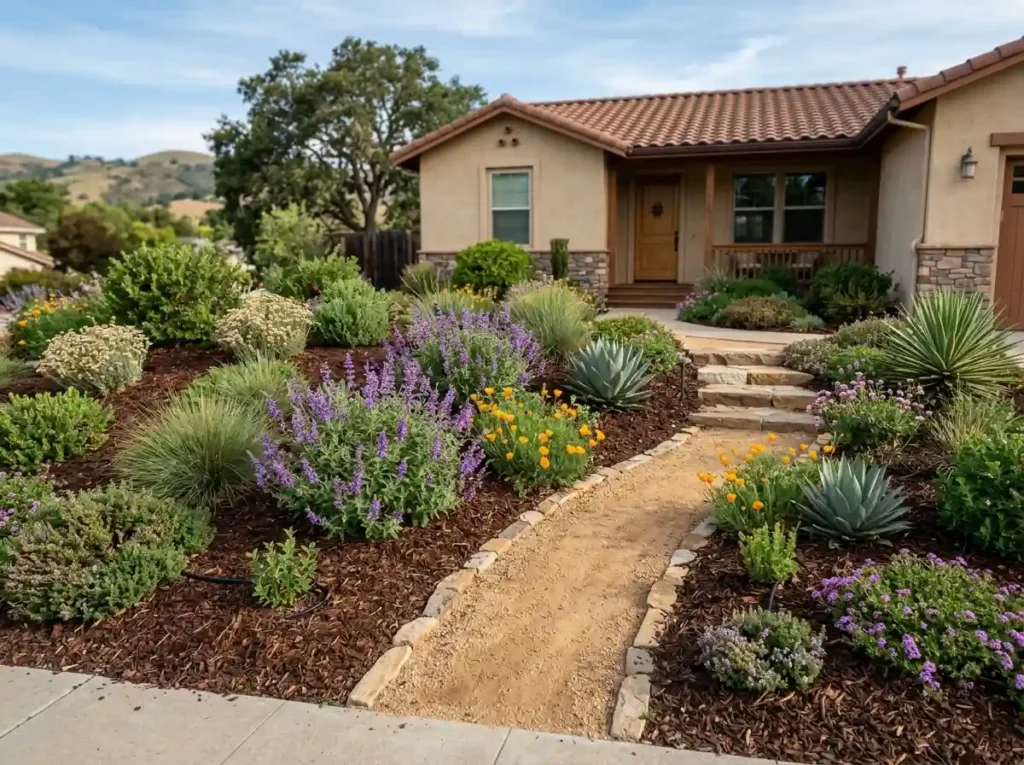
Xeriscaping is a way to plan a water-wise yard. It does not mean covering the space with rocks and adding one lonely plant.
Start by grouping plants with similar water needs. This prevents you from overwatering dry-climate plants to support one thirsty species.
Use regionally suitable shrubs, flowers, and ground covers. Repeat several plants across the yard to create order.
Mulch can protect the soil and slow water loss. The right mulch depends on the plants, climate, and fire-safety rules in your area.
New plants may still need regular water while their roots grow. Drip irrigation can place water close to the root zone when installed and managed well.
Leave open paths between planted areas. This makes maintenance easier and helps the design feel planned.
Build a Rock Garden With Drought-Tolerant Plants
Best for: Slopes, sunny yards, and dry soil
Cost level: Moderate to high
Maintenance: Weed control and occasional plant trimming
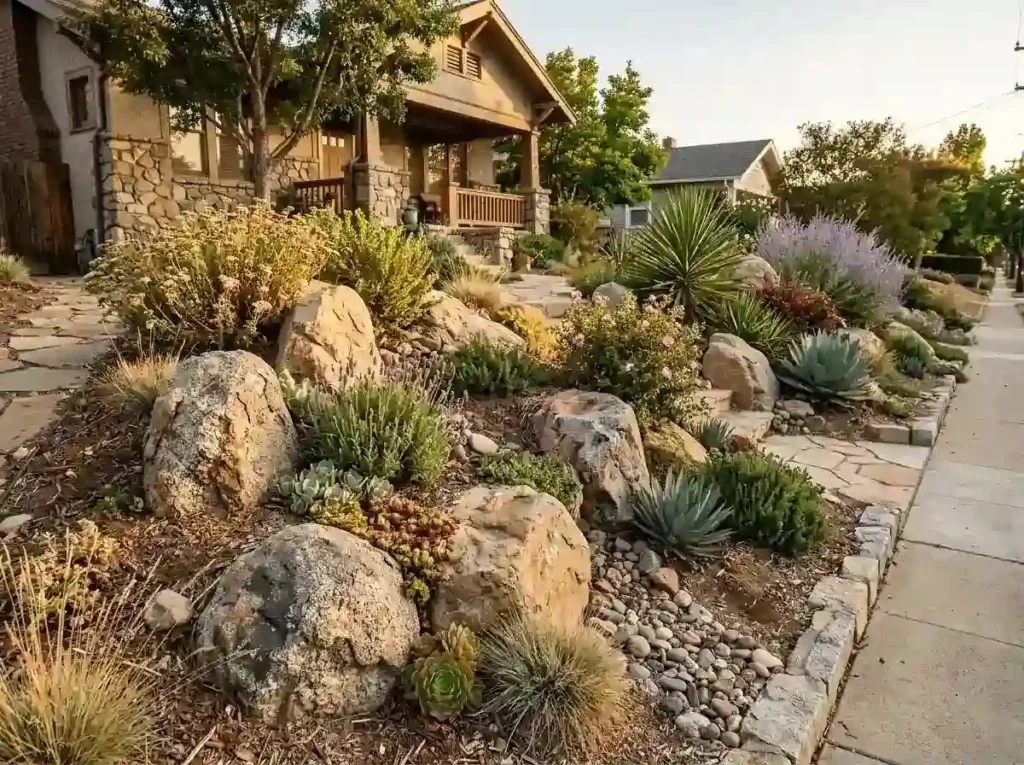
A rock garden works best when the stones feel connected to the land.
Use a few large rocks rather than many small pieces spread without a pattern. Partly bury each rock so it looks stable and natural.
Place low plants around the base. Add a few taller shrubs to stop the garden from looking flat.
Small soil mounds can create height changes. They may also improve drainage for plants that dislike wet roots.
Do not place heavy rocks over utility lines or major tree roots. Large stones may require equipment and professional placement.
Plan for water before building the garden. A slope can send rain across the sidewalk or into a neighbor’s property if the grade is changed carelessly.
Create a Succulent or Architectural Plant Garden
Best for: Warm climates and modern homes
Cost level: Moderate
Maintenance: Light pruning, cleanup, and cold-weather protection where needed
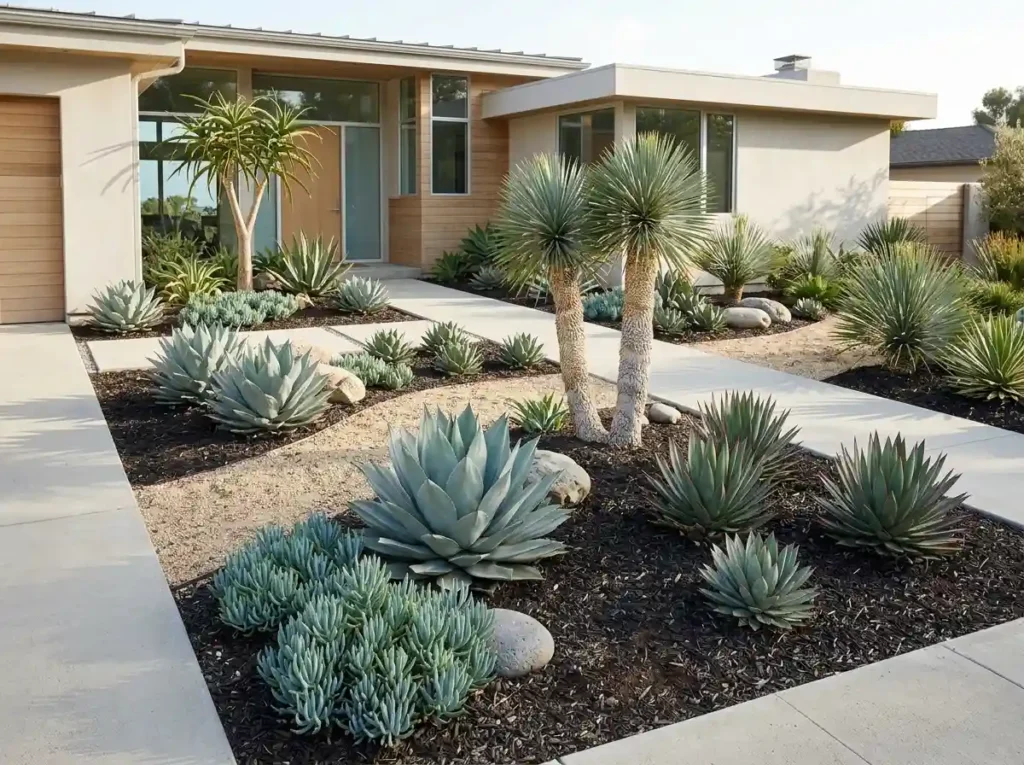
Succulents and structural plants can create a strong design with fewer plant types.
Use plants with clear shapes, such as agaves, yuccas, hardy succulents, or local plants with bold leaves. Repeat the same forms in several areas.
Leave room between young plants. Many architectural plants become much wider as they mature.
Keep sharp leaves and spines away from sidewalks, driveways, and the front door. A plant that looks small in a nursery pot may become a safety issue later.
Choose gravel or mulch that sets off the leaf shapes without covering every open space.
Climate is the main limit. Some succulents will not survive a cold or wet winter. Check local plant guidance before building the whole design around them.
Add a Dry Creek Bed to Handle Runoff
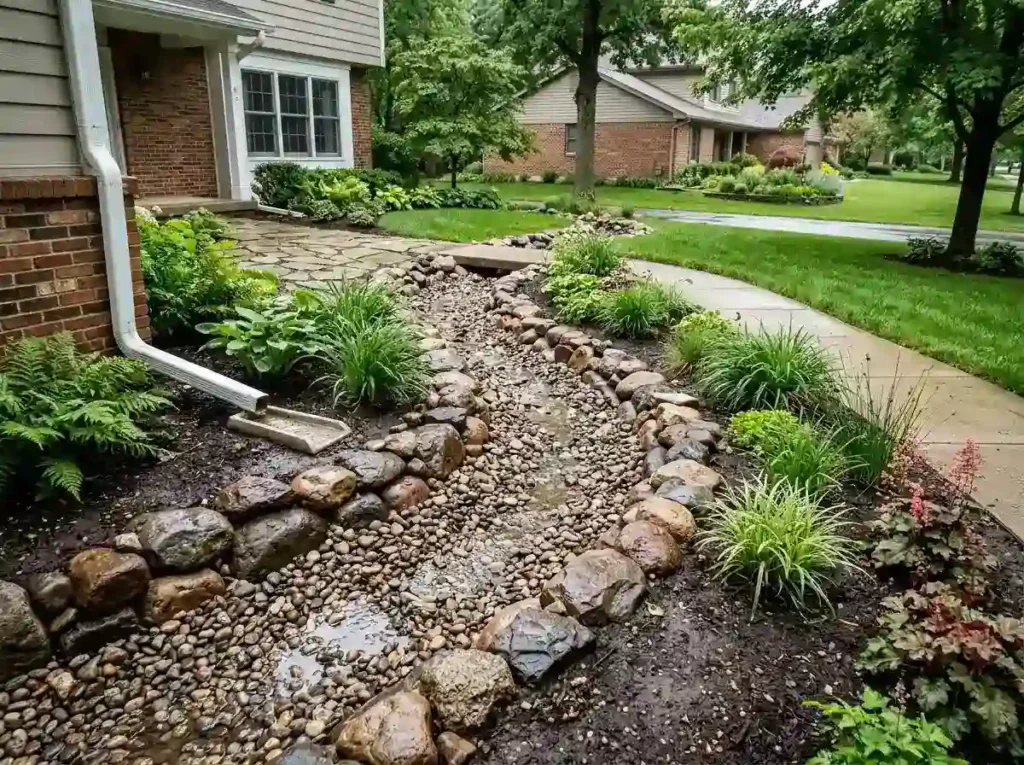
Best for: Yards with visible surface runoff
Cost level: Moderate
Maintenance: Debris removal and occasional stone repair
A dry creek bed can turn a drainage route into an attractive feature. It may help guide or slow surface water when it is designed for the actual slope.
Use several stone sizes. Place larger rocks along turns and edges. Add smaller gravel between them to create a more natural look.
Connect the creek bed to a real water source, such as a downspout or low area. A random stone line can look decorative, but it will not fix drainage by itself.
Plant moisture-tolerant species along the edges when the soil stays damp after rain.
Keep water away from the foundation. Do not send it into a neighbor’s yard or across a public sidewalk.
Serious drainage problems may need a landscape or drainage professional. This is especially important when water enters the house or causes soil movement.
Build a Rain Garden or Shallow Bioswale
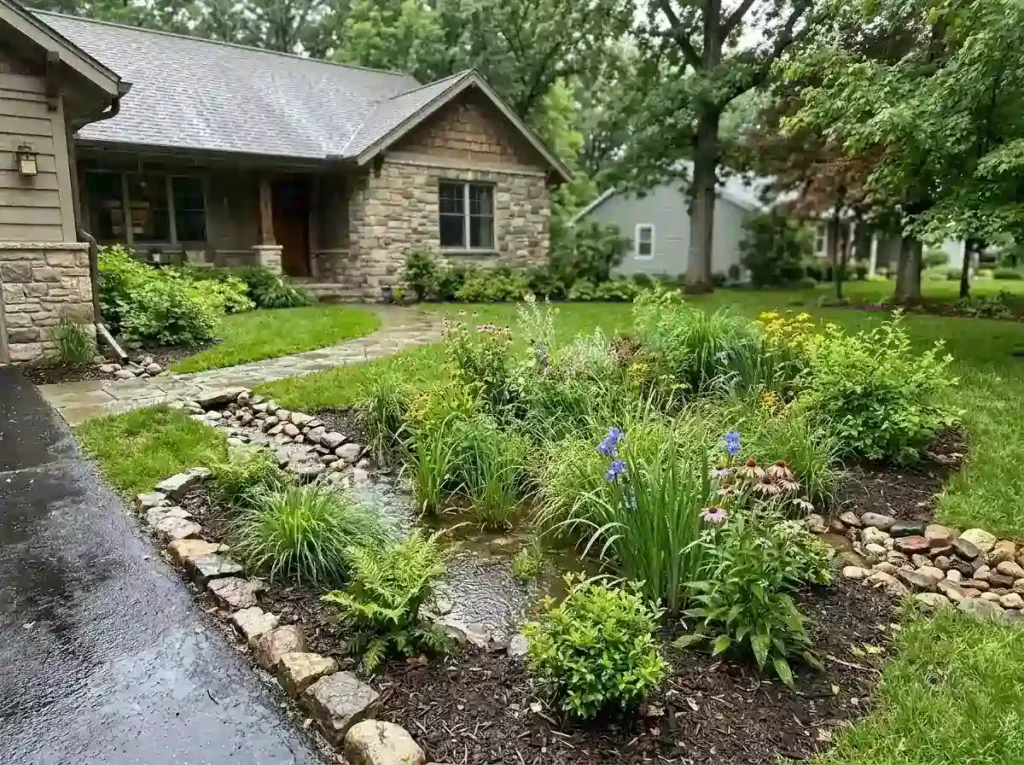
Best for: Low areas that collect roof or driveway runoff
Cost level: Moderate to high
Maintenance: Weeding, plant care, and inlet cleanup
A rain garden is a shallow planted area that holds runoff for a limited time while the water soaks into the soil.
Place it where water already moves, but keep it a safe distance from the foundation. The correct distance depends on your site and local rules.
Choose plants that can handle wet soil after a storm and drier soil between storms.
Test how quickly water drains before digging. Soil that stays wet for long periods may need another solution.
Every rain garden needs a safe overflow route. Heavy storms can bring more water than the garden can hold.
Check guidance from your local stormwater office. Some cities offer plans, approved plant lists, or financial support for rain gardens.
Add a Small Paver Seating Courtyard
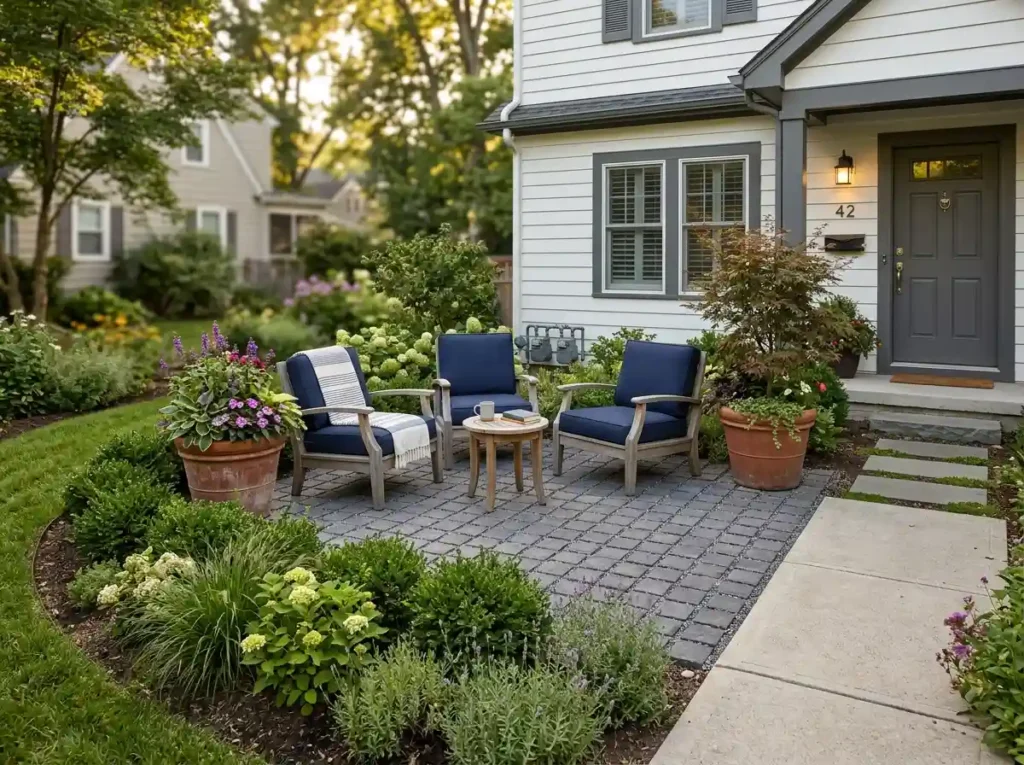
Best for: Social homeowners and yards with little porch space
Cost level: Moderate to high
Maintenance: Joint cleaning and weed control
Your front yard can provide more than curb appeal. A small courtyard can give you a place to drink coffee, talk with neighbors, or watch children play.
A space around 10 by 10 feet can hold two chairs and a small table. Measure your furniture before setting the final size.
Connect the courtyard to the front path. People should not need to cross loose mulch or plants to reach it.
Low shrubs can create privacy without hiding the whole space. Large containers can provide a softer border.
Choose paving with a surface that does not become slick after rain. Permeable paving may help water enter the soil when the full base is installed correctly.
Do not place the courtyard where it blocks a window, utility access, or the main route to the door.
Make the Front Walk the Main Design Feature
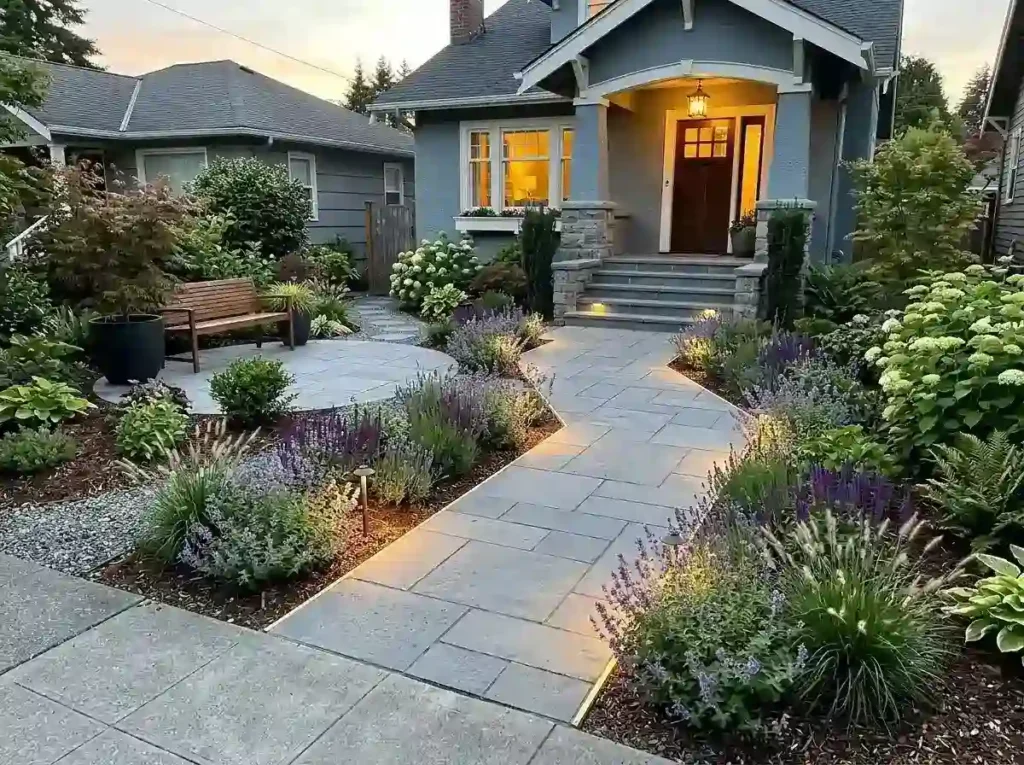
Best for: Narrow yards and homes with a weak entrance
Cost level: Moderate to high
Maintenance: Surface cleaning and edge care
A clear path can make a simple yard feel finished.
Widen a cramped walkway where space allows. A path around four feet wide can feel more comfortable for two people than a narrow strip, though your property may need a different size.
Use repeated plants along both sides. Keep them low enough to prevent branches from covering the route as they mature.
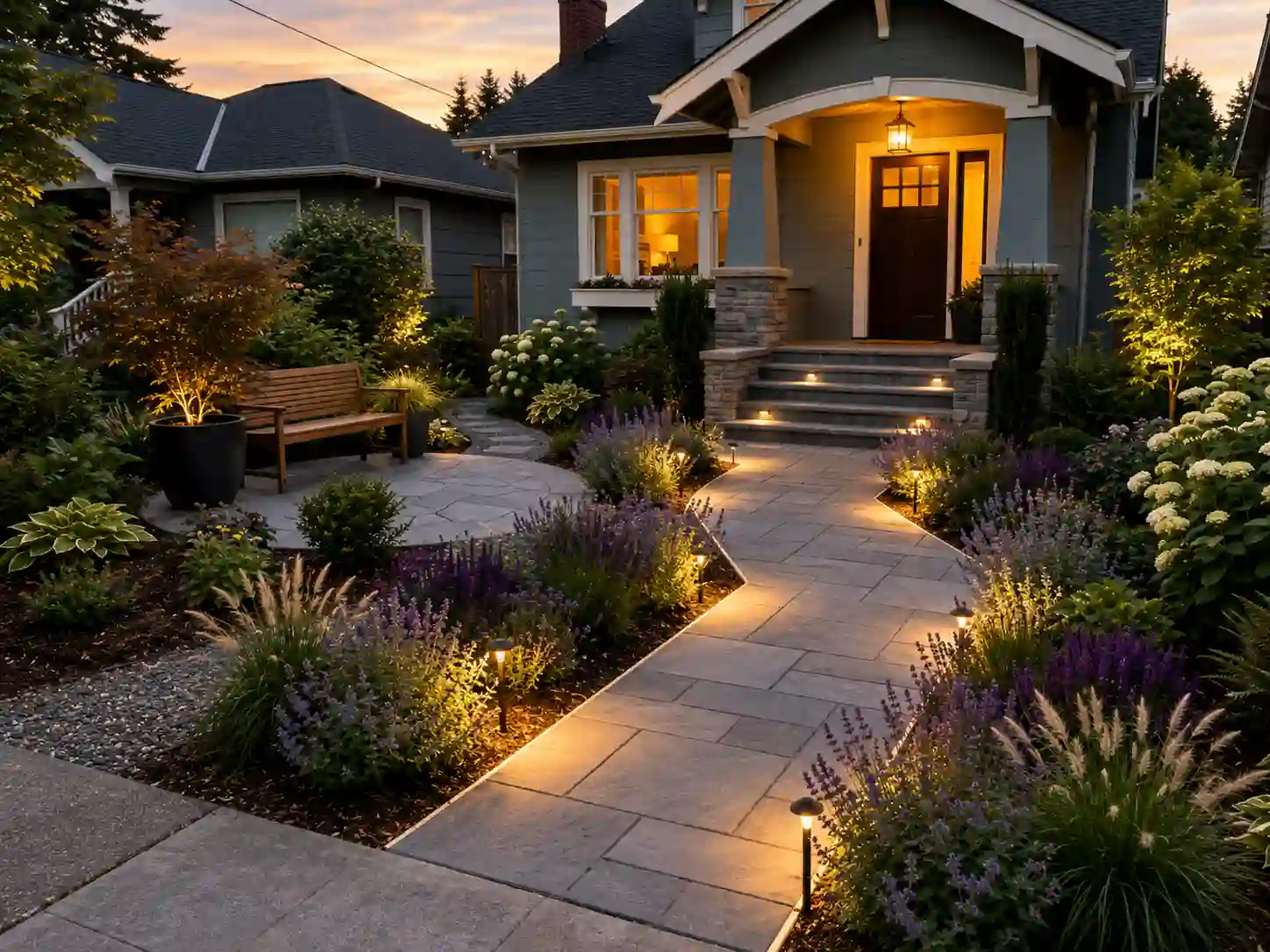
Low-voltage lighting can mark the edges at night. Place fixtures where they will not become trip hazards or get damaged during maintenance.
Make each turn easy to follow. The front door should remain the main destination.
Use the same paving or border material in another part of the yard. This helps connect the path with the wider design.
Terrace a Sloped Front Yard
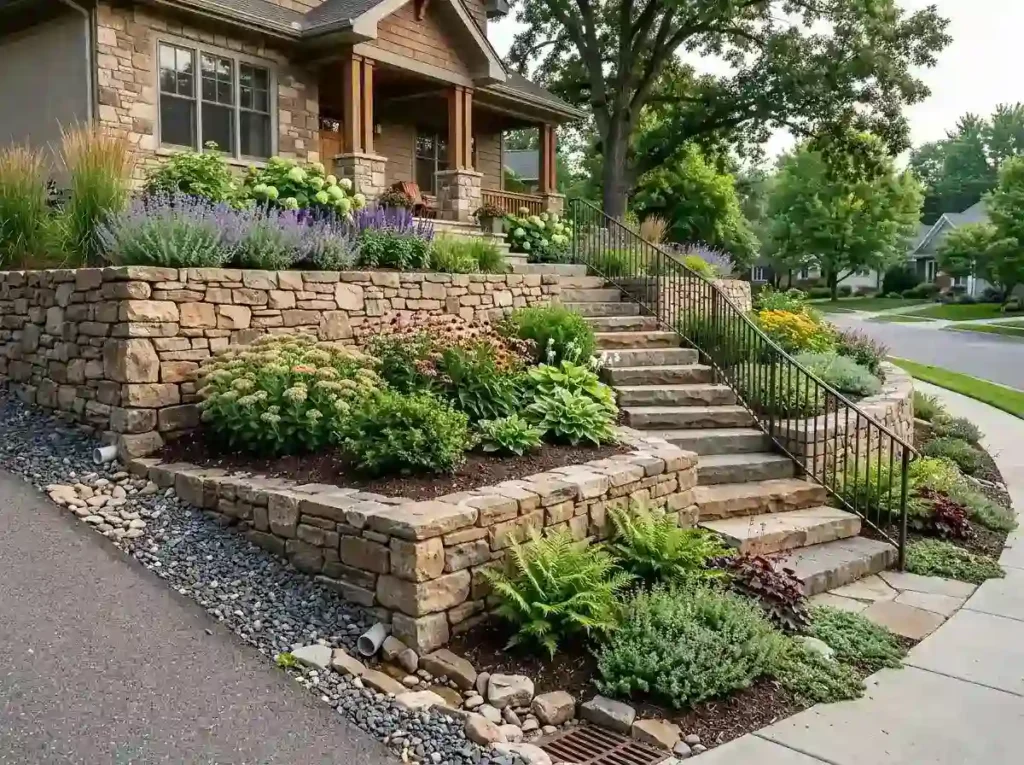
Best for: Steep yards that are hard or unsafe to mow
Cost level: High
Maintenance: Plant care and regular wall checks
A steep lawn can be difficult to cut and hard to use. Terraces divide the slope into smaller, flatter planting areas.
You can build shallow levels with stone, approved landscape timber, masonry, or planted banks. The right material depends on wall height, soil, drainage, and local building rules.
Add steps where people need to move between levels. Handrails may be needed for safety.
Water must have a clear route through or around the terraces. Trapped water can place pressure behind a wall.
Small planted terraces may be a manageable project. Tall retaining walls can fail if they lack proper footings, drainage, or engineering.
Hire a qualified professional for major walls or any slope that threatens a building, sidewalk, or neighboring land.
Create a Focal-Point Garden Around a Tree or Sculpture
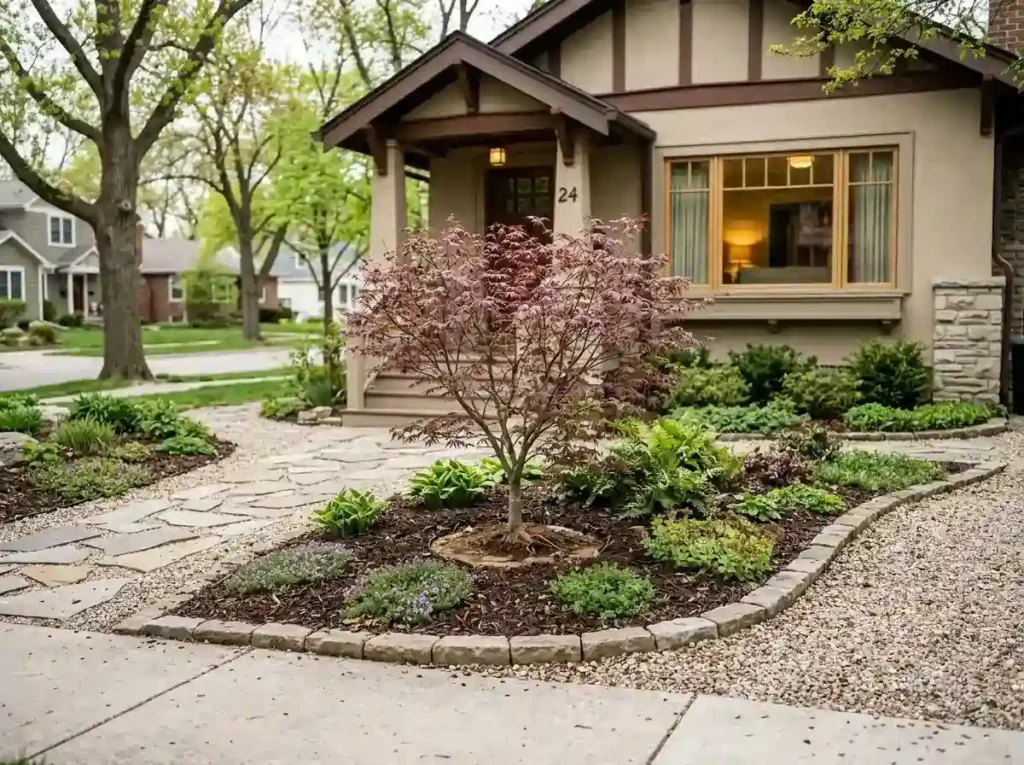
Best for: Simple yards that need a clear visual center
Cost level: Low to moderate
Maintenance: Plant trimming and edge care
One strong focal point can make a lawn-free yard feel more organized.
Use a small ornamental tree, large planter, boulder, birdbath, or garden sculpture. Place it where it can be seen from the street and front window.
Build a simple planting bed around it. Use low plants near the focal point so they do not compete with it.
Repeat one bed material elsewhere in the yard. This might be the same stone edge, mulch, or plant color.
Keep the front door visible. A focal point should guide the eye, not hide the entrance.
When working around an established tree, do not pile soil or mulch against the trunk. Avoid cutting major roots to create a perfect bed shape.
Plant a Pollinator-Friendly Front Garden
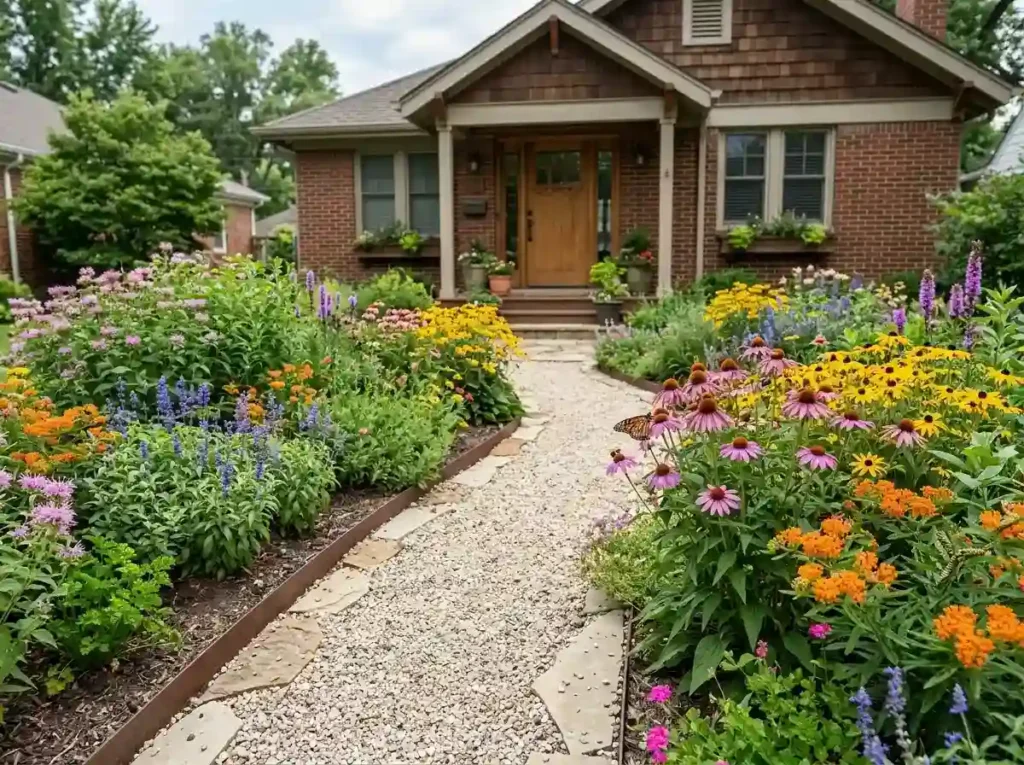
Best for: Flower lovers and homeowners who want to support wildlife
Cost level: Low to moderate
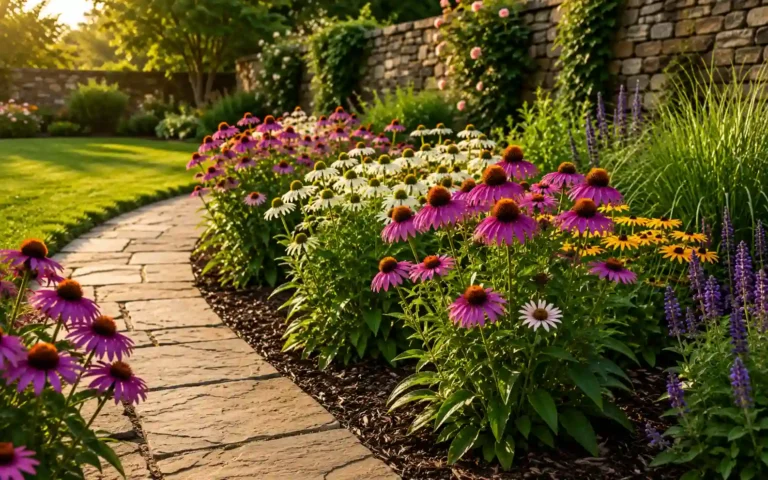
Maintenance: Weeding, deadheading, and seasonal cleanup
A pollinator garden can replace plain turf with flowers from spring through fall.
Choose plants that bloom at different times. This gives the yard changing color and provides a longer food season for visiting insects.
Plant several of the same flower together. Clear groups are easier to see and often look neater than single plants spread across the yard.
Use species suited to your region. Include host plants for local butterfly species when you have enough space.
Limit pesticide use. Some products can harm the same insects you are trying to attract.
Add a clear path and strong bed edges. These details show that the garden is cared for, even when some plants have loose or natural shapes.
Build a Four-Season Shrub and Perennial Border
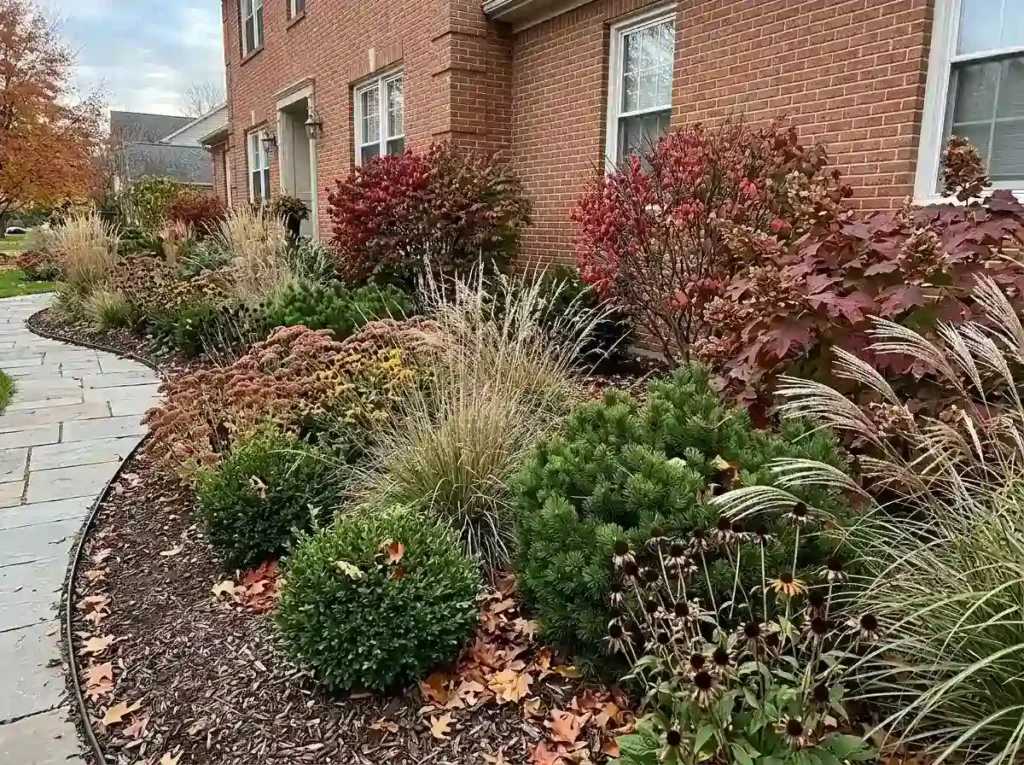
Best for: Homeowners who want color across the year
Cost level: Moderate
Maintenance: Pruning, seasonal cutting, and mulch care
A front yard can look empty when every plant blooms during the same month.
Plan for all four seasons. Use spring bulbs, summer flowers, fall leaf color, and shrubs with strong winter branches or evergreen leaves.
Choose plants by mature size. A small shrub near the nursery checkout may cover a window in a few years.
Repeat a few main plants instead of buying one of everything. Repetition helps the border feel connected.
Place taller shrubs near blank walls or corners. Keep lower plants below windows and beside paths.
Evergreens can provide winter shape, but too many may make the design look heavy. Mix them with flowering shrubs and perennials for a softer result.
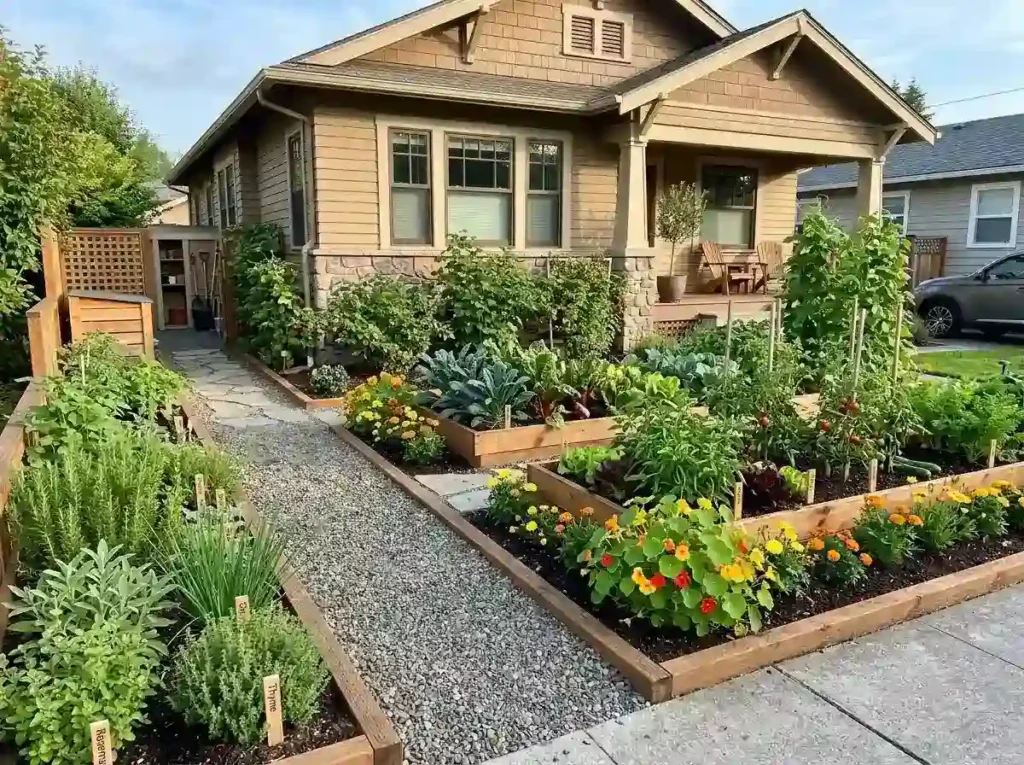
Grow an Attractive Edible Front Yard
Best for: Gardeners with limited backyard space
Cost level: Low to moderate
Maintenance: Regular watering, harvesting, and seasonal replanting
An edible front yard can produce herbs, berries, vegetables, and fruit while still looking tidy.
Use clear bed shapes. Raised beds, straight paths, and strong edges can help food plants feel like part of the landscape.
Mix edible and decorative plants. Herbs can border a path. Berry shrubs can replace plain foundation plants. Flowers can add color between vegetables.
Keep tall crops away from driveway sightlines and front windows. Store tools, empty pots, and compost in a less visible area.
Check local rules before adding raised beds near a sidewalk or property line.
Plan safe paths for watering and harvesting. You should be able to reach each bed without stepping on the soil.
How to Make a Lawn-Free Yard Look Planned
A lawn-free front yard can become messy when it lacks a clear structure. Use these simple rules:
- Repeat two or three main colors.
- Keep path edges easy to see.
- Group matching plants.
- Leave a clear view of the entrance.
- Choose one main focal point.
- Remove dead or damaged plants.
- Keep taller growth away from traffic views.
- Repeat the same mulch, stone, or edging material.
How to Choose the Right No-Grass Design for Your Yard
The best-looking photo may not show a design that will work on your property.
Start with sunlight. A sunny, dry yard may support gravel, thyme, xeriscaping, or a rock garden. A deeply shaded space may work better with a woodland garden, moss, or shade-tolerant ground covers.
Next, check the soil. Heavy clay holds water longer than sandy soil. You can use the USDA Web Soil Survey to view soil maps and information for many parts of the United States. Treat the results as a research tool. Major drainage or building decisions may still need an onsite check.
Your winter climate also matters. The USDA Plant Hardiness Zone Map groups areas by average annual extreme minimum winter temperature. It can help you check whether a perennial plant is likely to survive local winter cold.
Then consider traffic, budget, and upkeep.
| Yard condition | Ideas to consider |
| Full sun and dry soil | Gravel, xeriscape, rock garden |
| Deep shade | Woodland garden, moss, shade plants |
| Heavy foot traffic | Pavers, firm paths, courtyard |
| Steep slope | Terraces, shrubs, ground covers |
| Small front yard | Containers, wide path, small courtyard |
| Runoff problem | Dry creek bed, rain garden |
| Limited budget | Mulch beds, small plants, phased work |
| Four-season climate | Shrubs, bulbs, native perennials |
Choose three ideas that fit your site. Compare their costs and care needs before selecting one.
What Does a No-Grass Front Yard Cost?
There is no single price for replacing a front lawn. A simple mulch bed with young plants costs far less than custom paving, drainage work, or retaining walls.
Your total cost may include:
- Grass removal and disposal
- Soil preparation
- Grading
- Drainage repairs
- Edging
- Mulch, gravel, or pavers
- Plants
- Irrigation changes
- Delivery
- Labor
Smaller plants reduce the starting price, but they take longer to fill the yard. Mature shrubs provide faster results but cost more and may be harder to move.
Keeping healthy trees and shrubs can save money. It also preserves height and shade that new plants may take years to provide.
| Starting cost | Common choices |
| Lower | Mulch beds, small plants, reused stone |
| Moderate | Ground covers, gravel, containers, granite |
| Higher | Courtyards, retaining walls, major drainage work |
For a 500-square-foot yard, make a budget for each stage. Add the cost of removal, soil work, material delivery, plants, irrigation, and labor. Include an extra five to ten percent for unexpected needs.
Prices vary by region. Get current local material prices and at least two or three quotes before approving expensive work.
You can also complete the project in stages. Start with the main path and drainage. Add plants and decorative features later.
10 Mistakes That Can Ruin a No-Grass Front Yard
Removing grass solves one maintenance problem, but a weak plan can create several new ones.
1. Filling the Whole Yard With Gravel
A large sheet of gravel may look hot and empty. Break it up with plants, paths, and focal points.
2. Ignoring Water Flow
New walls, paths, and soil levels can change drainage. Watch the yard during heavy rain before building.
3. Choosing Plants Based Only on Flowers
A pretty flower may fail in the wrong soil or climate. Check light, water, mature size, and winter needs.
4. Using Soft Ground Covers in Busy Routes
Daily foot traffic can destroy low plants. Add stepping stones or a firm path.
5. Forgetting Mature Plant Size
Shrubs can block windows and paths as they grow. Read the plant label and allow enough space.
6. Mixing Too Many Materials
Several gravel colors, pavers, bricks, and edging styles can make the yard look busy. Limit the main materials.
7. Damaging Existing Trees
Cutting large roots or piling soil against trunks can harm healthy trees.
8. Expecting No Maintenance
Gravel collects leaves. Mulch gets thin. Plants need pruning. A lawn-free yard still needs care.
9. Blocking Views Near the Driveway
Tall plants can hide people, bicycles, or cars. Keep traffic views open.
10. Skipping Local Checks
Utility lines, HOA rules, and permits can affect the project. Check them before ordering materials.
Build a Better Front Yard One Section at a Time
You do not need a large lawn to create a green and welcoming entrance. Ground covers, native plants, mulch beds, gravel gardens, paths, courtyards, and pollinator beds can all replace turf.
The right choice depends on your sunlight, soil, drainage, climate, budget, and daily use. It should also match the amount of maintenance you are willing to do.
Start by measuring the yard. Mark the main path and watch where rainwater flows. Then choose two or three ideas that fit those conditions.
You can convert one section first instead of removing everything at once. This gives you time to see what works before spending more.
The best front yard landscaping ideas no grass required will make your entrance easier to use, easier to care for, and more connected to your home.