17 Front Yard Flower Bed Ideas Along a Driveway
The space beside your driveway can be one of the hardest parts of your front yard to landscape.
The area may be narrow. The pavement may make the soil hot and dry. Cars, trash cans, and people also need room to move.
You may worry that plants will lean over the driveway or scratch your car. Rain may wash mulch onto the pavement. Large shrubs can also block your view when you pull into the street.
The good news is that you do not need a huge yard or a large budget to fix this space.
These front yard flower bed ideas along a driveway include options for small yards, long driveways, slopes, shaded areas, and sunny spots. You will also learn how to choose plants that stay neat near cars.
Start by looking at the space you already have. Then choose a design that fits your sunlight, soil, budget, and free time.
Plan Your Driveway Flower Bed Before You Buy Plants
Buying plants should not be your first step.
Start by measuring the full planting area. Write down its length and width. Do not guess.
A two-foot-wide strip needs small plants that stay inside the bed. A six-foot-wide area gives you enough room for shrubs, flowers, and low ground cover.
Next, check the sunlight.
Watch the area during the morning, afternoon, and early evening. A spot that looks sunny at breakfast may be shaded for most of the day.
You should also check what happens after rain. Water may run off the driveway and collect in the bed. It may also carry mulch and soil onto the pavement.
Mark the areas where car doors open. Leave space for trash cans, hoses, and people walking between cars. Plants should improve the area without making daily tasks harder.
Draw a simple plan that includes:
- The driveway
- The garage
- The front walkway
- The mailbox
- The street entrance
- The planting bed
- The path of rainwater
Pay close attention to mature plant size. A small shrub at the garden center may grow four or five feet wide.
Plants near the street should also stay low. Tall shrubs can make it harder to see cars, bikes, and people. Check local rules before planting near a public sidewalk or road.
Good landscaping along a driveway starts with the space, not the plants.
5 Low-Maintenance Driveway Flower Bed Ideas
A simple flower bed can look better than a crowded one.
Using fewer plant types also makes the area easier to care for. Repeated colors and shapes help the driveway feel connected to the rest of the yard.
Repeat Evergreens and Flowers in a Simple Pattern
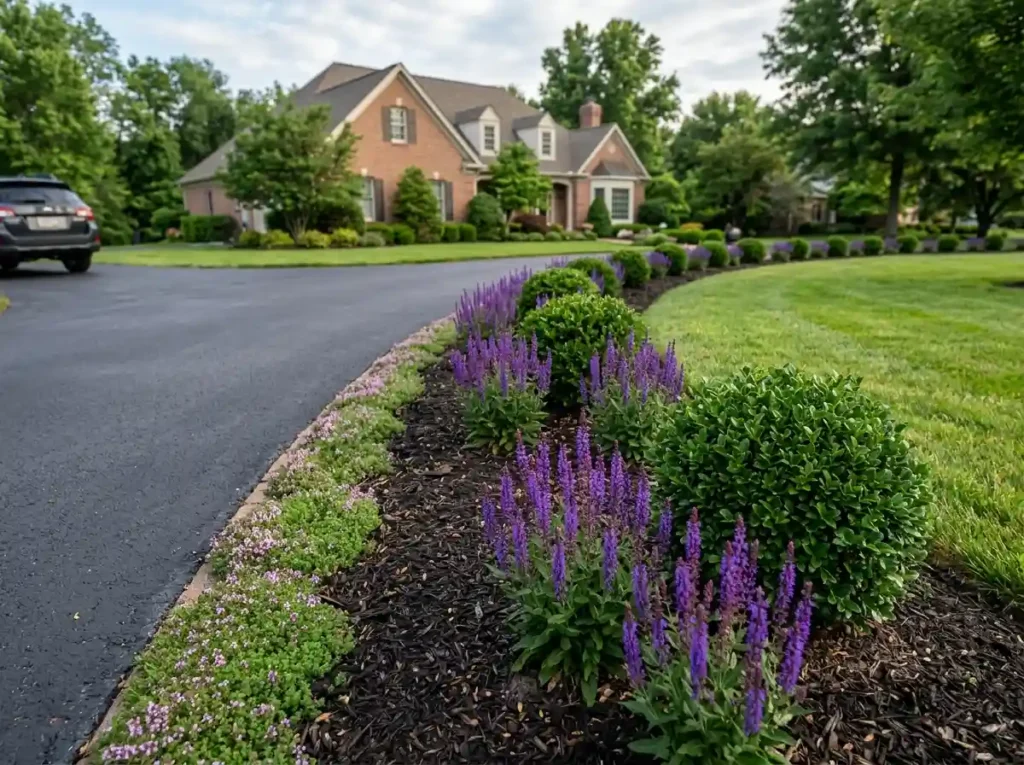
Small evergreen shrubs give your flower bed shape during every season.
Place them several feet apart. Fill the open spaces with flowering perennials such as catmint, salvia, sedum, or coneflowers.
A perennial is a plant that returns for several growing seasons.
Repeating the same two or three plants keeps the design calm. It also makes a long driveway look more planned.
You could place one compact evergreen every five feet. Add three salvia plants between each shrub. Use low ground cover near the pavement.
Check the mature width of every plant before buying it. A shrub that grows six feet wide does not belong in a narrow bed.
Best for: Medium and long driveways
Sun needs: Depends on the chosen plants
Upkeep: Light pruning and seasonal cleanup
Main benefit: Year-round shape
Build a Gravel Bed for a Hot, Sunny Driveway
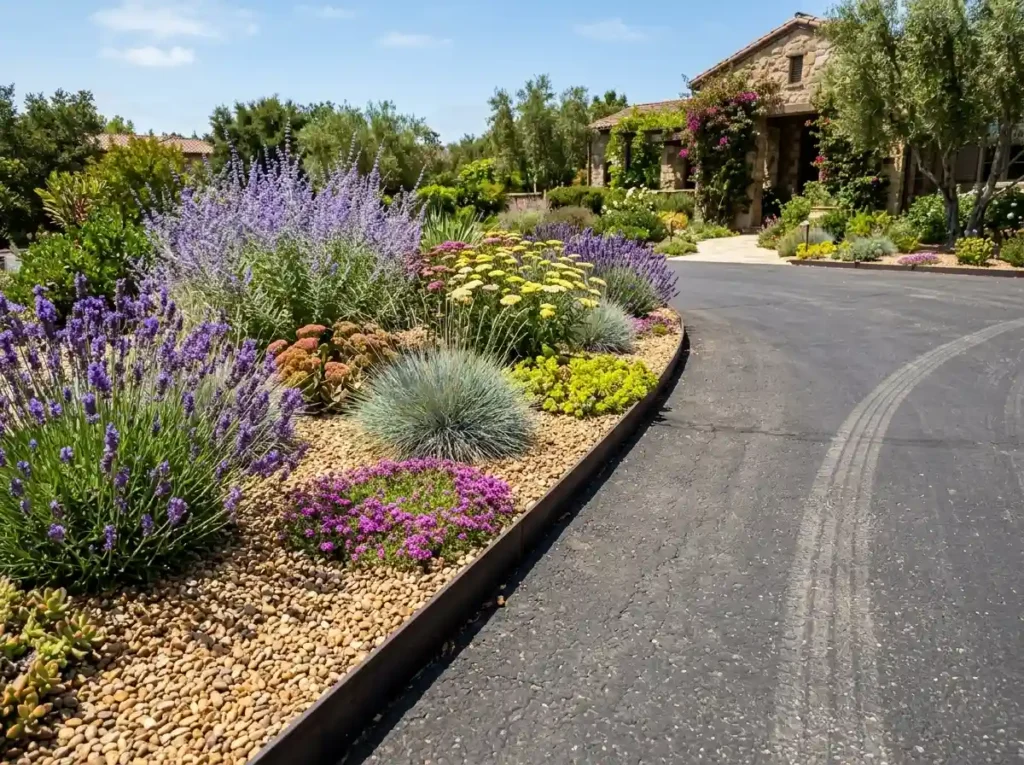
Pavement holds heat. This can make the soil beside your driveway much warmer than the rest of your yard.
A gravel bed can work well in this kind of space. Use drought-tolerant plants that handle heat and dry soil.
Good choices may include lavender, yarrow, sedum, blue fescue, creeping thyme, and Russian sage. Choose plants that suit your local climate.
Leave enough open space between plants. This helps each plant keep its natural shape.
Gravel does have a drawback. Tires, heavy rain, and snow shovels may push loose stones onto the driveway.
Use solid edging to hold the gravel in place. Avoid tiny stones near areas where cars turn or park.
Best for: Hot and sunny front yards
Sun needs: Full sun
Upkeep: Occasional weeding and trimming
Main benefit: Less watering after plants settle in
Plant a Ribbon of Compact Ornamental Grass
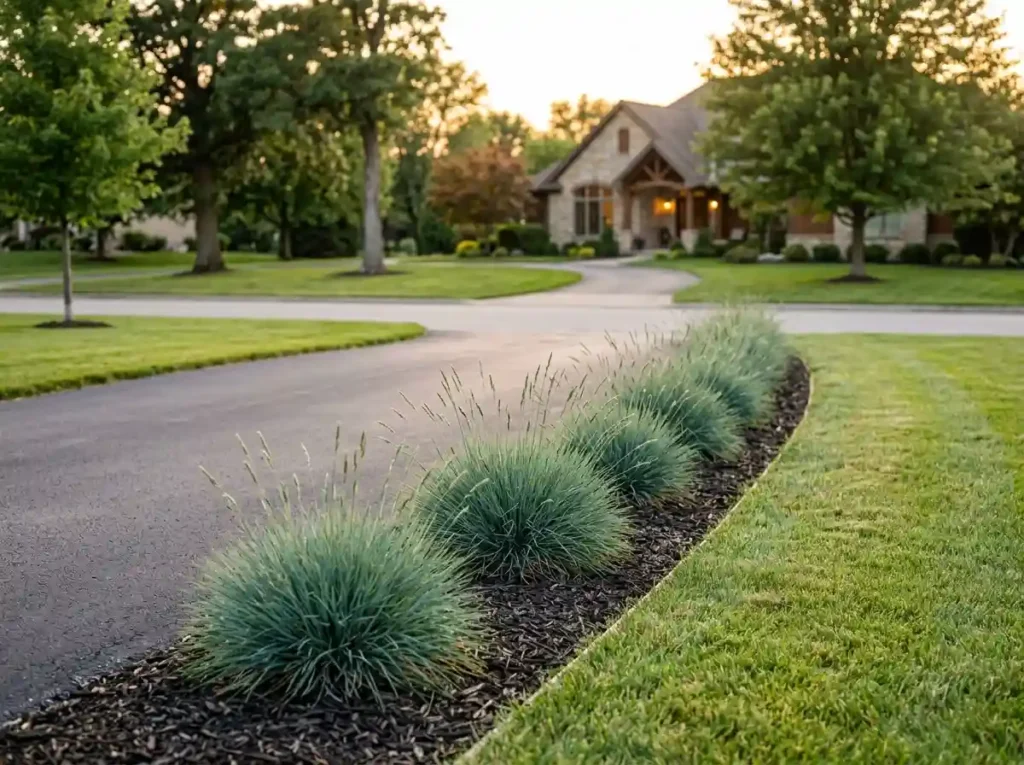
A row of ornamental grass can soften a long, hard driveway edge.
Choose one compact variety. Repeat it in a clean line instead of mixing several different grasses.
Blue fescue works well in many sunny beds. Prairie dropseed gives you a softer and more natural look. Japanese forest grass can work in shaded areas.
Avoid tall grass close to cars. Long leaves may fall over the pavement or block your view near the road.
Some grasses also spread through underground roots. Check the plant label or ask a local nursery before buying.
Cut the grass back at the right time for that plant. Many types need trimming once each year.
Best for: Modern homes and simple landscapes
Sun needs: Varies by grass type
Upkeep: One major trim each year
Main benefit: Soft texture and gentle movement
Grow Native Flowers Behind a Clean Edge
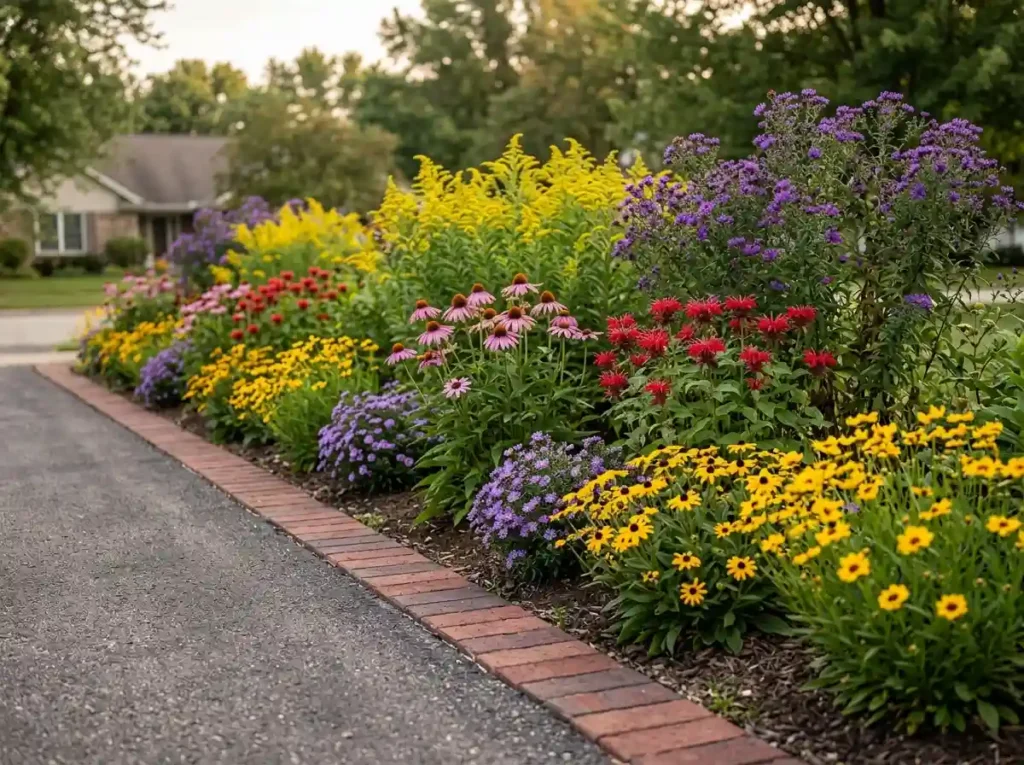
Native plants can support bees, butterflies, and other local wildlife.
The exact plants will depend on where you live. Common choices may include asters, coneflowers, coreopsis, bee balm, black-eyed Susans, and some types of goldenrod.
Native flower beds can look loose and natural. A clean border helps them look planned beside a driveway.
Use brick, stone, metal edging, or a sharp trench between the garden and pavement. Keep taller flowers at the back. Place shorter plants close to the driveway.
A native garden may need regular watering during its first growing season. Once the roots are strong, the bed may need less care.
Do not assume every plant sold as “wildflower” is native to your area. Check a local plant guide before buying seeds or plants.
Best for: Pollinator-friendly yards
Sun needs: Depends on local plant choices
Upkeep: More care at first, then seasonal cleanup
Main benefit: Flowers, color, and local habitat
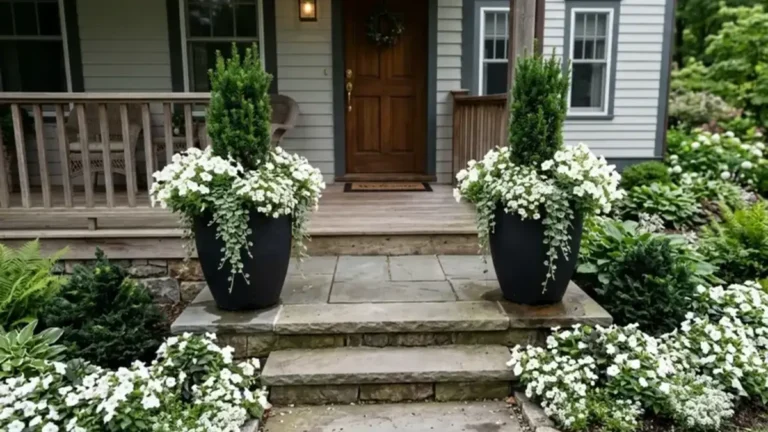
Use a White-and-Green Color Plan
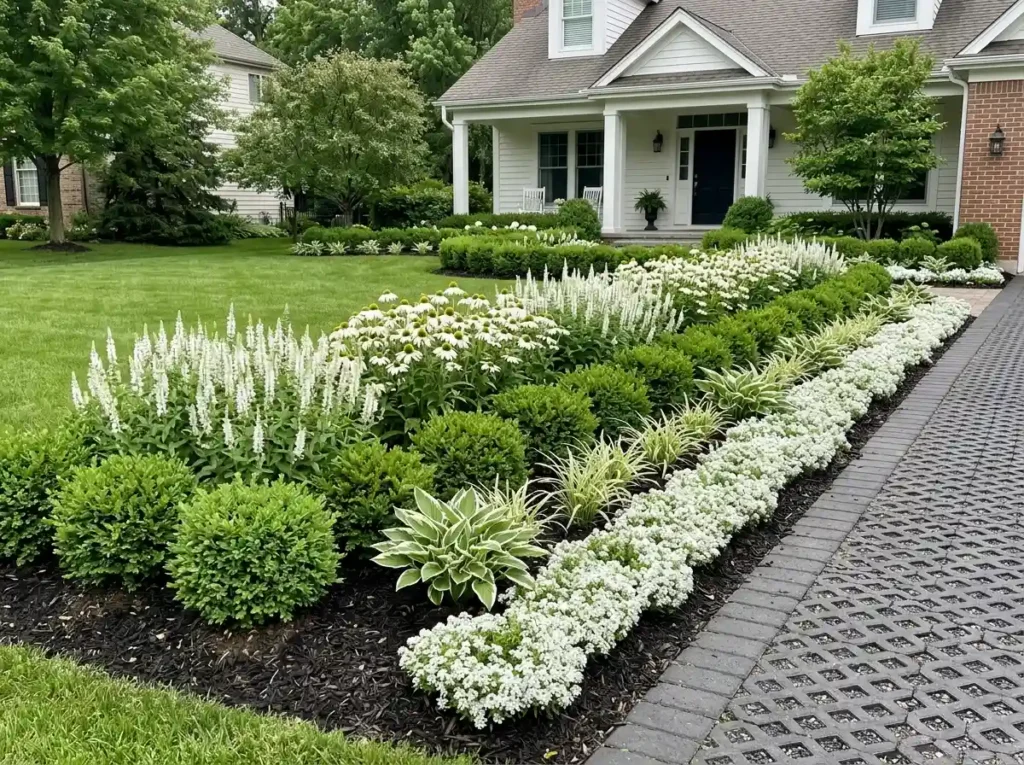
Too many colors can make a small front yard feel busy.
A white-and-green planting plan looks calm and clean. It can also help a narrow driveway bed feel wider.
Use small evergreen shrubs as the green base. Add white alyssum, white salvia, white coneflowers, or other compact flowers.
You can use a small hydrangea if the bed is wide enough. Many hydrangeas grow too large for a narrow driveway strip, so check the mature size.
Variegated leaves can add more detail without adding another flower color.
The goal is not to use every white flower you can find. Choose two or three plant types and repeat them.
Best for: Traditional and formal homes
Sun needs: Varies by plant
Upkeep: Depends on the flowers and shrubs
Main benefit: A bright and tidy appearance
Plant a Narrow Strip of Low-Growing Flowers
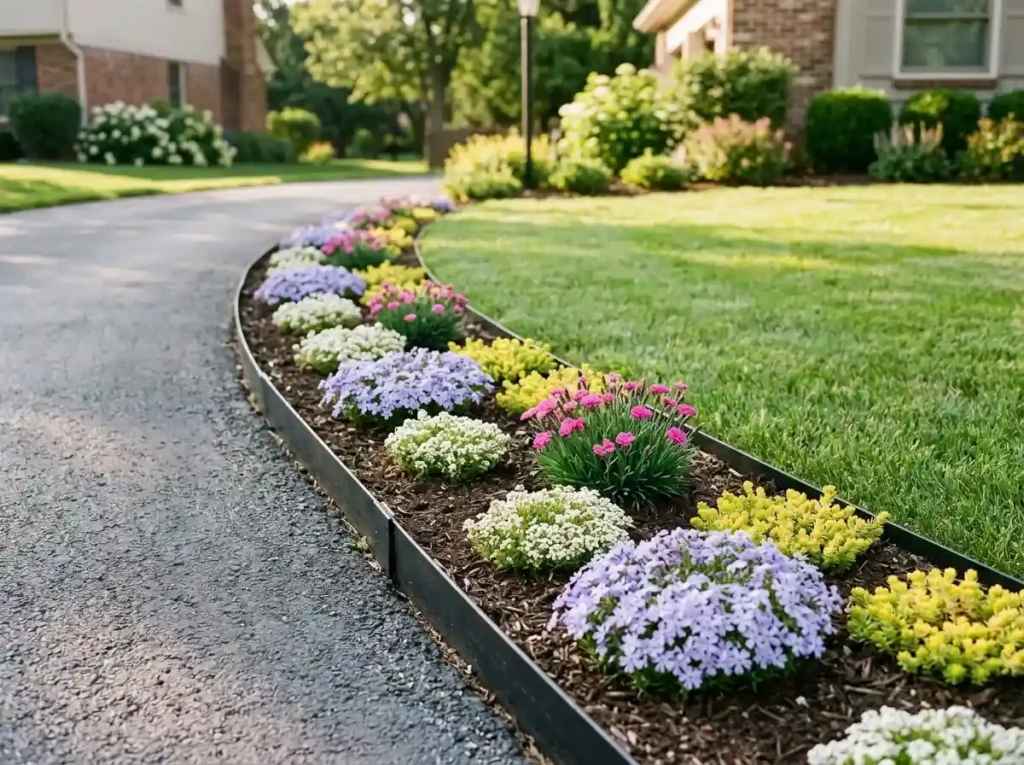
An 18- to 24-inch strip can hold a simple row of low flowers.
Try creeping phlox, dianthus, sweet alyssum, dwarf sedum, or other compact plants that suit your climate.
Keep the tallest plants away from the pavement. They may lean over the driveway after rain.
A narrow bed also needs a strong edge. This keeps soil and mulch away from tires.
Do not squeeze large shrubs into the space. The bed may look empty at first, but the plants will fill out.
You can repeat one flower along the full strip. You can also use groups of three plants with open space between them.
Best for: Tight spaces between a driveway and lawn
Sun needs: Depends on the flowers
Upkeep: Light trimming and weeding
Main benefit: Color without taking up parking space
Add Small Pocket Beds at Key Corners
You do not have to plant the full length of your driveway.
Small pocket beds can add color without creating a large garden to maintain. Place them where they will have the most effect.
Good locations include the corner near the garage, the point where the walkway meets the driveway, and a wide turn in the pavement.
Use one main plant in each pocket bed. Add a few smaller flowers around it.
A compact shrub with three flowering plants may be enough. You could also use a small ornamental grass with low ground cover.
Repeat one plant or color in each pocket. This will connect the separate beds.
Best for: Small budgets and limited planting space
Sun needs: Match each pocket to its light level
Upkeep: Low
Main benefit: Strong visual effect with fewer plants
Extend the Mailbox Bed Along the Driveway
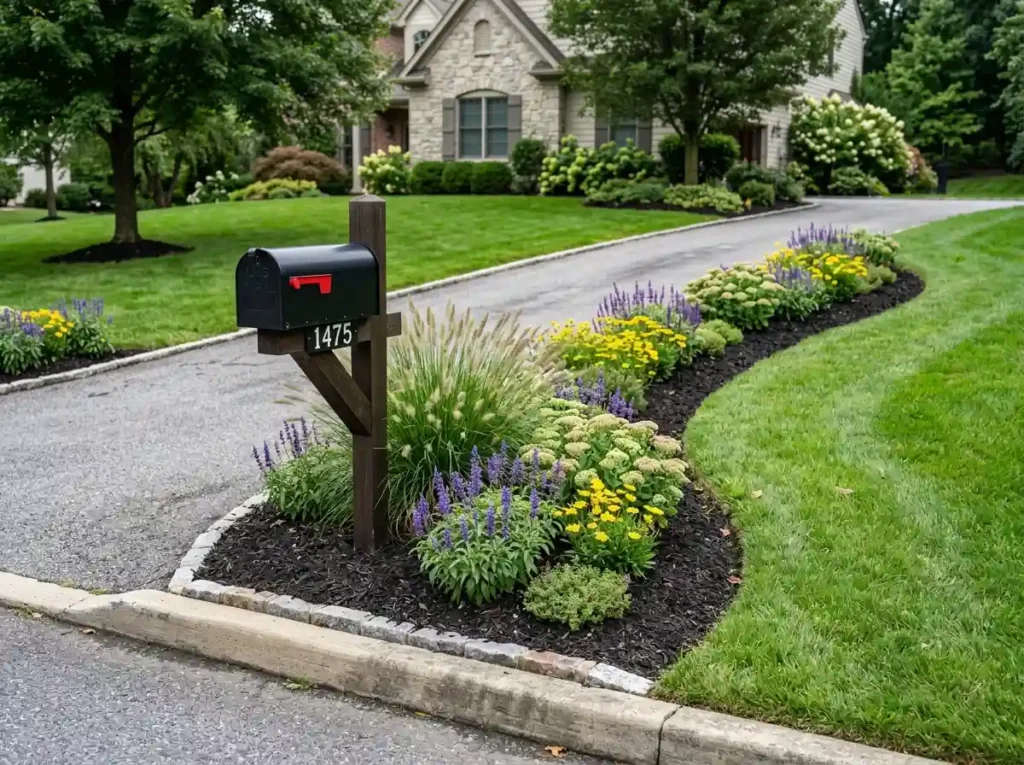
A mailbox bed often looks like a small island with no link to the rest of the yard.
Extend the bed a few feet along the driveway. This creates a smoother line between the street, mailbox, and front lawn.
Use low flowers near the pavement. Place one taller accent plant behind or beside the mailbox.
Salvia, coreopsis, sedum, compact roses, and dwarf grasses may work. Seasonal annuals can add extra color.
Leave room for the mailbox door to open. The postal worker should also be able to reach it without stepping on plants.
Avoid thorny plants in this area. People may brush against them when collecting mail.
Best for: Mailboxes close to the driveway
Sun needs: Often full sun, but check the spot
Upkeep: Low to medium
Main benefit: Connects the mailbox with the yard
Add a Trellis Beside the Garage
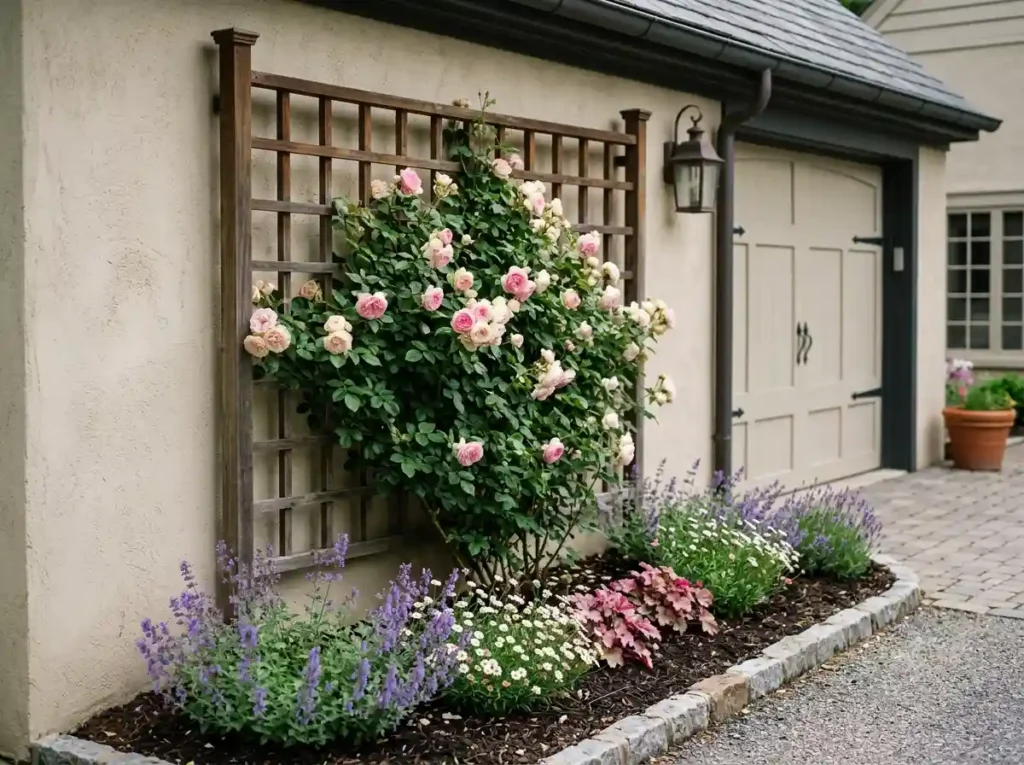
A trellis can add height when there is little ground space.
Place a narrow trellis beside the garage wall. Grow a climbing plant that fits your climate and light level.
Clematis, a compact climbing rose, or star jasmine may work in the right conditions.
Leave space between the plant and the wall. Air should be able to move behind the leaves.
Do not let vines grow into gutters, vents, or roof edges. Keep them away from garage doors and moving parts.
Add a few low flowers at the base of the trellis. This will hide bare stems and connect the vertical plant with the ground.
Best for: Narrow spaces beside a garage
Sun needs: Depends on the climbing plant
Upkeep: Regular tying and light pruning
Main benefit: Adds color without using much ground space
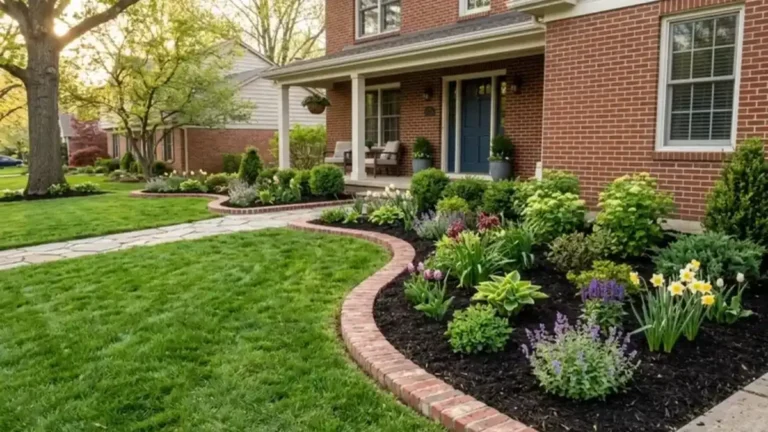
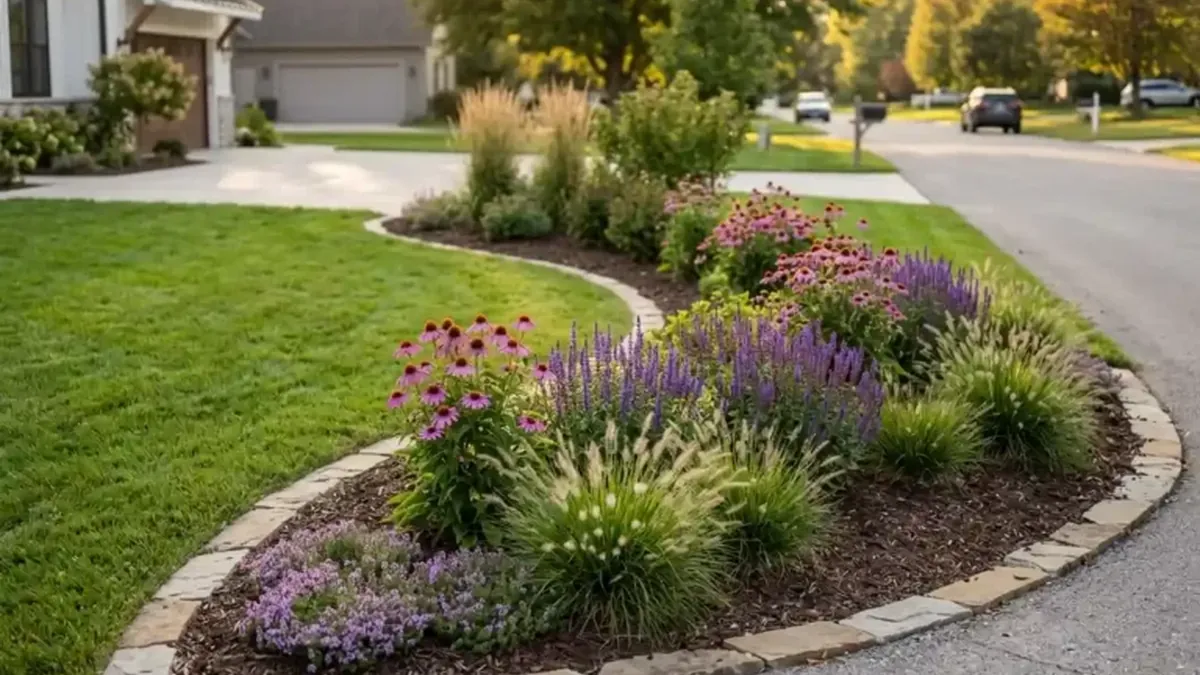
Add a Curved Bed Near the Entrance
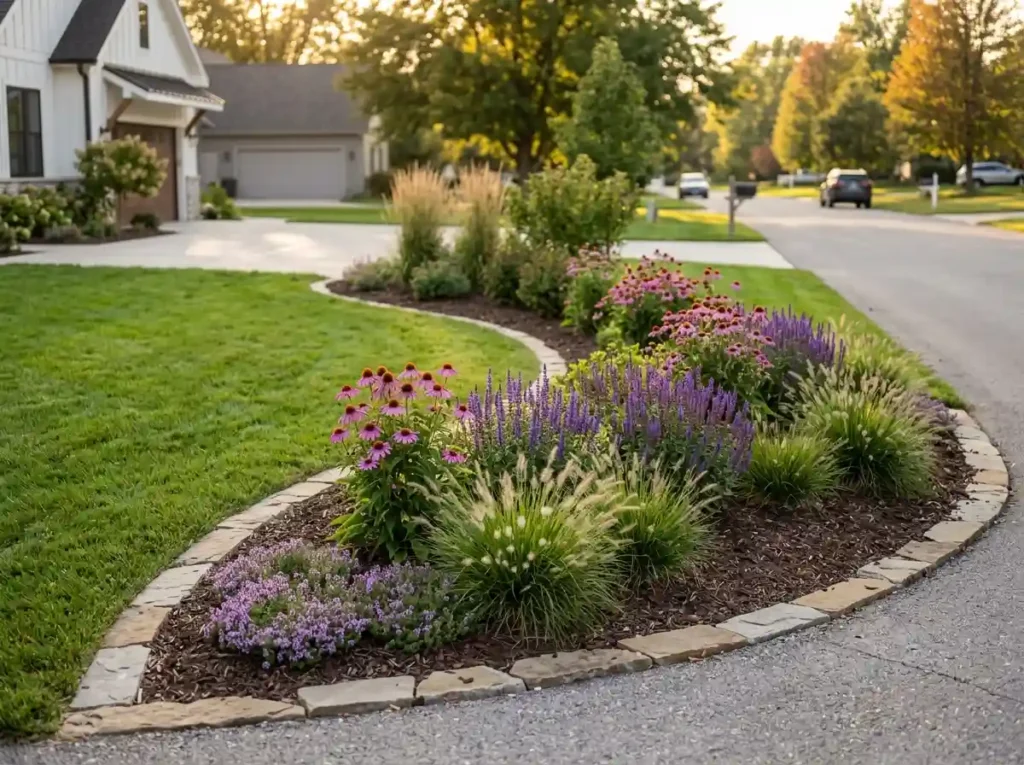
A curved bed can soften the straight edge of a driveway.
Use a garden hose to test the shape before cutting the lawn. Make the curve wide and gentle. Small, sharp curves are hard to mow around.
Place low plants near the pavement. Use taller flowers or shrubs farther back.
You could pair dwarf grass with coneflowers. You could also combine salvia with creeping thyme.
Leave open space between groups. The bed will feel larger and calmer.
Do not build the bed so close to the road that plants block your view. Keep the tallest plants away from the street corner.
Best for: Wide yards with open lawn
Sun needs: Often sunny
Upkeep: Medium
Main benefit: Softens the driveway edge
Create Matching Beds on Both Sides
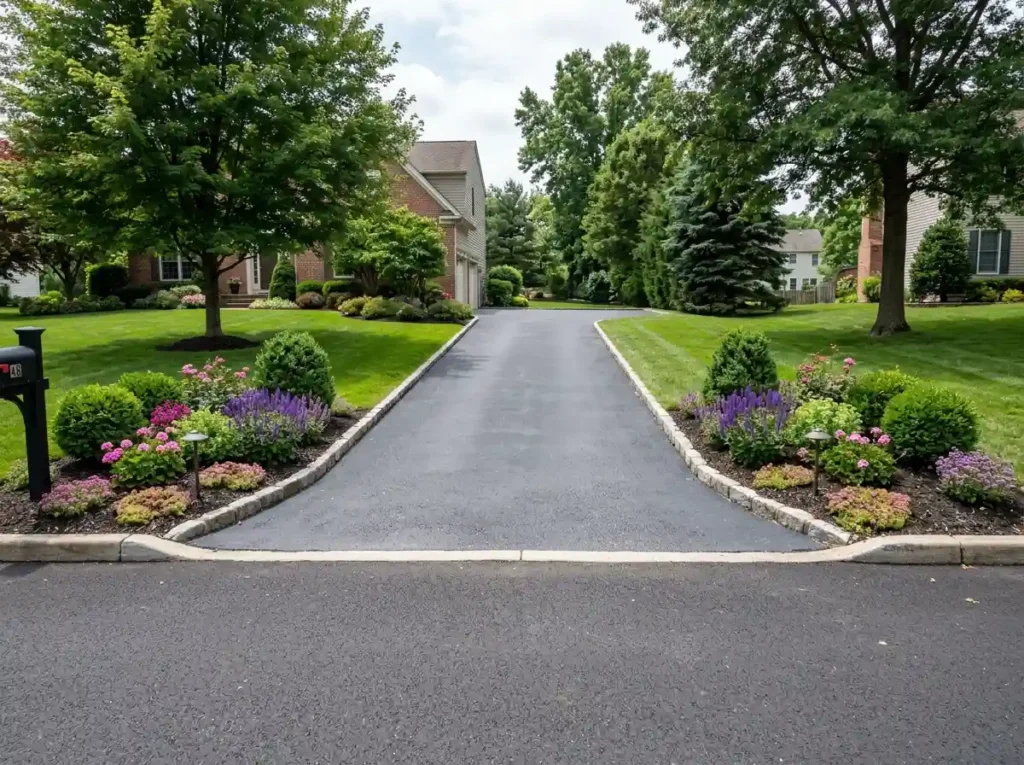
Matching flower beds can make a driveway entrance feel balanced.
The two beds do not need to be perfect copies. Use the same main plants and similar shapes.
For example, place one compact evergreen on each side. Add the same flower color around both shrubs.
This idea works well when the driveway sits in the center of the property. It can also help mark the entrance to a long driveway.
Keep the design low near the road. Avoid large shrubs, thick hedges, and tall grass.
Think about snow, road salt, and passing traffic before choosing plants. The entrance may face harsher conditions than the area close to the house.
Best for: Formal homes and centered driveways
Sun needs: Usually similar on both sides
Upkeep: Medium
Main benefit: Creates balance and a clear entrance
Build a Low Stone-Raised Bed
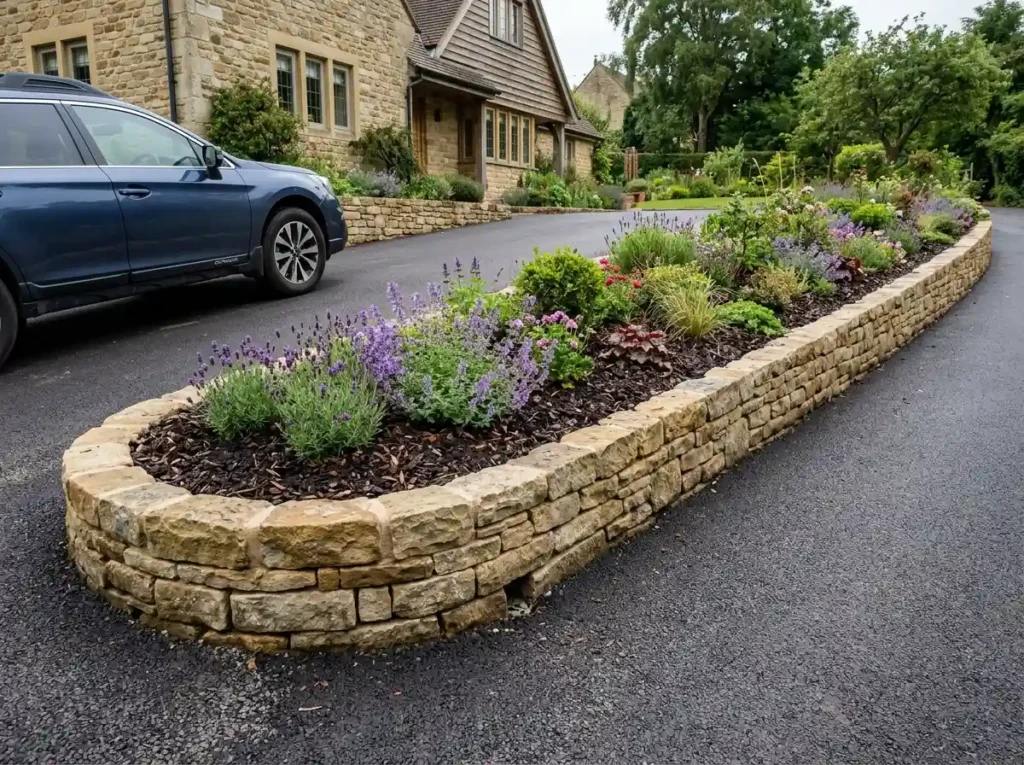
A low stone border can make a flower bed look finished.
It can also hold soil on a gentle slope. This helps when rain keeps washing mulch toward the driveway.
Choose stone or block that matches the home. A simple material often looks better than a mix of several colors.
Keep the wall low. A tall raised bed near the street may block your view.
The bed also needs a way for extra water to escape. Trapped water can damage plants and push soil through gaps.
Avoid sharp corners where car doors open. Keep the border away from tire paths.
Contact your local utility-marking service before digging for the base.
Best for: Slight slopes and poor soil
Sun needs: Depends on the plants
Upkeep: Low after installation
Main benefit: Holds soil and creates a strong edge
Pair Seasonal Flowers With Low Lighting
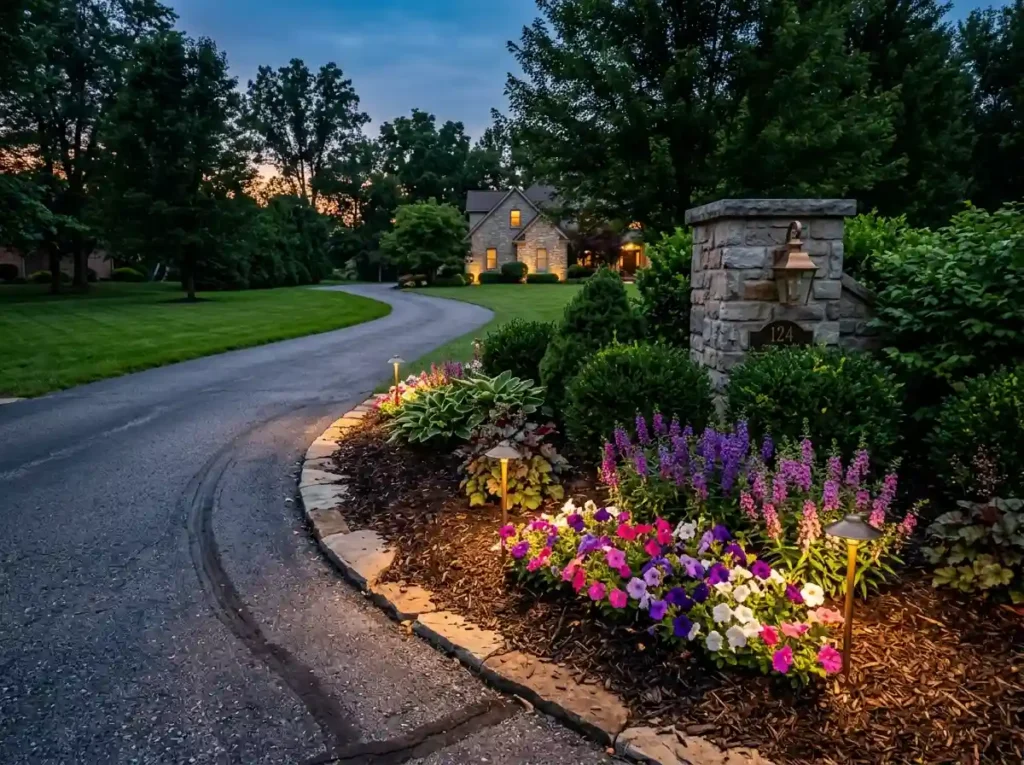
Seasonal flowers can add quick color near the driveway entrance.
Use permanent shrubs or perennials as the base. Then add a small number of annuals each season.
Marigolds, petunias, pansies, begonias, zinnias, and angelonia may work. Choose them based on heat, light, and local weather.
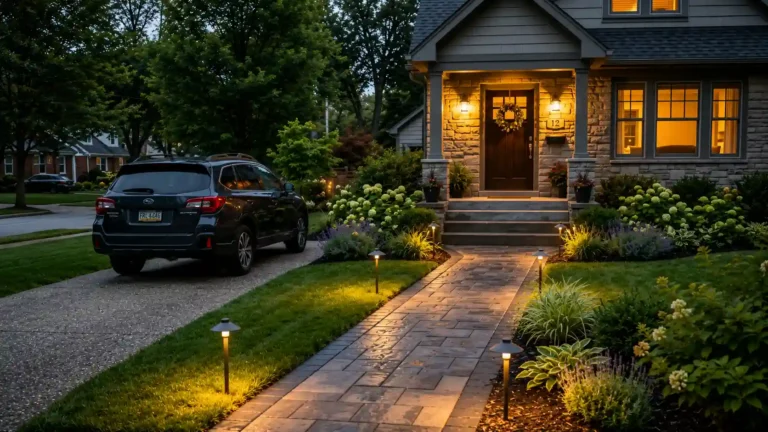
Low landscape lights can help mark the driveway at night. Place them where tires, lawn tools, and snow equipment will not hit them.
Aim the light at the plants or ground. Do not point bright lights at drivers or neighboring windows.
Solar lights are easy to install, but their light may be weak in shaded areas. Wired low-voltage lights often provide steadier results.
Best for: Homes that need evening curb appeal
Sun needs: Match flowers to the site
Upkeep: Seasonal planting and light cleaning
Main benefit: Adds color during the day and shape at night
Repeat Plant Groups Along a Long Driveway
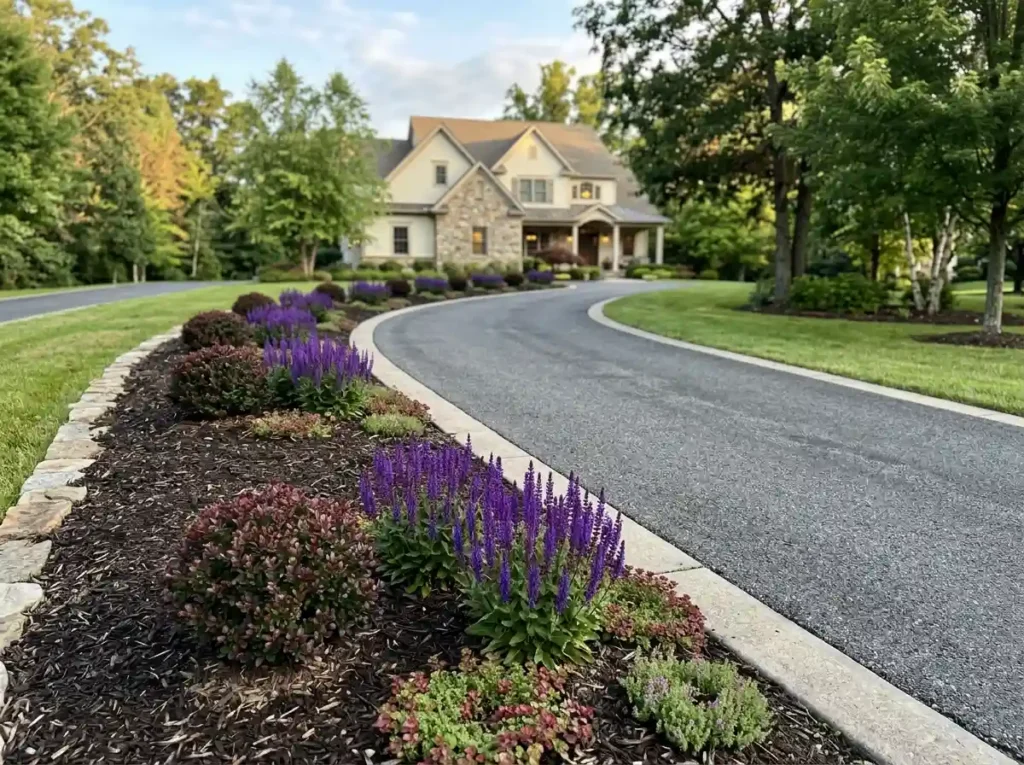
Do not use a different plant every few feet.
A long driveway looks better when the same plant group appears several times.
Start with one compact shrub. Add a group of three flowering perennials. Finish with a low ground cover.
Leave a short area of open mulch. Then repeat the group.
This pattern gives the eye a clear path along the driveway. It also makes plant shopping easier.
You do not need to fill every open spot. Empty space keeps the bed from feeling crowded.
Choose plants with similar water needs. This will make watering simpler.
Best for: Long suburban or rural driveways
Sun needs: Match the group to the site
Upkeep: Low to medium
Main benefit: Makes a long border feel connected
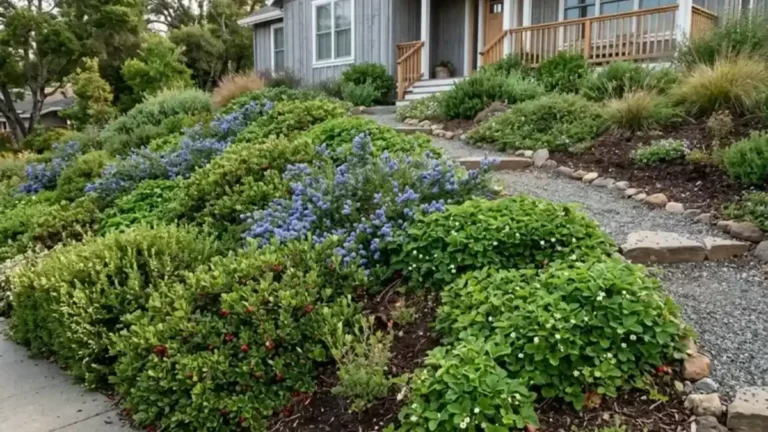
Use Deep-Rooted Plants on a Sloped Driveway
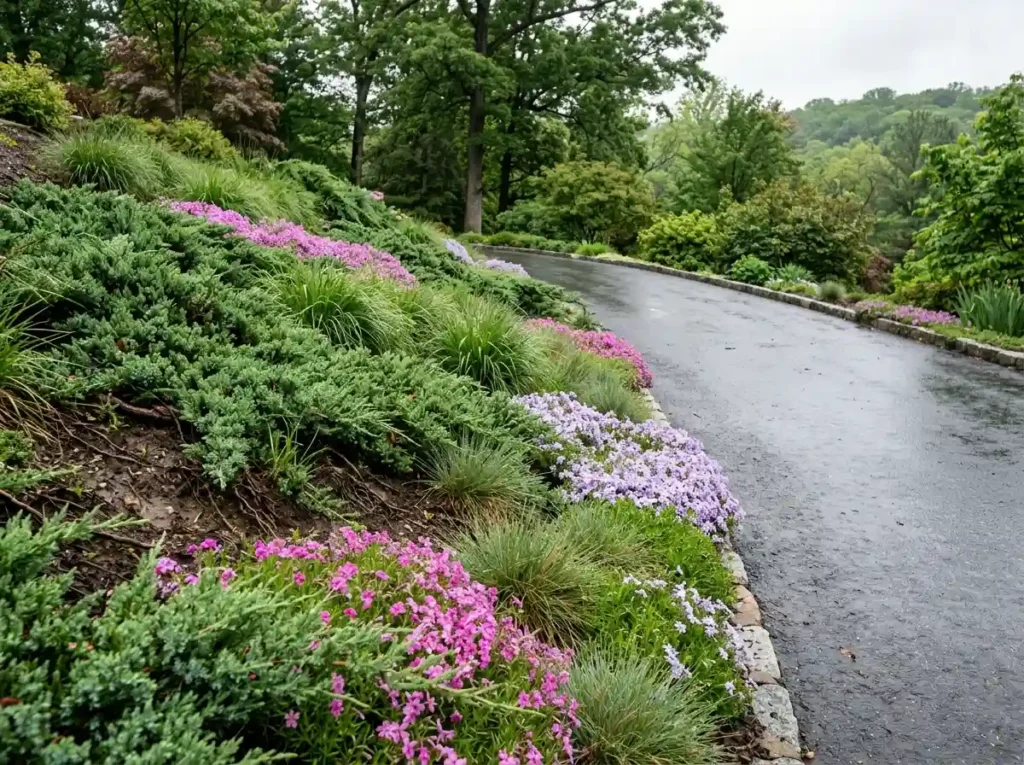
Rain can move quickly down a slope.
It may wash away soil, mulch, and young plants. The answer is not always to add more mulch.
Use plants that create a dense cover over the soil. Deep or spreading roots can help hold the surface in place.
Possible choices include creeping juniper, native sedges, low grasses, and creeping phlox. Your best options will depend on the climate and the amount of sunlight.
Plant across the slope instead of creating straight rows that run downhill. This may help slow surface water.
Small terraces can also help on gentle slopes. They need firm support and safe drainage.
Call a drainage or landscape professional when water is cutting channels into the soil. You should also get help if runoff reaches the garage, street, foundation, or nearby property.
Best for: Driveways with erosion or fast runoff
Sun needs: Varies
Upkeep: Higher during the first growing season
Main benefit: Helps protect exposed soil
Grow a Shade Bed Under Mature Trees
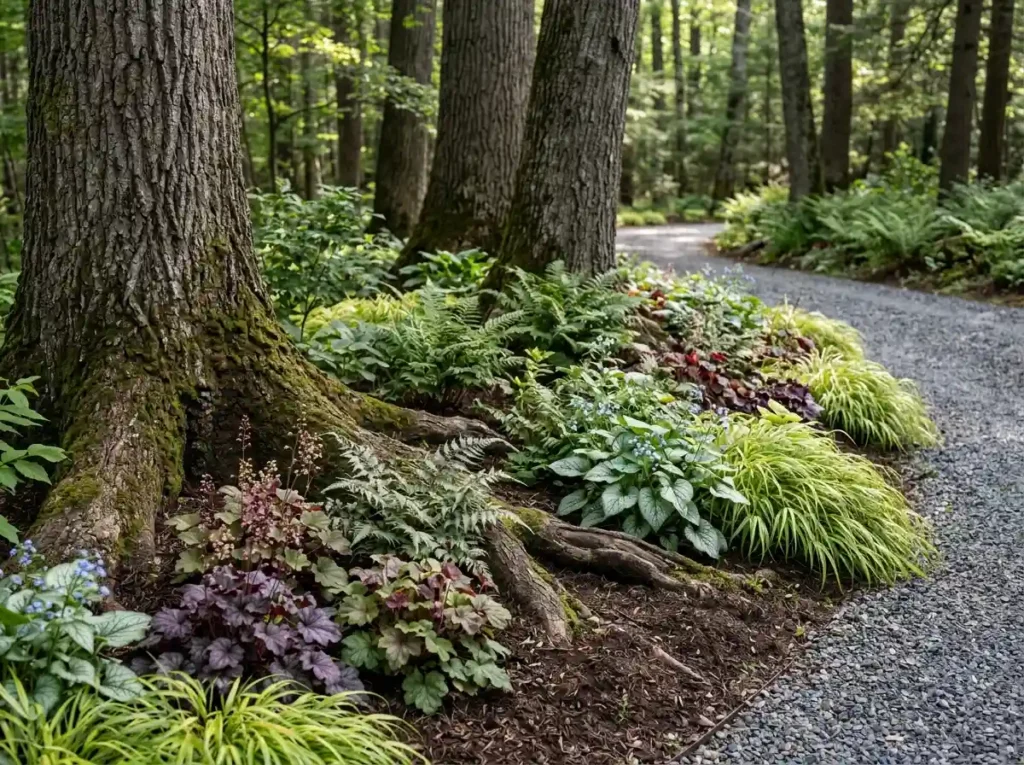
A shaded driveway bed can still have color and texture.
Use plants that handle low light and competition from tree roots.
Heuchera adds colorful leaves. Ferns bring soft texture. Brunnera can provide small flowers and broad leaves. Japanese forest grass can brighten a darker corner.
Hostas may also work, but deer and slugs can damage them in some areas.
Do not raise the soil level around a mature tree. Extra soil can harm the roots.
Keep mulch away from the trunk. A thin layer is enough.
Avoid cutting large tree roots to fit new plants. Use small plants and hand tools when working close to a tree.
Best for: Wooded yards and mature trees
Sun needs: Shade or filtered light
Upkeep: Low to medium
Main benefit: Adds interest where grass may struggle
Create a Cottage-Style Pollinator Border
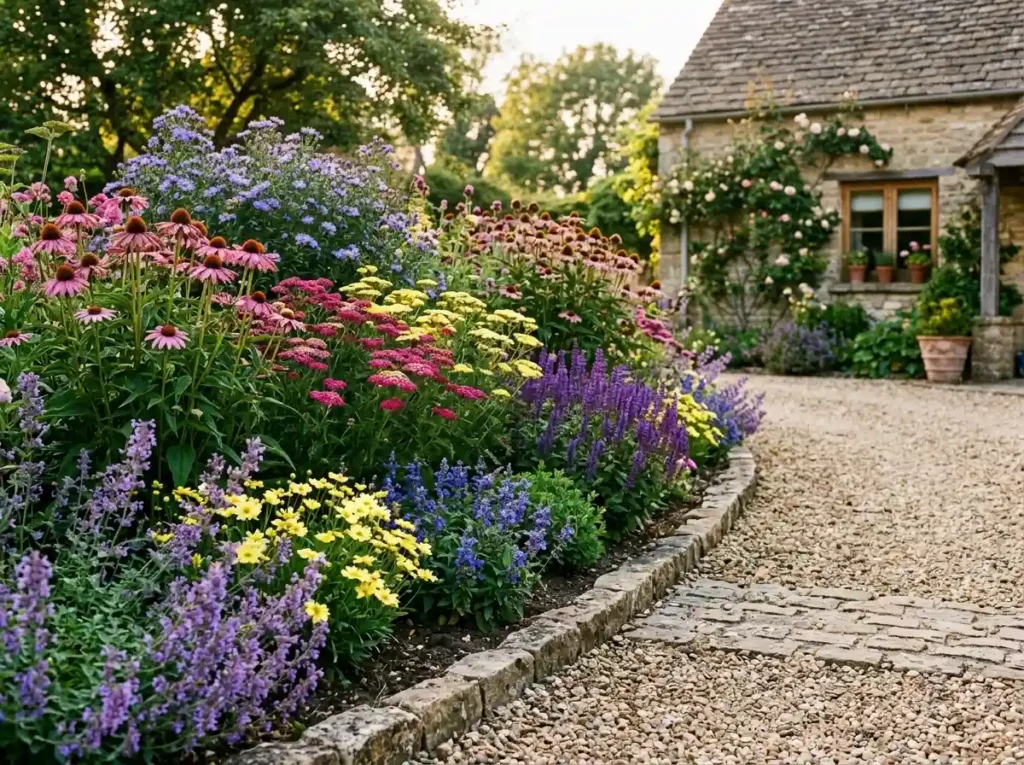
A cottage-style bed uses groups of flowers with different heights and bloom times.
Good choices may include catmint, salvia, coneflowers, coreopsis, asters, and yarrow. Compact flowering shrubs can add more shape.
Place taller plants at the back. Keep short plants close to the driveway.
Use groups of three or five instead of planting one of everything. Repeated groups keep the bed from looking random.
A clean edge is important. Stone, brick, metal, or a sharp trench can separate the loose flowers from the pavement.
Some pollinator plants spread through seeds or roots. Remove extra growth before it reaches the driveway.
Best for: Informal homes and colorful yards
Sun needs: Full sun to partial sun
Upkeep: Seasonal trimming and deadheading
Main benefit: Long-lasting color and pollinator activity
Here are three simple combinations you can use as a starting point:
Sunny slope: Native grass, sedum, and creeping juniper
Shaded driveway: Heuchera, ferns, and Japanese forest grass
Long driveway: Compact shrub, salvia, and low ground cover
How to Choose Plants That Will Not Crowd Your Car
The best plants for driveway flower beds fit the space when fully grown.
Check the mature height and width on the plant label. Do not buy based on the current pot size.
Avoid thorny shrubs close to car doors. Roses, barberry, and similar plants can scratch people and vehicles.
Floppy flowers may also become a problem. Rain can push tall stems onto the driveway.
Pavement reflects heat. Plants beside concrete or asphalt may need more heat tolerance than plants near the house.
Winter conditions matter too. Road salt and dirty snow can damage some plants.
Ground cover can be useful, but some types spread fast. Choose plants you can keep inside the bed.
Avoid trees and shrubs that drop large fruit, sticky sap, or hard seed pods near parked cars.
| Driveway Condition | What to Look For | Possible Plants |
| Full sun and heat | Heat and dry-soil tolerance | Sedum, yarrow, lavender |
| Partial shade | Flexible light needs | Heuchera, ferns, brunnera |
| Narrow bed | Compact growth | Dianthus, dwarf grasses, alyssum |
| Long bed | Easy to repeat | Salvia, catmint, small shrubs |
| Sloped area | Dense roots and spreading growth | Sedges, creeping phlox, juniper |
| Near car doors | Soft and low plants | Thyme, sedum, low annuals |
Plant names alone are not enough. Check whether each choice suits your soil, climate, and growing zone.
How to Install a Driveway Flower Bed Without Causing Drainage Trouble
Start by marking the bed with a garden hose.
Move the hose until the shape looks right from the street, driveway, and front door.
Then watch the space after rain. Do not block a path that water already uses.
Contact your local utility-marking service before digging. Gas, water, power, or cable lines may run through the yard.
Follow these basic steps:
- Measure and mark the bed.
- Check how water moves after rain.
- Remove grass and weeds.
- Test the soil if plant growth has been poor.
- Add soil improvements only when needed.
- Install safe edging.
- Place plants on top of the soil while they are still in their pots.
- Check the spacing from several angles.
- Plant and water each area well.
- Add a light layer of mulch.
- Sweep soil and mulch off the driveway.
Keep the top of the soil below the pavement edge. This reduces the chance of dirt washing onto the driveway.
Do not build up soil against the garage or house foundation.
New plants need regular water while their roots grow. Water the soil, not the pavement.
Get professional help if water runs into the garage or collects against the house. Flowers cannot fix a serious grading problem.
10 Driveway Landscaping Mistakes That Waste Time and Money
A few planning mistakes can turn a pretty idea into a daily problem.
Buying Plants Before Measuring
A plant may look small at the store but grow several feet wide.
Fix: Measure the bed and check mature size first.
Blocking the View of the Road
Tall shrubs near the street can hide cars, bikes, and people.
Fix: Keep entrance plants low and check local sightline rules.
Planting Thorny Shrubs Near Car Doors
Thorns can catch clothes and scratch paint.
Fix: Use soft, compact plants near parking spaces.
Using Loose Stone Near Tire Paths
Small stones can roll onto the driveway or get pushed by tires.
Fix: Use firm edging and larger, stable material.
Letting Mulch Wash Onto the Pavement
Fast water can move mulch after every storm.
Fix: Lower the soil level and improve the edge.
Squeezing Large Shrubs Into Narrow Beds
Constant pruning will not fix a plant that is too large for the site.
Fix: Choose a true compact variety.
Ignoring Snow and Road Salt
Snow piles may crush plants. Salt may burn leaves and roots.
Fix: Leave storage space and choose tougher plants where needed.
Using Fast-Spreading Ground Cover
Some plants can move into the lawn and across the driveway edge.
Fix: Check the growth habit before planting.
Building a Raised Bed Without Drainage
Water may collect behind the wall and damage plants.
Fix: Give extra water a safe path out of the bed.
Using Too Many Plant Types
A small bed can look messy when every plant has a different color and shape.
Fix: Choose two or three main plants and repeat them.
Start With the Idea That Fits Your Real Yard
The best driveway bed is not always the largest or most colorful one.
It should fit the width of your space. It should also match the sunlight, soil, drainage, and time you have for yard work.
A narrow strip may need low flowers and firm edging. A long driveway may look better with repeated plant groups. A shaded area needs plants that can grow with less light.
Measure your driveway border before shopping. Check the sunlight and watch where rainwater moves.
Then save the two designs that fit your space best.
These front yard flower bed ideas along a driveway can help you turn an empty border into a neat part of your yard. Start small, leave room for growth, and choose plants that make daily life easier.