16 Front Porch Ideas to Boost Curb Appeal
Your porch may be the first thing guests see, yet it can be one of the hardest spaces to decorate. It may feel too small for furniture. The plants may look lost. Or the mix of rugs, signs, and seasonal items may make the entrance feel crowded.
The good news is that you do not need a large budget or a wide porch to improve it. A fresh door color, one well-sized seat, or two matching planters can change how the whole entrance looks.
These front porch ideas will help you work with the space you already have. You will find simple options for small porches, modern homes, comfortable seating areas, and low-cost updates. You will also learn how to choose furniture, plants, lighting, and colors that fit your home.
Start with the problem that bothers you most. Then choose one or two ideas that solve it.
How to Plan a Front Porch Makeover That Fits Your Space
Buying decor before measuring your porch can lead to wasted money. A chair may look small in a store but feel huge beside your front door. A planter may block the path or make the steps harder to use.
Measure the width and depth of the porch first. Check the space around the door when it is fully open. You should also measure steps, railings, and narrow corners.
Next, decide what you want the porch to do. Do you want a place to sit? Are you trying to improve curb appeal? Do you need privacy from the street? Your main goal will guide each choice.
A narrow porch may only need one slim bench and a tall planter. A deeper covered porch may have room for two chairs, a table, and an outdoor rug.
Keep a clear path from the steps to the door. Guests should not have to move around plants or furniture to enter the home.
Use this table to choose a starting point:
| Your Main Goal | Best Features to Add |
| Improve curb appeal | Door paint, planters, and lighting |
| Add seating | Chairs, a bench, or a porch swing |
| Create privacy | Tall plants, screens, or curtains |
| Make the porch feel bigger | Slim furniture and wall decor |
| Spend less | Paint, reused furniture, and textiles |
Take a straight photo of your porch before shopping. A photo can help you spot clutter, empty areas, and items that do not match.
4 Small Front Porch Ideas That Make the Entry Feel Bigger
The best small front porch ideas save floor space and keep the entrance easy to use. You do not need to fill every corner. In fact, leaving some open space often makes a small porch look larger.
Replace Deep Chairs With a Slim Porch Bench
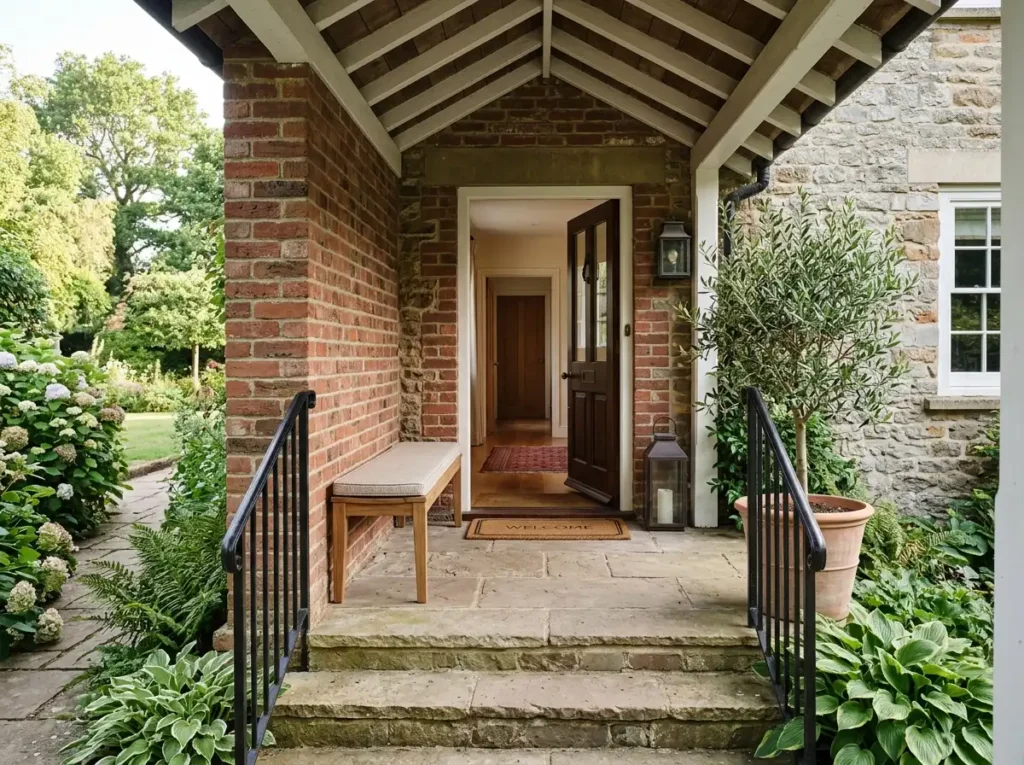
Large outdoor chairs can take over a narrow porch. A slim bench gives you a place to sit without blocking the door or walkway.
Place the bench against a side wall instead of facing the street. This keeps the main path open. A backless bench can work well when the porch feels tight because it creates less visual weight.
Add one outdoor cushion or a small pillow for comfort. Choose a fabric made for outdoor use so rain and sun do less damage.
A wooden bench suits cottages, brick homes, and farmhouse-style entries. A simple metal bench may work better on a modern porch.
Best for: Narrow covered porches
Budget: Low to medium
Avoid: Buying a bench before checking the door swing
One bench often looks better than two crowded chairs. You still get useful seating, but the porch feels calmer.
Use Tall Planters to Draw the Eye Up
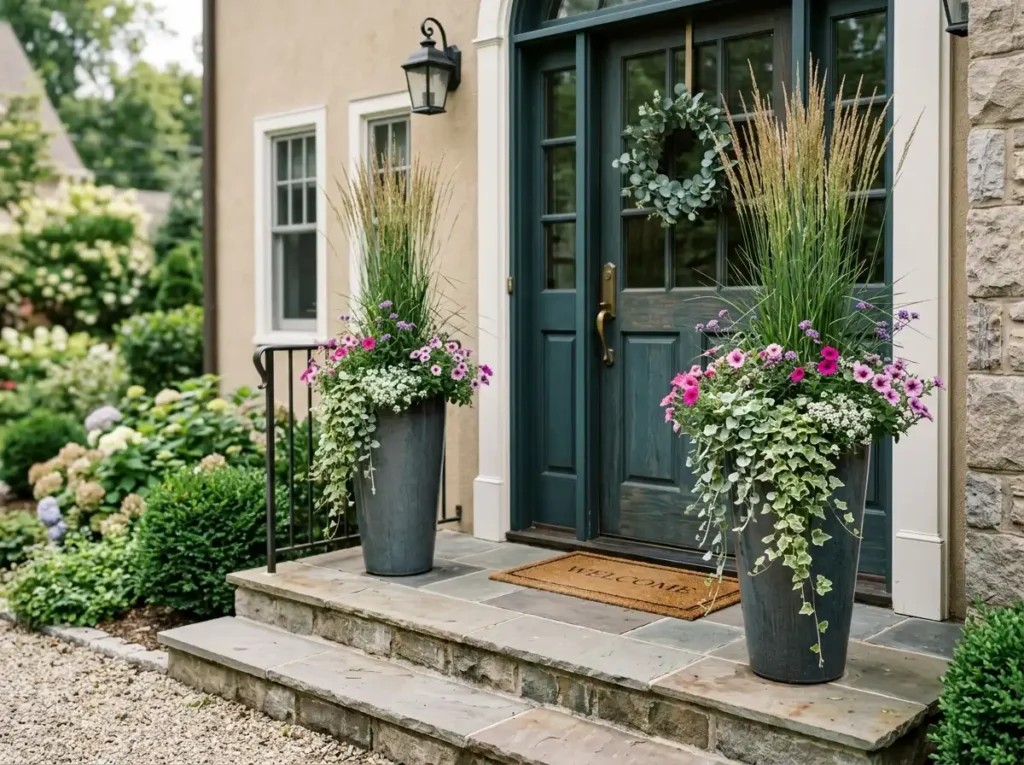
Several small flowerpots can make a small porch feel messy. One or two tall planters use less floor space and create a stronger shape.
Place a tall pot beside the door or at the edge of the steps. You can also use a narrow plant stand, a wall planter, or a small trellis.
Choose plants based on the amount of light your porch gets. Ferns often work well in shade. Ornamental grasses and many flowering plants need more sun. Check plant labels before buying.
For a fuller look, use one tall plant in the center. Add a shorter filler plant around it. Then add one trailing plant near the edge.
Best for: Small porches with limited floor space
Budget: Low to medium
Avoid: Using plants that will quickly outgrow the area
Two tall planters can frame the door without making the porch feel packed.
Layer an Outdoor Rug Under the Doormat
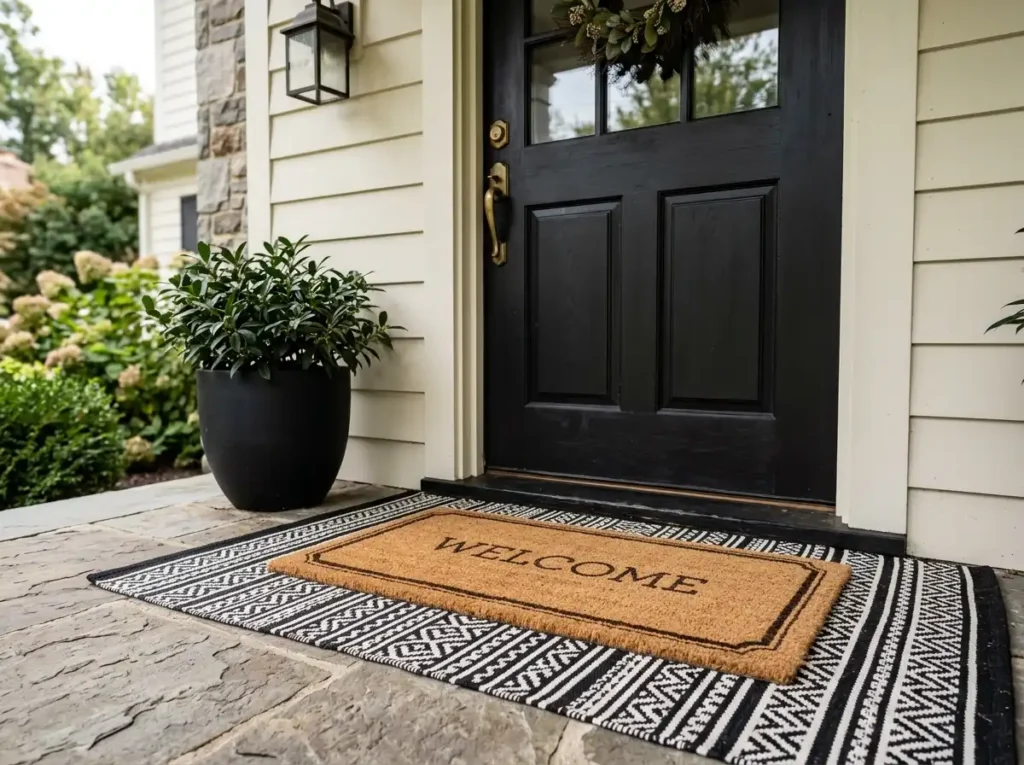
A plain doormat may look too small on its own. Layering it over a larger outdoor rug gives the entrance more color and shape.
Choose a low, weather-safe rug that fits under the door. Check that the door can open without catching the rug.
A simple black-and-white pattern works with many home colors. You can place a natural coir mat on top for a warm and casual look.
The bottom rug should be wider than the top mat. This creates a clear border and makes the setup look planned.
Match one color in the rug to the door, planters, or porch furniture. This small link helps the whole entrance feel connected.
Best for: Covered or partly covered entrances
Budget: Low
Avoid: Using indoor rugs that hold water
This is one of the easiest front porch decorating ideas because it adds style without taking up useful space.
Move Decorations From the Floor to the Walls
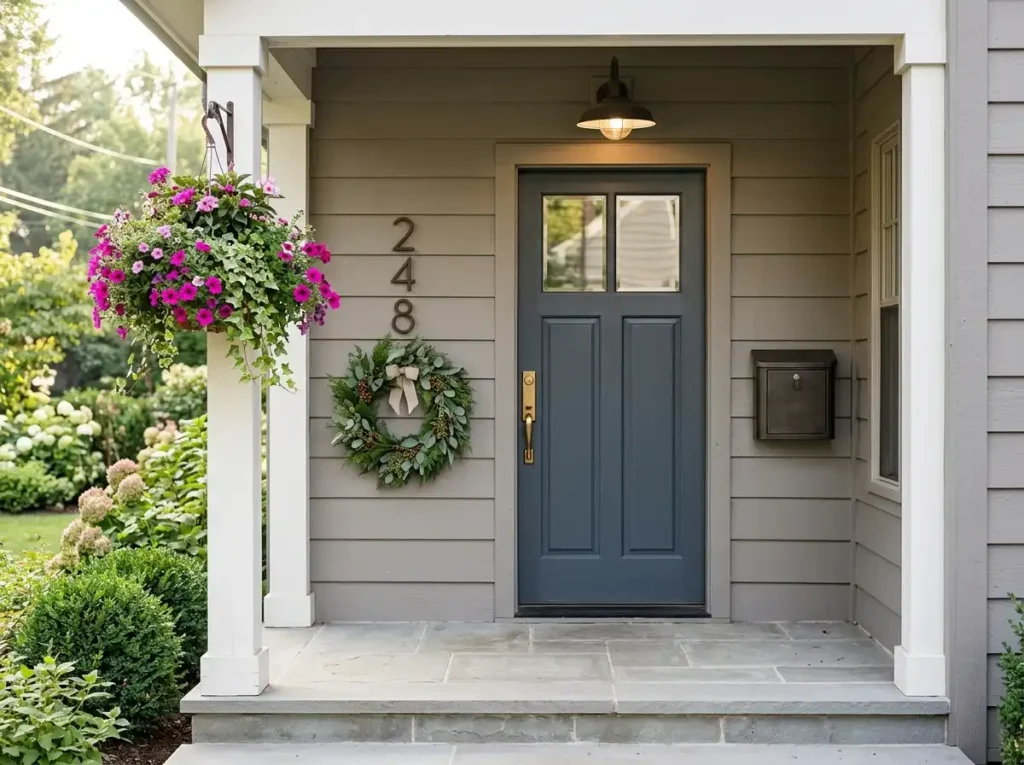
Wall decor can add detail without reducing walking space. This works well on narrow porches where every inch of the floor matters.
Replace a standing sign with a smaller wall sign. Use hanging baskets instead of extra pots. You can also add bold house numbers, a wall-mounted mailbox, or a simple wreath.
Keep the design balanced. One sign, one light, and one hanging plant may be enough. Too many wall items can make the porch feel just as crowded as too many floor items.
Choose items that can handle outdoor weather. Indoor frames and signs may fade, bend, or peel after a few wet days.
Best for: Narrow and shallow porches
Budget: Low
Avoid: Covering every open wall
A small porch feels larger when the floor stays clear and each item has a clear purpose.
Create a Simple Two-Chair Conversation Area
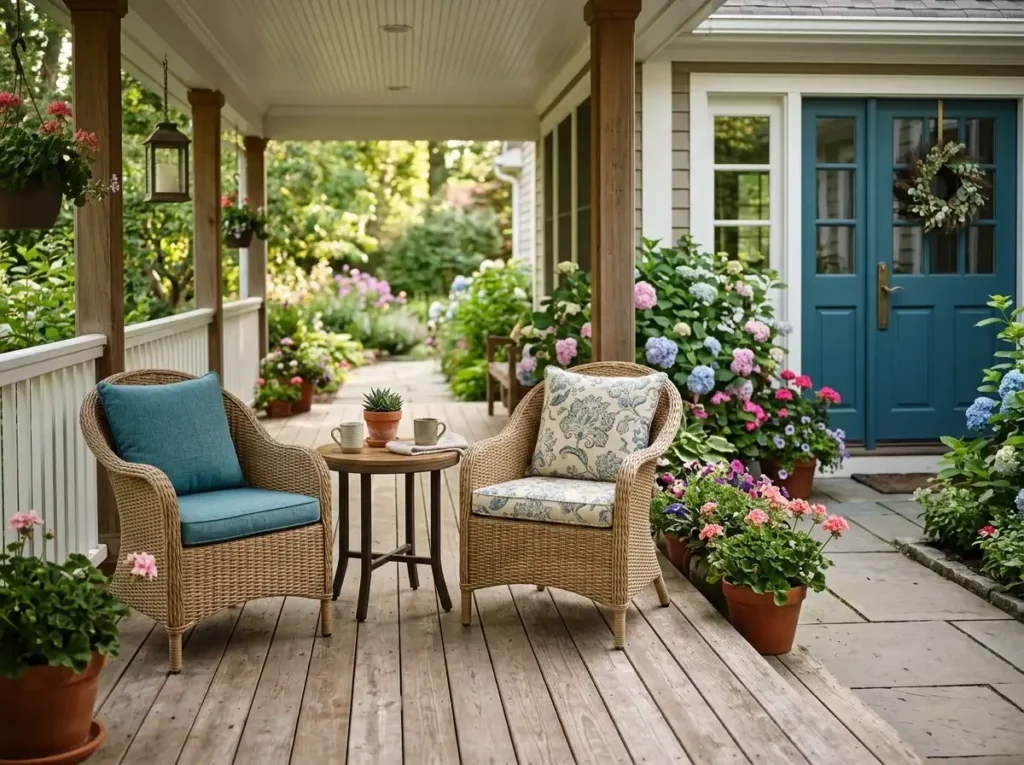
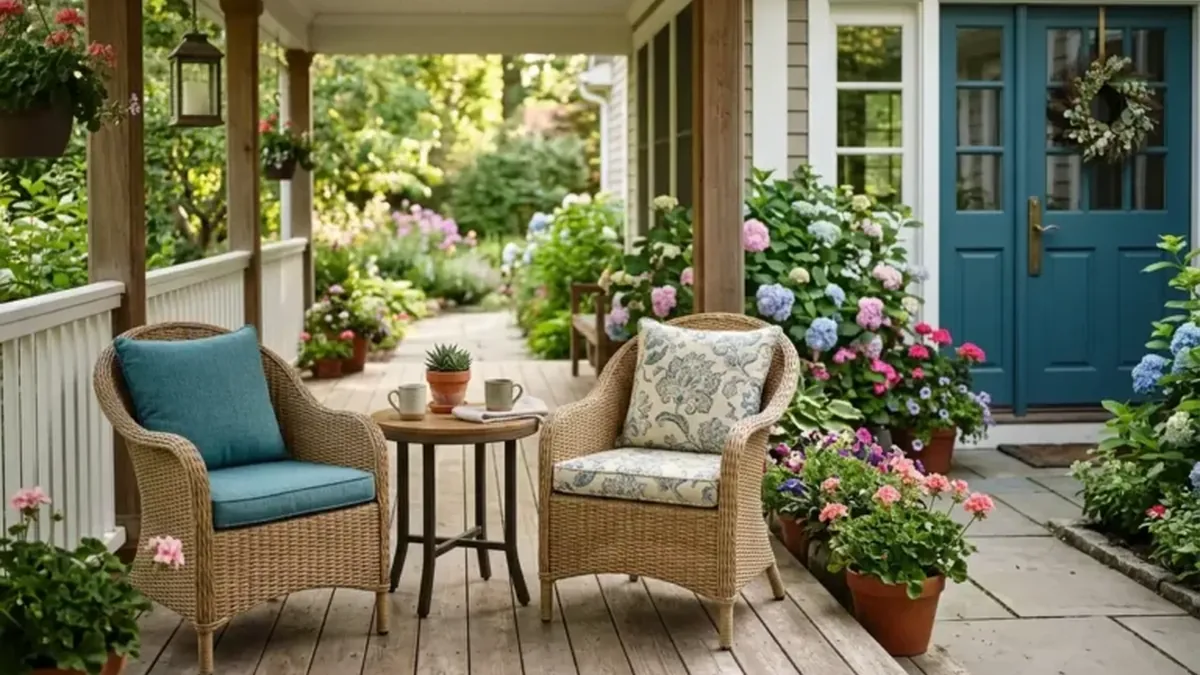
Two chairs can turn an empty porch into a useful outdoor room. Angle them slightly toward each other instead of placing them in a straight line.
Add a small table between the chairs. The table should be large enough for a drink, a book, or a small planter. It should not block the walking path.
Compact woven chairs work well on many covered porches. Metal chairs may be easier to clean. Wooden chairs can add warmth but may need more care.
Use washable outdoor cushions. Pick one or two colors that connect with the front door or nearby flowers.
Best for: Medium or deep porches
Budget: Medium
Avoid: Pushing furniture too close to the entrance
Two chairs and one small table create a clear sitting area without filling the whole porch.
Add a Porch Swing or Hanging Chair Safely
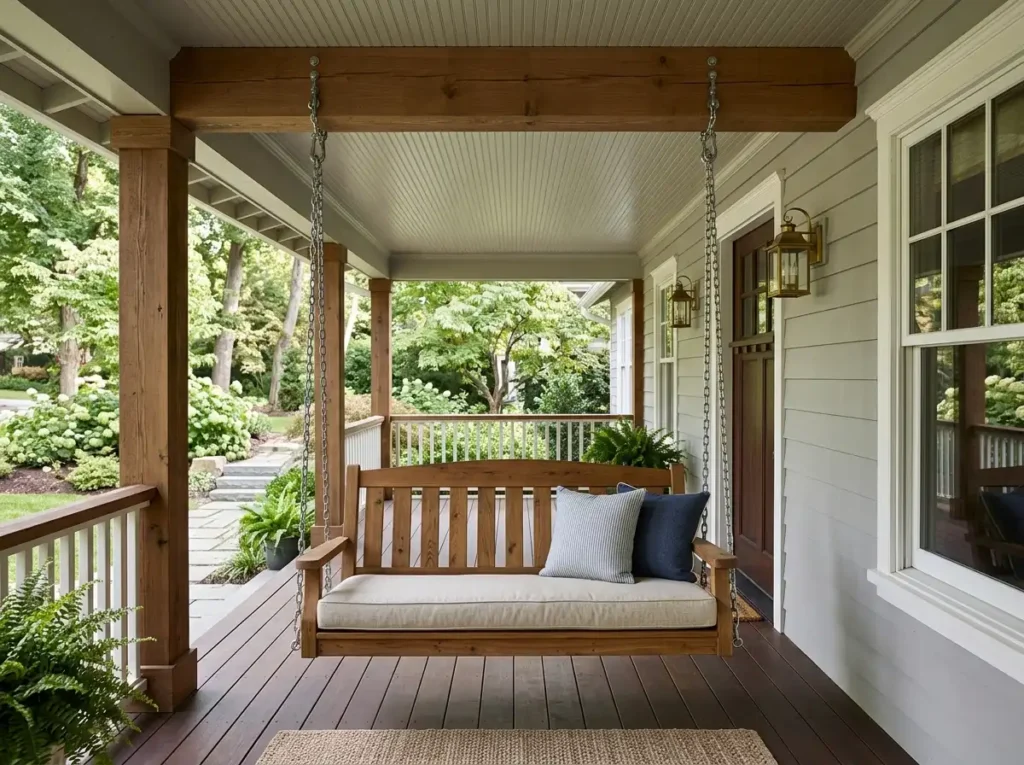
A porch swing gives you a comfortable place to relax. It can also become the main visual feature of a larger porch.
Before buying one, check that the ceiling has strong structural support. A swing should never hang from thin panels or decorative boards. Hire a qualified contractor when you are unsure.
Leave enough room in front and behind the swing. It needs space to move without hitting a wall, railing, light, or planter.
A hanging chair may fit better when the porch is too narrow for a full swing. It still needs secure support and enough open space.
Add one seat cushion and a few outdoor pillows. Keep the colors simple so the swing does not look overloaded.
Best for: Deep, covered porches
Budget: Medium to high
Avoid: Attaching hardware without checking the support
Safety matters more than style here. A well-installed swing can last for years, but a weak support point can cause serious damage.
Add Soft Textures Without Creating Clutter
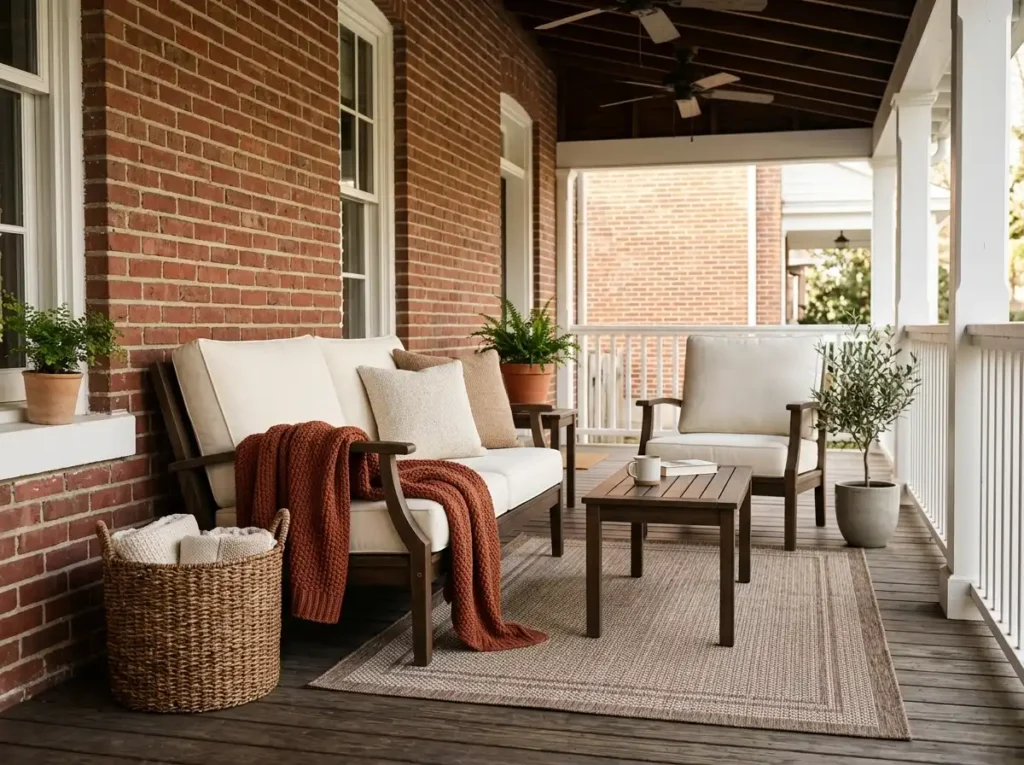
Outdoor cushions, rugs, and throws can make a porch feel warmer. They also soften hard surfaces such as brick, wood, and concrete.
Choose two or three colors and repeat them. For example, use cream cushions, a rust-colored throw, and a brown basket. This creates a cozy look without adding too many shades.
Use outdoor fabrics that resist moisture and fading. Even covered porches can get wet during heavy rain or wind.
A basket can hold cushions when the weather turns bad. You can also use a storage bench if you need both seating and hidden storage.
Do not leave soft items outside all year if your area has harsh weather. Store them during heavy rain, snow, or long periods of strong sun.
Best for: Covered porches with seating
Budget: Low to medium
Avoid: Mixing too many patterns
Soft textures should make the porch feel comfortable, not busy.
Create Privacy With Plants or a Narrow Screen
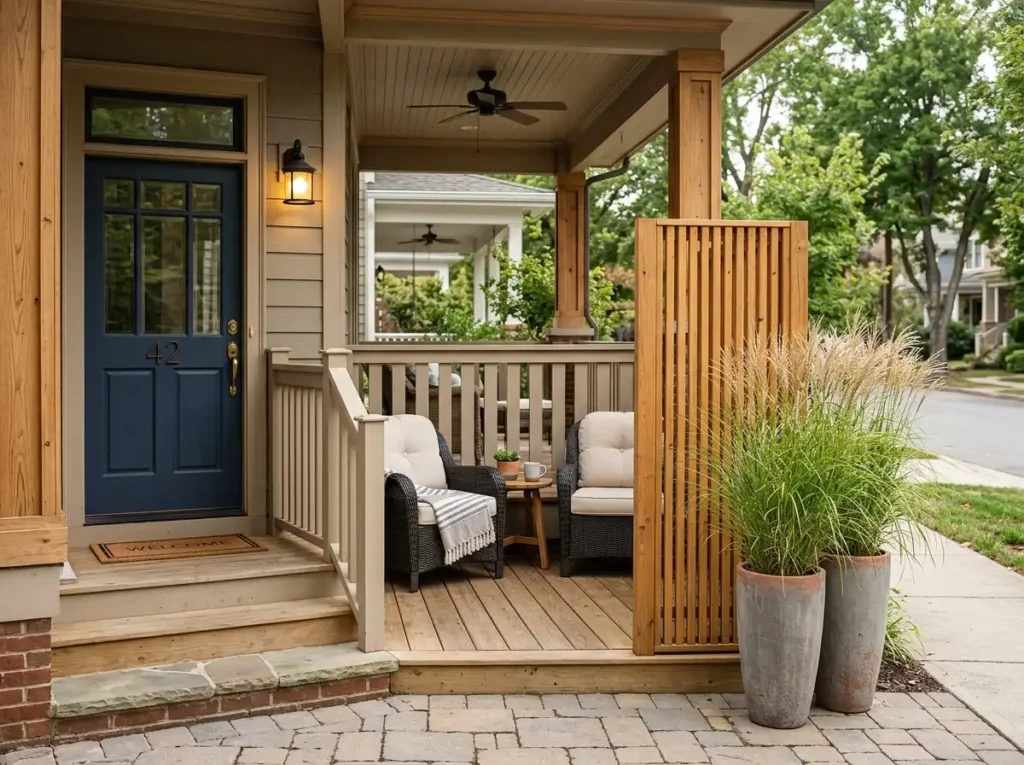
A porch facing a busy road or nearby home may feel too open. A little privacy can make the space more relaxing.
Tall potted grasses create a soft screen without closing the porch. Narrow wooden panels can block a direct view while still letting in light and air.
Outdoor curtains may work on a deep covered porch. Tie them back when you do not need them. This keeps the entrance bright and open.
A trellis with a climbing plant can also create privacy over time. Make sure the plant suits your climate and does not damage the siding.
Do not block the house number, porch light, steps, or front door. The entrance should still be easy to see and use.
Best for: Porches near sidewalks or neighboring homes
Budget: Low to high
Avoid: Creating a dark, closed entrance
The best cozy porches feel private enough for relaxing but still look welcoming from the street.
Use a Simple Two- or Three-Color Plan
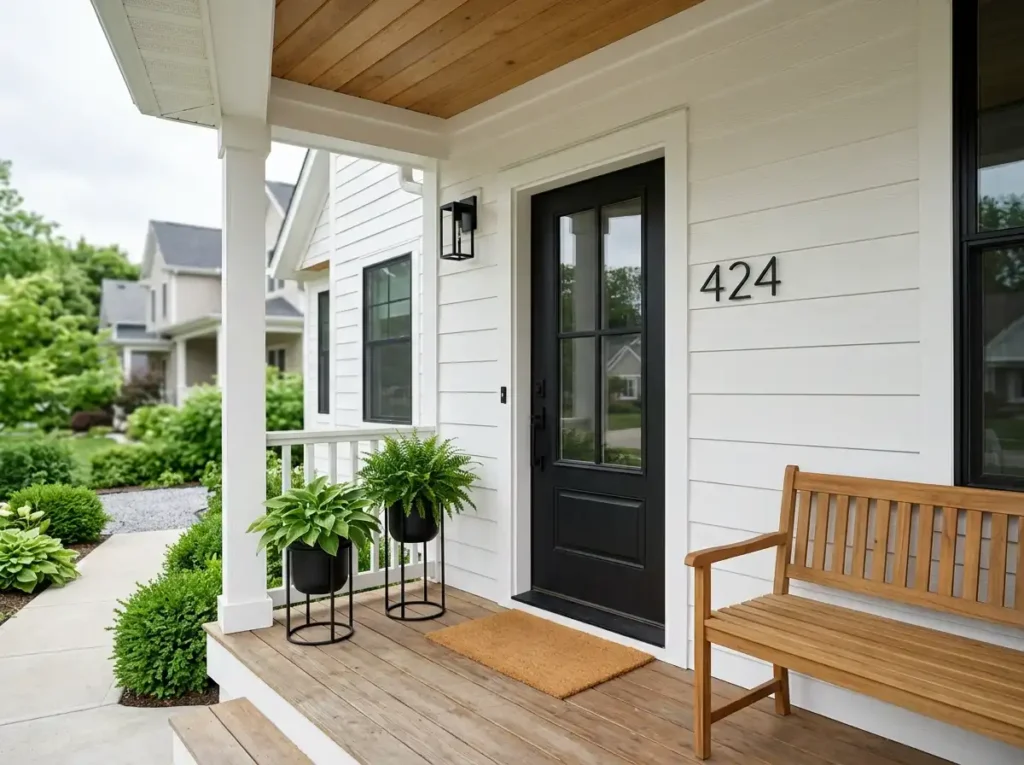
Start with colors that are already part of the house. Look at the siding, brick, roof, trim, and front door.
Choose one main color and one or two supporting colors. A white home may look clean with black fixtures and warm wood furniture. A gray home may work well with charcoal, cream, and green plants.
Repeat the same finish across several items. For example, use black on the porch light, house numbers, and planter stands.
Avoid adding a different color with every cushion, pot, and sign. Too many unrelated colors make even a large porch look cluttered.
Try these simple combinations:
- White, black, and warm wood
- Gray, charcoal, and green
- Brick, black metal, and natural wood
- Cream, bronze, and deep green
Best for: Modern, farmhouse, and updated traditional homes
Budget: Any
Avoid: Choosing colors without checking the fixed exterior materials
A clear color plan can make old and new items look like they belong together.
Replace Small House Numbers With a Bold Set
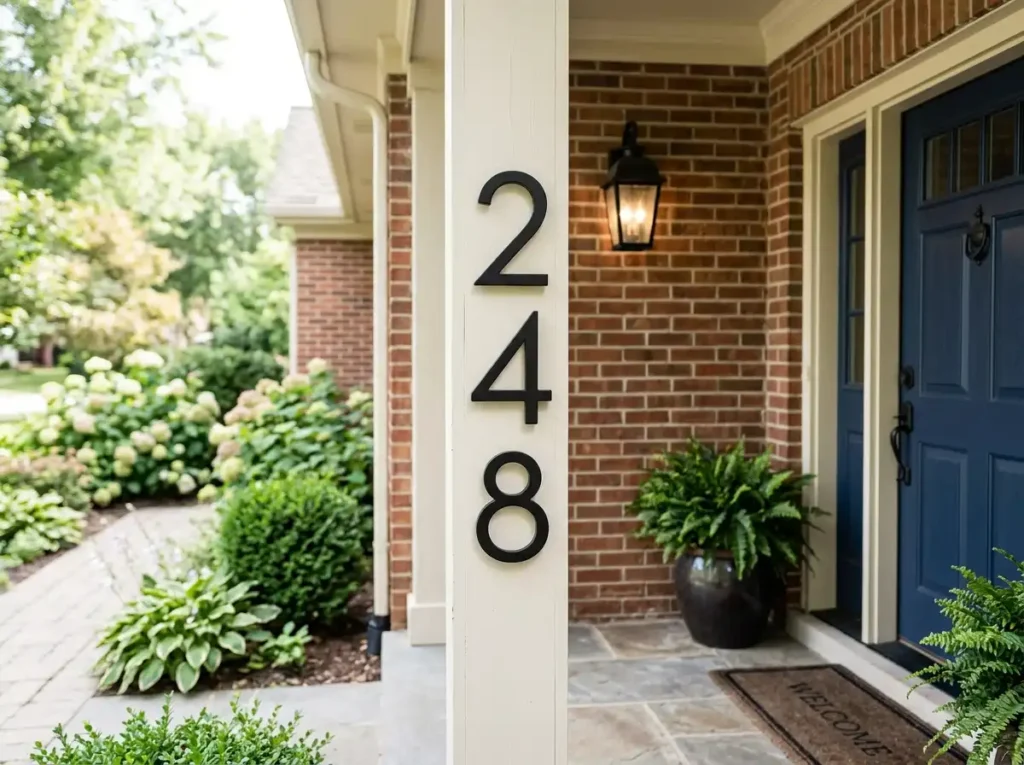
House numbers have a practical job, but they can also improve the look of the entrance.
Choose numbers that are easy to read from the street. The color should stand out against the wall. Matte black numbers often look clear on white siding, light brick, or pale stone.
Vertical numbers can fit well on a narrow column. A horizontal set may work better above a mailbox or beside a wide door.
Match the number finish to nearby lights or door hardware. This creates a simple link between the items.
Check local rules if your area has requirements for number size or placement. Emergency workers and delivery drivers should be able to find your home without trouble.
Best for: Dated or plain entrances
Budget: Low
Avoid: Small numbers with poor color contrast
This update takes little space, yet it can make the porch look sharper and easier to find.
Frame the Door With Matching Large Planters
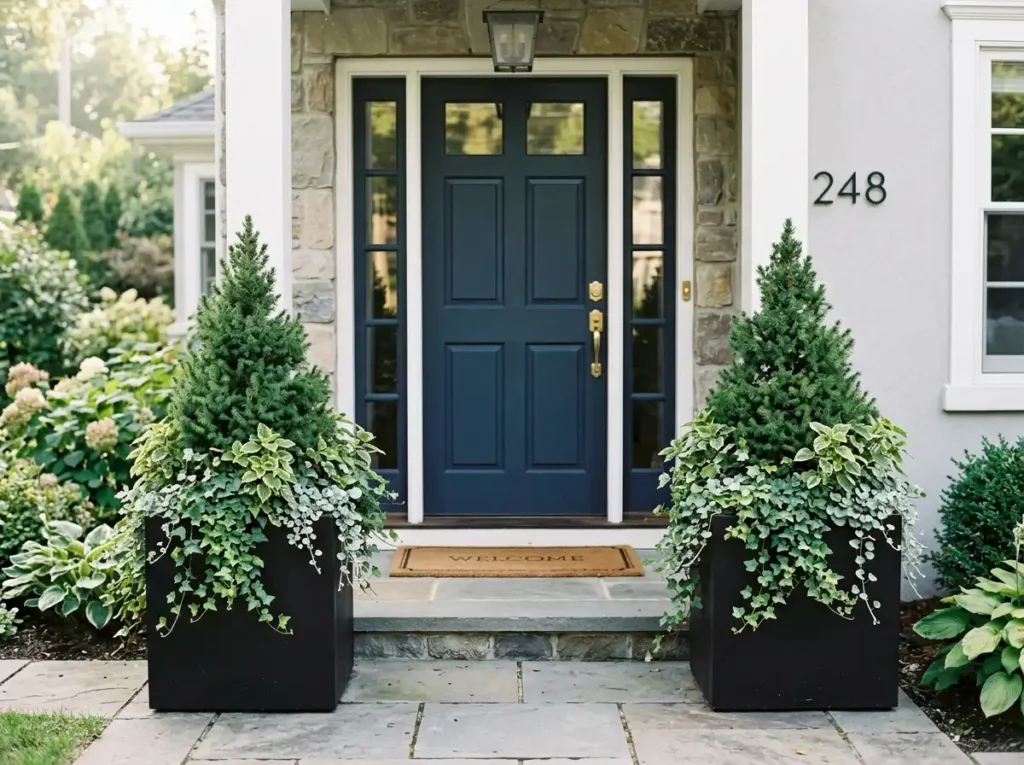
Small pots often get lost beside a full-size front door. Two larger planters can create a stronger and more balanced entrance.
Place one planter on each side when the porch is wide enough. If the space is narrow, use one planter near the handle side of the door.
Choose simple shapes for a modern porch. Square black pots, smooth concrete planters, and tall round containers can all work well.
Make sure the planter size fits the door and porch. It should add height without blocking the light, doorbell, or path.
Plant ideas include:
- Ferns for a shaded porch
- Ornamental grass for a sunny entrance
- A dwarf evergreen with trailing plants
- Seasonal flowers around a taller green plant
Best for: Wide doors and plain entrances
Budget: Medium
Avoid: Filling large pots with plants that need very different care
Larger planters often look cleaner than a group of small, mismatched pots.
Mix Warm Wood With Black Metal
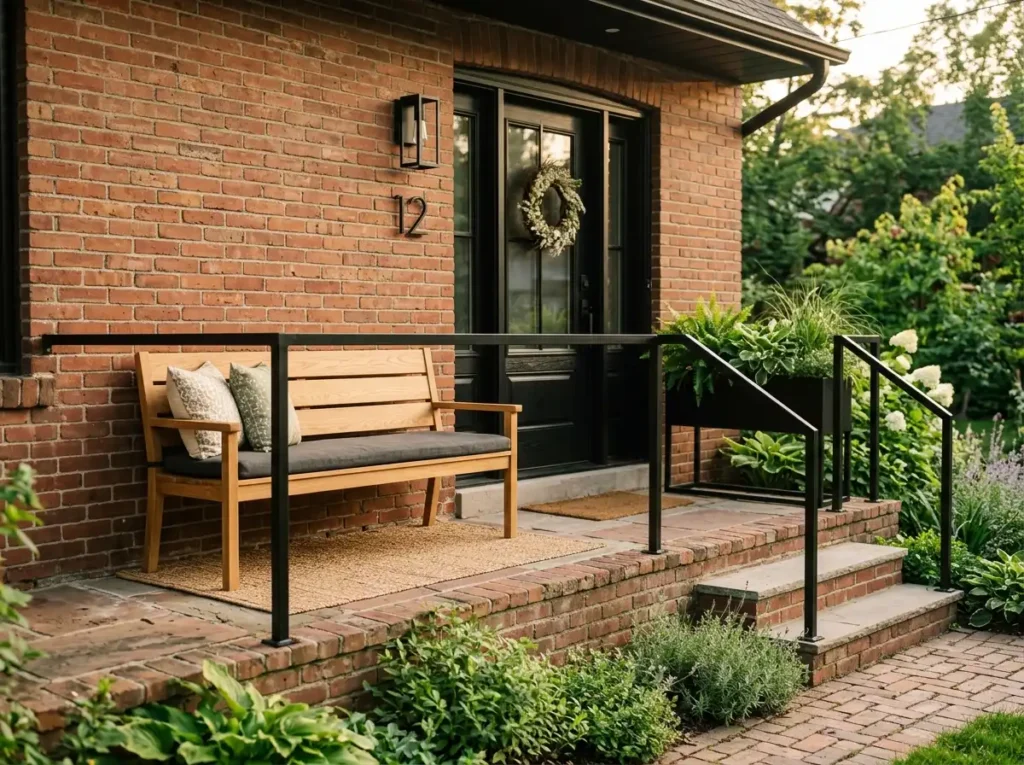
Wood and black metal create a clean look without making the porch feel cold.
Use natural wood on a bench, door, ceiling, or side table. Repeat black through railings, lights, planters, or house numbers.
This mix works well on brick homes because wood adds warmth while black creates a clear edge. It also suits modern farmhouse and simple cottage exteriors.
You do not need to replace every item. A wooden bench can work with existing black railings. New black wall lights can help an older wooden door feel more current.
Choose outdoor-safe wood or apply a protective finish. Check it each year for peeling, fading, or water damage.
Best for: Brick, farmhouse, and modern homes
Budget: Medium
Avoid: Using many different wood stains in one small area
A modern porch feels finished when colors and materials repeat instead of fighting for attention.
Paint the Front Door a Fresh Color
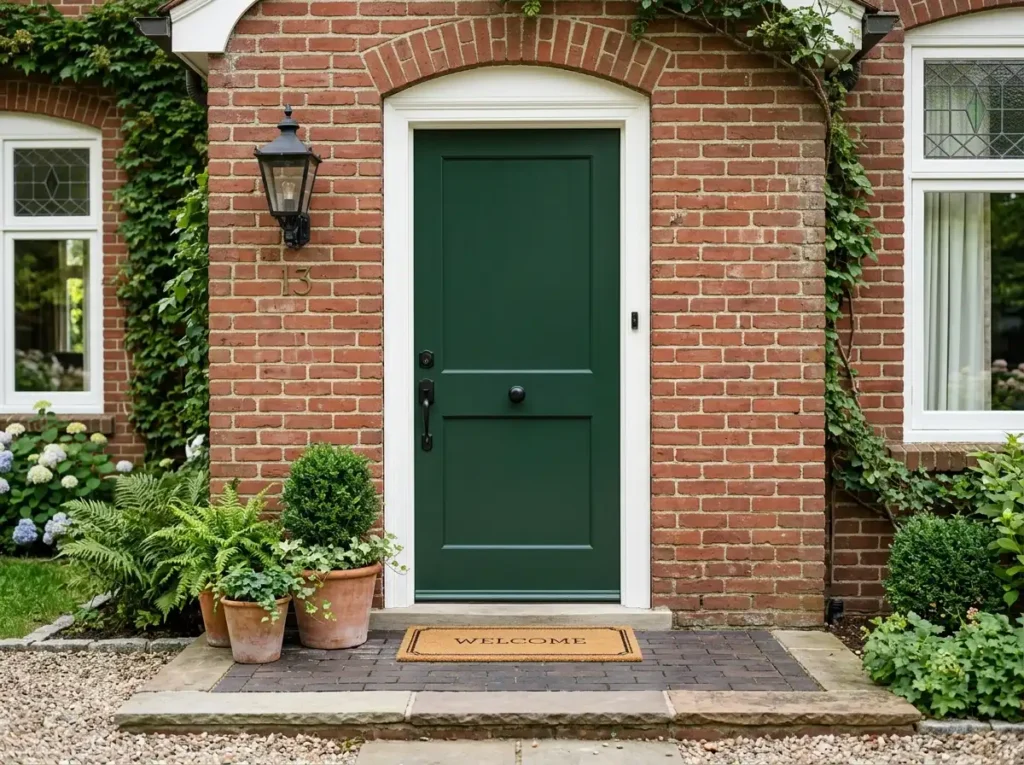
The front door is one of the largest color blocks on the porch. Changing it can update the whole entrance.
Choose a color that works with the siding, brick, trim, and roof. Test a small painted sample before covering the door. Color can look very different in shade and direct sun.
Prepare the surface before painting. Clean the door, remove loose paint, sand rough areas, and use the right primer when needed. Choose an exterior paint made for the door material.
Use this guide as a starting point:
| Home Exterior | Door Colors to Consider |
| White siding | Navy, black, red, or green |
| Red brick | Black, deep green, or warm brown |
| Gray siding | Blue, yellow, white, or charcoal |
| Beige siding | Dark brown, green, or muted blue |
A new handle or knocker can finish the update when the budget allows.
Best for: Plain or faded entrances
Budget: Low
Avoid: Choosing a color from a small phone screen alone
Paint is affordable, but the result depends on good prep work.
Clean and Update Old Porch Furniture
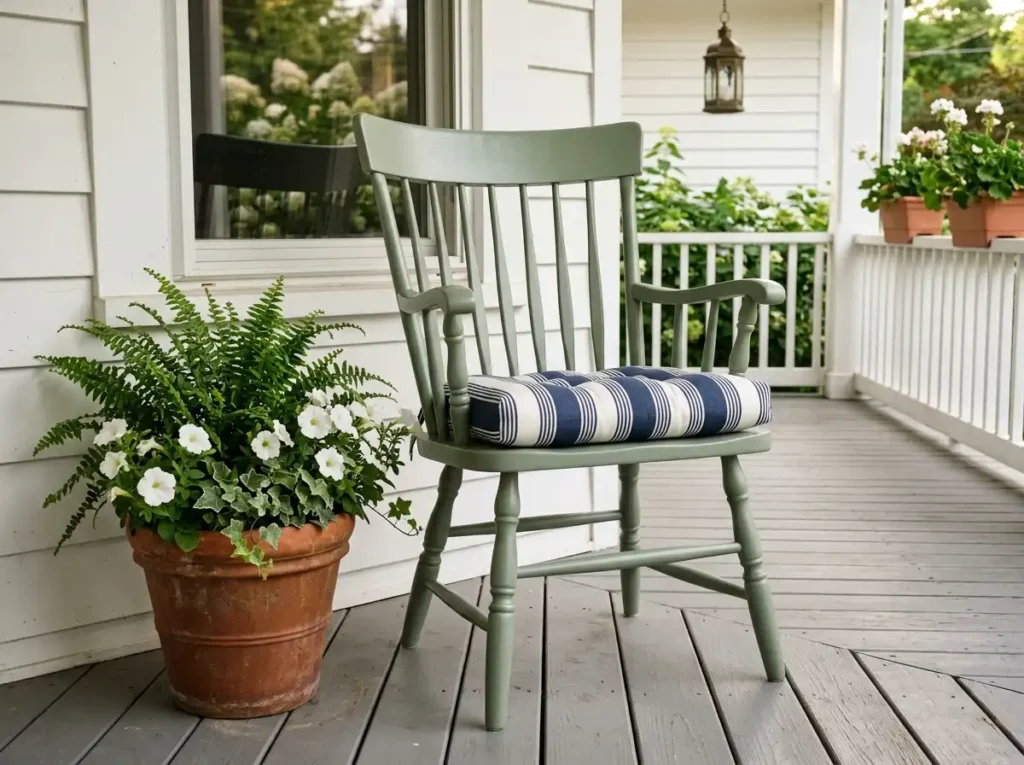
Old furniture may still have years of use left. Dirt, faded paint, and worn cushions can make it look worse than it is.
Start with a deep clean. Tighten loose screws and check for cracks, rust, or rotten wood. Do not reuse furniture that feels weak or unsafe.
Sand peeling paint before adding a new finish. Use paint or sealant made for outdoor furniture.
Replace worn cushions with simple outdoor covers. You can also add one small pillow to connect the furniture color with the front door or planters.
An old wooden chair can become a useful porch accent after cleaning, paint, and a new seat cushion.
Best for: Low-cost porch makeovers
Budget: Low
Avoid: Painting over dirt, rust, or loose paint
Reusing one solid chair is often better than buying a cheap set that may not last.
Create a Decor Base You Can Use All Year
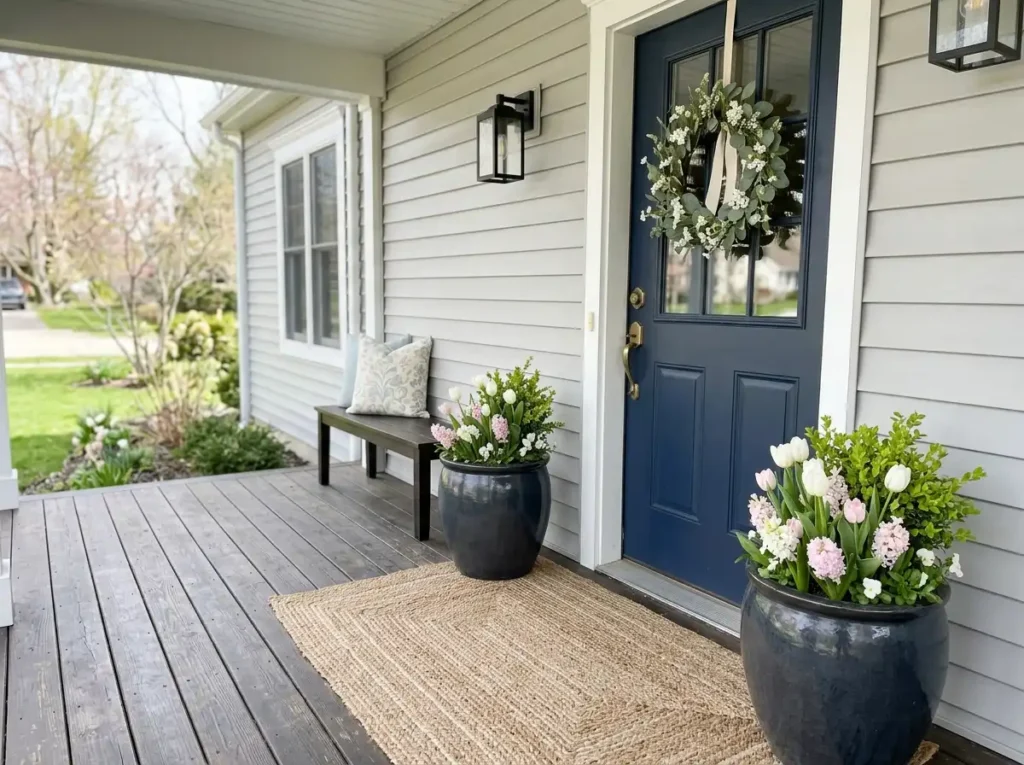
Changing every porch item each season costs money and creates extra storage problems. A simple year-round base makes seasonal decorating easier.
Keep the main planters, rug, furniture, and lighting in place. Change smaller items such as flowers, wreaths, ribbons, and cushion covers.
Here is one simple plan:
- Spring: Add bulbs, soft colors, and a light wreath.
- Summer: Use green plants and bright outdoor cushions.
- Fall: Add mums, pumpkins, and warm fabric shades.
- Winter: Use evergreen branches and soft outdoor lights.
Choose storage-friendly decor. Flat wreaths, cushion covers, and small signs take up less room than large seasonal figures.
Natural items can also save money. Pine branches, simple pumpkins, and dried stems can add color without filling the porch.
Best for: Homeowners who enjoy seasonal changes
Budget: Low to medium
Avoid: Replacing the full porch setup four times a year
A fixed base keeps the porch consistent while small changes make it feel fresh.
Improve the Entrance With Warm Outdoor Lighting
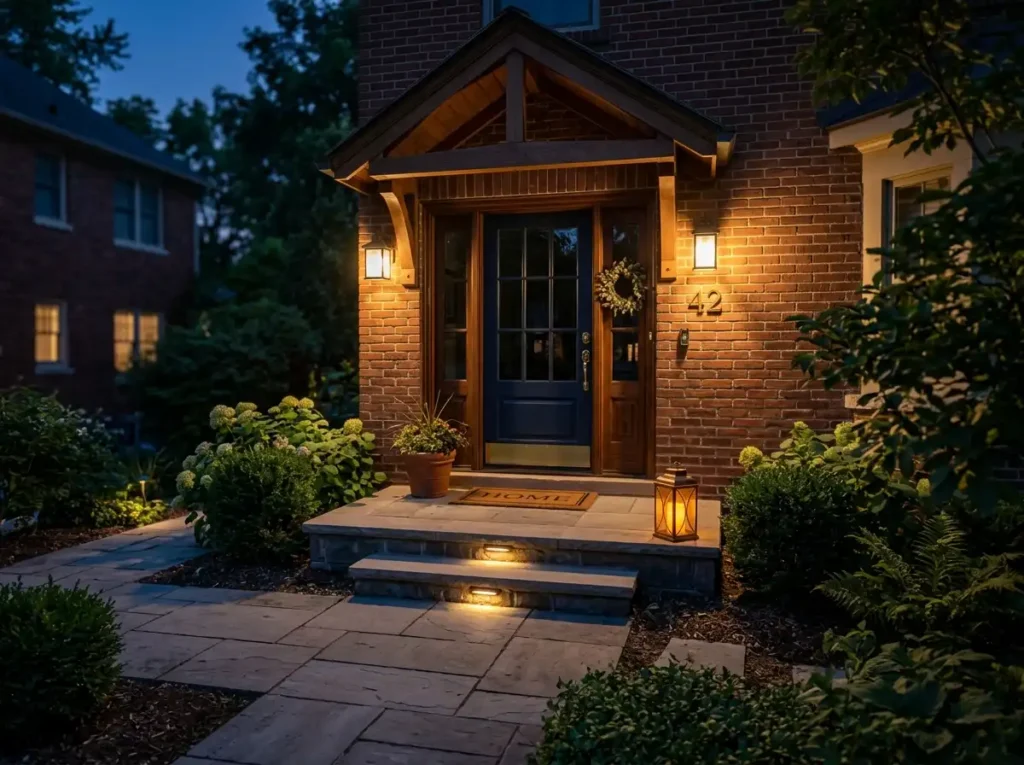
Good lighting makes the porch safer and more welcoming. It can also help guests find the steps, doorbell, and house number.
Replace dated wall lights with a size that fits the entrance. A tiny light may look lost beside a tall door. A very large light can overpower a narrow porch.
Use outdoor-rated bulbs and fixtures. Warm light often feels more inviting than a harsh, bright white light.
Solar lanterns can add soft light without new wiring. Step lights may help on dark stairs. Place them where they light the path without shining into windows or nearby homes.
Electrical work can be dangerous. Hire a licensed electrician when you need new wiring or are unsure about an existing fixture.
Best for: Dark entrances and porch steps
Budget: Low to high
Avoid: Using indoor lights outside
Paint, lighting, and reused furniture often make a bigger difference than a full set of new decorations.
How to Choose the Right Front Porch Ideas for Your Home
A porch idea may look great in a photo but still fail on your home. The size, weather, light, and house style all affect the final result.
Start with the porch condition. Is it empty, crowded, dark, or too open? Choose an idea that fixes that issue first.
A shaded brick porch may suit ferns, warm wood, and classic lanterns. A sunny modern porch may work better with black planters, simple furniture, and ornamental grasses.
Think about care as well. White cushions may need frequent cleaning. Real plants need water. Wood furniture may need a fresh finish after a few seasons.
Use this guide to find your first update:
| Porch Condition | Best Place to Start |
| Empty and plain | Door color and planters |
| Small and crowded | Remove items and use wall decor |
| Dark at night | Improve porch and step lighting |
| Large but unused | Add a clear seating zone |
| Open to neighbors | Add tall plants or a partial screen |
| Old-fashioned | Update lights, numbers, and hardware |
Do not try to fix every issue in one weekend. Choose the two changes that will have the biggest effect.
For example, clean the porch and paint the door first. Add plants or furniture after you see how the new color changes the entrance.
Start With One Change That Solves a Real Problem
A successful porch does not need expensive furniture or a large collection of decor. It needs a clear path, useful items, and colors that work with the home.
Measure the space before you buy anything. Choose furniture that fits. Use plants that suit the light. Repeat a few colors and materials so the entrance feels connected.
Start with one of these front porch ideas instead of changing everything at once. A fresh door color, two balanced planters, or better lighting may be enough to make the whole entrance feel warmer and more complete.