18 Tropical Garden Design Ideas for a Lush Backyard
A plain backyard can feel hot, exposed, and uninviting. You may have enough space, yet the area still lacks privacy, shade, and life. Adding random plants rarely fixes the problem. In fact, it can leave the yard looking crowded and hard to maintain.
You do not need a huge garden or year-round tropical weather to create a lush outdoor escape. You need the right mix of bold leaves, layered planting, natural materials, and useful features.
These tropical garden design ideas will help you plan a yard that looks full without feeling messy. You will learn how to choose tropical garden plants, build privacy, soften paths, add water, and create a comfortable seating area.
There are also options for patios, courtyards, pool areas, and cooler climates. Start with the ideas that solve your biggest problems. You can add more features over time as your plants grow and your budget allows.
Plan Your Tropical Garden Before You Buy Plants
A small plant at the nursery can become much larger than expected. If you ignore its mature size, it may block a path, cover a window, or crowd nearby plants.
Start by measuring your garden. Mark doors, windows, drains, paths, storage areas, and anything else that needs to remain accessible.
Next, check how sunlight moves across the space. Some areas may receive strong afternoon sun. Others may stay shaded for most of the day. Also look for places where rainwater collects.
Decide what you want the garden to do. You may need privacy from nearby homes. You may want a shaded place to sit. Perhaps you want to improve the view from your living room.
Use three plant levels when planning your tropical garden layout:
- Upper level: Palms, bananas, small trees, or tall screening plants
- Middle level: Canna, ginger, hibiscus, fatsia, or bird of paradise
- Lower level: Ferns, coleus, caladiums, bromeliads, or ground covers
Draw a simple plan before shopping. It does not need to look perfect. It only needs to show where plants, paths, seating, and garden features will go.
Build Layers to Make Your Garden Look Fuller
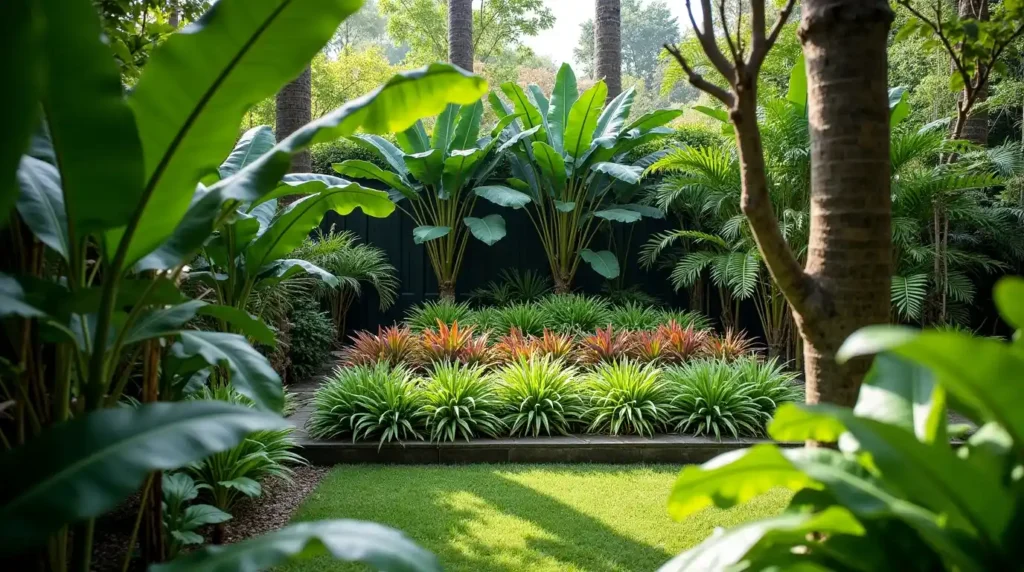
Layered planting is one of the easiest ways to create a lush garden design. It adds depth and helps a new garden look more established.
Place the tallest plants near a fence, wall, or back border. Use medium plants in front to hide bare trunks and stems. Finish with ferns, ground covers, and smaller foliage near the edge.
You could place a hardy banana at the back, a group of cannas in the middle, and ferns along the front. This creates three clear levels without using too many plant types.
Avoid placing one plant of every variety around the garden. That often creates a broken, untidy look. Instead, repeat three to five plant types in small groups.
Leave enough space between young plants. Empty gaps may look strange at first, but they give each plant room to grow.
Simple planting formula: One tall plant, two medium plants, and three low-growing plants.
Use One Large-Leaved Plant as a Focal Point
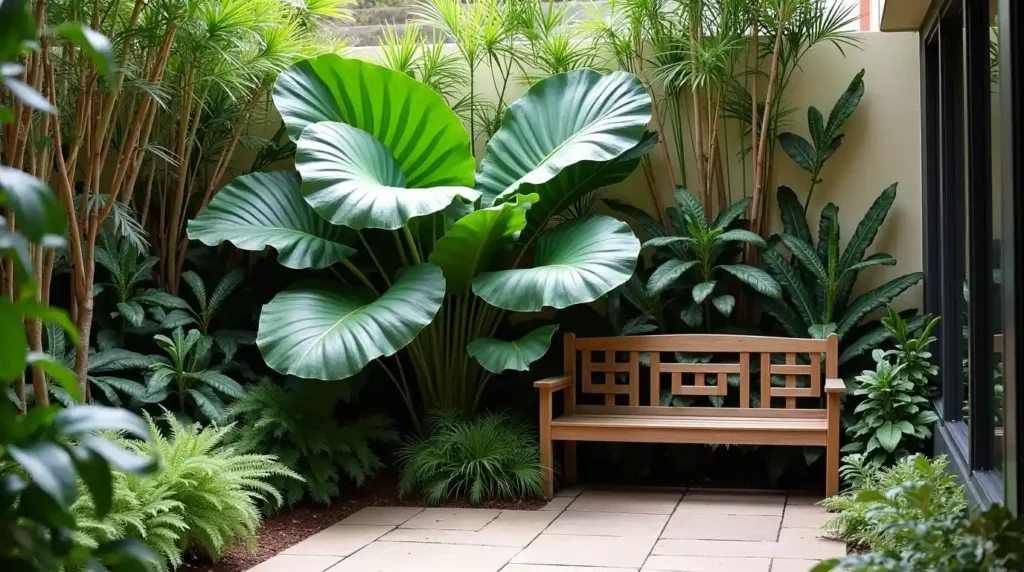
One dramatic plant can create more impact than ten small plants.
Large leaves quickly give a yard a tropical feel. Plants such as elephant ears, bananas, cannas, fatsia, and bird of paradise can act as living garden art.
Place your focal plant where you can see it from a patio, window, entrance, or garden seat. It should draw your eye without blocking the whole view.
Do not fill a small yard with oversized leaves. Too many large plants can make the garden feel cramped. Balance broad leaves with fine ferns, grasses, or narrow palm leaves.
A large elephant ear beside a simple bench may be enough to change the whole space. Add low plants around its base to help it blend into the garden.
Check the mature height, width, cold tolerance, and safety of each plant before buying it. Some exotic garden plants may need winter care or may not suit homes with pets.
Add Privacy Without Building a Solid Green Wall
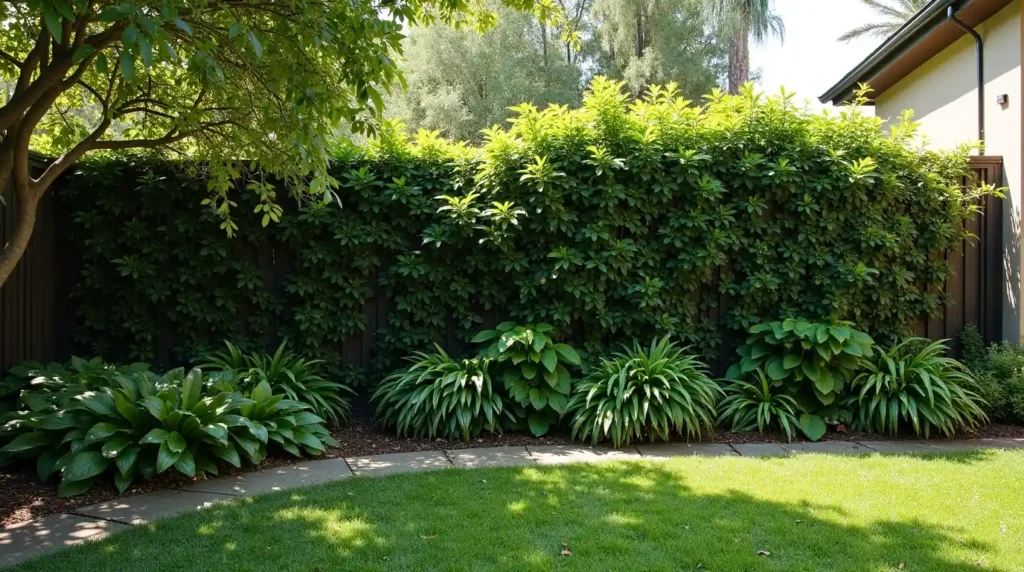
A tropical privacy garden should block unwanted views while still allowing light and air to move through the yard.
Start by finding the exact places where privacy is needed. It may be one upstairs window, a nearby road, or a seating area next door. You may not need to screen the whole property.
Use plants at different heights instead of relying on one flat hedge. Place tall structural plants at the back. Add evergreen shrubs in front. Finish with broad-leaved plants near ground level.
Palms, suitable evergreen shrubs, climbing plants, and some types of clumping bamboo may provide screening. Always check local advice before planting bamboo because some types spread fast.
A trellis can also support jasmine, passionflower, or another locally suitable vine. This works well in a narrow yard where ground space is limited.
Keep plants far enough from fences, pipes, roofs, and neighboring property. Good tropical landscape design plans for mature growth from the start.
Add Bright Flowers Without Creating Color Clutter
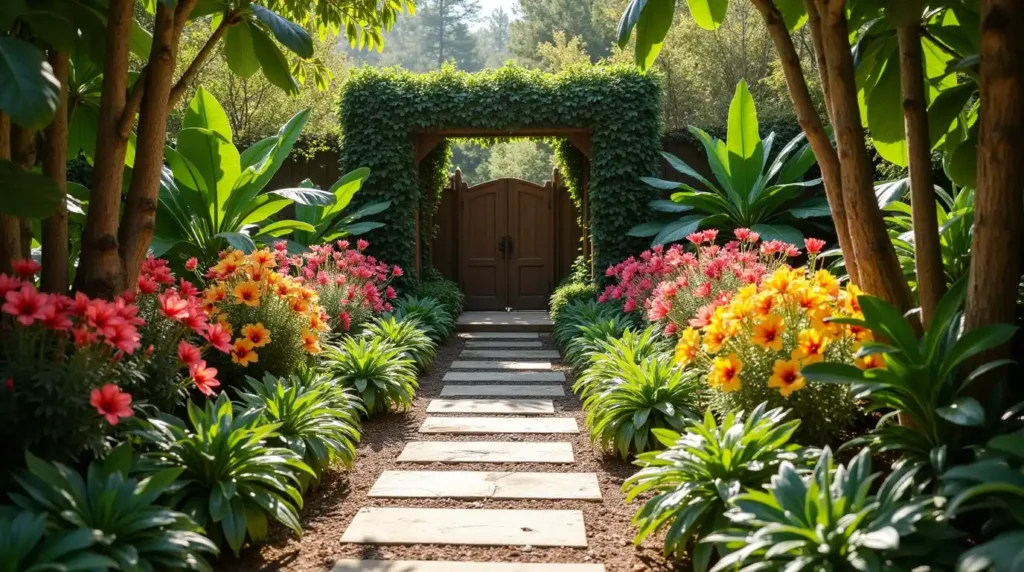
Tropical flowers bring energy to a garden, but strong color needs control.
Let green foliage remain the main part of the design. Then choose two or three flower colors. Repeat those shades around the yard.
A warm palette could include coral, yellow, and deep pink. A softer plan may use white, pale pink, and purple. Pick colors that work with your home, outdoor furniture, and containers.
Hibiscus, canna, ginger, bougainvillea, begonias, impatiens, and bird of paradise may suit different climates and light levels. Check local growing needs before choosing them.
Place flowering plants where you will notice them most. Good locations include entrances, patio edges, water features, and the end of a path.
Try to plan for more than one flowering season. When one plant stops blooming, another can take its place.
Repeat one main flower color in at least three spots. This makes the tropical flower garden feel planned rather than random.
Soften Hard Paths With Lush Border Plants
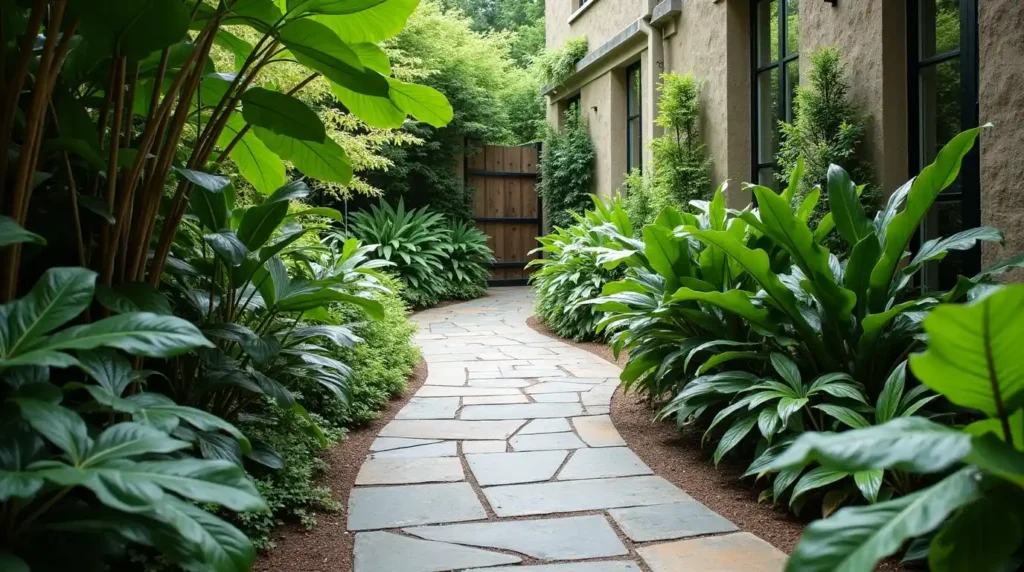
A bare path can feel separate from the rest of the garden. Soft planting along its edges helps it blend into the landscape.
Use low ferns, caladiums, coleus, small gingers, or spreading ground covers beside the walkway. Let a few soft leaves lean over the edge, but keep the main walking area clear.
Repeat the same plant every few feet. This guides the eye and gives the path a calm rhythm.
Avoid placing thorny plants, stiff leaves, or toxic plants beside a narrow route. This is important in homes with children, pets, or older visitors.
You could pair ferns with caladiums in shade. In a sunnier spot, try cannas with a soft ground cover. Compact palms can also frame a wider path.
Keep small plants near the walkway and taller plants farther back. This makes the path feel open while still giving you a lush border.
Trim plants before they block the route. A tropical garden path should feel inviting, not difficult to use.
Use One Gentle Curve to Make a Small Yard Feel Deeper
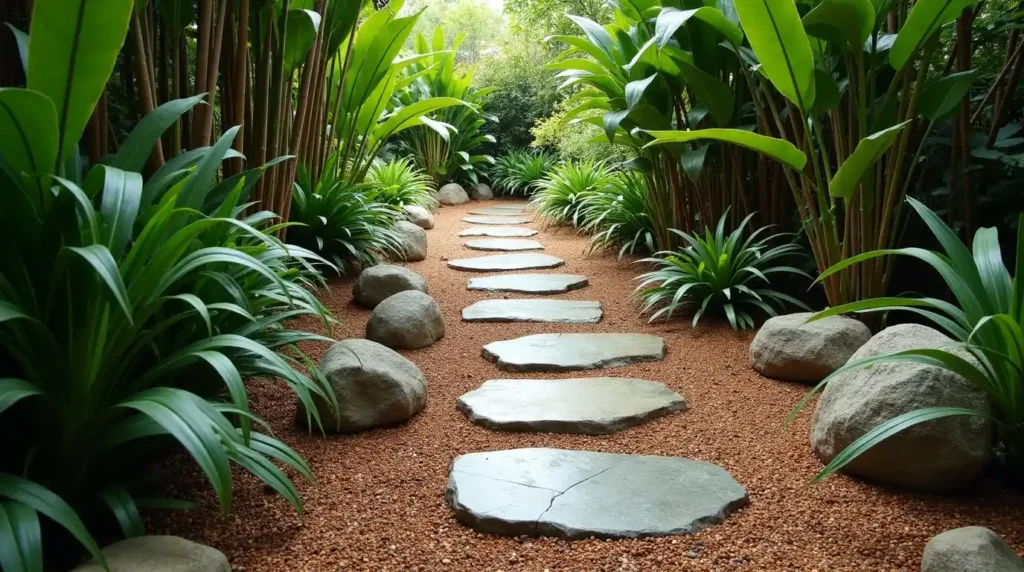
A straight path shows the whole garden at once. A curved path hides part of the view, which can make the space feel larger.
Lead the curve to something useful or attractive. This could be a seat, water bowl, sculpture, hidden planting area, or back gate.
Use plants to partly hide the destination. The reader should see enough to feel interested, but not the whole feature at once.
Choose a surface that stays safe in wet weather. Textured stone, brick, gravel with firm edging, stepping stones, and permeable paving can work well.
Avoid adding several sharp bends to a small yard. The route may look forced and become awkward to walk through. One wide curve is often enough.
Before installing the path, place a hose or rope on the ground. Walk along the planned route several times. Adjust the curve until it feels natural.
A clear destination and a gentle bend will create a more useful jungle-style garden than a path that twists without purpose.
Add a Small Water Feature Near the Seating Area
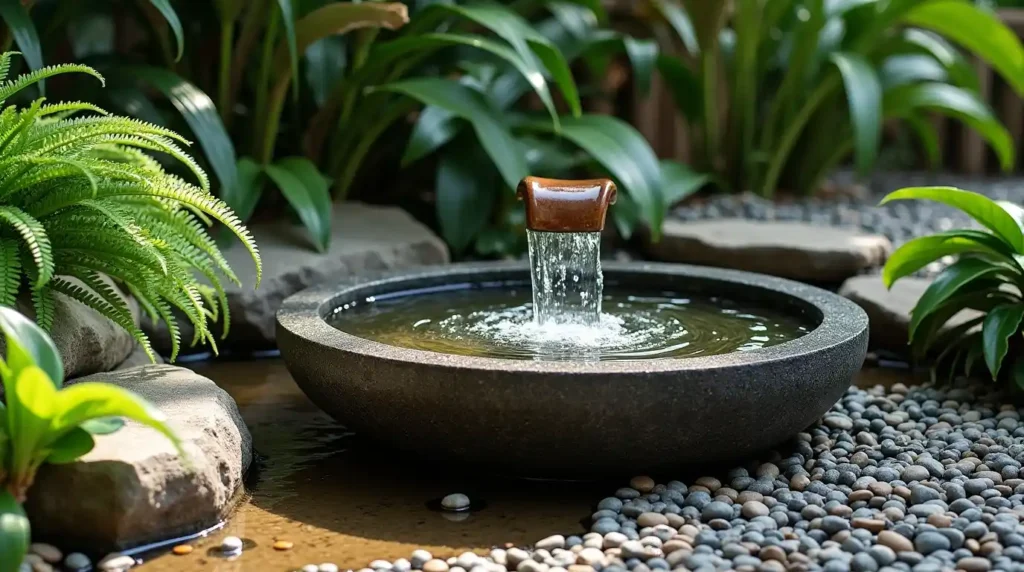
You do not need a large pond to enjoy the sound and movement of water.
A glazed bowl, recirculating urn, wall fountain, or small pond can create a calm focal point. Place it near the seating area so you can hear it while you relax.
Match the feature to the size of the garden. A large waterfall may overwhelm a courtyard. A small water bowl may disappear in a wide backyard.
Surround the feature with stones, ferns, and plants that enjoy slightly damp conditions. Keep access open so you can clean the pump and remove fallen leaves.
Think about water use, electrical safety, and mosquito control. Moving water is often easier to manage than still water, but every feature needs regular care.
Homes with young children may need extra safety steps. Check local rules before adding a pond or deep container.
For a simple small tropical garden design, start with a recirculating urn. It provides sound without taking up much room.
Limit Your Garden to Two or Three Main Materials
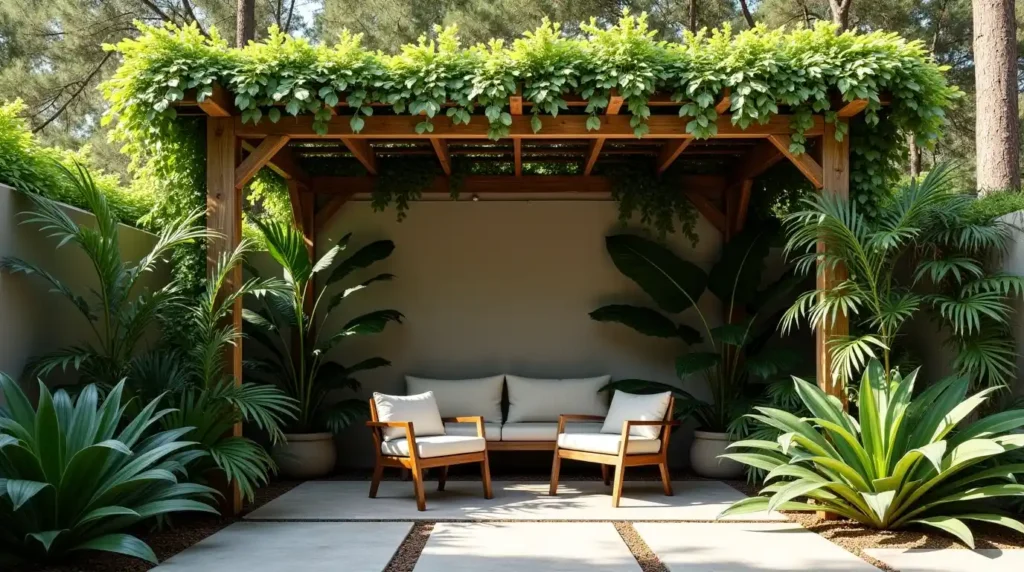
Too many paving, edging, and container styles can make a small tropical garden feel cluttered.
Choose one main material and one or two supporting materials. Repeat them in paths, planters, steps, borders, or seating areas.
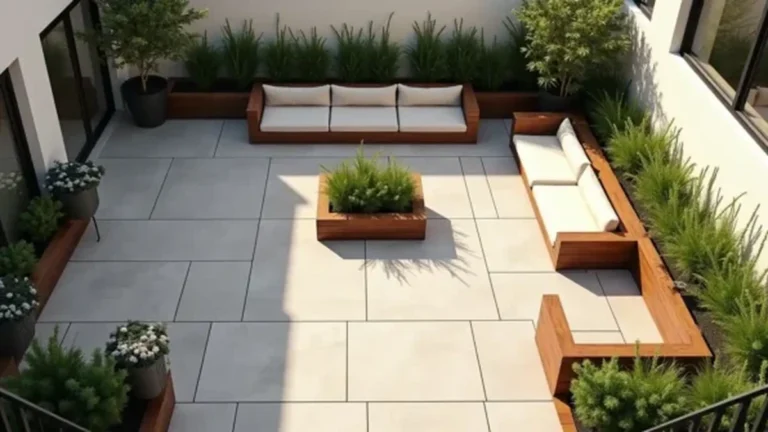
Natural stone works well with dark timber. Warm paving pairs nicely with terracotta. Pale gravel can brighten a shaded garden. Black containers can give large green leaves a clean, modern background.
Use materials that can handle rain, sun, and humidity. Untreated wood may rot quickly in damp conditions. Smooth stone can become slippery.
Here are three simple style options:
- Modern tropical: Black planters, dark fencing, and large stone pavers
- Rustic tropical: Weathered timber, gravel, and handmade clay pots
- Resort-style: Pale stone, warm wood, and simple outdoor furniture
Repeat your chosen materials across the yard. This makes separate areas feel like parts of one design.
The best tropical landscaping ideas often use fewer materials with more care.
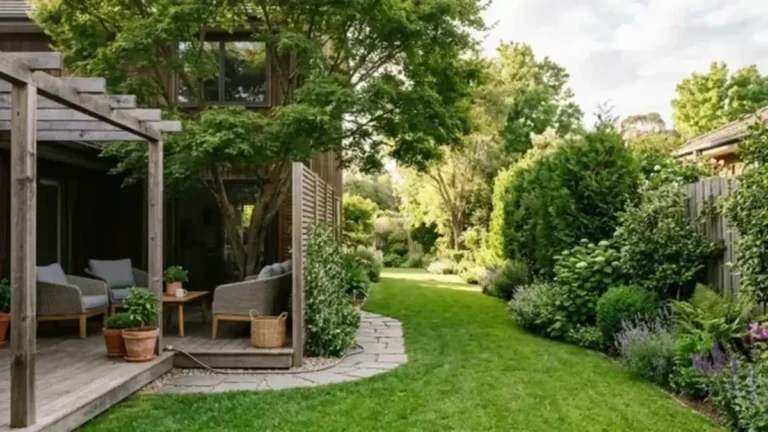
Create a Shaded Seating Area You Will Use
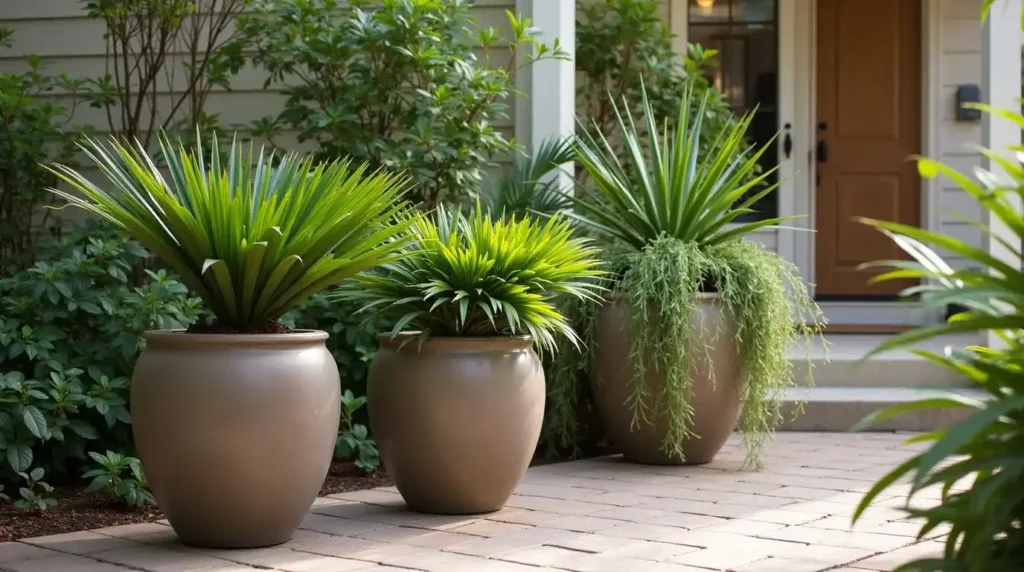
A beautiful garden has little value if it is too hot to enjoy.
Watch the space at different times of day before placing furniture. A location that feels cool in the morning may receive strong afternoon sun.
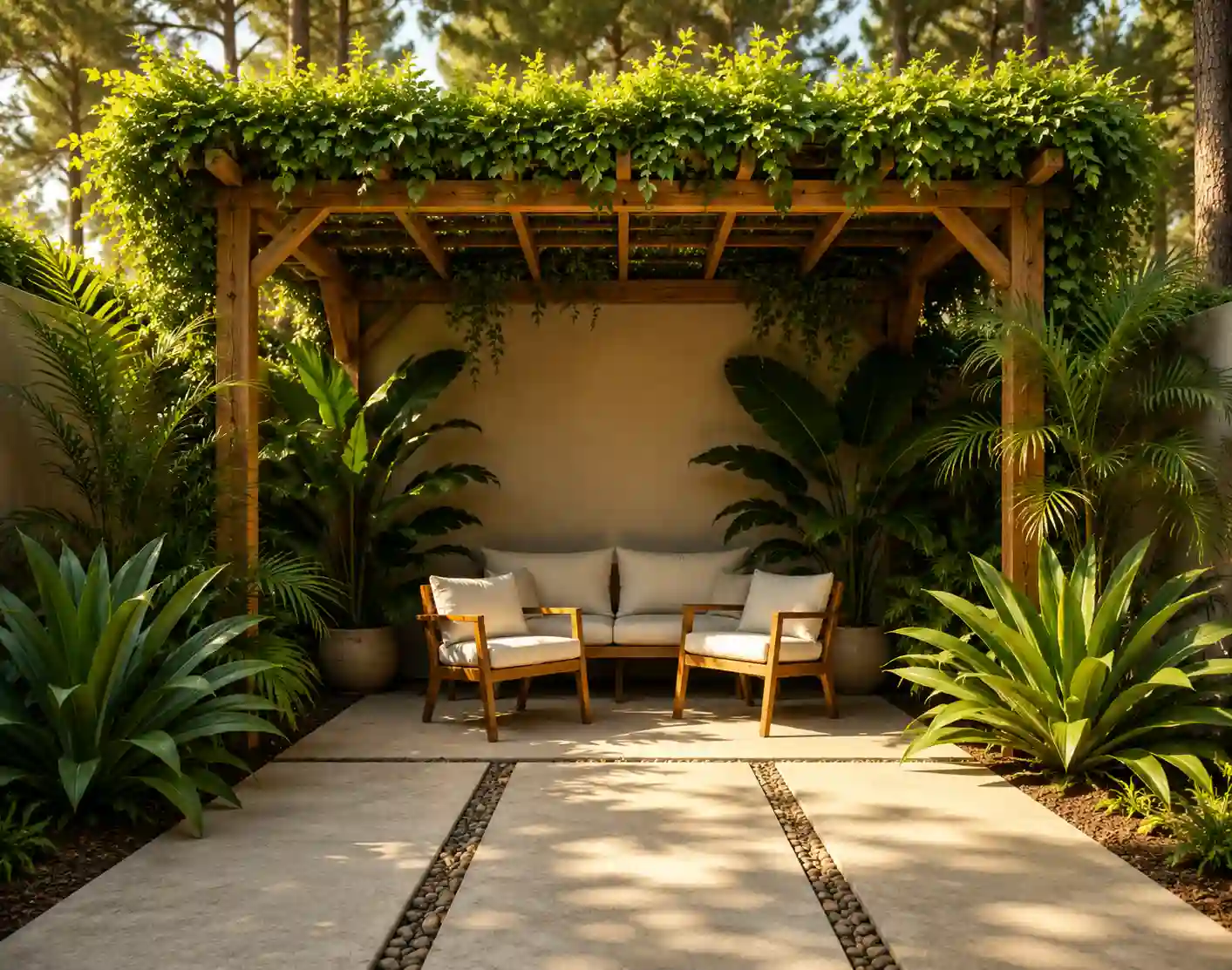
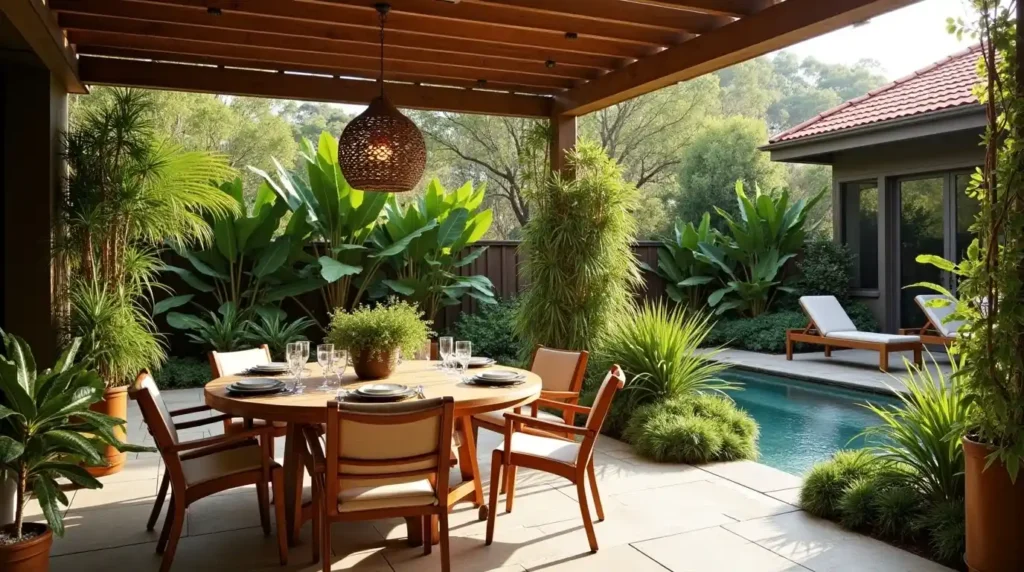
Add shade with a pergola, umbrella, shade sail, covered patio, small tree, or vine-covered frame. Make sure the area still receives enough airflow.
Place tall plants behind the seating area to create privacy. Use lower plants in front so the space feels enclosed without blocking the view.
Choose furniture that can handle moisture and falling leaves. Keep the floor level, firm, and easy to clean. Add a small table for drinks, books, or garden tools.
For two people, a bench or two compact chairs may be enough. A family area may need a small table and chairs under a larger cover.
Sit in the planned spot before building anything. Check the heat, privacy, noise, and view. Comfort should guide the final choice.
Use Climbing Plants When Ground Space Is Limited
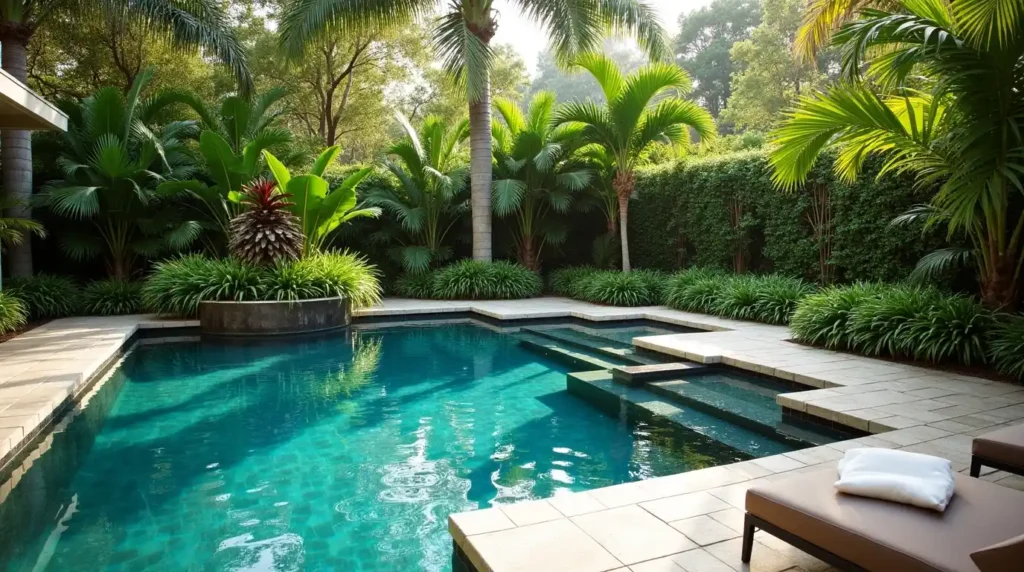
Climbing plants add height and greenery without using much floor space.
Grow them over a pergola, trellis, fence panel, or strong metal frame. This can provide shade, privacy, flowers, and a softer view of hard walls.
Jasmine, passionflower, mandevilla, bougainvillea, and climbing fig may work in different settings. Their needs vary, so match the plant to your climate and sunlight.
Check how large and heavy the mature vine will become. A light trellis may not support a thick, woody climber. Fast-growing plants also need regular trimming.
Keep strong vines away from roof tiles, gutters, windows, and weak fences. Make sure you can reach the plant for pruning.
Some climbing plants can spread beyond the garden. Check local invasive plant lists before planting.
For a small tropical garden design, use one climber to cover a plain wall. Add two large containers at its base to create a full vertical garden.
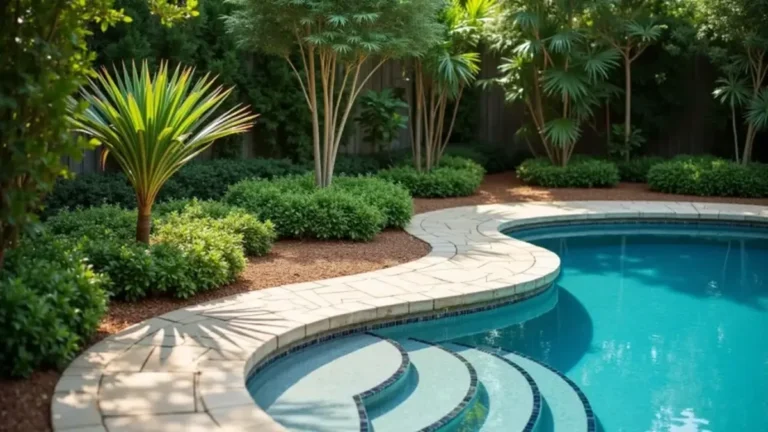
Choose Clean, Safe Plants Around a Pool
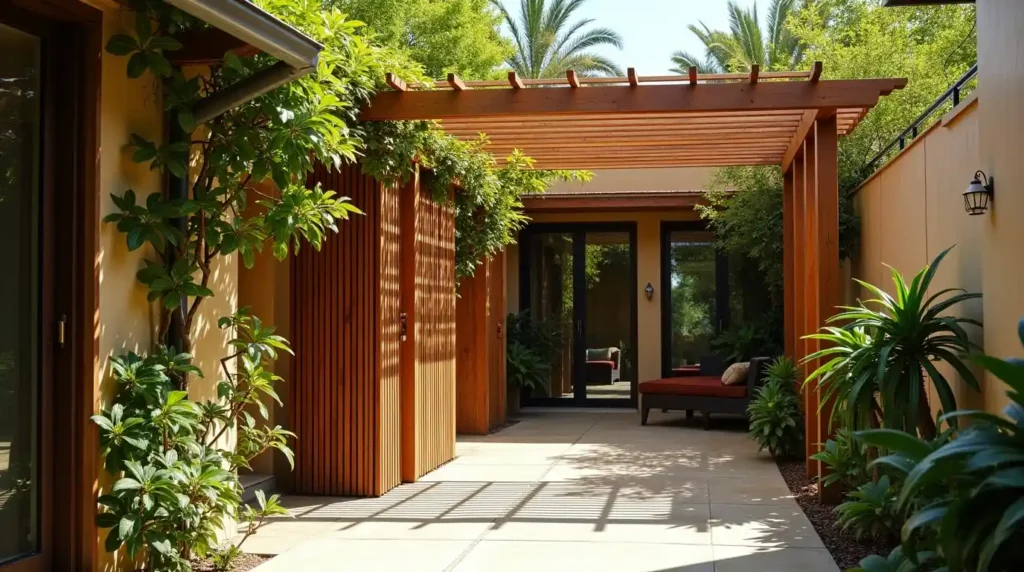
Poolside tropical plants need to look good without creating constant cleaning work.
Avoid plants that drop large amounts of fruit, flowers, seeds, or dry leaves. Keep thorny plants and sharp leaves away from walking areas.
Choose plants with roots that are less likely to damage paving or pool structures. Leave enough space between mature plants and the edge of the pool.
Use slip-resistant paving in all wet areas. Do not allow low branches to block the view of children or swimmers.
Useful tropical pool landscaping features include:
- Upright palms or large foliage plants
- Low ground covers
- Large containers
- A privacy screen
- An outdoor shower
- A shaded bench
- Soft evening lights
Repeated plants often look cleaner than a wide mix of species. For example, several matching palms or pots can create a calm resort-style effect.
Check local pool safety rules before changing fences, gates, planting, or sightlines.
Use Three Large Pots to Transform a Small Patio
You can create a tropical container garden even when you cannot plant in the ground.
Use fewer, larger pots instead of many small containers. Large pots hold more soil, dry out more slowly, and create a stronger visual effect.
Try this three-pot plan:
- Add one tall plant, such as a banana or compact palm.
- Add one medium flowering plant, such as canna or hibiscus.
- Add one low foliage plant, such as a fern or coleus.
Place the tallest pot at the back. Move the medium pot slightly forward. Use the low plant to soften the base.
Make sure every container has drainage holes. Group plants with similar watering needs so care is easier.
Heavy pots can be difficult to move. Use wheeled stands if tender plants must go indoors during winter.
Check pots often during hot weather. Container plants can dry out faster than plants growing in the ground.
This is one of the easiest tropical garden ideas for small spaces and rental homes.
Use Raised Beds to Fix Poor Drainage
Tropical-looking plants often enjoy moist soil, but many will struggle when their roots stay in standing water.
Check the garden after heavy rain. If water remains for many hours, the area may need better drainage.
Raised beds lift plant roots above wet ground. They also create clear planting zones and can make a flat yard feel more structured.
You can build beds with stone, brick, finished concrete blocks, durable timber, or metal edging. Do not pile soil against a house wall, fence, or untreated wood.
Add organic matter based on the needs of your chosen plants. Do not use the same soil mix for every species.
Cover the surface with organic mulch. Mulch helps slow water loss and keeps soil temperature more stable. Keep it away from plant stems to reduce rot.
Moisture-retentive soil feels damp but still contains air. Waterlogged soil stays heavy and may smell unpleasant.
Test the finished bed with water before planting expensive tropical garden plants.
Light One Plant, One Path, and One Seating Area
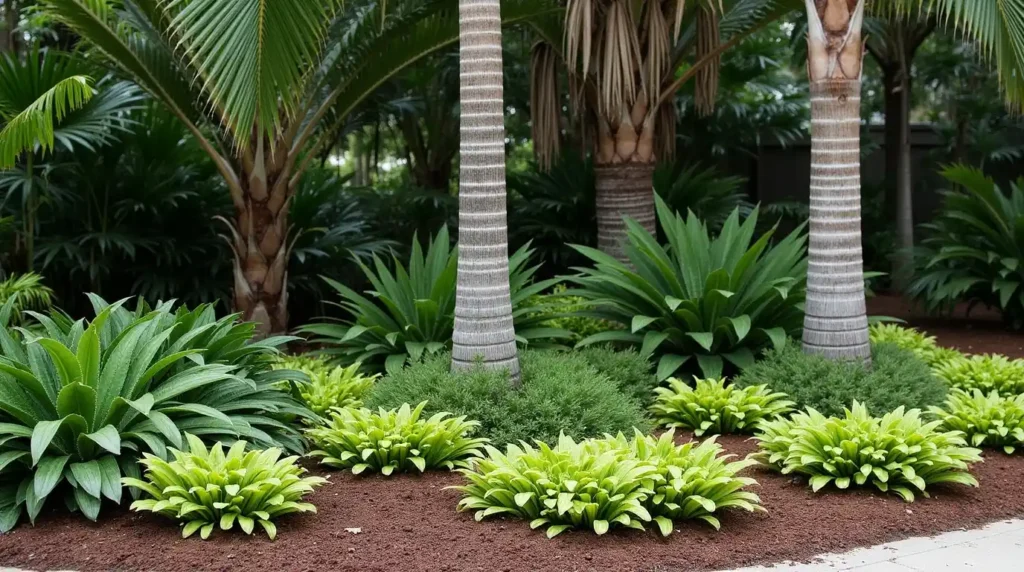
Garden lighting should help you move safely and enjoy the plants after dark.
Avoid lighting every tree and border. Too much light can make the garden feel harsh and may disturb wildlife or nearby bedrooms.
Start with three areas:
- One focal plant
- One main path
- One seating area
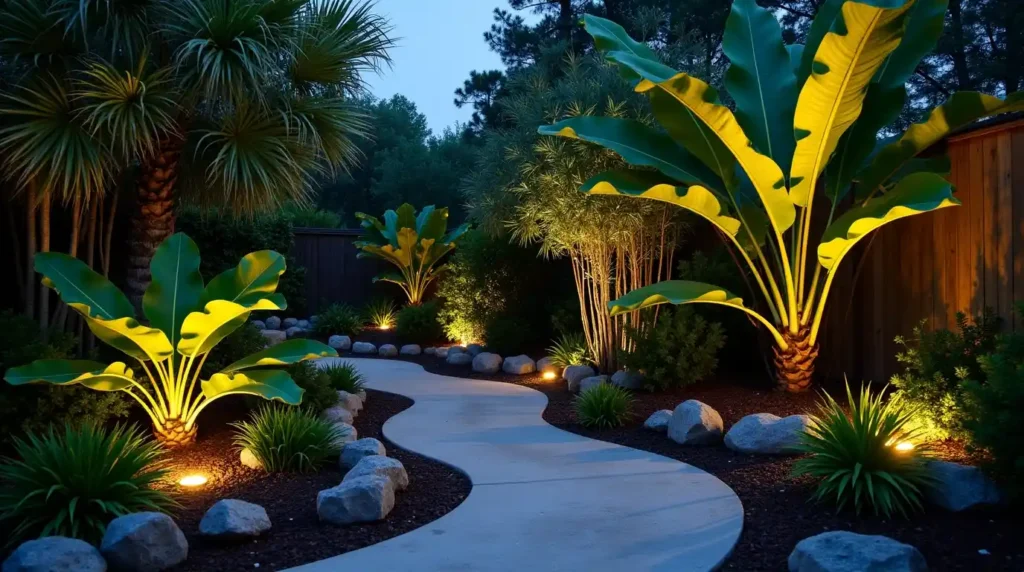
Place an uplight behind a large leaf to show its shape. Add low lights along the path. Use a downlight or warm string lights near the seating area.
Hide fixtures behind stones or foliage when possible. The light should be visible, but the fitting does not need to be the main feature.
Choose outdoor-rated products. Keep cables away from water and walking routes. Use a qualified professional when fixed electrical work is required.
Test temporary lights before installing them. Move each one until it creates the effect you want.
Soft tropical garden lighting adds depth while keeping the yard calm and comfortable.
Add Plants That Feed Birds and Pollinators
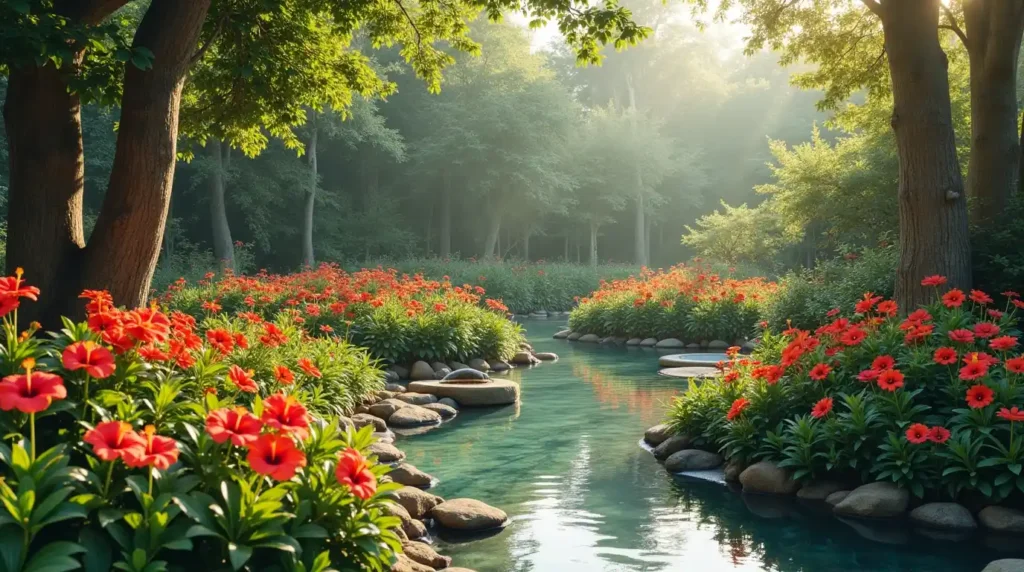
A lush garden can look beautiful while also giving local wildlife food, water, and shelter.
Choose locally suitable flowers that provide nectar across different seasons. Include several flower shapes because different pollinators feed in different ways.
Dense shrubs and layered foliage can give birds safe places to rest. Seed-producing or berry-producing plants may provide food, but check which options suit your area.
Add a shallow water dish in a shaded place. Include stones or safe landing points. Clean the dish often to keep the water fresh.
Avoid using pesticides unless they are truly needed. Many sprays can harm helpful insects as well as pests.
Native plants can still give you a tropical look. Look for local plants with broad leaves, strong shapes, colorful flowers, or dense growth.
Add at least one plant chosen for wildlife rather than appearance alone. It can make the garden more active and useful throughout the year.
Reduce Work With Repeated, Climate-Suited Plants
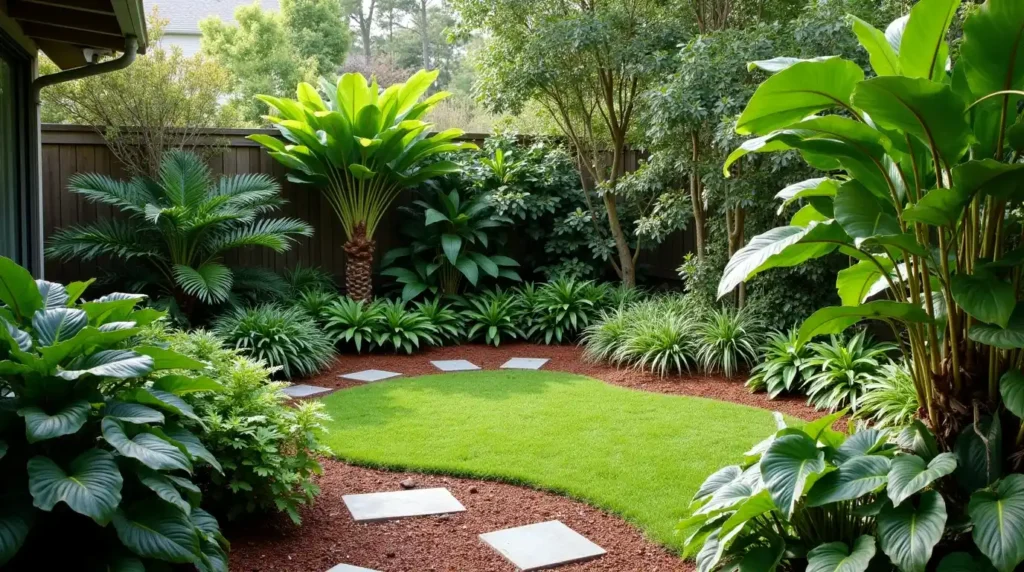
A tropical garden does not need constant care, but no garden is free from maintenance.
The easiest way to reduce work is to choose plants that already suit your soil, sun, rainfall, and temperature. A plant placed in the wrong conditions will need more water, feeding, and protection.
Repeat dependable foliage plants instead of using many high-care flowering species. Group plants with similar water needs in the same beds.
Add mulch to slow weeds and moisture loss. Use drip irrigation or another focused watering system where suitable. Check it often for blocked lines or leaks.
Leave enough room for plants to reach their mature size. Crowded plants need more pruning and may suffer from poor airflow.
Try this low-maintenance tropical garden formula:
- One structural plant
- Two repeated foliage plants
- One flowering accent
- One spreading ground cover
- A layer of mulch
You will still need to prune, remove damaged leaves, check watering, and complete seasonal cleanup. The goal is manageable care, not zero work.
Create a Tropical Look in a Cooler Climate
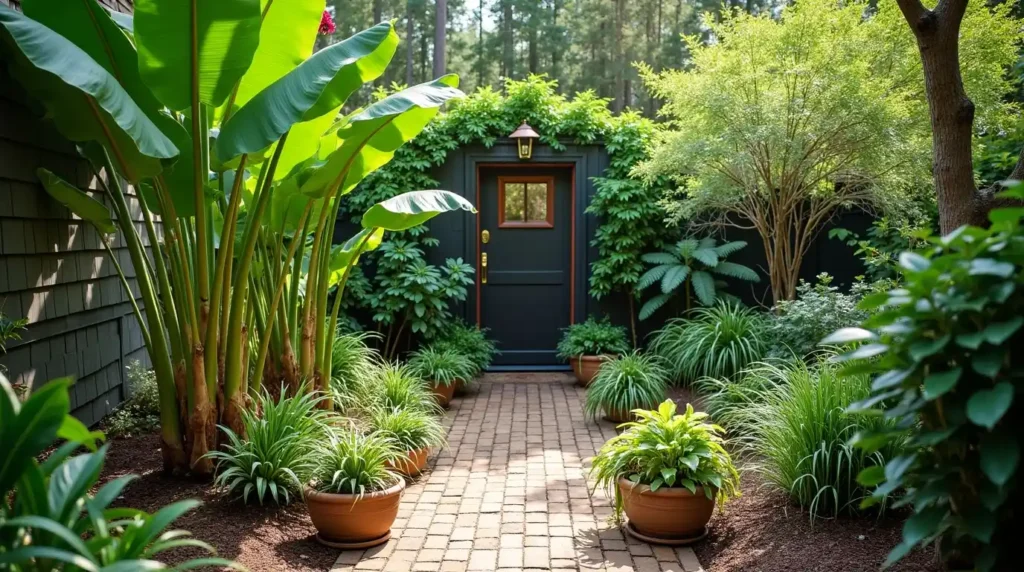
You can create tropical style even when true tropical plants cannot survive outdoors all year.
Focus on leaf size, strong shapes, dense planting, and rich green color. The overall design matters more than the plant label.
Depending on your local conditions, tropical-looking options may include fatsia, hardy banana, ferns, hostas, hardy hibiscus, cannas, ornamental grasses, and large-leaved shrubs.
Use hardy plants as the permanent base. Add tender plants in pots during warmer months. Palms, elephant ears, and other sensitive plants can be moved indoors before cold weather.
Dark fencing can make green foliage stand out. Thick planting can also help the area feel warmer and more sheltered.
Learn which plants can stay outdoors, which need their roots protected, and which must be stored indoors.
Winter survival depends on more than the lowest temperature. Wind, wet soil, snow, and the length of cold weather also matter.
Build the garden around reliable hardy plants. Treat tender plants as seasonal accents rather than the main structure.
How to Choose the Best Tropical Garden Ideas for Your Yard
You do not need to use all 18 ideas. Adding everything at once may crowd the yard and increase the cost.
Start with your main problem.
If the garden feels exposed, focus on layered privacy planting. If it feels hot, add shade and a seating area. If it looks flat, introduce one large-leaved focal plant and mix different leaf shapes.
Use this quick guide:
- Small yard: Containers, one focal plant, and vertical planting
- Sunny yard: Shade, mulch, and heat-tolerant foliage
- Shaded yard: Ferns, caladiums, fatsia, and bright containers
- Cool climate: Hardy foliage and movable pots
- Pool area: Low-litter plants and slip-resistant paving
- Busy household: Repeated plants and simple irrigation
Beginners can start with four changes:
- Add one bold focal plant.
- Build one layered planting group.
- Repeat one natural material.
- Improve one useful area, such as a seat or path.
The most effective tropical garden design ideas solve a real problem while making the yard feel more inviting.
Start With One Simple Tropical Garden Feature
A successful tropical garden uses layers, leaf contrast, controlled color, and climate-suited plants. Paths, water, shade, and lighting can make the space more comfortable, but you do not need to install everything at once.
Measure your yard first. Then choose one focal plant, one layered border, and one feature that helps you use the space. This could be a shaded seat, a curved path, or a small water bowl.
Give young plants enough room to grow. Repeat a few strong shapes and materials instead of filling every gap.
The best tropical garden design ideas match your climate, available space, budget, and preferred level of care. Start small, watch how the garden grows, and make changes when you can see what the space truly needs.