18 Outdoor Dining Area Ideas for Every Backyard
You do not need a large patio or an expensive remodel to enjoy meals outside. The best outdoor dining area ideas work with the space you already have. A small balcony can hold a table for two. An empty garden corner can become a quiet place for family dinners.
Your outdoor area may feel too sunny, exposed, cramped, or far from the kitchen. The right layout can fix many of these problems. Shade makes daytime meals more comfortable. Lighting lets you stay outside after sunset. Smart furniture choices can help a small space feel less crowded.
These ideas cover patios, porches, decks, balconies, and open yards. You will learn how to plan a comfortable outdoor dining space for your needs and budget. You can use one idea or combine several. As you review these backyard dining area ideas, think about when you eat outside, how many people you seat, and what keeps you from using the space now.
Define Your Patio Dining Area with an Outdoor Rug
Best for: Large patios that feel open or unfinished
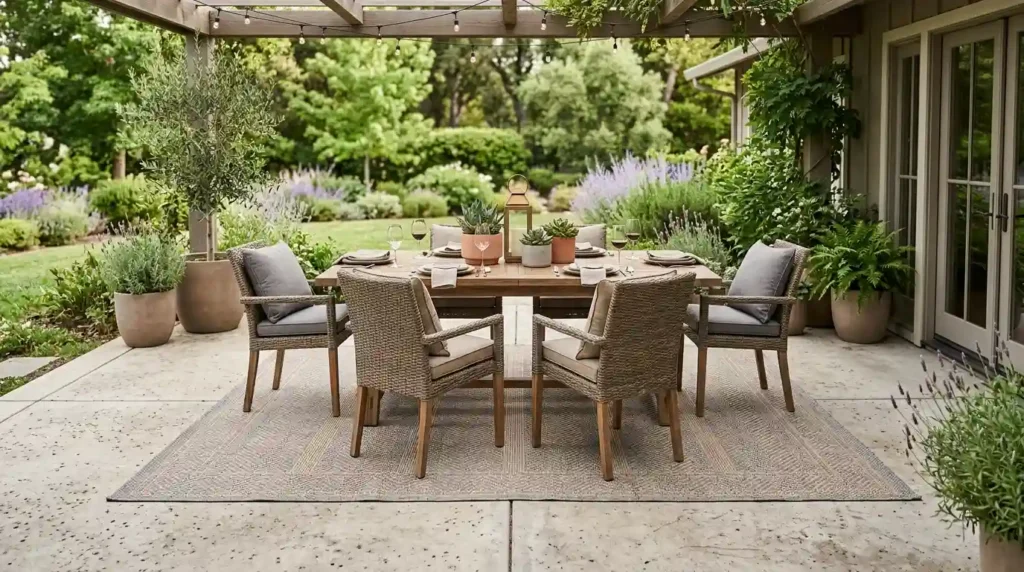
A table can look lost when it sits alone on a wide concrete patio. A weather-resistant rug creates a clear dining zone without any building work. It also adds color and helps the space feel more like an outdoor room.
Choose a rug that holds the table and all its chairs. The chairs should remain on the rug when someone pulls them out. A rug that is too small can catch chair legs and make the setup look cramped.
For example, place a six-seat table over a large tan or gray rug. Add cushions or planters that repeat one of the rug colors. This simple link can pull the whole design together.
Look for a rug made for outdoor use. It should resist moisture, stains, and fading. Measure your table with the chairs pulled out before you shop. You can mark the full area with painter’s tape to check the size.
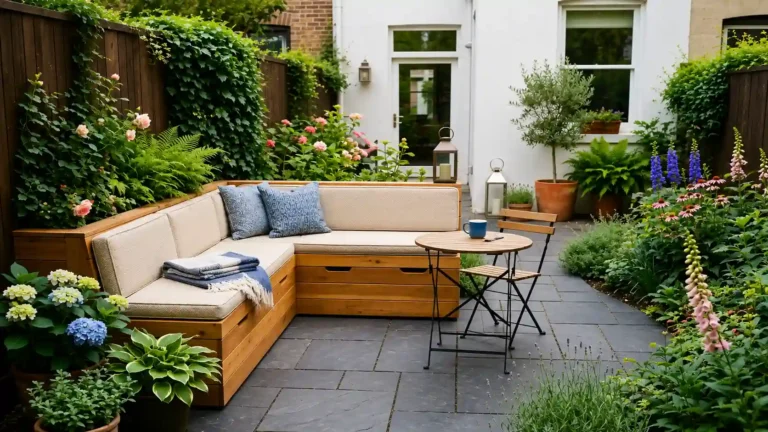
Save a Tight Corner with a Built-In Bench
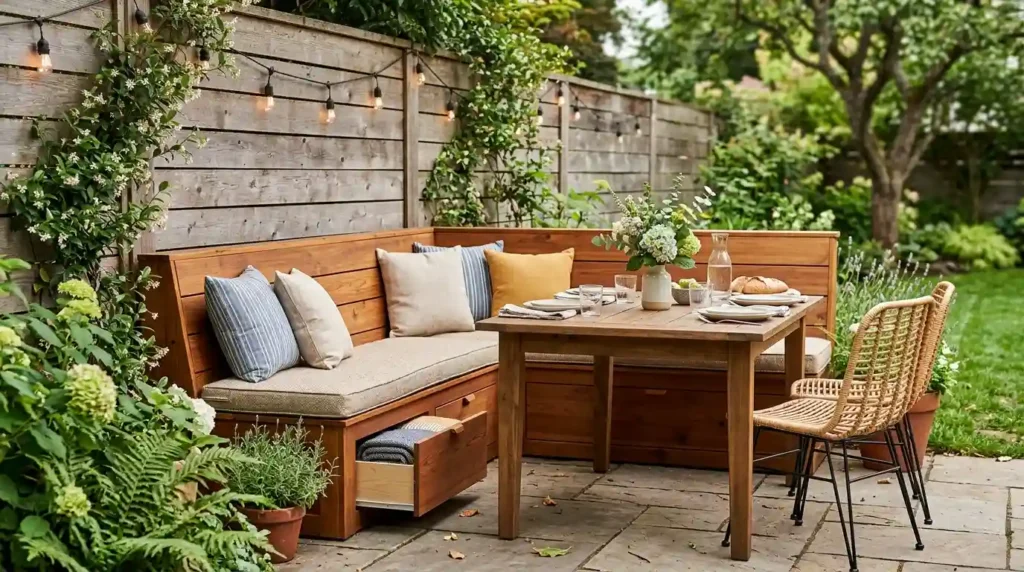
Best for: Small patios, fenced yards, and unused corners
Chairs need space behind them, which can make a small patio feel crowded. A built-in bench solves this problem by placing seating against a wall or fence. It can turn a forgotten corner into a useful dining nook.
An L-shaped bench works well with a rectangular table. Add one or two lightweight chairs on the open side. You can move these chairs when you need more walking space.
Use the area below the seat for storage if the design allows it. A covered compartment can hold seat pads, small garden tools, or table linens. Make sure the inside stays dry and has some airflow.
Add removable outdoor cushions for comfort. Choose covers that resist water and sunlight. You can bring them inside during heavy rain.
Before building, test the layout with boxes or spare chairs. Check the bench height against the table height. A poor match can make meals uncomfortable, even if the design looks good.
Fit More Walking Space Around a Round Table
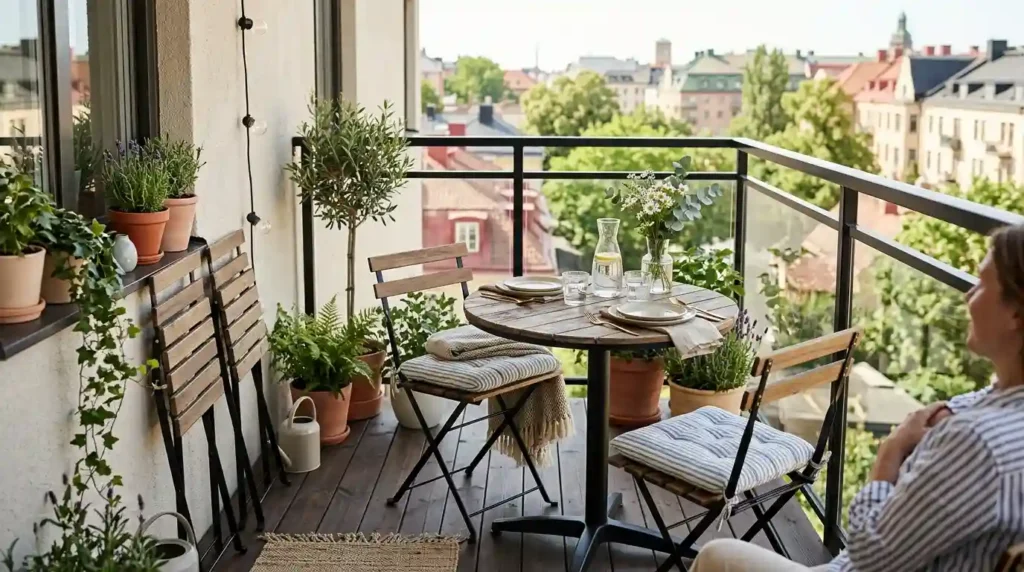
Best for: Balconies, narrow patios, and dining areas for two to four people
A square table can create awkward corners in a tight space. A round outdoor table gives you a smoother path around the seating area. It can also make conversation easier because everyone faces the center.
Look for a pedestal base instead of four wide legs. This gives people more freedom to place their feet. It may also let you fit an extra chair when a guest visits.
A small bistro table is a good choice for an apartment balcony. Pair it with folding or stackable chairs. You can store the chairs against a wall when you need the floor for another use.
Avoid choosing a table based on its top size alone. The chairs also need room to slide back. Doorways and main walking paths must stay clear.
Measure the full setup before buying anything. Use tape to mark the table edge and chair positions on the floor. Then walk around the outline to see if it feels comfortable.
Create a Shaded Dining Room Beneath a Pergola
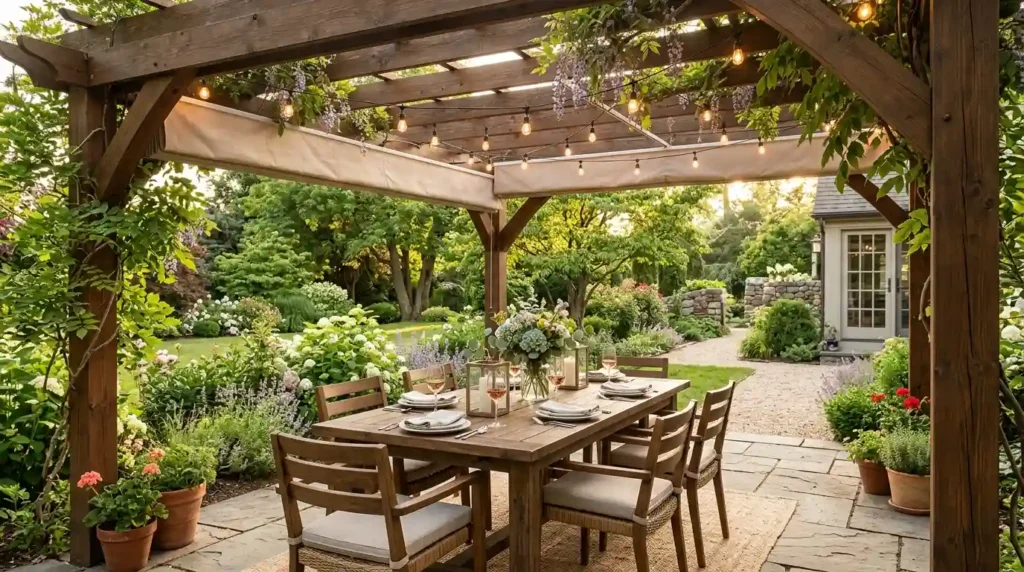
Best for: Patios that need structure and partial shade
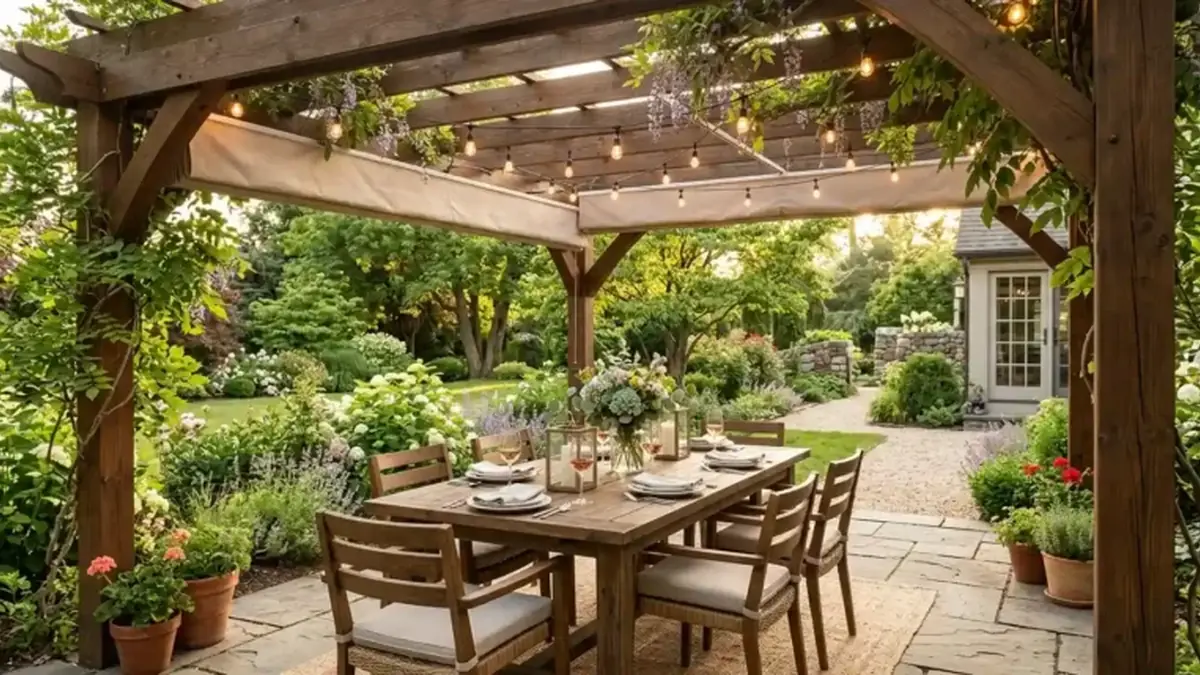
A table placed in an open yard may feel exposed. A pergola gives the dining area a clear frame and helps it feel like a room. It can also support lights, climbing plants, or a fabric canopy.
Place a table for six beneath a wood or metal pergola. Add warm lights along the beams for evening meals. Suitable climbing plants can provide more shade as they grow, though they may need trimming and seasonal care.
Open pergola beams do not block all direct sun or rain. Add a retractable canopy if you need stronger protection. Check how the sun crosses the yard before setting the structure’s position.
Choose materials that suit your home. A stained wood pergola can warm up a plain patio. A slim dark metal frame can suit a modern yard.
Before you build, check local rules for permits, height, and distance from property lines. Also confirm the structure can handle local wind and weather.
Get Fast, Flexible Shade with a Patio Umbrella
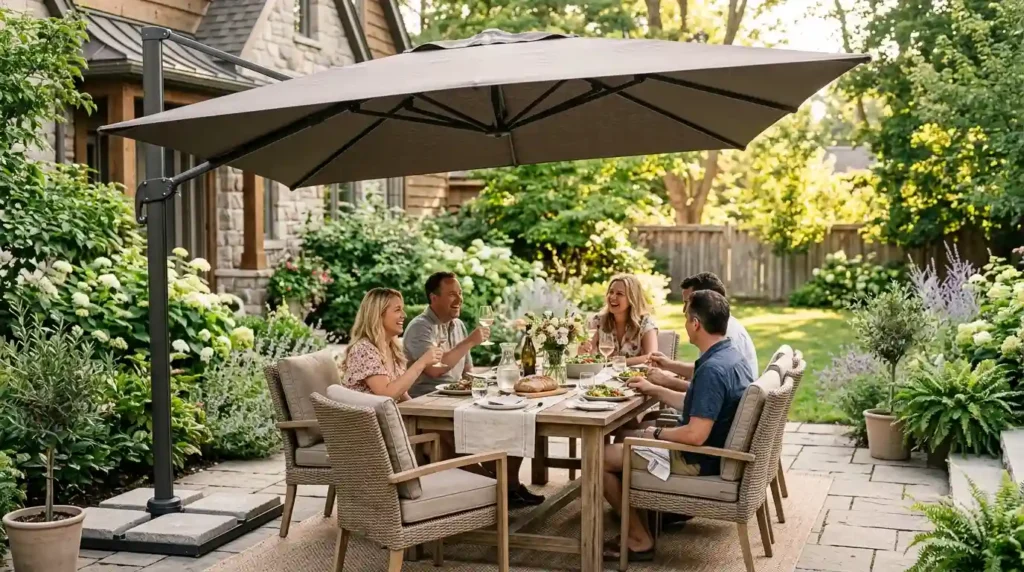
Best for: Renters and anyone who needs movable shade
A patio umbrella is one of the easiest ways to make outdoor meals more comfortable. It costs less than a fixed roof and can be moved or replaced when your needs change.
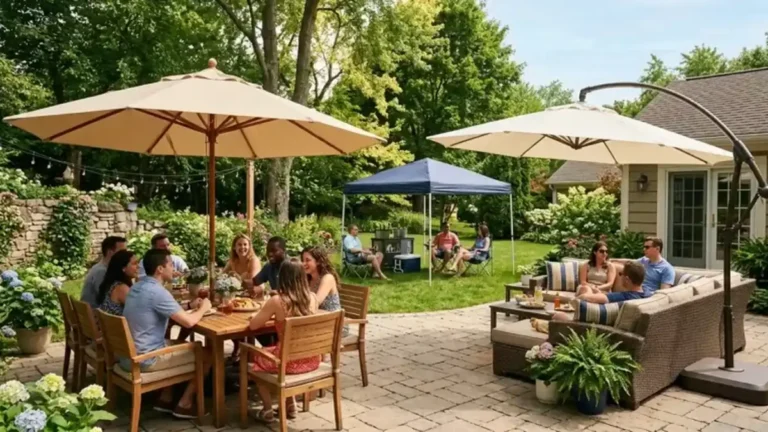
A center-pole umbrella works well with a table that has a hole in the middle. Choose a cantilever umbrella when you want the whole tabletop clear. Its side-mounted frame can cover a larger dining setup without placing a pole between guests.
Watch the area during the hours when you normally eat outside. Morning and afternoon sun enter from different angles. An umbrella placed for lunch may provide little shade at dinner.
Use a base made for the size and type of umbrella you choose. A weak base may tip when the wind rises. Close the umbrella during strong wind and whenever you leave it unattended.
For a finished look, match the umbrella fabric with your cushions or rug. A light neutral shade can keep the setup calm and easy to update.
Turn a Covered Porch into a Useful Dining Room
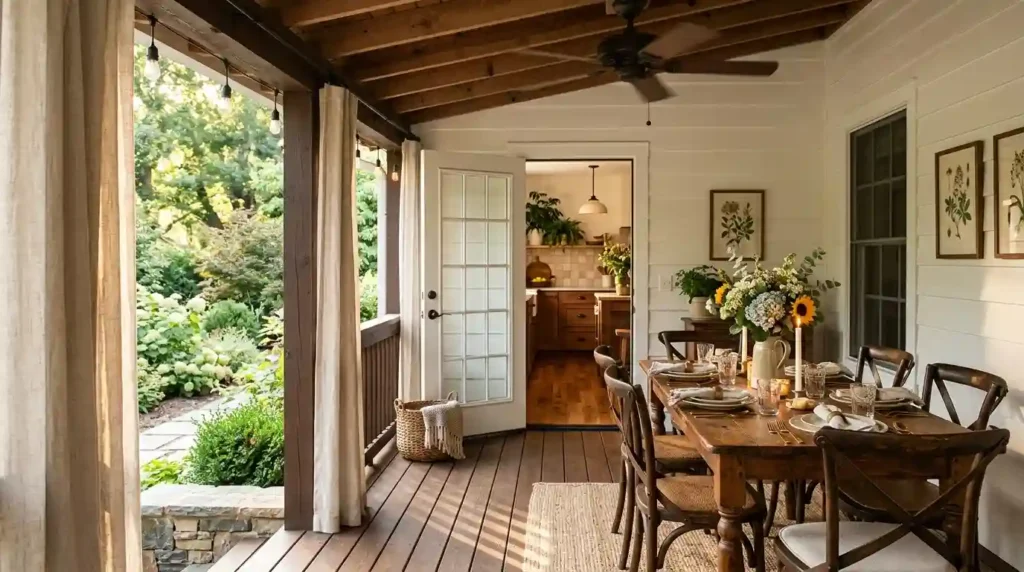
Best for: Homes with a porch close to the kitchen
A covered porch already has one feature many patios lack: a roof. This makes it a practical spot for meals during strong sun or light rain. It may also reduce the amount of new work your project needs.
Place the table where it will not block a doorway or main path. Keep the route from the kitchen as short as possible. This makes it easier to carry hot dishes, drinks, and plates.
A farmhouse-style table can give a wide porch a warm, relaxed look. In a smaller area, use a narrow table with a bench along one side.
Add outdoor curtains or roll-down shades if low sun causes glare. An outdoor-rated ceiling fan can improve airflow, but it must be suited to the location and installed correctly.
Connect the porch with the inside of your home by repeating one color or material. You might match the table wood with indoor floors or use cushions in a color found in the kitchen.
Turn an Empty Garden Corner into a Gravel Dining Area
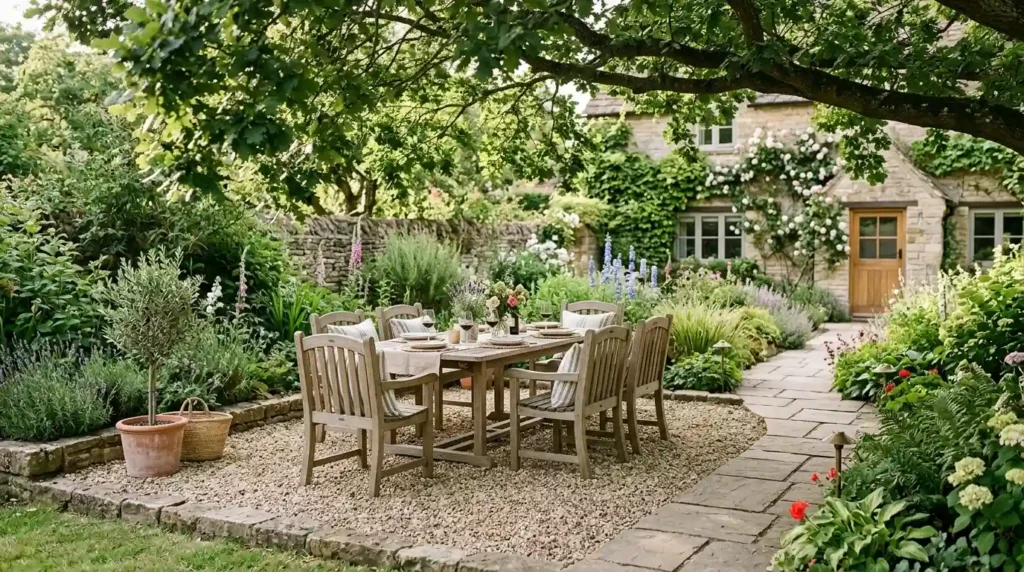
Best for: Large yards with unused space away from the house
You do not have to place your dining table next to the back door. A quiet corner of the garden can offer better views and a more peaceful setting.
Start with a level location that does not collect water. Prepare the base before adding gravel. The right base will depend on your soil and drainage, but good preparation helps limit sinking, weeds, and uneven spots.
Use firm edging to keep the gravel in place. Choose chairs and tables with wide feet so they do not sink between the stones. Thin chair legs may wobble or become hard to move.
A pea-gravel area beneath a tree can look relaxed and natural. However, check for falling fruit, sap, weak branches, or heavy leaf drop before placing the table there.
Add a stable path from the house to the dining area. Lighting along the route will make evening use safer. Plan the base, border, path, and furniture together so each part works with the others.
Keep Deck Dining Safe and Easy to Reach
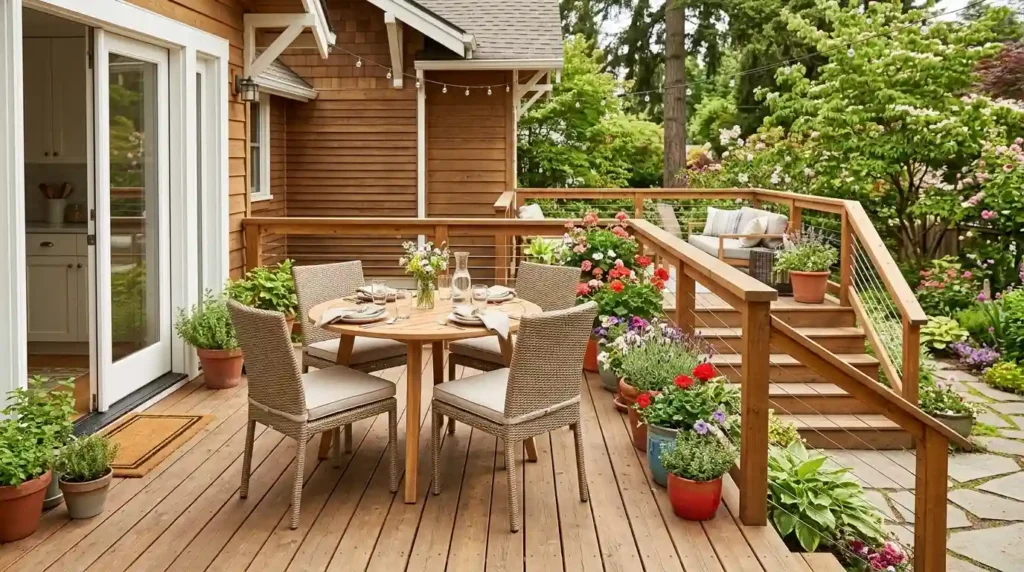
Best for: Raised decks connected to a kitchen or living room
A deck can be a natural place for an outdoor table because it is often close to the house. Food is easier to carry, and you can move inside quickly if the weather changes.
Place the table near the kitchen door, but do not block it. Leave a clear route to stairs, railings, and other seating areas. Guests should not have to squeeze behind occupied chairs to leave the deck.
Choose furniture that matches the deck’s size. A large table may seat more people, but it can make a modest deck hard to use. A compact table with slim chairs often works better.
Planters can soften hard deck edges and add color. Place them where they will not reduce walking room or add too much weight in one spot.
Check the condition of the deck before adding heavy furniture, large pots, or a shade structure. Look for loose boards, weak railings, and signs of rot. Ask a qualified professional to inspect anything that seems unsafe.
Make Evening Meals Safer with String Lights
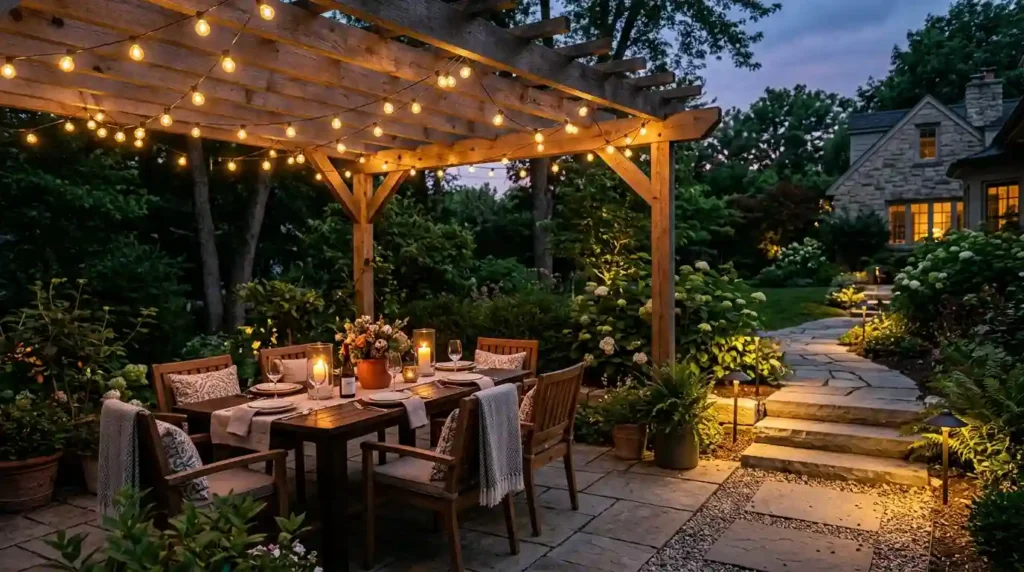
Best for: Patios and decks used after sunset
A dining area loses much of its value if it becomes too dark after dinner starts. String lights can mark the space and add gentle light without making the patio feel harsh.
Hang the lights above the table in a zigzag or simple grid. Keep them high enough that guests will not touch them when standing. Aim for soft, even light instead of one bright bulb shining into someone’s eyes.
String lights help people see the table, but they may not light nearby steps or paths. Add low lights along walking routes and changes in level. Each light should have a clear purpose.
Use bulbs, cords, plugs, and connections rated for outdoor use. Keep connections protected from water. Follow the product directions, and contact a licensed electrician if new wiring or outlets are needed.
Warm-toned bulbs often create a relaxed mood for evening meals. Test the lights before fixing every strand in place. This helps you spot dark areas and glare.
Add Comfort and Privacy with Container Plants
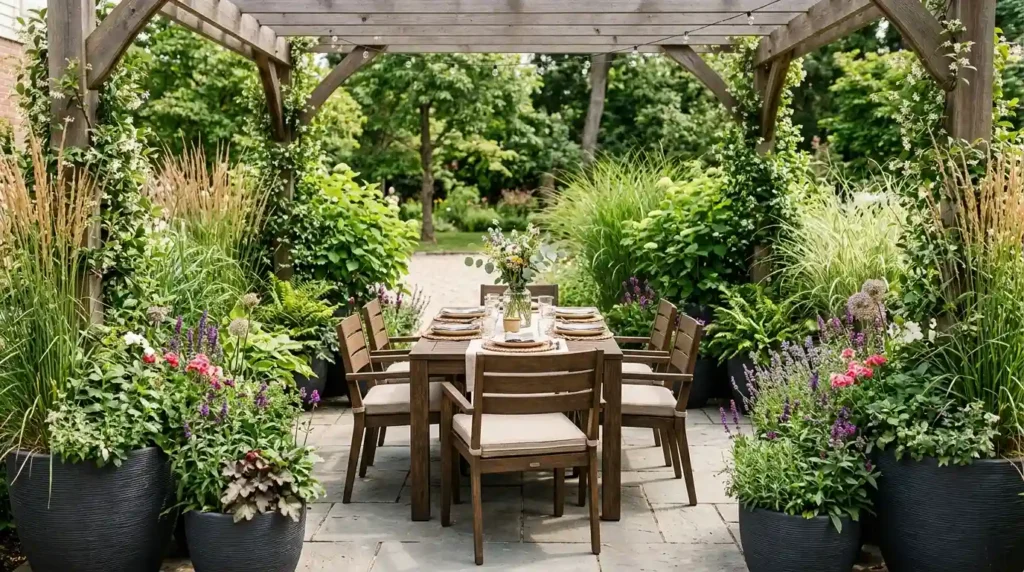
Best for: Bare patios and dining areas that feel exposed
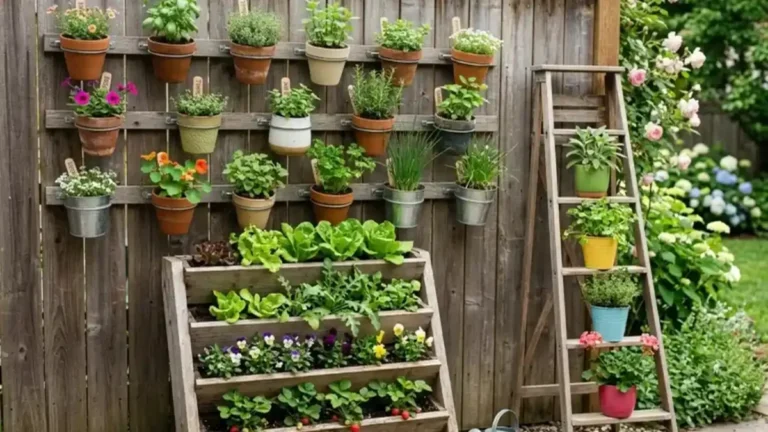
A dining table can feel cold when it is surrounded by hard walls and paving. Container plants add color, softness, and a sense of privacy. They are also easy to move when the layout changes.
Place tall pots near the outer corners of the dining zone. Mix upright plants with lower greenery to create layers. Matching containers can give the area a clean look, while mixed pots feel more casual.
Choose plants for the sunlight, heat, and winter conditions in your area. A plant that works on a shaded porch may struggle on a hot patio. Local garden centers can help you select suitable options.
Keep thorny plants away from chairs and narrow paths. Strong scents can also become too much when placed close to food. Check the mature size so the plants do not take over the seating area.
Leave enough room to pull out every chair. The goal is to frame your outdoor dining space, not crowd it.
Block Neighboring Views with a Slatted Screen
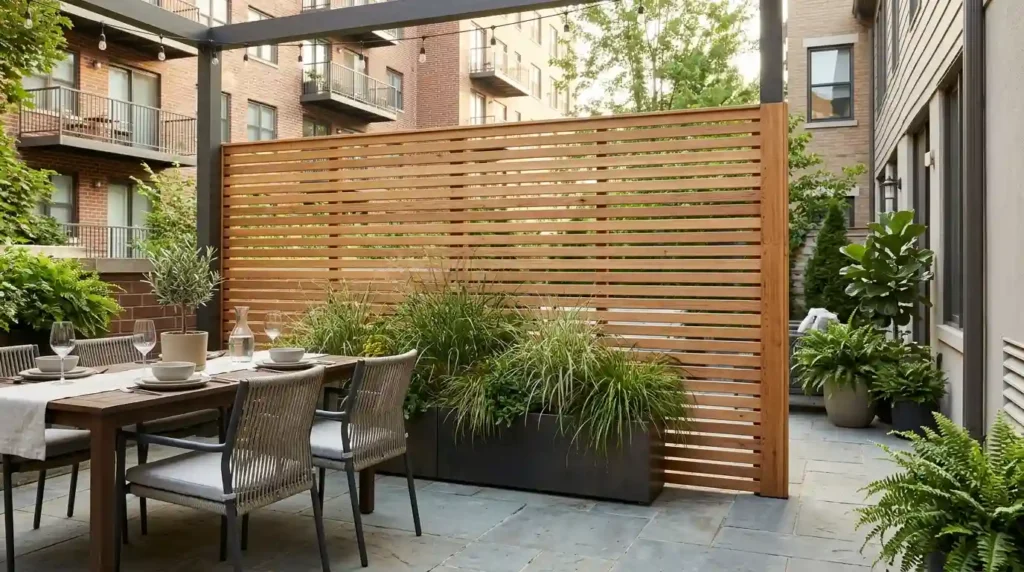
Best for: Urban patios and yards with close neighbors
It can be hard to relax when your dining table sits in full view of nearby homes. A slatted screen can block the strongest sightline while still allowing some air and light to pass through.
First, sit at the table and find the direction where privacy is most needed. You may need one short screen instead of a full fence. This can cost less and keep the area from feeling closed in.
A cedar screen can warm up a concrete patio. You can also match the slats with an existing deck, fence, or part of the house. Add a planter at the base to soften the straight lines.
Leave small gaps between the slats if airflow matters. Solid panels provide more coverage, but they may trap heat or catch more wind.
Check rules for screen height, property lines, and shared fences before installation. Place the screen on your property and make sure its posts have proper support.
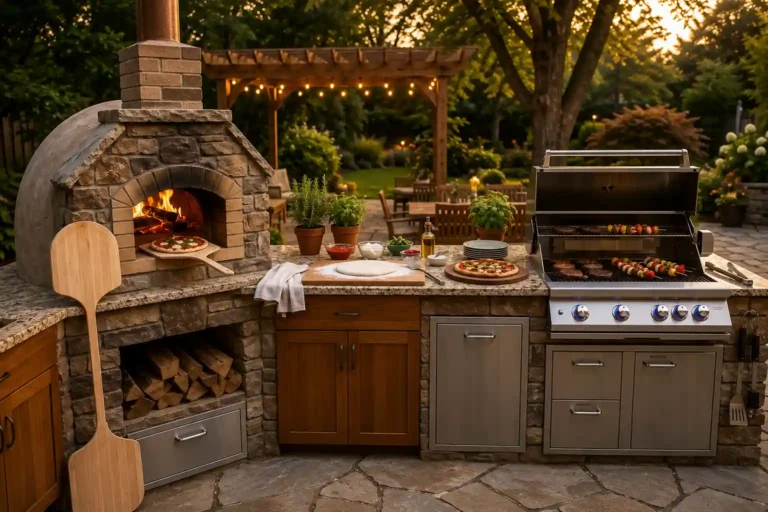
Make Serving Easier Beside an Outdoor Kitchen
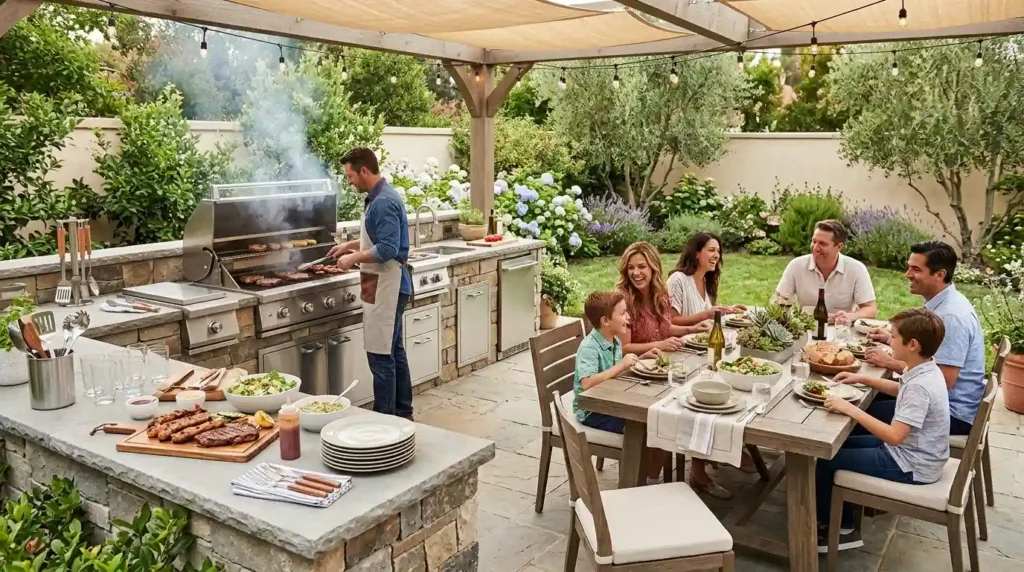
Best for: Families and hosts who cook outside often
Carrying every plate and drink across the yard gets tiring. A dining nook beside an outdoor kitchen keeps food, cooking, and serving in one area.
Place the table close enough for easy serving, but keep it away from grills and other hot surfaces. Follow the appliance maker’s clearance rules. Smoke should flow away from guests, windows, and doors whenever possible.
Add a counter or side surface for serving dishes. This keeps the main table open for plates and drinks. Storage for outdoor dishes, napkins, and cooking tools can reduce trips inside.
A simple setup might include a dining table facing a grill counter. Guests can talk with the cook without standing in the work area. Keep the main cooking path clear so hot pans can be moved safely.
Local fire rules may affect where you place cooking equipment. Check them before building a fixed outdoor kitchen. Safety matters more than placing every feature close together.
Keep Family Meals Simple with a Picnic Table
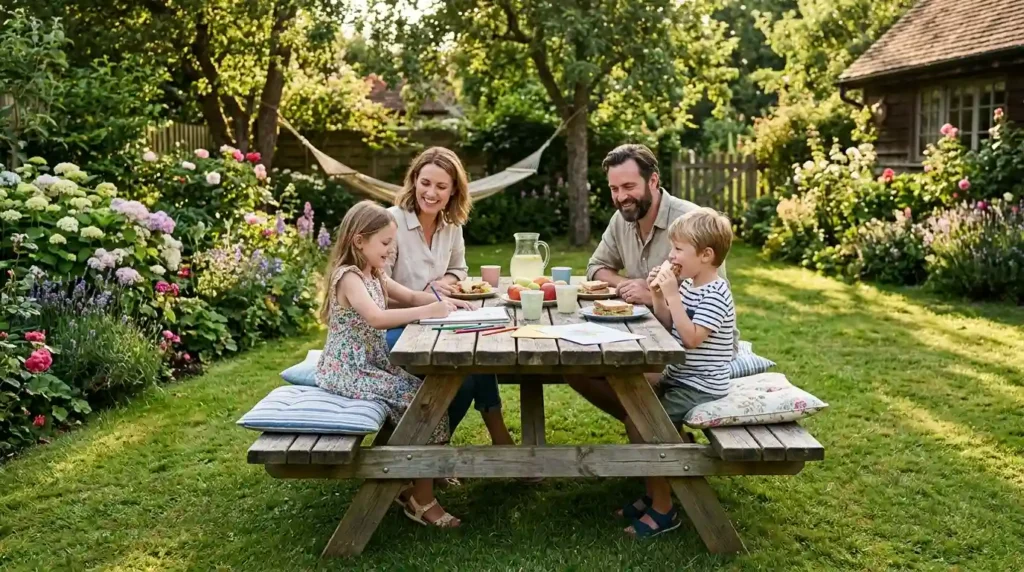
Best for: Casual yards, children, and large family meals
A picnic table gives you a table and seats in one simple piece. It works well for quick lunches, craft projects, and relaxed family dinners.
Wood brings warmth to a garden, but it needs care to resist moisture and sun. Coated metal can be easier to clean, though it may become hot in direct sunlight. Recycled plastic is another low-care choice, but styles and prices vary.
Fixed benches can be hard for some guests to enter. A table with separate benches gives you more freedom. You can move one bench away and place chairs there when needed.
Add washable seat pads if people often stay at the table for a long time. Store them in a dry box when they are not in use.
Place the picnic table on a flat, stable surface. A painted table near the lawn can add color and create an easy family gathering spot without a formal patio design.
Free Up Small Spaces with Folding Furniture
Best for: Balconies and patios with more than one use
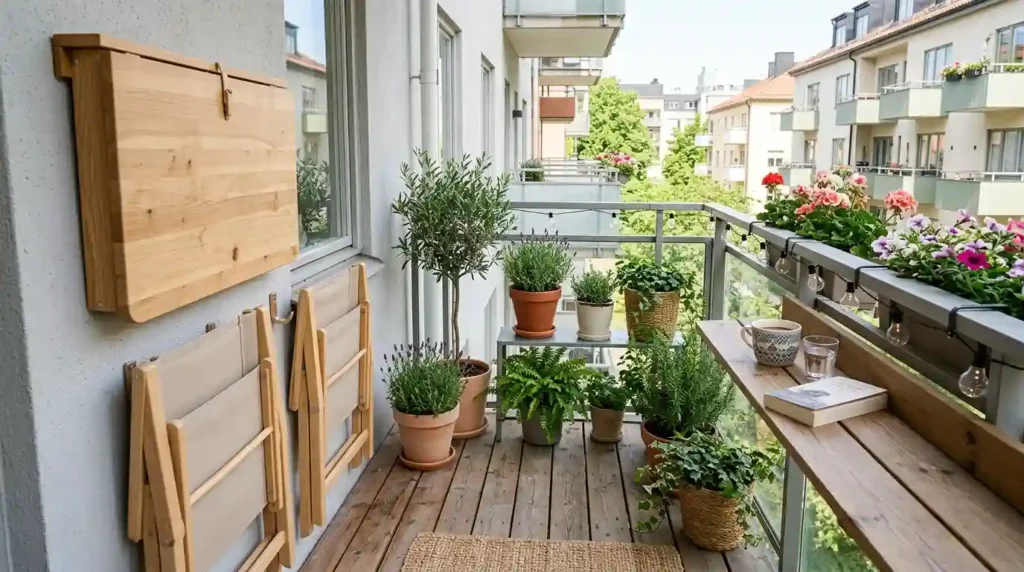
A permanent dining set may take up too much room on a small balcony. Folding furniture lets the same space support meals, plants, exercise, or quiet time.
A wall-mounted table can fold flat when you finish eating. Folding chairs can hang from strong wall hooks or fit inside a storage area. Stackable chairs are another option if you have more floor space than wall space.
Choose pieces that are light enough to move but stable enough for outdoor use. Very light furniture may shift in strong wind. Store it safely during bad weather.
If you host guests, keep a small table outside for daily meals. Add a second folding table only when you need more seats. This avoids filling the area with furniture you rarely use.
Measure the furniture in both open and folded positions. Make sure it fits through the door and inside its planned storage spot before you buy it.
Add Warmth with a Fire Pit Dining Table
Best for: Cool evenings and open entertaining areas
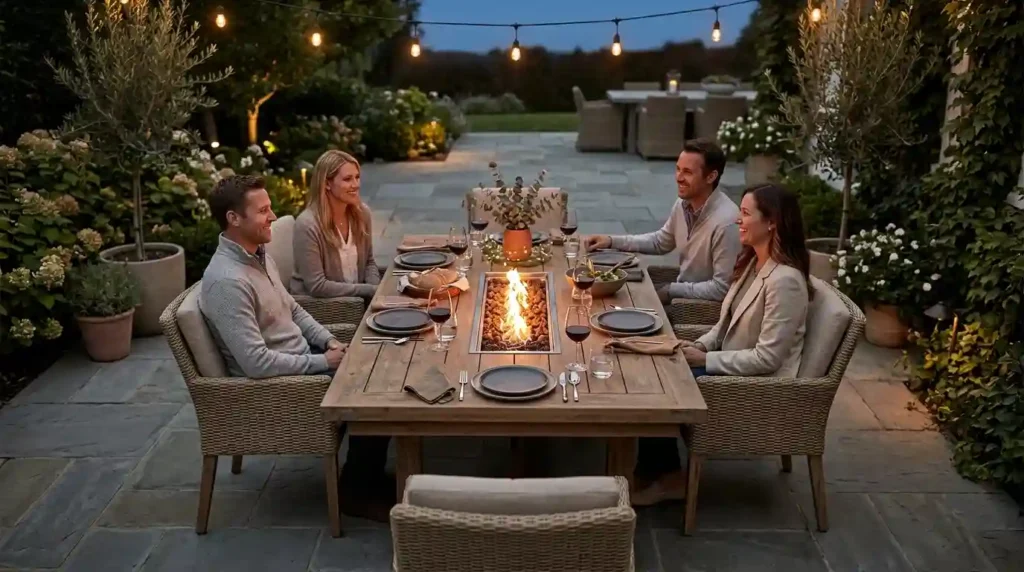
A fire feature can make dinner feel warmer and more inviting after sunset. You can choose a dining table with a built-in gas fire feature or place the eating area near a separate fire pit.
A wide table with a central flame gives guests space for plates around the fire. Check that the tabletop does not become too crowded. A cover for the fire section can provide more serving space when the flame is off.
Heat and flame require careful planning. Keep the feature away from items that can burn. Use it on a firm surface suited to heat, and account for wind direction before lighting it.
Follow the maker’s rules for fuel, ventilation, overhead cover, and safe spacing. Local fire codes may add more limits. There is no single clearance that works for every product and yard.
Never leave the flame unattended. Keep children and pets away from hot surfaces, which may stay hot after the fire is turned off.
Make Mismatched Furniture Look Planned with Color
Best for: Low-cost updates and furniture you already own
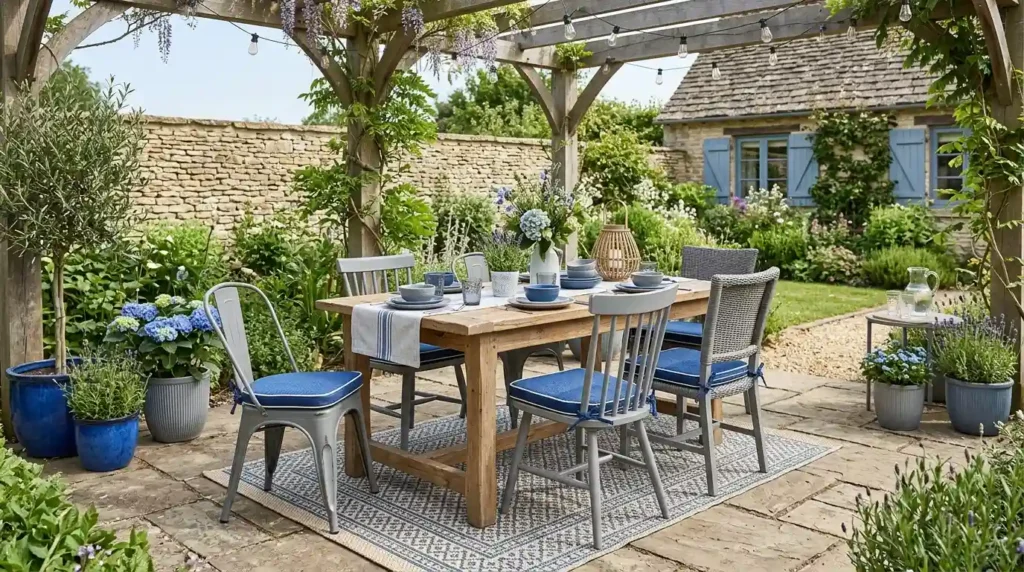
You do not need a matching furniture set to create a stylish outdoor dining area. A simple color plan can make different chairs, tables, and planters feel connected.
Choose two or three colors. Repeat them across cushions, pots, an outdoor rug, and small table items. For example, mixed chairs can look like a set when each one has the same blue seat cushion.
Neutral furniture gives you more freedom to change accent colors later. Gray, black, natural wood, and white can all work as a base. Add stronger color through items that are easy to replace.
You can also repeat a material from the house. A wood table may link with a wood fence. Dark metal chairs can match black window frames or lights.
Choose outdoor fabric that resists fading and moisture. Store soft items during severe weather. If the budget is tight, begin with matching cushions and one planter before changing larger pieces.
Clear the Table with an Outdoor Serving Station
Best for: Parties, family meals, and patios near the kitchen
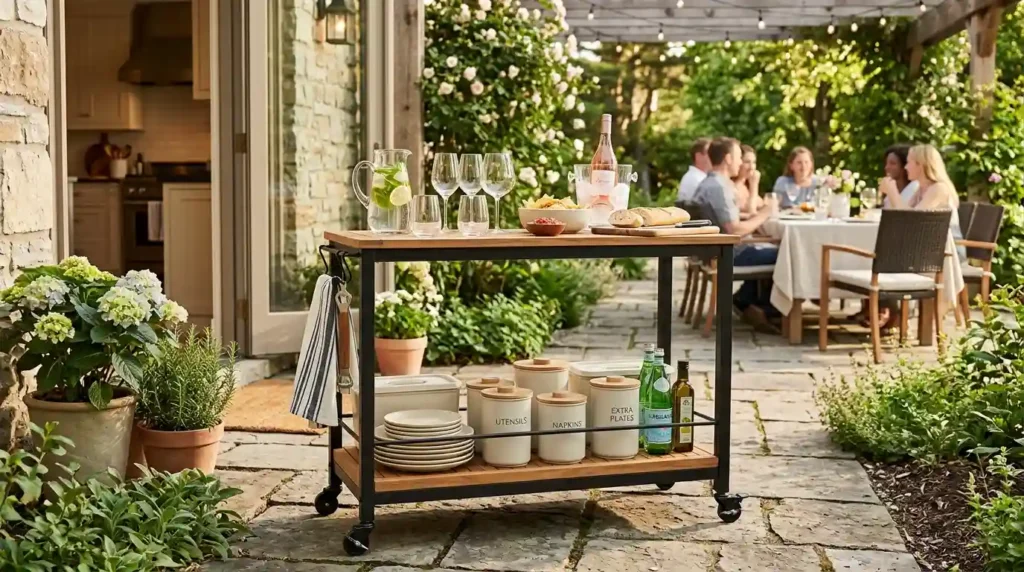
Drinks, serving bowls, and extra plates can fill a dining table fast. A small serving station gives these items their own place and leaves more room for guests.
A slim bar cart can sit against the house near the dining area. Use the top for drinks and food that will be served soon. Store napkins and utensils in covered containers below.
Choose a cart with outdoor-safe materials and wheels that lock. Locking wheels keep it steady while people serve themselves. Bring the cart inside or cover it if it is not made for long-term outdoor storage.
Place the station along the route between the kitchen and table. Do not let it block a doorway or narrow path. If the area has no flat wall, a small outdoor cabinet can serve the same purpose.
Food should not sit outside longer than is safe, especially in hot weather. Return leftovers and foods that spoil quickly to proper storage after the meal.
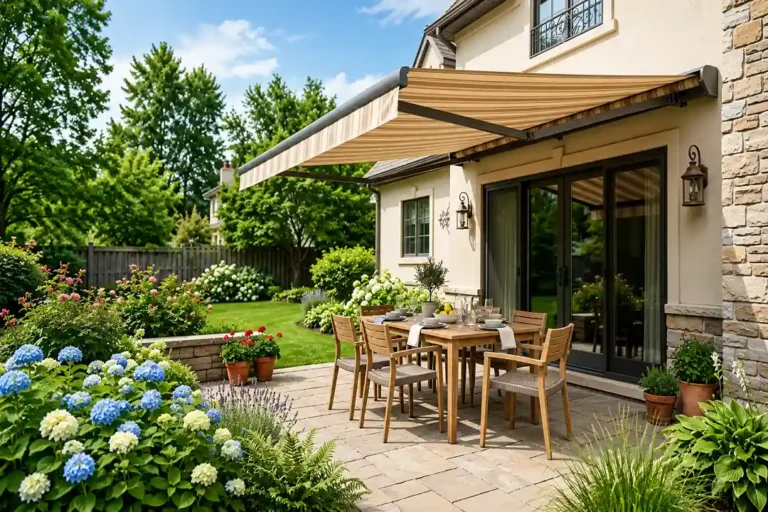
Use Your Dining Area More Often with Weather Protection
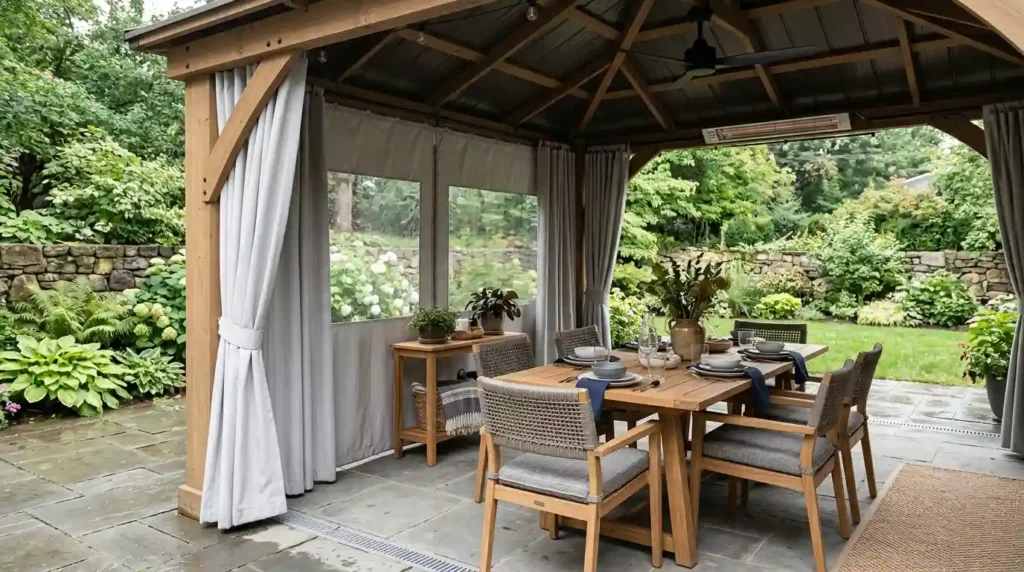
Best for: Homeowners who want a longer outdoor dining season
Sun, rain, wind, and cold can limit how often you eat outside. An all-weather outdoor dining area uses several forms of protection so the space stays comfortable during more of the year.
Start with overhead cover. A roof, solid canopy, or suitable awning can protect the table from sun and light rain. Add removable curtains or screens on the side that receives the strongest wind or low sun.
Choose outdoor-rated furniture and quick-drying fabric. Store cushions during severe weather, even if their labels say they resist water. This can help them last longer.
Drainage also matters. Water should move away from the table instead of forming puddles beneath the chairs. Fix drainage problems before adding rugs or heavy furniture.
Outdoor-rated fans or heaters may improve comfort, but they must suit the location. Follow all installation and clearance rules.
You do not need to add every feature at once. Start with the weather problem that stops you from using the area most often.
Create an Outdoor Dining Area You Will Really Use
The best outdoor dining area ideas fit your space and the way you live. A large table will not help if it blocks the door. Beautiful chairs will still feel uncomfortable without shade. Start with function, then add color and style.
You can also combine several ideas. A gravel base can hold a round table. Planters can add privacy, while an umbrella provides shade. String lights can make the same area useful after sunset.
Measure your available space before buying furniture. Check the sun, walking paths, and distance from the kitchen. Then choose one improvement that solves your biggest problem. Start with the feature that will make you use the space more often, whether that is shade for lunch or soft lighting for dinner.