15 Low Maintenance Landscaping Ideas for the Front of Your House on a Budget
A great-looking front yard should not take every weekend, a high water bill, or thousands of dollars. The right low maintenance front yard landscaping plan can make your home look cleaner while cutting down on mowing, watering, trimming, and weeding.
These low maintenance landscaping ideas for front of house on a budget focus on small changes with a clear purpose. You can replace one weak patch of grass, clean up a muddy edge, or improve the space near your front door. You do not need to redo the whole yard at once.
The best results often come from simple choices. Use fewer plant types. Repeat the same materials. Work with the sun, soil, and drainage you already have.
The 15 front yard landscaping ideas on a budget below include plants, paths, mulch, gravel, lighting, containers, and water-saving options. Start with the area that bothers you most. Finish one small project before moving to the next.
Plan Your Low Maintenance Front Yard Landscaping Before You Spend
Buying plants before checking your yard can waste money. A plant may look healthy at the store but fail in deep shade, wet soil, or strong afternoon sun.
Walk around your front yard in the morning, at midday, and later in the day. Note which areas stay sunny, shaded, dry, or wet. Look for slopes, worn grass, standing water, and places where people already walk.
Next, decide what can stay. Healthy shrubs, useful stones, old pavers, and large pots may still work. Moving or cleaning them may be cheaper than buying new items.
Choose one main area to improve first. The front door, walkway, porch, or mailbox usually gives the fastest visual result. Then set a budget for plants, mulch, edging, and tools.
A basic plan can fit on graph paper. Mark the house, path, driveway, trees, and planting beds. This easy front yard landscaping step helps you measure the area and avoid buying too much.
Before shopping, check:
- Daily sunlight
- Soil moisture
- Drainage
- Water access
- Existing plants and materials
- Your total budget
- The time you can give to yard care
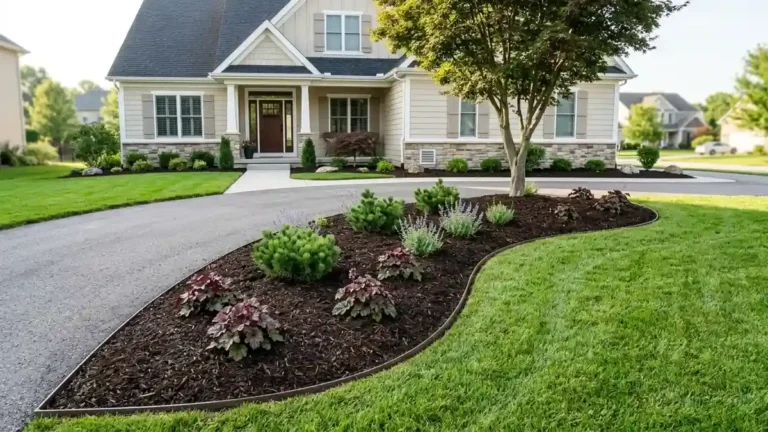
Replace Hard-to-Mow Grass With Mulch Beds
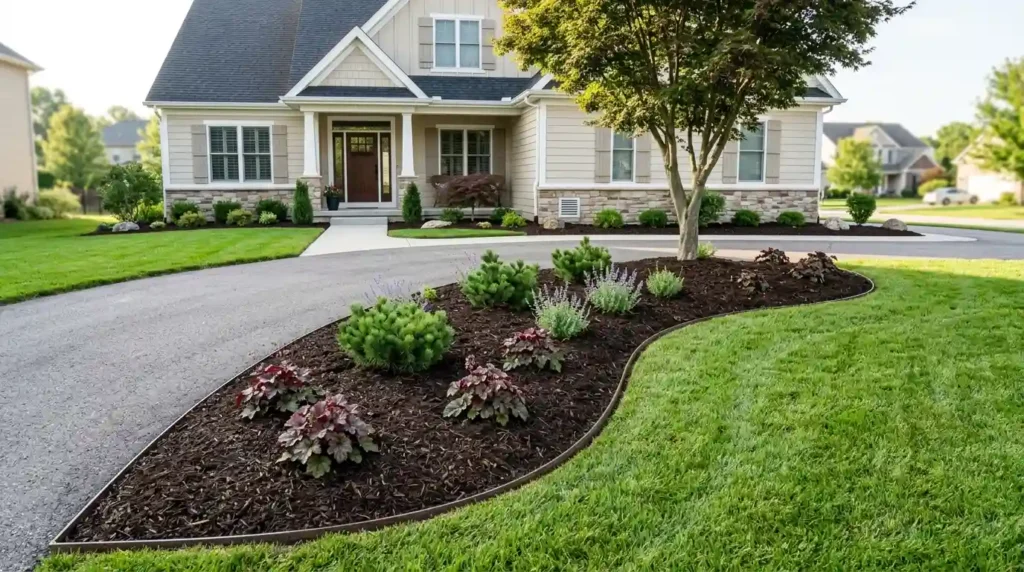
A mulch bed can reduce the amount of grass you need to mow. It also gives empty or awkward areas a cleaner look.
Start with a narrow strip beside the driveway, the space under front windows, or an area around a tree. You do not need to remove the full lawn. One well-shaped bed can make a big difference.
For a simple cardboard method, cut the grass short, cover it with plain cardboard, and wet the cardboard. Add about 2 to 3 inches of mulch on top. Keep mulch a few inches away from tree trunks, plant stems, siding, and vents.
Use a straight edge or a gentle curve. Too many small bends can look messy and make mowing harder.
Estimated cost: Low
DIY time: Half day
Maintenance: Low
Best for: Patchy grass, tree areas, and narrow strips
Save money: Ask local tree services or city programs about free wood chips.
Future maintenance: Pull new weeds early and add mulch when the layer becomes thin.
Use Native Plants in Simple Repeated Groups
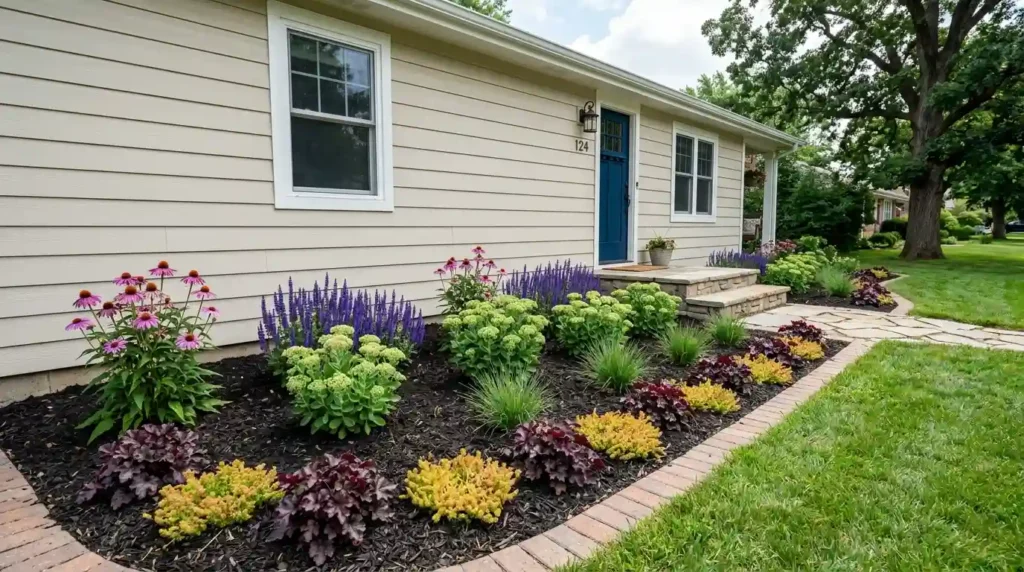
Too many plant types can make a small front yard look busy. Repeating a few plants creates a calmer and more finished look.
Choose native plants that suit your local weather, soil, and rainfall. They still need care when first planted, but many become easier to manage once their roots settle in.
Try a simple four-part plan:
- One low border plant
- One flowering plant
- One medium accent plant
- One evergreen or strong structural plant
Repeat plants in groups of three, five, or seven. Check the mature width before planting. Small nursery plants can grow much wider than they look in the pot.
Possible choices include coneflower, yarrow, sedum, salvia, lavender, native grasses, or compact juniper. Plant choice depends on your region, so use a local extension office or native plant list before buying.
Estimated cost: Low to medium
DIY time: Half day
Maintenance: Low after the first season
Best for: Sunny beds, pollinator gardens, and foundation areas
Save money: Buy smaller plants and let them fill the space over time.
Future maintenance: Water new plants until established and divide crowded perennials when needed.
Add a Few Evergreen Shrubs for Year-Round Structure
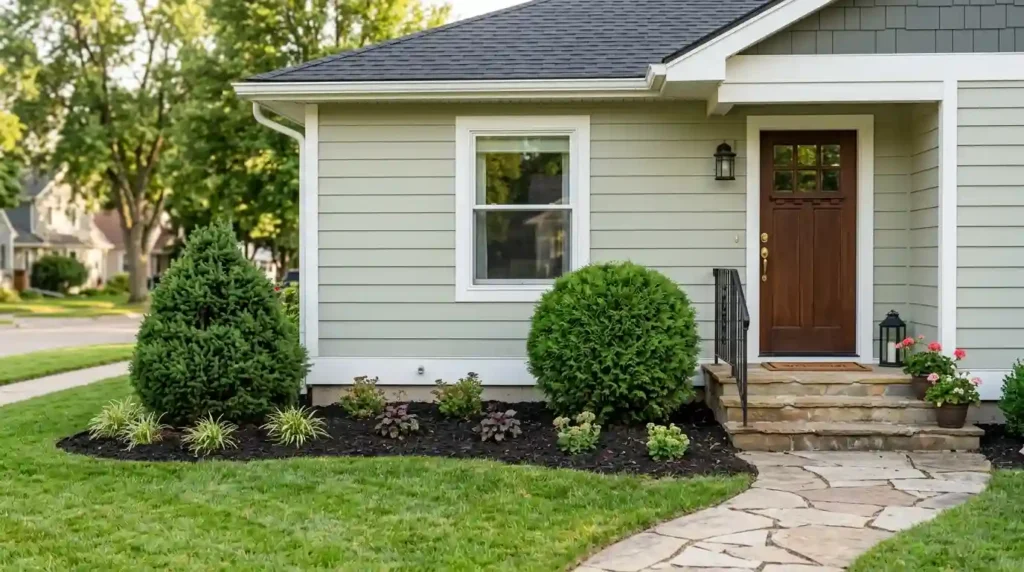
Front yards can look bare in winter or during dry seasons. A few evergreen shrubs help the yard keep its shape throughout the year.
Place one shrub near a front step, house corner, or large blank wall. Use compact types that will fit the space when fully grown. Do not judge a shrub by the size of its nursery pot.
Good options may include dwarf holly, compact juniper, small conifers, or other evergreens suited to your climate. Check the plant label for mature height and width.
Leave enough space between shrubs, windows, paths, and the house. Crowded shrubs need more trimming and may block airflow.
Two well-placed shrubs can work better than six plants packed into one bed.
Estimated cost: Medium
DIY time: Two to four hours
Maintenance: Low
Best for: Empty corners, front steps, and plain walls
Save money: Look for healthy smaller shrubs instead of paying more for large ones.
Future maintenance: Lightly shape plants only when needed and remove dead branches.
Cover Bare Soil With Easy-Care Ground Cover
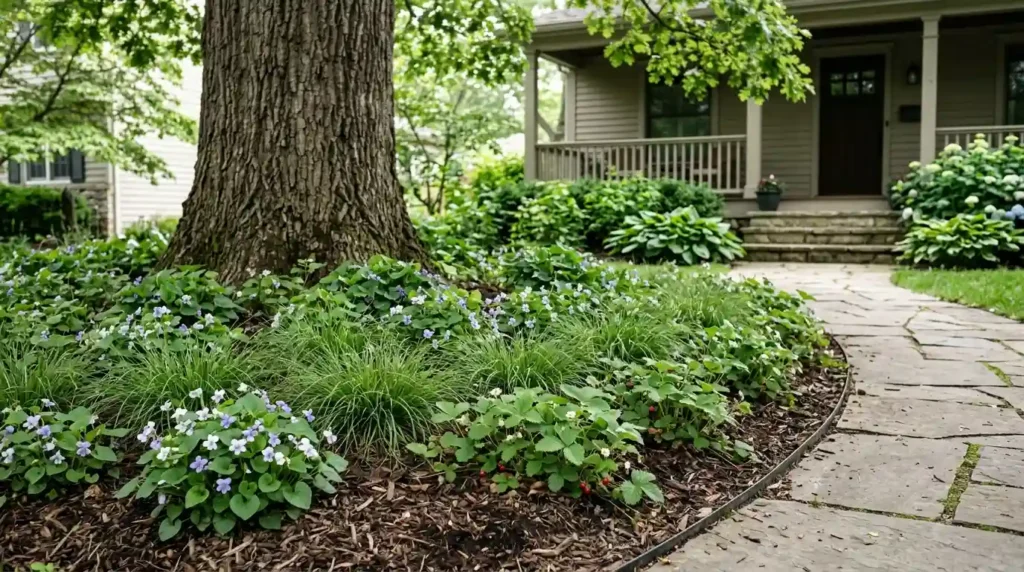
Grass often fails under trees, on slopes, or in deep shade. Low maintenance ground cover can fill these spots and help reduce bare soil.
Choose plants based on the site. Creeping thyme and some sedums may work in sunny, dry places. Native violets, wild strawberry, ajuga, or shade-loving sedges may suit cooler or shaded areas.
Check local invasive plant lists before buying. A plant that behaves well in one area may spread too fast in another.
Plant in small groups and leave the right amount of space between them. Add mulch around young plants while they spread. Ground cover is not instant, and it may need regular water during its first growing season.
Estimated cost: Low to medium
DIY time: Half day
Maintenance: Low after it fills in
Best for: Slopes, shade, and places where grass struggles
Save money: Divide ground cover from a healthy existing patch with the owner’s permission.
Future maintenance: Trim plants away from paths and remove any unwanted spread.
Add a Gravel Strip Along the House
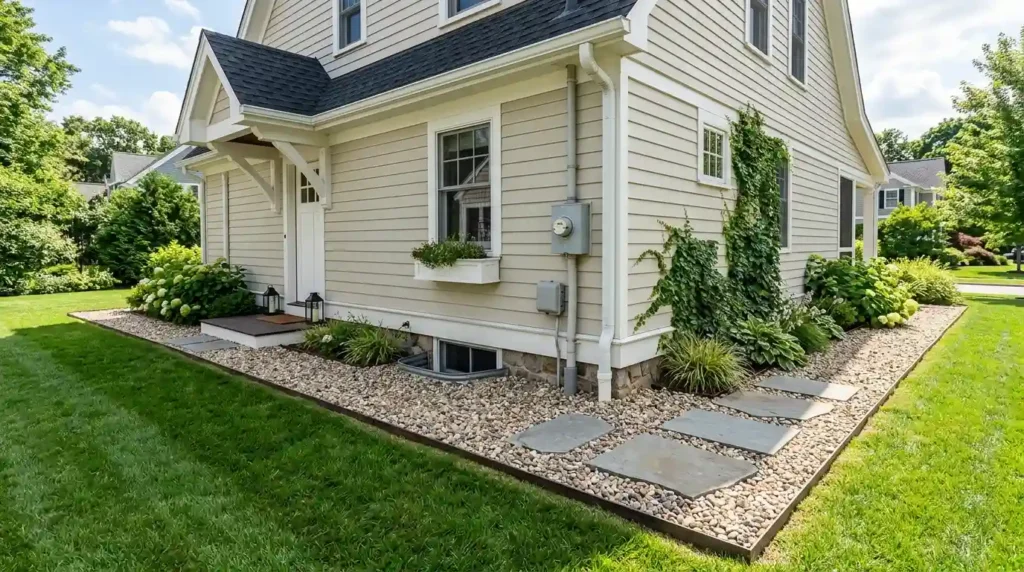
A muddy or bare strip beside the foundation can make the whole front yard look unfinished. Gravel can create a clean edge with very little weekly care.
Remove weeds and loose soil first. Add edging so the stones stay in place. Use landscape fabric only where it makes sense. Fabric can help under a simple gravel path, but it may cause trouble in planting beds where roots and soil need to mix.
Make sure the ground still slopes away from the house. Do not pile gravel against siding, vents, or wood trim. Keep utility boxes and drains easy to reach.
You can also mix gravel with stepping stones near a side door or hose tap.
Estimated cost: Medium
DIY time: One day
Maintenance: Very low
Best for: Narrow foundation strips and side entrances
Save money: Buy gravel in bulk for larger areas instead of using many small bags.
Future maintenance: Rake loose stones back into place and remove leaves before they break down.
Use Reclaimed Brick or Stone for Clean Garden Edges
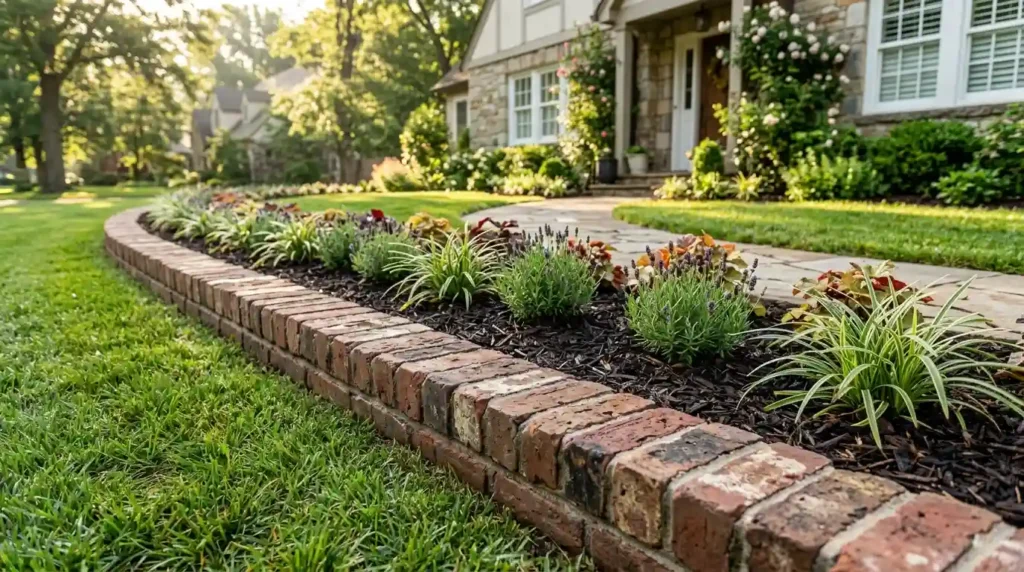
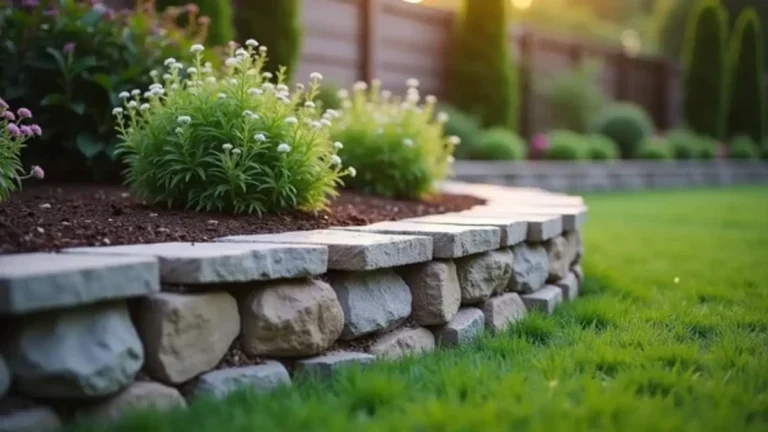
Clean edges can make basic plants look more planned. You do not need new metal edging to get this effect.
Look for old bricks, pavers, flat stones, or leftover building materials. Check local resale groups, reuse stores, yard sales, and neighbors who are removing a patio.
Set the materials on firm, level soil. A thin layer of sand can help keep bricks even. Keep the height steady so the border does not look broken.
Mismatched bricks can still look good when you repeat the same pattern. For example, place every brick flat or turn every third brick on its side.
Avoid tight curves. A straight line or soft curve is easier to install and maintain.
Estimated cost: Low
DIY time: Half day
Maintenance: Very low
Best for: Mulch beds, mailbox gardens, and small borders
Save money: Reuse materials from your own yard before shopping.
Future maintenance: Reset any pieces that move after heavy rain or frost.
Plant Ornamental Grasses for Texture Without Much Work
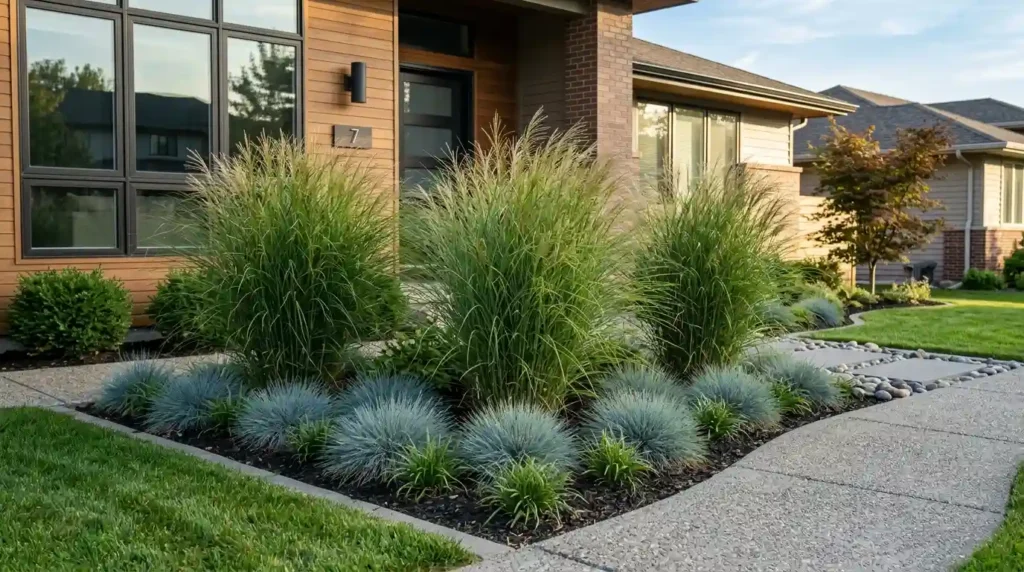
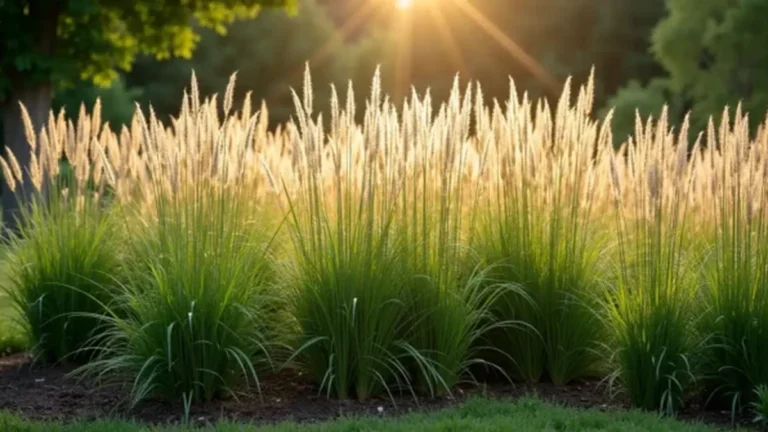
A flat planting bed can look dull even when it is neat. Ornamental grasses add height, movement, and soft texture.
Choose clumping types instead of grasses that spread through underground roots. Check the mature size, since some grasses can cover windows or lean across paths.
Possible choices include blue fescue, little bluestem, switchgrass, native sedges, or a safe local fountain grass variety. Ask a local nursery whether the plant is invasive in your area.
Plant three matching grasses in a row or loose triangle. Repetition looks planned and helps small yards feel less crowded.
Estimated cost: Low to medium
DIY time: Two to three hours
Maintenance: Low
Best for: Sunny beds, dry areas, and modern front yards
Save money: Divide a large healthy clump into several smaller plants when the season is right.
Future maintenance: Cut back old growth once a year if the plant needs it.
Build a Simple Stepping-Stone Path
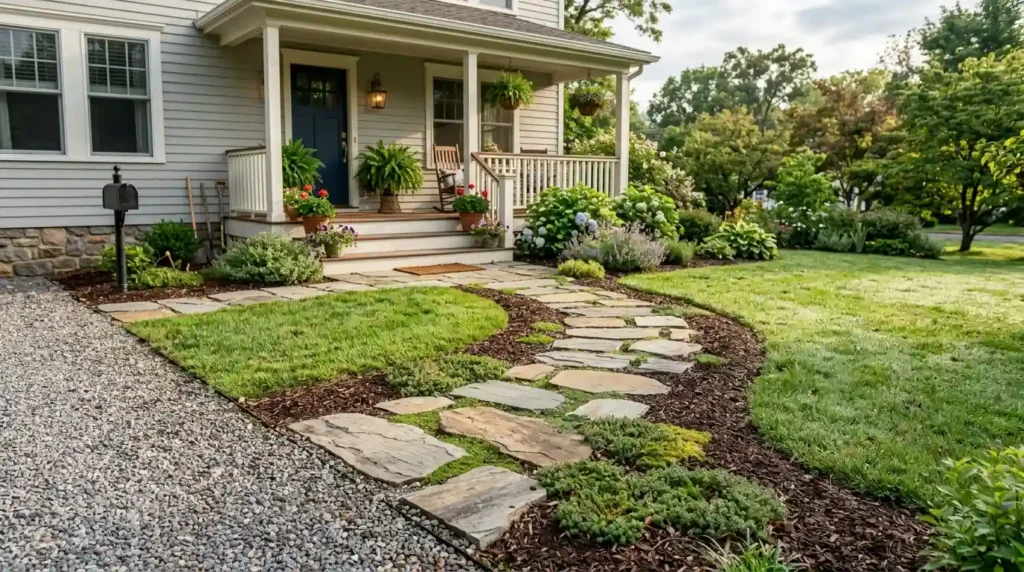
A worn strip of grass usually shows where people already want to walk. A stepping-stone path can protect that area without the cost of a full paved walkway.
Place the stones along the natural route from the driveway to the porch, side gate, or hose tap. Walk the route before setting anything in place.
Set each stone on a firm base. The top should sit level with the ground or nearby material to reduce tripping. Space stones for a comfortable step, then test the path again.
Fill the gaps with mulch, gravel, or a low ground cover that can handle light foot traffic.
Estimated cost: Medium
DIY time: Half day
Maintenance: Low
Best for: Short paths and small front yards
Save money: Reuse concrete pavers or flat stones from another area.
Future maintenance: Level any stone that shifts and keep plants from covering the walking surface.
Group Budget Containers Near the Front Door
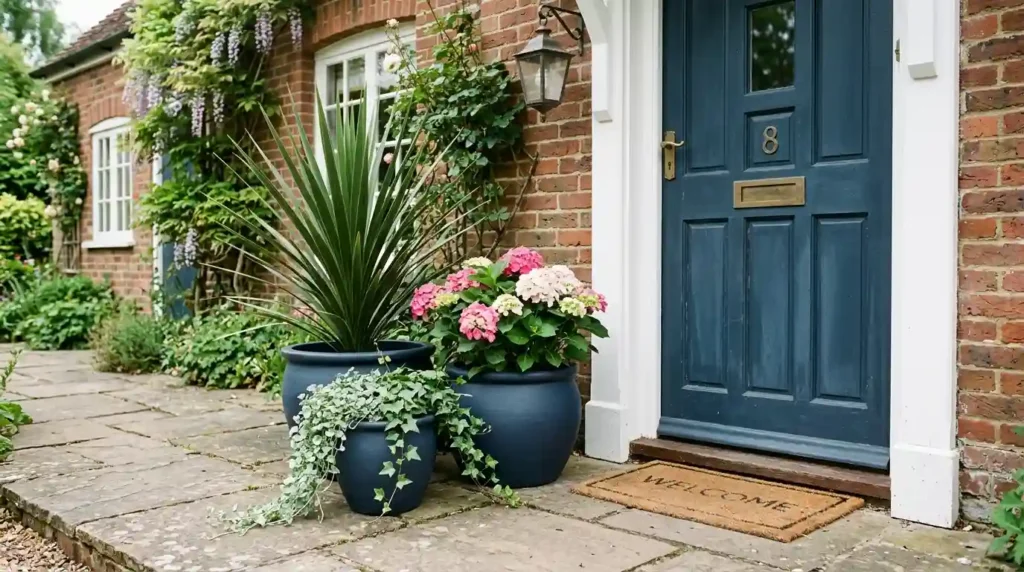
Your front door has more visual impact than a far corner of the yard. A small group of pots can add color without creating a large garden bed.
Use three containers in different heights. One large pot often looks better and holds water longer than many tiny pots.
A simple group may include:
- One tall plant for shape
- One medium flowering or leafy plant
- One low or trailing plant
For less work, use one plant type in each pot. Choose plants that match the amount of sun near the door.
Renters can use containers, solar lights, and removable stepping stones without changing the full yard.
Estimated cost: Low to medium
DIY time: One hour
Maintenance: Medium
Best for: Porches, renters, and small entrances
Save money: Clean and paint old pots in one matching finish.
Future maintenance: Water as needed, remove dead growth, and refresh the top layer of potting mix.
Place Solar Lights Where They Solve a Real Problem
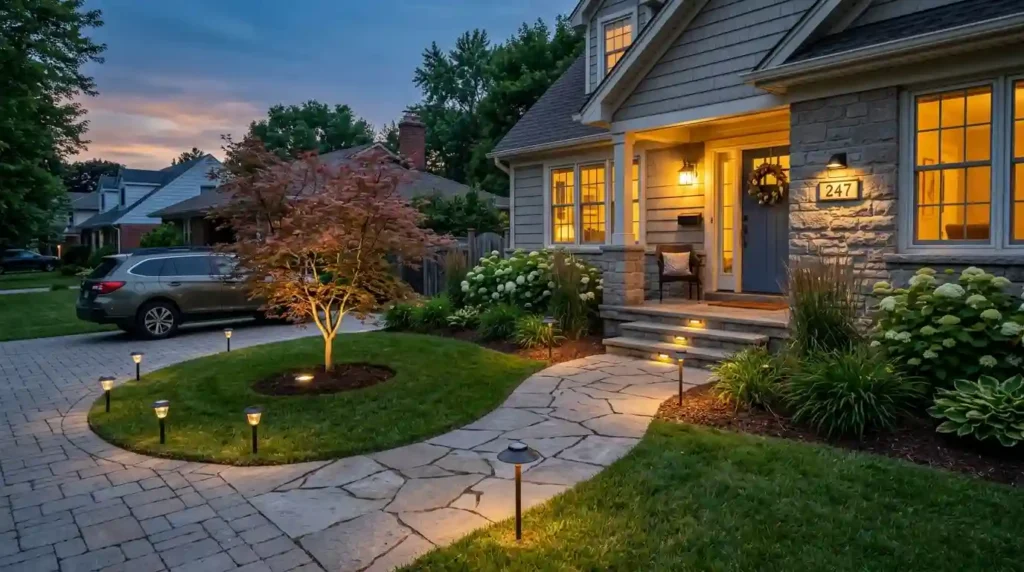
Too many small lights can make a front yard look cluttered. Use solar landscape lighting only where it improves safety or helps guests find the entrance.
Good locations include:
- Front steps
- A turn in the walkway
- The mailbox
- The house number
- The edge of the driveway
- One small tree or feature plant
Place each solar panel where it receives direct light for part of the day. A light under a dense tree or porch roof may not charge well.
Choose a simple style and use the same finish across the yard. Four useful lights often look better than twelve random ones.
Estimated cost: Low
DIY time: One hour
Maintenance: Low
Best for: Paths, steps, and dark entrances
Save money: Buy one small matching set instead of mixing several styles.
Future maintenance: Wipe dust from the panels and replace weak batteries when needed.
Turn the Mailbox Area Into a Small Garden
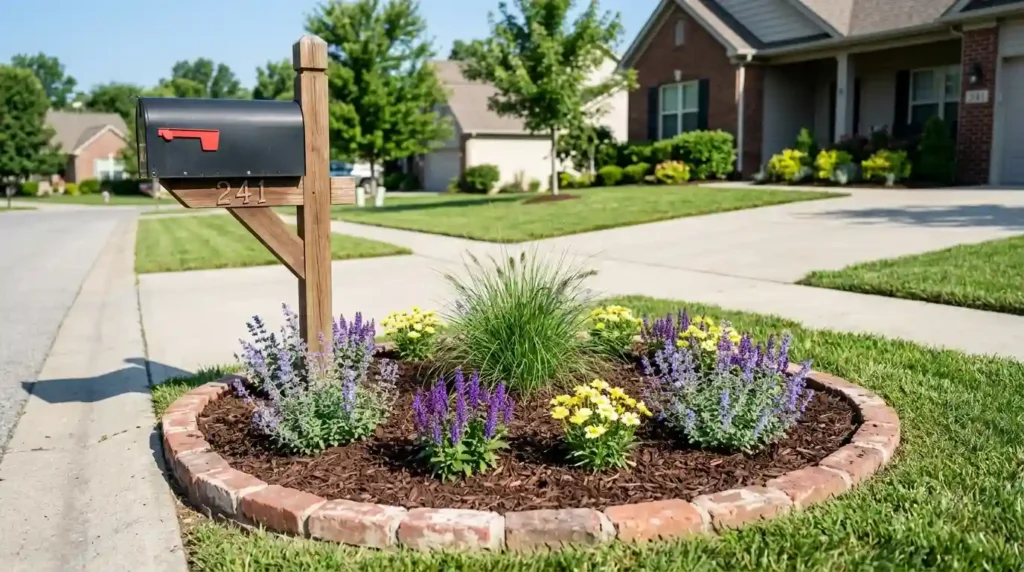
You can improve curb appeal without changing the whole yard. A small mailbox garden gives you one clear project with a strong street view.
Create a simple circle, square, or oval bed. Add one compact grass or small shrub, three low flowering plants, and a layer of mulch. Finish the edge with brick, stone, or a clean cut line.
Keep plants low enough to avoid blocking the mailbox or house number. Avoid thorny plants and aggressive vines. Leave clear access for mail delivery.
Check local rules before changing the area near the street. Some neighborhoods and postal services have limits on mailbox placement and access.
Estimated cost: Low
DIY time: Half day
Maintenance: Low
Best for: Plain lawns and small curb appeal projects
Save money: Use divided plants and leftover edging from another bed.
Future maintenance: Trim plants away from the mailbox and renew mulch as needed.
Install a Soaker Hose or Basic Drip Line
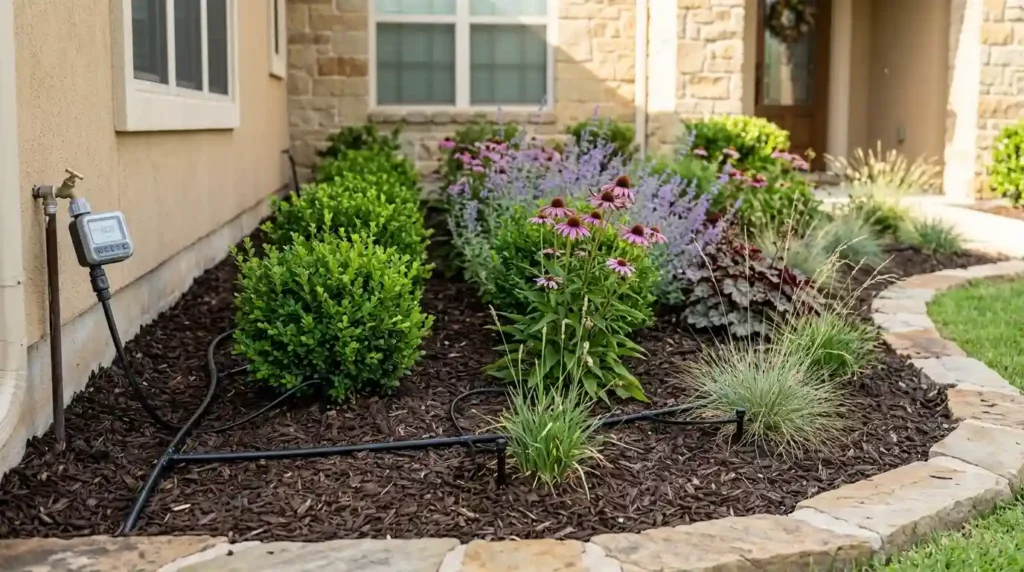
Low maintenance plants still need steady water while their roots grow. A soaker hose or simple drip line can make watering easier.
Place the line near the root area, not against the plant stem. Cover it with mulch if the product instructions allow. Group plants with similar water needs on the same line.
Add a basic timer to reduce missed watering and prevent the hose from running too long. Check local watering rules, especially during hot or dry weather.
A small system can serve a foundation bed, mailbox garden, row of shrubs, or container group.
Estimated cost: Low to medium
DIY time: One to two hours
Maintenance: Low
Best for: New beds and busy homeowners
Save money: Start with one hose and one timer for the bed that dries out fastest.
Future maintenance: Check for leaks, blocked holes, and loose fittings at the start of each season.
Use a Dry Creek Bed to Fix a Wet or Muddy Spot
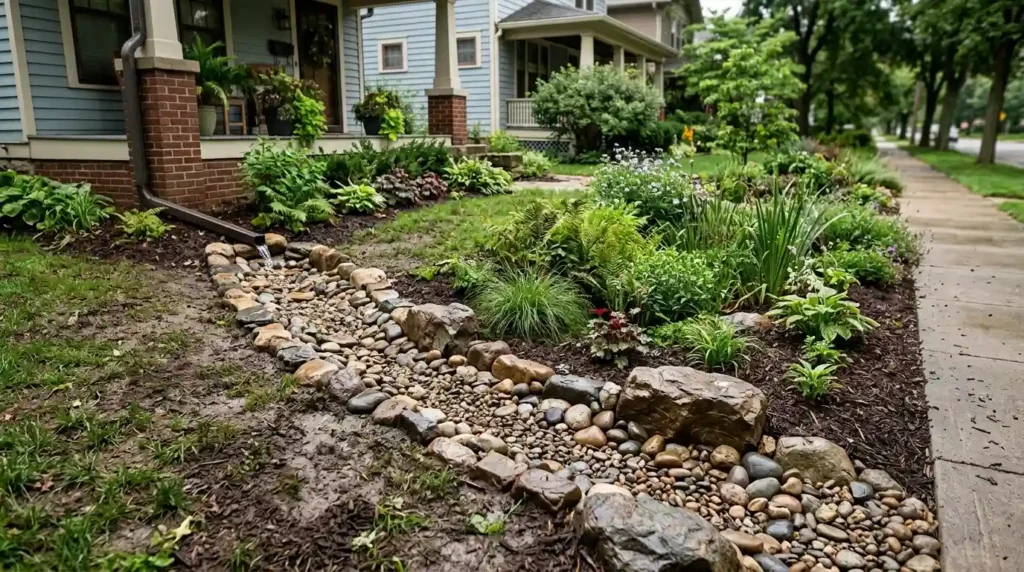
Standing water and washed-out soil can damage plants and make the front yard hard to use. A short dry creek bed may help guide rainwater through a small low area.
Follow the natural slope of the yard. Do not force a sharp curve just for looks. Use a mix of gravel, medium stones, and a few larger rocks for a more natural result.
A dry creek can begin near a downspout, but the water must move away from the foundation. It should not flow onto a neighbor’s property or create a slippery public path.
This idea works best for small surface-water problems. Deep standing water, foundation moisture, or serious erosion needs professional advice.
Estimated cost: Medium
DIY time: One day
Maintenance: Low
Best for: Muddy strips, downspout areas, and light erosion
Save money: Reuse clean stones already found on the property.
Future maintenance: Remove leaves and soil that block the water path.
Reuse Rocks, Pots, Pavers, and Healthy Plants
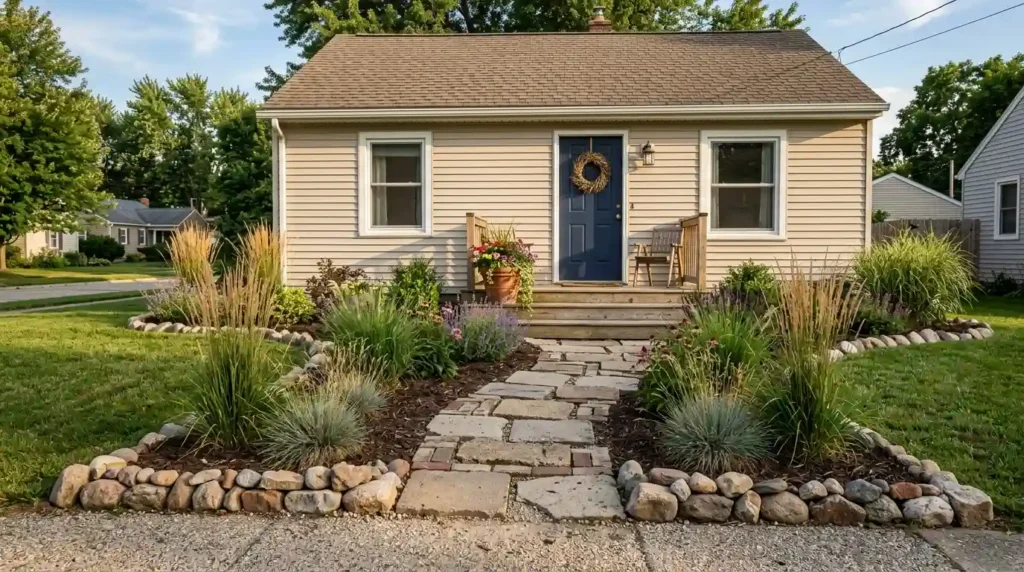
Walk around your property before visiting a garden center. You may already own half the materials needed for a simple front yard makeover.
Move scattered rocks into one planned border. Use leftover pavers for a short path. Clean an old pot and place it near the front door. Divide a healthy perennial or ornamental grass and repeat it in several spots.
Even broken concrete pieces can work as informal stepping stones when they have flat, safe surfaces. Do not use pieces with sharp edges.
The goal is not to use every old item. Choose one or two materials and repeat them. This keeps reused items from looking random.
Estimated cost: Very low
DIY time: One to four hours
Maintenance: Depends on the project
Best for: Tight budgets and weekend updates
Save money: Make a full list of useful items before buying anything.
Future maintenance: Keep reused materials clean, level, and grouped in a clear pattern.
Keep Seasonal Flowers in One Small Color Zone
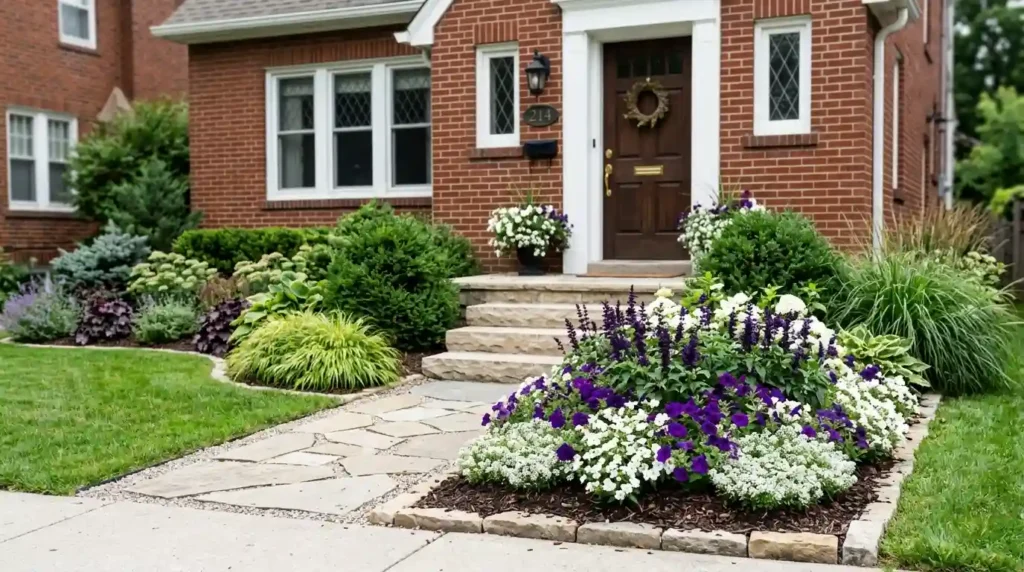
Seasonal flowers can become expensive when they are spread across the whole yard. Place them in one high-impact area instead.
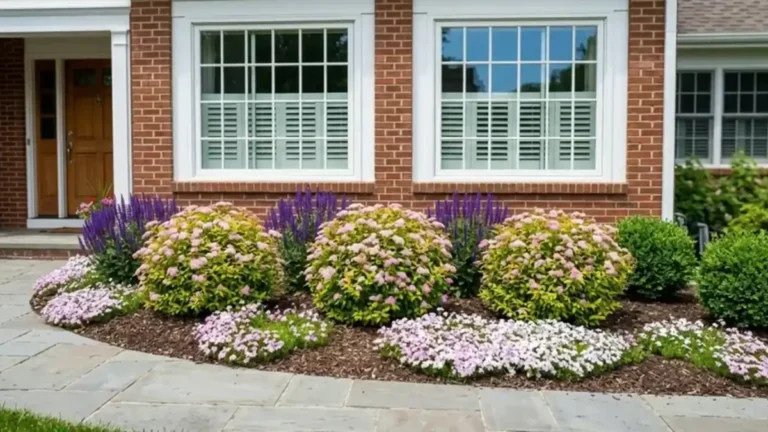
Good locations include the front steps, mailbox, one large container, or the front edge of an evergreen bed. Choose one or two colors that work with the house.
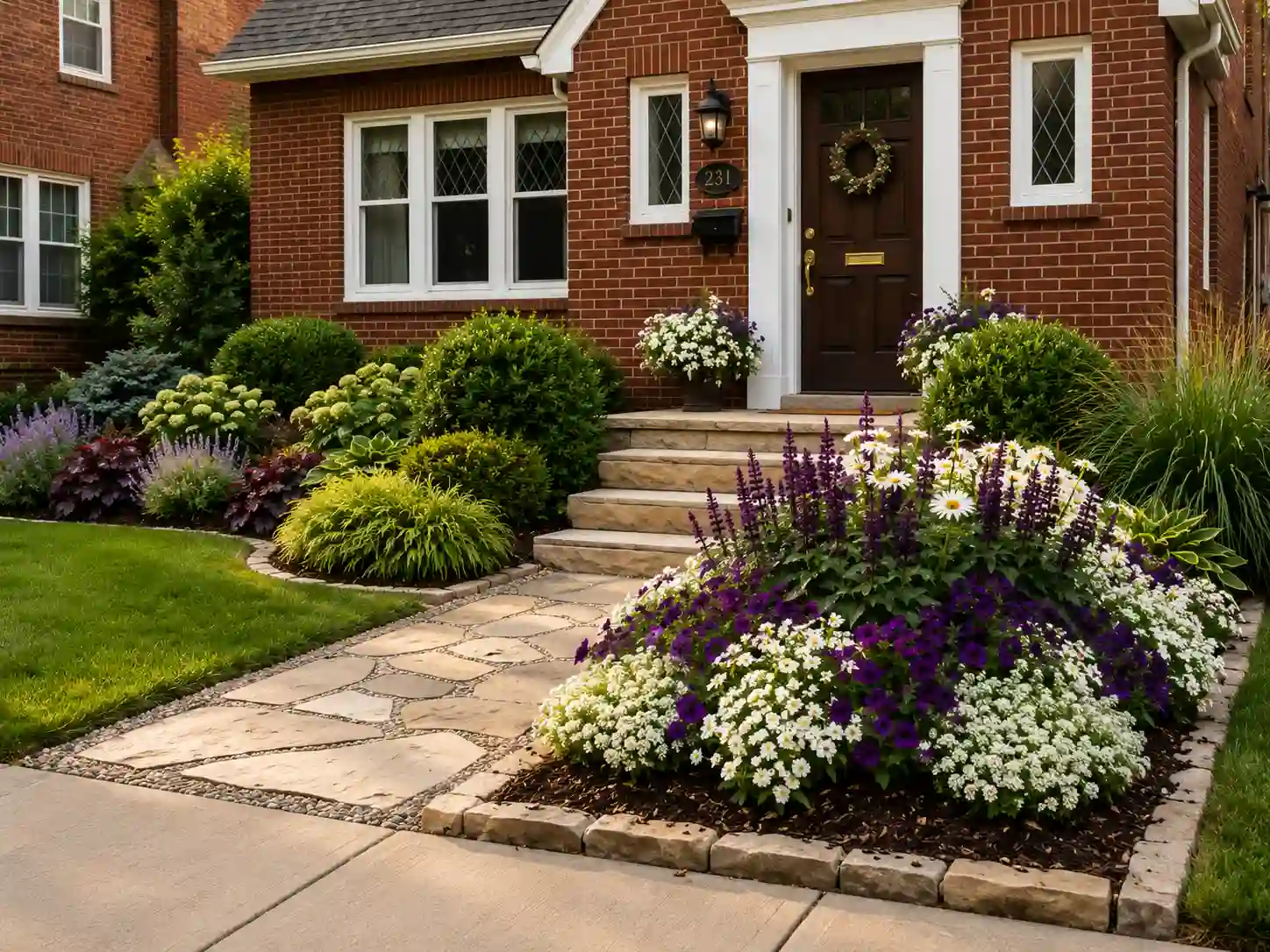
For red brick, white, soft yellow, and deep purple often stand out. White siding can work with many colors, but a limited mix looks cleaner. Gray homes often pair well with white, blue, purple, or soft pink flowers.
Use perennials, shrubs, grasses, and mulch through the rest of the yard. Replace only the small seasonal color zone each year.
Estimated cost: Low
DIY time: One hour
Maintenance: Medium
Best for: Front doors, mailboxes, and small flower beds
Save money: Buy fewer flowers and group them tightly where people will notice them.
Future maintenance: Water, remove faded flowers, and replace seasonal plants only when needed.
Compare These Ideas by Cost, Time, and Maintenance
The best project depends on your yard, budget, and free time. Low maintenance front yard landscaping often starts with cleanup, reuse, mulch, and one clear focal point.
| Idea | Starting Cost | DIY Time | Future Maintenance |
| Mulch bed | Low | Half day | Low |
| Native plant groups | Low to medium | Half day | Low |
| Evergreen shrubs | Medium | Two to four hours | Low |
| Ground cover | Low to medium | Half day | Low |
| Gravel strip | Medium | One day | Very low |
| Reclaimed edging | Low | Half day | Very low |
| Stepping-stone path | Medium | Half day | Low |
| Container group | Low to medium | One hour | Medium |
| Solar lighting | Low | One hour | Low |
| Drip line | Low to medium | Two hours | Low |
For a budget under $50, start with weeding, edging, reused materials, or a small mulch bed. With $50 to $150, you may be able to add containers, solar lights, a drip line, or a few small plants. Larger gravel, path, or drainage projects may cost more.
Prices change by location and yard size. Measure first and check local prices before setting your final budget.
Avoid These Budget Landscaping Mistakes
A low price does not make a plant or material a good choice. The wrong item can cost more when it dies, spreads, or needs to be removed.
Avoid these common mistakes:
- Buying plants without checking their mature size
- Choosing plants only because they are flowering at the store
- Mixing high-water plants with dry-climate plants
- Piling mulch or gravel against the house
- Covering vents or drainage openings
- Using a ground cover that is invasive in your area
- Planting shrubs too close to windows or paths
- Buying too many plant types
- Starting several projects and finishing none
- Using landscape fabric in every bed without a clear reason
A row of discounted plants is not a bargain when the plants cannot handle your soil or sunlight.
Do this instead: measure the space, check the plant label, and make a short shopping list. Buy for one finished area at a time.
Start With One Small, Visible Project
A better front yard does not require a full redesign. Start by reducing one hard-to-mow area, cleaning one border, or improving the entrance.
Choose plants that suit the site. Repeat a few materials. Use what you already own before buying more. Plan for the mature size of each plant, and make sure water moves away from the house.
Walk outside and choose the area that looks the most unfinished. Set a small weekend budget and complete that one job first.
The best low maintenance landscaping ideas for front of house on a budget are the ones you can finish now and easily care for next year.