15 Driveway Landscaping with Rocks Ideas for Any Home
Does the space beside your driveway look bare, muddy, or hard to maintain? You are not alone. Driveway edges often have patchy grass, weeds, loose soil, and areas that are difficult to mow.
The right approach to driveway landscaping with rocks can give these problem areas a clean and finished look. Rocks can also reduce yard work, define the driveway edge, and help protect soil from light water runoff.
Still, placing random stones beside the pavement will not always look good. You need to choose the right rock size, color, border, and plants. You also need to think about drainage and vehicle space.
These 15 rock landscaping ideas for driveway areas include simple borders, planted rock gardens, drainage features, and modern designs. You will find options for small yards, long driveways, slopes, and tight spaces.
Plan Your Driveway Landscaping with Rocks Before You Buy Materials
Before choosing a rock color, decide what the space beside your driveway needs to do.
Is the grass always muddy? Does rain wash soil onto the pavement? Do weeds keep growing along the edge? Or does the driveway simply look plain?
Your answer will help you pick the right design.
Rocks can serve three main purposes:
- Decorative rocks improve the look of the driveway.
- Functional rocks help control light runoff, mud, and soil movement.
- Structural rocks support slopes, raised beds, and low walls.
Measure the length and width of the area before you order materials. Even a small mistake can leave you with too much rock or an unfinished section.
Watch the area during or after heavy rain. Note where the water comes from and where it collects. Rocks may slow soil erosion, but they cannot fix every drainage issue.
You should also mark the space used by tires, doors, gates, trash bins, and snow equipment. Keep plants and large stones away from these areas.
Choose rock colors that work with your house and driveway. Pale stone can brighten dark asphalt. Charcoal gravel can create a strong contrast beside light concrete.
Before digging, contact your local utility marking service. This step helps you avoid buried pipes and cables.
Before Buying Landscaping Rock
- Measure the full area.
- Take photos from the street and front door.
- Check the path of rainwater.
- Mark tire and walking zones.
- Check for buried utilities.
- Pick one main rock color.
- Estimate the mature size of each plant.
Create a Smooth River Rock Border
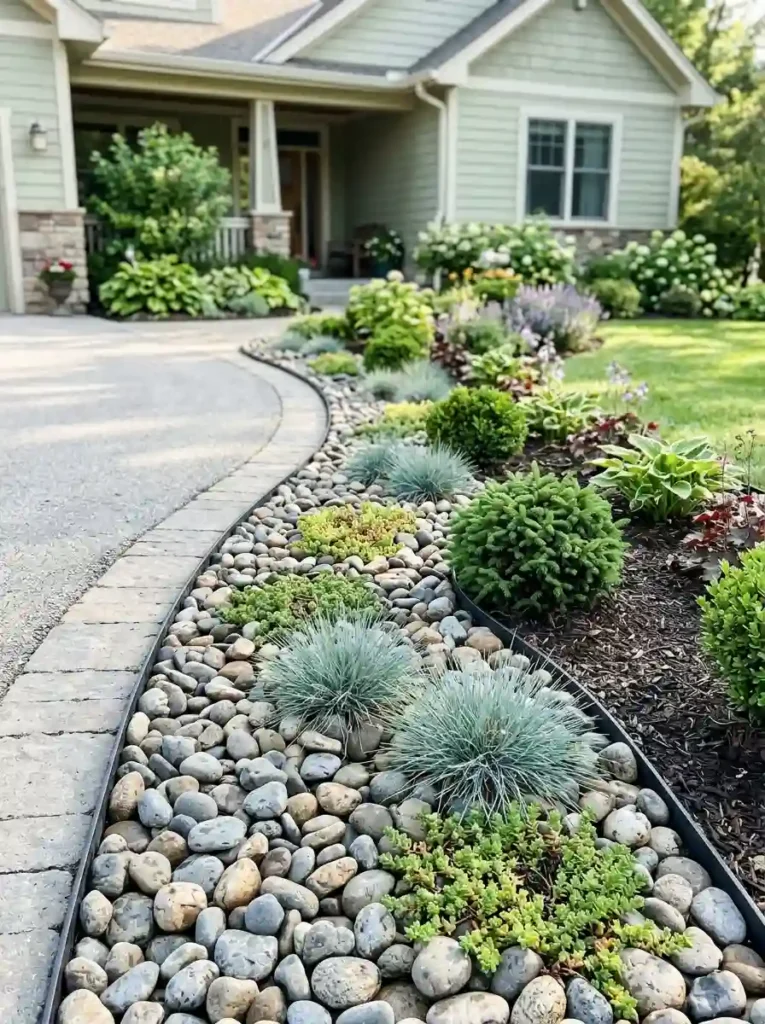
A river rock border can hide bare soil and create a soft edge beside the driveway. The rounded stones work well with cottage, rustic, and natural yard styles.
Choose medium stones instead of tiny pebbles. Small pebbles can roll onto the pavement and get caught in tire treads.
Install metal, stone, or strong plastic edging along both sides of the rock bed. Edging keeps the stones in place and stops nearby soil from mixing with them.
Gray and tan river rocks look good beside light concrete. You can add blue fescue, sedum, or small evergreen shrubs for more color.
Keep the border narrow if you have a small front yard. A strip that is 18 to 24 inches wide may be enough to create a clear edge.
Best for: Natural and cottage-style homes
Maintenance level: Low to medium
Watch for: Rocks rolling onto the driveway
Fix a Messy Edge with Crushed Stone
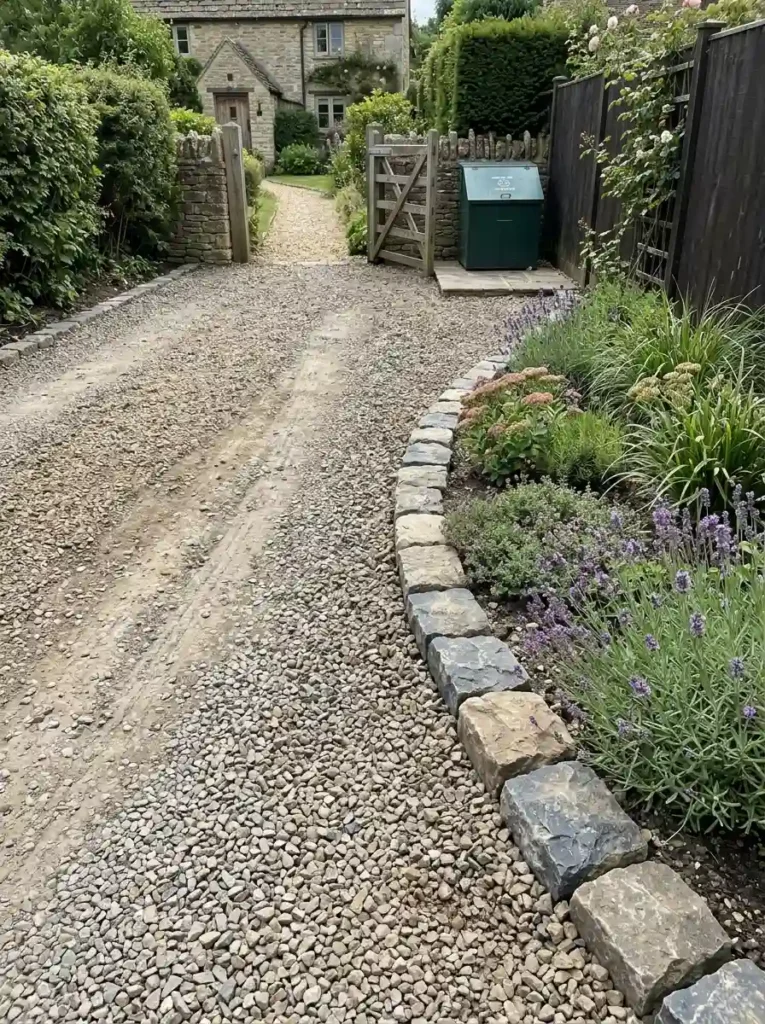
Crushed stone is a smart choice for a driveway edge that gets light foot traffic. Its sharp sides lock together better than smooth gravel.
This makes it more stable near tires, gates, and trash bin paths.
Remove the grass and loose soil first. Add a firm base, then spread and compact the crushed stone. A hand tamper may work for a small area. Larger spaces may need a plate compactor.
Use crushed granite for a warm, natural look. Gray limestone works well beside concrete, brick, or dark siding.
Add larger cobblestones along the outside edge if the crushed stone looks too plain. This extra border makes the design feel planned.
Crushed stone is useful, but it can look harsh by itself. Add a few low plants to soften the space.
Best for: Narrow strips and high-use edges
Maintenance level: Low
Watch for: Uneven spots caused by a weak base
Combine Cobblestones and Gravel for a Strong Border
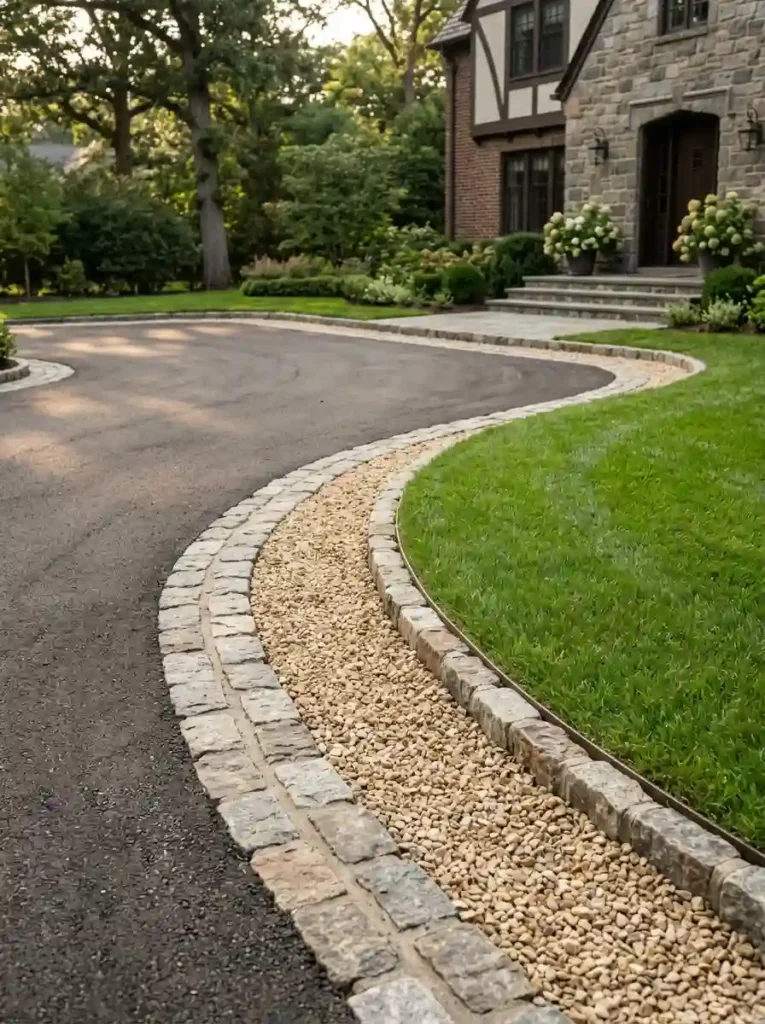
Loose gravel can spread into the lawn or driveway. A row of cobblestones helps keep it contained.
Place the cobblestones along the outer edge of the bed. Fill the space between the stones and driveway with smaller gravel.
This design gives you the texture of gravel with the clean shape of a solid border.
Match the cobblestones with your front steps, walkway, or house trim. Charcoal stones with pale gravel can suit a modern gray home. Warm brown stones can work well with brick or wood siding.
A gentle curve can soften a long, straight driveway. Use a garden hose to test the shape before you start digging.
Cobblestones can cost more than basic plastic edging. However, they often last longer and create a stronger finished look.
Best for: Traditional and formal front yards
Maintenance level: Low
Watch for: Poorly placed stones that create an uneven edge
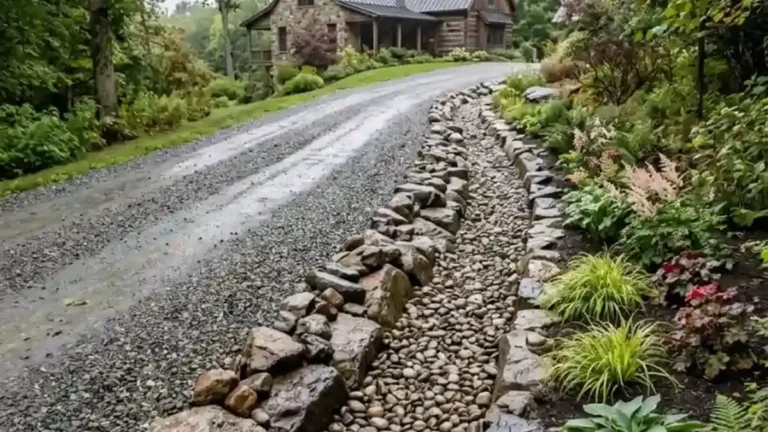
Build a Dry Creek Bed Beside the Driveway
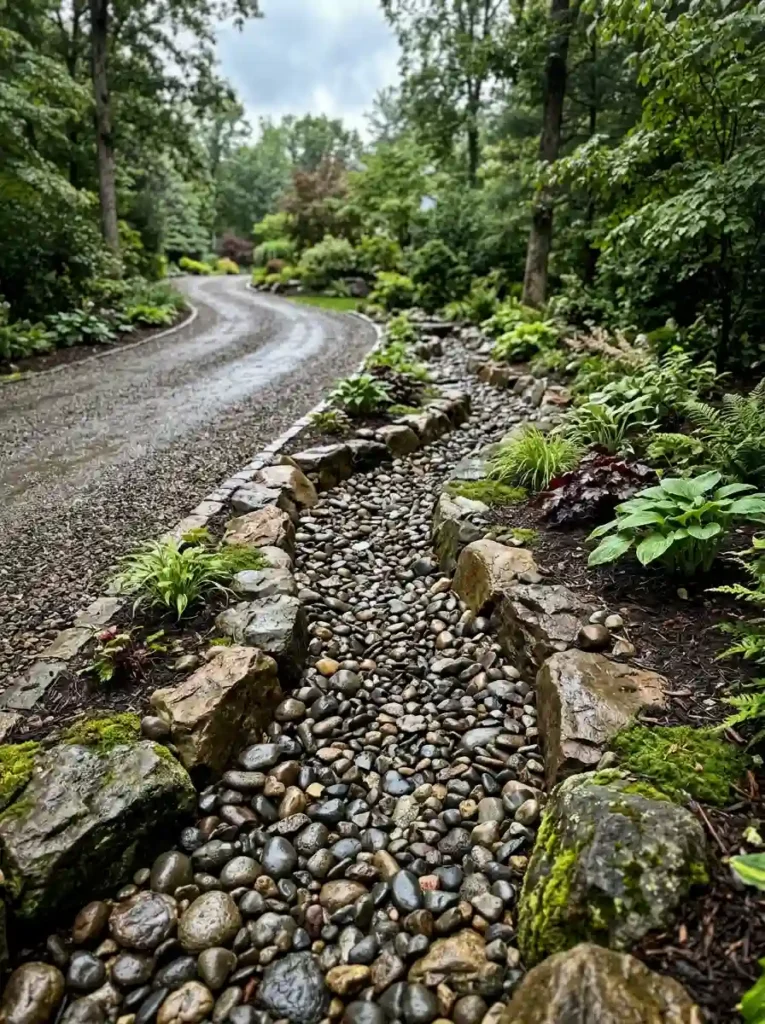
Does rainwater cut a path through the soil beside your driveway? A dry creek bed may help protect the area while adding a natural feature.
Start by finding the low path where water already flows. Shape a shallow channel with gentle curves.
Place larger stones along the sides. Fill the center with smaller river rocks. The mix of sizes makes the creek bed look more natural.
You can add moisture-friendly plants near the edges. Keep plant roots and stems out of the main water path.
A dry creek bed must lead water to a safe place. Do not send water near your foundation, across a public path, or onto a neighbor’s property.
This feature can handle light runoff when it is shaped and placed correctly. It may not fix standing water or serious flooding. Those problems may require grading, a drain, or help from a drainage expert.
Best for: Areas with visible runoff
Maintenance level: Medium
Watch for: Sending water to the wrong place
Add Contrasting Gravel Bands
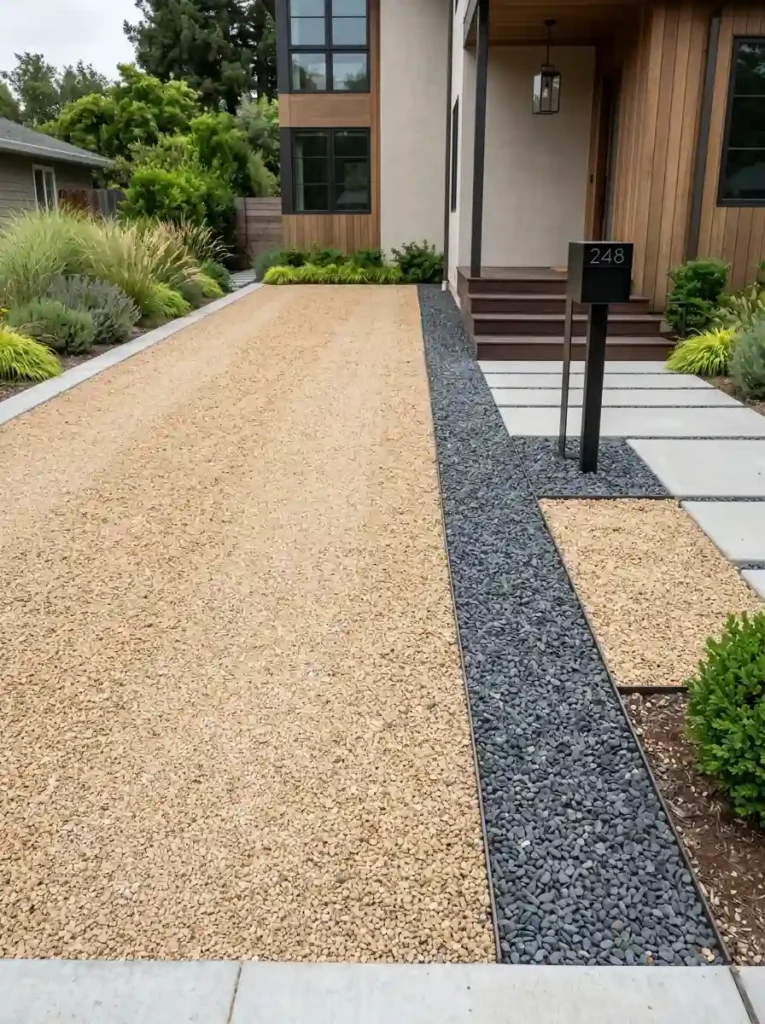
A wide rock bed can look flat when it contains one color from end to end. A second gravel color can add shape without using more plants.
Start with one main color. Then add a narrow band in a darker or lighter shade.
For example, use tan gravel as the base and add a charcoal strip through the center. You can also place a dark band along the driveway edge.
Follow the line of the driveway. Random waves and circles can make the area look busy.
Use hidden edging between the two rock colors. Without a divider, the stones will mix over time.
Repeat both colors near the front steps, mailbox, or porch. This small detail connects the driveway landscape with the rest of the yard.
Keep the pattern simple. Two colors are often enough.
Best for: Wide, open rock beds
Maintenance level: Medium
Watch for: Gravel colors mixing together
Add a Stepping-Stone Path Through the Rocks
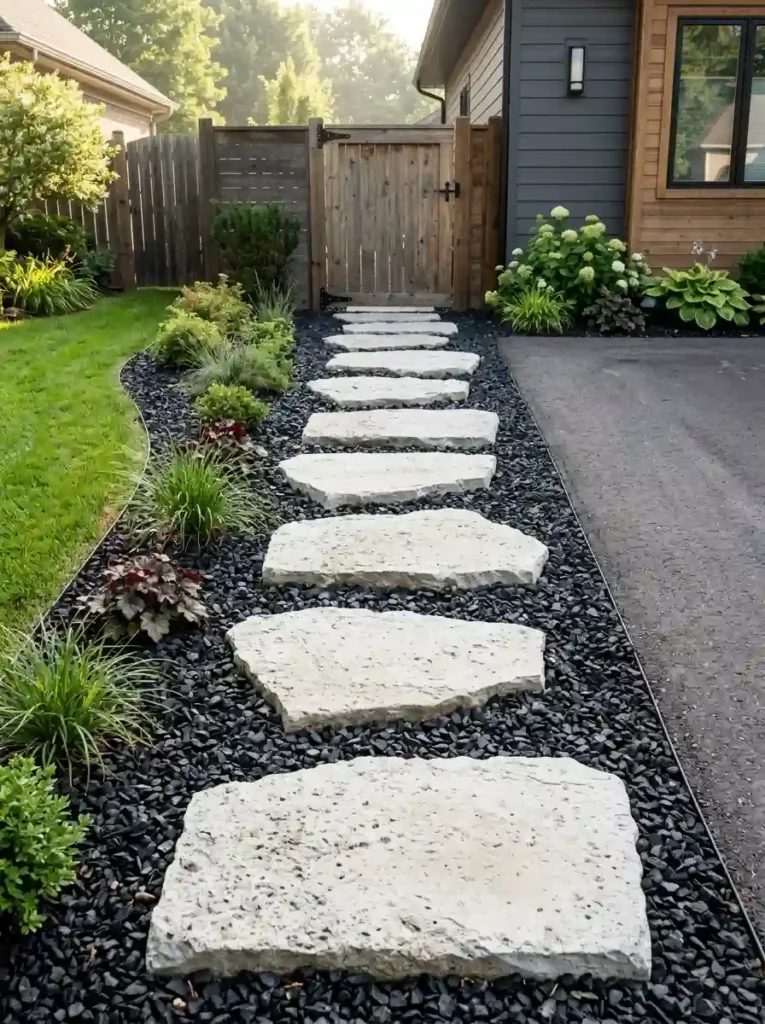
A rock bed beside the driveway can block access to a side gate, porch, or garden. Stepping stones give you a clean path through the area.
Choose flat stones with a rough surface. Smooth stones can become slippery after rain.
Set each stone on a firm, level base. The top should sit slightly above the surrounding gravel. This helps keep loose rocks off the walking surface.
Use large natural stones for a casual yard. Choose square or rectangular pavers for a modern home.
Black gravel with pale concrete slabs creates a bold contrast. Warm gravel with flagstone creates a softer look.
Test the spacing before you finish the project. Walk across the stones several times to make sure the steps feel natural.
Best for: Paths to gates and side doors
Maintenance level: Low
Watch for: Loose or uneven stepping stones
Create a Drought-Tolerant Rock Garden
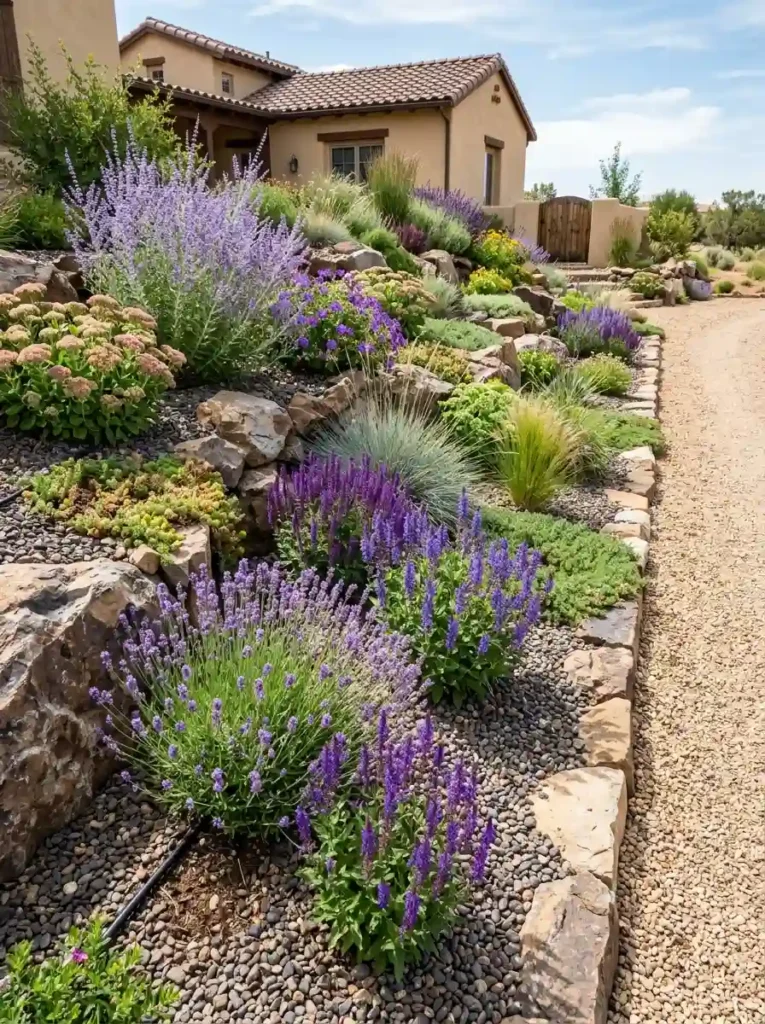
A planted rock garden can reduce mowing while still adding color and texture.
Start with plants that suit your local weather, soil, and sunlight. A plant that grows well in one region may fail in another.
Good options may include:
- Lavender
- Salvia
- Sedum
- Yucca
- Agave
- Russian sage
- Blue fescue
- Small ornamental grasses
Group plants with similar water needs. This makes watering easier and lowers the risk of root problems.
Leave enough space for each plant to reach its full size. Crowded plants can cover the rocks and grow over the driveway.
Avoid sharp plants near car doors and walking areas. Agave and yucca can cause injuries when planted too close.
Drip irrigation sends water near the roots. It also keeps the driveway dry.
Best for: Dry and sunny front yards
Maintenance level: Low after plants settle
Watch for: Plants that outgrow the space
Replace a Difficult Grass Strip with Rock Mulch
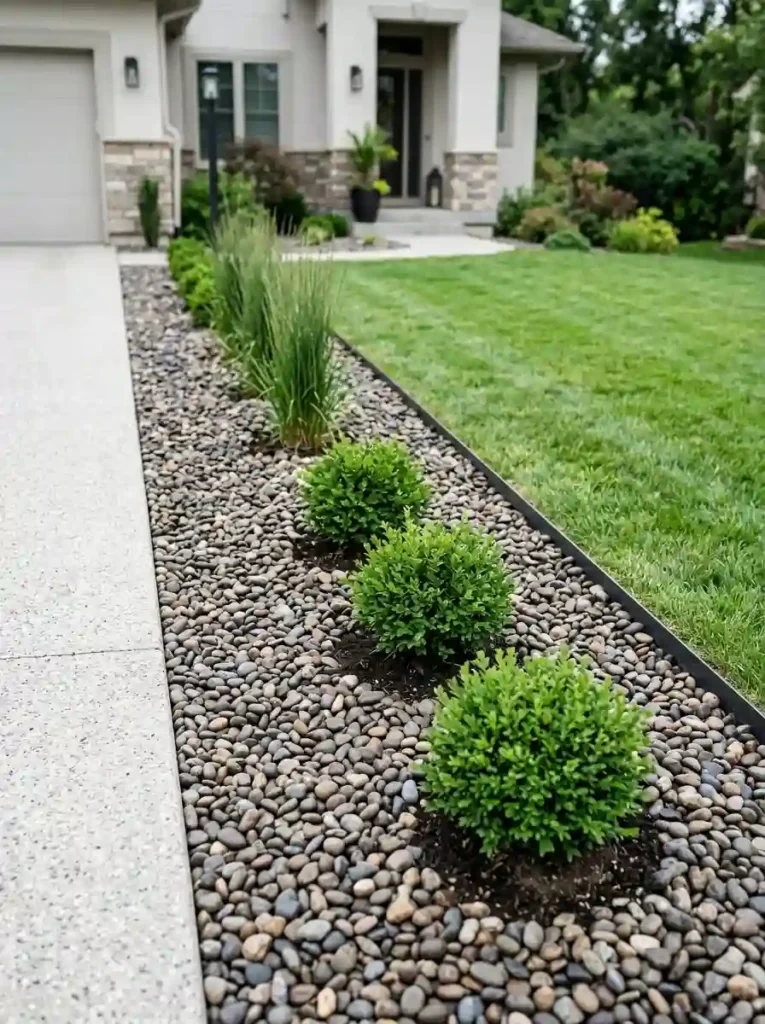
A narrow strip of grass beside the driveway can be hard to mow. It may also turn brown from heat, road salt, or tire traffic.
Replace that weak grass with rock mulch.
Remove the old grass and roots. Level the soil so water does not run back at the house or collect near the pavement.
Add edging between the new rock bed and any grass that remains. This gives the area a clear shape.
Use repeated groups of the same plant instead of many different plants. Three dwarf grasses or three small shrubs often look better than a random mix.
Pale gravel can brighten a shaded strip. Dark rock can work well beside white siding or light concrete.
Keep the rocks away from tree trunks and plant crowns. A thick pile of stone can trap heat and moisture around the base.
Best for: Thin grass strips and hot edges
Maintenance level: Low
Watch for: Poor grading below the rocks
Plant Ornamental Grasses Among Large Stones
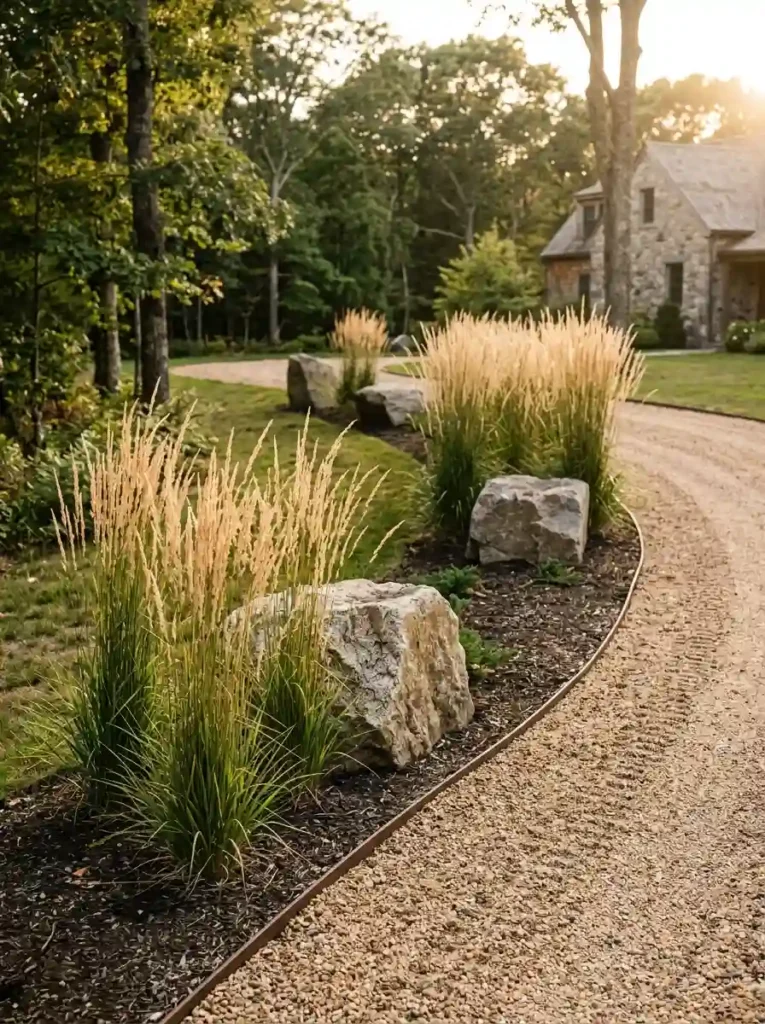
Long driveways can feel empty when the full edge is covered with one type of gravel. Large stones and grasses can break up the space.
Use a few anchor stones instead of many small rocks. Partly bury each stone so it appears settled into the ground.
Plant ornamental grasses in groups of three or five. Repeated groups create a calm and connected look.
Choose upright types that will not fall across the pavement. Feather reed grass and smaller switchgrass varieties may work in some climates.
Mix the soft grass blades with rough stones. The change in texture adds interest without adding bright colors.
Leave room to reach each plant for trimming. Many grasses need to be cut back once a year.
Best for: Long or curved driveways
Maintenance level: Low to medium
Watch for: Grass leaning into the vehicle path
Frame the Driveway Entrance with Boulders
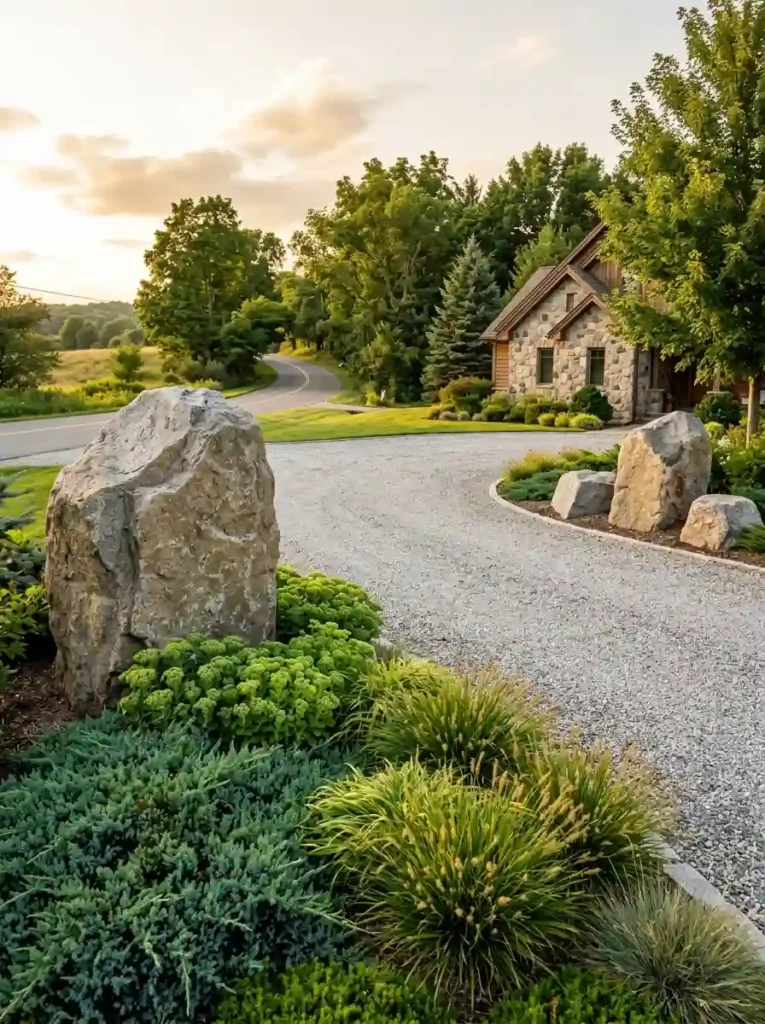
The driveway entrance is one of the first things people see. A few boulders can give it more shape and weight.
Use one large boulder or a group of three in different sizes. Groups of odd numbers often look more natural than matching pairs.
Partly bury the bottom of each boulder. A stone placed flat on top of the soil can look added rather than settled.
Match the rock with materials used on the house. Limestone can suit a light stone home. Dark granite may work beside modern siding.
Add low juniper, sedum, or small grasses around the stones.
Keep every boulder outside the vehicle turning space. It should not block the driver’s view of cars, bikes, or people near the street.
Large rocks are heavy. Ask the supplier how they will be delivered and placed before ordering.
Best for: Long, rural, and wide driveways
Maintenance level: Low
Watch for: Blocked views and tight turning space
Build a Small Rock Garden Around the Mailbox
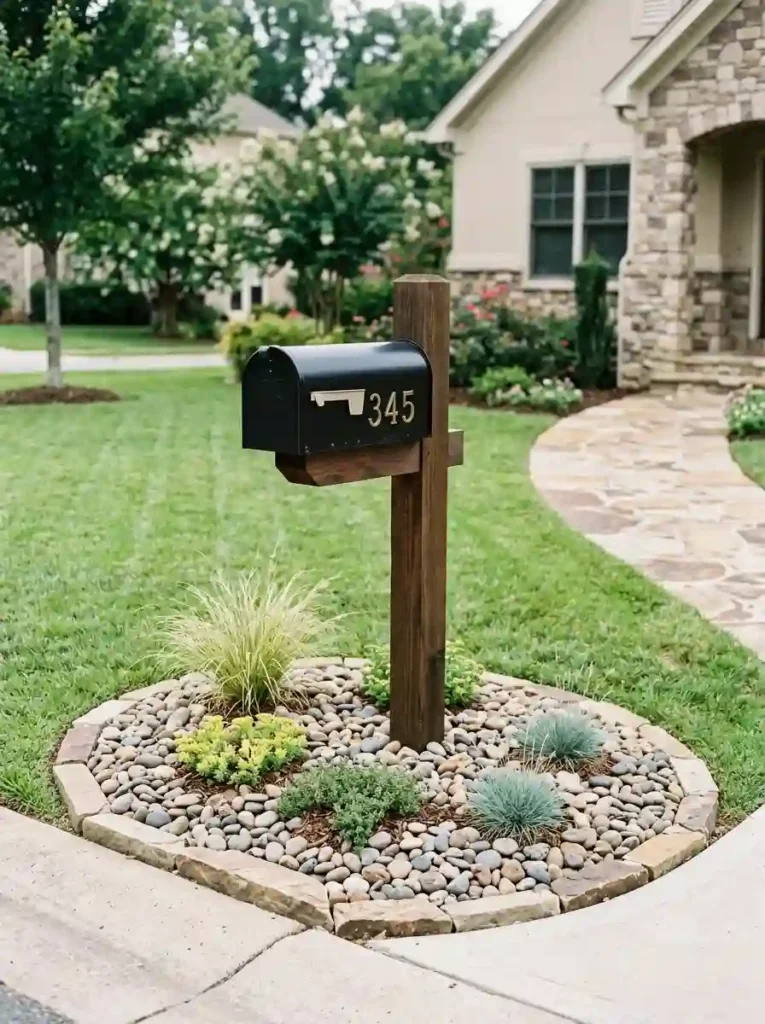
A mailbox area often has worn grass, weeds, or bare soil. A small rock garden can fix the problem without taking over the yard.
Create a simple circle, oval, or curved bed around the post. Keep the shape large enough to look planned but small enough to maintain.
Use river rock, crushed stone, or pea gravel. Add one small grass and a few low plants for color.
Choose salt-tolerant plants if road salt reaches the area during winter. Your local garden center can help you find suitable options.
Do not cover the house number or block access to the mailbox. Keep plants low so drivers and delivery workers can see clearly.
Repeat a rock color used closer to the house. This helps the mailbox area feel connected to the full landscape.
Best for: Small weekend projects
Maintenance level: Low
Watch for: Plants hiding the post or house number
Use Low-Voltage Lights to Show the Rock Design
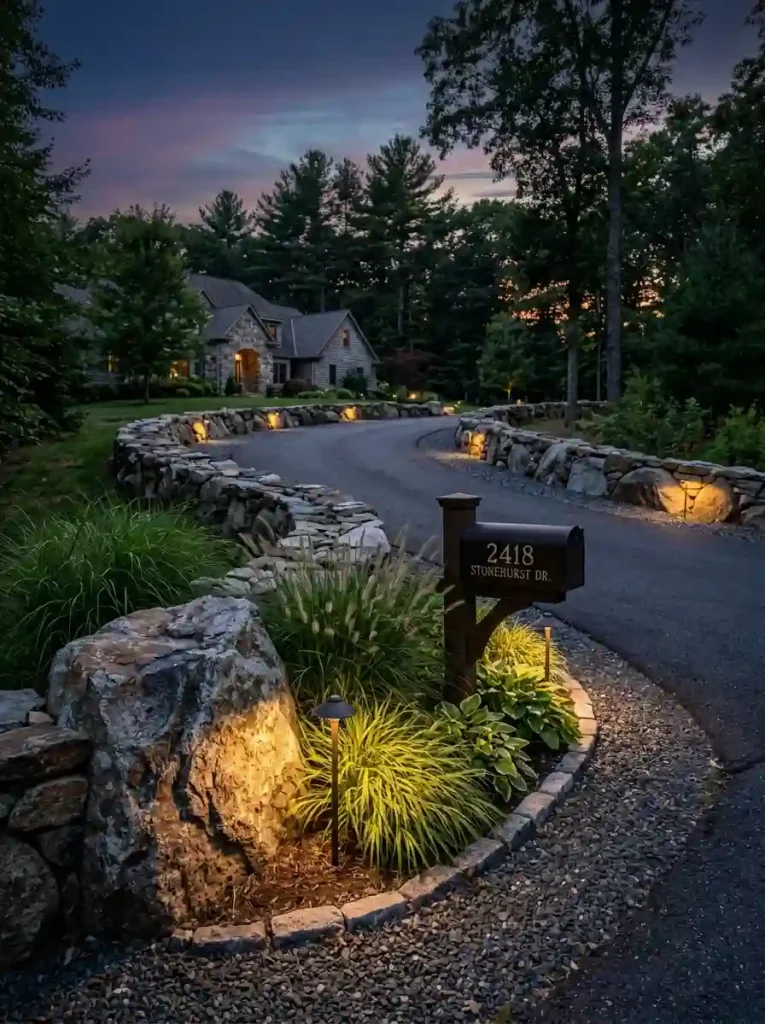
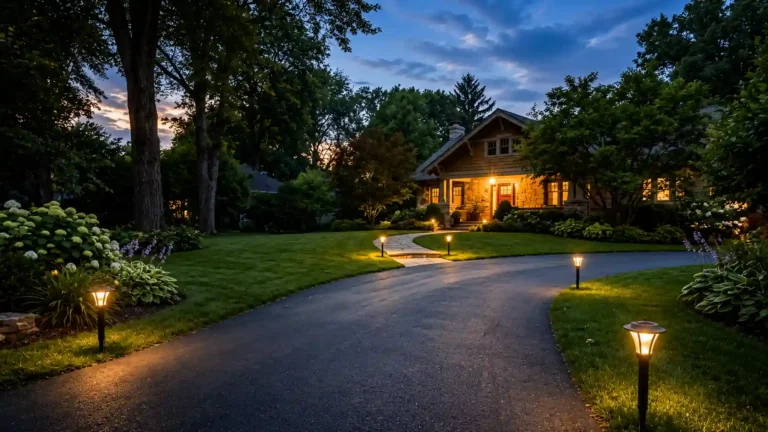
Rock landscaping can disappear after sunset. Low-voltage lights can show the driveway edge and make the entrance easier to see.
Use a few lights instead of placing one beside every stone.
Aim small lights at feature boulders, grasses, or the mailbox bed. Point them down when possible. This reduces glare for drivers and neighbors.
Warm light often looks softer around stone and plants. Keep the same light tone across the front yard.
Protect fixtures from car tires, lawn tools, and snow equipment. Place wires where they will not be damaged during yard work.
Solar lights are easy to install, but their output may change with weather and shade. Wired low-voltage lights tend to give steadier results.
Lighting should support safety and shape. It should not turn the driveway into a bright runway.
Best for: Dark entrances and long driveways
Maintenance level: Low to medium
Watch for: Glare and poorly protected wires
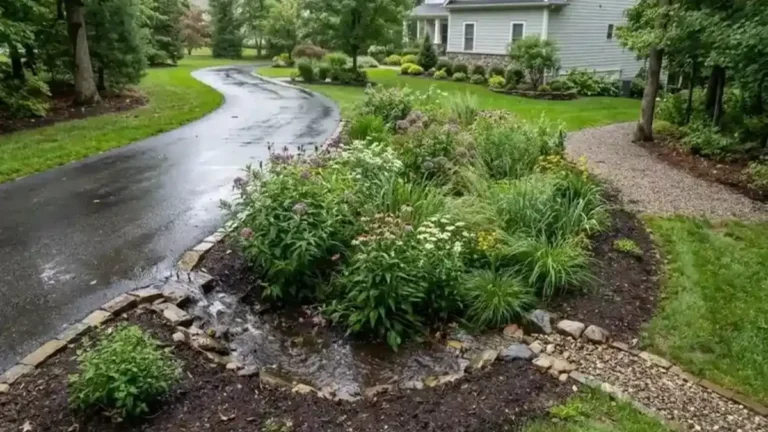
Guide Runoff with a Rock-Lined Swale
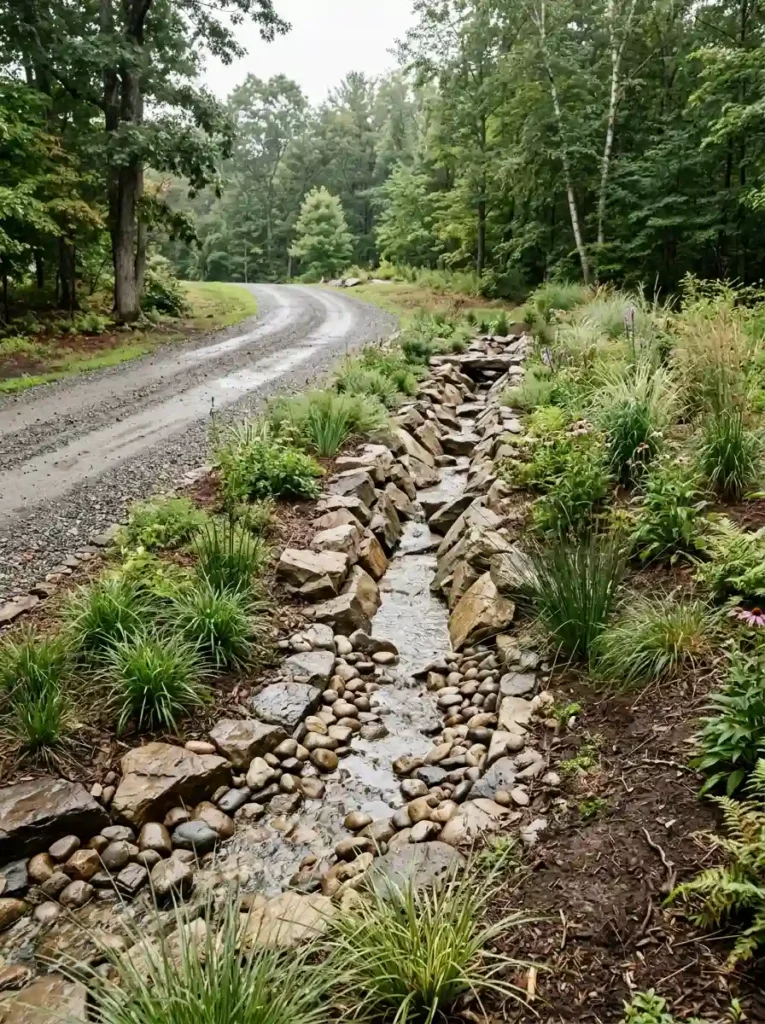
A drainage swale is a shallow channel that moves rainwater across the yard.
It can help when water runs beside the driveway and washes soil away.
Shape the swale so it follows the natural slope. Use larger or rough stones where the water moves faster. Smaller stones may wash away during heavy rain.
Plants along the sides can slow the water and hold the soil. Choose plants that can handle both wet and dry periods.
Check the swale after storms. Remove leaves, soil, and trash that may block the water path.
A rock-lined swale is not the right fix for every yard. Get professional advice if water reaches your home, floods the driveway, or crosses a public walkway.
Local rules may also control where stormwater can go.
Best for: Light erosion and surface runoff
Maintenance level: Medium
Watch for: Blockages and poor water direction
Stabilize a Sloped Driveway with Retaining Stones
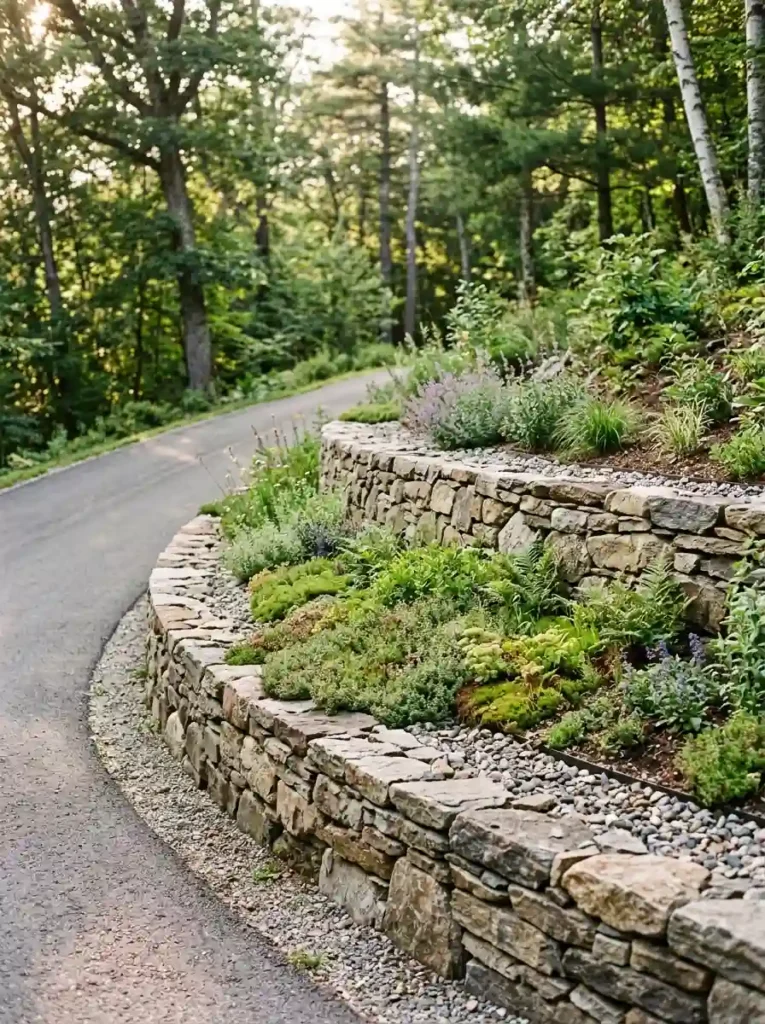
Soil beside a sloped driveway may wash down during rain. Low retaining stones can help hold it in place.
Use fieldstone, retaining blocks, or large rocks to create short level areas. Two low terraces may be safer and easier to maintain than one tall wall.
Add groundcover plants between the stones. Their roots can help hold loose soil.
Water must have a safe way to drain from behind the wall. Trapped water can push stones out of place.
Small decorative terraces may work as a DIY project. Tall walls and walls near heavy vehicle areas need more planning.
Local permits may be needed for larger structures. A contractor or engineer can help with height, base depth, and drainage.
Best for: Sloped driveway edges
Maintenance level: Medium
Watch for: Water pressure behind the stones
Create a Modern Look with Dark Rock and Concrete
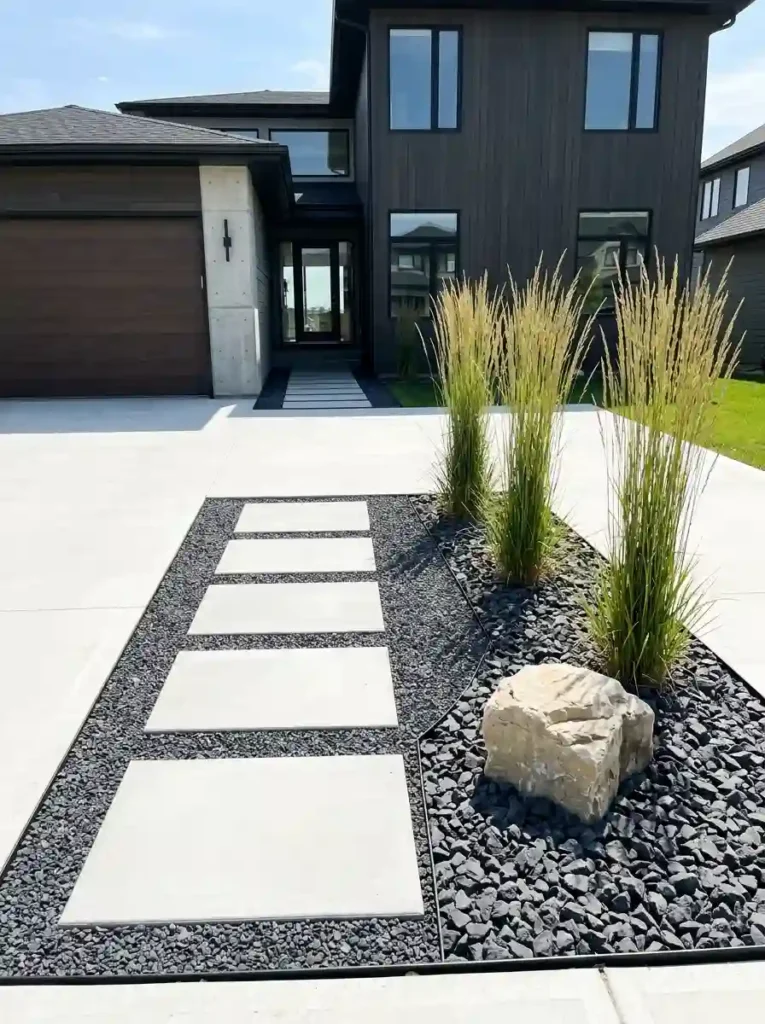
Modern driveway landscaping often looks best when the design stays simple.
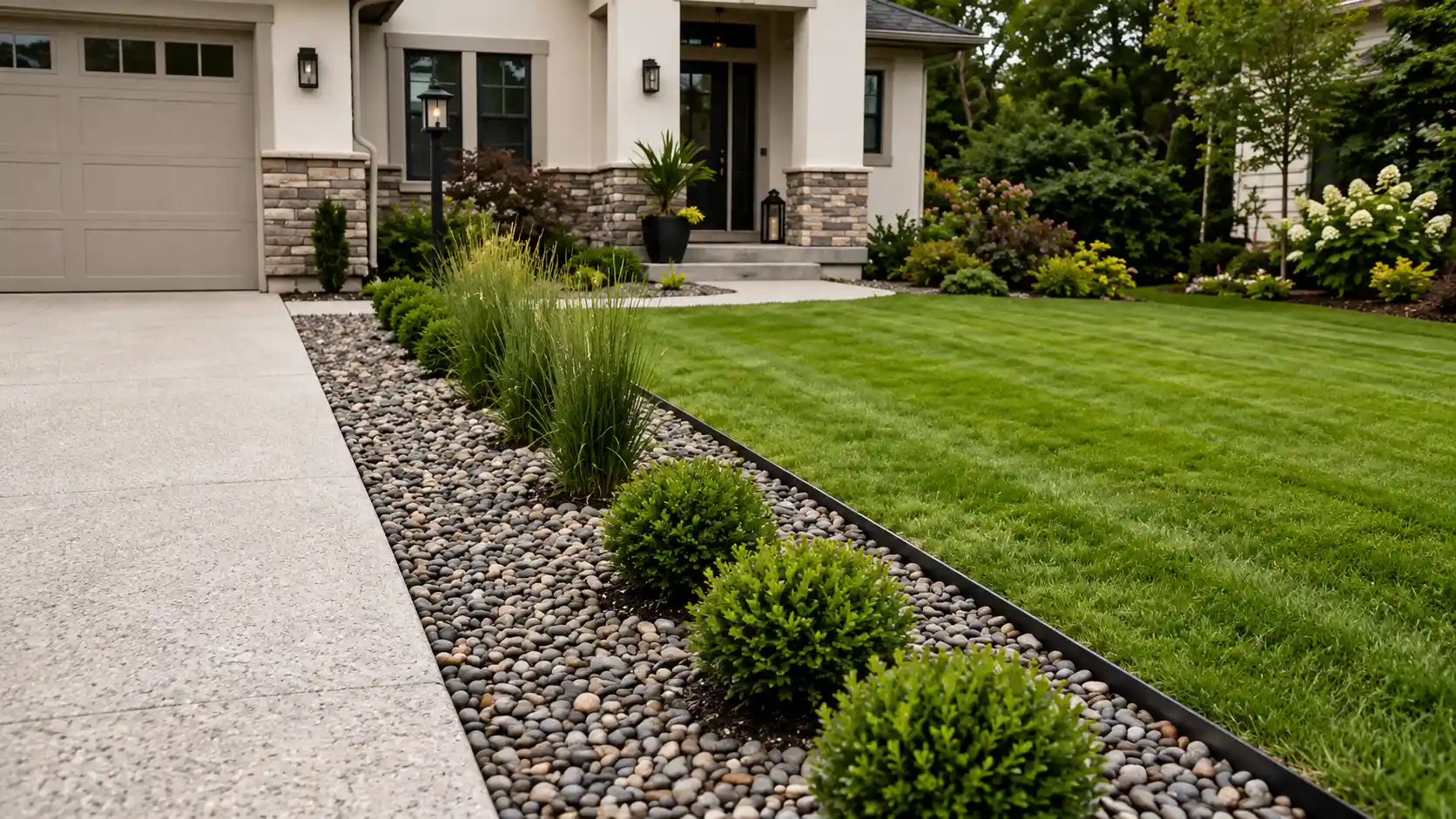
Use dark gravel, black lava rock, or charcoal stone beside pale concrete. Add rectangular pavers to repeat the straight lines of the driveway.
Choose one feature boulder or one sculptural plant. Too many focal points can make the area feel crowded.
Limit the full design to:
- One main rock color
- Two rock sizes
- Two or three plant types
- One repeated shape
You might combine black gravel, pale concrete slabs, one light boulder, and three upright grasses.
Leave open space between the plants. Empty space is part of the design.
Dark rocks may become hot in strong sun. Check the heat needs of nearby plants before using them across a large area.
Best for: Modern and simple homes
Maintenance level: Low
Watch for: Heat from dark stone
How to Choose the Best Rocks for Driveway Landscaping
The best rock depends on the job it needs to do. Color matters, but size, shape, weight, and location matter too.
River Rock
River rock has a smooth and natural look. It works well in planted beds and dry creek features.
Its round shape allows it to move. Use strong edging and avoid placing small river rock near tire paths.
Crushed Stone
Crushed stone has sharp sides that fit together. This makes it more stable than rounded gravel.
It works well in narrow borders and lightly used paths. It may look rough without plants or a solid outer edge.
Pea Gravel
Pea gravel is small, smooth, and easy to walk on. It works well around stepping stones.
It also spreads easily. Use deep edging to keep it out of grass and pavement.
Lava Rock
Lava rock is light and bold. Red or black pieces can suit desert and modern yards.
The light pieces may move during heavy rain. Lava rock can also be hard to remove after it mixes with soil.
Decomposed Granite
Decomposed granite creates a firm, natural-looking surface when installed well.
It can work in paths and casual borders. Some products need a stabilizer to reduce dust and movement.
Landscape Boulders
Boulders add height and create strong focal points.
They need careful placement and safe delivery. Partly bury them for a more natural look.
Before ordering a large amount, bring home a small sample. Look at it dry, wet, in full sun, and beside your house.
Rock colors can change a lot when they are wet.
8 Rock Landscaping Mistakes That Create More Work
Rock beds are often called low maintenance. That does not mean they need no care.
Avoid these common mistakes.
1. Using Rocks That Are Too Small
Tiny stones can move into the driveway and lawn. Use larger rock near tires and strong water flow.
2. Skipping the Edging
Loose rocks spread without a firm edge. Install edging before adding the stone.
3. Ignoring Drainage
Do not cover a wet area with rocks and hope the water problem will stop. Fix the water path first.
4. Adding Too Many Rock Colors
Several colors can make a small yard look busy. Pick one main color and one accent color.
5. Covering Plant Crowns
Keep stones away from the base of plants. Thick rock can trap heat and moisture.
6. Blocking the Driver’s View
Tall plants and boulders can hide people and cars. Keep entrance features low and away from the street view.
7. Choosing Plants by Their Current Size
Small plants grow. Check the mature width before placing them beside the pavement.
8. Forgetting About Leaves and Soil
Leaves and dust collect between rocks. Over time, this material can support weeds.
Blow or rake the bed often. Pull weeds while they are still small.
A Simple Maintenance Schedule
Each Month
- Remove young weeds.
- Clear leaves and trash.
- Move loose rocks back into place.
- Check paths and stepping stones.
Each Season
- Trim plants near the driveway.
- Clear dry creek beds and swales.
- Check the edging for damage.
- Clean light fixtures.
Once a Year
- Fill low spots.
- Add rock only where needed.
- Check drainage after heavy rain.
- Make sure large stones remain stable.
Start with One Small Driveway Problem
You do not need to rebuild your full front yard at once. Start with the area that causes the most trouble.
A river rock border can clean up bare soil. Crushed stone can replace a weak strip of grass. A planted rock garden can add color without adding a large amount of yard work.
Drainage must come before decoration. Watch where the water goes, protect vehicle space, and choose plants that fit your climate.
Start with a small border or planting bed. Test the rock beside your house before buying a full load. Then expand the design once your driveway landscaping with rocks works with your home, yard, and drainage needs.