19 Long Driveway Landscaping Ideas for Curb Appeal
A long driveway should feel like part of your yard. It should not look like an empty strip of pavement leading to your home.
Still, finding the right long driveway landscaping ideas can be hard. Planting the full length may cost too much. Large beds can also create hours of watering, pruning, and weeding.
Safety matters too. Tall shrubs may block your view of the road. Tree roots can lift paving. Loose mulch may wash across the driveway after heavy rain.
The good news is that you do not need to landscape every foot. A strong entrance, a few repeated plant groups, and an attractive area near the house can make a big difference.
The ideas below work for straight, curved, rural, and suburban driveways. You will find options for small budgets, large spaces, low-maintenance yards, and sloped land.
How to Plan Landscaping Along a Long Driveway
Walk the full length of your driveway before you buy any plants. Look at it from the road, your car, the house, and the main yard.
You may notice that some areas need more attention than others. The entrance may feel plain. A sharp curve may be hard to see at night. The space near the garage may look bare.
Divide the driveway into three main zones.
The Entrance Zone
This is the first part people see from the road. Use it for an address sign, small planting beds, low shrubs, or lighting.
Keep this area clear and easy to see through. Drivers need a safe view of traffic, cyclists, and people walking nearby.
The Middle Zone
The long middle section does not need constant decoration. Repeated groups of grasses, shrubs, trees, or lights can create a clear pattern.
This is also where you can save money. You can leave open lawn or natural ground between each planted group.
The Arrival Zone
The final area connects the driveway to your house, garage, parking space, and front path.
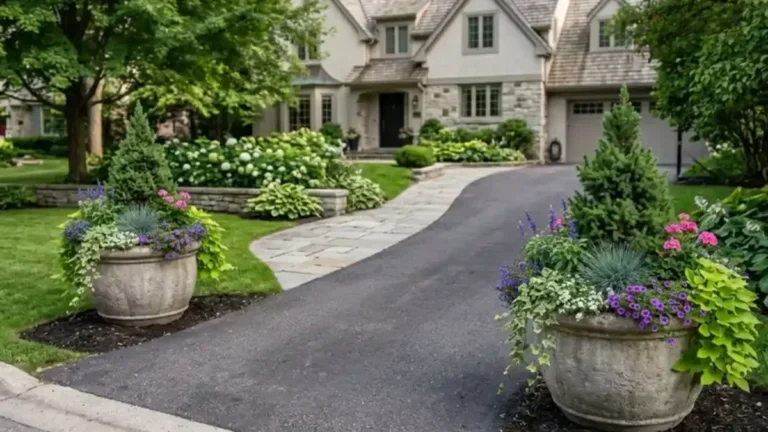
Use more detail here. Add a curved planting bed, containers, lighting, or a small tree. These features help guests find the front door.
Before planting, check:
- How much sun each area receives
- Where water collects after rain
- The width of the planting space
- Nearby power lines and underground pipes
- Local rules for roadside planting
- The mature size of each plant
- Space needed for snow, deliveries, or large vehicles
A small nursery shrub can become several feet wide. Always check its mature height and spread before placing it beside pavement.
4 Driveway Entrance Landscaping Ideas That Create a Strong First Look
You can improve the front of your property without changing the full driveway. In many cases, the entrance gives you the biggest result for your money.
Create Layered Planting Beds at the Entrance
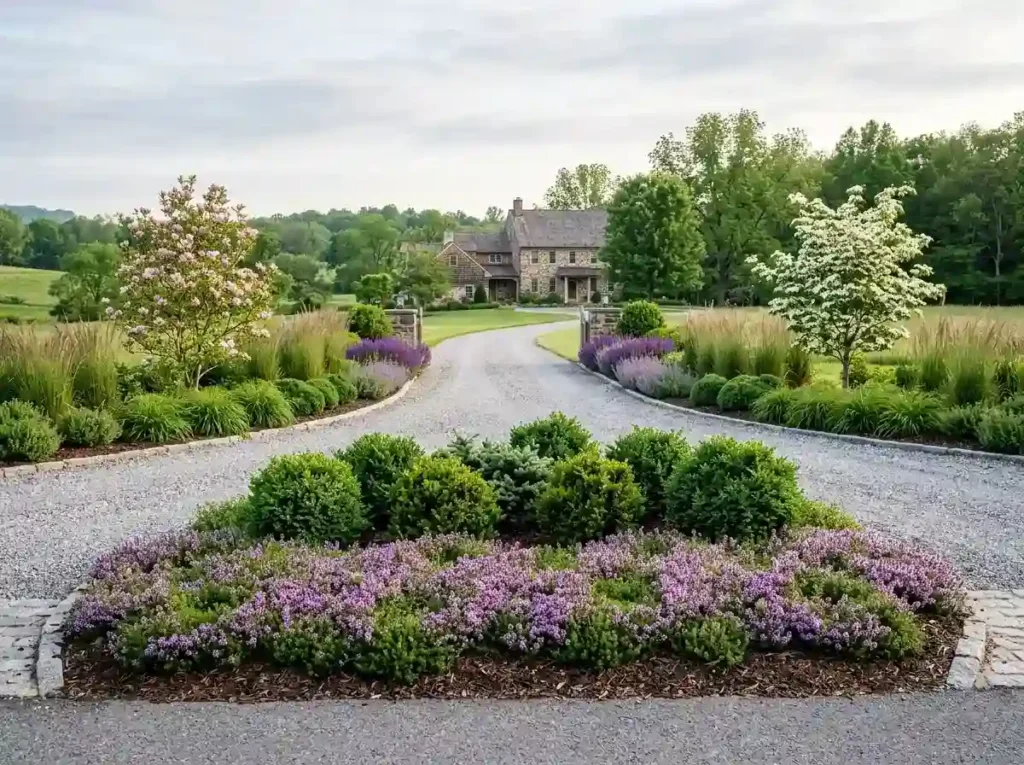
Layered beds make an entrance feel full without using one large plant. They also let you mix color, shape, and texture.
Place low groundcover near the front edge. Add medium shrubs behind it. Use a taller grass, shrub, or small tree as an accent.
A simple planting plan may include:
- Creeping thyme at the front
- Compact evergreen shrubs in the middle
- Upright ornamental grass at the back
- One small flowering tree on each side
Choose plants that stay low near the road. You should be able to see over or through them when leaving the driveway.
You can also repeat one of these plants near the house. This small step helps the entrance and home feel connected.
Practical tip: Use three to five plant types at most. Too many different plants can make the entrance look messy.
Frame the Driveway With Matching Stone Pillars
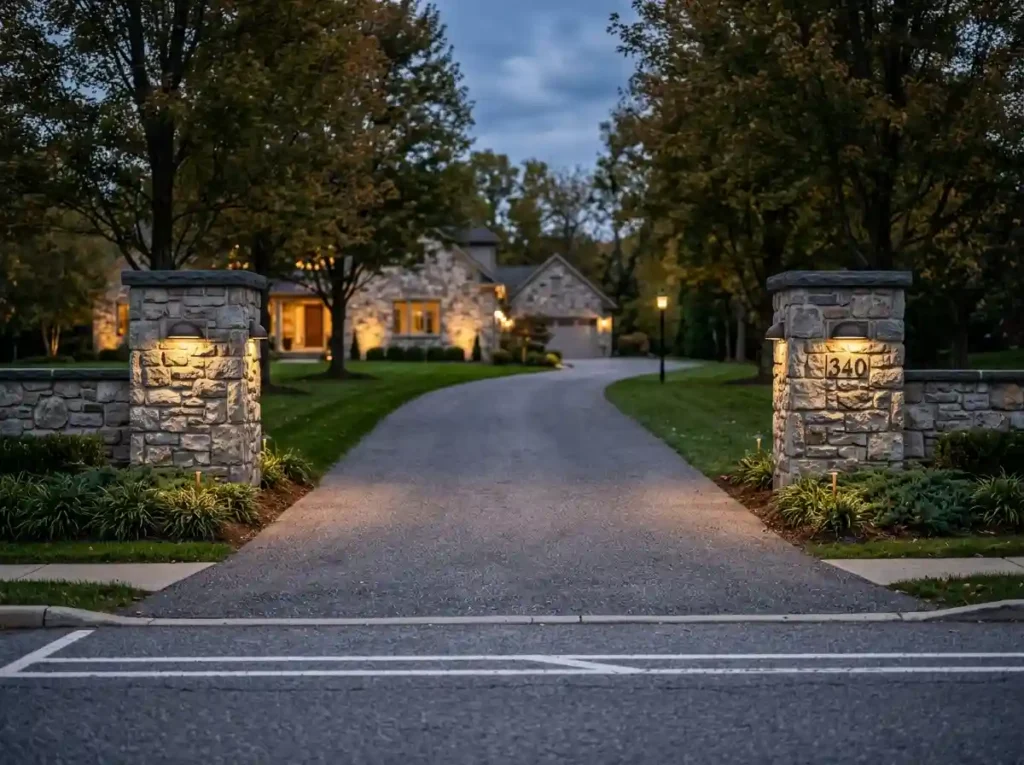
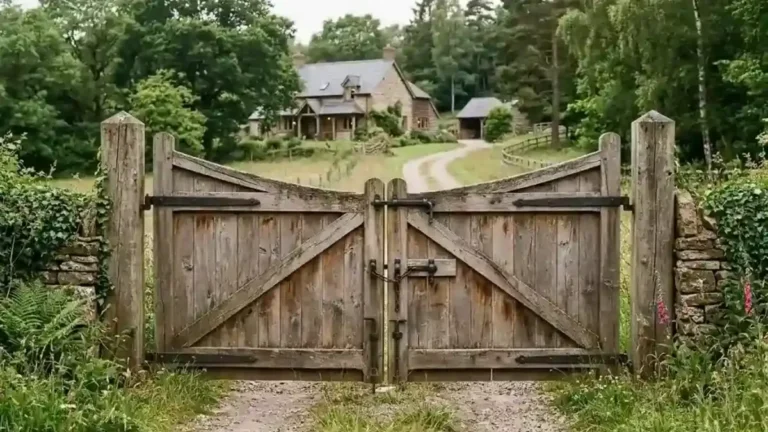
Stone or brick pillars make a long driveway easier to find. They can also give the entrance a more finished look.
Match the pillars to materials already used on your home. For example, use similar stone, brick, or concrete.
You can add:
- House numbers
- Downward-facing lights
- A gate
- Small planting beds
- Low evergreen groundcover
Keep the size of the pillars in balance with the driveway. Large pillars may make a narrow entrance feel tight.
You do not need expensive stonework to get a similar effect. Simple timber posts, painted masonry blocks, or metal address panels can also mark the entrance.
Practical tip: Repeat the same material near the garage, front path, or mailbox. This creates a clear design link.
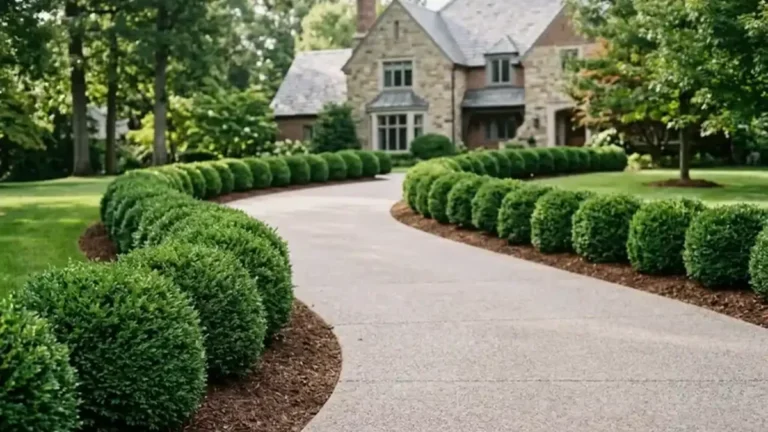
Use Low Hedges to Define the Driveway Opening
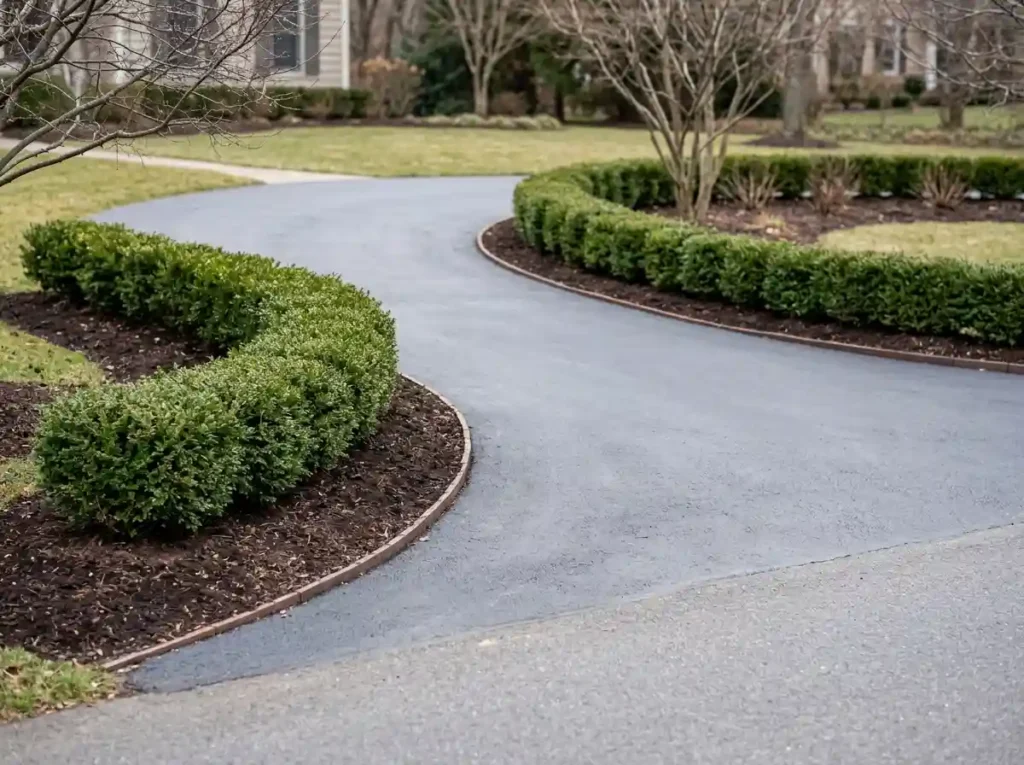
A short hedge can guide the eye into the driveway. It can also hide uneven ground or create a neat border.
Choose compact shrubs that handle regular pruning. Low native shrubs may need less care than formal hedges.
Good options may include:
- Dwarf yaupon
- Inkberry
- Compact boxwood types
- Low-growing native evergreens
Plant the hedge in a gentle curve instead of a hard square shape. Curves often feel softer and leave more turning space.
Avoid thorny plants beside a narrow driveway. They can scratch cars and make it harder for people to step out safely.
Practical tip: Check the hedge from the driver’s seat before planting. Make sure it will not block your view once it reaches full size.
Add a Mailbox Garden or Address Feature
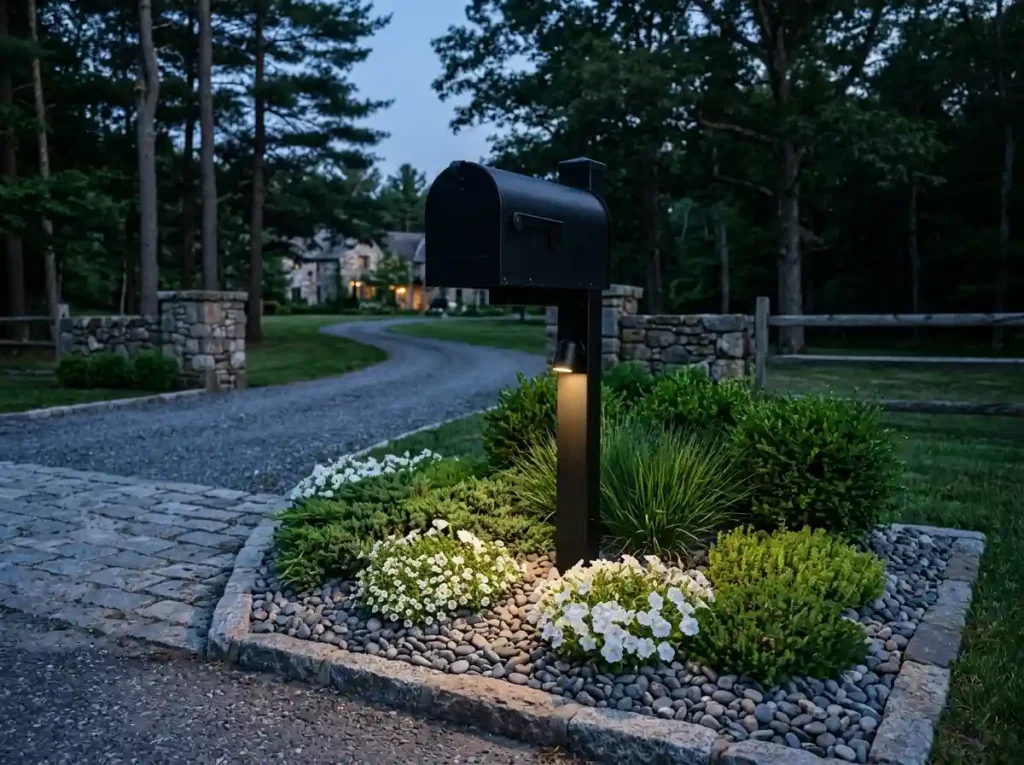
A mailbox garden is a smart choice when you want a small project with a clear result.
Start with a strong feature, such as:
- A black metal mailbox
- A timber address post
- A stone house-number sign
- A simple metal address panel
Add a small bed around the base. Use plants that handle heat, road dust, and less water.
A clean design may include white flowers, one grass type, and a low evergreen. For a relaxed rural look, use native flowers with a clear mowed edge.
Stone mulch may work better than bark near the road. Bark can wash away or blow across the driveway.
Keep plants below the mailbox door. Postal workers should have clear access.
Practical tip: Light the address from above or below, but keep the light out of drivers’ eyes.
7 Driveway Border Landscaping Ideas That Add Color and Shape
The middle of a long driveway needs rhythm. It does not need flowers along every inch.
Repeated plants and materials usually look cleaner. They also cost less and require less work.
Repeat Groups of Ornamental Grasses
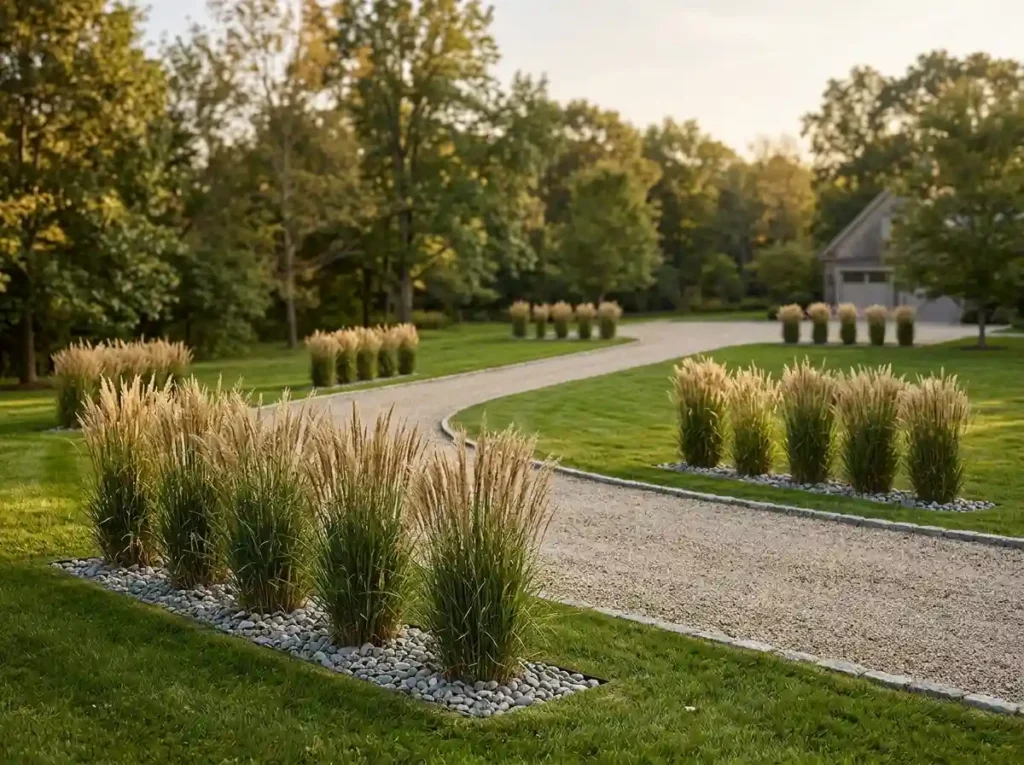
Ornamental grasses soften hard driveway edges. They move in the wind and add interest during several seasons.
Plant them in groups of three, five, or seven. Repeat each group at key points instead of forming one long row.
For example, you could place grass groups:
- Near the entrance
- Beside the first curve
- Halfway to the house
- Near the parking area
Choose grasses with stems that stay upright. Floppy plants may hang over the pavement.
Some grasses need to be cut back once a year. Others may spread faster than expected. Check how they grow in your area.
Practical tip: Leave a narrow stone or grass strip between the plants and pavement. This makes cleanup easier.
Plant a Native Wildflower Strip
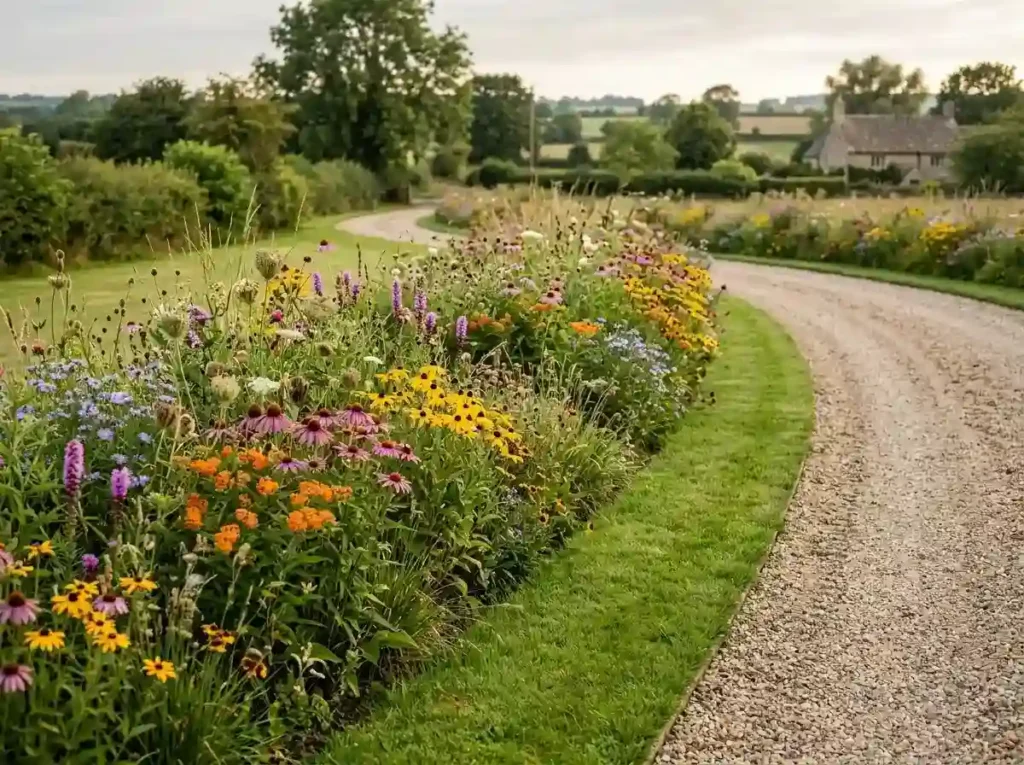
Native flowers can add color without the formal look of clipped shrubs. They work well along rural, gravel, and wide driveways.
Choose a seed or plant mix suited to your soil and rainfall. Include flowers that bloom at different times.
A good mix may provide:
- Spring flowers
- Summer color
- Fall seed heads
- Food for local bees and butterflies
Wildflower areas can look rough during their first season. They may also need weed control while new plants become established.
Keep a clean mowed strip beside the driveway. This makes the flowers look planned and gives passengers a safe place to step.
Practical tip: Start with one section. See how the plants grow before adding flowers along the full driveway.
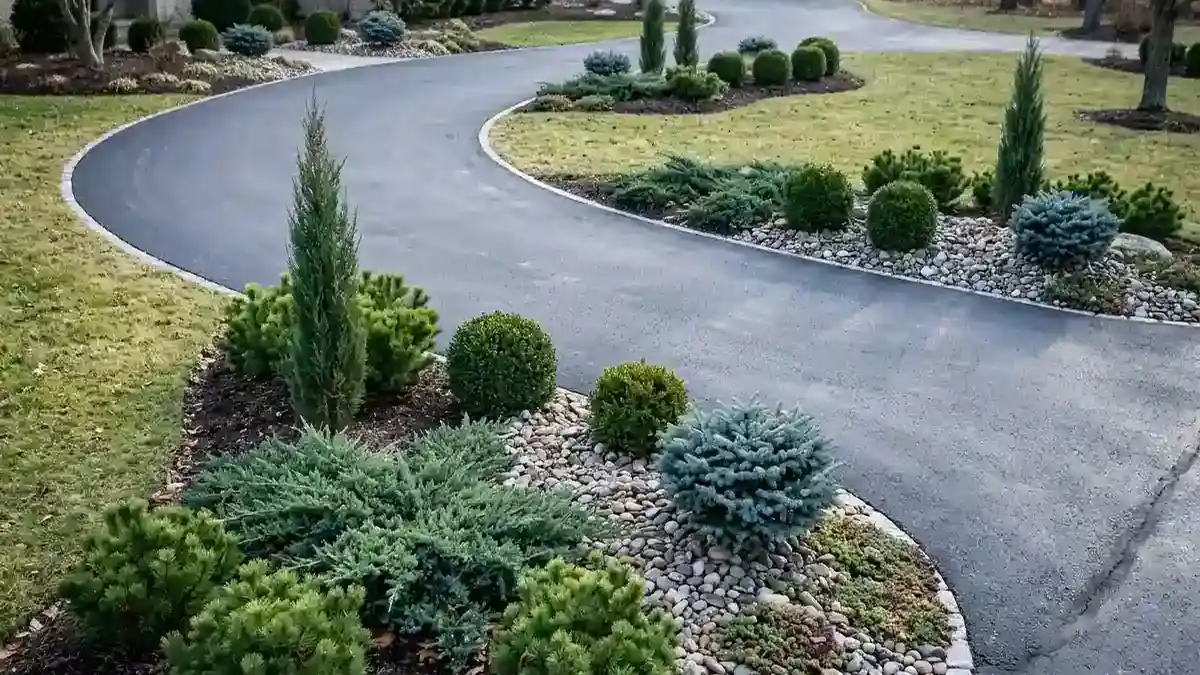
Build a Low-Maintenance Evergreen Border
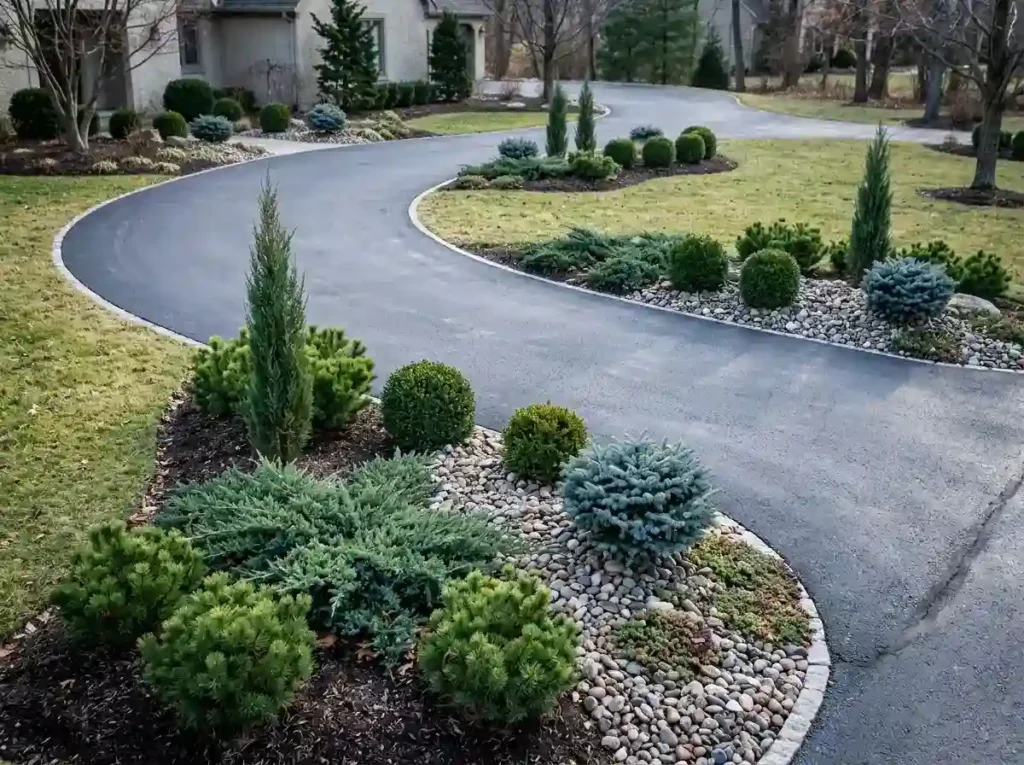
Evergreens provide shape and color through every season. They are useful when flowers disappear during colder months.
Avoid planting one solid wall of the same shrub. Mix a few forms instead.
For example, combine:
- Low spreading evergreens
- Rounded shrubs
- A few upright accents
- Stone mulch or groundcover
Check the mature width of each plant. Some small evergreens can become much wider than expected.
Also think about local weather. Plants beside roads may face salt, dust, reflected heat, strong wind, or dry soil.
Practical tip: Use evergreens near important areas, such as the entrance and curves. You may not need them along the full length.
Stagger Flowering Shrubs Along One Side
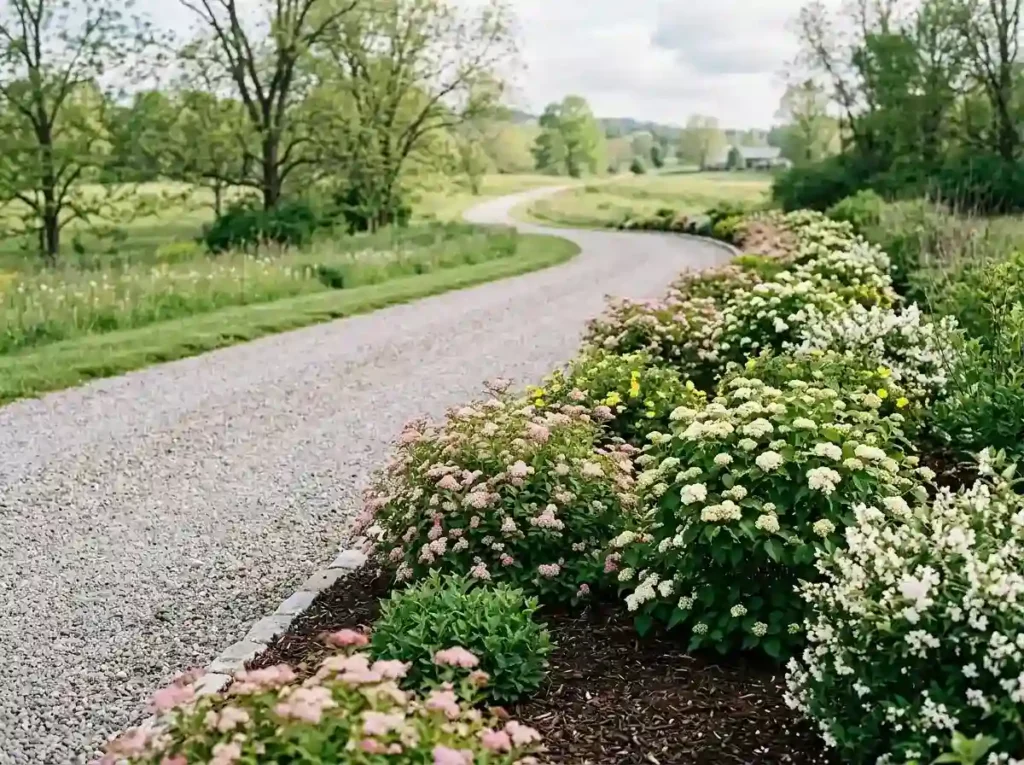
You do not have to landscape both sides. A one-sided border can still look balanced when the plants are spaced well.
Use groups of two or three shrubs. Stagger them instead of forming a straight line.
Choose shrubs with different bloom periods. This can provide color for more than one season.
Possible choices include:
- Spirea for sunny sites
- Hydrangeas where soil stays moist
- Compact native viburnums
- Dwarf flowering shrubs for narrow beds
Repeat two or three shrub types. Too many kinds can make the border feel random.
Keep tall plants away from sharp bends. They may block your view of people, animals, or other cars.
Practical tip: Place the shrubs on the side that is easier to water and maintain.
Replace Hard-to-Mow Grass With Groundcover
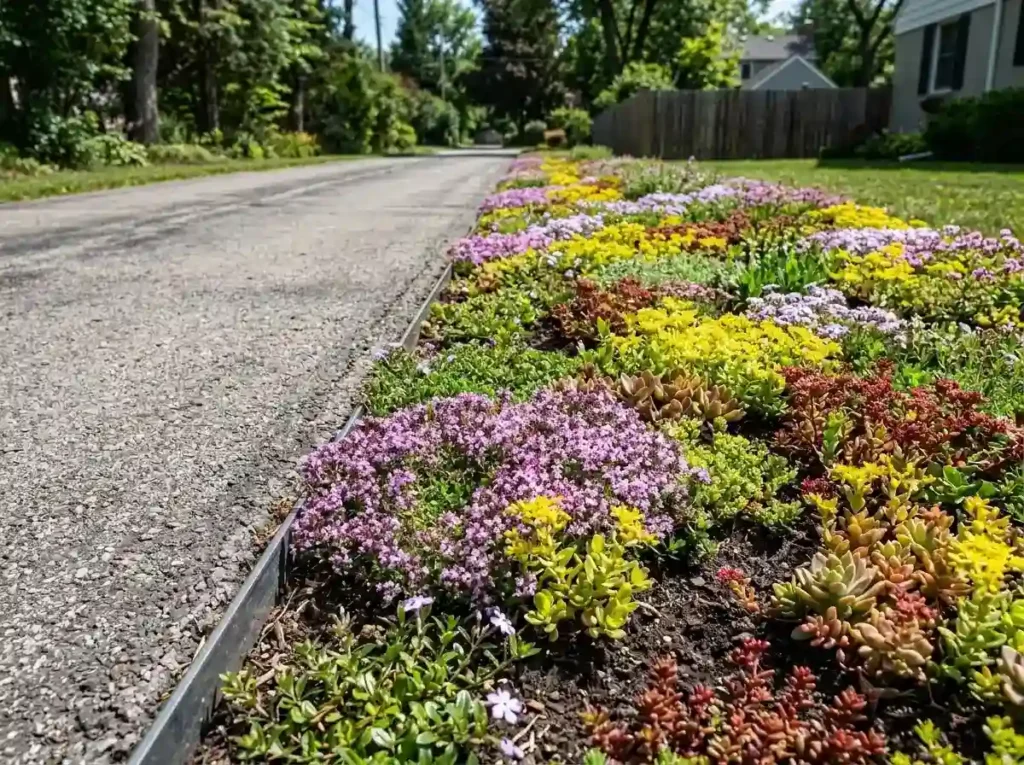
Thin strips of grass beside pavement are often hard to mow. They may also dry out because of heat from the driveway.
Low groundcover can fill these spaces and reduce mowing.
Options may include:
- Creeping thyme
- Sedum
- Low native plants
- Other non-spreading groundcover suited to your area
Choose plants that can handle heat and occasional foot traffic. Passengers may step on them when leaving a car.
Use a clear edge to stop plants from growing across the pavement. Avoid aggressive plants that may spread into nearby beds or natural land.
Practical tip: Test groundcover in a small patch first. Some types grow well in one climate but fail in another.
Add Planted Berms for Privacy and Depth
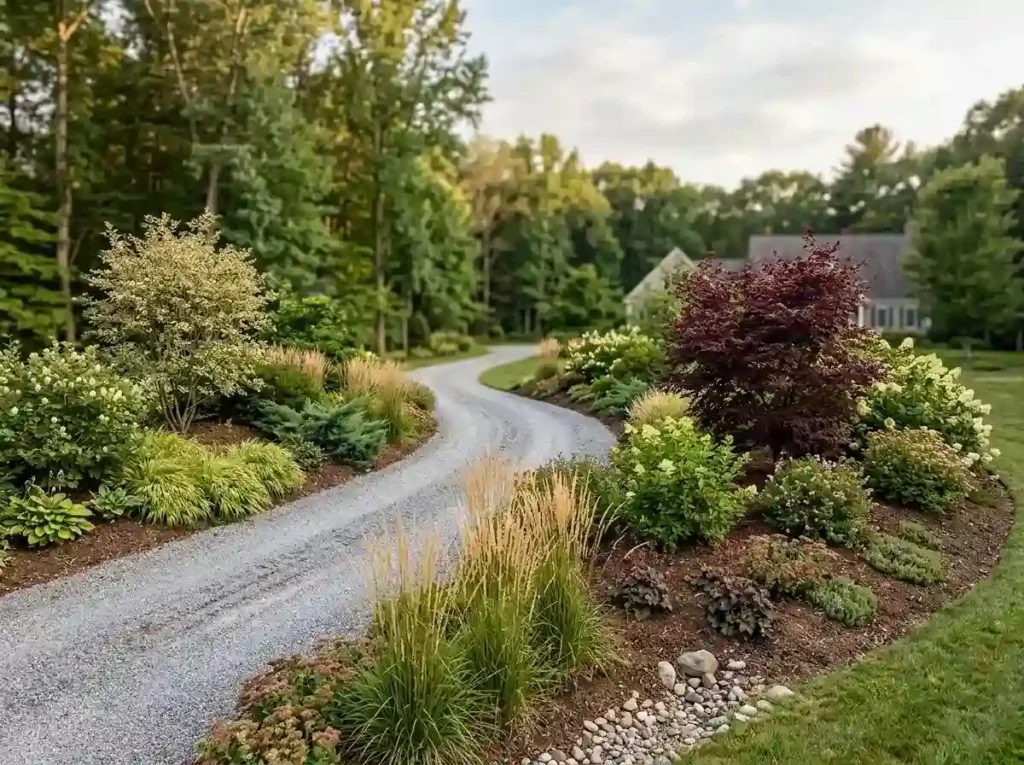
A berm is a raised mound of soil. It can add height to a flat yard and screen views of nearby homes, roads, or work areas.
Use long, soft curves. A steep pile of soil can look unnatural and may wash away.
Plant the berm with a simple mix:
- One focal tree
- Medium shrubs
- Ornamental grasses
- Low groundcover
Place berms at selected points instead of building one long mound. This creates changing views as people drive through the property.
Water should flow around the berm, not across the driveway. Poor grading can cause puddles or damage the driveway base.
Practical tip: Ask a drainage professional for help if the area already has heavy runoff.
Add a Gravel or Decorative Stone Strip
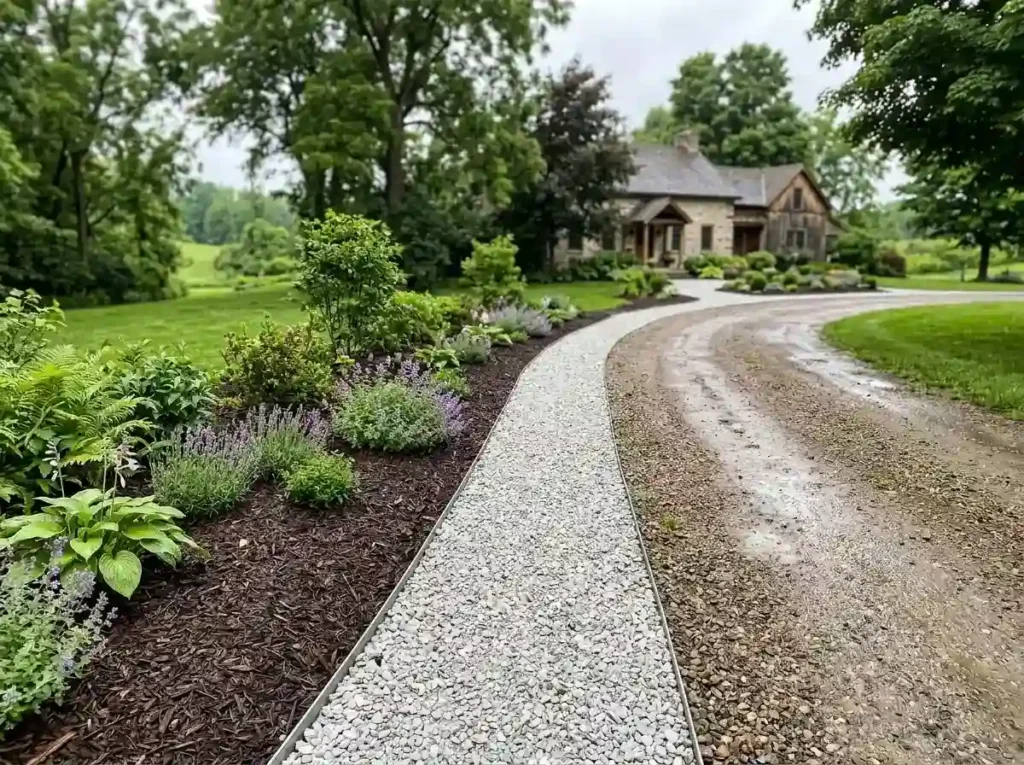
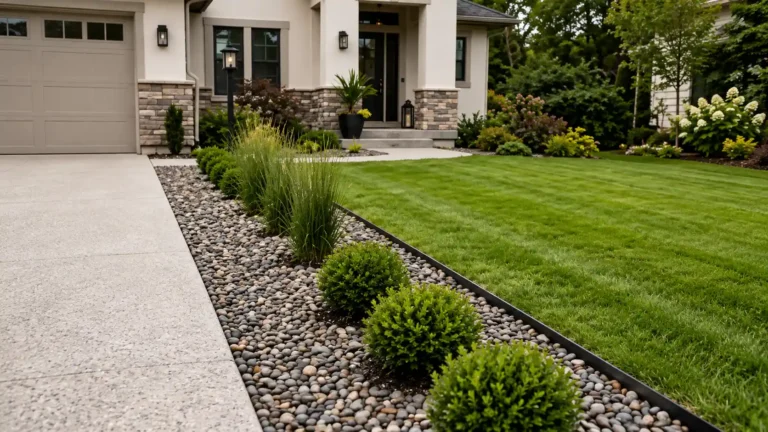
A stone strip creates a clean gap between the driveway and planted beds.
It can help:
- Catch loose soil
- Reduce bark mulch on the pavement
- Make mowing easier
- Improve drainage at the edge
- Add color and texture
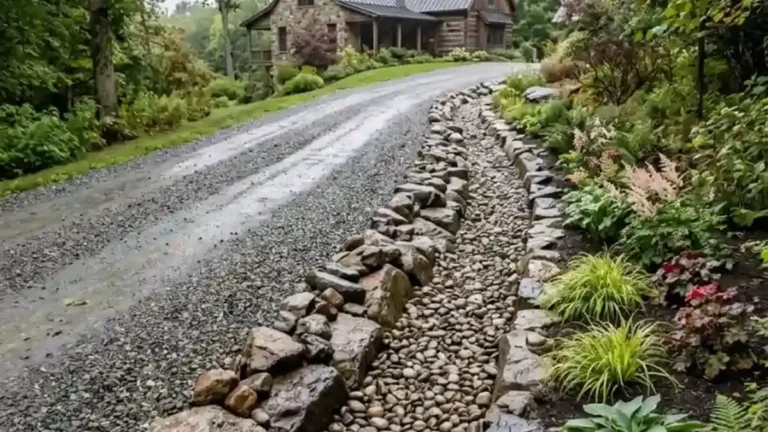
Choose stone that fits the property style. River rock may suit a modern concrete drive. Crushed stone often works well beside rural gravel.
Use edging if the stone moves into the lawn or driveway. A solid base layer can also help control weeds.
Dark stone may become very hot in full sun. This can stress nearby plants.
Practical tip: Use the same stone near the entrance and house to connect all three driveway zones.
5 Ways to Use Trees, Lighting, and Hardscape Safely
Large features help shape a long space. They can be seen from farther away than small flowers.
These ideas often cost more, so plan them with care. Moving a tree, wall, or electrical line later can be difficult.
Create a Tree-Lined Driveway
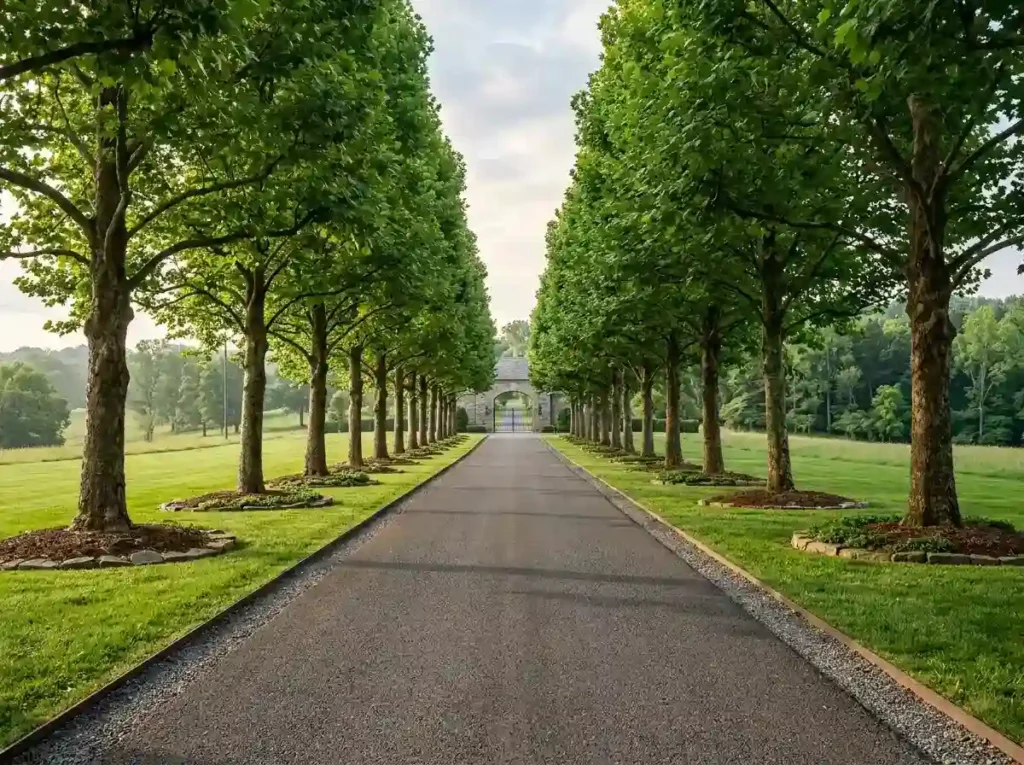
A tree-lined driveway can create shade, privacy, and a classic look.
Use even spacing for a formal design. Use loose groups for a more natural style.
Before planting, check:
- Mature tree height
- Mature canopy width
- Root growth
- Leaf and fruit drop
- Local pests and diseases
- Distance from power lines
- Space for large vehicles
Do not place trees too close to the pavement. Roots may lift the driveway, while branches may scratch cars.
The best tree type depends on your soil, climate, rainfall, and available space. A tree that works well in one region may fail in another.
Practical tip: Mark each mature canopy width on the ground before planting. This helps you see how much room the tree will need.
Mark Curves With Focal Trees
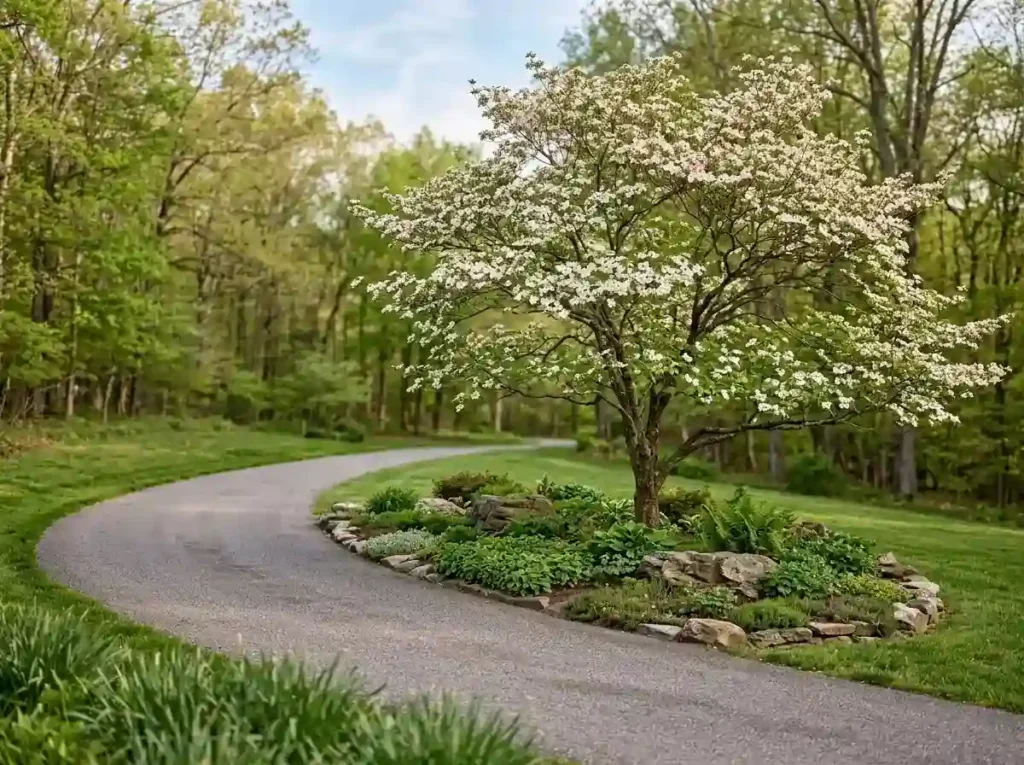
A focal tree can draw attention to a bend or change in direction. It can also break up a long, plain view.
Choose one tree with a strong shape, flowers, bark, or fall color. Place it outside the driver’s clear sightline.
Add a simple base of groundcover, stone, or mulch. Avoid a tiny ring that looks out of scale.
Focal trees work well beside curved driveways because they guide the eye from one area to the next.
Do not place a large tree inside a tight curve. Drivers need a clear view of the road ahead.
Practical tip: View the planting spot from both driving directions before you dig.
Install Low Driveway Lighting
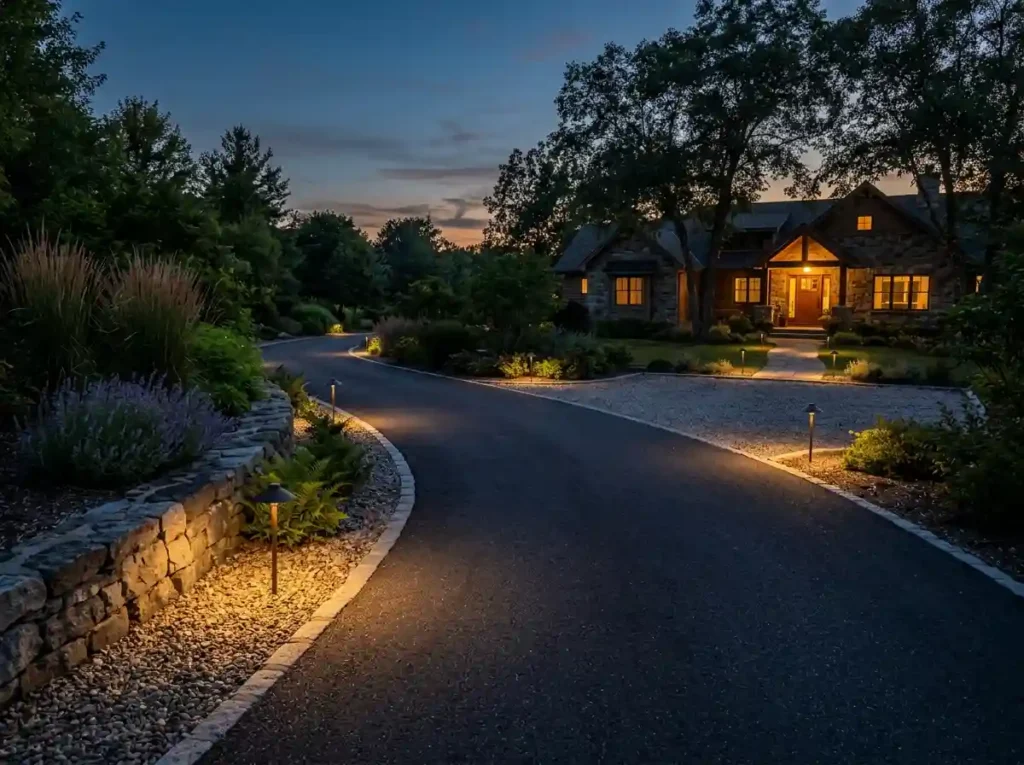
Driveway lights help guests see edges, turns, gates, and walking paths after dark.
Place lights where they solve a clear problem. You do not need a fixture every few feet.
Useful places include:
- The entrance
- Sharp bends
- Retaining walls
- Parking edges
- The path to the front door
- Changes in ground level
Aim each light downward. Bright glare can make it harder to see.
Solar lights are easy to install. But they may not work well under trees or during long periods of cloudy weather.
Hardwired lights are more reliable. They also cost more and often need professional installation.
Practical tip: Test temporary lights first. Drive through the area at night and check for dark spots and glare.
Add Low Retaining Walls Beside Slopes
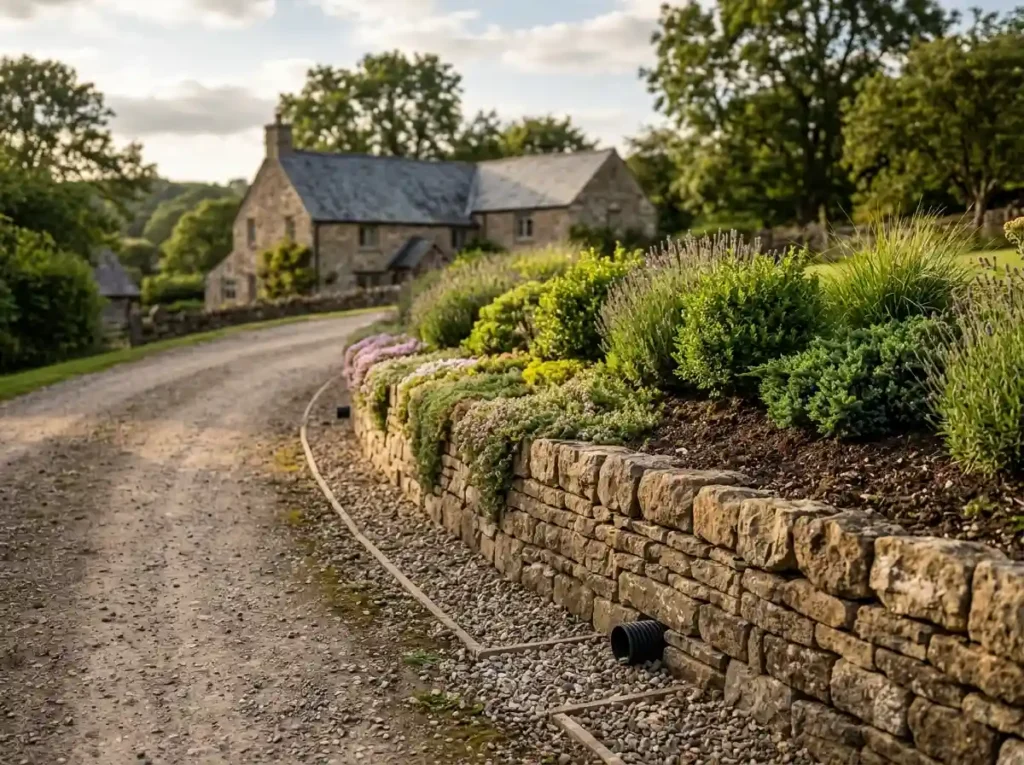
A retaining wall can hold soil beside a sloped driveway. It may also create a flat space for plants.
Match the wall to the house or other hard surfaces. Natural stone suits many rural homes. Brick can fit a traditional house. Concrete block offers many sizes and finishes.
Drainage behind the wall is very important. Trapped water can push against the structure and cause damage.
Low garden walls may be simple projects. Tall walls or walls near heavy vehicle areas need expert design.
Add trailing groundcover or low shrubs to soften the top edge.
Practical tip: Fix drainage before adding decorative plants. Plants cannot solve a failing wall.
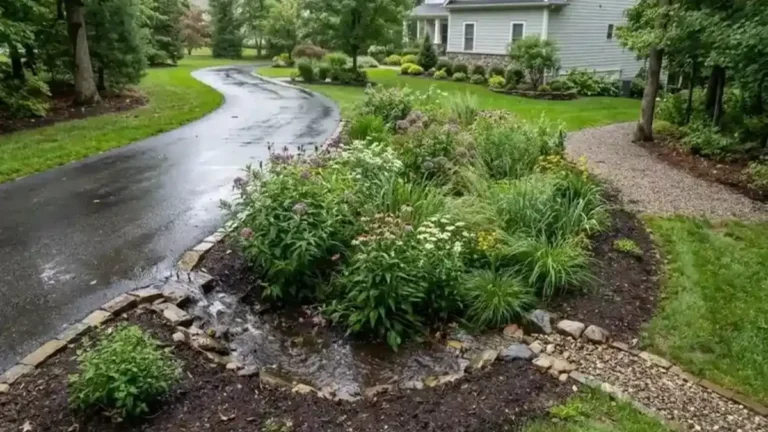
Turn Drainage Ditches Into Planted Swales
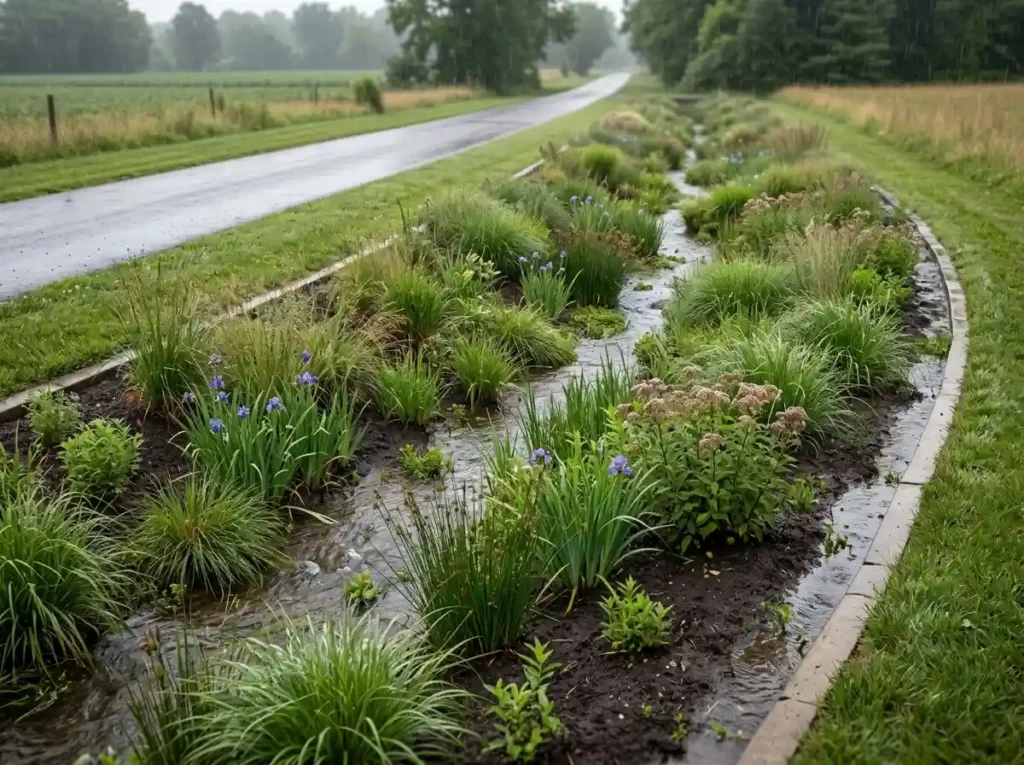
A swale is a shallow channel that guides rainwater. It can look better than a bare ditch when planted with the right grasses and moisture-loving plants.
A planted swale may:
- Slow moving water
- Reduce soil loss
- Filter dirt
- Hold water away from pavement
- Add natural color
Do not create a low area that keeps water beside the driveway base. Standing water can weaken the ground under the pavement.
Choose plants that can handle both wet and dry periods. The exact mix will depend on local rainfall and soil.
Large drainage problems need professional help. This is especially true if water crosses the driveway or flows from nearby land.
Practical tip: Watch the area during heavy rain before changing its shape.
3 Low-Maintenance Long Driveway Landscaping Ideas
Some of the best long driveway landscaping ideas use fewer plants, larger groups, and materials that need little weekly care.
The goal is not to remove all work. Every landscape needs some care. But a simple plan can reduce watering, pruning, and weeding.
Improve the Driveway in Separate Zones
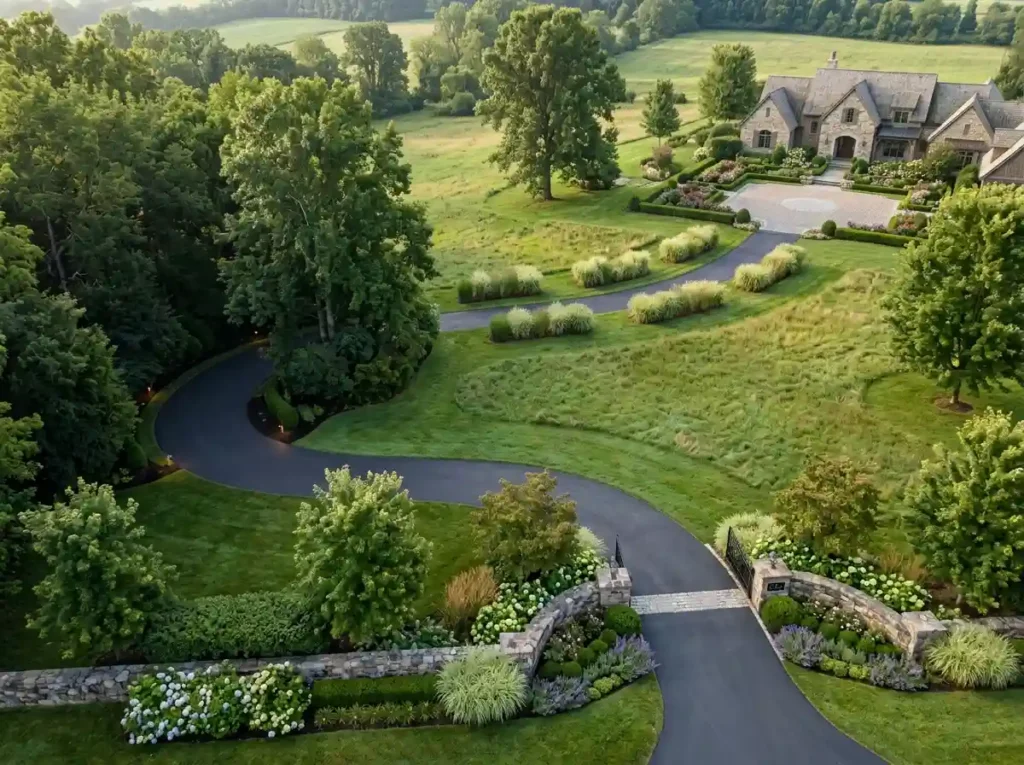
You do not need to complete the whole project at once.
Start with the areas people notice most:
- Improve the entrance.
- Add lights at dark curves.
- Repeat grasses or shrubs in the middle.
- Finish the area near the house.
Set a budget for each phase. This helps you avoid buying plants without a clear plan.
Use the same stone, plant types, and colors in each phase. The finished project will still look connected.
This method also lets you learn what works. You may find that some plants need more water or space than expected.
Practical tip: Finish one complete zone before starting another. Several unfinished beds can make the property feel untidy.
Use Drought-Tolerant Plants and Stone Mulch
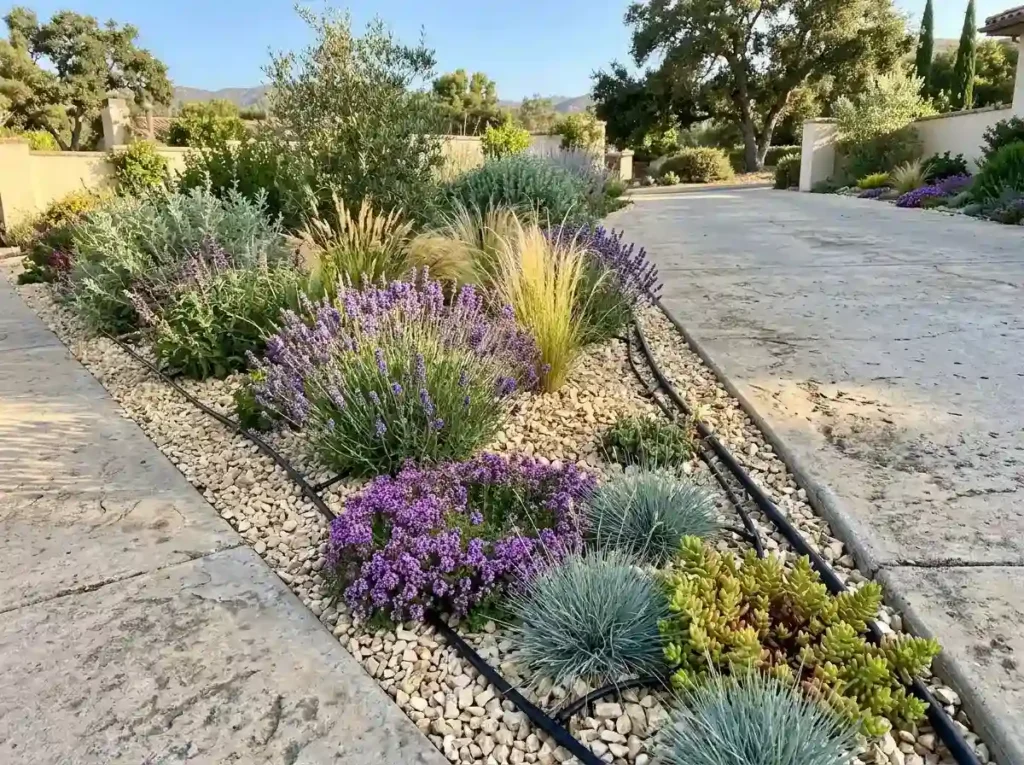
Dry areas beside pavement can be hard on plants. Heat from asphalt or concrete may dry the soil faster.
Choose plants that suit your local rainfall. Group plants with similar water needs.
Possible choices may include:
- Sedum
- Ornamental grasses
- Lavender in suitable climates
- Drought-tolerant native shrubs
- Low flowering groundcover
Drip irrigation can send water to the roots without wetting the full bed. It may also reduce water waste.
Stone mulch lasts longer than bark in many areas. But it can trap heat. Use it with plants that can handle hot soil.
Practical tip: Do not copy a dry-climate plant list if you live in a wet or humid area. Local conditions matter.
Create a Strong Arrival Garden Near the House
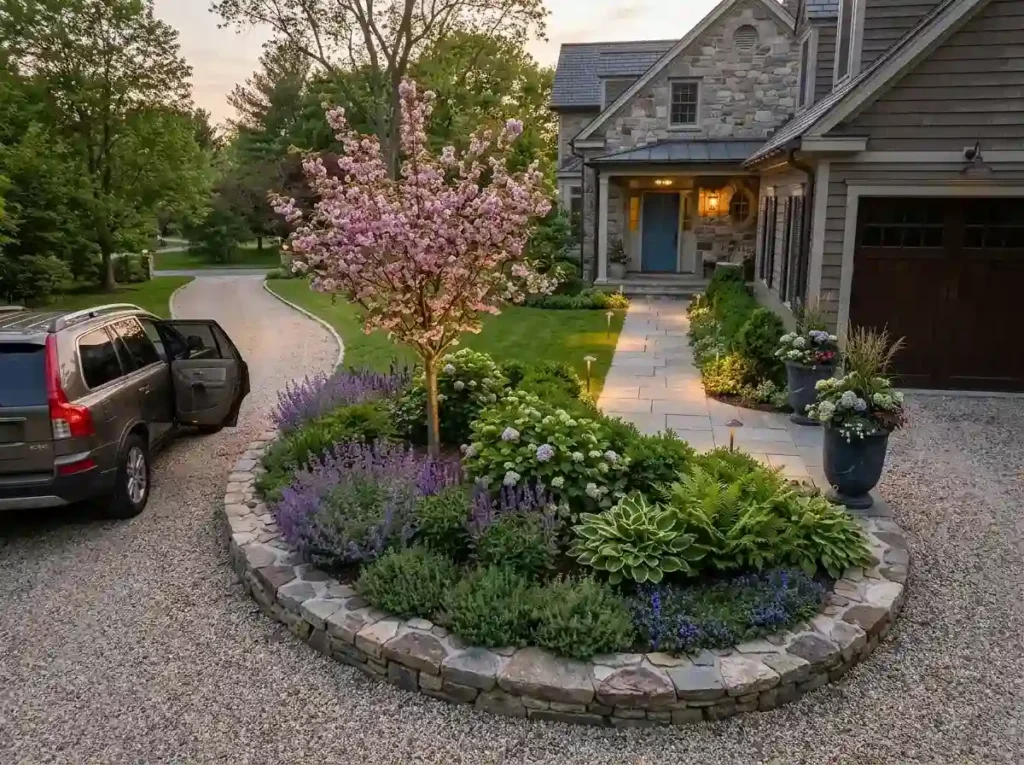
The area near the house deserves more detail. This is where people slow down, park, and look for the entrance.
Use a curved bed to connect the driveway with the front path. Add plants that match the scale of the house.
You might include:
- A small flowering tree
- Low shrubs near the walkway
- Matching containers beside the garage
- Groundcover around parking edges
- Low lights leading to the door
Repeat one material from the driveway entrance. This may be the same stone, metal, brick, or plant.
Keep large shrubs away from parking doors and walking paths. Guests should have enough room to leave their cars.
Place seasonal containers near a water source. Pots at the far end of a large property are easy to forget.
Practical tip: Stand in the guest parking area and check whether the front door is easy to find.
How to Choose the Best Plan for Your Driveway
The best design is not always the one that looks best in a photo. It needs to fit your land, budget, climate, and free time.
Choose your main goal first.
Choose an Entrance Garden If You Want Fast Curb Appeal
An entrance garden creates a clear change without a full-property project.
It works well when:
- Your budget is limited.
- The driveway is hard to see.
- The entrance looks plain.
- You want a weekend project.
Choose Trees or Berms If You Need Privacy
Trees and raised planting areas can screen nearby roads, homes, or work spaces.
They need more room and planning. They may also create leaf cleanup and pruning work.
Choose Grasses or Native Flowers for a Rural Look
These plants fit wide, open land. They can also reduce the need for clipped hedges and formal beds.
Keep a clean edge beside the driveway so the area looks planned.
Choose Evergreens or Stone for Year-Round Structure
Evergreens keep their shape through more seasons. Stone strips also look neat when flowers are not in bloom.
These choices suit homeowners who want a simple and clean design.
Choose One-Sided Planting to Save Money
Landscaping both sides can double the number of plants, edging, and irrigation lines.
A well-planned border on one side may be enough. Balance it with a few features at the entrance and near the house.
Common Long Driveway Landscaping Mistakes to Avoid
A few planning errors can create expensive problems later.
Avoid these common mistakes:
- Planting trees too close to pavement
- Blocking the view of traffic
- Using too many plant types
- Adding beds without a watering plan
- Ignoring mature plant width
- Letting mulch wash onto the driveway
- Placing lights at eye level
- Building walls without drainage
- Planting inside snow storage areas
- Choosing plants based on photos instead of local conditions
You should also avoid filling every empty space. Open areas give plants room to grow. They also make repeated features stand out.
Make Your Long Driveway Feel Like Part of the Home
You do not need to fill the full driveway with plants. Start with a clear entrance. Add simple repeated features through the middle. Finish with a welcoming garden near the house.
Choose plants based on mature size, local weather, and the amount of care you can give them. Fix water and visibility problems before adding decoration.
Walk the driveway and select three areas that need the most help. Then choose two or three of these long driveway landscaping ideas and build the design one section at a time.