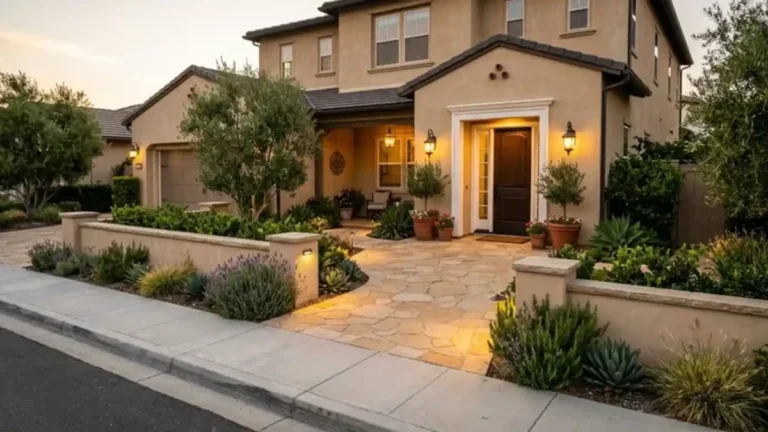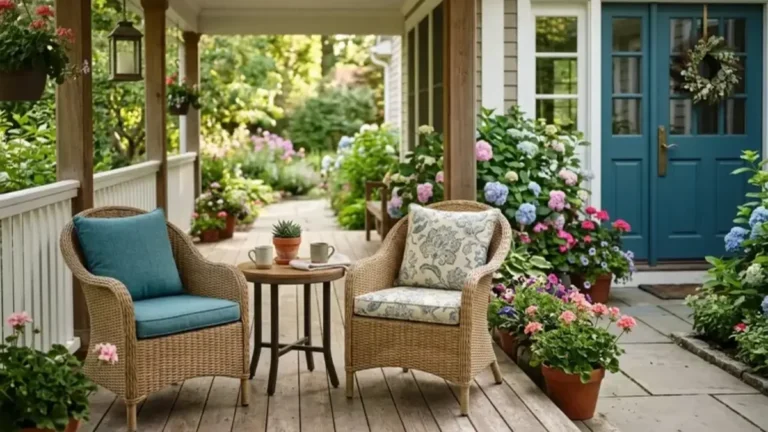
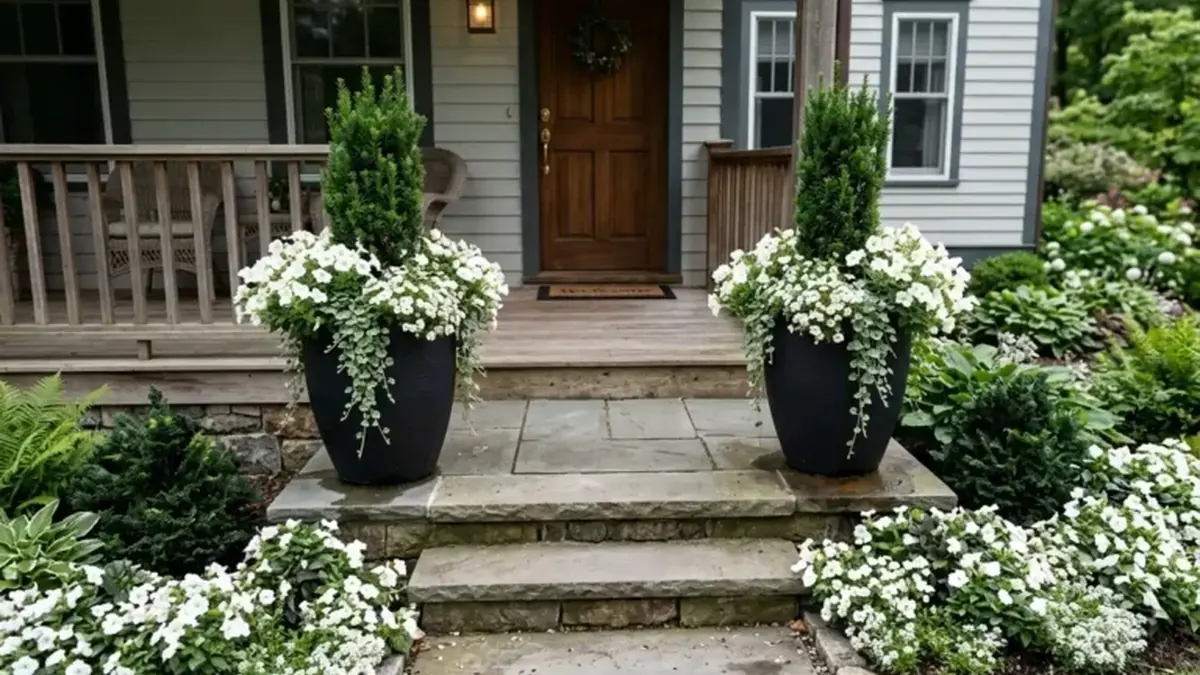
16 Front Yard Garden Design Ideas for Any Home
Your front yard may feel empty, plain, or hard to care for. You might have plants, but they do not look like they belong together. Or you may have no idea what to plant near the house, walkway, or front door.
The good news is that you do not need to replace everything.
A few smart changes can make your front yard feel more welcoming. Clear garden bed shapes, repeated plants, and one strong focal point can make a big difference.
These front yard garden design ideas work for many home styles and yard sizes. You will find options for sunny areas, shaded spaces, narrow yards, wet soil, and small budgets.
You will also learn how to choose plants that fit your climate and care schedule. This matters because a pretty garden can become a burden when the plants need more time, water, or space than you can give them.
Start with the problem area that bothers you most. Then choose one idea that fits your home.
Plan Your Front Yard Garden Before You Buy Plants
It is easy to fall in love with plants at a garden center. The flowers look bright, the leaves look healthy, and the plants seem small enough to fit anywhere.
That small plant may not stay small.
A shrub in a one-gallon pot could grow wider than your window. A climbing vine could reach the gutters. A spreading groundcover could cover the edge of your walkway.
Measure your front yard before you shop. Write down the length and depth of each garden bed. Measure the space below windows and beside steps.
Next, watch how sunlight moves across the yard.
A full-sun area usually receives at least six hours of direct sunlight each day. A partly sunny space may receive four to six hours. A shaded spot often receives less than four hours.
Check the yard in the morning, afternoon, and early evening. A place that looks sunny at breakfast may be shaded by noon.
You should also look for:
- Low spots where water collects
- Dry areas near walls or driveways
- Slopes that may lose soil
- Utility boxes and underground lines
- Downspouts that release a lot of water
- Tree roots close to the surface
Think about your free time too. Some gardens need regular watering, trimming, feeding, and deadheading. Others need a basic cleanup once or twice each year.
Before you buy plants, know your:
- Yard measurements
- Sun conditions
- Soil condition
- Planting zone
- Water access
- Weekly care limit
- Total budget
A little planning can save you from moving or removing plants later.
Front Yard Garden Design Ideas That Frame Your Home
Your house should still be the main feature of the front yard. Garden beds should soften hard walls and connect the building to the lawn.
They should not cover the door, windows, or steps.
The next four front yard garden design ideas can help frame your home without making it feel hidden.
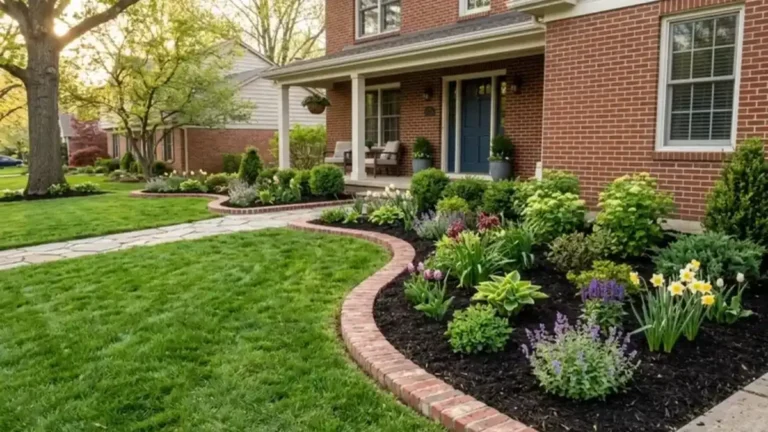
Create Layered Foundation Garden Beds
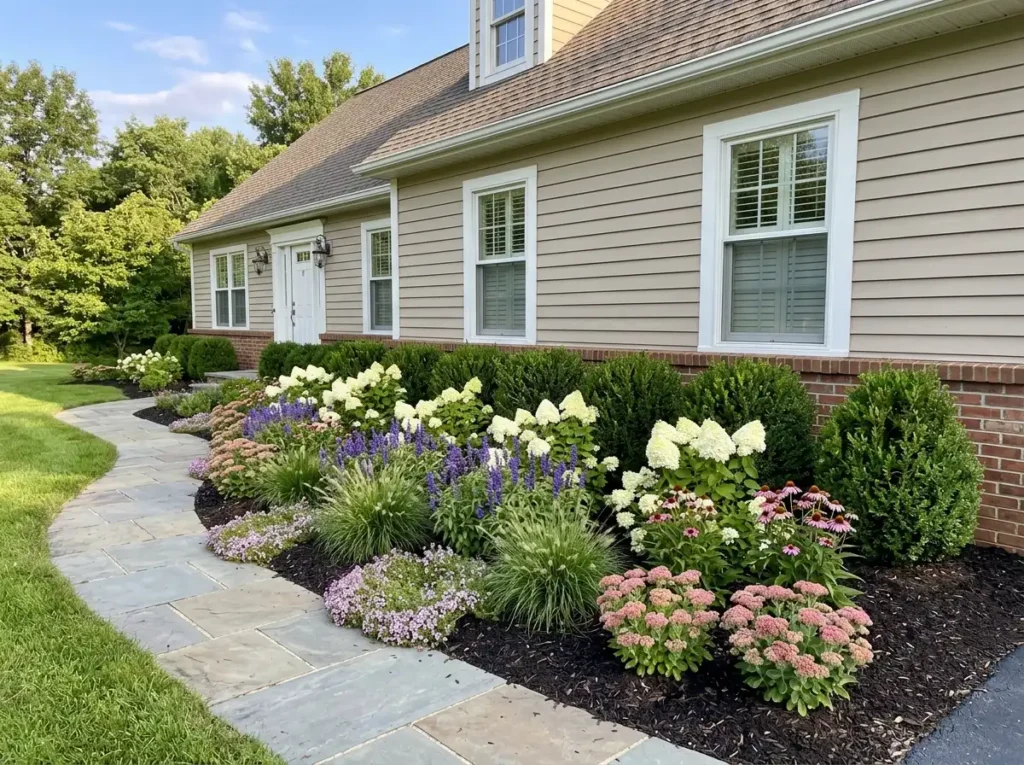
A layered garden bed uses plants of different heights. This creates depth and keeps the bed from looking flat.
Place compact shrubs or tall plants near the back. Add medium flowers or grasses in the middle. Finish with low flowers or groundcovers along the front.
You could use:
- Compact evergreen shrubs at the back
- Hydrangeas, salvia, or dwarf grasses in the middle
- Sedum, creeping thyme, or low annuals at the front
Choose plants that fit your local climate. A plant that grows well in a cool, damp area may fail in a hot and dry yard.
Leave enough space between each plant. Check the mature width on the plant label. Do not judge the space by the size of the pot.
Repeat the same plants across the bed. Three groups of one flower often look calmer than ten single plants.
Best for: Long walls and plain foundation beds
Maintenance: Low to medium
Main benefit: Adds depth without blocking the house
Use Matching Garden Beds Beside the Entrance
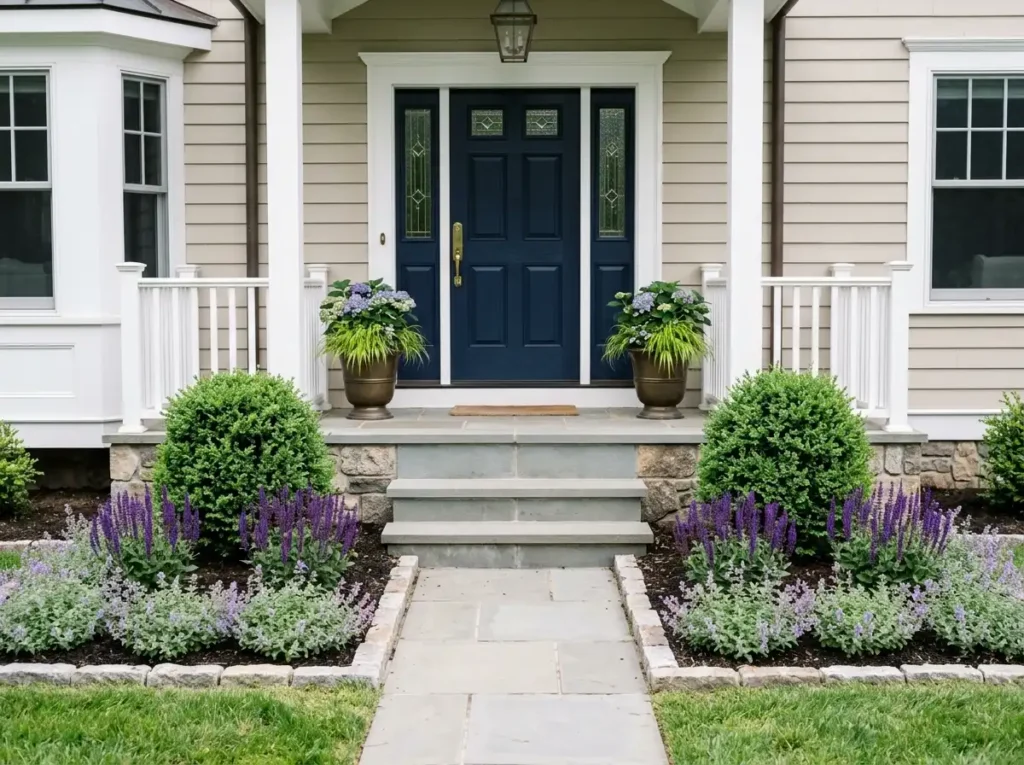
Matching beds can make your entrance feel clear and balanced.
The beds do not need to be exact copies. They should share the same main colors, plant shapes, or materials.
Place one compact evergreen on each side of the entrance. Add groups of flowers around them. Finish the beds with the same low border plant.
You can also use matching pots when there is no space for in-ground beds.
A simple entrance design could include:
- One small evergreen in each bed
- Three flowering plants in each group
- A low groundcover around the edge
- Two matching porch containers
Keep tall plants away from steps and railings. Visitors should be able to see where they are walking.
You can change a few annual flowers each season. The main structure can stay in place.
Best for: Homes with a clear central doorway
Maintenance: Medium
Main benefit: Makes the front door easier to notice
Soften Bare Corners With Curved Garden Beds
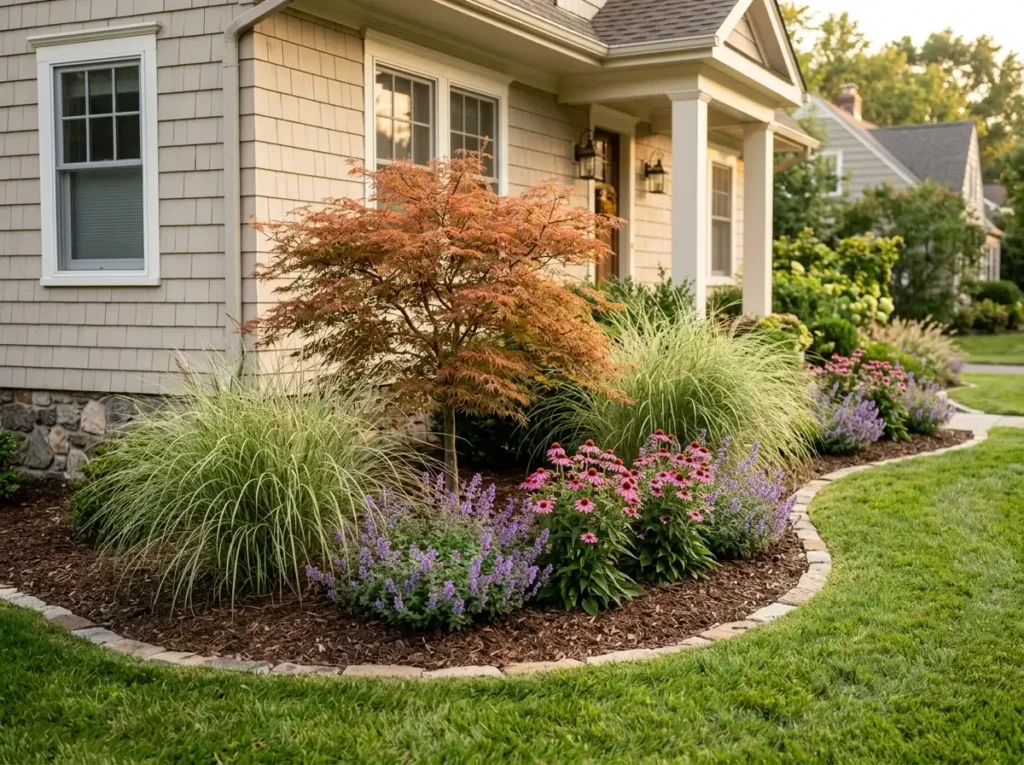
Sharp house corners can make a yard feel stiff. A curved garden bed can soften that look.
Start the curve near the foundation. Bring it gently into the lawn. Avoid using many small bends because they can look messy and are hard to mow around.
Make the bed wide enough to hold more than one thin row of plants. A narrow bed may look weak beside a large house.
A corner bed could include:
- One dwarf flowering tree or large shrub
- Two groups of ornamental grass
- Several repeated flowering plants
- Mulch or a low groundcover
Use plants with rounded or arching shapes. They will support the soft curve of the bed.
Lay a garden hose on the lawn before digging. Move the hose until the curve looks natural from the street.
Best for: Empty corners and wide front lawns
Maintenance: Low to medium
Main benefit: Softens hard building lines
Add One Small Ornamental Tree as a Focal Point
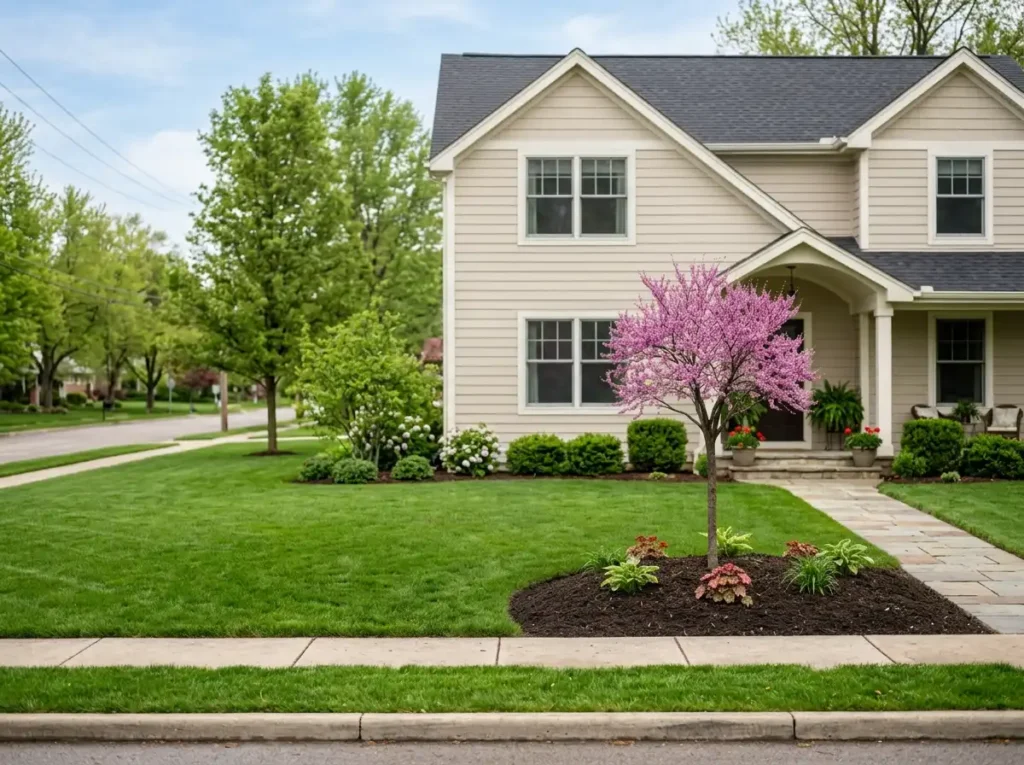
A small tree can give your front yard height and shape.
Choose one with a mature size that fits the space. Do not plant a tree close to the house just because it is small today.
Possible choices may include serviceberry, redbud, Japanese maple, crabapple, or crape myrtle. The right choice depends on your climate, soil, and available space.
Place the tree where it will not hide the entrance. Keep branches away from the roof, power lines, and windows.
You can add low plants around the tree, but leave the trunk clear. Do not pile mulch against the bark. This can trap moisture and cause damage.
A tree looks strongest when it has some open space around it. Avoid filling every inch of soil with flowers.
Best for: Open lawns that need height
Maintenance: Medium
Main benefit: Gives the yard one clear focal point
Use Paths and Entry Gardens to Lead People to the Door
Can a first-time visitor quickly find your front door?
Your path, plants, porch, and lighting should make the entrance easy to see. Plants should guide the eye without covering the walkway.
These ideas can make your entry feel safer and more welcoming.
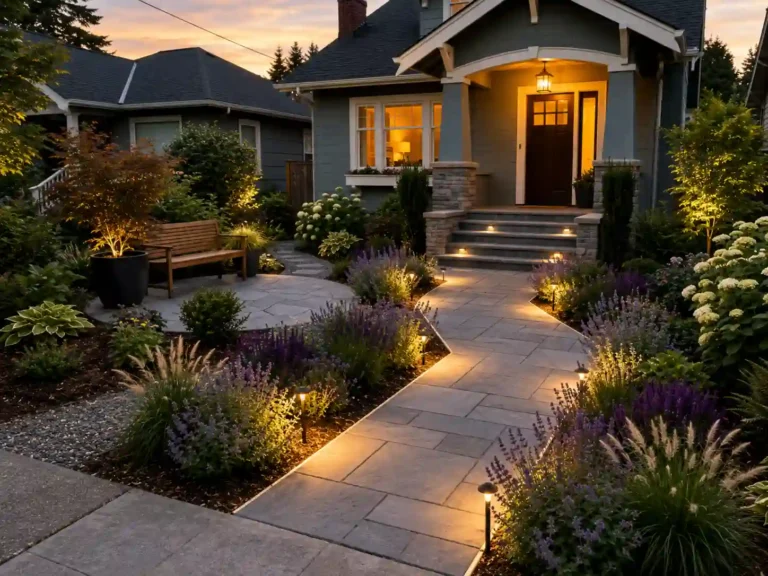
Edge the Walkway With Low, Repeated Plants
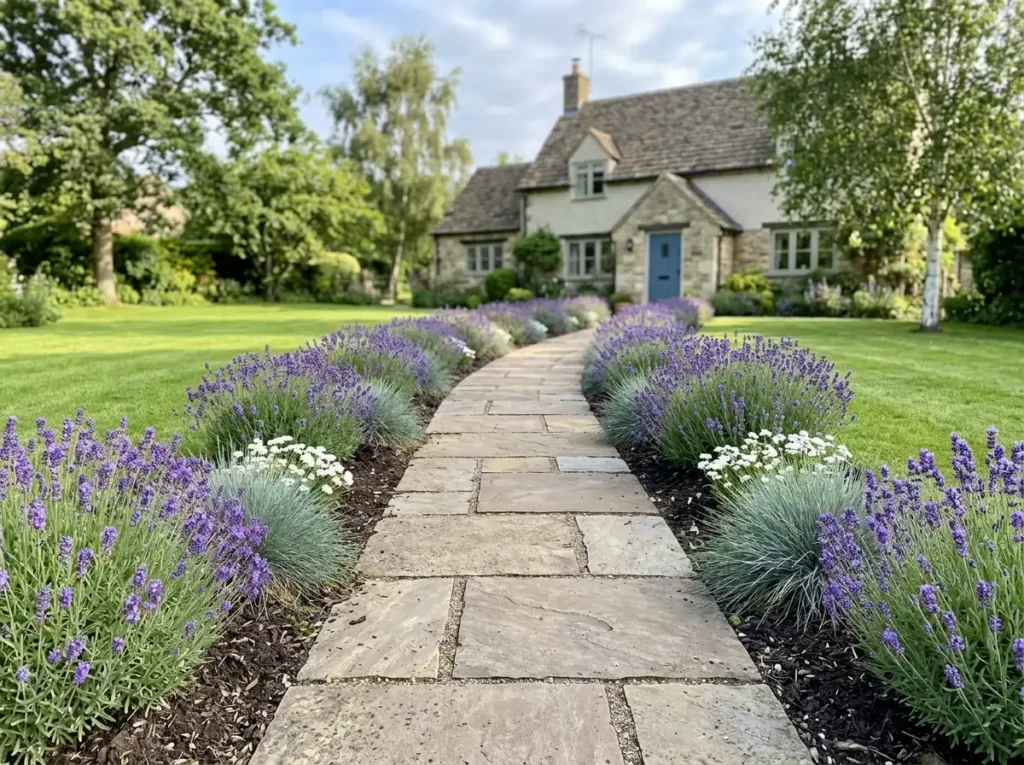
Low plants can make a basic walkway feel like part of the garden.
Choose plants that stay below knee height. Taller plants may lean into the path or hide the edges at night.
Good choices may include dwarf grasses, lavender, compact boxwood, sedum, or another low plant suited to your area.
Use one main edging plant instead of several unrelated types. Repeat it along both sides of the path or use it in small groups.
Leave enough space between the plants and hard surface. Leaves and stems will spread as the plants grow.
Avoid thorny plants near walkways. You should also avoid soft plants that break when bags, pets, or feet brush against them.
Add one seasonal flower for color if the border feels too plain.
Best for: Straight or curved front paths
Maintenance: Low to medium
Main benefit: Makes the path feel clear and finished
Plant a Fragrant Garden Near the Front Path
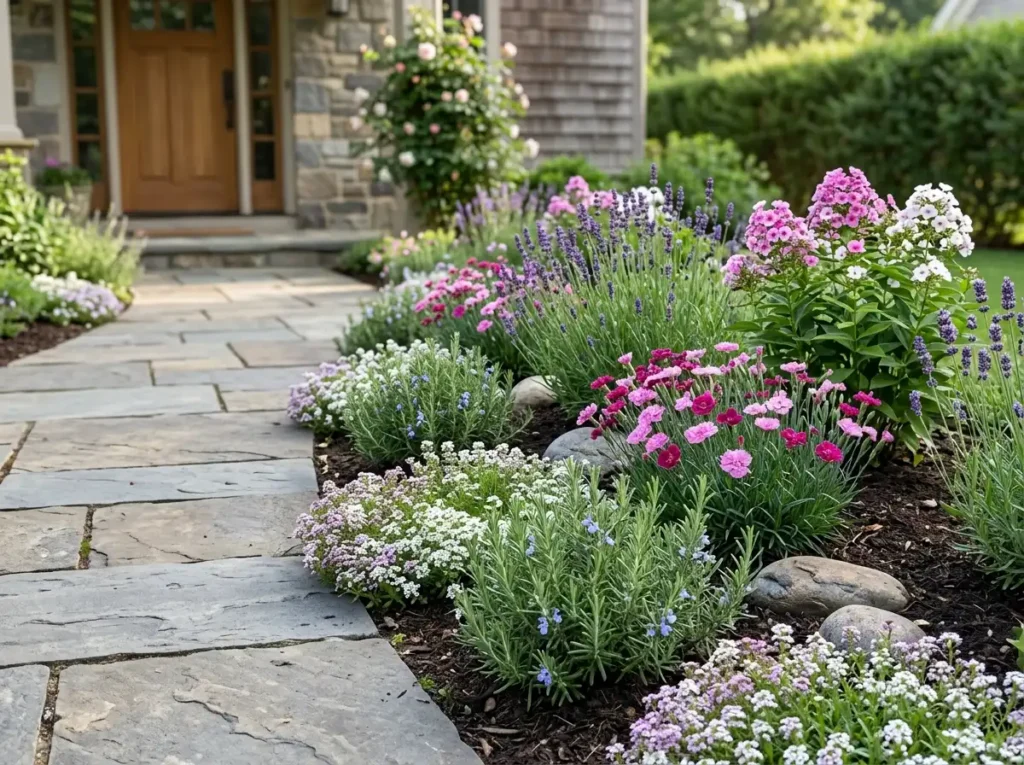
A garden can offer more than color. Scent can make the entrance feel warm and memorable.
Plant fragrant flowers where people can enjoy them as they walk past. Do not hide them at the back of a deep bed.
Possible choices include:
- Lavender
- Dianthus
- Garden phlox
- Sweet alyssum
- Rosemary in warm climates
- Fragrant native flowers
Try to mix plants that bloom at different times. One plant may offer spring scent, while another blooms in summer.
Think about bees before placing flowers beside a narrow path. Pollinator plants are useful, but a tight walkway may not be the best place for a large group of bee-friendly flowers.
You should also avoid very strong scents beside bedroom windows if anyone in your home is sensitive to them.
Best for: Walkways, porches, and seating areas
Maintenance: Medium
Main benefit: Adds scent without needing more space
Turn the Mailbox Into a Small Garden Feature
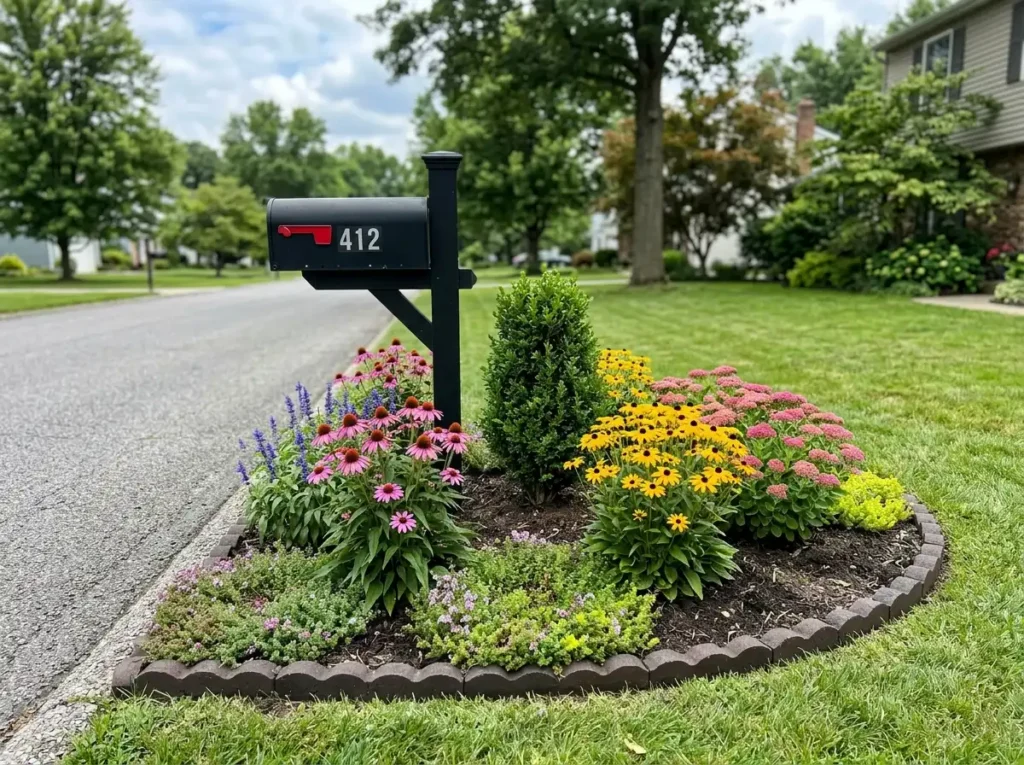
A mailbox garden can add color near the street. It can also connect the edge of your property to the main garden.
Create a small oval, circle, or half-circle bed around the post. Use a clear border so grass does not grow into the soil.
Plants near the road may face extra heat from pavement. They may also deal with road salt, wind, or dry soil.
Choose hardy plants that can handle these conditions.
A simple mailbox garden could include:
- One compact upright plant
- Two groups of flowering perennials
- Low groundcover around the edge
Keep plants clear of the mailbox door. The carrier should be able to reach it without stepping into the bed.
Do not block views of the road. Check local rules before planting close to a curb, sidewalk, or street sign.
Best for: Plain curbside areas
Maintenance: Low to medium
Main benefit: Adds color at the edge of the property
Connect Porch Containers to the Main Garden
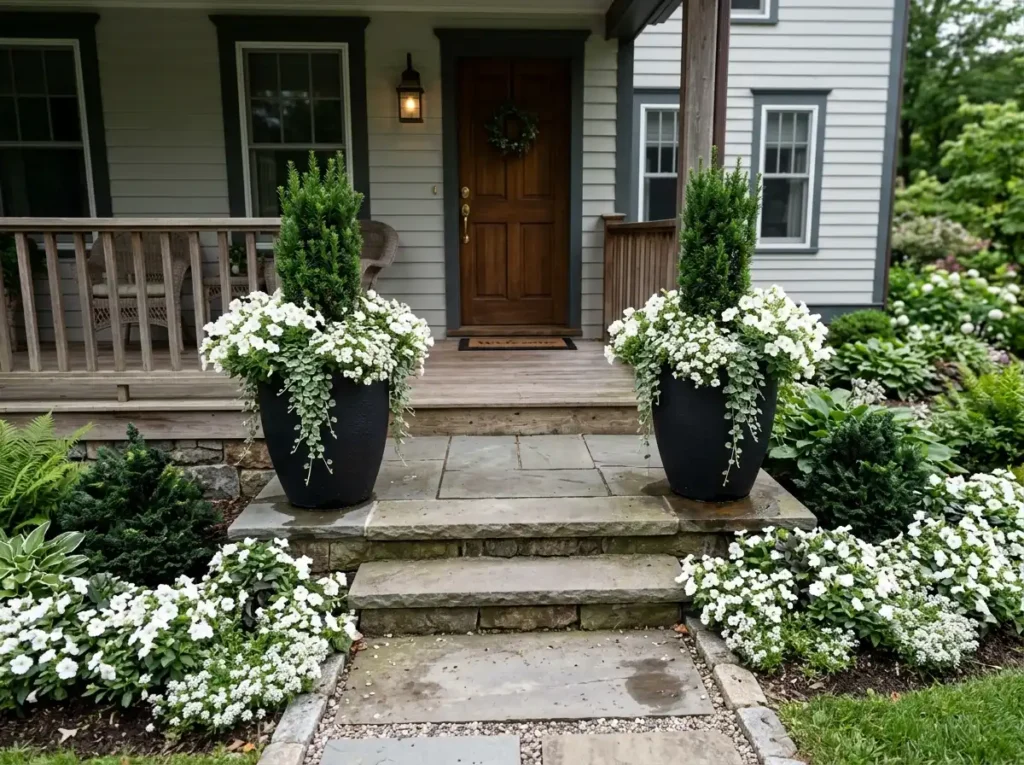
Porch containers often look separate from the rest of the yard. You can fix this by repeating colors and plants.
Choose one or two colors from your garden beds. Use the same colors in your porch pots.
For example, a garden with white flowers and dark green shrubs could include white flowers in black or gray pots.
A simple container can include:
- One upright plant
- One full plant in the middle
- One trailing plant near the edge
Make sure the pot fits the size of the porch. A tiny pot can disappear beside a wide entrance. A large pot may block narrow steps.
You do not need to replace every plant each season. A compact evergreen can stay in the center while smaller flowers change around it.
Keep all containers out of the main walking area.
Best for: Porches, steps, and paved entrances
Maintenance: Medium
Main benefit: Links the house and garden through color
Small Front Yard Garden Ideas That Make the Space Feel Bigger
A small yard does not need more plants. It needs better plant placement.
Too many colors, shapes, and garden features can make the area feel crowded. A simple layout often works better.
These small front yard garden ideas use height, repetition, and clear sight lines.
Grow a Vertical Garden on a Trellis
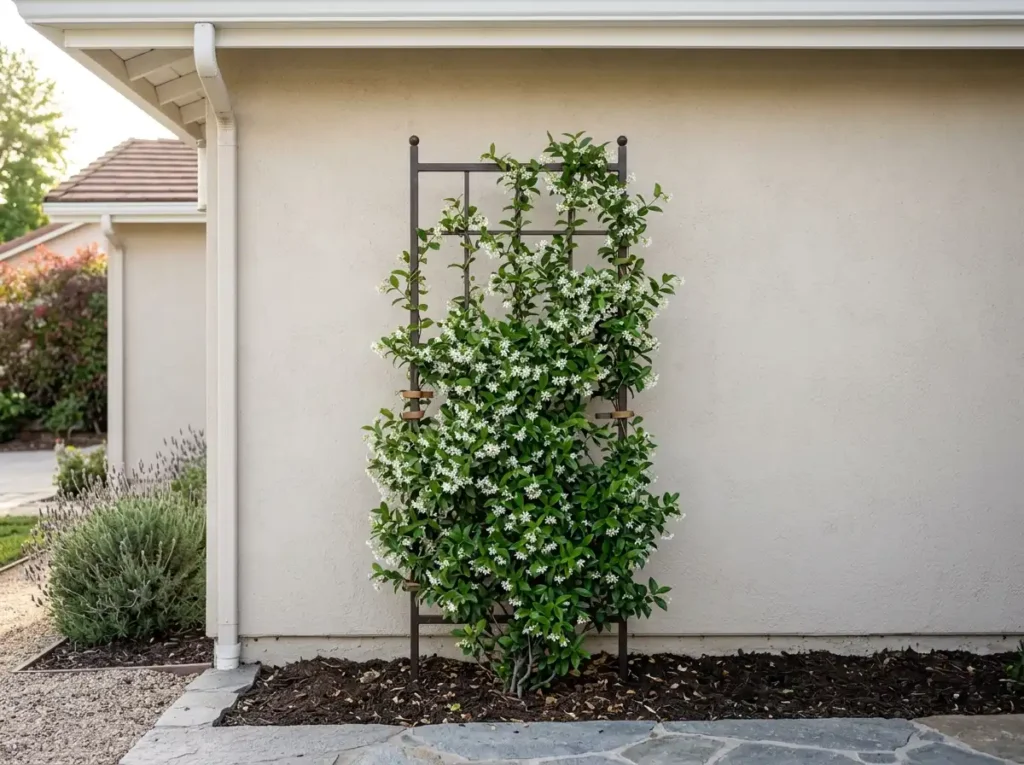
A trellis lets you grow plants upward instead of across the ground.
Place one beside a blank wall, porch post, or narrow garden bed. Leave some space between the trellis and wall so air can move behind the plant.
Choose a climbing plant that suits the amount of light. Clematis, climbing roses, star jasmine, and annual vines are possible choices in the right climate.
Some vines can damage walls, gutters, or rooflines. Check how the plant climbs before placing it near your home.
You can grow the vine in a large container when there is no open soil. Make sure the pot is heavy enough to hold the trellis.
One vertical feature is often enough. Several trellises may make a small yard feel busy.
Best for: Narrow beds and blank walls
Maintenance: Medium
Main benefit: Adds height without taking much ground space
Fill a Narrow Strip With a Simple Plant Pattern
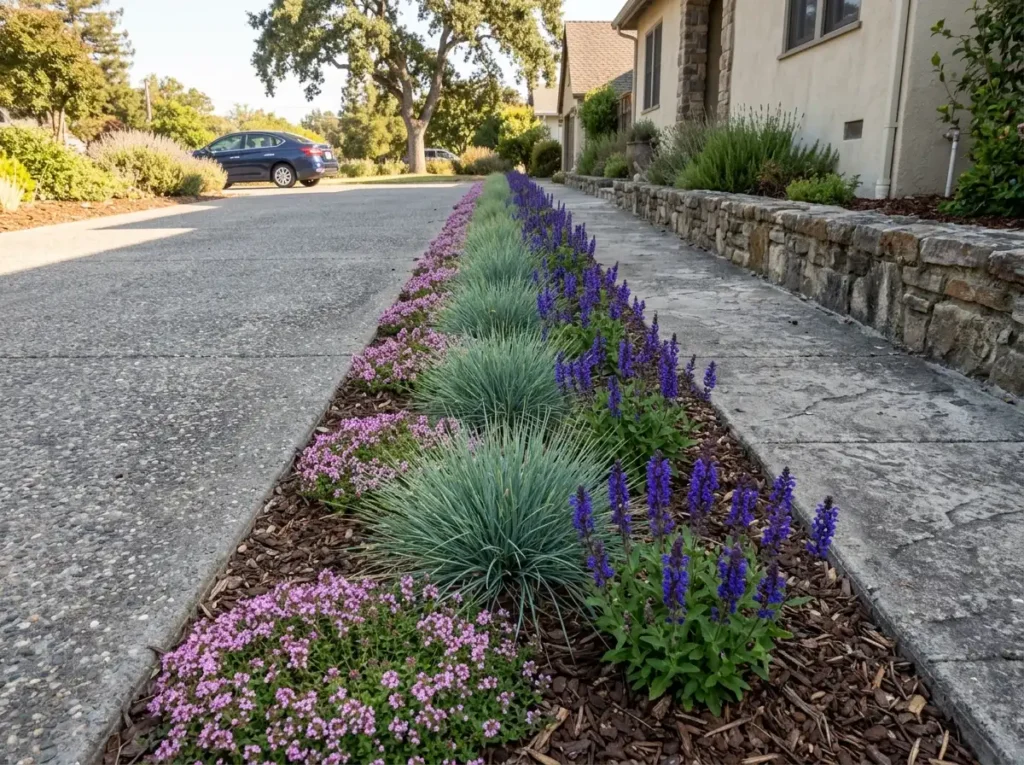
The strip beside a driveway or walkway can be hard to plant. It may be hot, dry, and too narrow for large shrubs.
Use two or three plant types at most. Choose plants with compact or upright growth.
A simple pattern could use:
- One row of compact grasses
- Small groups of flowering perennials
- Low groundcover along the front
Repeat the same pattern from one end to the other. Repetition can make a narrow space look longer and more planned.
Keep plants away from the driveway edge. Stems and flowers should not brush against cars or get crushed by tires.
Mulch can help cover bare soil. Groundcovers can work too, but choose a type that will not spread onto the pavement.
Best for: Driveway edges and side strips
Maintenance: Low
Main benefit: Uses awkward space without creating clutter
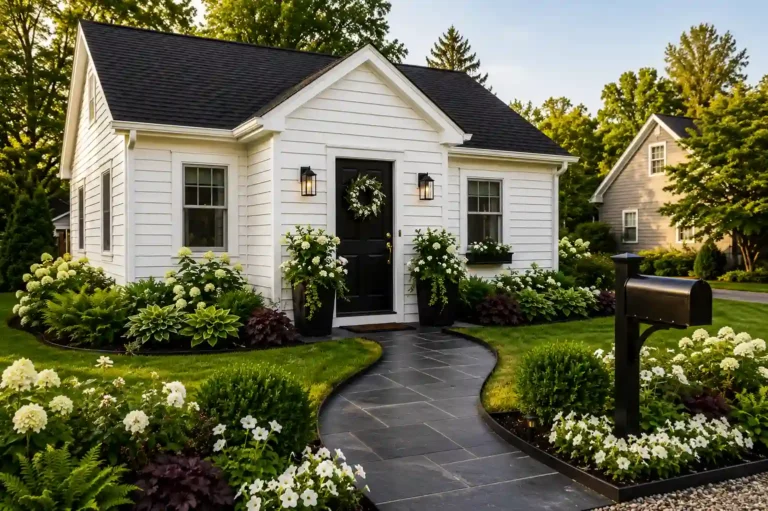
Use One Main Flower Color for a Cleaner Look
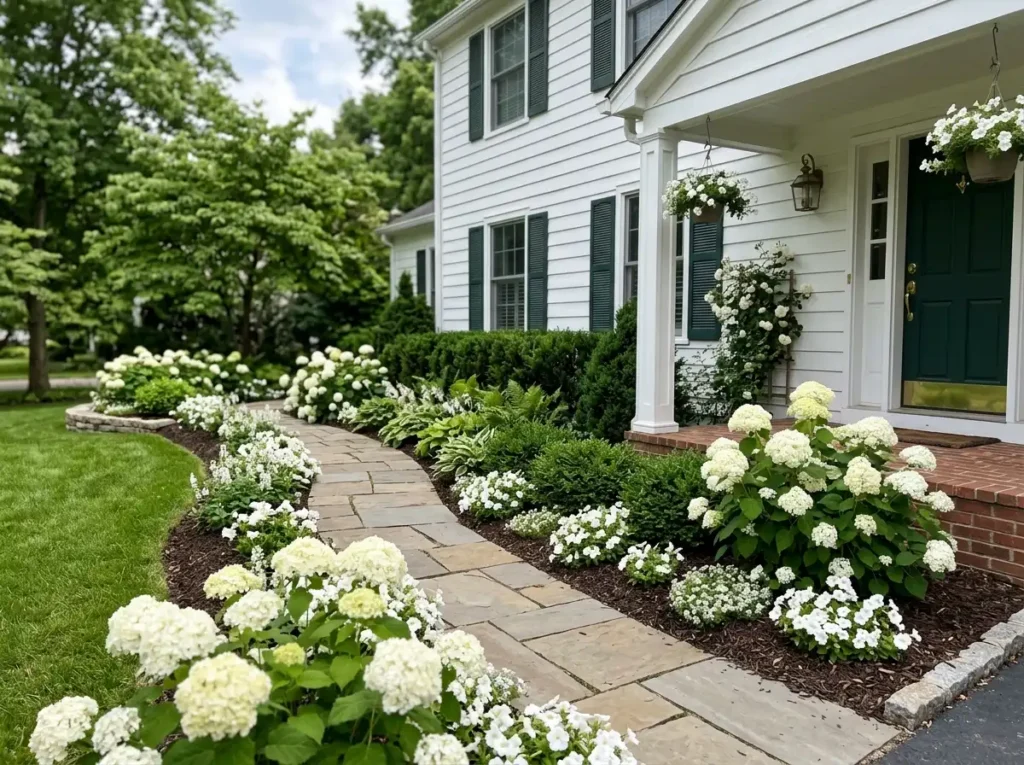
A limited color palette can make a small yard feel calm and open.
Choose one main flower color. Support it with green leaves and a few neutral materials.
A white-and-green garden could include white hydrangeas, pale annuals, low white flowers, and dark evergreen shrubs.
You can also use several shades of one color. Pale pink, medium pink, and deep rose will still feel connected.
Add variety through leaf shape and plant height. This keeps the garden interesting without adding more flower colors.
Repeat the main color near the walkway, entrance, and foundation bed. The repeated color will help the whole yard feel connected.
This approach works well when the house already has strong colors or detailed materials.
Best for: Small or visually busy homes
Maintenance: Depends on plant choice
Main benefit: Makes the yard feel calmer and less crowded
Build a Compact Cottage-Style Garden
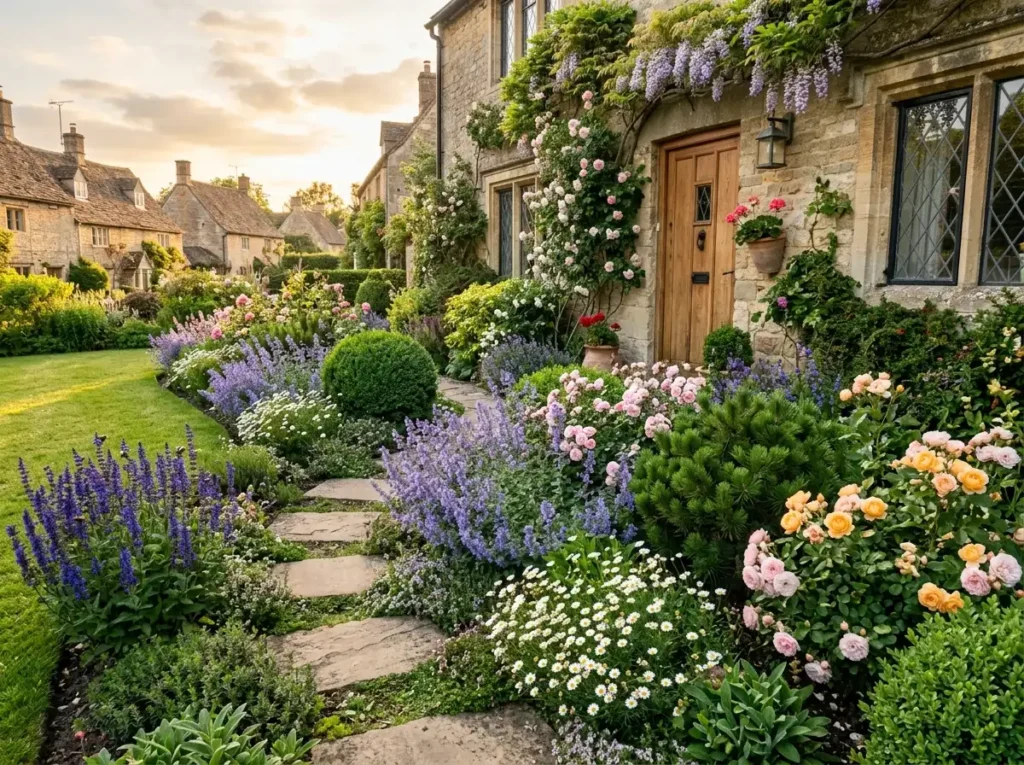
Cottage gardens feel full, soft, and colorful. They can also become messy when every plant has a different size and growth habit.
Use compact flowers instead of large spreading types. Repeat your main plants across the bed.
Possible plants may include dwarf roses, salvia, catmint, compact daisies, and thyme. Check which plants fit your local weather and soil.
Add one short stepping-stone path if the bed is deep. This will let you reach plants without stepping on them.
Mix flowers with a few evergreen plants. The evergreens will give the bed shape when many flowers are not blooming.
Keep a clear edge between the lawn and garden. A neat edge helps an informal planting style look planned.
Best for: Traditional homes and flower lovers
Maintenance: Medium to high
Main benefit: Adds color and charm in a small area
Create a Low-Maintenance Front Yard Garden
A low-maintenance garden is not a garden with no work.
Every garden needs some care. Plants may need water during dry weather. Beds need cleaning. Shrubs may need light pruning.
The goal is to choose plants and materials that reduce regular work.
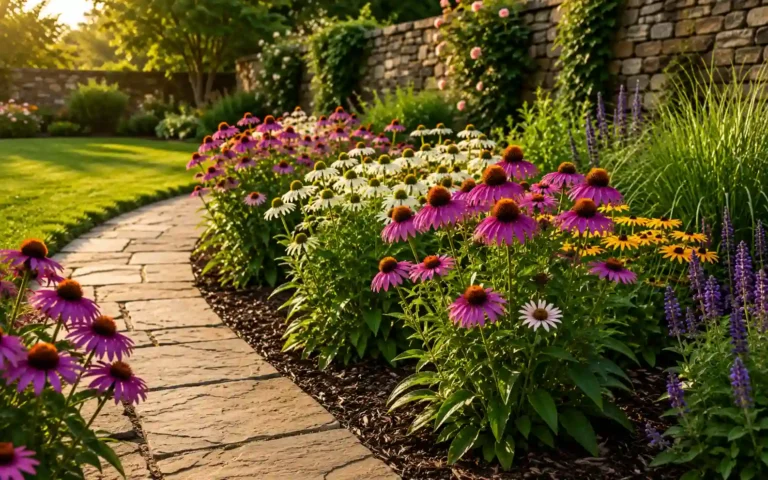
Plant a Native Pollinator Garden
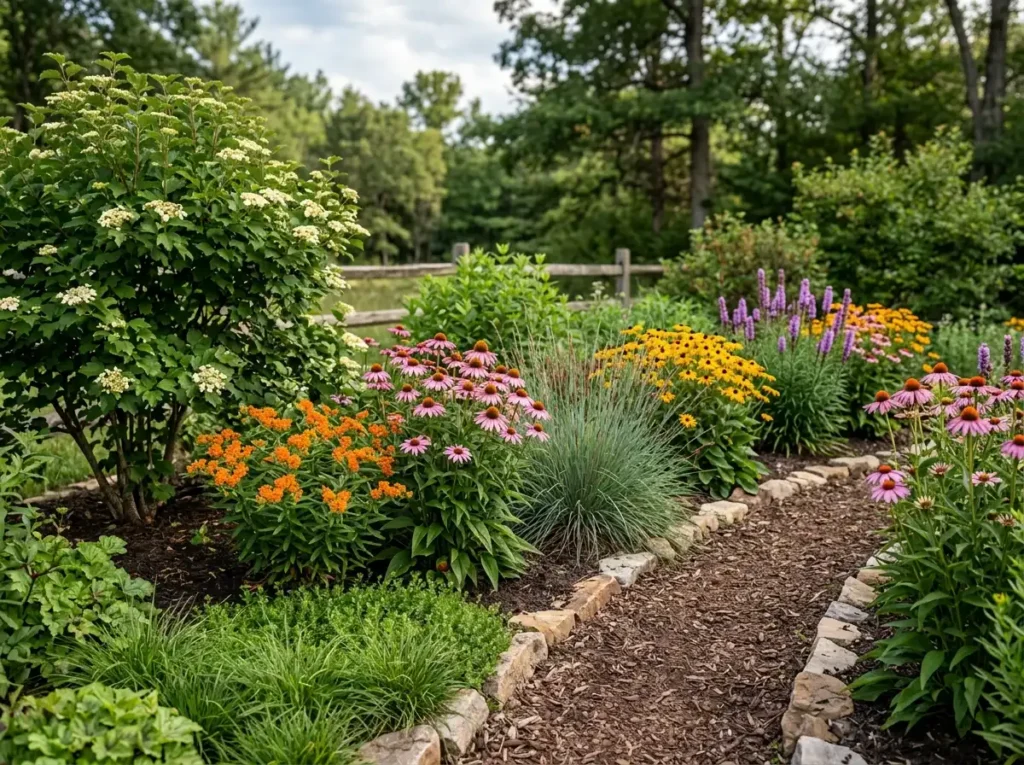
Native plants grow naturally in a certain region. Many provide food and shelter for local insects and wildlife.
That does not mean every native plant is easy to grow. You still need to match the plant to your soil, light, and moisture level.
A simple native garden could include:
- One native shrub
- Three groups of flowering perennials
- One group of native grass
- A low groundcover or clean border
Choose plants that bloom at different times. This can provide color from spring through autumn.
Plant flowers in groups instead of placing single plants across the bed. Groups are easier for pollinators to find. They also create a stronger visual pattern.
Add a clear edge, path, or small sign if the garden has a loose style. These details show that the area is planned and cared for.
Best for: Wildlife-friendly yards
Maintenance: Low to medium after plants settle
Main benefit: Supports local wildlife and seasonal color
Turn a Wet Low Spot Into a Rain Garden
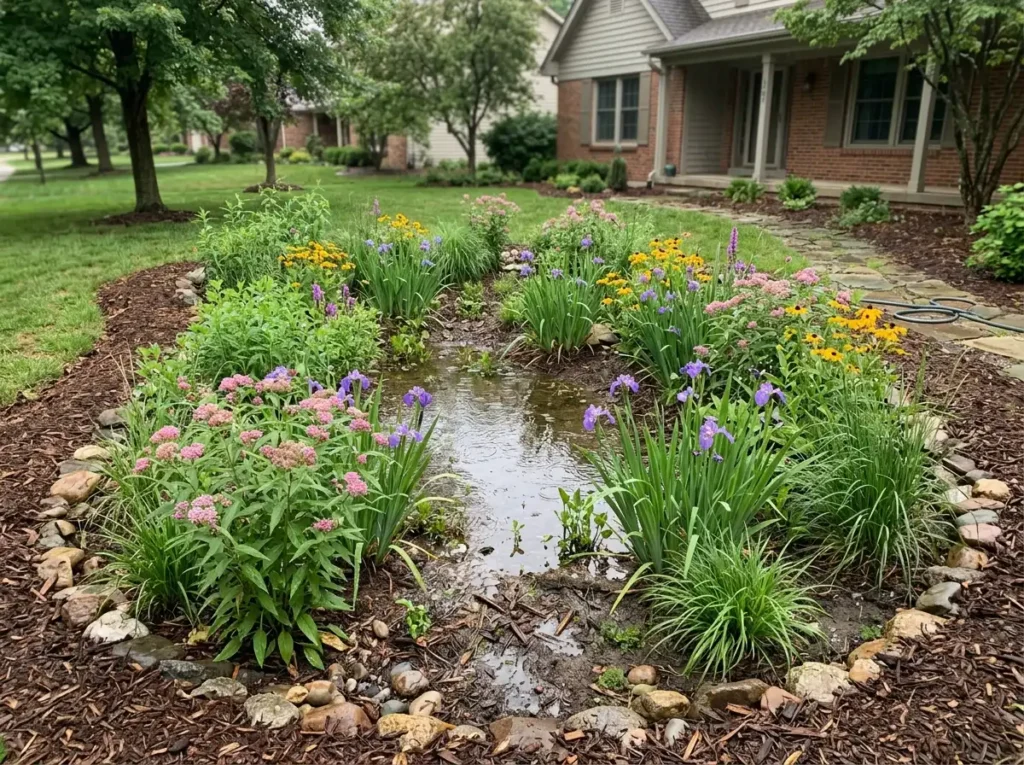
Does water collect in the same part of your yard after every storm?
A rain garden may help manage some of that water. It is a shallow planted area that holds rain for a short time.
A rain garden is not a pond. The water should soak into the soil after the rain ends.
Choose plants that can handle wet and dry conditions. The center of the garden may stay wet longer than the outer edge.
Do not place a rain garden beside the foundation without checking local guidance. You should also find underground pipes, cables, and drainage systems before digging.
A serious drainage problem may need help from a landscape contractor, engineer, or local drainage expert. Plants cannot fix every water issue.
Use a clear border and repeated plant groups. This will help the area look like a garden instead of a muddy low spot.
Best for: Yards with temporary rainwater collection
Maintenance: Medium
Main benefit: Turns a wet area into a useful garden feature
Mix Gravel, Groundcovers, and Drought-Tolerant Plants
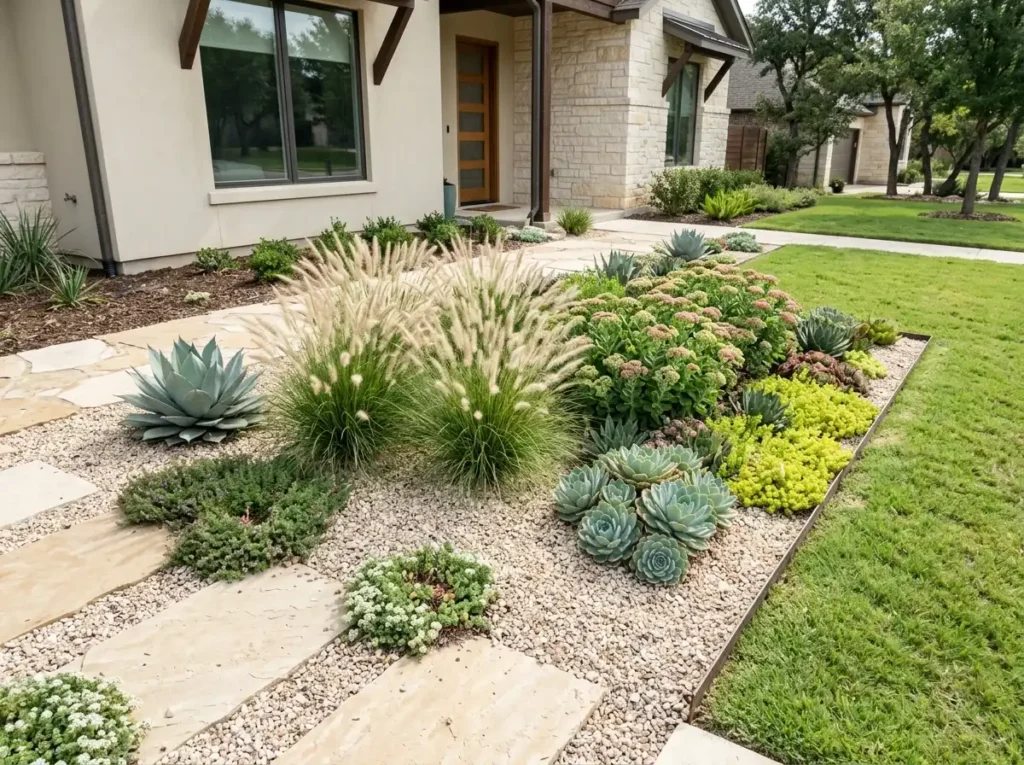
Gravel can reduce muddy soil and add a clean look. It works best when it is part of a full planting plan.
Do not cover the whole yard with gravel and place random plants across it. The space may feel empty and can become hot in direct sun.
Group your plants in clear sections.
A modern bed could include:
- Three compact ornamental grasses
- Repeated sedums or succulents
- One structural shrub
- Gravel with flat stepping stones
Use groundcovers to soften the hard surface. Pick a type that will not spread too fast.
Install strong edging between the gravel and lawn. This will keep stones from moving into the grass.
Choose gravel that fits the color of your house, walkway, or roof. Too many hardscape colors can make the yard feel disconnected.
Best for: Sunny and dry front yards
Maintenance: Low to medium
Main benefit: Reduces open soil and regular watering
Build a Four-Season Garden With Evergreens
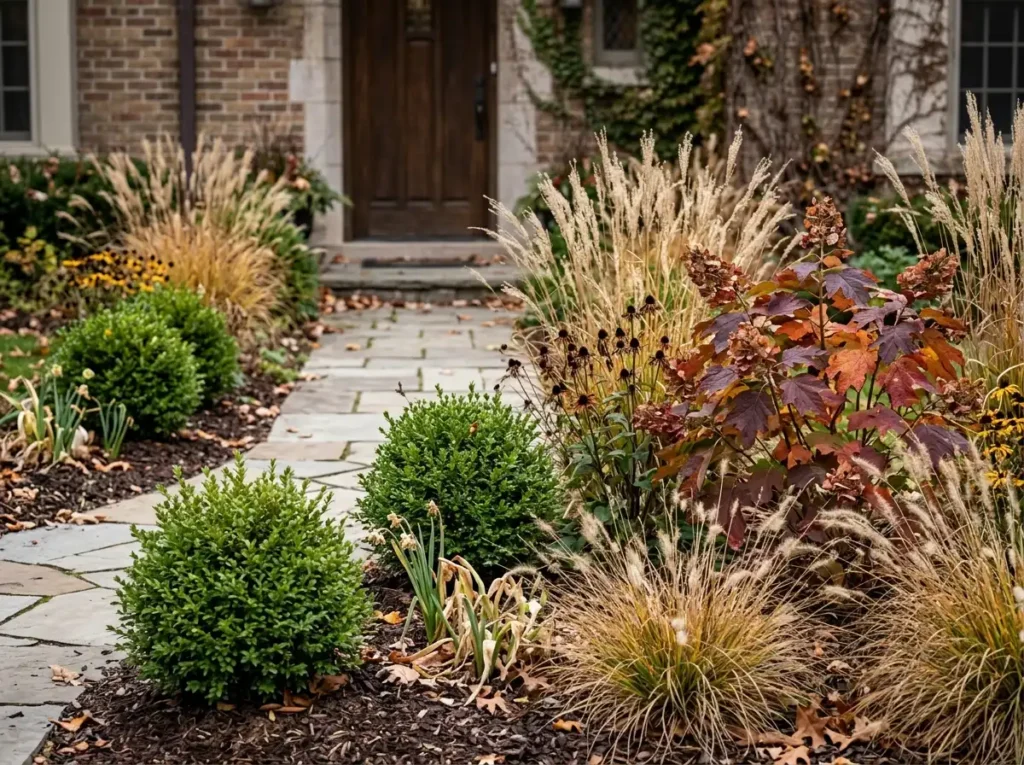
Many front yards look bright in spring and summer. Then they become bare in winter.
A four-season garden includes plants that offer interest throughout the year.
Start with a few compact evergreen shrubs. They will give the garden shape when flowering plants are resting.
Then add seasonal plants:
- Spring bulbs for early color
- Flowering perennials for summer
- Shrubs or trees with autumn leaves
- Bark, berries, grasses, or seed heads for winter
Do not fill the whole bed with evergreens. Too many can make the design feel heavy.
Use them as anchors. Repeat two or three across the yard so the design feels connected.
Check the mature size before planting. Some evergreens grow much larger than they appear at the garden center.
Best for: Homes in areas with clear seasons
Maintenance: Low to medium
Main benefit: Keeps the front yard attractive all year
How to Pick the Right Front Yard Design for Your Home
The best idea depends on what you want to fix.
Do you need more color? Do you want less yard work? Is your entrance hard to see? Does water collect near the driveway?
Start with one main goal.
| Your Main Need | Ideas to Consider |
| Small front yard | Vertical garden, narrow strip, one-color garden |
| Better entrance | Matching beds, fragrant path, porch containers |
| Less maintenance | Native garden, evergreens, gravel garden |
| Poor drainage | Rain garden with suitable plants |
| More curb appeal | Ornamental tree, layered beds, curved corner bed |
| More seasonal color | Cottage garden, layered beds, four-season garden |
Your garden style should also fit your home.
Straight bed lines and repeated grasses may suit a modern house. Curved beds and mixed flowers may look better beside a cottage or traditional home.
Look at the materials on the building. Brick, stone, wood, and painted siding can guide your color choices.
Sun, soil, and drainage matter more than the look of a plant photo. A beautiful plant will not stay beautiful in the wrong place.
Set a care limit before you choose the design. A cottage garden may need more trimming and cleanup. A simple evergreen bed may need less weekly care.
You can also complete the project in stages.
Take a clear photo of your house from the street. Print it or open it in a basic drawing app. Sketch possible bed shapes over the photo.
This can help you spot problems before you start digging.
Front Yard Garden Mistakes That Can Ruin the Layout
A front yard can have healthy plants and still look unplanned.
One common mistake is buying plants based on their current size. Always check their mature height and width.
Another mistake is using too many plant types. Ten single plants can look more crowded than three plant types repeated in groups.
Avoid these common problems:
- Beds that are too narrow for mature plants
- Shrubs that cover windows
- Flowers that lean over steps
- Trees planted too close to the house
- Thorny plants beside walkways
- No clear edge between lawn and soil
- High-care plants in hard-to-reach areas
- Designs copied from a different climate
- Plants with very different water needs in one bed
Do not hide the front door behind tall plants. The entrance should remain the main visual point.
Leave enough room for bins, hoses, tools, and outdoor repairs. A garden should not block access to utility boxes, taps, or meters.
Check the design from the street before planting. A layout may look balanced from the porch but uneven from the road.
You can use stakes, pots, or cardboard boxes to mark the future plant positions. Step back and look at the full yard.
Five minutes of checking can prevent years of awkward plant placement.
Start With One Front Yard Problem
A successful front yard garden needs a clear shape, suitable plants, repeated colors, and open access to the entrance.
You do not need to complete every area at once.
Choose the part of the yard that causes the most trouble. It may be a bare corner, wet low spot, empty walkway, or crowded foundation bed.
Measure the area. Check the light. Then sketch a basic layout before you shop.
The best front yard garden design ideas work with your home instead of competing with it. Start with one manageable section, repeat what works, and give the plants room to grow.