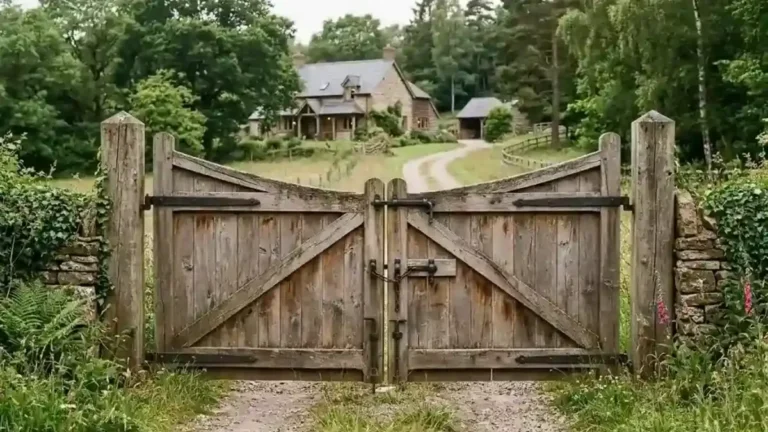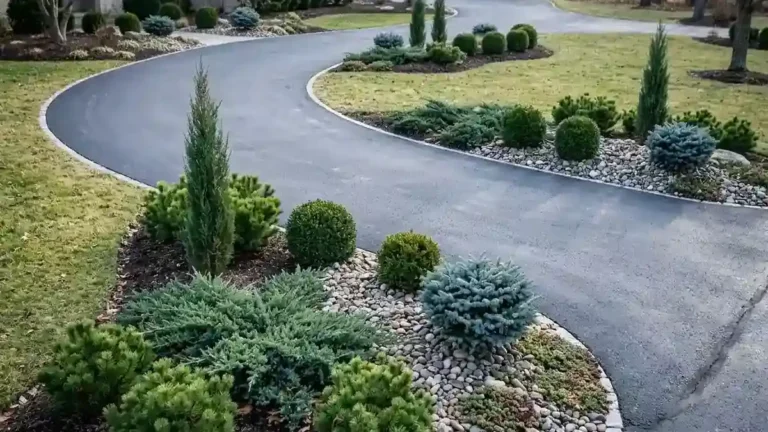
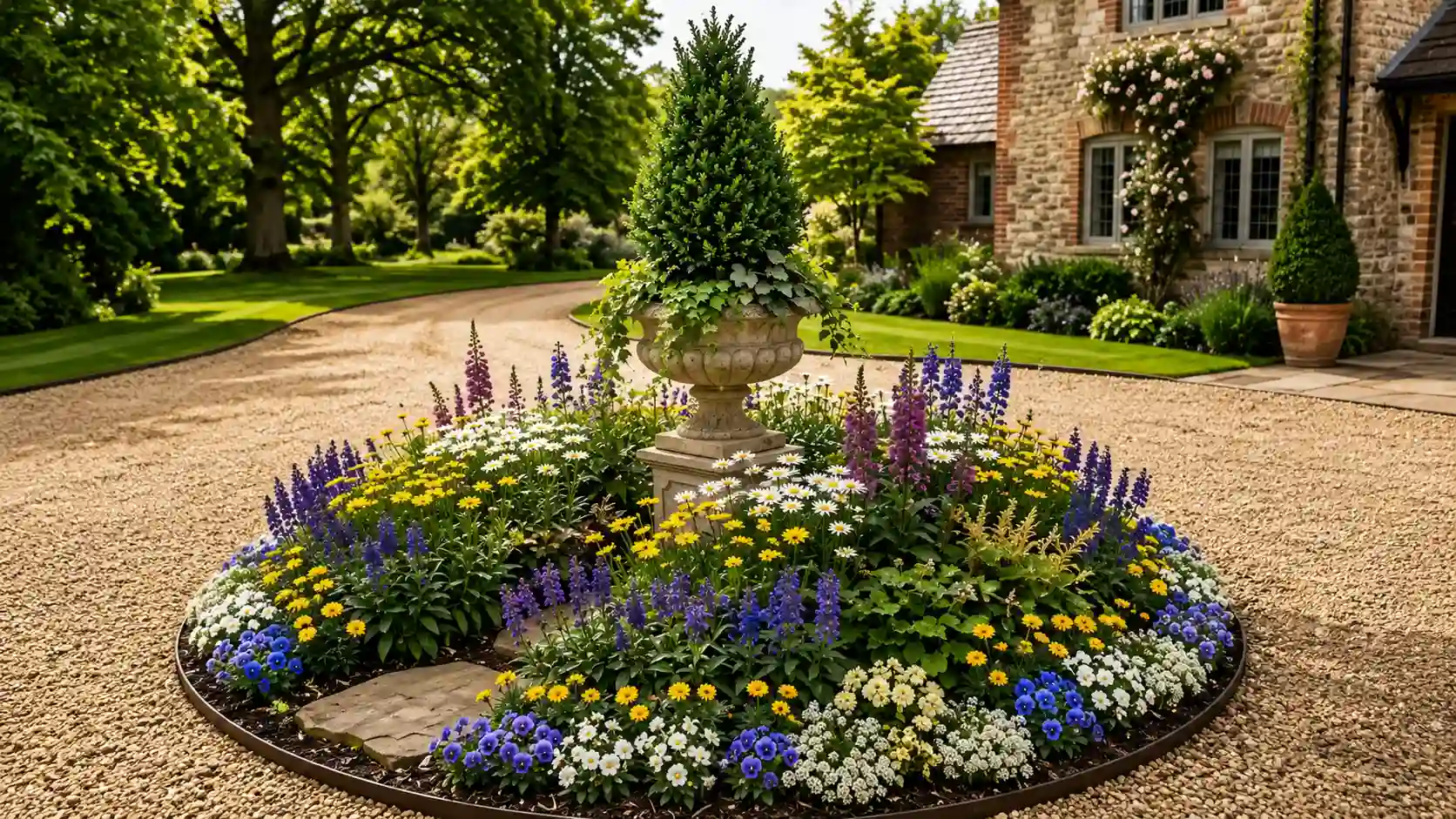
20 Side and Circular Driveway Landscaping Ideas
A side or circular driveway takes up a large part of your front yard. If the space around it looks bare, the whole yard can feel unfinished.
But adding random plants is not the best fix.
Large shrubs may scratch your car. Tree roots may lift the pavement. Tall plants near the road may block your view. Poor drainage may also leave water sitting near the driveway after rain.
The right plan can help you avoid these problems.
These side and circular driveway landscaping ideas will help you add color, shape, and curb appeal. You will find options for narrow spaces, center islands, driveway entrances, and worn borders.
You will also learn how to choose plants that fit the space. Some ideas need regular care. Others use native plants, gravel, and simple borders to reduce yard work.
The best choice depends on your driveway shape, local weather, budget, and free time.
How to Plan Your Driveway Landscaping
Before you buy plants, watch how people use your driveway.
Notice where cars turn, park, and back up. Open the car doors to see how much space they need. Check where people walk from the driveway to the house.
These small checks can prevent costly mistakes.
Measure each planting area. Include narrow side strips, the driveway entrance, and any center island.
Next, check how much sun each area receives. A wall may shade one side of the driveway for most of the day. Open areas may receive strong afternoon sun and heat from the pavement.
You should also watch where rainwater flows. Look for puddles, washed-out mulch, and wet soil.
Mark these main zones on a simple sketch:
- Driveway entrance
- Side planting strip
- Parking area
- Turning area
- Center island
- Front walkway
- Drainage path
Keep plants away from drains, utility boxes, and important road views. Call your local utility-marking service before digging deep holes.
Think about the look you want. Formal yards often use even rows, low hedges, and matching planters. Natural yards may use native flowers, grasses, stones, and curved beds.
Once you know the limits of the space, you can choose a design that looks good and works well.
6 Side Driveway Landscaping Ideas for Narrow Spaces
A narrow side driveway can be hard to landscape. You may have little soil, strong heat, deep shade, or a blank wall.
The goal is to add interest without making the driveway feel tighter.
Add a Slim Evergreen Border
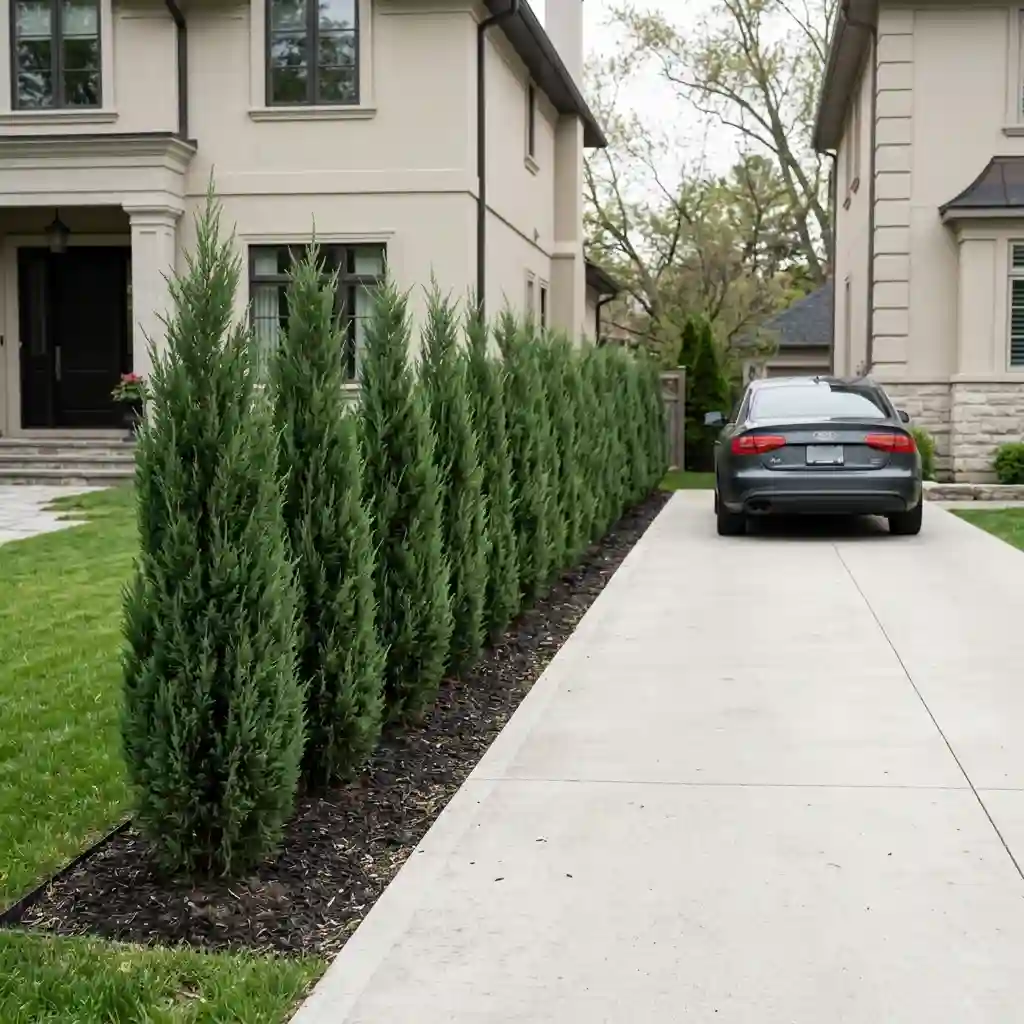
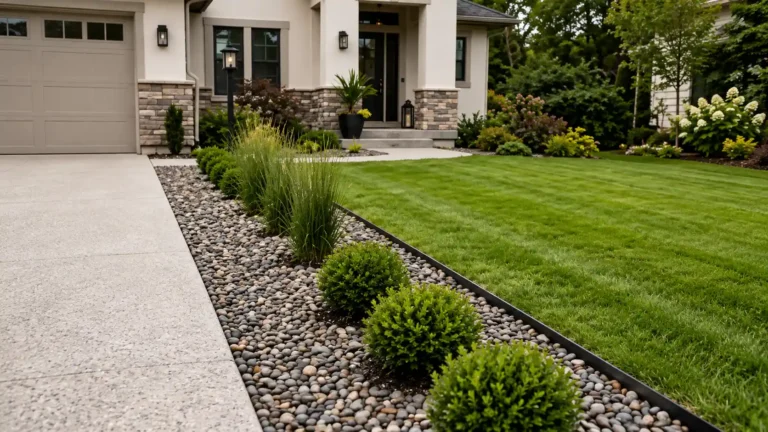
A row of compact evergreen shrubs can make a side driveway feel neat all year.
Choose plants with a narrow mature shape. Do not judge a shrub by its size at the garden center. Read the plant label and check how wide it may grow.
Place the shrubs far enough from the pavement. Branches should not touch parked cars or block mirrors.
You can use one type of shrub along the full border. This creates a clean and calm look.
For more texture, mix two evergreen plants with different leaf shapes. Keep the color range simple so the narrow area does not feel busy.
Best for: Formal, modern, and traditional homes.
Care tip: Pick a variety that fits the space without heavy trimming. A plant that grows too wide will create more work each year.
Build a Layered Planting Strip
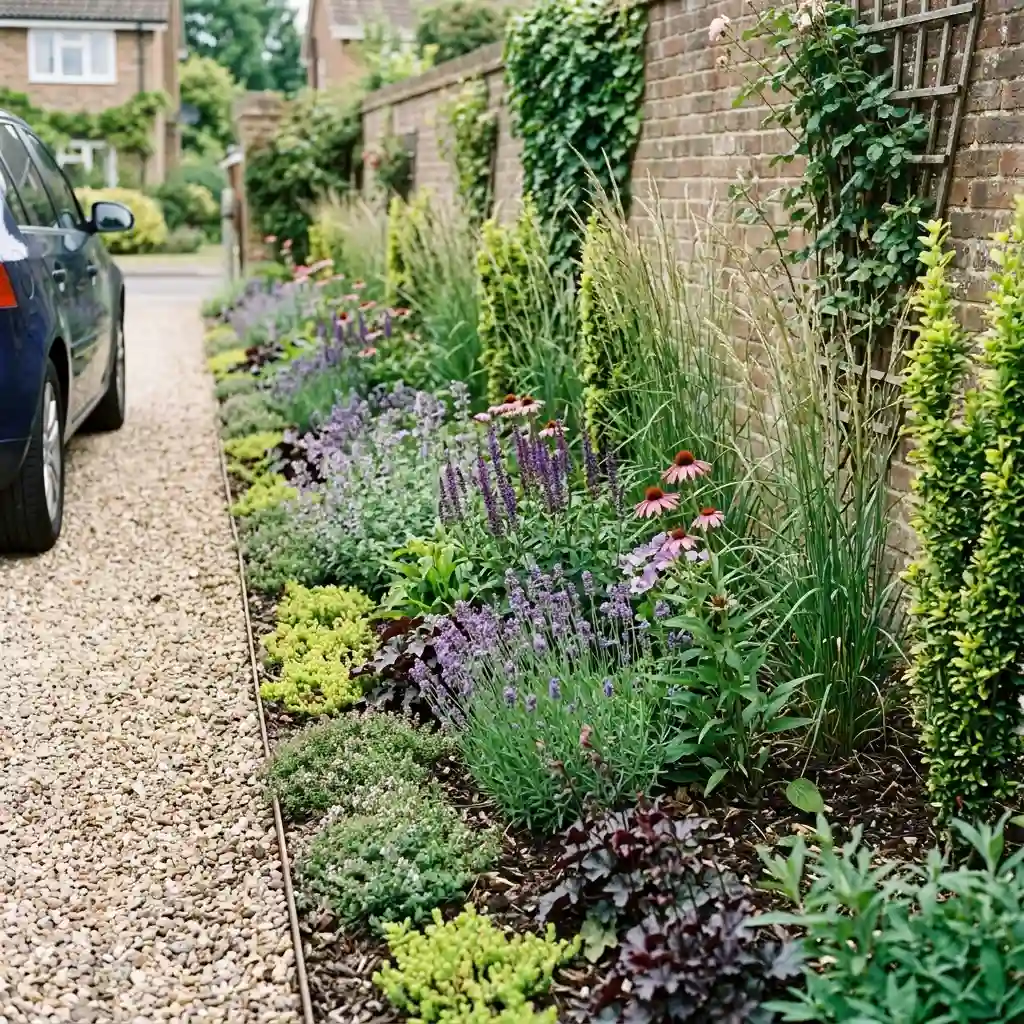
A layered bed can make a plain side driveway feel deeper and softer.
Place low groundcover next to the pavement. Add medium flowers or leafy plants behind it. Keep the tallest plants near a fence or wall.
This order protects the driveway from spreading branches. It also keeps each plant visible.
Repeat the same plants along the strip. You do not need a different flower in every gap.
Try a simple mix of:
- Low groundcover near the driveway
- Flowering plants in the middle
- Slim grasses or shrubs at the back
Choose plants with different leaf shapes. This keeps the bed attractive when few flowers are open.
Best for: Side strips with enough room for two or three plant layers.
Care tip: Leave small gaps so you can remove weeds and reach the back of the bed.
Use a Trellis for Vertical Color
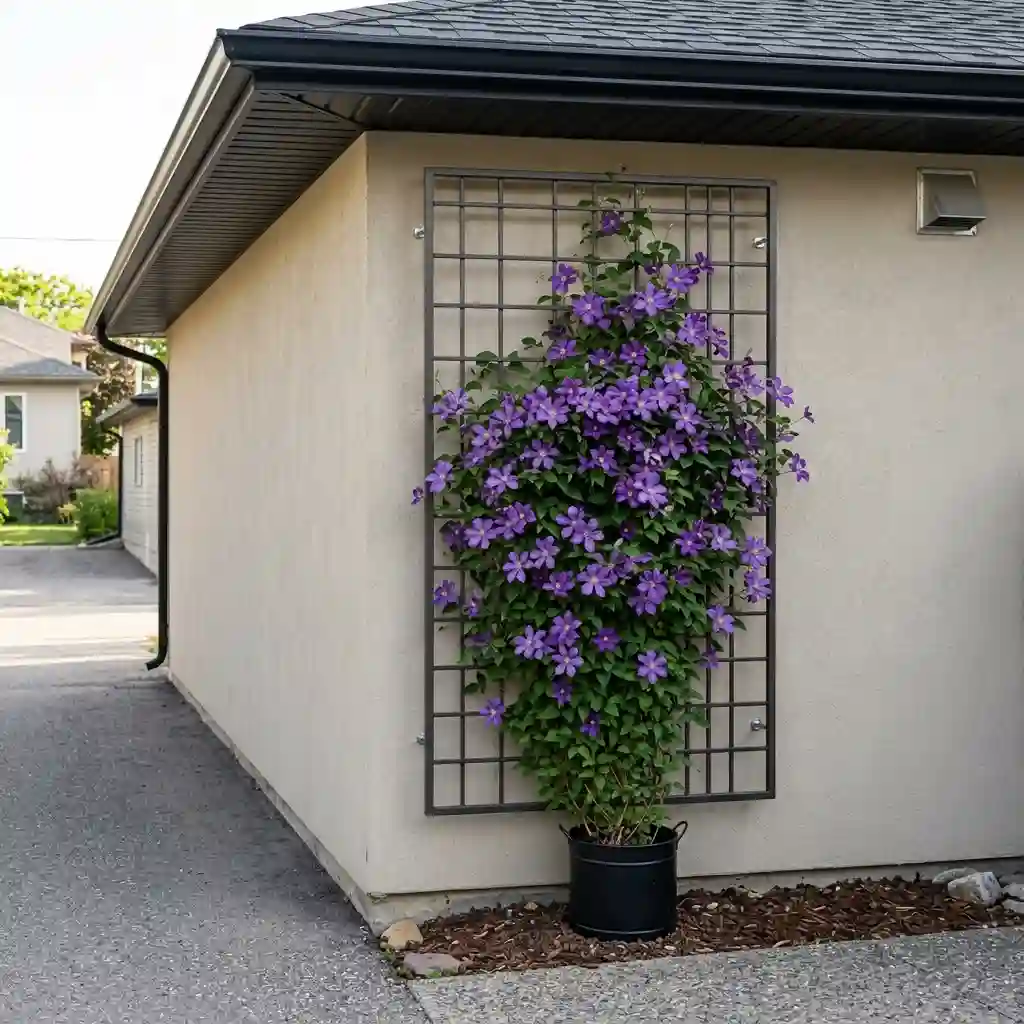
A trellis lets you add plants without using much ground space.
Attach it to a plain garage wall or install it beside a fence. Leave a small gap between the trellis and the wall so air can move behind the plant.
Choose a climber that grows well in your local weather. Check how tall and wide it becomes.
Some climbing plants grow fast and spread into gutters, roof gaps, or nearby trees. These plants may need frequent cutting.
A slower-growing climber may be easier to control beside a driveway.
Match the trellis to the home. Wood can suit cottage and traditional homes. Dark metal often works well with modern homes.
Best for: Very narrow driveways beside a blank wall.
Care tip: Keep vines away from cables, roof edges, vents, and outdoor lights.
Create a Gravel Strip With Stepping Stones
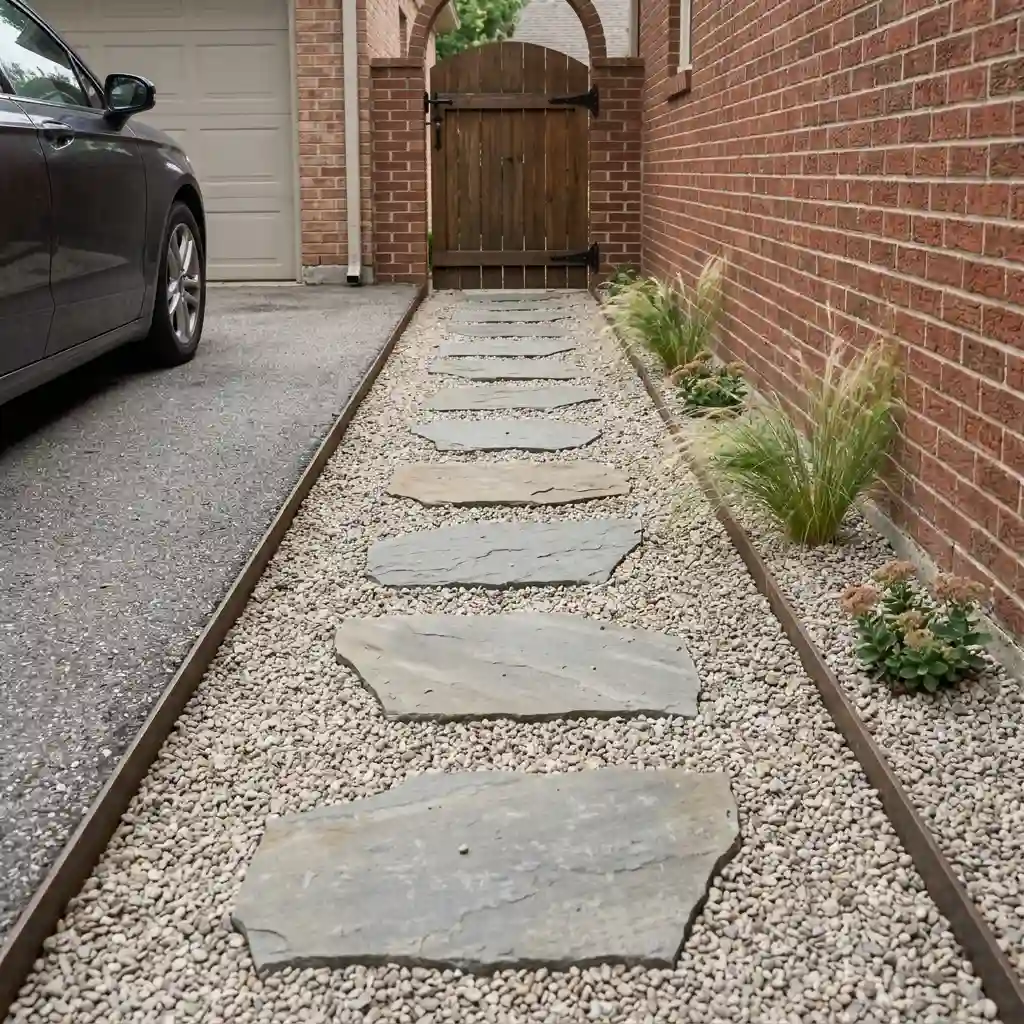
Grass often struggles in narrow spaces beside pavement. It may become thin, muddy, or hard to mow.
A gravel strip can solve this problem.
Add strong edging between the driveway and gravel. The edging keeps stones away from tires and drains.
Place flat stepping stones through the gravel if you use the area to reach bins, a gate, or the backyard.
You can add a few heat-tough plants along the wall. Keep the design open so walking remains easy.
Choose stones that suit the house. Pale gravel can brighten a shaded side yard. Dark gravel can create a clean look beside light walls.
Best for: Hot, dry, shaded, or hard-to-mow side areas.
Care tip: Do not place loose gravel where car tires can push it onto the driveway.
Add Raised Planters Along a Wall
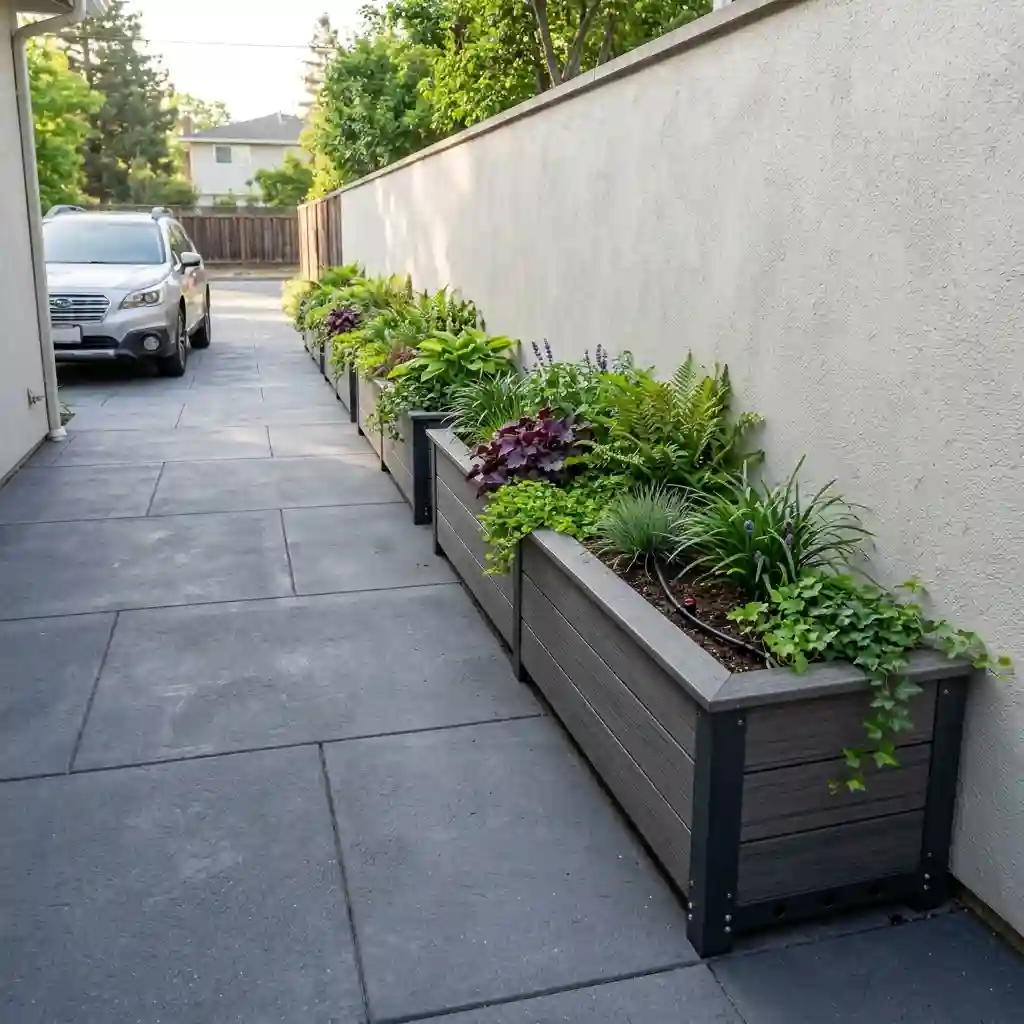
Raised planters work well when the ground is paved or the soil is poor.
Use long, narrow boxes instead of many small pots. This makes the area look calmer and leaves more walking space.
Choose a planter depth that gives roots enough room. The planter should also have holes for extra water to escape.
Match the planter material with the house. Wood adds warmth. Metal creates a sharper look. Concrete feels solid but can be hard to move.
Add drip lines to water the plants. This keeps water off the pavement and reduces waste.
Best for: Side driveways with little open soil.
Care tip: Check the full planter width before buying. Make sure car doors can still open without hitting it.
Turn the Driveway End Into a Pocket Garden
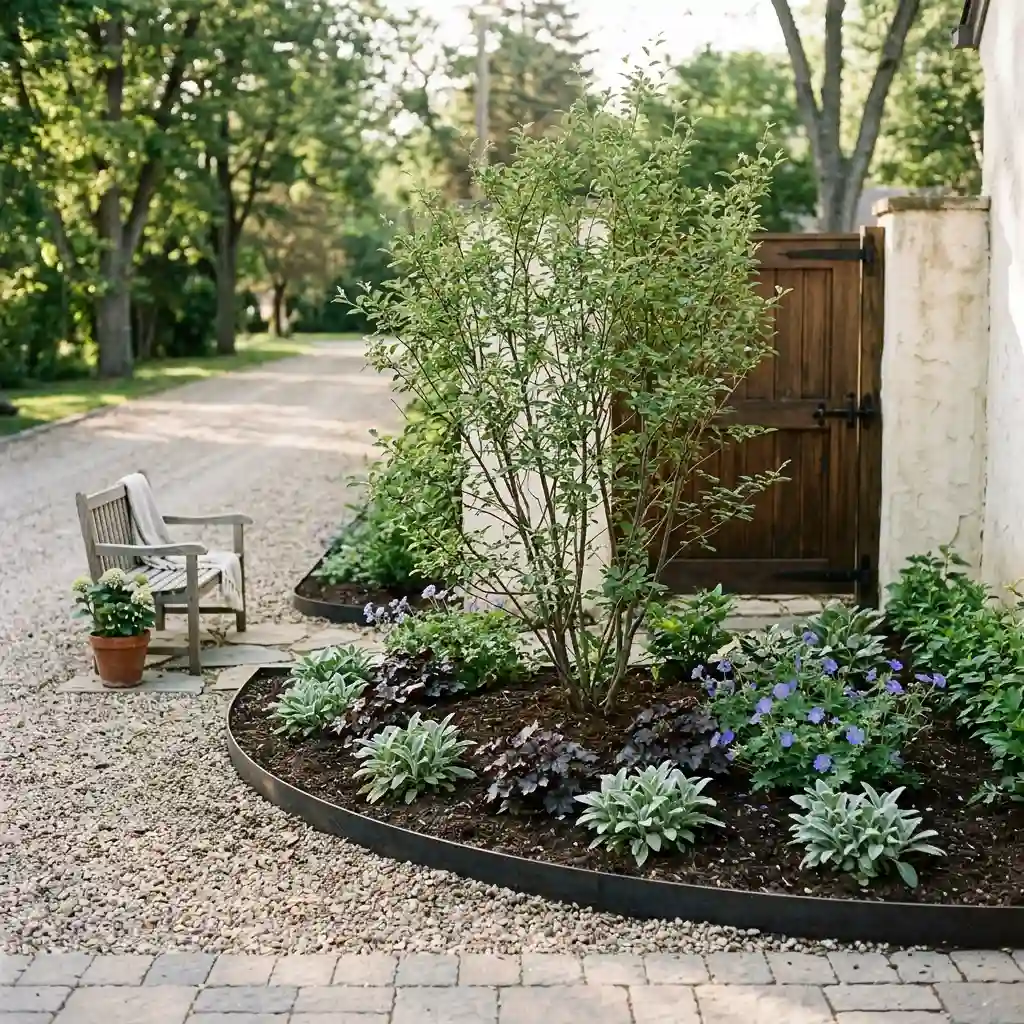
The far end of a long side driveway can feel empty. A small garden can create a clear stopping point.
Add one main plant, such as a compact tree or upright shrub. Place lower plants around its base.
A curved bed can soften the hard line where the driveway meets a fence, gate, or garage.
Repeat one or two plants from the front yard. This helps the pocket garden feel linked to the rest of the property.
You may also add a simple bench if the area is wide enough. Keep it clear of cars, doors, and storage spaces.
Best for: Long side driveways that end near a gate or blank wall.
Care tip: Do not cover utility boxes, water taps, or garage access.
6 Circular Driveway Landscaping Ideas for the Center Island
The center island is often the first thing people notice in a circular driveway.
It can be seen from the street, house, front door, and both sides of the driveway. This means the design should look balanced from several angles.
Keep the outer edge low. Drivers should be able to see other cars, people, and the road.
Plant One Tree With Low Groundcover
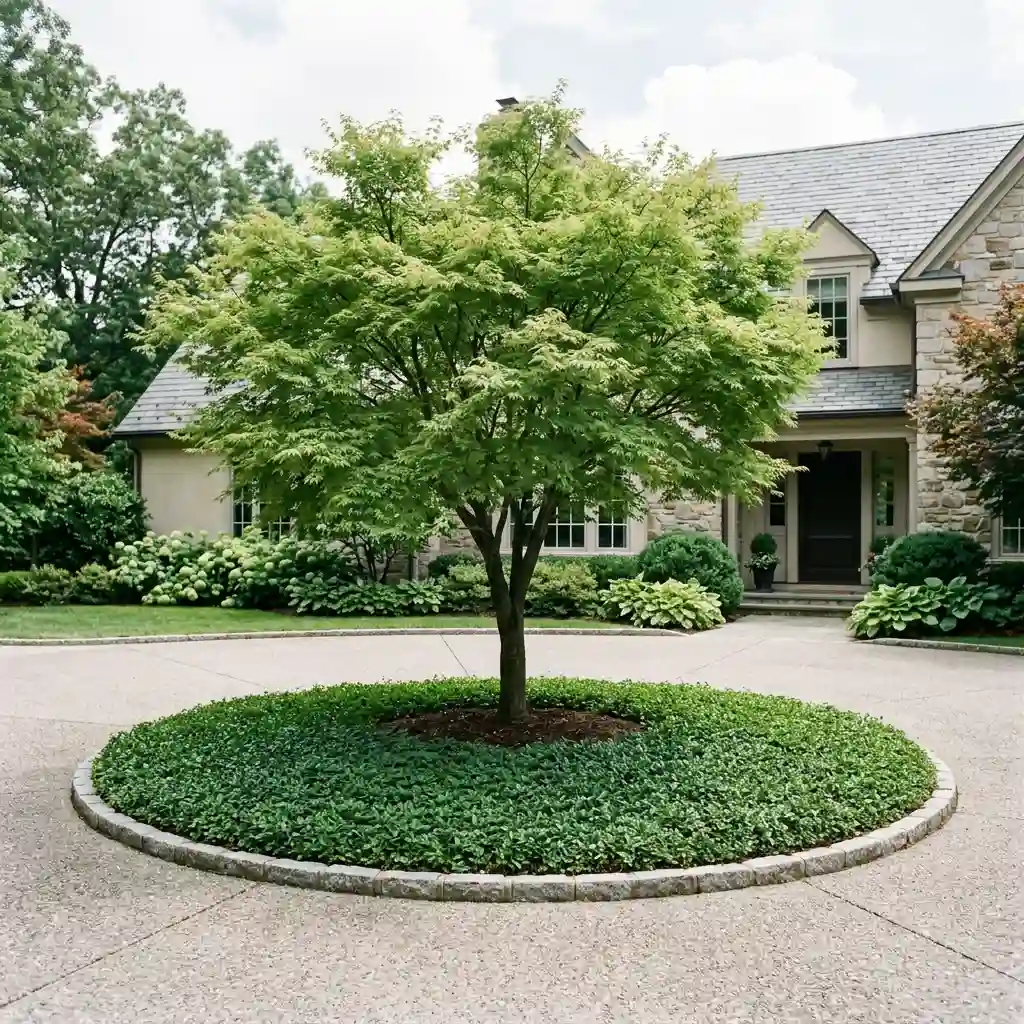
One tree can give the center island a clear focal point.
Choose a tree that fits the space when fully grown. Check the mature height, branch spread, trunk size, and root habits.
A large tree may look small when first planted. After several years, its branches may hang over cars or its roots may affect nearby pavement.
Place low groundcover around the tree instead of grass. This removes the need to push a mower around the trunk.
Use one groundcover or a simple mix of two plants. Too many plant types can make the island feel messy.
Best for: Medium and large circular driveway islands.
Care tip: Keep lower branches trimmed so they do not block views across the driveway.
Create a Low Evergreen Island
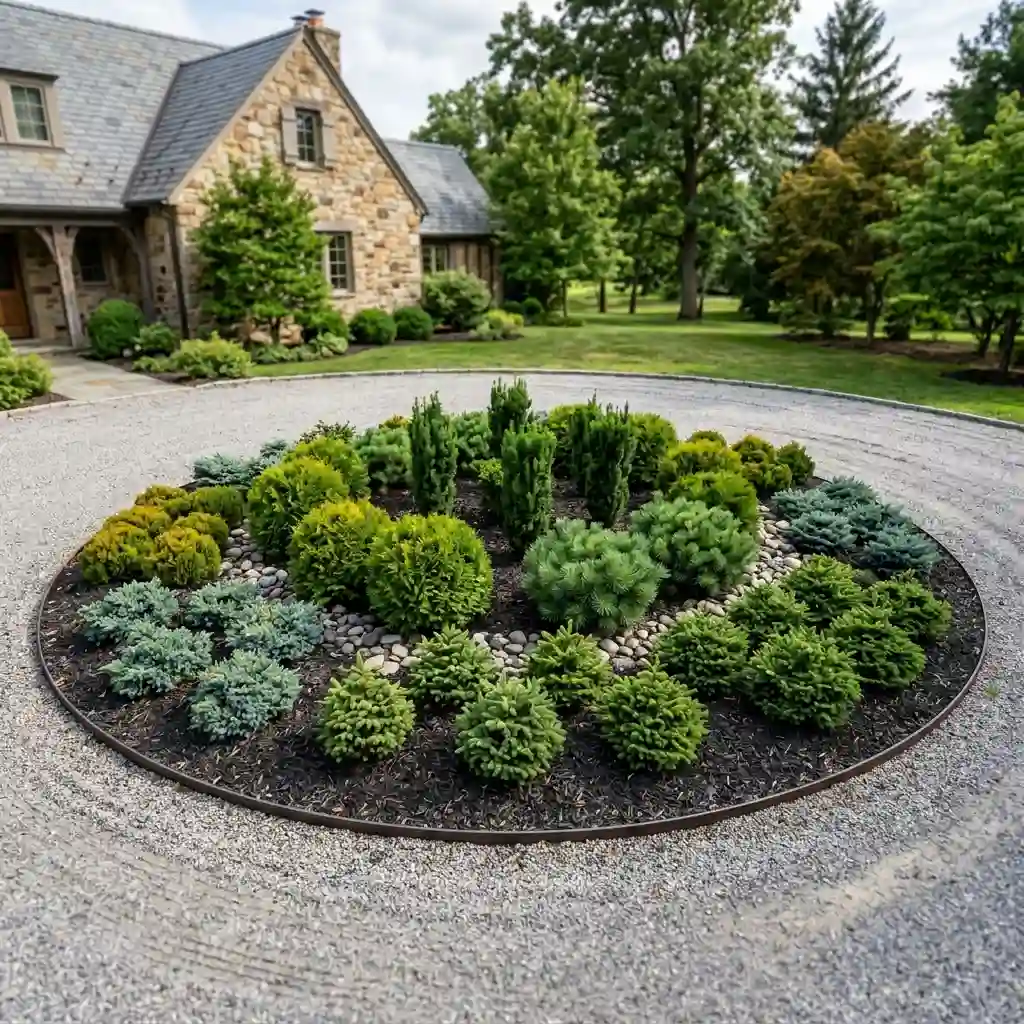
Compact evergreen shrubs can add shape and color during every season.
Use groups of three, five, or seven plants instead of placing single shrubs at equal spaces around the island.
Keep the shortest plants near the edge. Place slightly taller shrubs near the middle.
You can mix rounded shrubs with upright plants for contrast. Use mulch or small stones between them.
A low evergreen design works well when you want a clean look without seasonal replanting.
Best for: Formal yards and homeowners who prefer a neat design.
Care tip: Check mature plant sizes before you set the final spacing.
Add a Ring of Seasonal Flowers
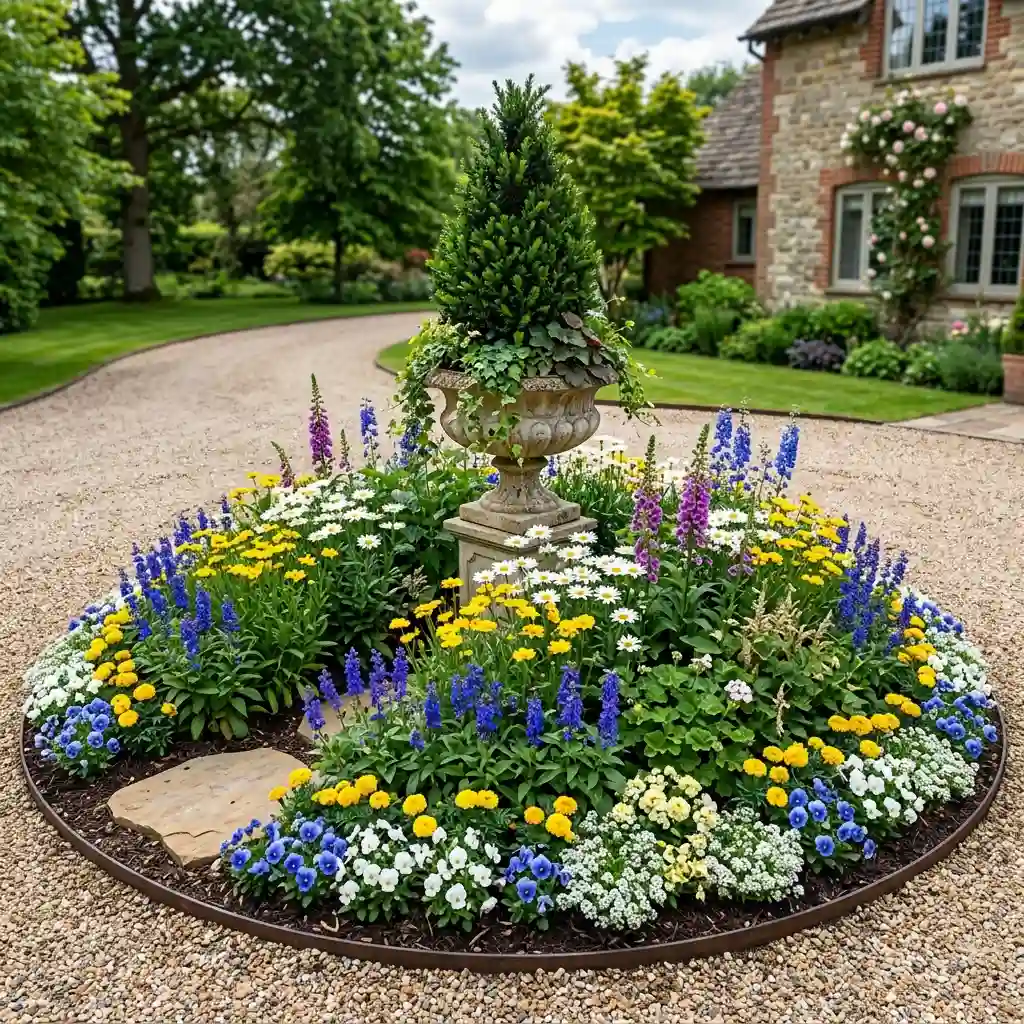
A flower ring can add bright color to a circular driveway.
Choose two or three main colors. Repeat them around the island.
Place the lowest flowers near the outer edge. Add taller flowers closer to the center.
You can also use one evergreen shrub, small tree, or urn in the middle. The flowers should support that feature instead of fighting for attention.
Choose plants with different bloom times. This helps the island stay colorful for more than a few weeks.
Best for: Homeowners who enjoy changing plants through the year.
Care tip: Leave a small path or stepping stone so you can water and replace flowers without stepping on them.
Build a Rain Garden or Dry Creek
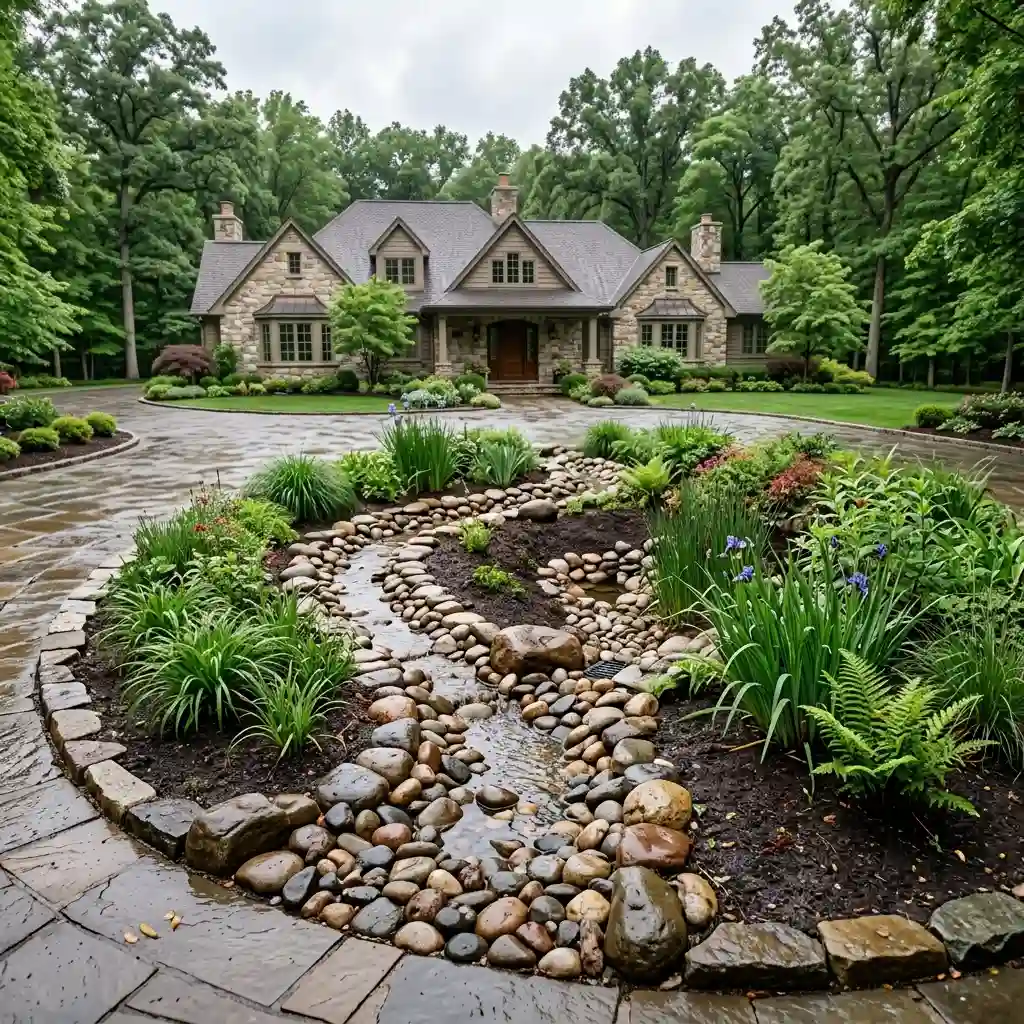
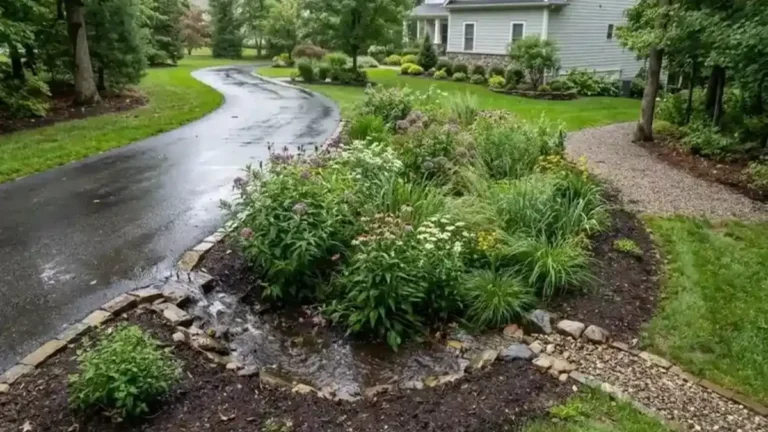
A low center island may collect water after rain. You may be able to turn this weak spot into a useful garden feature.
Watch where the water enters and where it needs to leave.
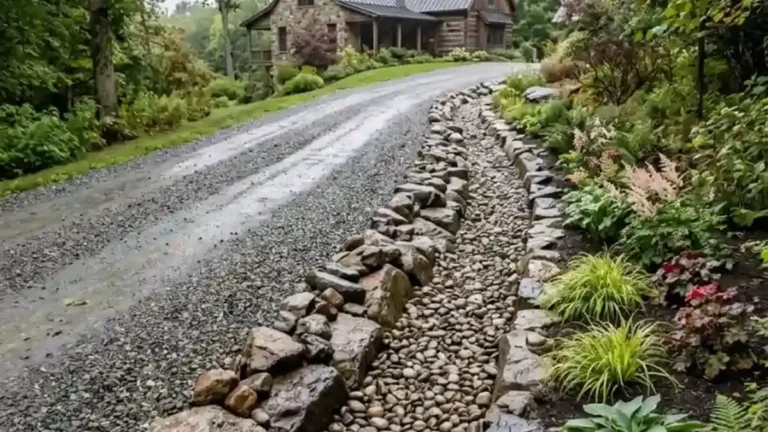
Add plants that can handle both wet and dry periods. Place river stones along the water path to form a dry creek look.
The stones can slow moving water and protect the soil from washing away.
But stones alone will not fix a serious drainage issue. The slope and water outlet must also work.
Best for: Circular driveways with runoff or wet center areas.
Care tip: Ask a drainage expert for help if water sits near the driveway base or home foundation.
Mix Ornamental Grasses With Boulders
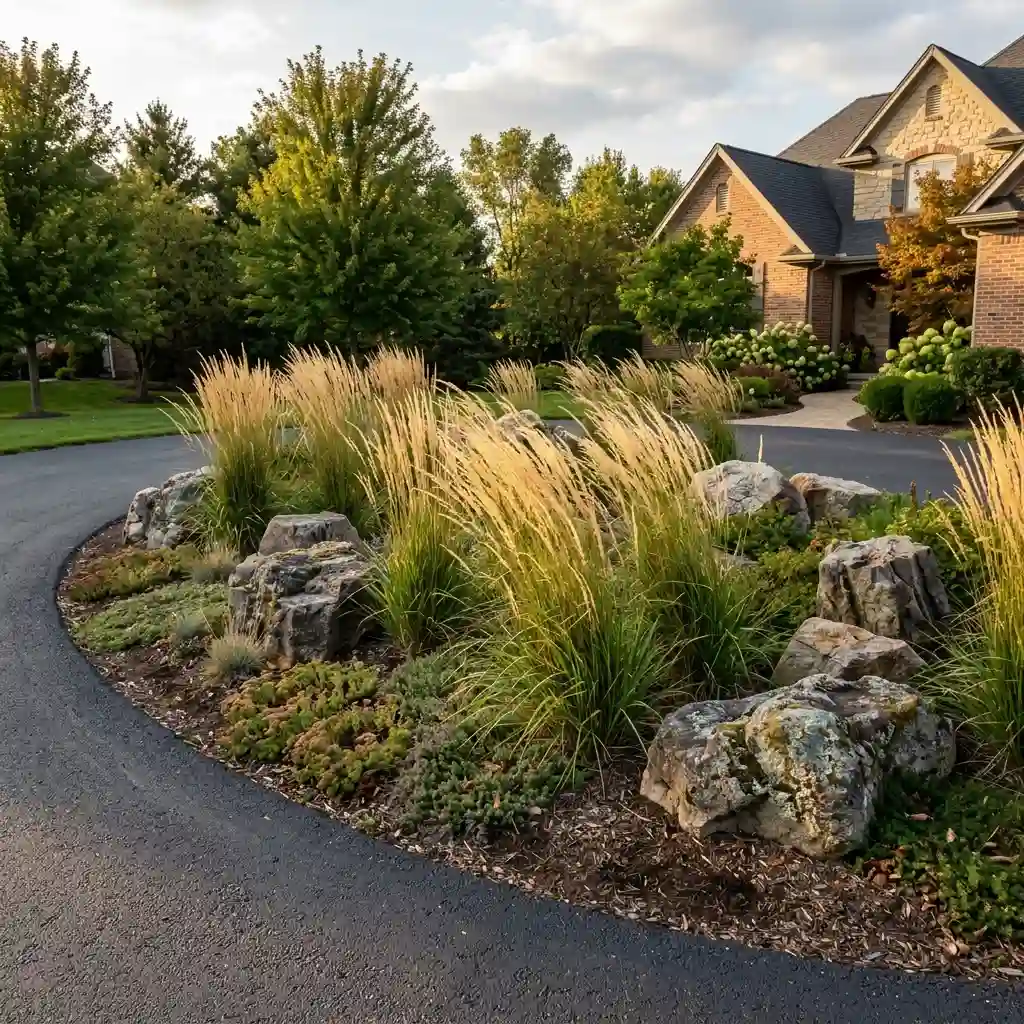
Grasses and boulders can create a relaxed look with fewer flowers.
Choose grasses that stay upright. Soft plants that fall over may cover the driveway edge.
Use boulders in several sizes. Place them in small groups instead of making an even stone ring.
Partly bury each boulder. This makes it look like the stone has always been there.
Add low groundcover between the grasses and rocks. This can help cover bare soil and reduce weeds.
Best for: Modern, natural, prairie-style, and rustic yards.
Care tip: Keep dry grass and leaves away from outdoor lights and hot equipment.
Add a Fountain, Urn, or Garden Feature
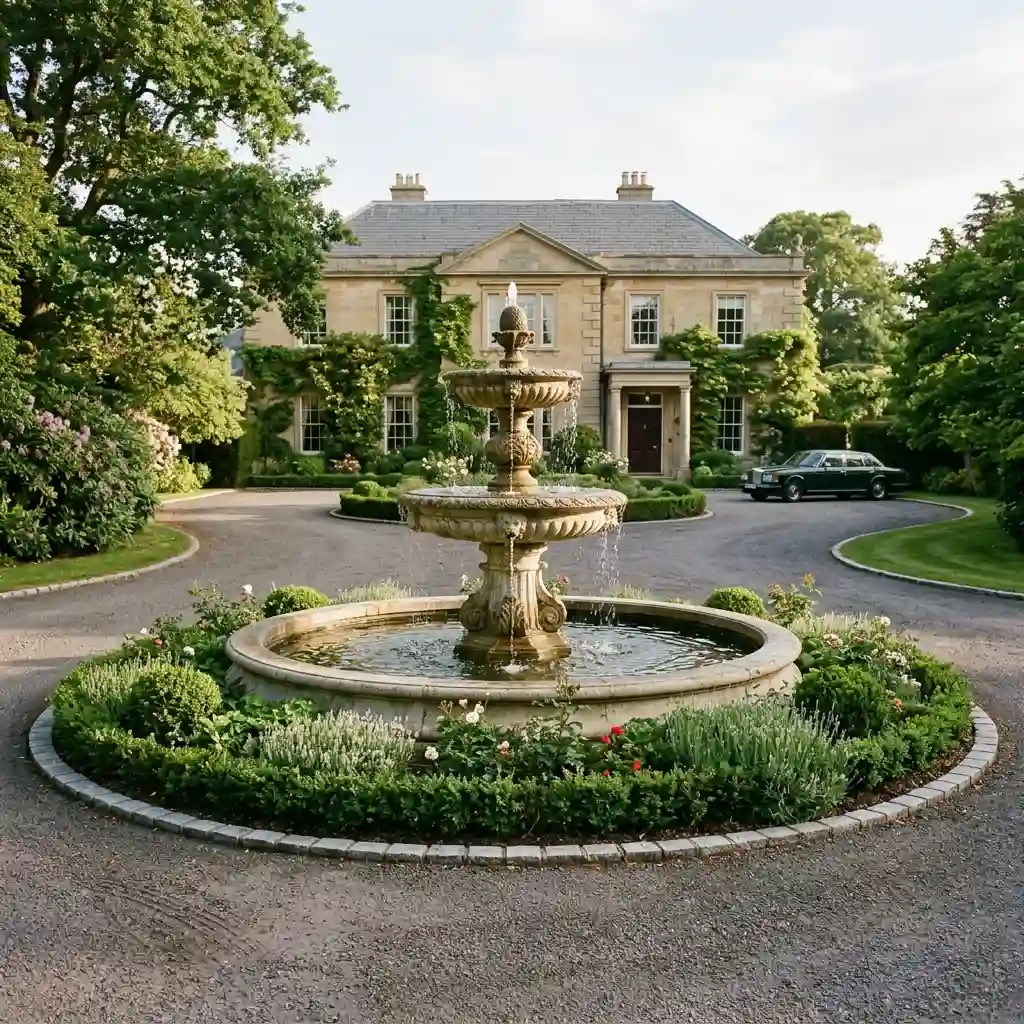
One strong garden feature can give a large island a clear purpose.
A fountain can add sound and movement. A large urn can support seasonal plants. A simple sculpture may suit a modern home.
Choose a feature that fits the size of the island. A small item may look lost in a wide bed. A very large feature may block the view of the house.
Keep nearby plants lower than the main feature.
Plan for water, power, cleaning, and winter care before adding a fountain.
Best for: Formal, Mediterranean, classic, and large front yards.
Care tip: Use one main feature. Several statues, pots, and signs can make the area feel crowded.
5 Driveway Entrance and Border Ideas That Add Curb Appeal
The entrance tells visitors where to turn. It also shapes the first view of your home.
A clear border can make an old driveway look more finished without changing the full surface.
Shape Curved Beds Around the Driveway
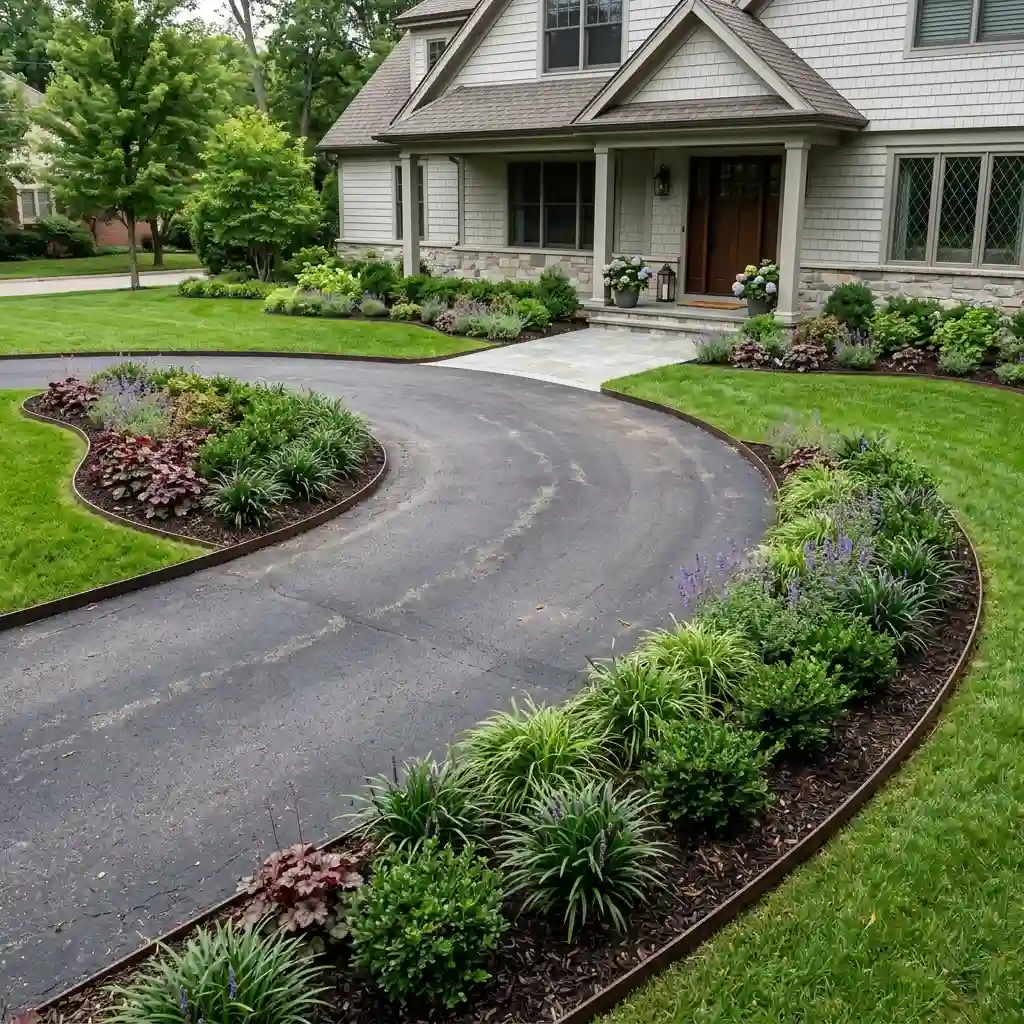
Curved beds can soften the hard shape of concrete or asphalt.
Follow the main line of the driveway. Use long, smooth curves instead of many small waves.
Connect the beds with the front walk, porch, or center island. This makes the yard feel like one planned space.
Repeat a few plants on both sides. The beds do not need to match exactly, but they should feel linked.
Keep plants low on tight corners so drivers can see across the curve.
Best for: Circular, curved, and half-circle driveways.
Care tip: Use strong edging to keep grass and mulch from spreading into the driveway.
Place Matching Planters at the Entrance
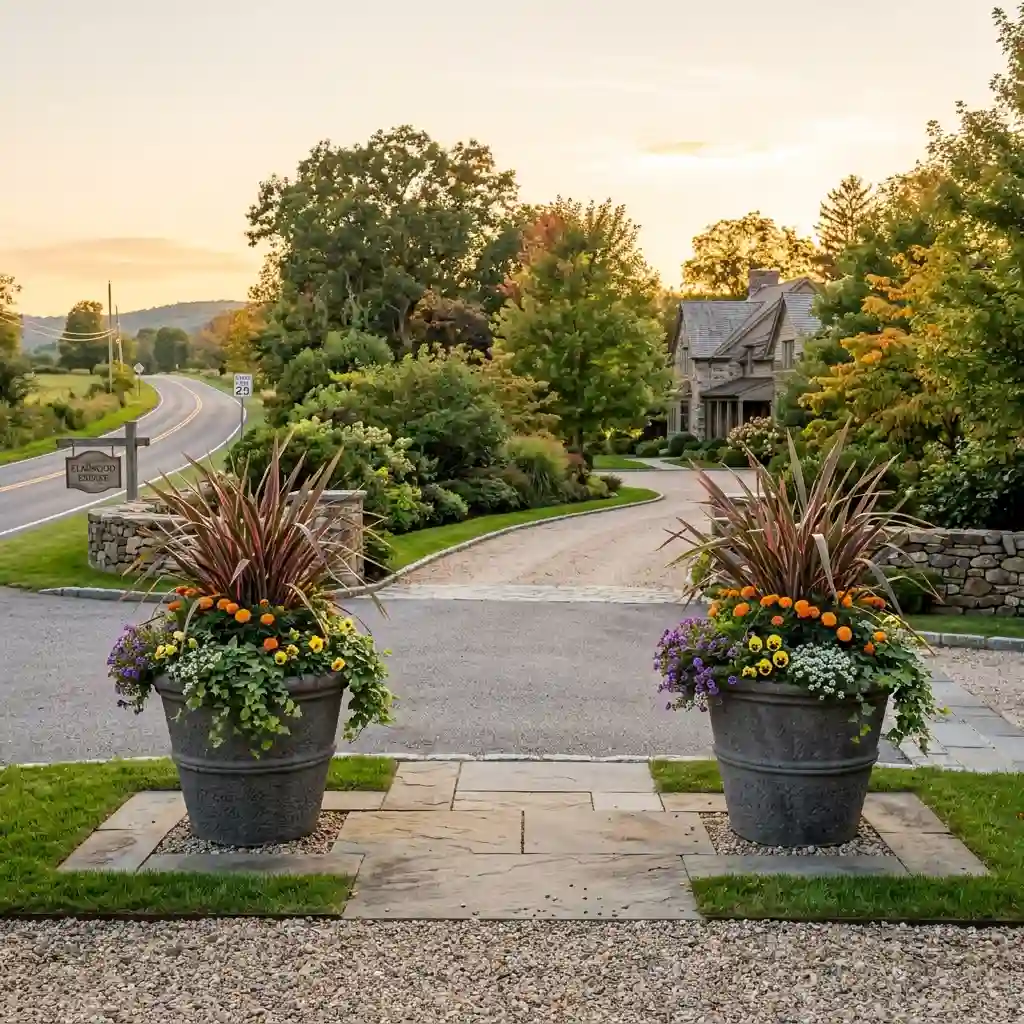
Two large planters can mark the driveway without major building work.
Place one on each side of the entrance. Set them far enough back so cars, delivery vans, and trailers have room to turn.
Choose containers that are large enough to match the open space. Small pots may look weak near a wide driveway.
Use the same main plant in both containers. You can change smaller flowers through the year.
Set each planter on a flat, stable base. This prevents leaning and helps water drain.
Best for: Driveways with limited planting soil near the road.
Care tip: Use heavy planters or secure them in windy areas.
Define the Edge With a Low Hedge
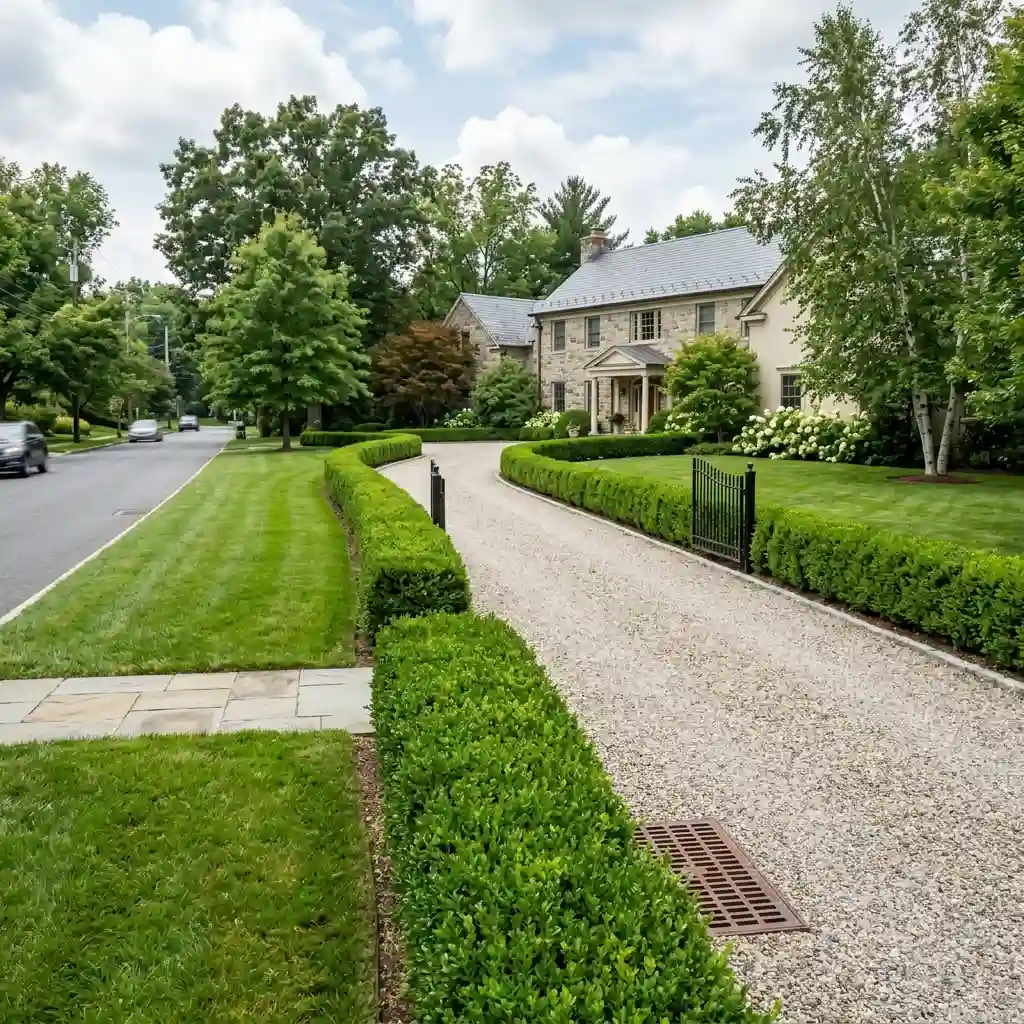
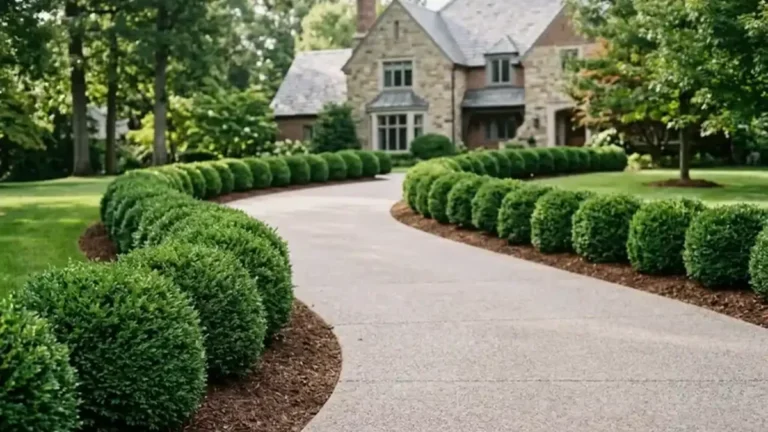
A low hedge can create a neat line along a long driveway.
Choose a shrub that handles regular trimming. It should also suit the local sun, soil, and rainfall.
Keep the hedge low near the road and curves. Drivers need a clear view of people and traffic.
Leave open gaps near walkways, drains, and gates.
Do not place thorny shrubs near parking spaces. Sharp branches may scratch cars or hurt people getting out.
Best for: Formal front yards and long driveway borders.
Care tip: Pick a shrub with a mature width that fits the bed.
Create a Mailbox or Address Garden
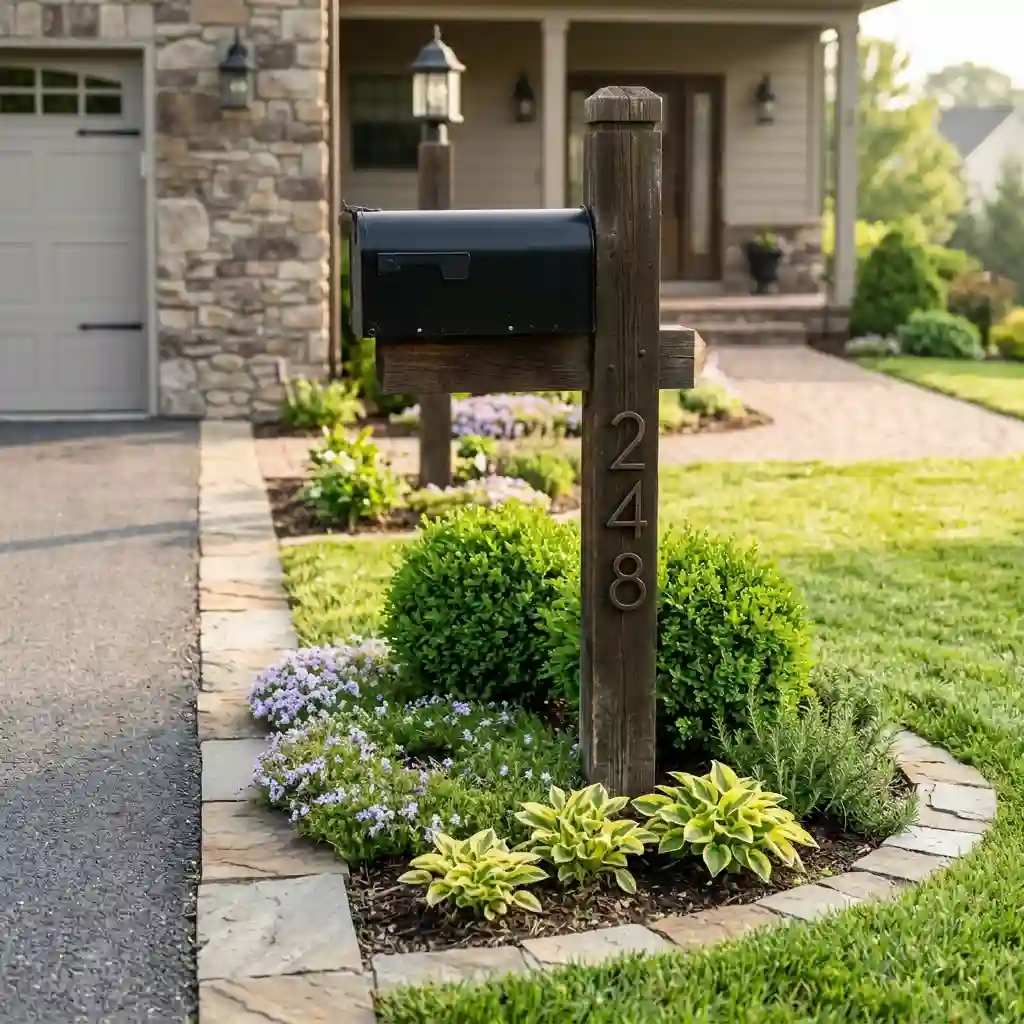
A small garden around your mailbox or house number can make the driveway entrance easier to see.
Use low flowers or groundcover around the base. Add one compact evergreen for color during colder months.
Keep the house number clear from the road. Plants should not cover the sign as they grow.
Repeat a material from the home. You might use the same brick, stone, or metal found near the porch.
Leave enough room for mail service and repairs.
Best for: Plain driveway entrances without a clear focal point.
Care tip: Avoid large plants that spread into the road or mailbox access area.
Replace Weak Grass With Groundcover
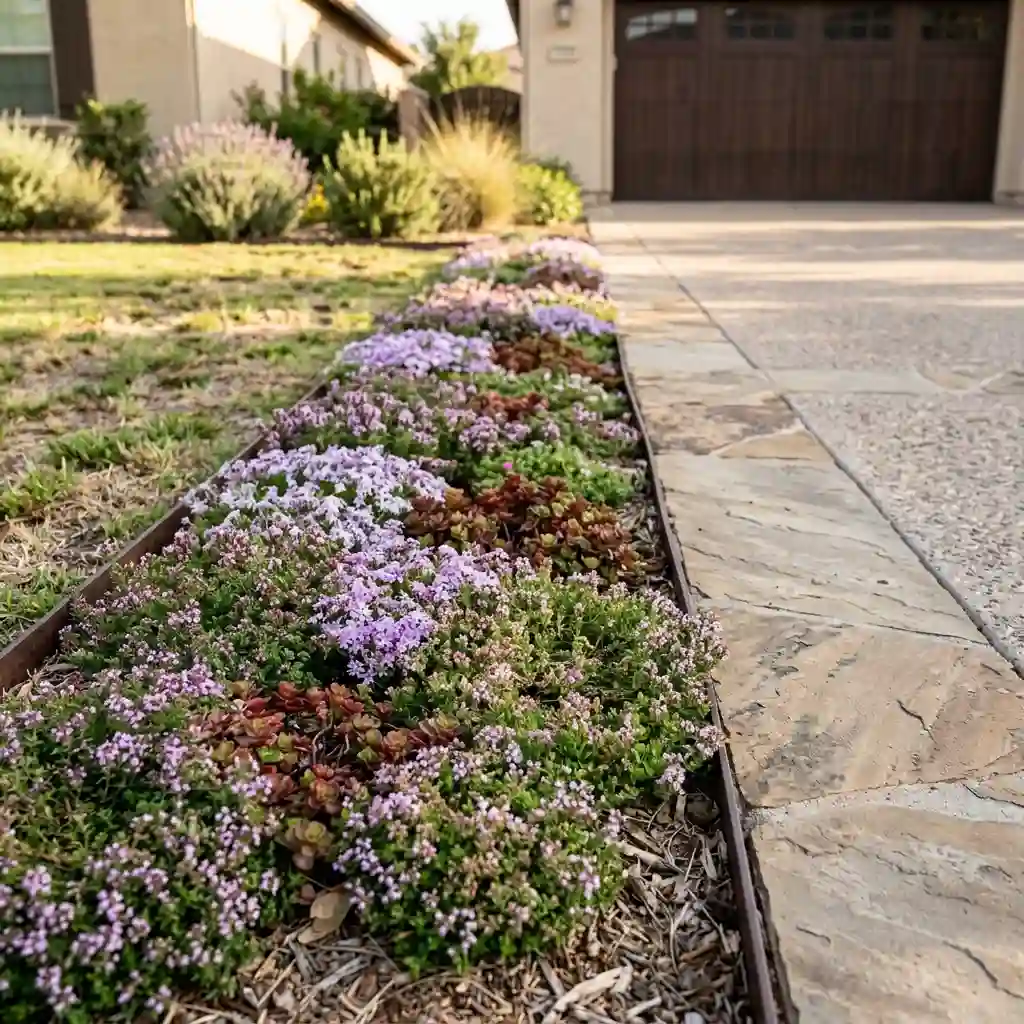
Thin grass beside a driveway often needs more work than it is worth.
Heat from the pavement can dry the soil. Car tires may also damage the edge.
Replace weak grass with a low groundcover suited to your local weather.
Choose a plant that does not spread into the driveway. Avoid harmful invasive plants.
Add edging if the groundcover grows fast. This creates a clear line and makes trimming easier.
Some groundcovers handle light foot traffic. Others should stay in areas where no one walks.
Best for: Slopes, narrow lawn strips, and hard-to-mow edges.
Care tip: Check whether the plant stays green all year or dies back during winter.
3 Low-Maintenance Ideas That Solve Common Problems
Good driveway landscaping should do more than look nice.
It should make the area safer, reduce runoff, or cut regular yard work.
Install Low-Voltage Driveway Lighting
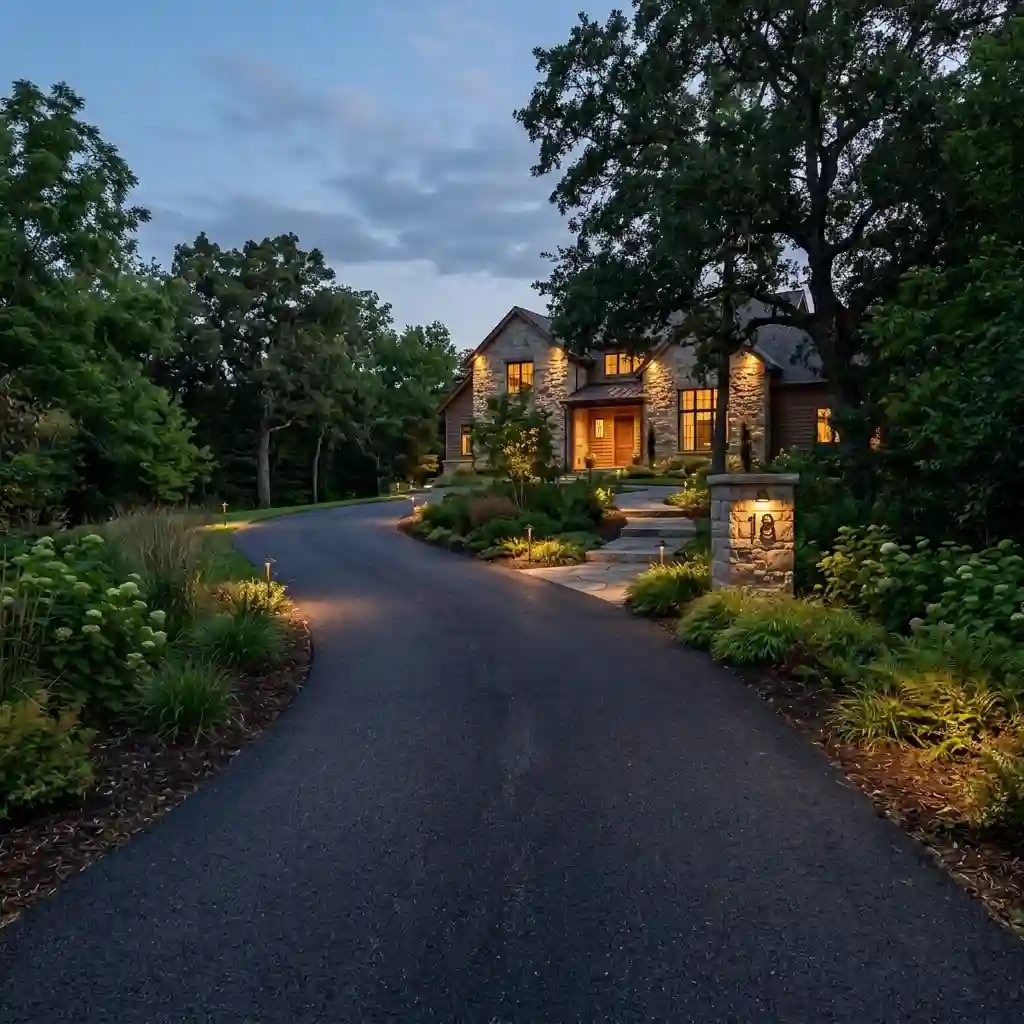
Good lighting can help you see curves, steps, and the driveway edge after dark.
Place lights at key points. Focus on the entrance, sharp turns, walkways, and house numbers.
You do not need a fixture every few feet. Too many lights can make the driveway look like a runway.
Aim fixtures down or across the plants. Do not point them into drivers’ eyes or nearby windows.
Use warm light for a softer look. Protect wires and fixtures from tires, mowers, and snow tools.
Best for: Long, curved, and circular driveways used at night.
Care tip: Clean the lenses and trim nearby plants a few times each year.
Add a Permeable Paver or Gravel Border
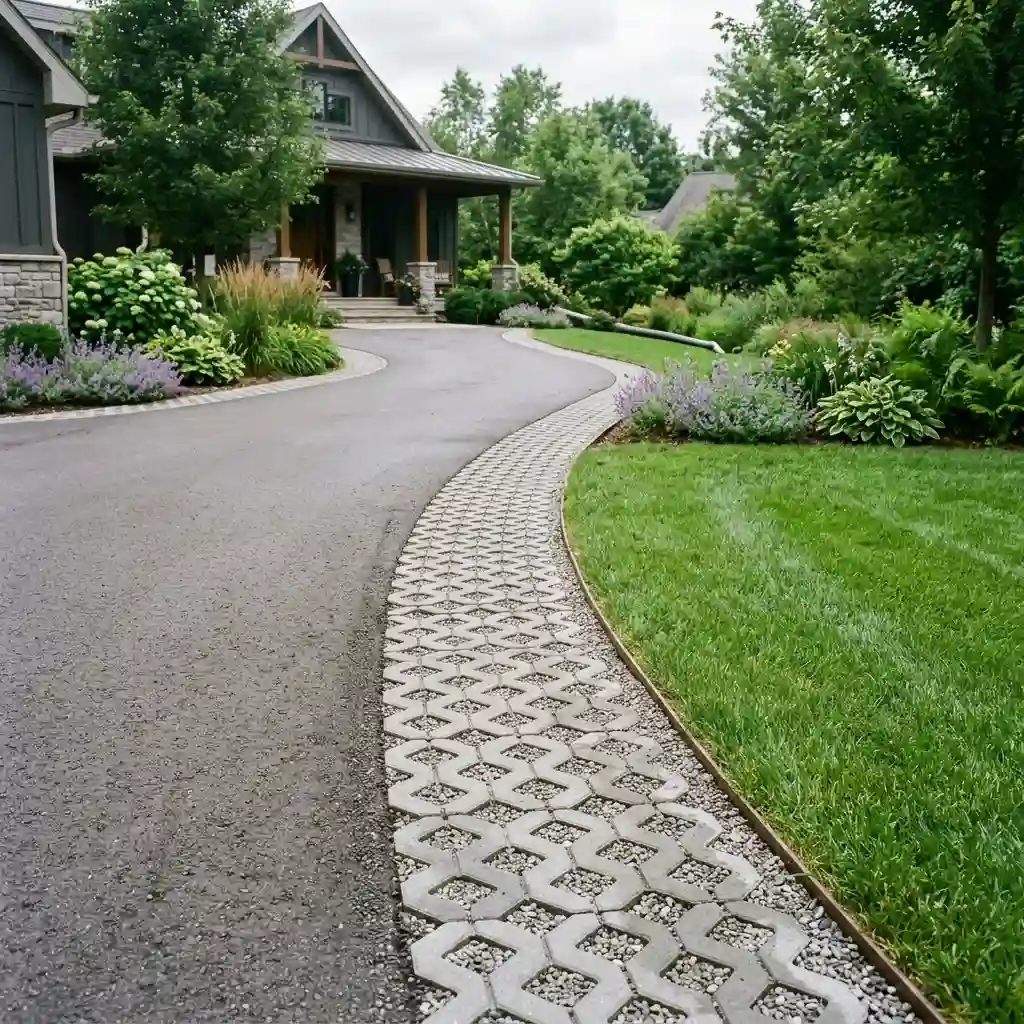
A permeable border may help with worn lawn edges and light runoff.
Water can pass through the gaps instead of flowing across a solid surface.
Use strong edging to hold gravel in place. The border should not spill onto the driving area.
Direct water away from the home. Do not create a low strip that sends water back under the driveway.
Permeable pavers need a suitable base. Poor base work may lead to sinking or blocked drainage.
Best for: Driveways with puddles, worn edges, or light runoff.
Care tip: Clear dirt and leaves from the gaps so water can still pass through.
Use Native, Drought-Tough Plants
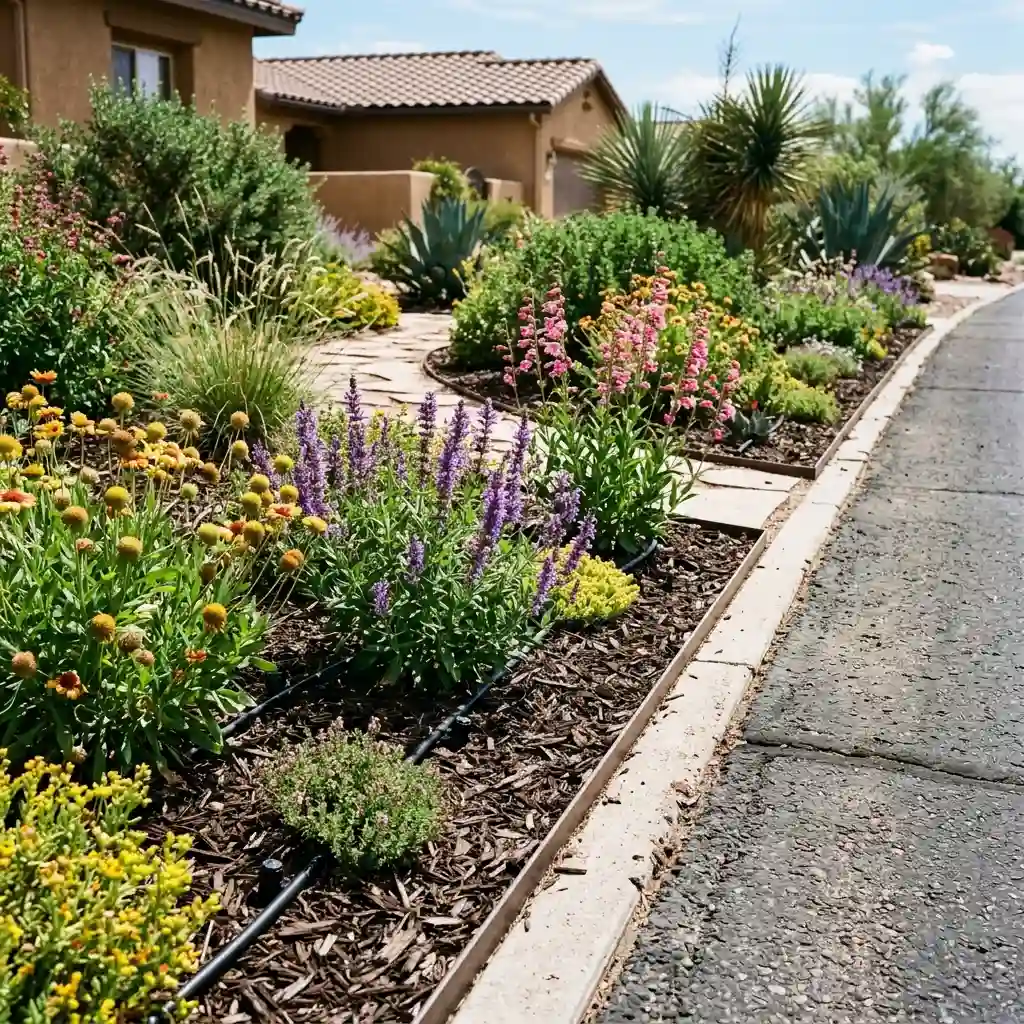
Native plants are suited to the weather and soil in your area.
Many need less extra water after they settle in. They may also support local birds and helpful insects.
Choose plants based on the exact site. A native shade plant may still fail in a hot driveway bed.
Group plants with similar water needs. Add mulch to slow water loss and reduce weeds.
Pick plants that bloom at different times. This can add color from spring through fall.
Avoid aggressive plants that spread into pavement cracks or nearby yards.
Best for: Busy homeowners and dry or hot locations.
Care tip: Use a local plant database or extension guide to choose the right species.
How to Choose Plants That Will Fit the Space
Plants beside a driveway face tough conditions.
Pavement holds heat. Soil may be dry and packed down. Cars may add dust, salt, and foot traffic.
Start with mature plant size.
Check these details before you buy:
- Full height
- Full width
- Root habits
- Growth speed
- Branch shape
- Water needs
- Sun needs
- Pruning needs
- Heat tolerance
- Salt tolerance
Keep low plants near the road. Use taller plants closer to the home, fence, or center of a large island.
Avoid thorny plants beside parking spaces. People need a safe path when they open car doors.
Trees need special care. Choose a species with a size and root pattern suited to the site. Ask a local tree expert when the island is small or the pavement is close.
Use drip irrigation where possible. Sprinklers may wet cars, wash mulch away, or create slippery spots.
How to Match Materials With Your Home
Your driveway landscape should feel connected to your house.
Look at the materials already used on the porch, walkway, walls, and roof.
Repeat one or two of them in the new design.
You might use:
- Brick edging beside a brick home
- Natural stone near stone walls
- Simple concrete planters near a modern house
- Dark metal edging near black window frames
- Warm gravel beside wood features
Limit the number of materials.
Too many stone colors, edging types, pots, and ornaments can make the yard feel busy.
A simple material plan is often easier to maintain.
How to Match the Design to Your Budget
You do not need to finish the full driveway at once.
Start with the area people see first. This may be the entrance, center island, or strip beside the front door.
Lower-Cost Options
These projects often need more labor than money:
- Cut clean bed edges
- Add fresh mulch
- Replace weak grass with groundcover
- Create a small mailbox bed
- Add a gravel strip
- Plant young native flowers
- Use a few solar lights
Mid-Range Options
These ideas may need more plants or better materials:
- Add raised planters
- Plant compact shrubs
- Install metal or stone edging
- Add drip irrigation
- Plant a young feature tree
- Use decorative gravel
- Install basic low-voltage lighting
Higher-Cost Options
These projects may need skilled help:
- Install permeable pavers
- Fix major drainage problems
- Add a fountain
- Move large trees
- Build entrance columns
- Install a full lighting system
- Redesign the center island
Complete the project in stages if needed.
First, fix drainage and access. Next, add the main plants. Finish with lighting, mulch, and small details.
7 Driveway Landscaping Mistakes to Avoid
A new plant may look harmless. But poor spacing can cause problems after a few years.
1. Planting Too Close to the Pavement
Branches may scratch cars. Roots and growing trunks may also affect the driveway edge.
Check the mature width before planting.
2. Blocking the View Near the Road
Tall shrubs, walls, signs, and columns may hide people or cars.
Keep the entrance open. Follow your local rules for road views and property lines.
3. Ignoring Mature Plant Size
Small nursery plants can grow much wider than expected.
Give each plant enough room from the start.
4. Using Too Many Materials
Several types of stone, mulch, edging, and pots can make the design feel messy.
Choose a short material list and repeat it.
5. Spraying Water Across the Driveway
Sprinklers may waste water and leave marks on cars.
Water can also cause algae, ice, or slippery pavement.
Use drip lines where possible.
6. Forgetting Snow Storage
Snowplows and shovels need space.
Do not place delicate plants, lights, or planters where snow is pushed during winter.
7. Adding Too Many Decorations
One clear focal point often looks better than several small ones.
Pick one tree, urn, fountain, or group of boulders. Let plants support it.
Quick Driveway Landscaping Checklist
Before you start, check these points:
- Can cars turn without touching plants?
- Can all car doors open?
- Are road views clear?
- Is water moving away from the house?
- Do the plants suit the sun and soil?
- Will the plants fit at full size?
- Can you reach every bed for care?
- Is loose gravel kept away from tires?
- Are house numbers easy to see?
- Does the plan fit your weekly free time?
Final Thoughts
Your driveway landscaping should make the yard look better without creating new problems.
Start by checking car space, road views, drainage, and mature plant size. Then choose one main feature and repeat a few plants or materials around it.
You do not need to use every idea. A clean border, one feature tree, or a simple group of native plants may be enough.
With careful planning, these side and circular driveway landscaping ideas can improve curb appeal while keeping your driveway safe, useful, and easier to care for.