17 Landscape Ideas for Driveway Borders
A plain driveway can make your whole front yard feel unfinished. This can happen even when your lawn is neat and your home looks well cared for.
The problem is often the empty space along the driveway. Grass may grow over the pavement. Mulch may wash onto the driving area. Weeds may fill bare soil. Large plants can also scratch cars or block your view of the street.
The good news is that you have many ways to fix these problems. Some options use brick, stone, gravel, or metal. Others use shrubs, flowers, grasses, and groundcovers.
These landscape ideas for driveway borders can help you create a cleaner and more welcoming entrance. You will find options for narrow spaces, long rural driveways, modern homes, low budgets, and yards with drainage problems.
Start by checking your space, sunlight, and water flow. Then choose an idea that fits your home and the amount of yard work you want to do.
What to Check Before Landscaping Your Driveway Border
A border may look great in a photo but fail beside your driveway. Your space, soil, sunlight, and water flow may be very different.
Start by measuring the area beside the driveway. A narrow strip between 12 and 18 inches may work for gravel, metal edging, or small groundcovers. A planting bed that is three feet wide gives you more room for shrubs, grasses, and flowers.
Next, watch the area after heavy rain. Does water collect beside the pavement? Does mulch wash onto the driveway? Does water run to the street, house, or neighbor’s yard?
You also need to check how much sun the area gets. Pavement can reflect heat onto nearby plants. A plant that grows well in a normal flower bed may struggle beside hot concrete or asphalt.
Think about daily use too. Leave room for car doors to open. Keep sharp branches away from parked cars. Do not place tall plants where they may block your view when you back out.
Before you buy materials or plants, check these points:
- Available border width
- Daily sunlight
- Soil drainage
- Reflected heat
- Winter salt exposure
- Car and mower clearance
- Maintenance needs
- Total budget
- Style of your home
Check the mature width of each plant. A small shrub at the garden center may become four feet wide after a few years.
Hardscape Landscape Ideas for Driveway Borders
Hard materials create a clear line between the driveway and the yard. They can also stop grass, gravel, and mulch from spreading.
Add Classic Brick Edging
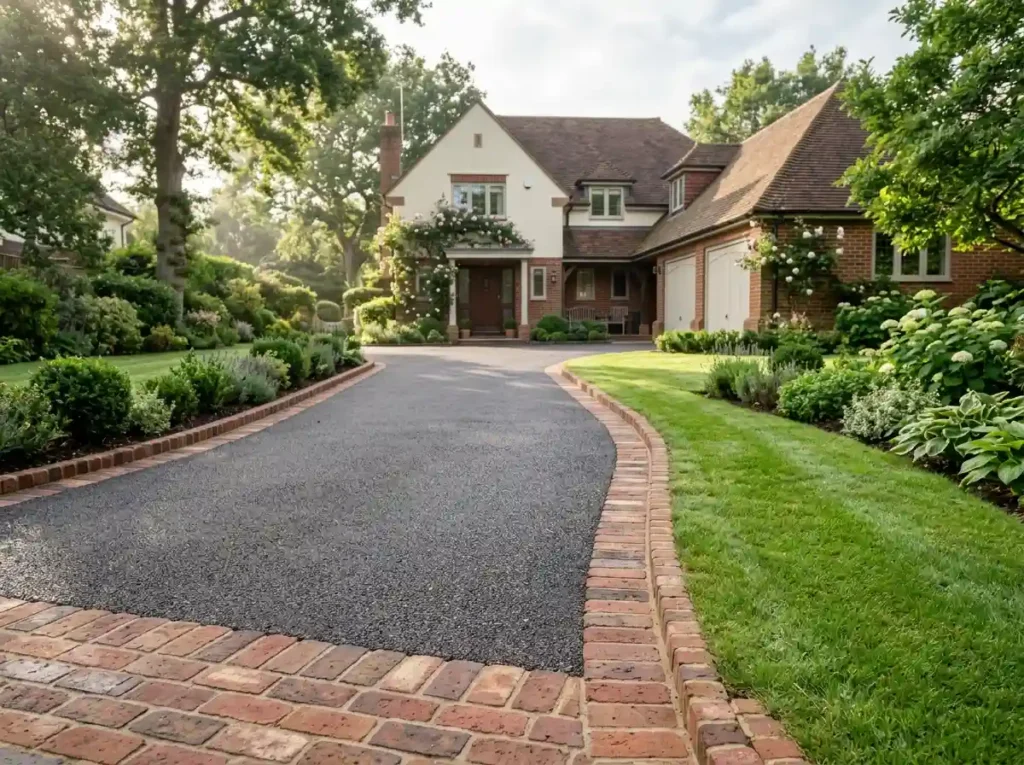
Brick edging gives a driveway a warm and traditional look. It works well with brick homes, cottage gardens, and older houses.
You can lay bricks flat for a low border. This creates a simple line that is less likely to catch tires or lawn equipment.
You can also place bricks at an angle. This makes the border stand out more, but the raised edge may catch a snow shovel or mower.
Match the brick color to your home when possible. Red and brown bricks often look good beside cream, tan, or brick walls. Dark gray bricks can work with cooler home colors.
Install the bricks on a firm and level base. Loose soil may cause them to sink or move after rain.
Best for: Traditional, cottage, and colonial-style homes.
Watch out for: Raised bricks placed too close to car tires.
Use Natural Stone or Cobblestones
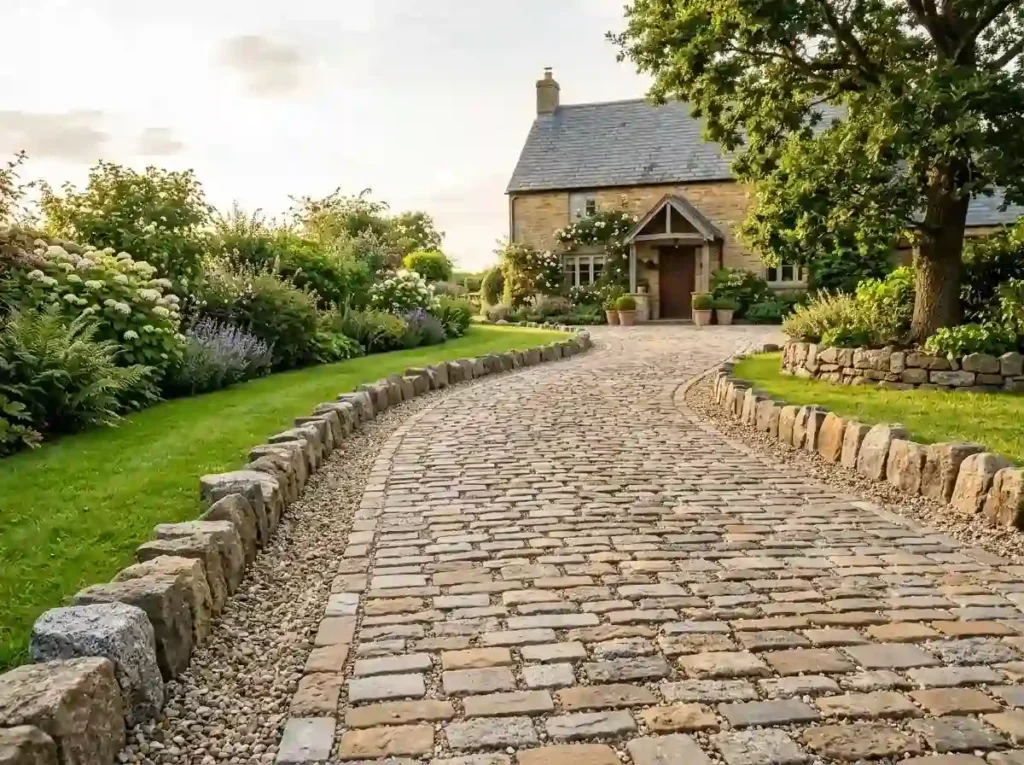
Natural stone gives a driveway a strong and lasting edge. It works well with rustic homes, farmhouses, and gardens with a relaxed look.
Choose stones with similar heights. This makes the border look cleaner and reduces large gaps.
Local stone often blends well with the area. It may also cost less to transport than stone brought from far away.
Gray stone works well with cool paint colors and modern concrete. Warm sandstone pairs well with cream, brown, and red brick.
Large spaces between stones may fill with weeds. Pack the base well and fill small gaps with gravel or jointing material.
Best for: Rustic, farmhouse, and high-end front yards.
Watch out for: Uneven stones that create a trip or mowing risk.
Install a Paver Mowing Strip
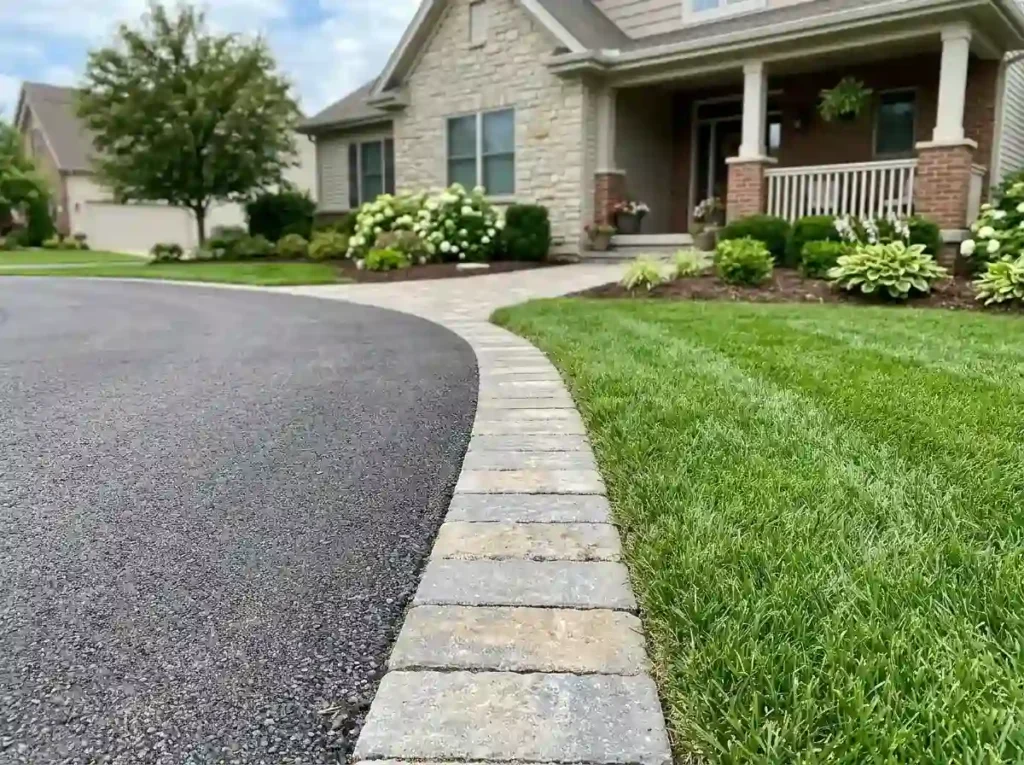
A paver mowing strip creates a neat border and makes lawn care easier.
Place one flat row of pavers beside the driveway. Keep the top of the pavers level with the grass. Your mower wheel can then move over the strip.
This reduces the need to trim grass by hand. It also stops grass from growing over the driveway edge.
Match the pavers to your front walkway, patio, or porch. This helps the yard feel connected.
You can also use a contrasting color. Dark pavers can frame a pale concrete driveway. Light pavers can soften dark asphalt.
A mowing strip is different from raised edging. It stays flat and gives your mower a stable surface.
Best for: Neat lawns and homeowners who want less trimming.
Watch out for: Pavers that sit too high or sink into soft soil.
Create a Clean Line With Metal Edging
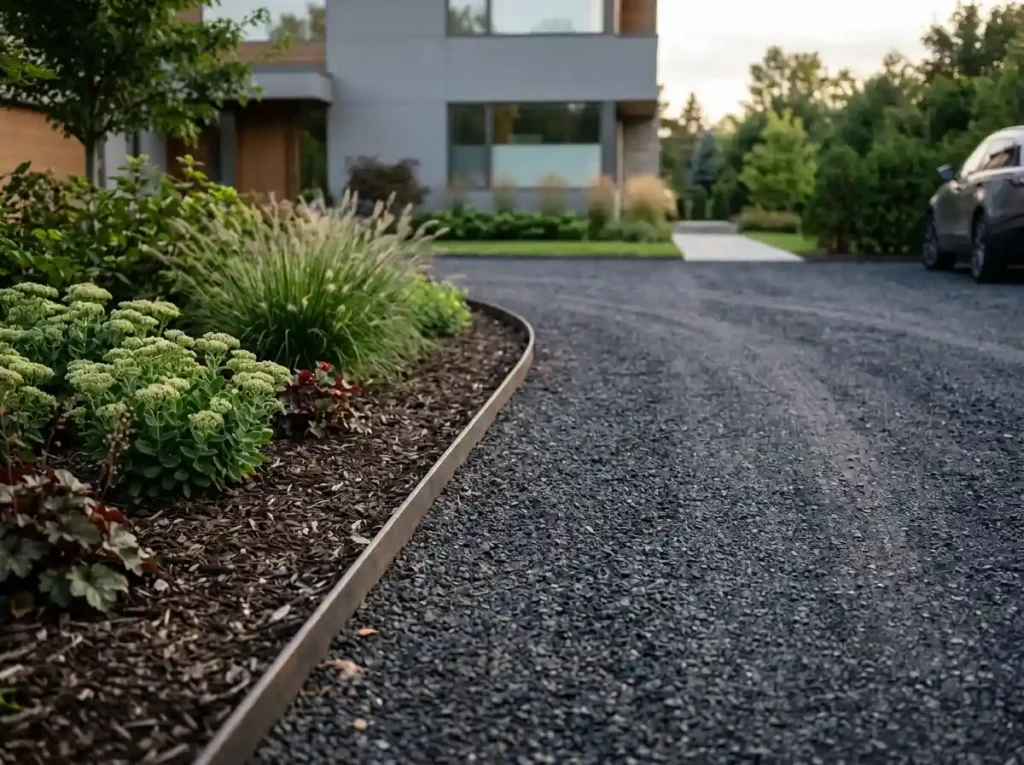
Metal edging creates a thin and modern border. It works well where you do not have much space.
Steel edging is strong and can hold gravel, soil, or mulch in place. Aluminum is lighter and does not rust in the same way.
Metal can follow straight lines or gentle curves. This makes it useful for modern gardens and simple planting beds.
Keep the top edge low enough to reduce trip risks. It should still be visible, so people and lawn workers know where it is.
Metal edging works best when it is installed firmly. Loose sections may bend or lift over time.
Best for: Modern homes, narrow driveways, and clean garden designs.
Watch out for: Sharp or loose edges near walking areas.
| Material | Style | Maintenance | Cost Level |
| Brick | Traditional | Medium | Medium |
| Natural stone | Rustic or premium | Low | High |
| Pavers | Clean and flexible | Low | Medium |
| Metal edging | Modern | Low | Medium |
Hard borders give you the clearest separation. Still, you do not need costly stonework to make your driveway look finished.
Budget-Friendly Driveway Border Landscaping Ideas
A clean border can look good without costing a lot. The key is to use simple materials and keep them in place.
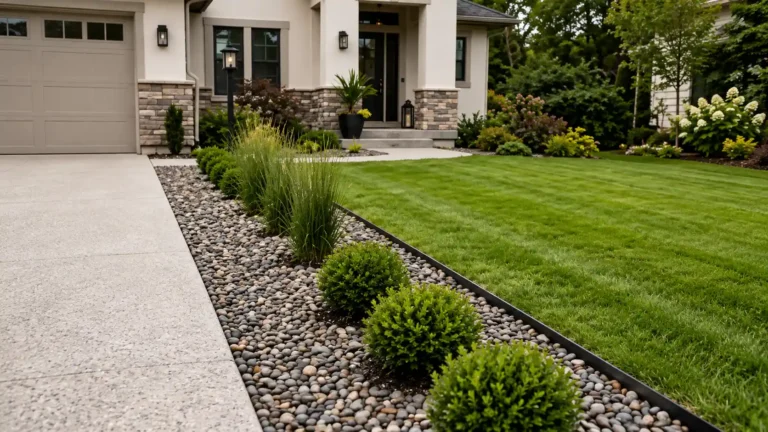
Add a Simple Gravel Ribbon
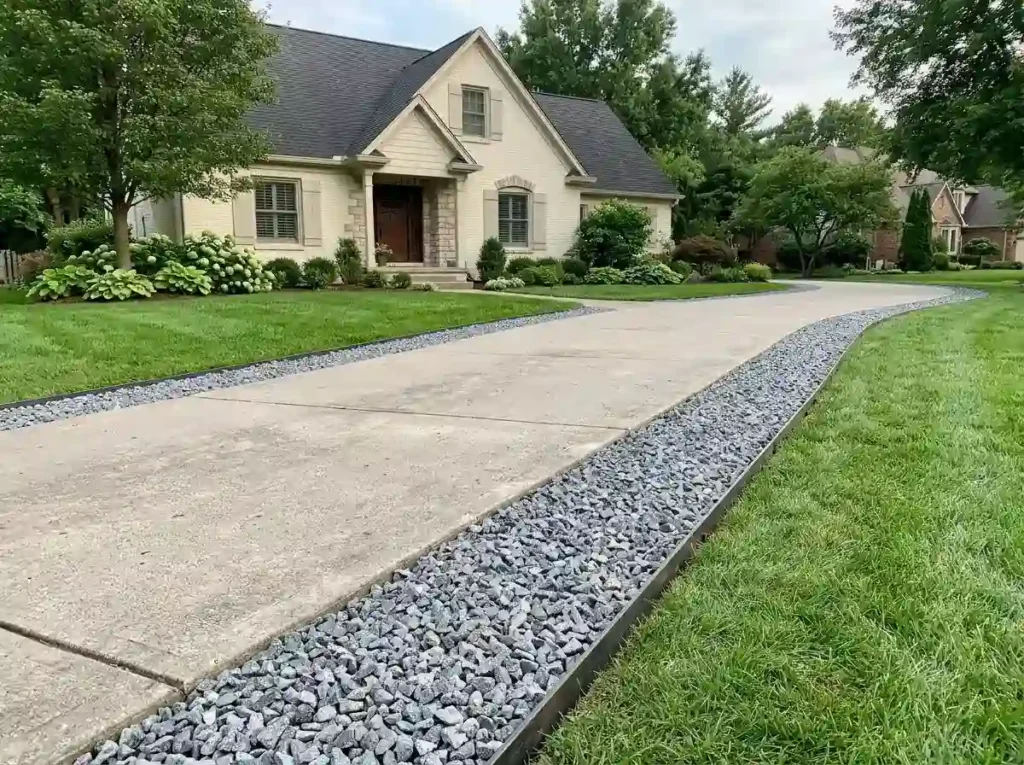
A narrow gravel strip can improve a plain driveway without a large planting project.
Create a strip along one or both sides of the driveway. A width of 12 to 24 inches may be enough for a clear border.
Angular gravel often stays in place better than smooth, round stones. Pea gravel can look attractive, but it may roll onto the driveway.
Install edging beside the gravel. Metal, brick, or plastic landscape edging can stop stones from spreading into the lawn.
Choose a gravel color that works with the home. Gray gravel looks clean beside concrete. Tan gravel can warm up a brown, cream, or brick house.
Best for: Long driveways, rural homes, and small budgets.
Watch out for: Loose gravel near slopes and busy turning areas.
Build a Mulched Planting Strip
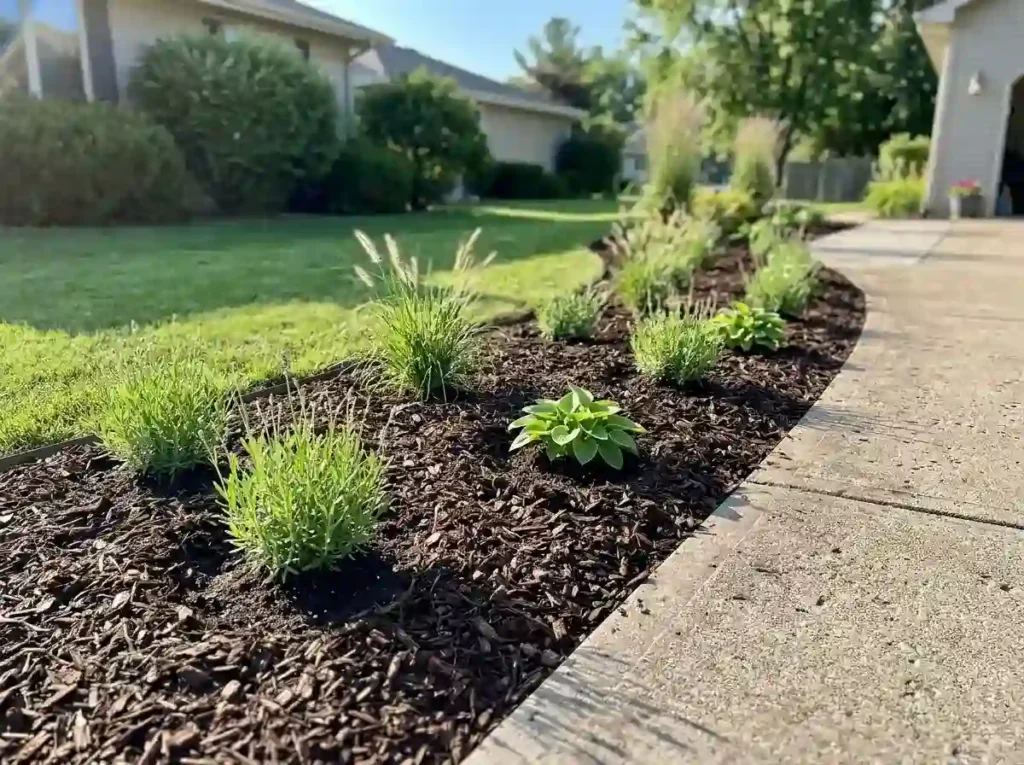
Mulch is one of the easiest ways to turn a rough grass edge into a planned border.
Remove the grass and create a clear bed line. Add a few plants with enough space between them. You do not need to fill every open spot.
Bark mulch gives the border a soft and natural look. Dark mulch can make green plants stand out. Lighter mulch may work better with pale stone or warm home colors.
Keep the mulch level below the driveway surface. This helps stop it from washing onto the pavement.
Mulch can help hold soil moisture and reduce weed growth. It still needs care. You may need to add a fresh layer after it breaks down or washes away.
Best for: Easy DIY projects and simple planted borders.
Watch out for: Thick mulch piled against plant stems.
Cut a Natural Trench Edge
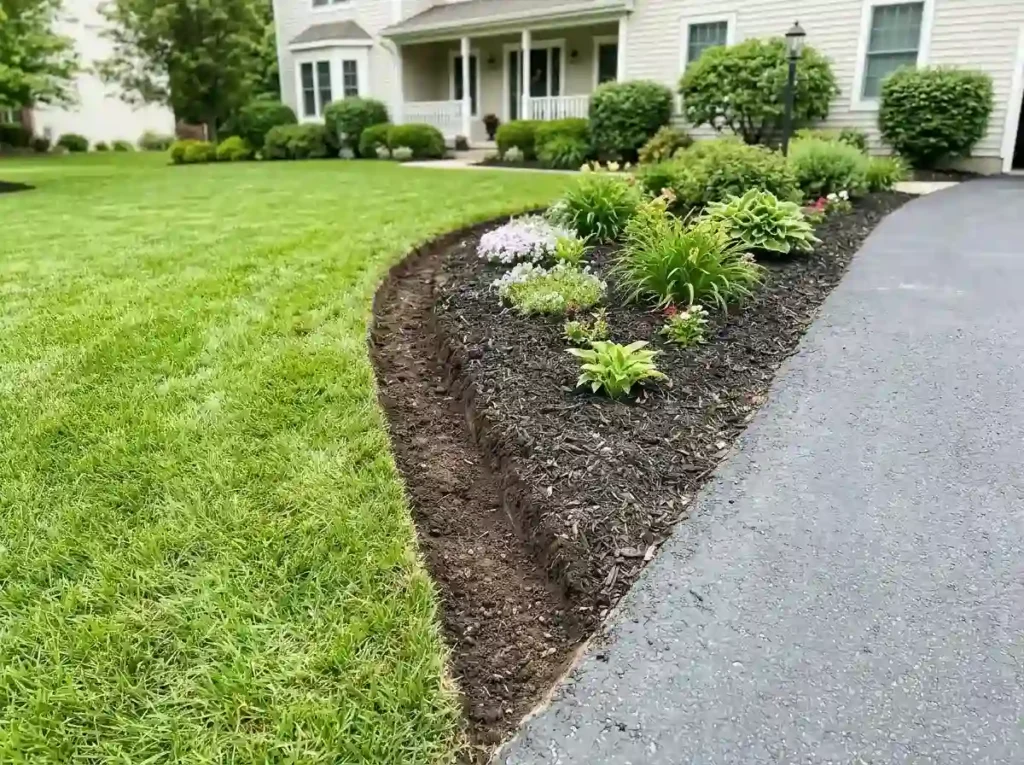
A trench edge is one of the cheapest driveway border ideas.
Use a flat shovel or edging tool to cut a shallow V-shaped line between the lawn and planting bed. The open cut creates a clear break without brick, metal, or plastic.
This method looks neat when the line is smooth. Straight lines suit formal homes. Broad curves work well in relaxed gardens.
The main drawback is upkeep. Grass will slowly grow back into the trench. You may need to cut the edge again a few times each year.
A trench edge costs very little to start. It may take more work over time than a fixed border.
Best for: Low-cost yard updates and weekend DIY work.
Watch out for: Edges that become rough or uneven.
A low-cost border works best when the line stays neat. Even cheap materials can look polished when they are well placed.
Plant-Based Driveway Border Ideas
Plants soften the hard look of concrete and asphalt. They can add color, movement, shade, and year-round structure.
The right plant choice matters. Plants beside driveways often face heat, dust, salt, poor soil, and water runoff.
Line the Driveway With Compact Evergreen Shrubs
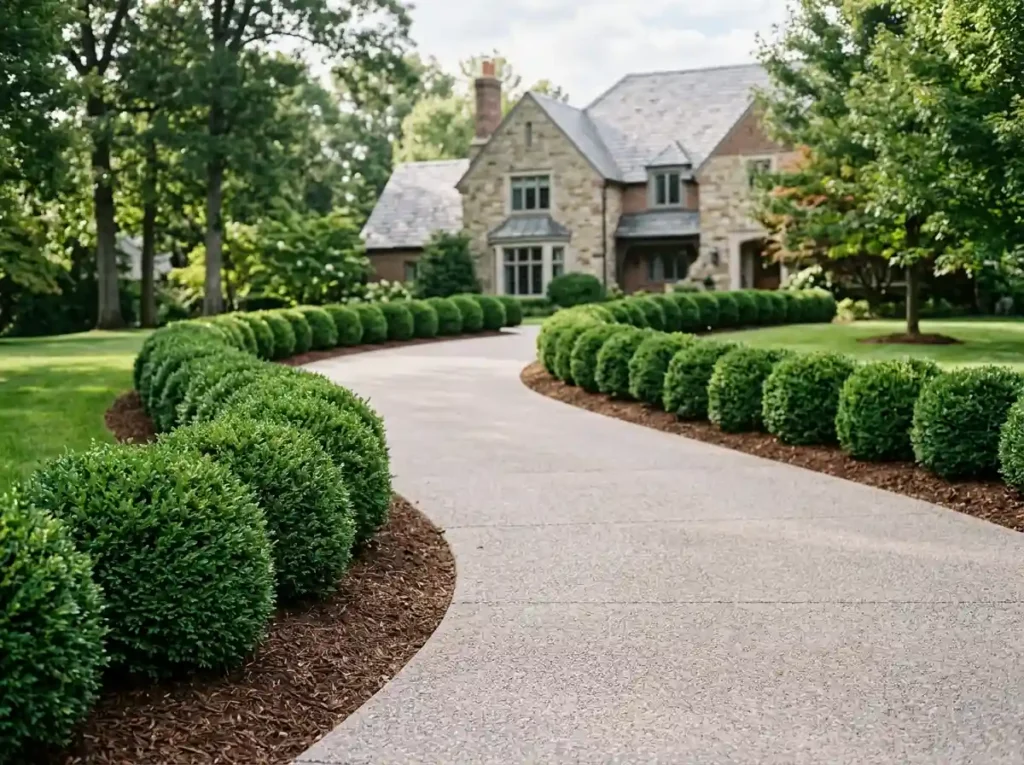
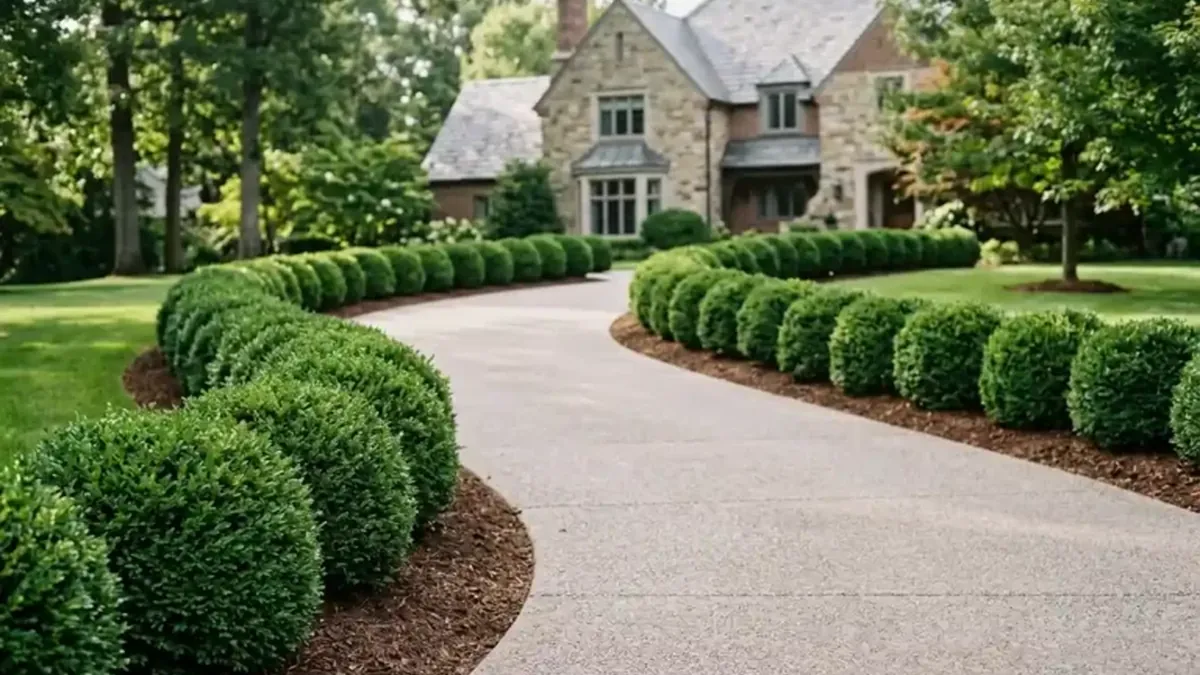
Compact evergreen shrubs can make a driveway look formal and well planned.
Use one type of shrub and repeat it along the border. Repetition creates a calm look. It often works better than mixing many unrelated plants.
Check the mature width before planting. A shrub that looks small today may grow over the driveway in a few years.
Leave a gap between the plant and pavement. This protects car doors and gives the shrub room to grow.
Avoid shrubs with sharp leaves or stiff branches near parked vehicles. Choose soft, naturally compact plants when possible.
Plant choices depend on your area. Compact juniper, dwarf inkberry, and small evergreen shrubs may work in some regions.
Best for: Formal homes and year-round greenery.
Watch out for: Shrubs that need constant cutting to stay small.
Soften the Edge With Ornamental Grasses
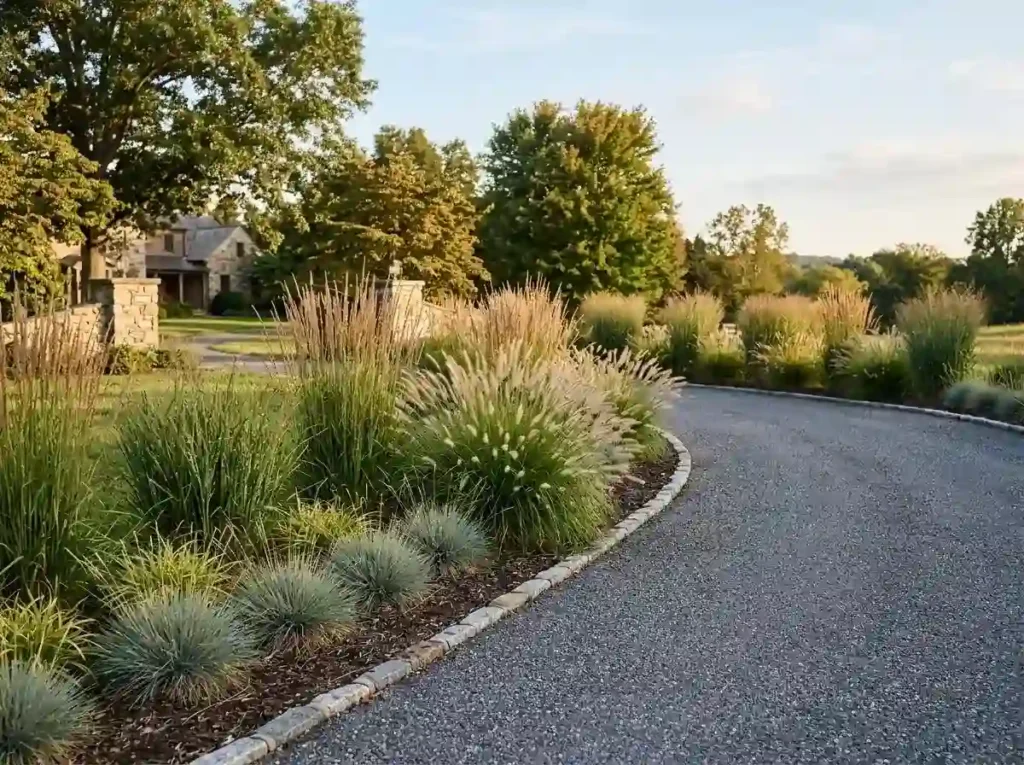
Ornamental grasses add movement and texture without creating a heavy border.
Choose grasses that grow in clumps. Avoid types that spread quickly through roots or seeds.
Short grasses work well near narrow driveways. Taller grasses can be used in wider beds or near the house end of the driveway.
Keep tall plants away from the road entrance. They may block your view of cars, people, or cyclists.
Blue fescue and little bluestem are possible choices in suitable climates. Some fountain grasses can spread in certain areas, so check local advice before planting them.
Many grasses need to be cut back once a year. Some stay neat through winter and add shape after flowers have faded.
Best for: Modern, natural, and low-water gardens.
Watch out for: Grasses that spread or fall across the pavement.
Create a Repeating Perennial Flower Border
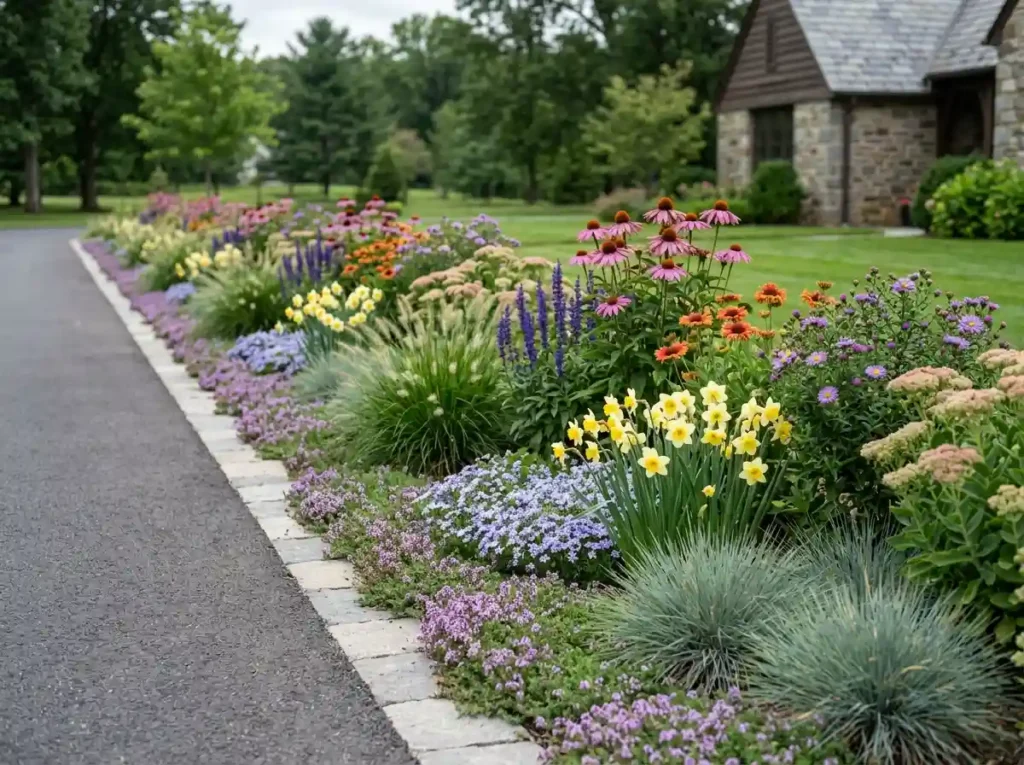
A flower border can add color without looking messy. The secret is to repeat a small number of plants.
Choose three to five plant types. Repeat them along the driveway instead of adding a different flower in every open space.
Include plants that bloom at different times. One group may flower in spring. Another may add summer color. A third can bloom in fall.
Place the shortest plants near the driveway. Put taller flowers farther back.
Choose plants that can handle heat from pavement. Dry soil may also be a problem, even when the rest of the yard stays moist.
A simple pattern could include:
- One low groundcover
- One flowering perennial
- One compact grass
- The same group repeated every four to six feet
This pattern keeps the border connected and easier to care for.
Best for: Cottage homes and colorful front yards.
Watch out for: Too many plant types with different care needs.
Replace Lawn Edges With Groundcovers
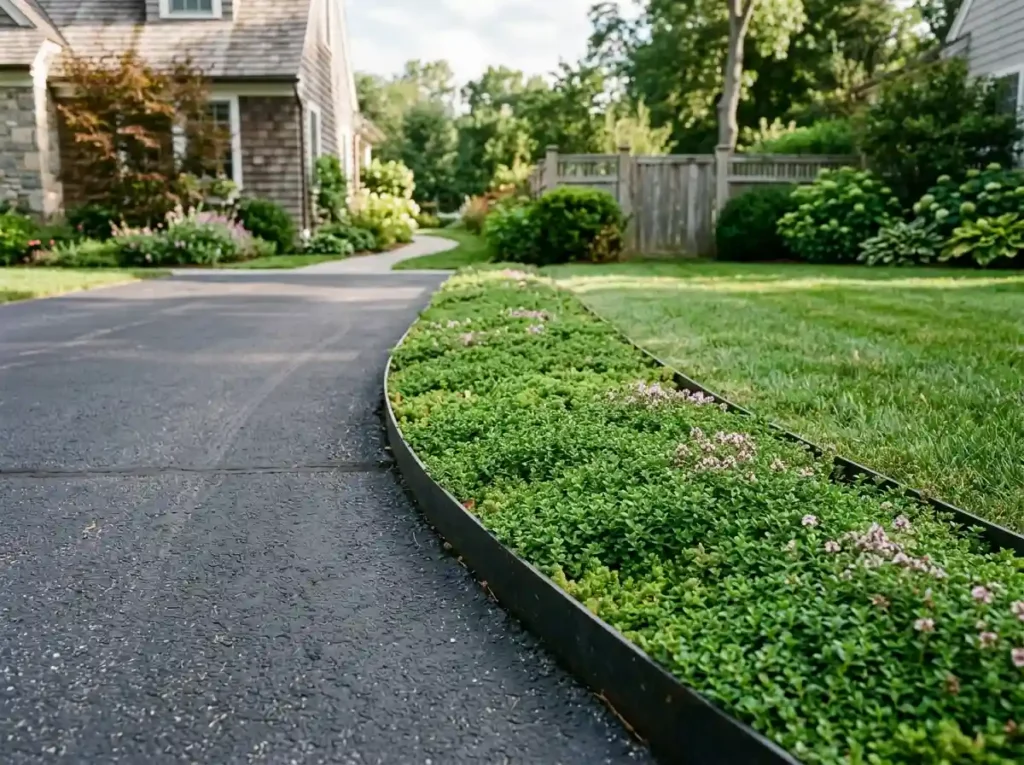
Groundcovers can replace narrow strips of grass that are hard to mow.
Choose low-growing plants that stay below car doors and walking areas. They can be useful on slopes and in small spaces.
Some groundcovers handle sun and dry soil. Others need shade and more moisture. Match the plant to the site.
Leave a hard edge between the plants and driveway. This can stop stems from spreading across the pavement.
Avoid aggressive plants. A fast-growing groundcover may enter the lawn, garden beds, or driveway cracks.
For U.S. gardens, the USDA Plant Hardiness Zone Map can help you check whether a perennial plant may survive local winter temperatures. You still need to check sunlight, soil, heat, and moisture.
Best for: Slopes, narrow strips, and areas that are hard to mow.
Watch out for: Plants that spread faster than you can control them.
The best plant border fits its space. It should handle pavement heat and still look good when flowers are not in bloom.
Low-Maintenance Driveway Landscaping That Fits Your Climate
A low-maintenance plant in one area may be hard to grow in another. Your climate, soil, rain, and winter weather all matter.
Plant a Native Pollinator Border
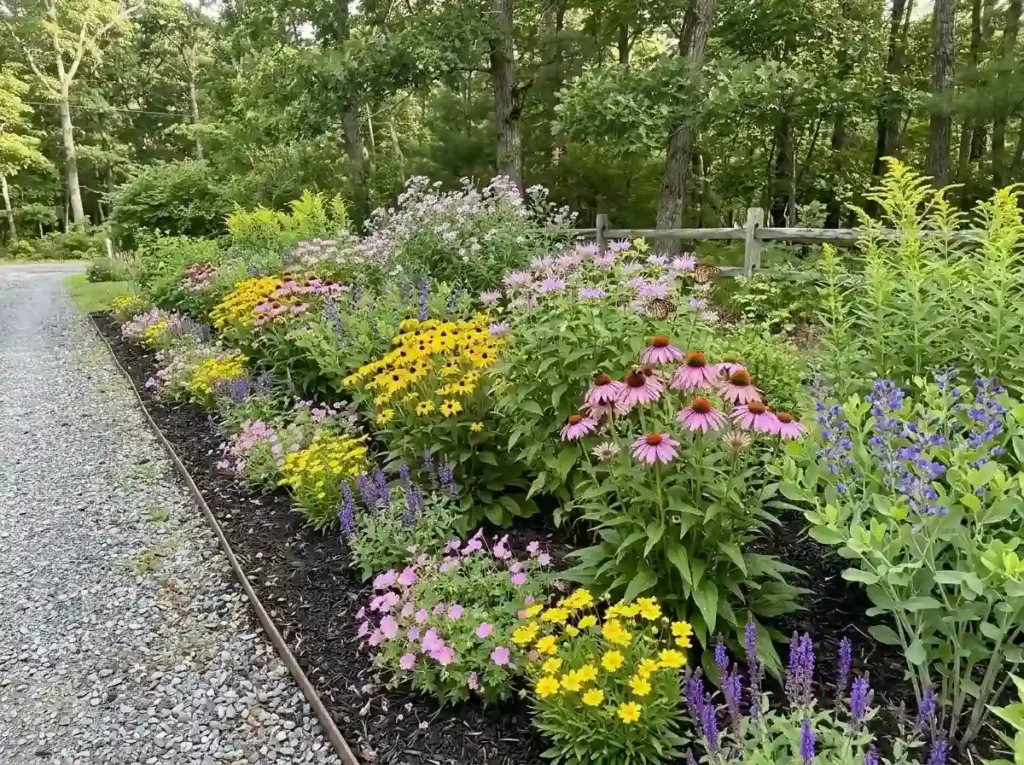
Native plants are adapted to the conditions of a certain region. They may support local bees, butterflies, and birds.
Choose plants native to your area, not just your country. A plant native to a wet coastal area may not suit a dry inland yard.
Plant several of the same type together. Groups are easier to see and often look more planned than single plants placed at random.
Include flowers that bloom at different times. This can provide color from spring into fall.
A native border does not have to look wild. Use a crisp edge and repeat plant groups. Keep taller plants behind shorter ones.
Best for: Wildlife-friendly yards and natural home styles.
Watch out for: Tall or spreading plants in narrow spaces.
Create a Drought-Tolerant Rock Garden
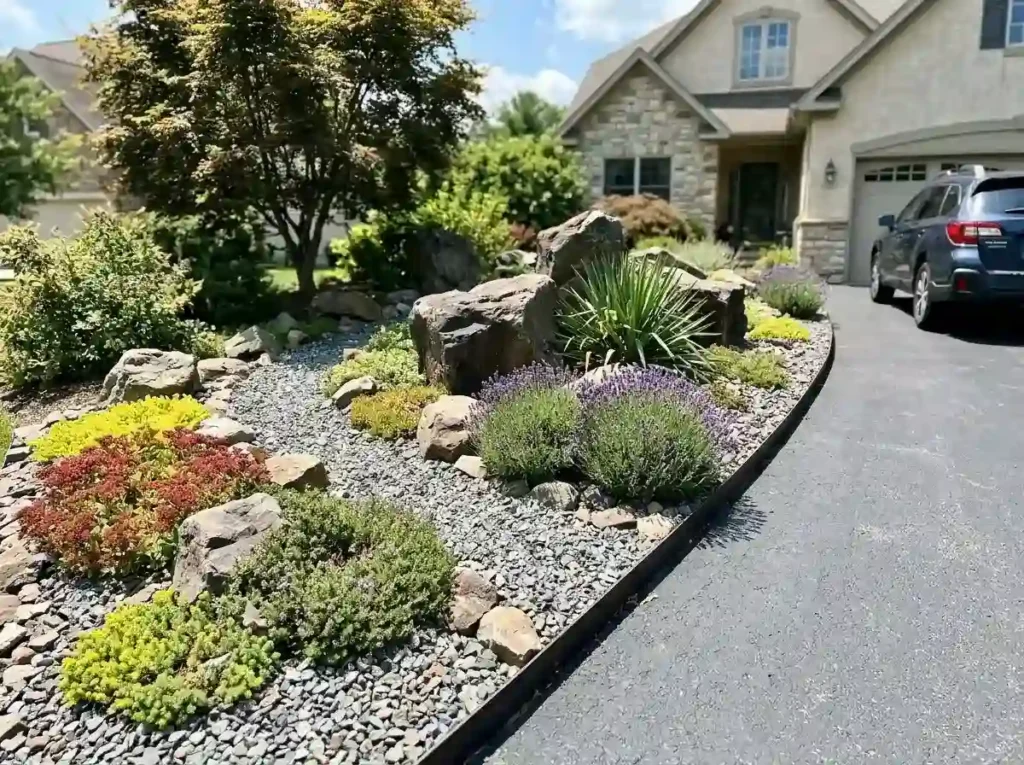
A rock garden can work well beside a hot and sunny driveway.
Use a mix of gravel, medium stones, and a few larger rocks. Different sizes look more natural than one layer of matching stone.
Add a small number of drought-tolerant plants. Sedum, thyme, yucca, or compact lavender may work in suitable climates.
Do not assume every rock garden needs no water. New plants still need regular watering while their roots grow.
Dark rocks can become very hot in full sun. This may harm plants that need cool soil.
Use edging to keep small stones away from the driveway and mower path.
Best for: Hot, dry, and sunny front yards.
Watch out for: Heat-sensitive plants placed among dark rocks.
Use Salt-Tolerant Plants in Cold Climates
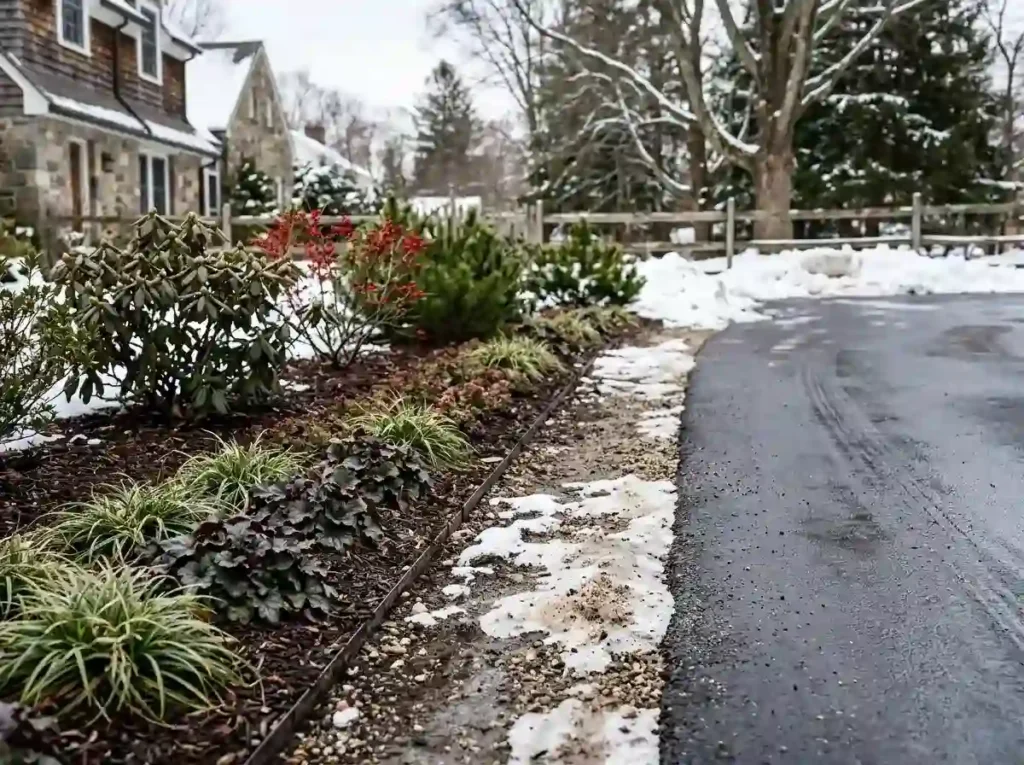
Winter salt can damage plants beside roads and driveways.
Salt may enter the soil through melting snow. It may also land on leaves and stems when cars splash salty water.
Place more tolerant plants near the pavement. Keep sensitive plants farther back.
Good drainage also matters. Salt damage may become worse when salty water sits around plant roots.
Do not pile snow from the driveway onto delicate plants. Snow may contain salt, dirt, and other road waste.
No plant is fully safe from heavy salt exposure. Even plants described as salt tolerant can become damaged when the amount is too high.
Best for: Areas with snowy winters and regular deicer use.
Watch out for: Salt collecting in low and poorly drained soil.
A border is easier to care for when the plants fit the site. Trying to force the wrong plant to grow will create more work.
Drainage-Friendly Driveway Landscaping Ideas
Water problems should be fixed before you focus on color and decoration.
Puddles, erosion, and washed-out mulch are signs that water is not moving well. A pretty stone border will not solve the problem unless the water has a safe place to go.
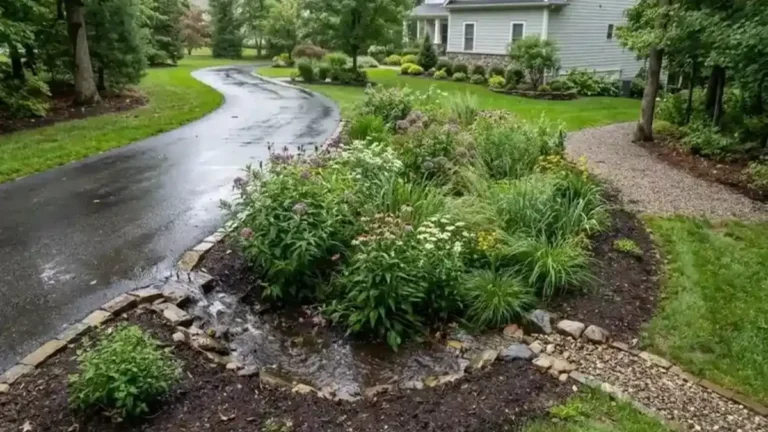
Turn a Low Spot Into a Rain Garden
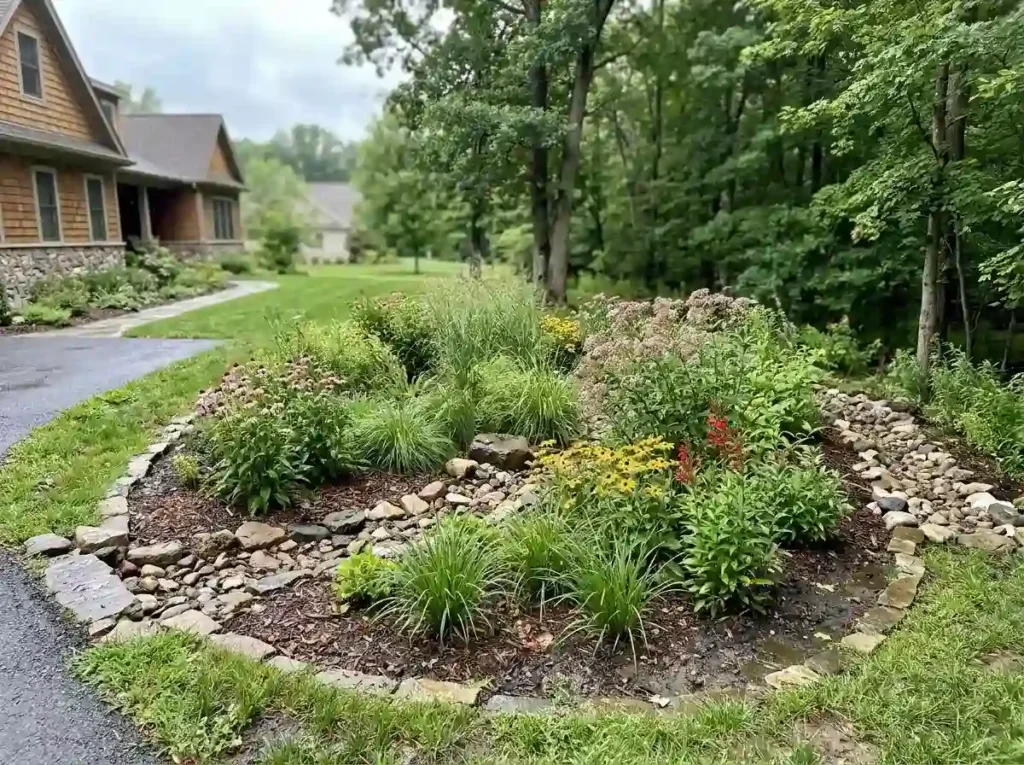
A rain garden is a shallow planted area that collects water for a short time.
It can receive runoff from a driveway, roof, or other hard surface. The water then slowly soaks into the soil.
Choose plants that can handle both wet and dry periods. The area may hold water after rain and become dry a few days later.
Do not place a rain garden too close to the house. Avoid underground pipes, cables, and septic systems.
The size and depth depend on your soil and the amount of runoff. Heavy clay soil drains more slowly than sandy soil.
Rain gardens can help reduce runoff and erosion when they are placed and built correctly. They may also support birds and pollinators.
Best for: Low areas that collect driveway runoff.
Watch out for: Water that remains for long periods.
Add a Dry Creek or Permeable Gravel Strip
A dry creek uses stone to guide water through the yard.
Create a shallow channel beside the driveway. Keep the center lower than the nearby soil.
Use several sizes of stone. Small gravel can fill gaps. Medium and large rocks can slow water and create a natural look.
Add plants along the upper sides of the channel. Avoid blocking the path where water needs to move.
A permeable gravel strip can also help water soak into the ground. It needs a proper base and suitable soil.
Before building either option, check where the water will end. Do not send it to your home, the street, or a neighboring property.
Best for: Sloped yards and areas where water follows the driveway.
Watch out for: Decorative stone placed without a drainage plan.
A drainage border should move or absorb water safely. It should also protect the driveway base from erosion.
Driveway Border Ideas That Improve Your Entrance
The driveway entrance is the first part most people see. A few strong details here can improve the whole front yard.
You can keep the long sides simple and spend more of your budget near the entrance.
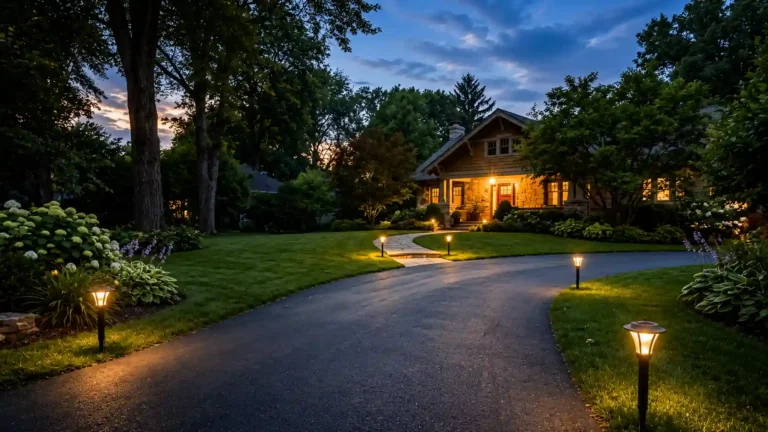
Add Low-Voltage or Solar Border Lighting
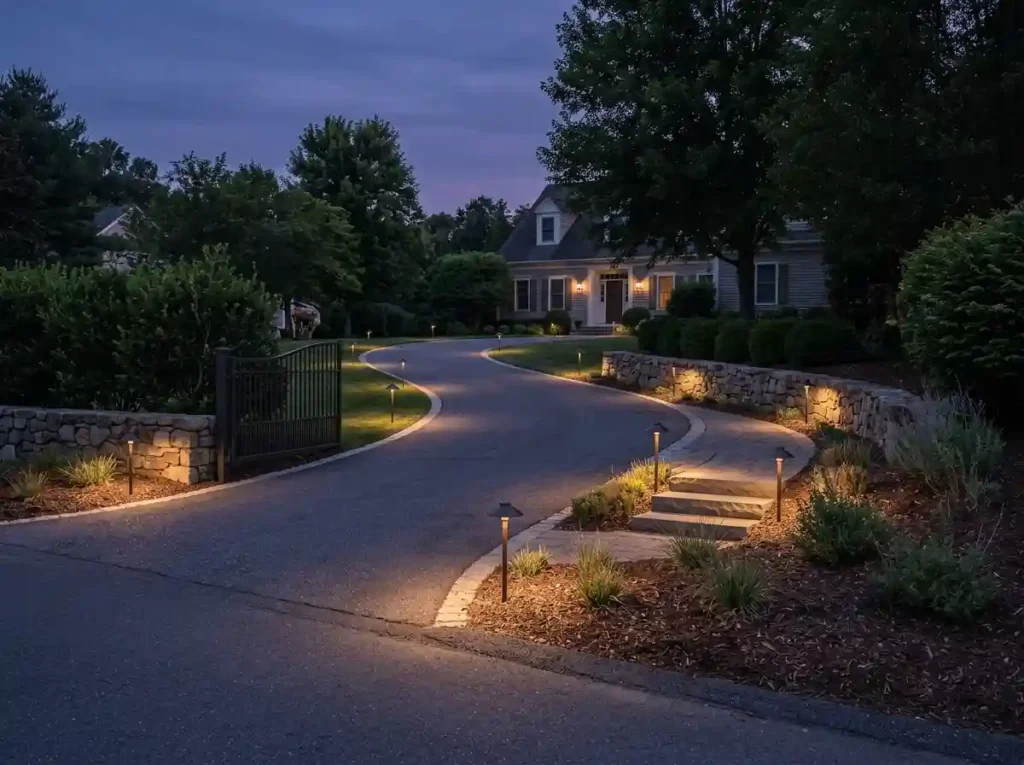
Driveway lights can make the entrance easier to see at night.
Place lights near turns, steps, walls, gates, and the street entrance. You may not need fixtures along the entire driveway.
Avoid placing too many lights in a straight and even line. This can make the driveway look like an airport runway.
Point lights down at the ground. This reduces glare for drivers and neighbors.
Solar lights are easy to install because they do not need wires. Their brightness may change based on sunlight and product quality.
Low-voltage lights often give more steady light. They need outdoor wiring and a transformer.
Keep all fixtures away from tires, mowers, snow shovels, and snowplows.
Best for: Long driveways, dark entrances, and homes with evening guests.
Watch out for: Bright lights aimed at drivers or nearby homes.
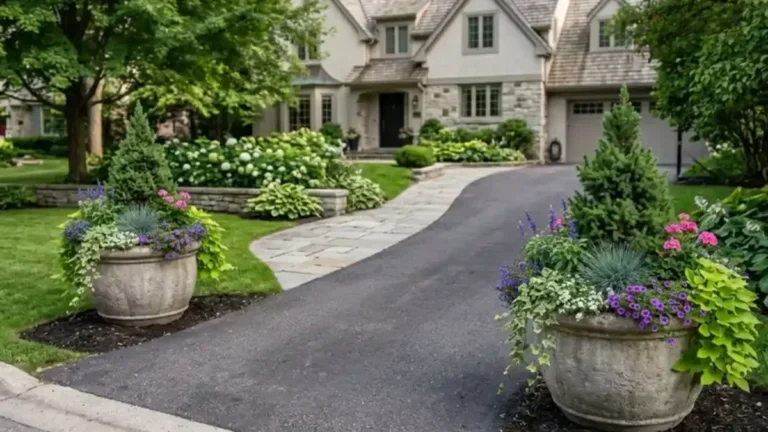
Build a Layered Mixed Border
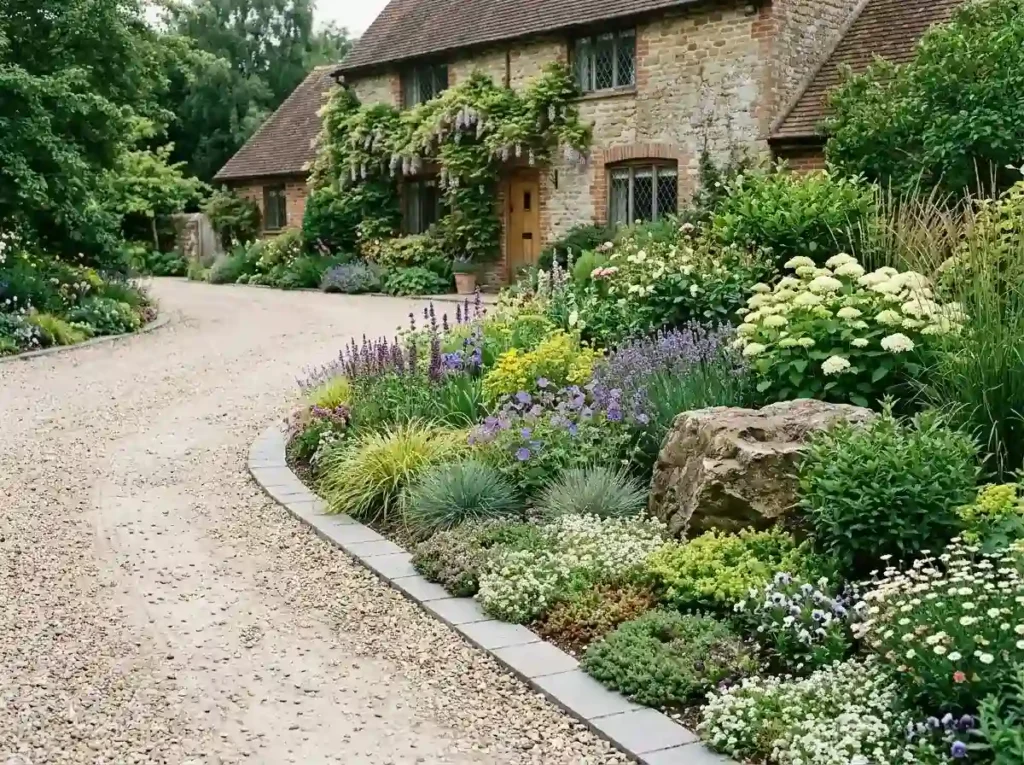
A layered border combines hard edging with plants of different heights.
Start with a clear edge. You might use flat pavers, brick, stone, or metal.
Add low plants near the driveway. Groundcovers and small flowers work well in this front layer.
Place medium plants behind them. Compact grasses or flowering perennials can add color and movement.
Use taller shrubs only where there is enough room. Keep them away from the street entrance and car doors.
Repeat the same groups along the driveway. This makes the design look connected.
You can widen the planting beds near the entrance. Add more plants or a feature stone there. Keep the middle section narrow and simple to control costs.
A useful design formula is:
Flat paver edge + low groundcover + compact grasses + two wider entrance beds
Best for: Homeowners who want a complete and planned look.
Watch out for: Too many plants packed into a narrow strip.
The entrance deserves the strongest details. The rest of the border can stay simple and repeated.
How to Choose the Best Driveway Border Idea
You may like several ideas, but the best choice should solve your main problem first.
Choose a hard border if grass, gravel, or mulch keeps spreading. Brick, metal, stone, and pavers create clear separation.
Choose plants if the driveway feels too hard or empty. Flowers and grasses can add color. Evergreen shrubs provide shape through the year.
Choose a drainage feature if water causes puddles, erosion, or washed-out beds. A rain garden or gravel strip may help when it is placed correctly.
Choose a low border if the space is narrow. Metal edging, gravel, and small groundcovers use less room than large shrubs.
Match the style to your home. Brick and clipped shrubs suit many traditional homes. Metal edging and grasses often fit modern homes. Stone and native plants create a more relaxed look.
| Your Main Goal | Good Options |
| Lowest starting cost | Trench edge or mulch strip |
| Less lawn trimming | Paver mowing strip |
| Modern style | Metal edging and grasses |
| Traditional style | Brick and compact shrubs |
| Better drainage | Rain garden or gravel strip |
| Year-round structure | Evergreen shrubs |
| More flowers | Repeating perennial border |
| Very narrow space | Metal, gravel, or groundcover |
| Cold and salty site | Hard edge and salt-tolerant plants |
Choose the option that fixes your biggest site problem. Add color and decoration after you deal with space, water, and maintenance.
Create a Border That Works for Your Yard
The best driveway border depends on your available space, budget, home style, climate, and drainage.
Hard edging creates clean lines and keeps materials in place. Plants add color and soften large paved areas. Gravel and mulch offer lower-cost options. Rain gardens and stone channels may help manage runoff.
Measure the area before you start. Watch how water moves after rain. Check plant sizes and leave enough room for cars, people, and lawn equipment.
Start with a short test area if you are not sure. You can check how the materials look and how well they stay in place.
With the right materials and plants, these landscape ideas for driveway borders can turn a plain paved area into a cleaner and more welcoming entrance.