16 Front Yard Landscaping Ideas for Corner Lots
A corner lot gives you more visible yard space. It also gives you more problems to solve.
Your front door may face one street while a long side lawn faces another. Passing cars and people can see more of your property. You may also have extra grass to mow, muddy sidewalk corners, or little privacy near your porch.
These front yard landscaping ideas for corner lots will help you make the full property feel connected. You will learn where to use low plants, trees, shrubs, paths, fences, and groundcover. You will also see how to add privacy without blocking important street views.
Safety comes first near an intersection. Local rules may control fence height, plant height, and how close features can sit near the road. Check those rules before you plant trees, install a fence, or build a raised bed.
Start with the biggest problem. Then choose one or two ideas that fix it.
How to Plan a Corner Lot Before You Start Planting
A corner yard has two public views. A design that looks good from one street may look empty from the other.
Begin by choosing your main frontage. This is often the side with the front door, porch, or main walkway. Give this side the strongest color, lighting, and detail.
The second street-facing side should support the main entrance. It does not need the same amount of decor. It should still use similar plants, edging, mulch, and materials.
Next, mark anything that may affect your plan:
- Sidewalks and driveways
- Utility boxes
- Drainage paths
- Overhead wires
- Underground utility lines
- Property boundaries
- Public right-of-way areas
- Places where people cut across the lawn
Check how sunlight moves across the yard. One side may get full afternoon sun while the other stays shaded by the house. This will affect which plants can grow well.
Watch what happens after rain. Mark wet areas before adding trees or flower beds. Planting will not fix poor drainage on its own.
Use this table to find your first step:
| Corner-Lot Problem | Best Place to Start |
| Two sides compete for attention | Choose one main frontage |
| The yard feels too open | Mark the areas that need privacy |
| There is too much grass | Identify hard-to-mow lawn areas |
| The sidewalk corner is muddy | Study foot traffic and drainage |
| Plants may block road views | Keep the corner low and open |
| The side lawn looks empty | Repeat shrubs, trees, or plant groups |
Take photos from both streets. This simple step can show gaps that are hard to see while standing inside the yard.
4 Corner Lot Landscaping Ideas That Keep Street Views Clear
Visibility matters more than decoration near a road corner. Tall shrubs, walls, and thick tree branches can make it harder for drivers to see people, cars, or bikes.
These corner lot landscaping ideas add curb appeal while keeping the intersection open.
Keep the Street Corner Low and Easy to See Across
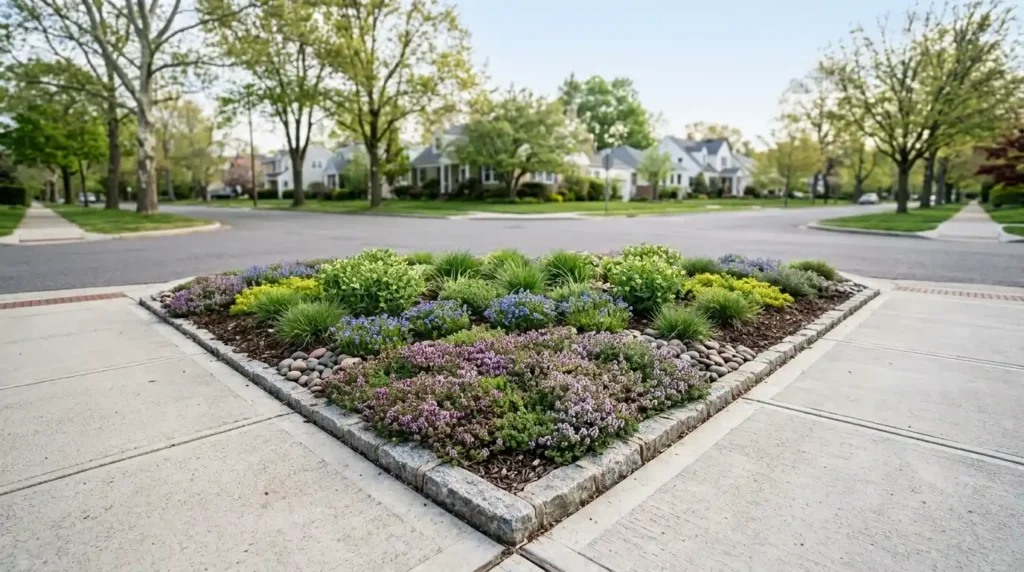
A tall hedge may give you privacy, but the street corner is usually the wrong place for it. Use low plants where the two roads meet.
Short flowers, groundcover, and low ornamental grasses can add color without creating a visual wall. Choose plants based on their mature height, not their size at the garden center.
Possible options include creeping thyme, low sedges, and compact native flowers. The right choice depends on your climate, soil, and sunlight.
Leave enough space between plants and the sidewalk. Leaves and stems should not lean into the walking area as they grow.
Local rules may define a clear sight area near the intersection. Ask your city or local planning office before planting anything tall in this zone.
Best for: Busy intersections and yards with sidewalks
Maintenance: Low to medium
Main benefit: Better visibility with added color
Avoid: Choosing shrubs that will grow much taller than expected
A low corner can still look finished. It just needs clear edges and a simple plant pattern.
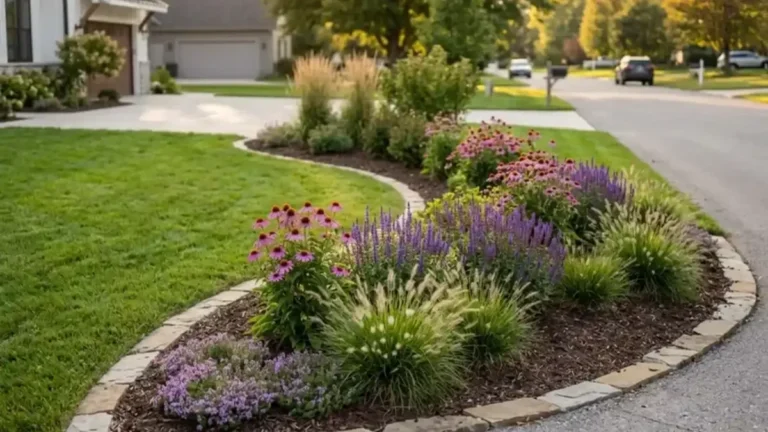
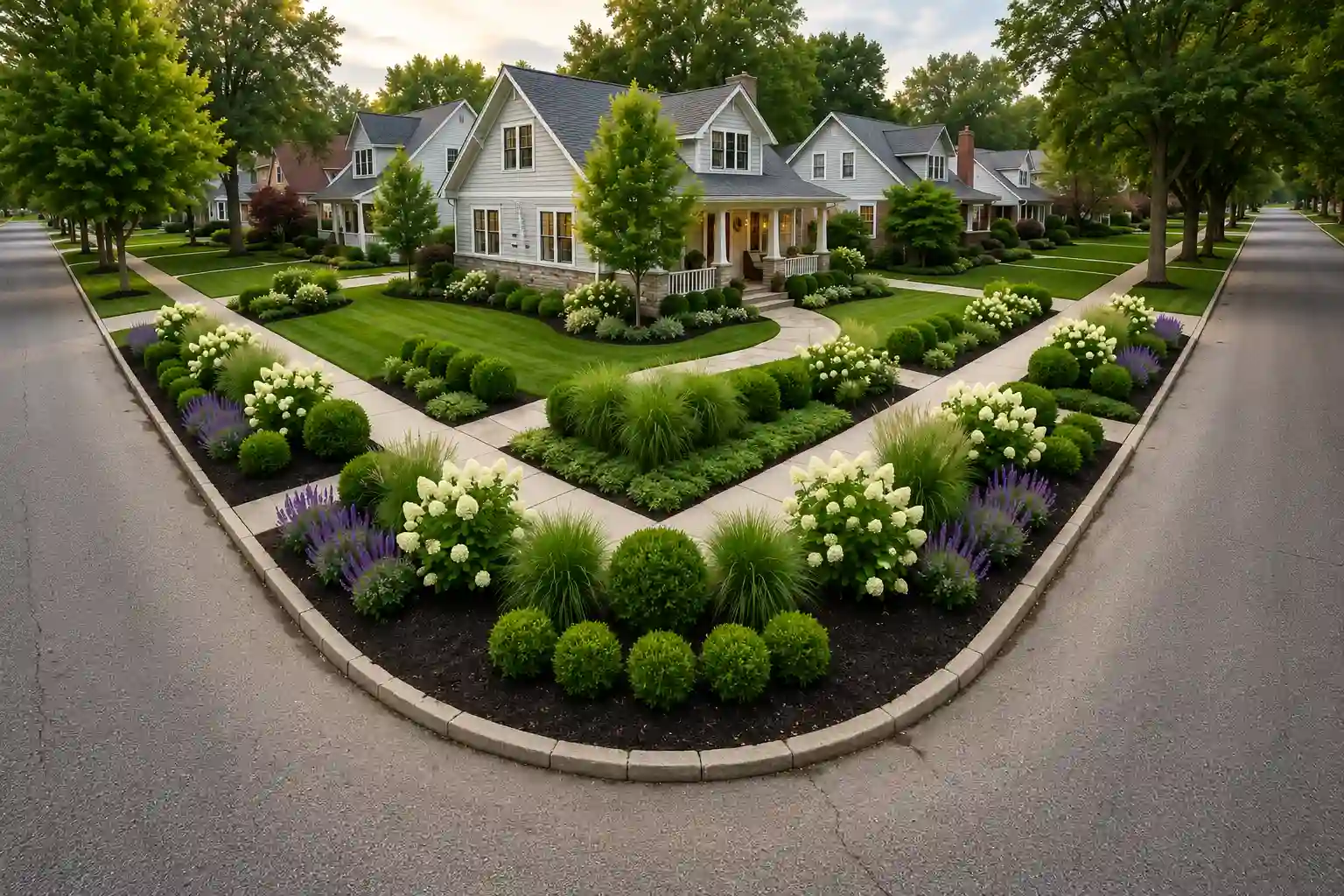
Add a Wide Curved Bed Around the Corner
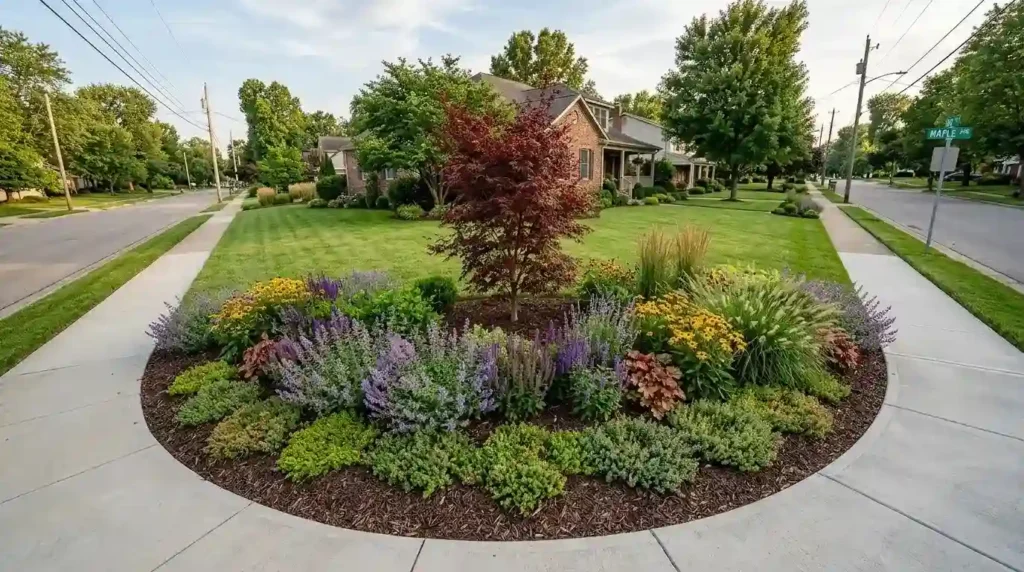
A sharp corner of grass can be hard to mow. It can also make a large yard feel plain.
A curved flower bed softens the angle and gives the corner a clear shape. Follow the line of the sidewalk or curb instead of creating a random curve.
Keep the lowest plants near the road. Place medium plants behind them. Any taller shrub or small tree should sit farther inside the property.
A simple planting order may look like this:
- Groundcover along the front edge
- Short flowers or grasses in the middle
- One taller feature farther back
Use a garden hose to mark the curve before digging. Step back and view it from both streets. Adjust the line until it looks smooth.
Make the bed wide enough for the mature plants. A narrow bed may look fine during the first year but become crowded later.
Best for: Large lawns with an empty street corner
Maintenance: Medium
Main benefit: Less awkward mowing
Avoid: Making a thin bed that plants will quickly outgrow
Mulch or spreading groundcover can help reduce weeds and limit grass trimming around the edge.
Place a Small Ornamental Tree Farther Inside the Yard
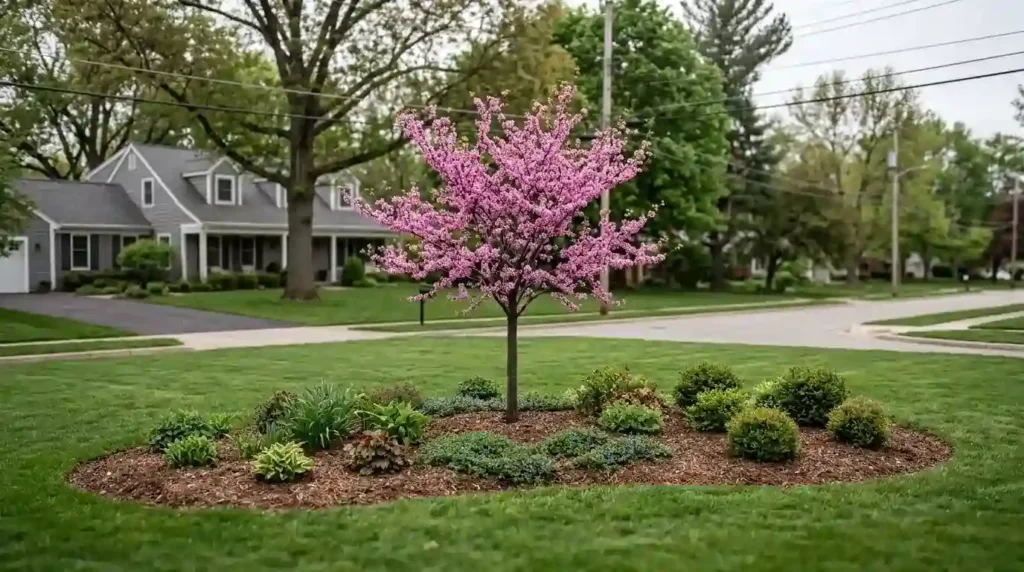
One well-placed tree can become a focal point from both streets. The key is to move it away from the intersection.
Place the tree farther inside the yard where it will not block views, traffic signs, or driveway access. Check for overhead wires before choosing the tree.
Small flowering trees may include redbud, serviceberry, dogwood, or certain crabapple varieties. Crape myrtle may suit warmer regions. Ask a local extension office or plant nursery which trees perform well in your area.
Think about the tree at full size. Check:
- Mature height
- Mature canopy width
- Root growth
- Leaf or fruit drop
- Distance from sidewalks
- Distance from the home
- Distance from utility lines
Add a broad planting bed below the tree instead of a tiny mulch circle. Use low shrubs or groundcover to connect it with the rest of the yard.
Best for: Wide corner properties
Maintenance: Medium
Main benefit: A clear focal point from two streets
Avoid: Planting under power lines without checking mature height
Do not place the tree simply in the middle of the lawn. Connect it to a bed so it looks like part of the full design.
Use Boulders as Accents, Not Road Barriers
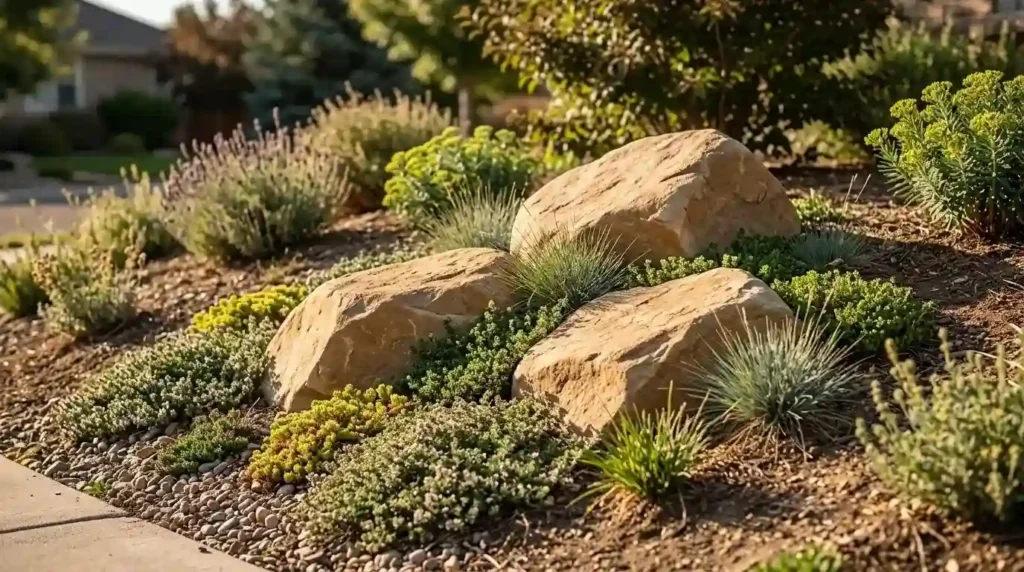
Decorative stone can add shape and texture to a corner bed. It works well in dry areas and on gentle slopes.
Use one large boulder or a group of three. Odd-numbered groups often look more natural than even rows.
Partly bury the bottom of each boulder. A rock placed flat on top of the soil can look dropped into the yard rather than built into the design.
Choose stone that works with the home. Gray stone may connect with cool brick or concrete. Warm tan stone can suit beige siding or natural wood.
Place boulders away from traffic views and walking paths. They should not sit where a driver expects to see across the corner.
Add low groundcover and small grasses around the base. This helps the stones feel connected to the planting bed.
Best for: Sloped yards and dry landscapes
Maintenance: Low
Main benefit: Year-round shape with little care
Avoid: Scattering many small rocks without a clear plan
The street corner should feel attractive without becoming a wall or blind spot.
Replace a Solid Hedge With Layered Shrubs
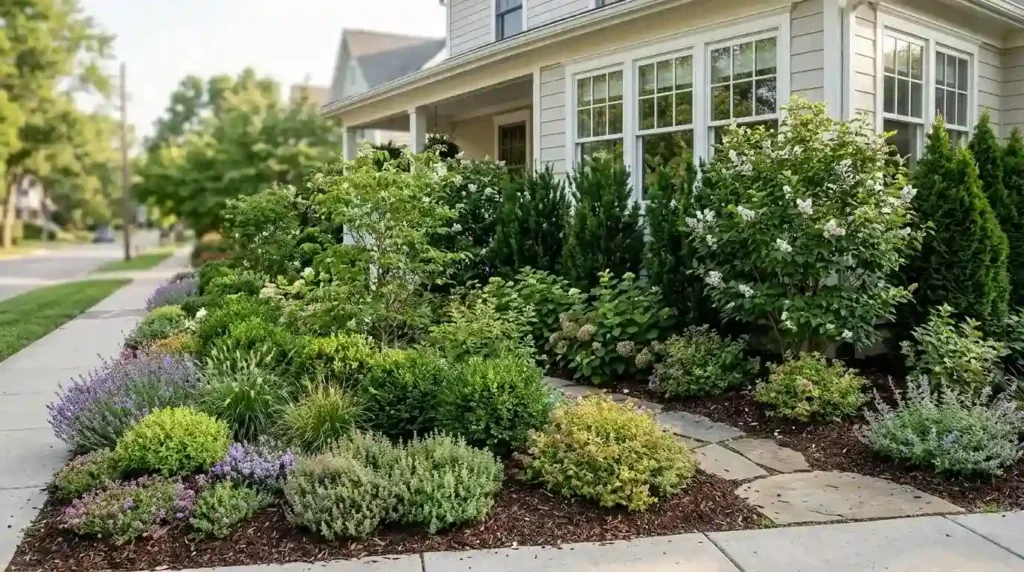
A tall hedge around both sides can make a home feel boxed in. It may also block road views and require frequent trimming.
Layered planting gives you softer privacy. Use short plants near the street, medium shrubs behind them, and taller plants closer to the home.
Stagger the shrubs instead of planting one straight line. A loose group looks more natural and leaves small openings for light and air.
Mix evergreen shrubs with plants that flower or change color during the year. The evergreen plants provide structure. The other plants keep the bed from looking flat.
Focus on windows, porch seating, or a side patio. These areas need more screening than open lawn.
Best for: Exposed windows and sitting areas
Maintenance: Medium
Main benefit: Privacy without a solid green wall
Avoid: Planting a tall hedge along the full street edge
Give each shrub enough space to reach its mature width. Crowded shrubs often need more trimming and may develop poor airflow.
Use Small Trees to Soften a Long Side Yard
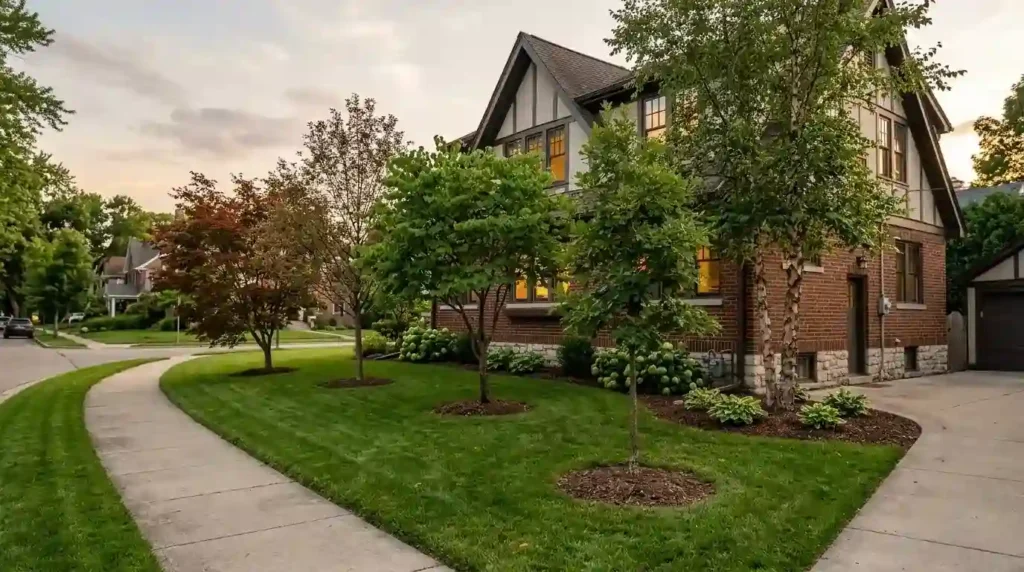
A long street-facing side yard may feel open and empty. A loose group of small trees can break up the view.
Use three or five trees instead of one long, straight row. Place them at slightly different distances from the street. This creates depth and looks less formal.
Think about what you want to screen. Trees can soften views of upper windows or a side porch. Shrubs may work better when you need privacy closer to ground level.
Choose trees with roots that suit the available space. Keep them away from driveways, underground lines, and narrow sidewalk strips.
Deciduous trees lose their leaves during part of the year. That may be useful if you want winter sunlight. Evergreen trees provide more year-round screening but may create deeper shade.
Best for: Long side lawns facing a second road
Maintenance: Medium
Main benefit: Softer views and added height
Avoid: Placing every tree at equal spacing without checking the house
View the group from both streets before planting. The trees should frame the home, not hide it.
Define the Property With a Short Fence and Plants
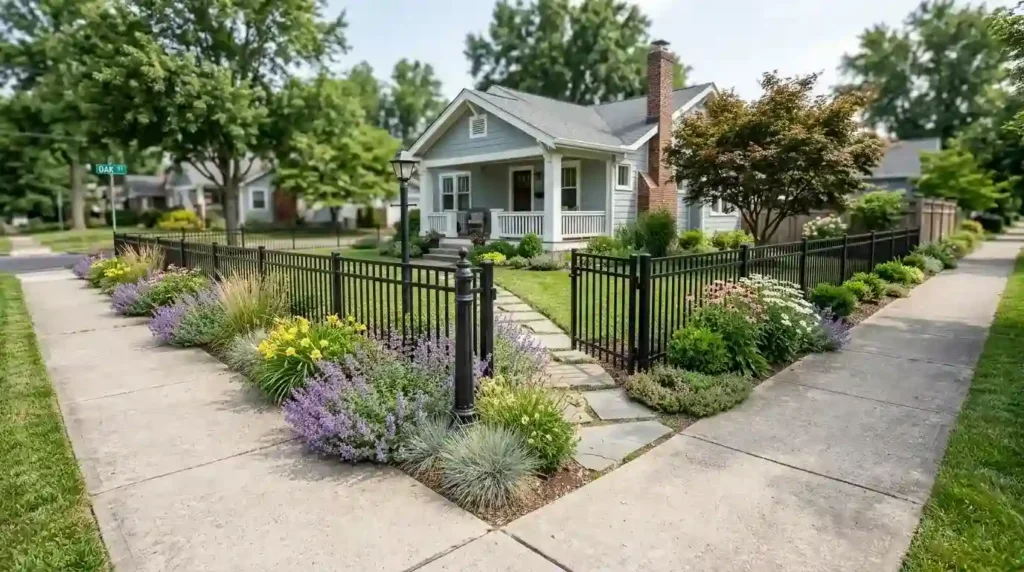
A low fence can show where your property begins. It may also discourage people from cutting across the lawn.
Check the property survey before choosing the fence location. The visible edge of the lawn may not match the legal property line.
Local rules may limit fence height near an intersection. Some cities also control materials, gate placement, and distance from sidewalks.
A short black metal fence can work with modern, brick, and traditional homes. A simple wood fence may suit a cottage or farmhouse-style property.
Plant grasses, flowers, or low shrubs in front of the fence. This softens the hard line and helps the fence become part of the landscape.
Keep gates easy to find. Do not block them with tall plants or wide branches.
Best for: Homes with frequent foot traffic near the lawn
Maintenance: Medium
Main benefit: A clear boundary without a closed feeling
Avoid: Installing the fence before confirming rules and property lines
A fence should guide people and support the design. It should not make the front yard look like a private backyard.
Screen Only the Porch or Patio That Needs Privacy
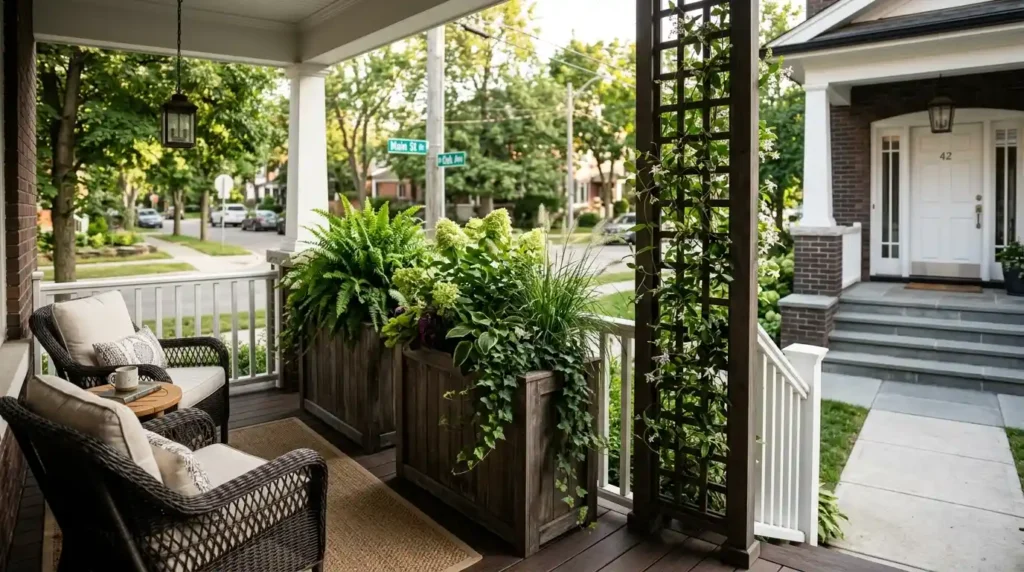
Your full yard may not need screening. You may only need privacy around the porch, patio, or one set of windows.
A focused screen costs less and takes up less space. It also keeps the main entrance open and easy to see.
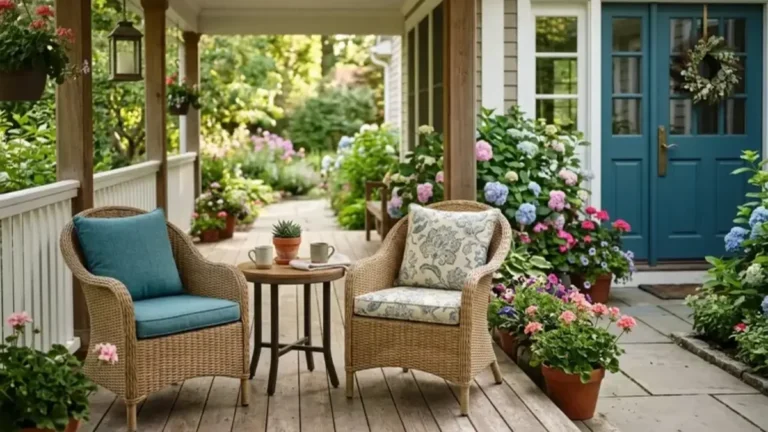
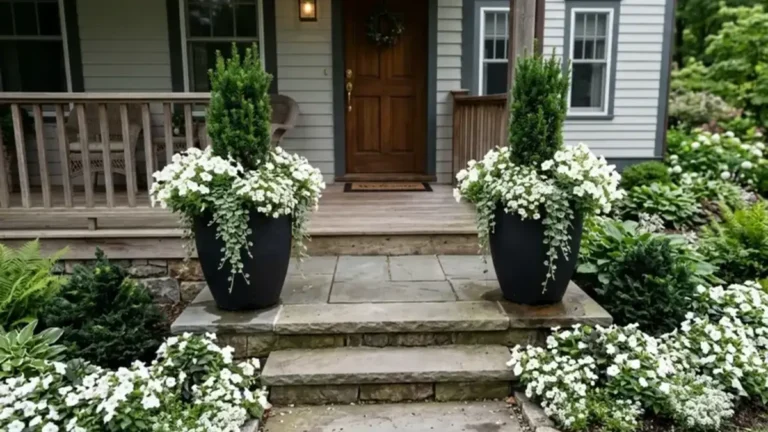
Use tall planters beside a porch. Add a narrow trellis near a seating area. A simple slatted screen can block a direct street view while allowing air through.
Narrow evergreen plants may work when you want a living screen. Check their mature width before planting them close to the house.
Leave room around steps, doors, and walkways. Guests should not have to squeeze past planters or branches.
Best for: Porches and patios facing passing traffic
Maintenance: Low to medium
Main benefit: Privacy where you need it most
Avoid: Screening every street-facing area
Good privacy landscaping protects the places you use without hiding the whole home.
Make One Side the Main Frontage
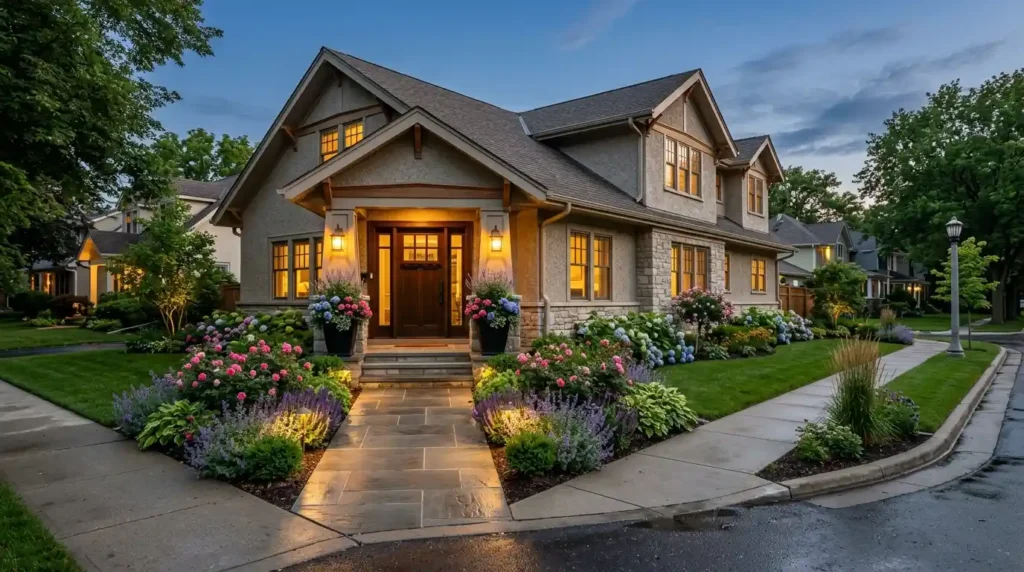
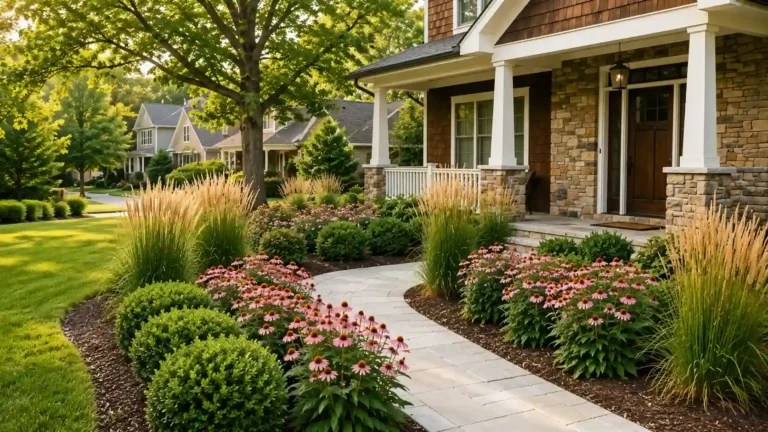
Choose the side with the front door as your main view. This area should have the strongest path, lighting, color, and planting.
Use larger flower groups near the entrance. Add matching planters beside the door. Keep the walkway clear and easy to follow.
The second frontage should be simpler. Repeat some of the same plants and materials without creating another main entrance.
For example, use flowering shrubs near the front door. Then repeat smaller groups of the same shrubs along the side street.
The home’s shape can help guide this choice. A porch, front steps, or large entry window often shows which side should lead.
Best for: Homes with a clear front-door side
Maintenance: Any level
Main benefit: A design that feels organized
Avoid: Giving both sides the same visual weight
One side should invite people to the door. The other should support that view.
Repeat a Short List of Plants Across the Yard
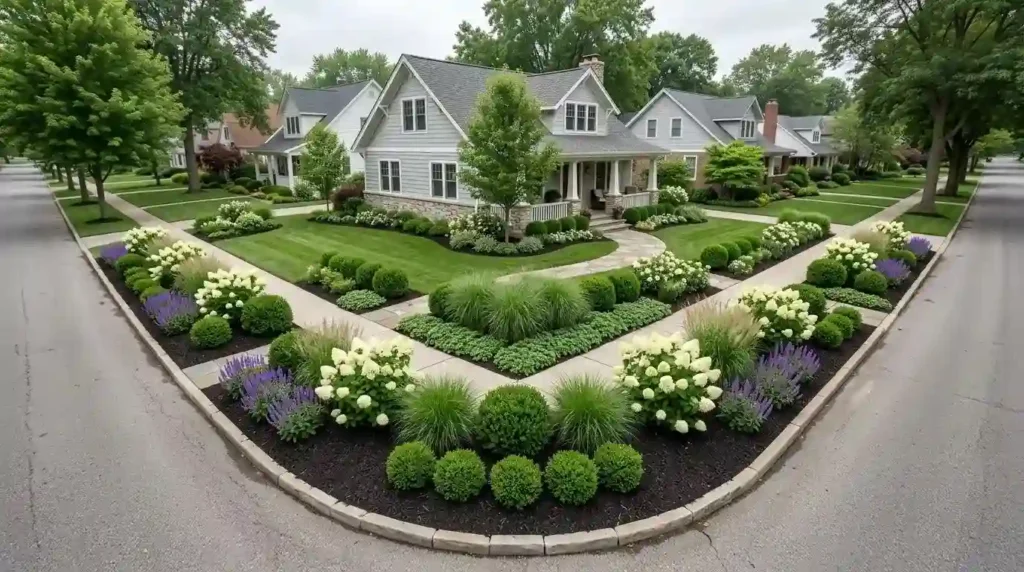
Using too many plant types can make a large corner lot look broken into small pieces.
Choose three to five main plants. Repeat them in different group sizes along both streets.
A simple plant list may include:
- One evergreen shrub
- One flowering shrub
- One ornamental grass
- One groundcover
- One seasonal or long-blooming flower
You do not need to place each plant in every bed. Repeat enough of them to create a clear link.
Use odd-numbered groups such as three or five when space allows. A single plant may look lost in a wide bed.
Keep the mulch, stone, and edging consistent. These materials can connect separate beds even when the plants are different.
Best for: Large properties with several planting areas
Maintenance: Low to medium
Main benefit: A calmer and more connected yard
Avoid: Buying one of every plant you like
Repetition is useful because it helps people see the property as one landscape.
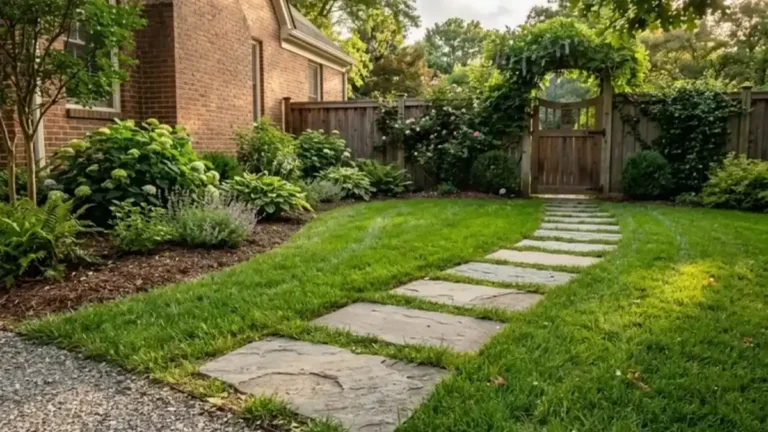
Add a Walkway Only Where People Need One
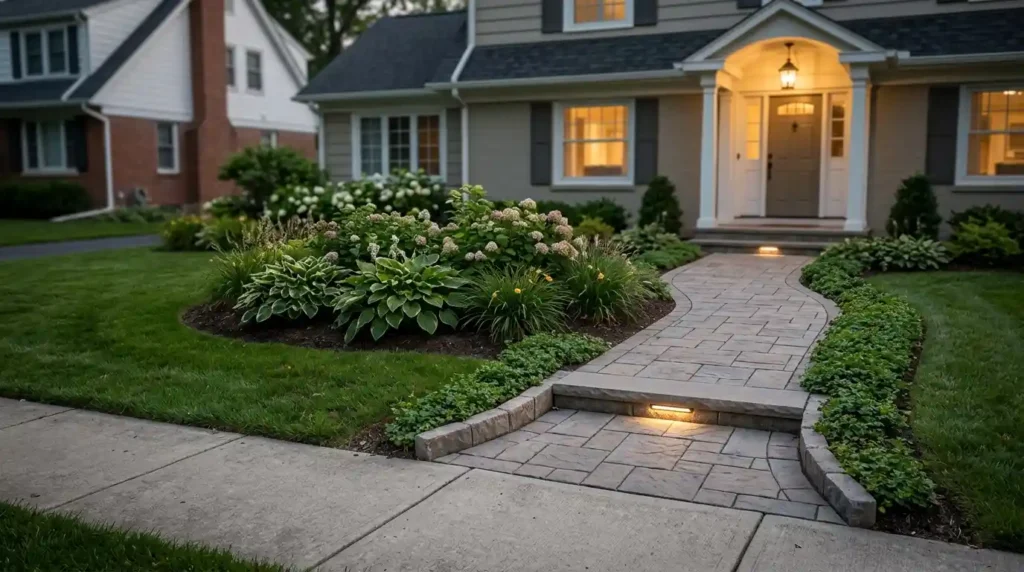
Corner homes may receive visitors from more than one direction. A walkway from the public sidewalk can help guide them to the door.
Watch how people already approach the home. Do they come from the front street or the side street? Is there a worn path in the grass?
Build a path where real foot traffic happens. Do not add a second walkway only because the yard has a second street.
A direct path is easy to follow. A gentle curve may work when it moves around a tree or planting bed.
Keep plants low near the path. Light steps and level changes so people can see them at night.
Use materials that match the house and main walkway. Brick, concrete, gravel, and stepping stones can all work in the right setting.
Best for: Homes approached from two directions
Maintenance: Low to medium
Main benefit: Clearer access and less worn grass
Avoid: Building a path that leads nowhere
A good path should answer a real need. It should not confuse guests about which door to use.
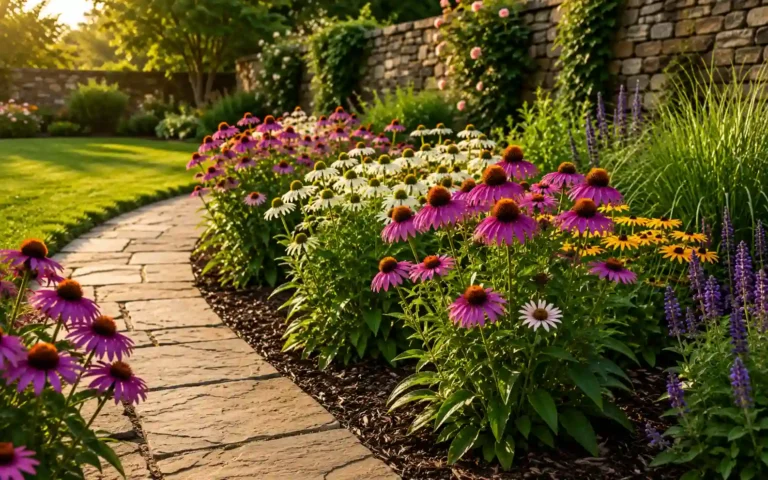
Turn the Long Side Lawn Into a Planting Ribbon
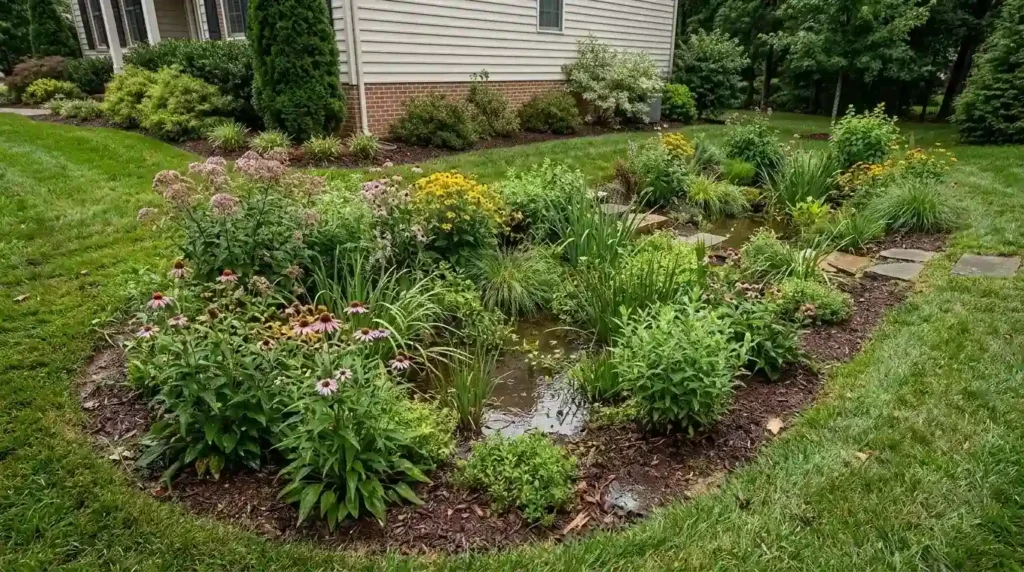
A thin strip of grass beside the sidewalk can feel empty. It may also require constant edging and mowing.
Replace part of it with one long, wide planting bed. Follow the sidewalk or property line to create a clear shape.
Repeat shrubs, grasses, and flowers in groups. Add a small tree at key points if there is enough space.
Keep plants back from the sidewalk. Branches should not scratch people or cover the walking area.
Use mulch or groundcover between plant groups. This reduces exposed soil and gives the bed a finished look.
Do not make the bed too narrow. Plants need enough room for their mature width.
Best for: Long side yards facing a street
Maintenance: Medium
Main benefit: Less lawn and better side curb appeal
Avoid: Squeezing wide shrubs into a thin strip
Both sides should feel connected, but the front-door side should remain the main visual lead.
Replace Hard-to-Mow Corners With Groundcover
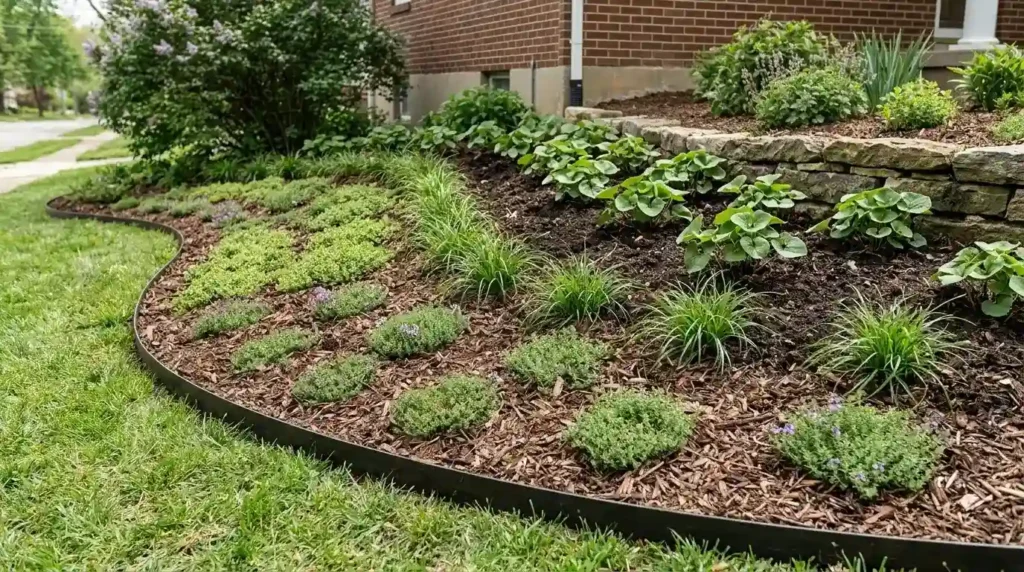
Sharp corners, slopes, and narrow strips can be difficult to mow. Groundcover may be a better fit.
Choose plants that match the light and soil. Some groundcovers need sun. Others perform better in shade or moist areas.
Possible choices may include creeping thyme, sedges, ajuga, low juniper, or spreading native plants. Check local advice before planting. Some fast-spreading plants can become invasive.
Prepare the soil before planting. Remove weeds and grass roots. Add edging if the groundcover sits beside a lawn.
Give the plants time to spread. You may still need mulch or hand weeding during the first season.
Best for: Slopes, sharp lawn corners, and narrow strips
Maintenance: Low after the plants fill in
Main benefit: Less mowing in awkward areas
Avoid: Choosing a spreading plant without checking its growth habit
Groundcover works best when it forms one clear bed rather than several small patches.
Turn a Wet Low Spot Into a Rain Garden
Water often collects in the lowest part of a corner yard. This may come from the roof, road, sidewalk, or nearby lawn.
A rain garden is a shallow planted area that holds water for a short time. It lets the water soak into the ground instead of sitting on the lawn.
A rain garden is not a permanent pond. Water should drain after a rain event.
Place it away from the home’s foundation. Check soil drainage, underground utilities, and local rules before digging.
Use plants that can handle both wet and dry periods. Native plants are often useful because many are suited to local weather and soil.
Do not send road runoff into a rain garden without checking for salt, oil, and other pollution risks.
Best for: Wet side yards and low lawn areas
Maintenance: Medium
Main benefit: Better use of a problem area
Avoid: Digging without checking drainage and utilities
A rain garden needs a proper location. It is not the right answer for every wet yard.
Replace Empty Grass With a Tree and Shrub Island
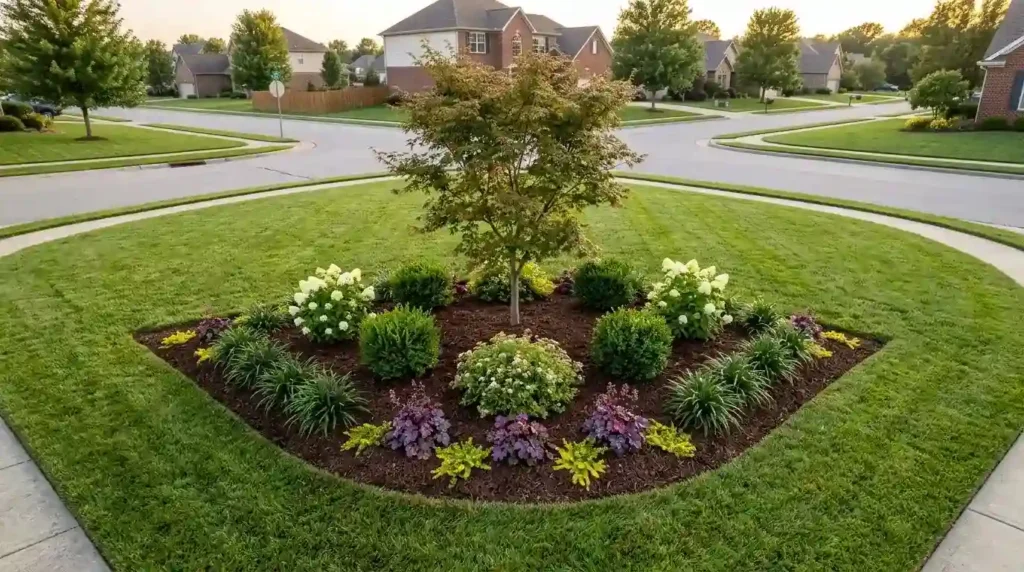
A wide lawn can look empty even when the grass is healthy. One broad planting island can add shape and reduce mowing.
Use a small tree as the main feature. Add three or five shrubs around it. Finish with groundcover or low flowers.
Connect the plants within one large bed. Avoid making a separate mulch circle around each plant.
A broad bed is easier to mow around. It also gives roots more protected soil and creates a stronger visual shape.
Use a simple edge that can be seen from both streets. Curves should be wide and smooth, not small and wavy.
Best for: Large open lawns
Maintenance: Low to medium
Main benefit: Less grass and a stronger focal area
Avoid: Creating several tiny plant islands
A simple formula works well:
One small tree + three shrubs + one repeating groundcover
Build a Durable Path Where Peoplpe Cut Across
A worn patch near the sidewalk is a sign that people already use that route. Replacing the grass again may not solve the problem.
Watch where people walk. Then decide whether a short path, stepping stones, or a gravel strip would make the area safer.
Use materials that match the main walkway. Keep the surface level and stable.
Add low plants beside the path, but leave enough room for feet, bags, bikes, or strollers.
Check whether the area is part of the public right-of-way. You may need approval before adding stones, edging, or other features.
Do not place boulders or sharp barriers where someone may trip over them.
Best for: Corner lots near schools, parks, or busy sidewalks
Maintenance: Low
Main benefit: Less mud and damaged grass
Avoid: Blocking a route without checking why people use it
A durable path often works better than repairing the same patch of grass each season.
How to Pick the Best Ideas for Your Corner Property
Do not choose plants first. Choose the problem you need to solve.
Begin with safety. Keep the intersection and driveway views clear. Check local rules before placing fences, trees, or tall shrubs near the road.
Next, look at privacy. Screen the porch, patio, or windows that feel exposed. You may not need privacy across the full property.
Solve drainage before adding decorative plants. Water problems can damage new beds and wash away mulch.
Think about maintenance. A large bed may reduce mowing but still need weeding, watering, and trimming. Choose a plan you can care for.
Use this guide:
| Yard Problem | Best Idea to Try First |
| The yard feels exposed | Layered shrubs or small trees |
| The street corner looks empty | Low curved planting bed |
| Mowing takes too long | Groundcover or a planting island |
| The side yard looks plain | Long planting ribbon |
| Water collects after rain | Properly placed rain garden |
| The sidewalk edge stays muddy | Durable path or edging |
| Both yard sides look unrelated | Repeated plants and materials |
| Road visibility is poor | Low plants near the corner |
Pair two ideas that support each other. A low corner bed can connect with a long side planting ribbon. A porch screen can work with repeated shrubs along the street.
Corner Lot Mistakes That Create More Work
Poor plant placement can lead to blocked views, cracked walks, crowded beds, and years of extra trimming.
Avoid these common mistakes:
| Common Mistake | Better Choice |
| Tall hedge near the intersection | Low plants near the road |
| Small mulch circles around every plant | One connected planting bed |
| Full screening on both streets | Privacy near the porch or windows |
| A different plant in every spot | A short repeated plant list |
| Shrubs placed against the sidewalk | Space for mature growth |
| Large tree under power lines | Smaller tree placed farther inside |
| New plants in a wet area | Fix or plan for drainage first |
Check the final layout before digging.
Make sure:
- Mature plant sizes are known
- Underground utilities are marked
- Property lines are confirmed
- Road views stay clear
- Water flows away from the home
- Sidewalks remain open
- The maintenance level fits your schedule
A young plant may look too small at first. Giving it enough room now can save years of cutting and removal later.
Fix the Most Visible Problem First
Start by looking at your property from both streets. Decide whether your biggest issue is privacy, road visibility, too much grass, poor drainage, or an empty side yard.
Then choose two front yard landscaping ideas for corner lots that solve the same problem. You might pair a low curved corner bed with a long side border. You could also combine focused porch privacy with repeated shrub groups.
Keep the street corner open. Plan around mature plant sizes. Check utility lines and local rules before you dig.
A corner yard does not need plants in every open space. It needs a clear plan that makes both sides feel safe, useful, and connected.