18 Backyard Landscaping Ideas for Privacy That Work
A backyard can look beautiful and still feel far too exposed.
You may have a patio that faces your neighbor’s kitchen. Your deck may sit below a second-floor window. People walking past the street may have a clear view of your pool or seating area.
That lack of privacy can stop you from using a space you paid for.
The good news is that you do not always need a tall fence around the whole yard. Some of the best backyard landscaping ideas for privacy use plants, screens, planters, curtains, and smart seating placement to block one problem view.
This guide covers 18 useful backyard privacy ideas for large and small spaces. You will find fast fixes, plant-based options, low-space designs, and ideas that may help the yard feel calmer.
The best choice depends on what you need to block. It also depends on how fast you need privacy and how much yard space you can use.
How to Plan Backyard Privacy Before You Spend Money
It is easy to buy plants or build a screen before checking what you truly need. That can lead to a costly privacy feature that blocks the wrong view.
Start by finding the exact sightline that makes you feel exposed.
Sit in the chair you use most. Look at the neighboring homes, street, sidewalk, and nearby windows. Then stand and check the view again.
A screen that works while you are sitting may be too short when you stand. A six-foot fence may hide a ground-floor patio but do little about an upstairs window.
You should also check the view from inside your home. Look through the kitchen, living room, and bedroom windows that face the yard.
Try this simple privacy sightline test:
- Sit in your main outdoor seating area.
- Mark the views you want to block.
- Ask another person to stand near the property line.
- Hold up a long board, pole, or sheet to test different heights.
- Repeat the test while standing and from inside the house.
This short test helps you place privacy landscaping where it will do the most good.
Next, check the amount of planting space you have. Wide hedges may work along a large boundary. They can make a narrow yard feel even smaller.
You should also note the sun, drainage, and wind. A plant that needs full sun may become thin in a shaded corner. Tall planters may tip over in a windy yard.
Before building a fence, topper, pergola, or fixed screen, check local rules. Fence height limits and permit rules vary by area. Homeowners’ associations may have extra rules about materials, colors, and placement.
Install a Horizontal Wood Slat Screen
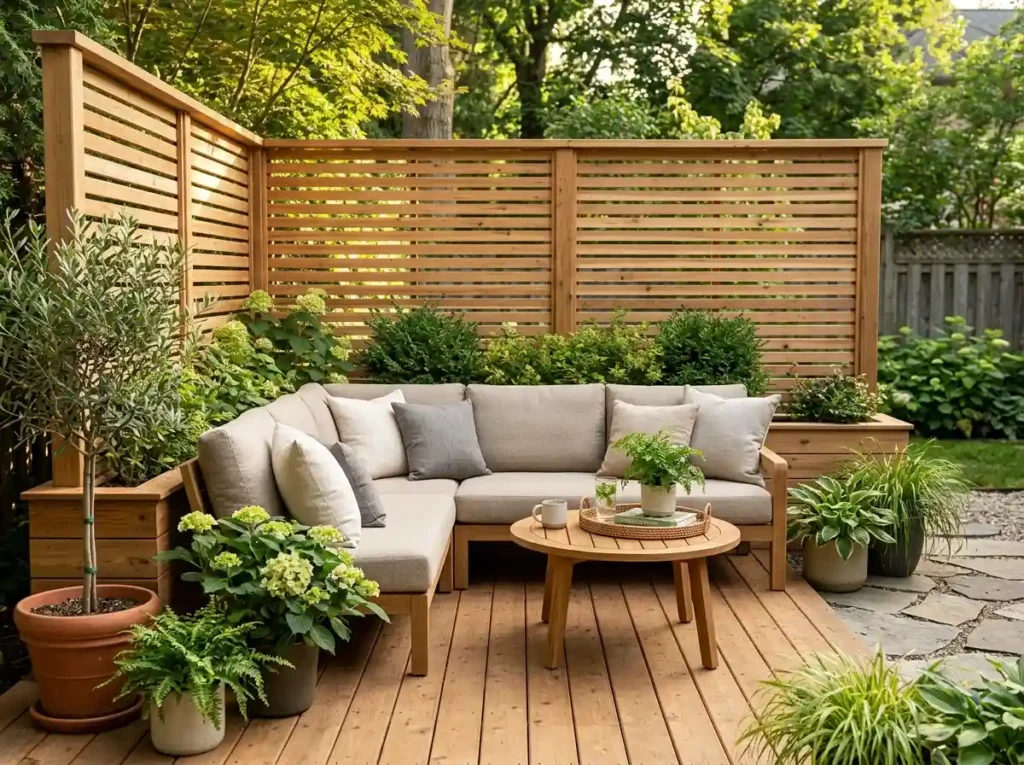
A horizontal wood slat screen gives you privacy as soon as it is installed. It works well behind a patio sofa, hot tub, outdoor kitchen, or dining table.
You do not need to run the screen across the full property line. Place it close to the area you use most. This can block the main view with less material and less cost.
Leave small gaps between the boards. The gaps let light and air pass through while making it harder for people to see into the space.
Match the wood stain or paint with your deck, fence, or house trim. This helps the screen look like part of the yard rather than a quick add-on.
Use wood made for outdoor use. Composite boards can also work if you want less painting or staining.
A seven-foot slat screen behind a patio sectional may block a neighbor’s direct view without making the whole yard feel closed.
Best for: Patios, decks, hot tubs, and outdoor kitchens
Privacy speed: Immediate
Watch out for: Local height and setback rules
Add Lattice Panels With Climbing Vines
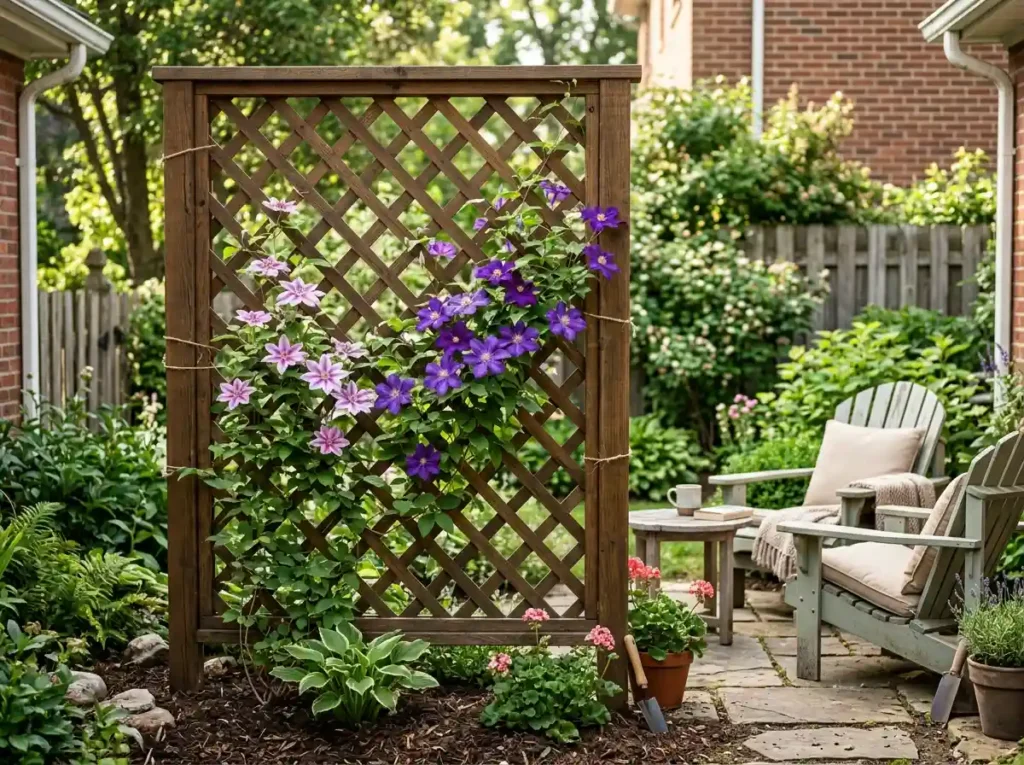
Lattice panels give you some privacy right away. Climbing vines fill the gaps and make the screen look softer over time.
This idea works well beside patios, along short fence sections, or around small seating areas. A freestanding lattice panel can also help renters when permanent building work is not allowed.
Choose a vine based on your light and climate. Clematis may work in one region, while star jasmine or climbing hydrangea may be a better choice in another.
Check how large the vine will become. Some fast-growing vines can take over nearby trees, gutters, fences, and garden beds.
You should also check whether a plant is listed as invasive in your area. A plant sold at one garden center may still cause problems in some regions.
Attach the lattice to a strong frame. Wet leaves and mature vines can become much heavier than they look.
Best for: Soft garden privacy in a small space
Privacy speed: Partial coverage now, fuller coverage later
Watch out for: Heavy or invasive vines
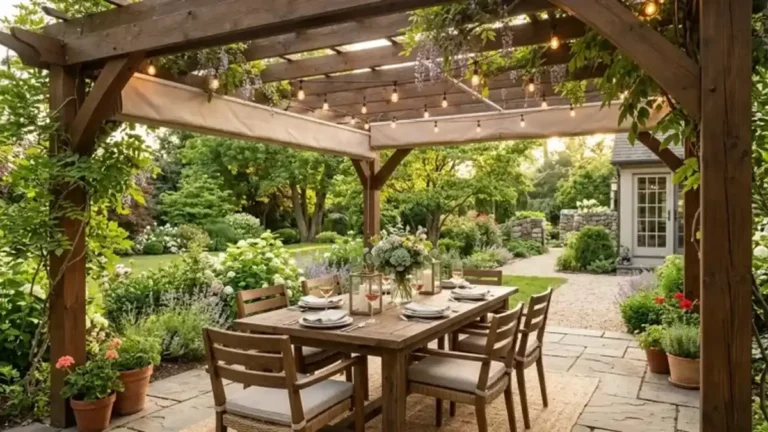
Use a Pergola With Outdoor Curtains
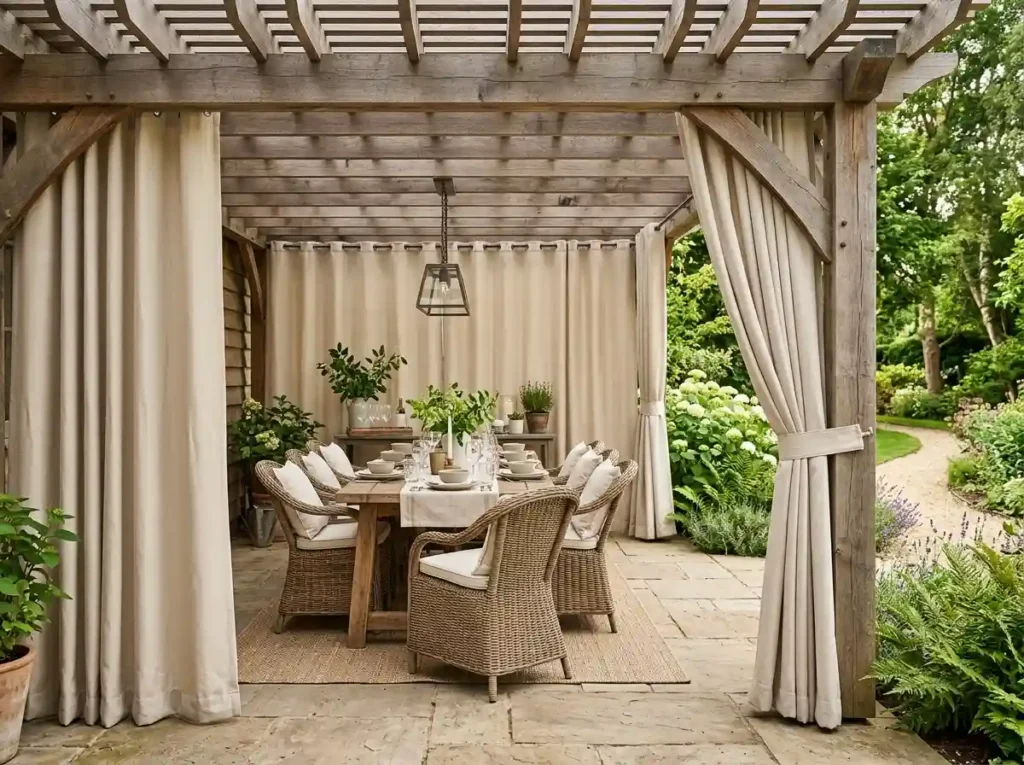
A pergola with curtains can create a private outdoor room without building solid walls.
You can close the curtains when you want privacy. Open them when you want more sun, air, or a wider view.
This works well around outdoor dining tables, lounge areas, hot tubs, and small patios. It is also useful when the unwanted view comes from one or two sides.
Choose outdoor fabric that can handle sun and rain. Light indoor curtains may fade, tear, or grow mildew when used outside.
Use tiebacks to hold the fabric during windy weather. Weighted curtain hems may also help, but curtains should still be secured before a storm.
A pergola may also help with views from upper floors because the roof frame and side curtains create coverage closer to where you sit.
Best for: Flexible patio privacy
Privacy speed: Immediate
Watch out for: Wind, moisture, and fading fabric
Extend an Existing Fence With a Decorative Topper
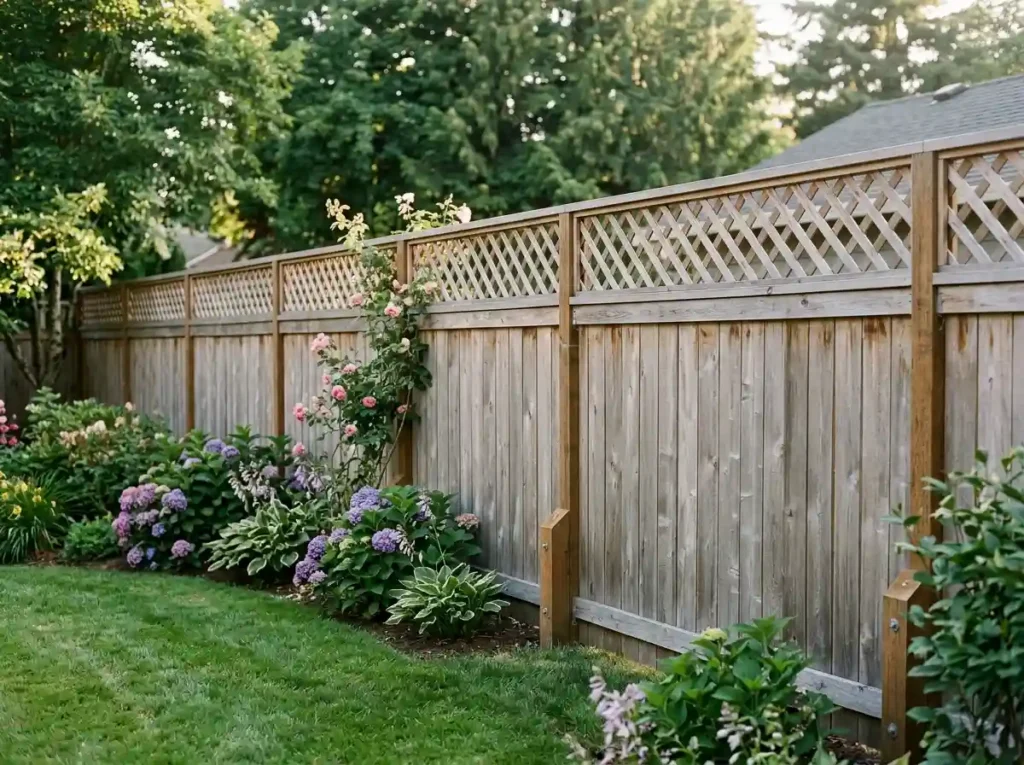
Your fence may be in good condition but still feel too short. A decorative topper can add height without replacing the whole fence.
Common options include lattice, narrow wood slats, and decorative metal panels. These materials can block upper sightlines while still allowing some light and air into the yard.
Try to match the topper with the existing fence. A topper that looks unrelated may make the fence appear unfinished.
Check the posts before adding extra weight. Old or weak posts may need repairs first.
You should also check local rules before starting. Some areas count the topper as part of the total fence height. Your homeowners’ association may also limit fence extensions.
A topper works best when the current fence already blocks most of the view and you only need another foot or two of coverage.
Best for: Improving an existing fence
Privacy speed: Immediate
Watch out for: Fence height limits and weak posts
Surround Your Seating Area With Tall Planters
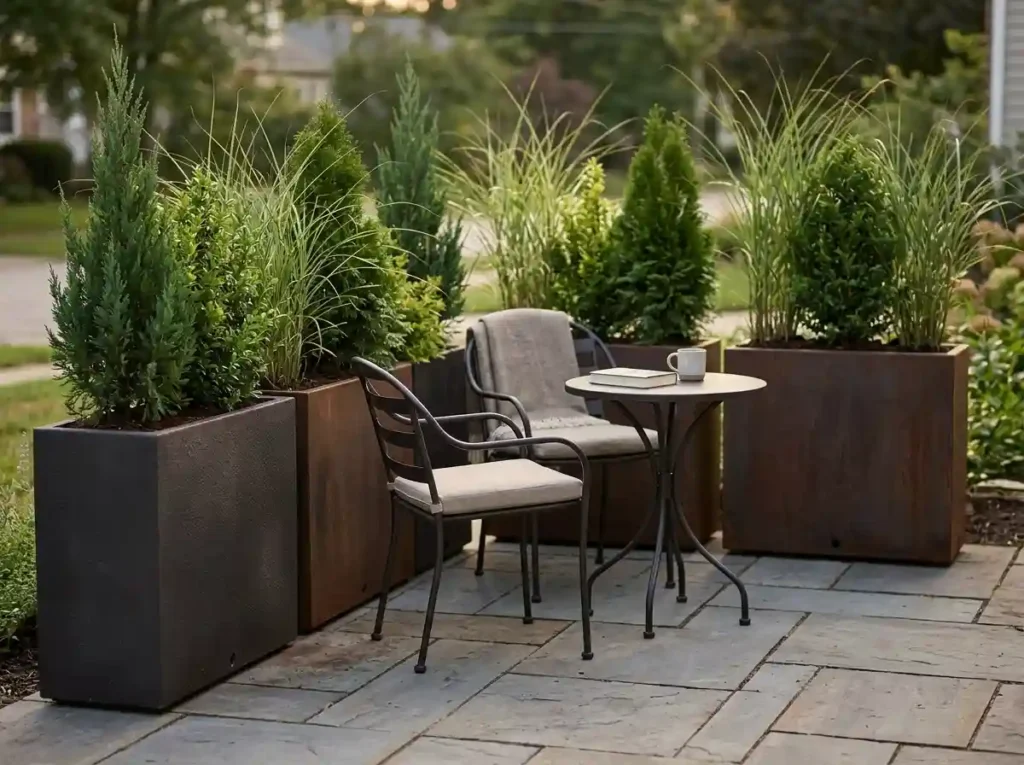
Tall planters can create privacy without permanent building work. You can move them when the seating plan changes.
Place the containers near a dining table, lounge chair, pool seat, or patio edge. They work better when placed close to the area you want to protect.
Use plants with upright growth. Small evergreens, canna lilies, clumping bamboo, and tall grasses may work, depending on your climate.
Large pots need more soil and may become very heavy. Place them before filling them if you do not plan to move them often.
Choose wide, stable containers in windy locations. Narrow pots with tall plants can tip during a storm.
Plants in containers dry out faster than plants in the ground. You may need to water them more often during hot weather.
Best for: Renters, patios, decks, and small yards
Privacy speed: Immediate to short term
Watch out for: Watering needs and wind
Grow an Evergreen Privacy Hedge
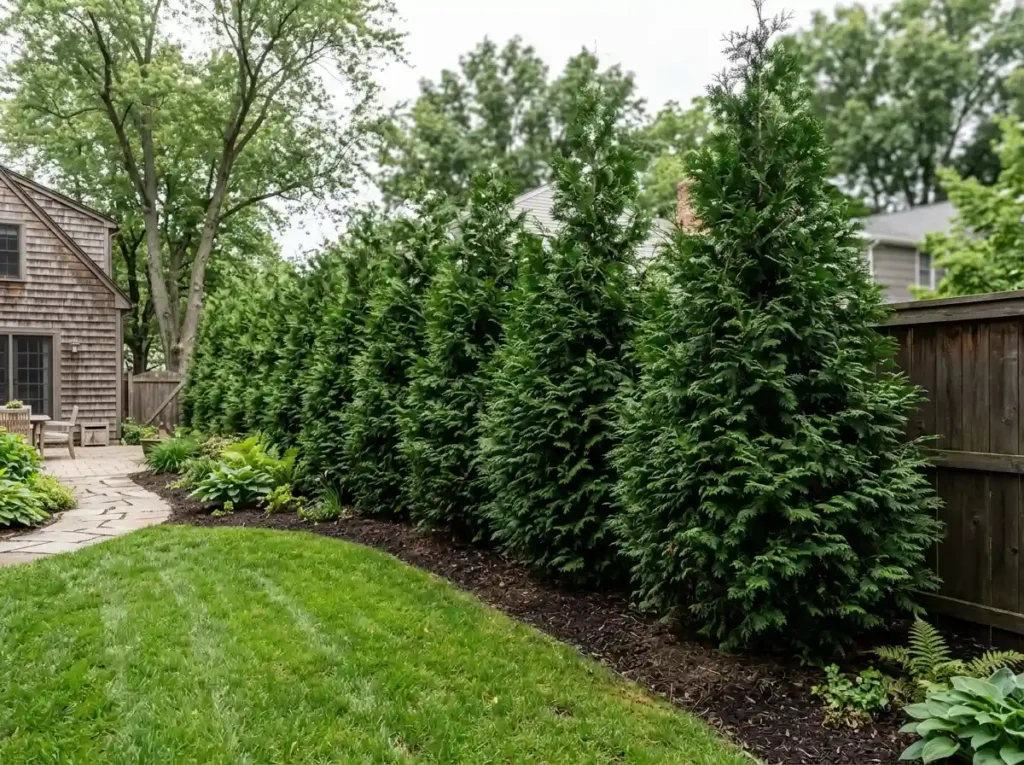
An evergreen hedge is a classic choice for year-round backyard privacy.
Unlike plants that lose their leaves, evergreens can keep most of their coverage through winter. This makes them useful along property lines, roads, and open side yards.
Possible choices include arborvitae, holly, yew, podocarpus, and upright junipers. The right plant depends on your soil, climate, rainfall, and sunlight.
Do not buy a plant based only on how it looks at the garden center. Check its mature height and width.
Some evergreens become much wider than expected. Planting them too close to a fence, building, or each other can lead to crowding and bare areas.
It may seem smart to place the plants close together for faster coverage. But crowded plants compete for light, water, and airflow.
A local nursery or extension office can help you choose a hedge plant that grows well in your area.
Best for: Year-round boundary privacy
Privacy speed: Medium to slow
Watch out for: Mature width and poor spacing
Build a Layered Privacy Border
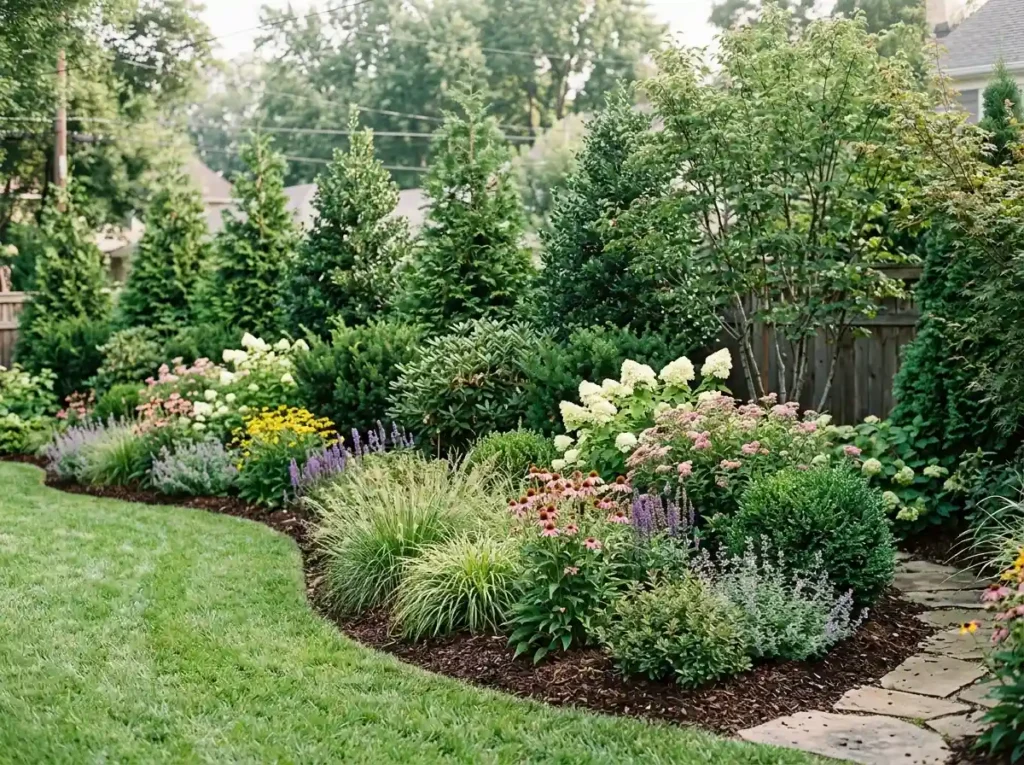
A single row of matching shrubs can look flat. It may also leave open gaps near the ground or between branches.
A layered privacy border uses plants at three heights.
Small trees form the upper layer. Medium shrubs fill the center. Grasses, flowers, and low shrubs cover the lower area.
This design can block views while making the yard look like a garden rather than a green wall.
Use some evergreen plants for winter coverage. Add flowering or leaf-changing plants for seasonal color.
Repeat a few plants across the border. Too many different plants can make the bed look busy.
You should also leave enough room for each plant to reach its mature size. A layered bed often needs more depth than a simple hedge.
This type of privacy landscaping can take time to fill in. The finished result often looks softer and more natural than a fence or single plant row.
Best for: Large yards and wide boundaries
Privacy speed: Slow
Watch out for: Space needs and plant crowding
Plant Columnar Trees in Narrow Spaces
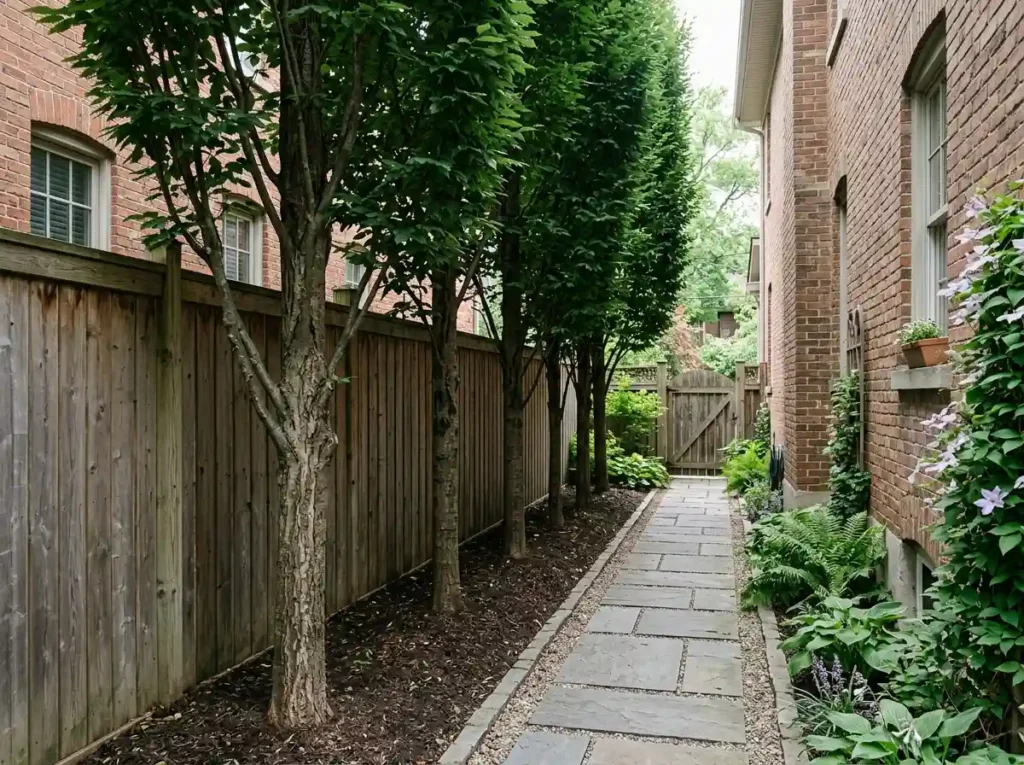
Columnar trees grow upward while staying fairly narrow. They are useful in side yards and tight spaces where a wide hedge will not fit.
They can also help block views from tall windows because their height creates more coverage than low shrubs.
Possible options include columnar hornbeam, narrow evergreen trees, and upright juniper types. Plant choices vary by region.
“Narrow” does not mean the tree will stay pencil-thin. Check the mature width before planting.
You should also think about roots, branches, and access. A tree planted too close to a walkway may make the path hard to use as it grows.
Columnar trees often look best when planted as a small group or repeated row. Leave enough room between them for air and healthy growth.
Best for: Side yards and narrow property lines
Privacy speed: Medium
Watch out for: Mature size and nearby paths
Grow Clumping Bamboo in Large Containers
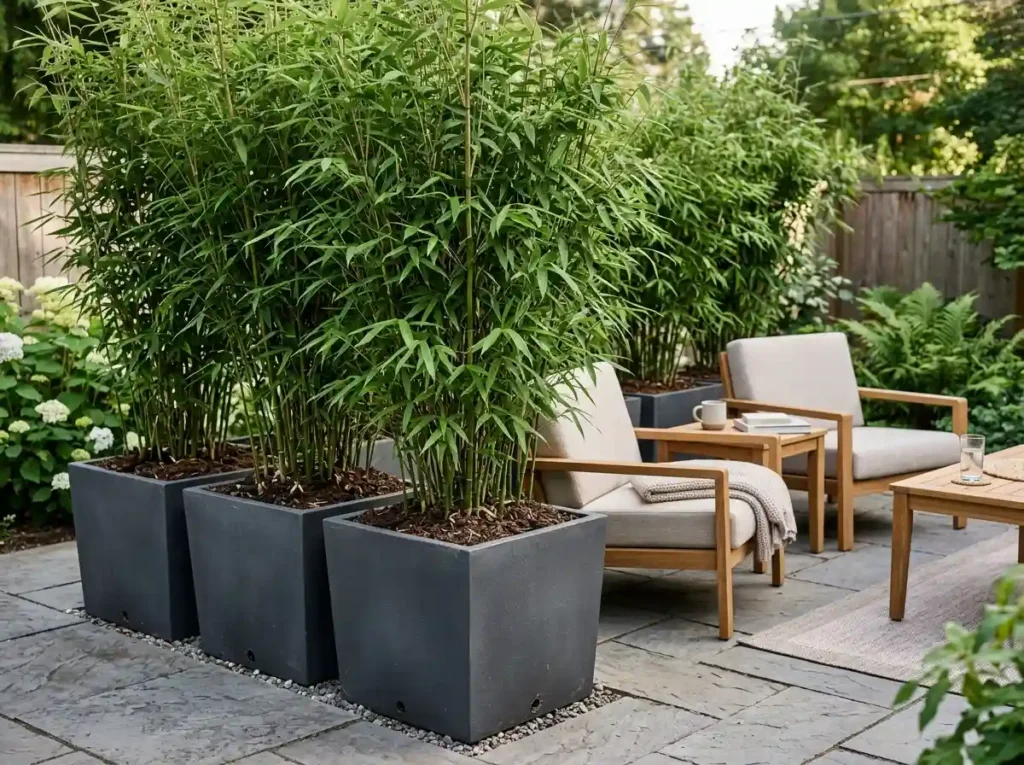
Bamboo can create a tall, modern privacy screen in a small amount of ground space.
Use clumping bamboo rather than running bamboo. Clumping types grow in a tighter group. Running bamboo can spread through lawns, garden beds, and nearby properties.
Growing bamboo in large containers gives you more control. It also lets you place the screen close to a patio or deck.
Use containers with drainage holes. Bamboo needs regular water, but wet roots can still cause trouble.
The pots should be large enough to support the plant and stop it from tipping in the wind.
Even clumping bamboo needs care. Roots may become crowded, and the plant may need to be divided or moved into a larger pot.
Check local rules and invasive plant guidance before buying bamboo. Some areas place limits on certain types.
Best for: Modern patios and narrow spaces
Privacy speed: Short to medium
Watch out for: Running bamboo and dry containers
Use Tall Ornamental Grasses
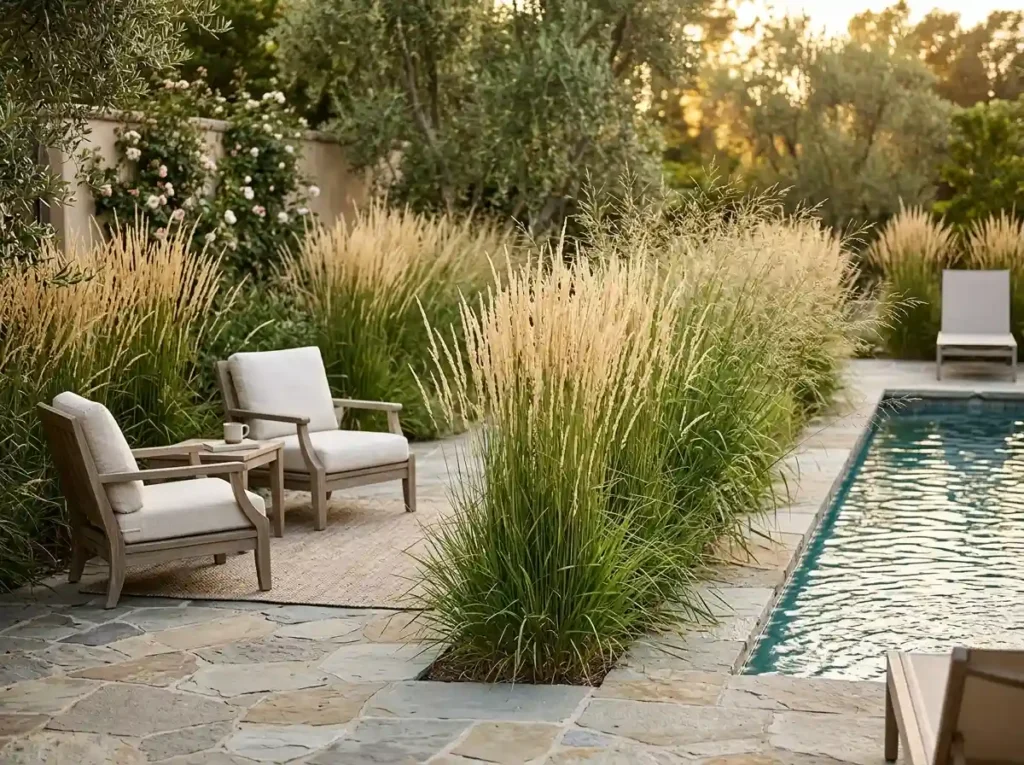
Tall ornamental grasses create a softer screen than a fence or hedge.
Their moving leaves can make a patio feel calm. They work well around pools, seating areas, and garden paths.
Switchgrass and feather reed grass are common examples, but you should choose plants that are safe and suitable for your region.
Some grasses stay upright through winter. Others fall over, lose their shape, or need to be cut back.
This means they may not provide full privacy all year.
Check the plant’s mature height before buying. A grass listed as “tall” may still be too short to block a standing person or raised window.
You should also avoid grasses that spread into nearby natural areas.
Use tall grasses in groups for better coverage. A single plant may look good but will leave open views on both sides.
Best for: Pools, patios, and soft seasonal screening
Privacy speed: Medium
Watch out for: Winter gaps and invasive types
Create a Raised Screen With Pleached Trees
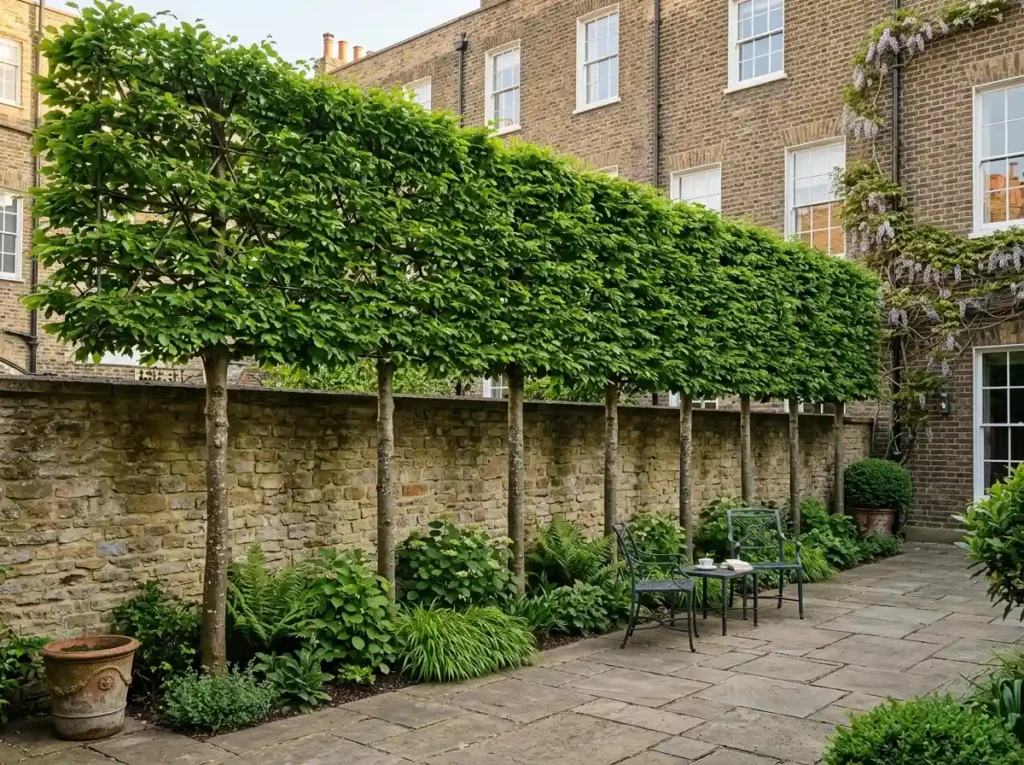
Pleached trees have clear lower trunks with branches trained into a flat raised screen.
They are useful when you want to block a second-floor view while keeping space open at ground level.
This can work in urban gardens and courtyards where a thick hedge would take up too much room.
Pleached trees have a neat, formal look. They can form a green panel above a fence or wall.
They are not a low-care option. The branches need regular pruning and training to keep the flat shape.
Young trees may also need support frames while they become established.
This choice often costs more than basic shrubs. It may still be worth considering when the problem view is high and ground space is limited.
Best for: Upper-window privacy and formal gardens
Privacy speed: Medium
Watch out for: Pruning, support, and higher cost
Plant an Edible Privacy Screen
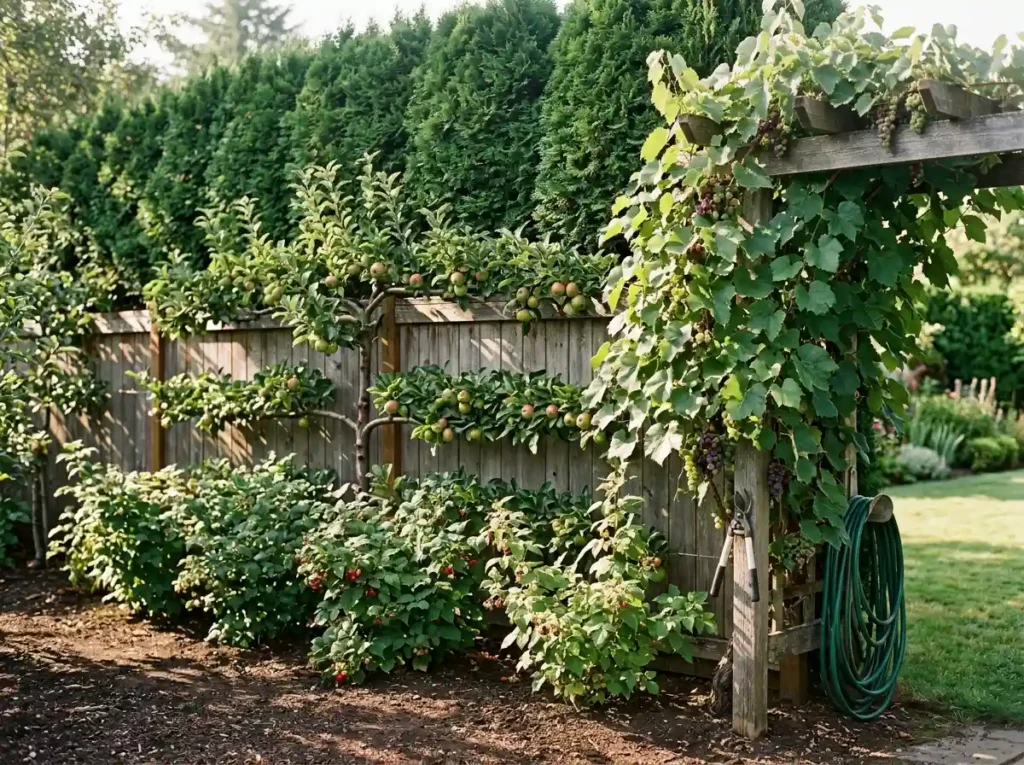
Your privacy screen can also provide fruit, herbs, or berries.
Espalier fruit trees can grow flat along a wall or fence. Grape vines can cover a strong trellis. Berry shrubs may form a useful seasonal screen.
Possible plant choices include apples, grapes, blueberries, currants, or serviceberry. Your local climate will decide what grows best.
Edible plants often need more care than simple privacy shrubs. They may need pruning, feeding, pest checks, and regular harvesting.
Many fruiting plants also lose their leaves in winter. This means the screen may provide less privacy during colder months.
Use edible plants where you want beauty and food during the growing season. Add an evergreen background if you need full coverage all year.
Best for: Productive gardens and sunny boundaries
Privacy speed: Medium to slow
Watch out for: Seasonal gaps and added care
Use Staggered Privacy Panels in a Small Yard
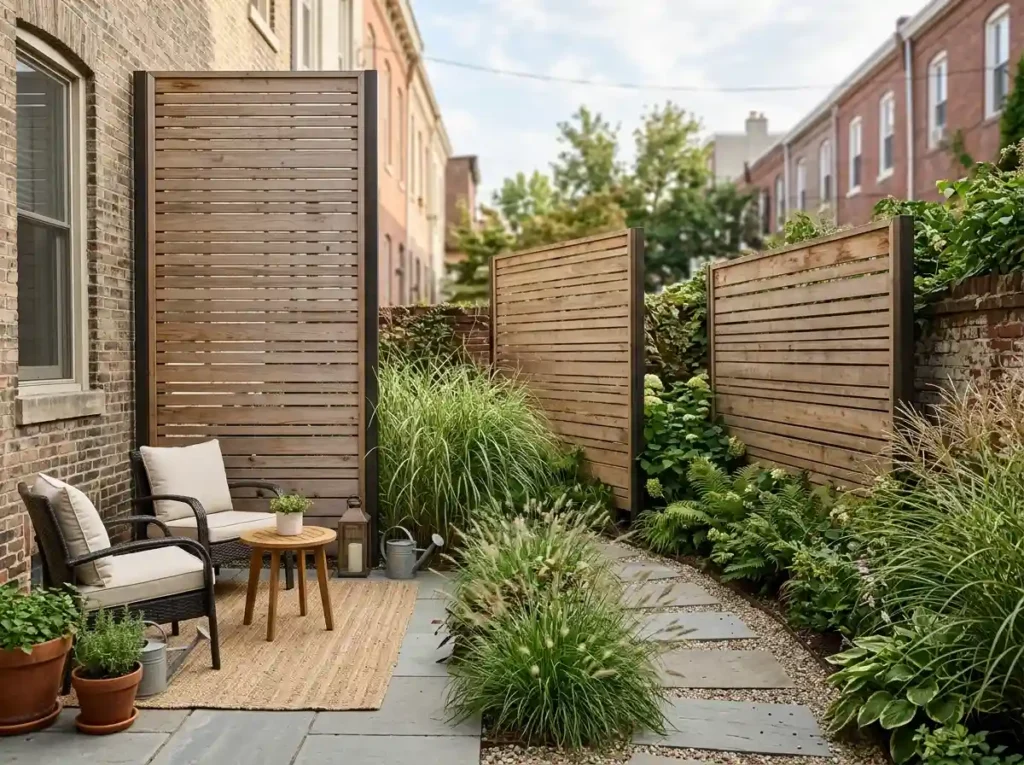
A straight wall of panels can make a small yard feel tight. Staggered panels block the view without closing every side.
Place two or three narrow screens at different points along the boundary. Leave small spaces between them.
The open areas keep air and light moving through the yard. The panels still block direct sightlines when placed at the correct angle.
Add grasses, vines, or compact shrubs between the panels. This makes the design feel softer.
You can also use different panel heights. Put the tallest screen where the view is most open. Use shorter panels where you need less coverage.
This setup works well in small backyard privacy plans because it uses less space than a wide hedge.
Best for: Small urban yards
Privacy speed: Immediate
Watch out for: Poor angles that leave open views
Add a Vertical Living Wall
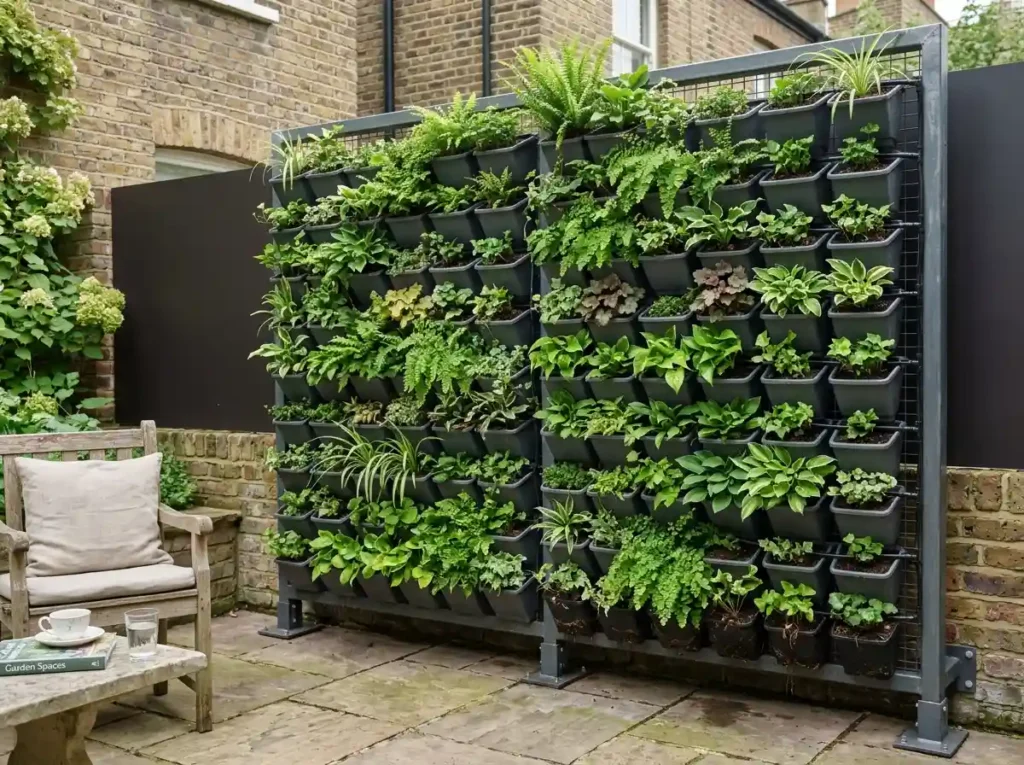
A vertical living wall uses height instead of ground space.
You can mount planters on a strong wall or use a freestanding frame. This works well on patios, balconies, and small courtyards.
Choose plants based on the sun in that spot. A shaded wall needs different plants than a hot, west-facing wall.
Remember that wet soil is heavy. The wall or frame must be strong enough to support the full weight.
Make sure you can reach every planter for watering and care. A tall wall may look good at first but become hard to manage.
A drip system can make watering easier. Simple removable pots may be better for a small project.
Living walls provide more texture than a plain screen. They may still need a solid panel behind them if you want complete coverage from day one.
Best for: Courtyards and patios with little ground space
Privacy speed: Short to medium
Watch out for: Weight, watering, and plant access
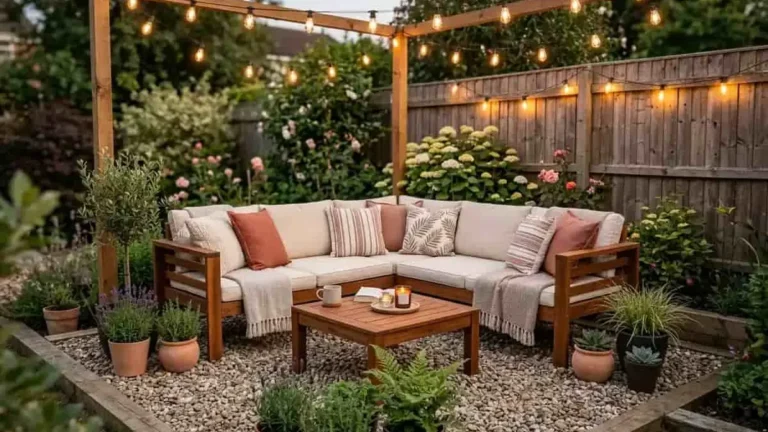
Turn One Corner Into a Private Retreat
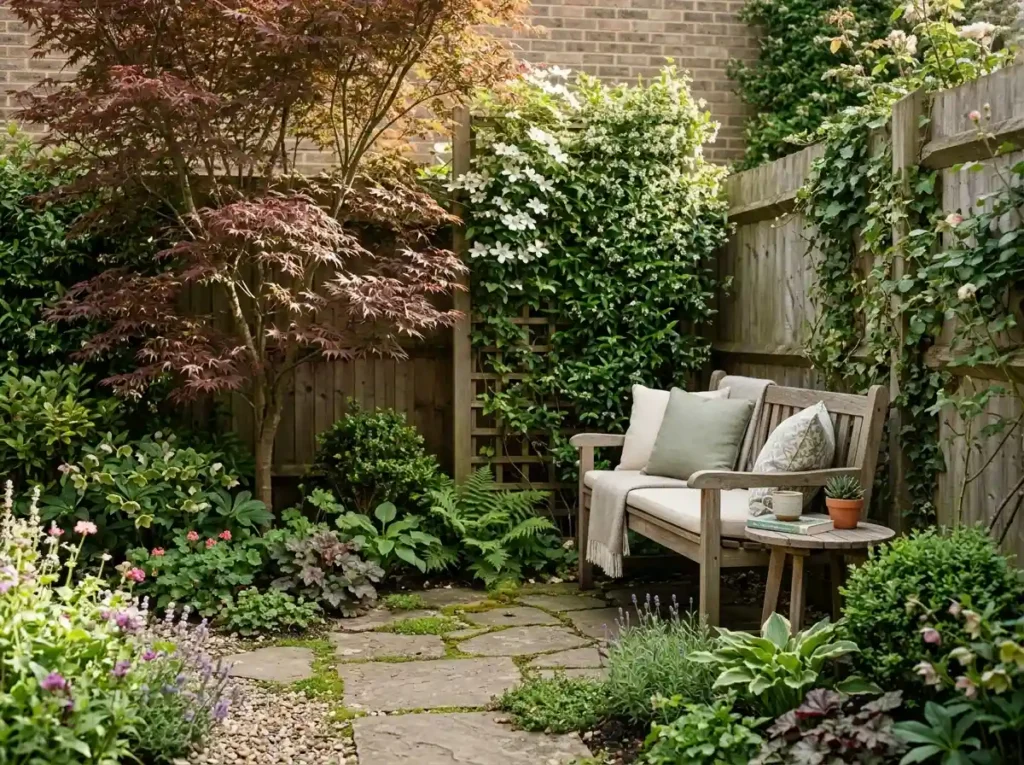
You do not need to hide the whole yard to enjoy more privacy.
Choose the corner that already feels least exposed. Add one screen, a small tree, a bench, and a few layered plants.
Angle the seating away from the neighbor’s windows. This small change may solve more of the problem than adding plants across the whole yard.
A corner retreat also costs less than screening every boundary.
Use a pergola, trellis, or tall planter behind the seat. Add lower plants around the sides to make the space feel settled.
Keep one side partly open. This helps the corner feel private without becoming dark or boxed in.
This is one of the easiest small backyard privacy ideas when money and space are limited.
Best for: Small budgets and focused seating areas
Privacy speed: Immediate to short term
Watch out for: Blocking too much light
Build a Privacy Island Around the Patio
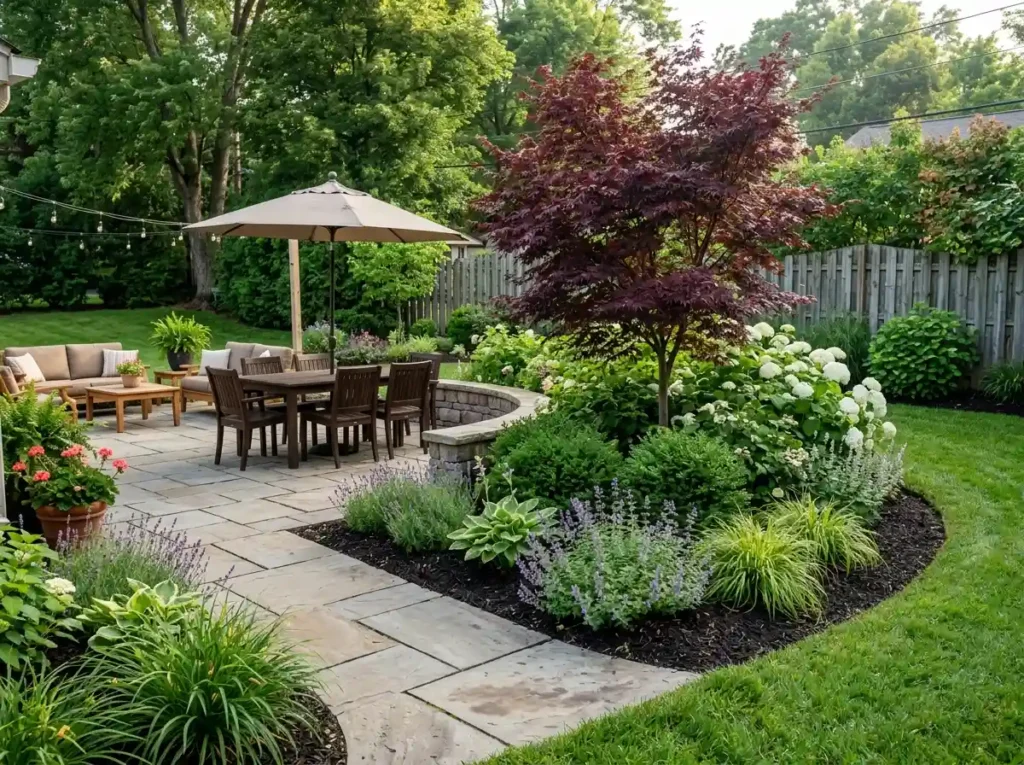
A privacy island is a curved or free-shaped planting bed placed around part of a patio.
It can include one small tree, several medium shrubs, and lower flowers or grasses.
Place the tallest plants where the unwanted view is strongest. Keep other areas lower so the patio still feels open.
A curved bed often looks softer than a straight hedge. It can also help connect the patio with the rest of the garden.
Leave a clear opening for walking, carrying food, and moving furniture.
Check mature plant width before planting. Shrubs that are too close to the patio may hang over the paving later.
This idea works well when you want patio privacy landscaping without covering every property line.
Best for: Patios in medium and small yards
Privacy speed: Medium
Watch out for: Overgrown plants near walkways
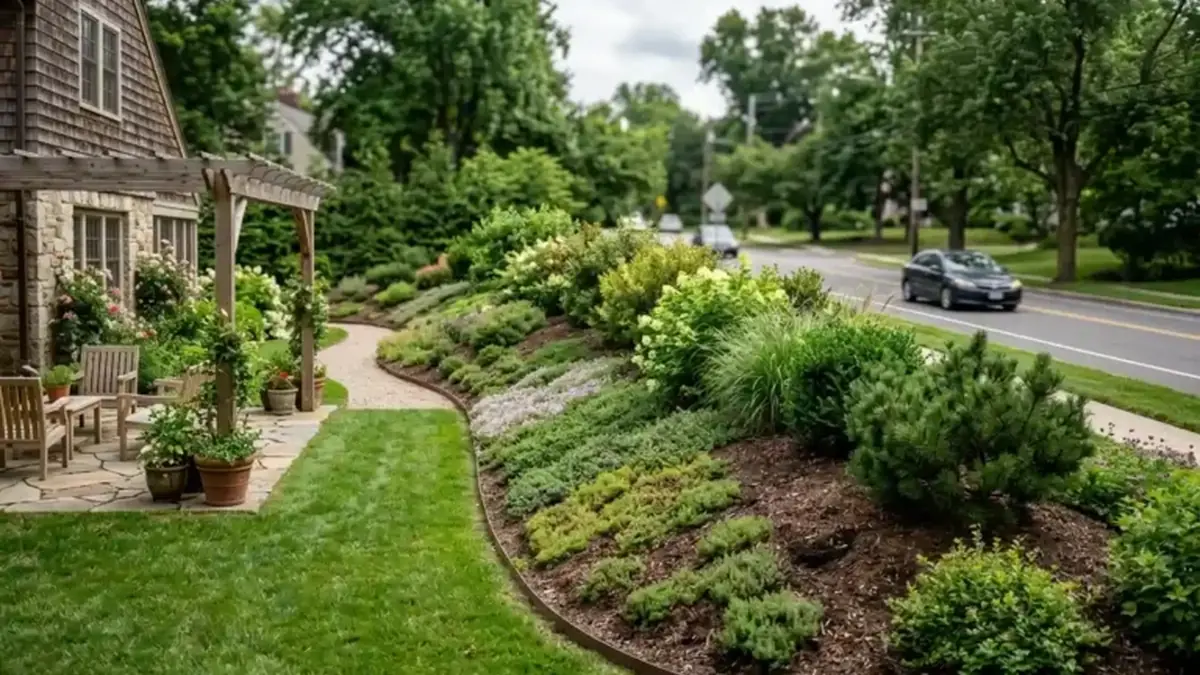
Build a Low Berm With Dense Planting
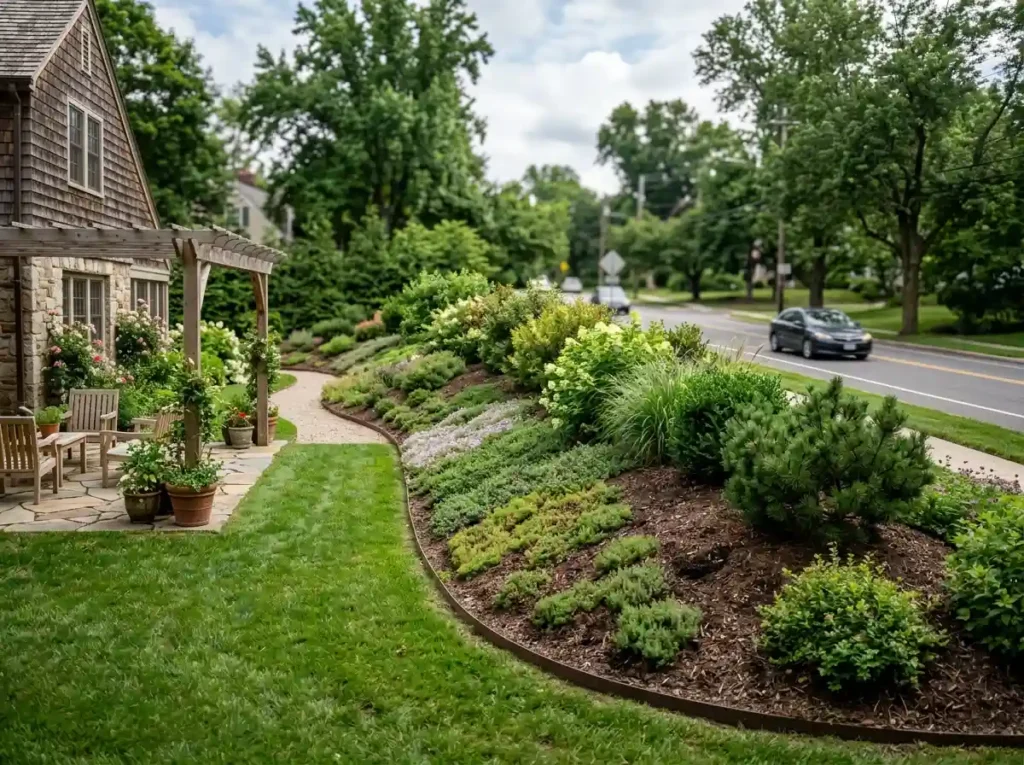
A berm is a raised mound of soil. It lifts plants higher, which can help them block views sooner.
For example, a shrub planted on a two-foot berm begins two feet above the normal yard level. This may help screen a road or open boundary without using a very tall fence.
Use a wide, gentle slope rather than a narrow pile of soil. A steep berm may wash away or become hard to mow and plant.
Plan drainage carefully. Water should not run into a neighbor’s yard, building, or patio.
Do not pile soil over the roots of an existing tree. Avoid buried utility lines and call the local marking service before digging.
A berm needs enough yard space to look natural. It may not fit in a narrow garden.
Best for: Road-facing yards and wide open boundaries
Privacy speed: Medium
Watch out for: Drainage, utilities, and tree roots
Pair Dense Planting With a Water Feature
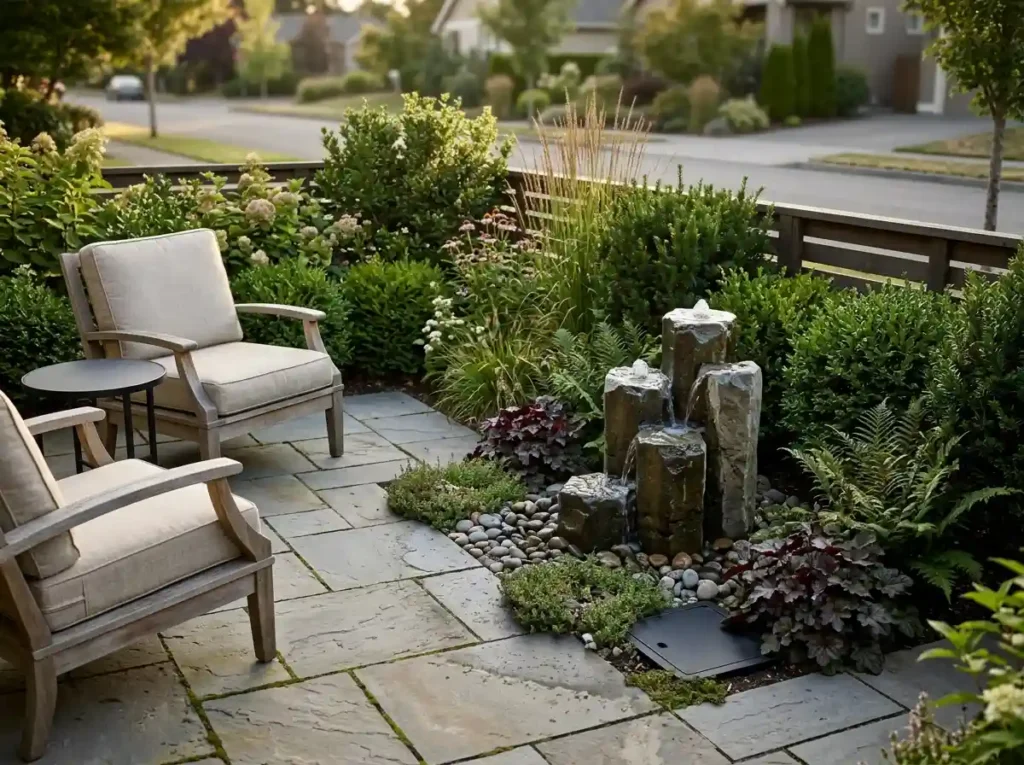
Privacy is not always about what people can see. Sound can also make a yard feel exposed.
Dense planting creates visual separation. A nearby fountain can help cover some street noise and nearby voices with the sound of moving water.
Place the water feature close to your seating area. A small fountain near the patio may be more useful than a large fountain at the far end of the yard.
Choose a design that is easy to clean. Standing water can collect leaves and dirt.
Plants do not remove all outdoor noise. A fountain also masks sound rather than making the yard silent.
This idea works best when paired with a fence, wall, screen, or thick planting border.
Best for: Patios near streets or active neighbors
Privacy speed: Immediate to medium
Watch out for: Cleaning, water use, and unrealistic noise claims
How to Choose the Best Backyard Privacy Solution
There is no single privacy option that works for every yard.
Start with your timeline. A screen or curtain gives you privacy right away. Trees and hedges may take several growing seasons to fill in.
Next, look at the amount of room you have. A layered planting border needs space. A slatted screen, columnar tree, or living wall can fit in a tighter area.
Think about care as well. Curtains need cleaning. Hedges need pruning. Container plants need regular watering.
Use this table to compare the main choices:
| Privacy option | Privacy speed | Space needed | Care level | Best use |
| Slatted screen | Immediate | Low | Low | Patios and decks |
| Outdoor curtains | Immediate | Very low | Medium | Flexible patio privacy |
| Tall planters | Immediate to short term | Low | Medium | Renters and small yards |
| Evergreen hedge | Medium to slow | Medium to high | Medium | Property boundaries |
| Columnar trees | Medium | Low | Low to medium | Narrow side yards |
| Layered planting | Slow | High | Medium | Natural full-yard privacy |
| Living wall | Short to medium | Very low | High | Courtyards |
| Berm and planting | Medium | High | Medium | Roads and open boundaries |
Create Privacy Without Making Your Yard Feel Closed
The right backyard landscaping ideas for privacy should help you feel comfortable without removing all the light and open space.
Start by finding the exact view that bothers you most. Then decide whether you need an immediate screen or a plant-based solution that grows over time.
Check mature plant sizes, sun, drainage, and local building rules before spending money.
In many cases, a mixed plan works best. Use a screen, curtain, or planter for quick privacy. Add trees, shrubs, grasses, or vines for a softer finish.
Choose the area you use most. Complete the sightline test, mark the problem view, and start with one useful change.