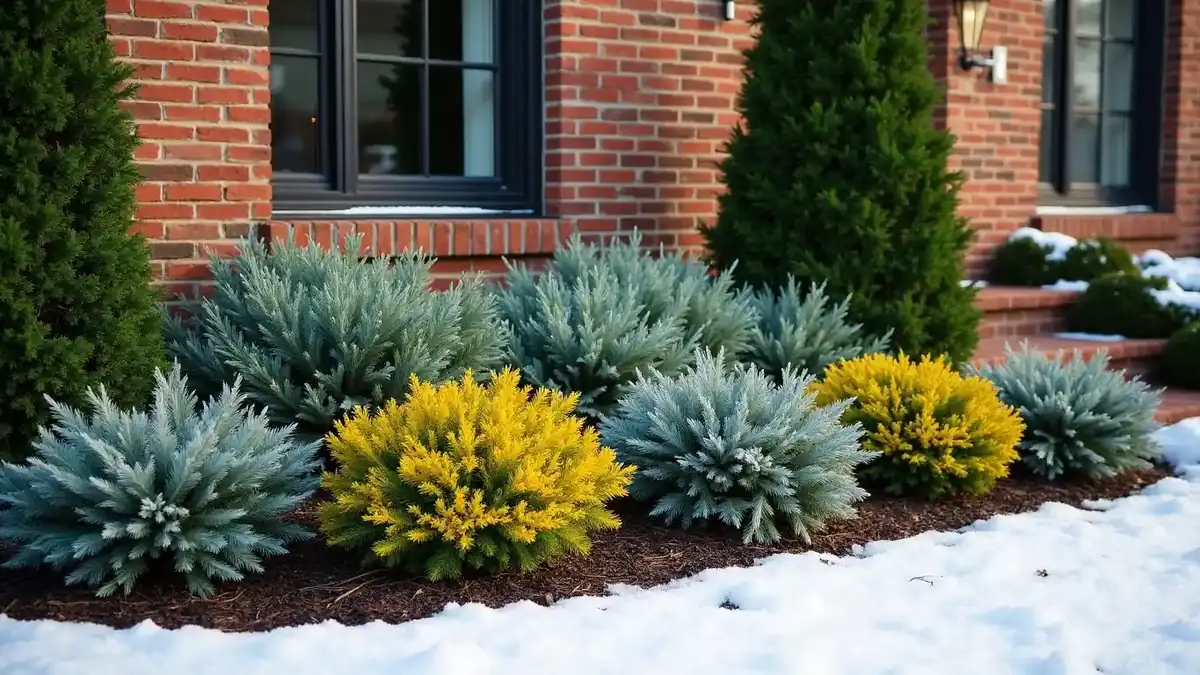
16 Winter Interest Garden Design Ideas for Every Yard
Your garden should not disappear when the last summer flower fades.
Yet many yards do exactly that. They look full and colorful from spring through fall. Then winter arrives, the leaves drop, and the garden turns into a flat mix of bare soil and empty stems.
Good winter interest garden design gives your yard shape, color, texture, and movement during the coldest months. It does not depend on flowers alone. Evergreens can hold the main structure. Bright stems, berries, bark, grasses, and seedheads can add color and detail.
You can also use paths, pots, benches, and soft lighting to create strong focal points. Even a small yard can look good in winter when each feature has a clear purpose.
The 16 winter garden ideas below will help you plan a yard that works in every season. Start with the areas you see most often, such as the view from your kitchen or living room. You do not need to redo the whole garden at once.
One well-planned view is a great place to begin.
Study Your Yard Before Buying New Plants

Good winter interest garden design starts with seeing what remains after the leaves and flowers are gone.
Do not begin by buying random evergreens at the garden center. First, take a slow walk around your yard. Look for spaces that feel empty, flat, or out of balance.
Next, go inside your home. Check the garden from your kitchen, living room, bedroom, and home office. These indoor views matter because you may spend more time looking through the windows than walking outside in winter.
Take photos from at least three important windows. Do this in the morning and again later in the day. Low winter sunlight may reveal certain trunks, grasses, and corners that you missed before.
Also note:
- Areas with full sun or deep shade
- Places that stay wet
- Windy corners
- Spots where snow piles up
- Beds that already have strong plants
A beautiful plant can still fail in the wrong place. Match every new tree or shrub to your soil, light, climate, and available space.
Quick action: Circle the three emptiest areas in your winter garden photos.
Build an Evergreen Backbone That Holds Its Shape
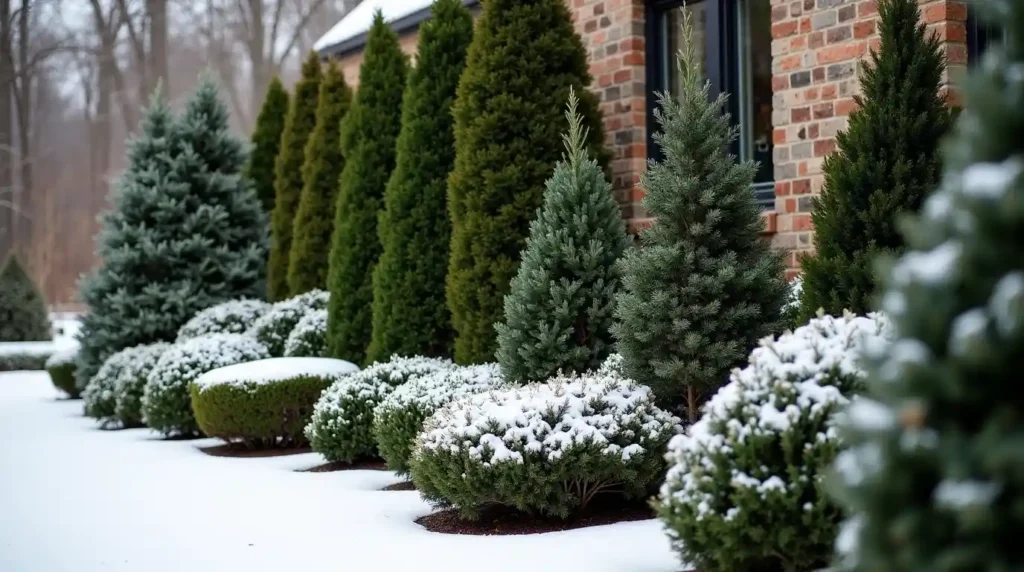
Many garden beds collapse after leaf fall because they have no permanent structure.
Evergreens fix this problem. They keep their leaves or needles through winter, so they can hold the main shape of the garden when other plants fade.
However, filling every open space with the same evergreen can make the yard feel heavy. Use a small mix of forms instead.
Try the three-form rule:
- Add one upright form for height.
- Add one rounded shrub for weight.
- Add one low, spreading plant near the front.
A column-shaped juniper can draw the eye upward. A rounded yew can give the bed a solid center. A dwarf pine can cover the lower level without hiding nearby plants.
Repeat one or two evergreens in other beds. Repeated plants make separate areas feel connected.
Leave space around each one. Summer flowers and grasses can soften their edges during warmer months.
Avoid this mistake: Do not plant a full row of matching evergreens unless you need a formal hedge or privacy screen.
Quick action: Choose three evergreen shapes before choosing three evergreen varieties.
Mix Evergreen Colors So the Garden Does Not Look Flat
Evergreens are not all the same shade of green.
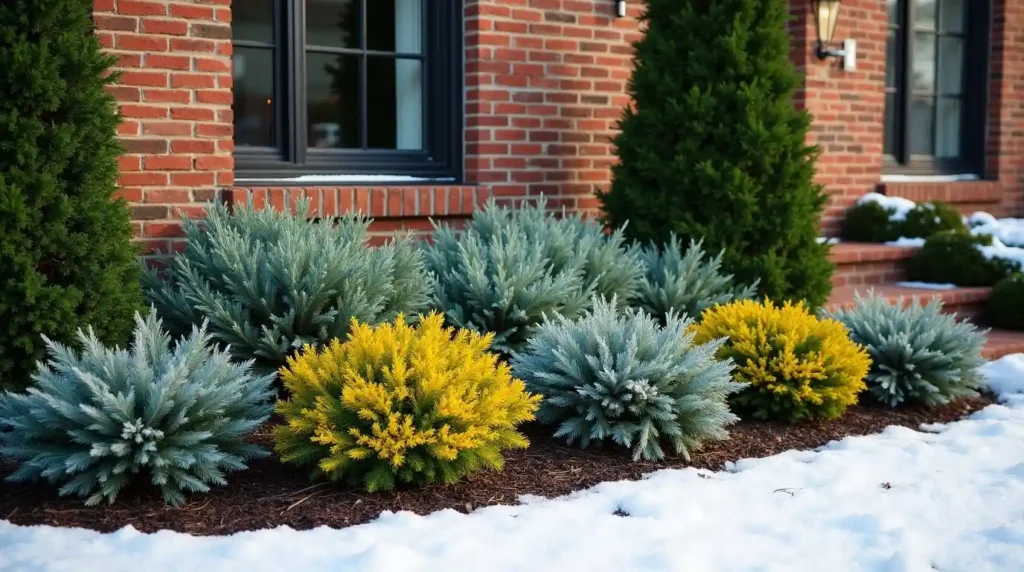
Some have deep forest-green foliage. Others look blue, silver, gold, or bronze. Mixing a few of these colors can make a winter bed feel richer without adding more plants.
Start with one dark evergreen as the background. Place a blue-green or silver plant in front of it. The lighter color will stand out against the darker leaves.
A golden conifer can brighten a shaded corner, but use gold with care. Too many yellow plants can make a garden look busy. One or two accents are often enough.
Texture matters too. Fine pine needles look soft next to broad, glossy holly leaves. A spiky juniper can contrast with the smooth leaves of a broadleaf evergreen.
Look at the colors already used on your home. Dark window frames may work well with blue-green plants. Warm brick may pair well with bronze or golden foliage.
This simple color link helps the garden feel like part of the property.
Good year-round garden design uses repeated colors to connect the house, plants, paths, and garden features.
Quick action: Pick one main evergreen color and one accent color.
Use Trees With Bark You Can Enjoy All Winter
Some trees become more beautiful after they lose their leaves.
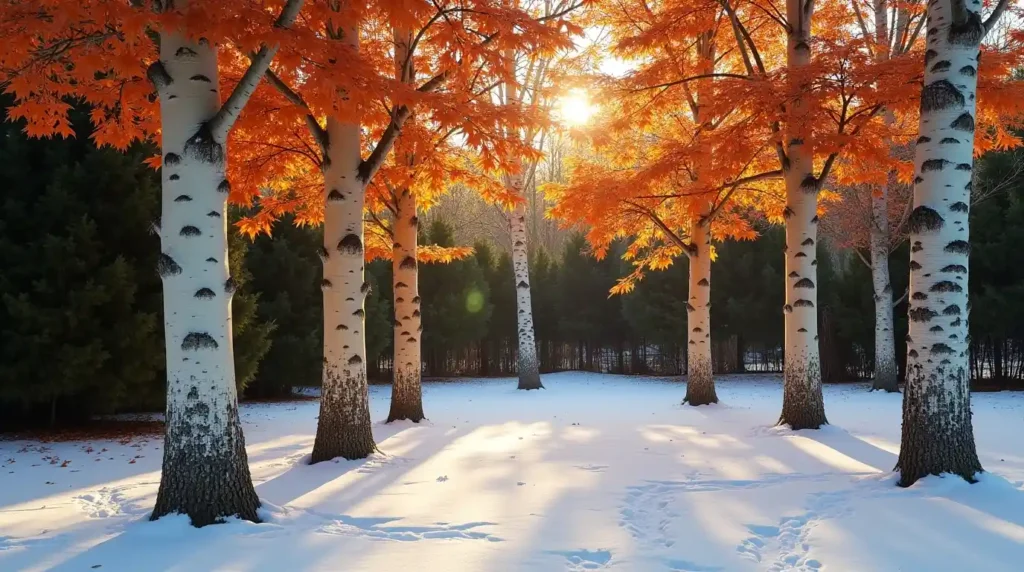
Their bark may peel, curl, shine, or show bands of several colors. These details are easy to miss in summer, but they can become the main feature of a winter garden.
Paperbark maple has warm, peeling bark that can look rich in low sunlight. River birch also has peeling bark with cream, tan, and brown tones. White-barked birches can create a bright contrast against dark fences or evergreen shrubs.
Placement makes a big difference.
Put a feature tree where sunlight can reach its trunk during winter. A simple background will help the bark stand out. A pale trunk may get lost in front of a light wall, but it may look clear against dark green foliage.
You should also check the tree’s full-grown size. A small young tree may later crowd a path, roof, or window.
Multi-stem trees can show more bark than a single-trunk tree. They also create strong shadows when winter sunlight passes through the branches.
Quick action: Check the view from indoors before choosing the planting spot.
Plant Colorful Stems in Groups for More Impact
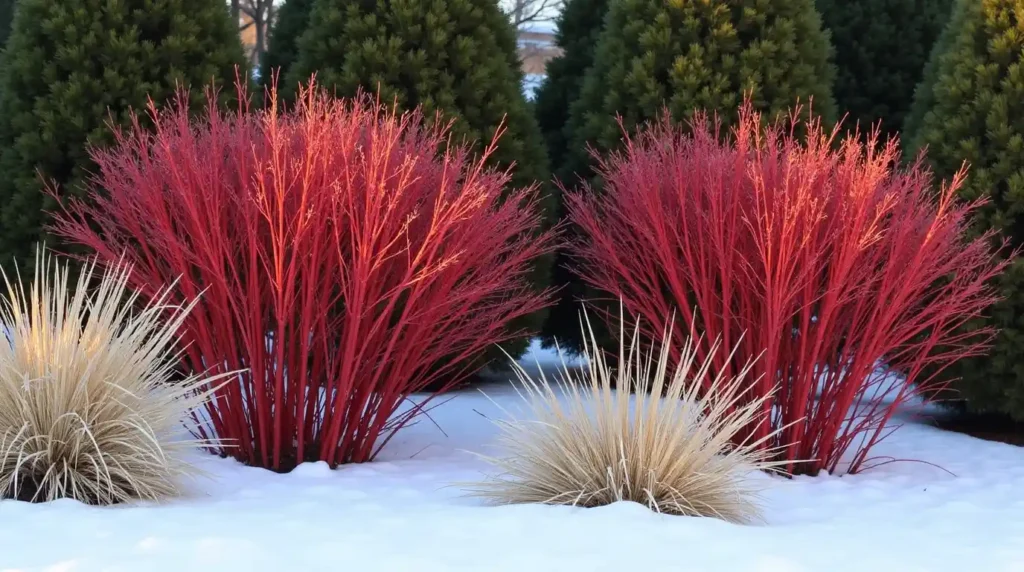
One thin red-stem shrub may disappear in a large garden bed.
A group of three or five can create a bold patch of winter color. Red, orange, yellow, and green stems look strongest when placed against a dark background.
Red-twig dogwood is a popular choice for cold climates. Yellow-stem dogwoods can brighten dull corners. Some willow varieties also offer bright stems during winter.
For a strong three-layer display, try this mix:
- Dark yew or another evergreen at the back
- Red-stem dogwood in the middle
- Pale ornamental grass at the front
The dark leaves help the bright stems stand out. The grass adds soft movement near the ground.
Many stem-color shrubs produce their brightest growth on younger branches. They may need regular pruning to keep that strong color. Check the needs of your chosen plant before cutting it.
Do not place bright stems behind a mixed group of bare branches. The colors may blend into the background.
Quick action: Plant stem-color shrubs where afternoon or morning light can hit them.
Add Berry Shrubs Where You Can See Them
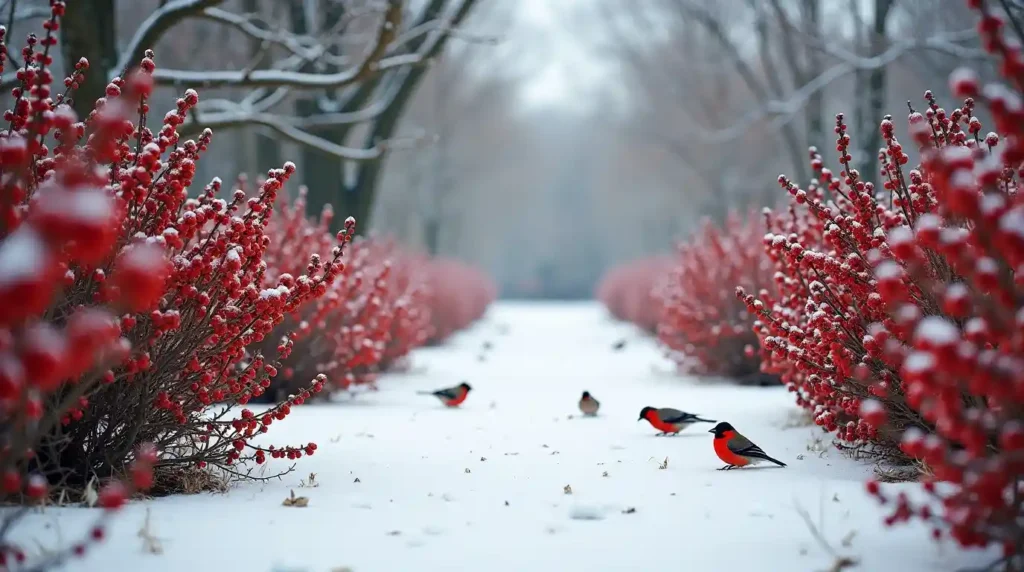
Winter berries can add small but powerful bursts of color.
Red berries are common, but you can also find orange, purple, blue, or white fruit. Winterberry holly, beautyberry, chokeberry, snowberry, cotoneaster, and some crabapples can all offer cold-season interest.
These plants for winter interest work best when you place them near paths, doors, or windows. A berry shrub at the far end of a large yard may be hard to see. The same plant outside a kitchen window can become a daily feature.
Before planting, check how the shrub produces fruit. Some plants need a male and female plant nearby. Without the right partner, you may get healthy leaves but few berries.
You should also check whether the fruit is safe around children and pets. Some berries can cause illness if eaten.
Birds may eat the fruit before winter ends. That is not a design failure. The berries still add early winter color and provide food for wildlife.
Quick action: Place one berry shrub where it can be seen from your most-used room.
Leave Strong Seedheads Standing After Fall
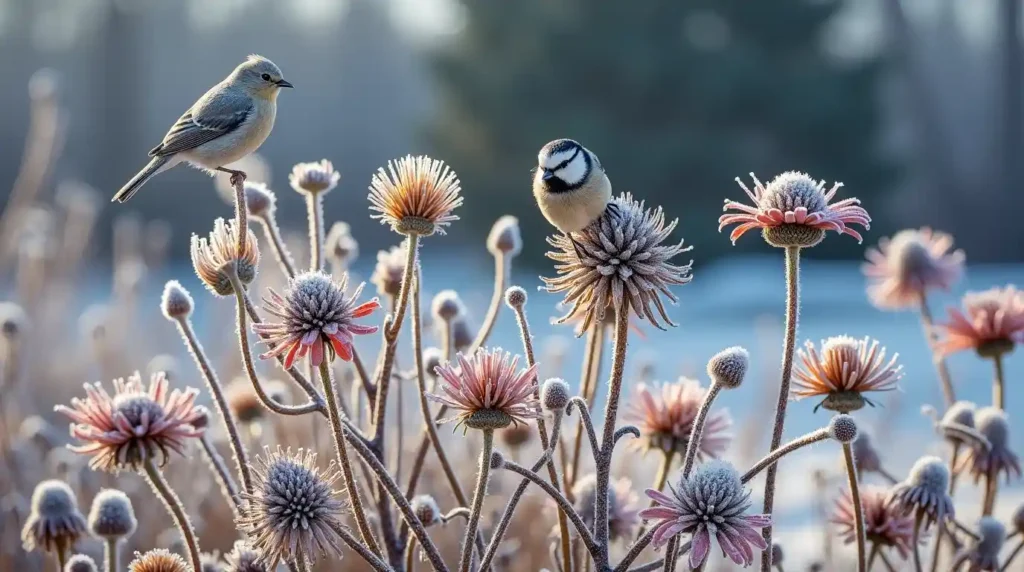
Cutting every perennial to the ground can leave your winter beds bare.
Some dry stems and seedheads stay upright for months. They catch frost, hold snow, and create clear shapes against dark soil.
Coneflowers have rounded centers that can stay attractive after the petals fall. Sedum forms broad flower heads that often hold frost well. Alliums, sea holly, globe thistle, and black-eyed Susans can also add useful winter detail.
Dry stems may provide shelter for insects. Seeds can also feed birds and small animals.
Still, you do not need to leave every plant standing.
Keep a plant when it is:
- Upright and strong
- Free from disease
- Easy to see
- Useful for birds or insects
- Safe beside paths
Cut a plant when it is:
- Collapsed across a walkway
- Diseased or rotten
- Covering a smaller evergreen
- Spreading unwanted seeds
- Making the bed look messy rather than natural
A good winter garden can look relaxed without looking forgotten.
Quick action: Keep the five strongest seedhead groups and remove the rest.
Add Ornamental Grasses for Movement
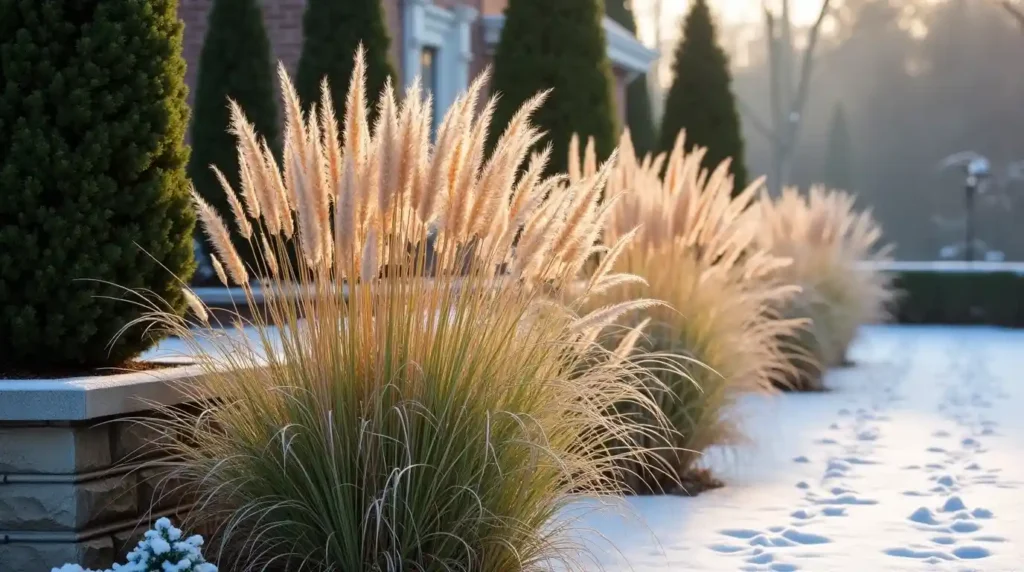
A garden filled with solid shrubs can feel stiff during winter.
Ornamental grasses add movement. Their thin leaves and soft seed plumes react to even a light breeze. They also catch frost and glow when low sunlight passes through them.
Ornamental grasses keep winter interest garden design from feeling too heavy. They work well beside clipped evergreens, stone walls, metal features, and bare tree trunks.
Switchgrass, feather reed grass, prairie dropseed, and tufted hair grass are useful examples in many areas. The best choice will depend on your climate and soil.
Choose grasses with stems that stay upright in winter. Some varieties flatten after heavy rain, wind, or snow. Check how the plant performs in your region before buying it.
Place grasses where they can receive side light or backlight. Morning sun can make frost-covered plumes shine. Evening light may turn dry grass heads gold.
Avoid placing tall grass in front of a favorite window view. It may block smaller plants behind it.
Quick action: Repeat one grass variety in two or three parts of the garden.
Place Winter Flowers Where You Can See Them
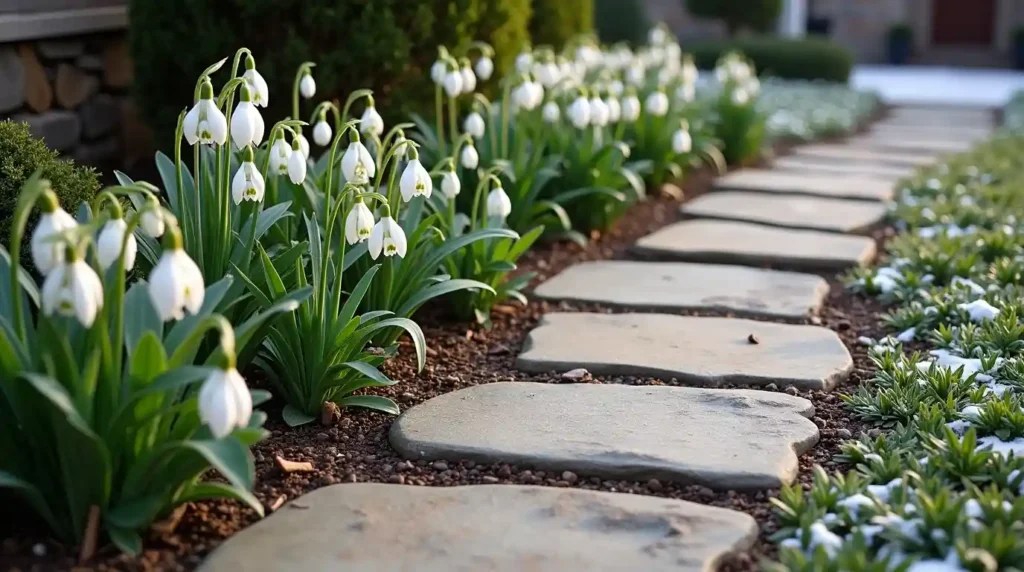
Winter flowers can be small, so location matters more than quantity.
Snowdrops planted at the back of a deep border may disappear from view. The same flowers beside a path, front step, or patio can become a clear seasonal detail.
Hellebores are useful because their flowers often face down or outward near ground level. Place them where you can see them from above, such as beside steps or a raised bed.
Snowdrops, winter aconite, winter heath, hardy cyclamen, witch hazel, and mahonia can also add flowers during the colder part of the year. Their bloom times will change based on climate and weather.
Use evergreen groundcover around small flowers. The green leaves will frame the blooms and keep the soil from looking empty.
Do not build the whole winter garden around flowers. Hard frost, snow, or strong wind may shorten the display. Use winter flowers as highlights within a stronger mix of evergreens, bark, stems, and grasses.
Quick action: Put small flowers within a few feet of a path or door.
Put Fragrant Plants Near Doors and Walkways

A fragrant winter shrub has little value if you cannot smell it.
Place scented plants near doors, gates, benches, and paths that you use during cold weather. A shrub hidden at the back of the yard may bloom well, but its scent may never reach you.
Sweet box is a useful option for a shaded area near an entrance. Winter honeysuckle and wintersweet can release scent from small flowers. Witch hazel, daphne, mahonia, and some viburnums can also add winter fragrance.
Think about wind before planting. Stand near the chosen door on a normal winter day. Notice which way the air moves. Place the shrub where the breeze is more likely to carry its scent into the walking area.
Check the full-grown width too. A small plant may later block a path or brush against people as they pass.
Fragrance works best when it comes as a pleasant surprise. One well-placed plant may have more effect than several shrubs hidden around the yard.
Quick action: Choose one entrance and add one fragrant plant nearby.
Use Strong Plant Shapes as Living Sculpture

Winter removes many leaves and flowers. This makes plant shapes easier to see.
A column, dome, cone, fan, or weeping form can act like living garden art. These shapes give the eye somewhere to rest when the rest of the bed looks loose or bare.
Try placing one upright evergreen beside a rounded shrub. Add a soft grass nearby to break up the formal lines.
Repeated shapes can also create rhythm. Two clipped domes on each side of a path may frame an entrance. Three narrow evergreens placed at different points can guide the eye through the yard.
Leave open space around strong forms. A special tree or clipped shrub will lose its effect if crowded by too many nearby plants.
Clipped plants need care. Do not use several formal shapes unless you have time to trim them.
Try the silhouette test. Take a photo of your winter garden and turn it black and white. If the main shapes are still clear, your structure is working.
Quick action: Add one clear shape to the emptiest garden
Create Focal Points With Pots and Seasonal Containers
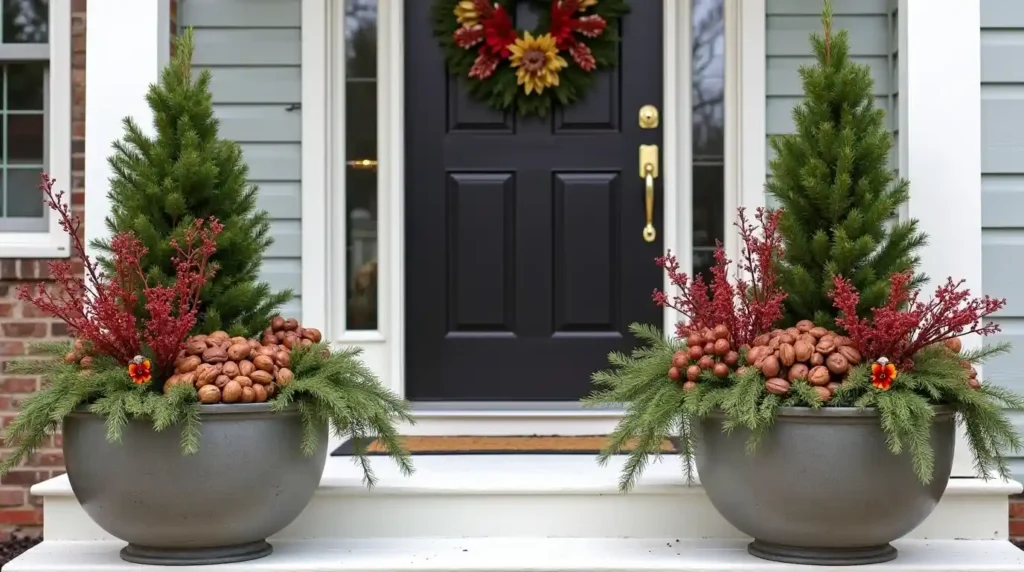
Winter gardens still need places where the eye naturally stops.
Large outdoor containers can provide that focus even when nearby borders are quiet. They also let you change the display without digging new planting beds.
Choose frost-resistant pots that suit the style of your home. Fill them with evergreen branches, dwarf conifers, winter pansies, ivy, ornamental cabbage, or colorful stems cut from dogwoods and willows.
You can also add pinecones, birch branches, or natural moss for extra texture. Keep the design simple. Too many decorations can make the container feel crowded.
Place pots where people naturally look first.
Good locations include:
- Beside the front door
- At the end of a path
- Next to a bench
- On a patio
- Near the main garden entrance
Check soil moisture during dry winter periods. Plants in containers often dry out faster than those growing in the ground.
Quick action: Place one large container where it is visible from both indoors and outdoors.
Add Stone, Wood, and Metal for Year-Round Texture
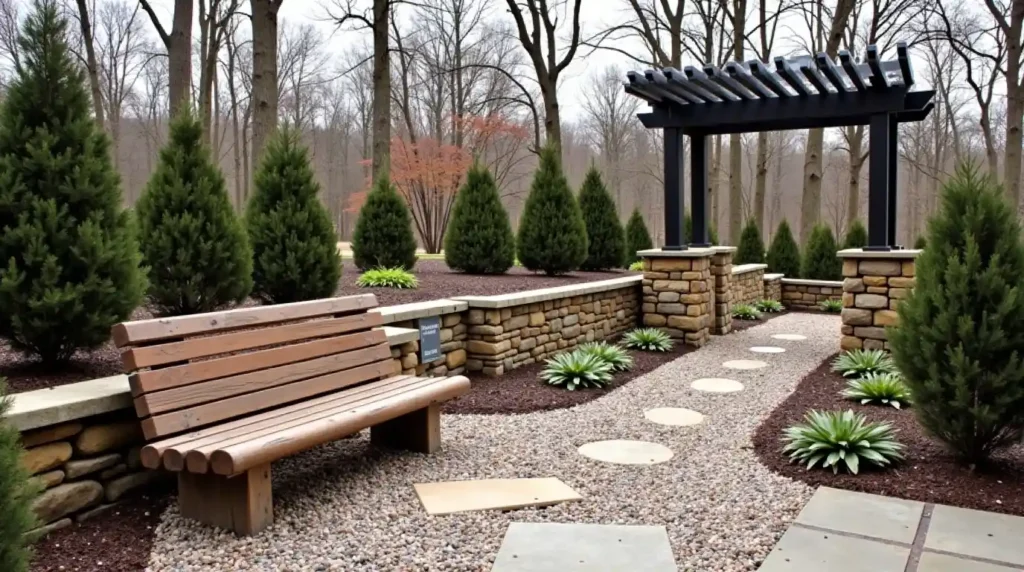
Plants are only one part of good winter interest garden design.
Hard landscaping becomes more noticeable after leaves fall. Stone walls, timber benches, gravel paths, and metal arches can give the garden structure throughout the year.
Natural materials often look better than adding many decorative ornaments. A weathered wooden bench may become a stronger focal point than several small decorations.
Think about contrast.
A rough stone wall can make smooth evergreen leaves stand out. Dark metal supports may frame pale tree bark. Light-colored gravel can brighten shady areas during winter.
Keep materials consistent throughout the garden. Repeating similar colors and textures helps different spaces feel connected.
Avoid filling every empty corner with ornaments. Open space often makes the main features look stronger.
Quick action: Identify one area where a simple bench, boulder, or decorative support could improve the winter view.
Light the Garden for Dark Winter Evenings
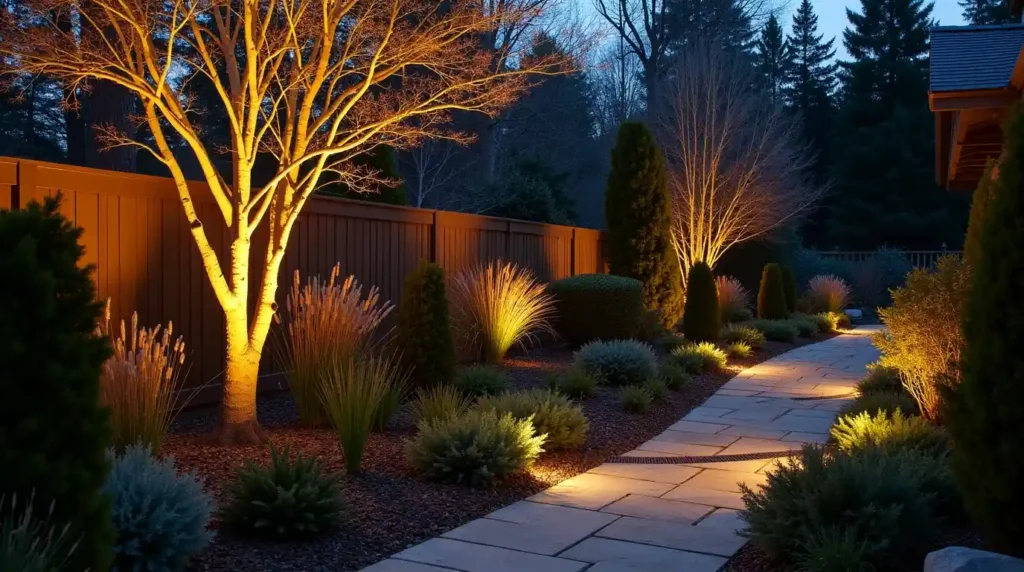
Many people enjoy their garden after sunset during winter.
Simple outdoor lighting can highlight the best parts of your landscape without making it look overly bright.
Focus on a few important features rather than lighting everything.
Good choices include:
- A tree with interesting bark
- An evergreen specimen
- Ornamental grasses
- A stone wall
- A garden sculpture
- The main pathway
Warm white lighting usually creates a softer and more natural appearance than cool blue lighting.
Use downward lighting where possible. It reduces glare and helps create gentle shadows across plants and garden features.
Solar lights may work well along sunny paths, while low-voltage wired lighting often provides more reliable performance during shorter winter days.
Keep safety in mind by lighting steps, entrances, and uneven walkways first.
Quick action: Highlight one feature tree or evergreen before adding more garden lighting.
Make Wildlife Part of the Winter Display
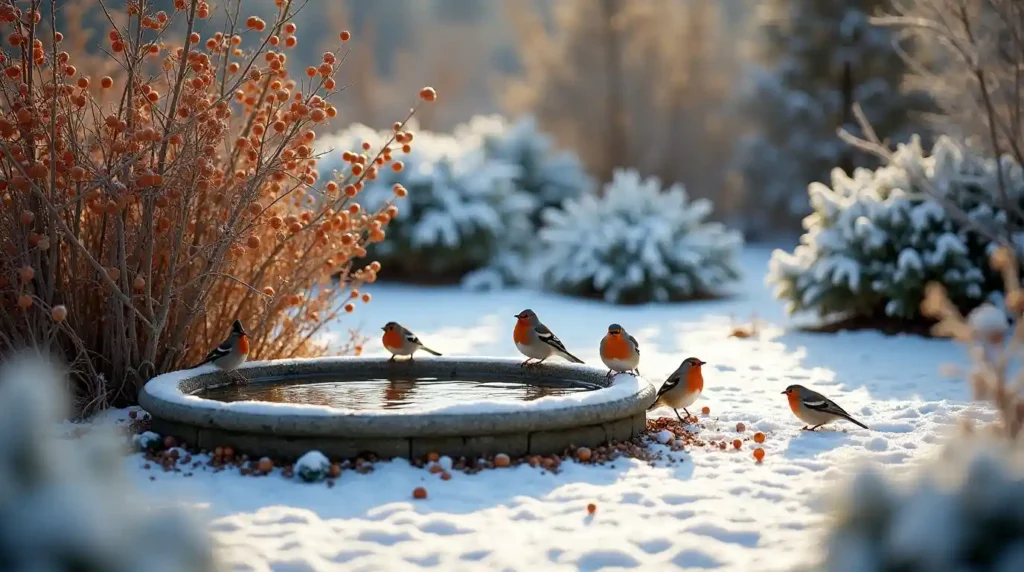
A lively garden often feels more attractive than an empty one.
Birds, butterflies, and beneficial insects add movement even when few plants are growing.
Berry shrubs provide food during early winter. Seedheads feed birds after many flowers have faded. Dense evergreen shrubs can also offer shelter from wind and predators.
A shallow bird bath can become another winter focal point if the water stays unfrozen. Clean it regularly so visiting birds have a safe place to drink.
Avoid removing every fallen leaf. Small piles in quiet corners may shelter insects that help your garden later in the year.
Native plants often support more local wildlife than non-native choices because they have evolved together over many years.
A healthy winter garden is not perfectly tidy. A little natural mess often benefits birds, pollinators, and other helpful wildlife.
Quick action: Leave one quiet corner of the garden slightly natural for wildlife.
Plan Every Season Together Instead of Separately
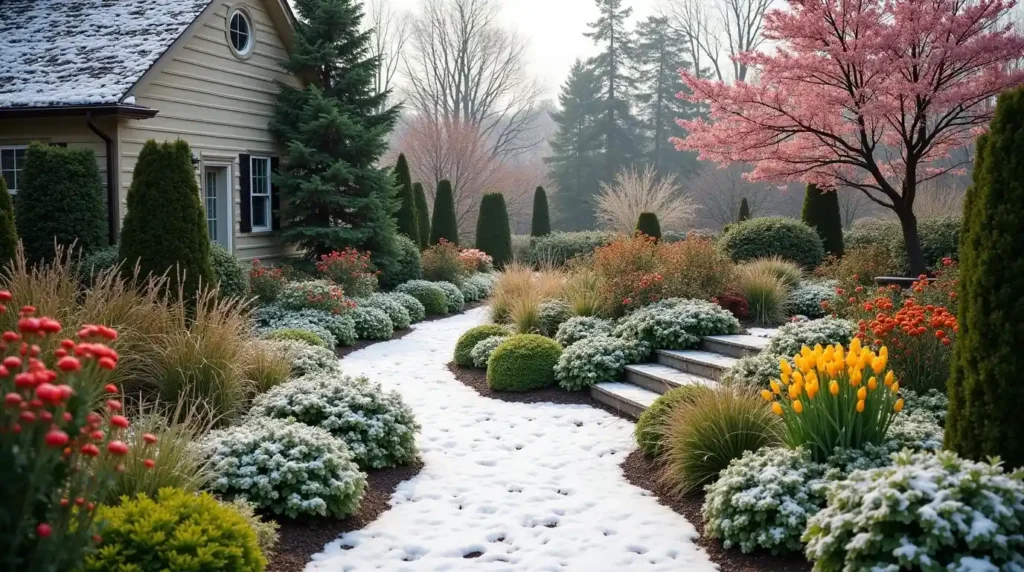
The best winter gardens are not designed for winter alone.
Every plant should contribute to more than one season whenever possible. A shrub may flower in spring, provide green foliage through summer, colorful berries in fall, and an attractive shape during winter.
Layer different types of plants together instead of relying on one feature.
A simple planting combination might include:
- Evergreen shrubs for structure
- Flowering perennials for summer color
- Ornamental grasses for movement
- Berry shrubs for wildlife
- Trees with attractive bark
- Spring bulbs for the season ahead
Think about how the garden changes month by month instead of trying to make every area look perfect at the same time.
As plants mature, continue taking winter photos each year. Small adjustments, such as moving a container or adding one evergreen, often improve the overall design more than starting over.
Winter interest grows over time as the garden becomes more balanced.
Quick action: Choose one garden bed and make sure it offers interest in at least three different seasons.
Common Winter Garden Design Mistakes to Avoid
A few simple mistakes can reduce the impact of an otherwise beautiful garden.
Watch out for these common problems:
- Relying only on flowers for seasonal interest
- Planting too many identical evergreens
- Ignoring views from inside the house
- Cutting every perennial down in fall
- Placing colorful stems where they receive little light
- Blocking important views with tall grasses
- Choosing plants without checking mature size
- Adding too many decorations instead of improving structure
- Forgetting to include plants that support birds and pollinators
Avoiding these mistakes often improves the garden more than buying additional plants.
Conclusion
A beautiful winter garden is not built with flowers alone.
Structure, texture, color, movement, and careful placement all work together to keep your yard attractive after the growing season ends. Evergreens provide the framework, while bark, berries, grasses, seedheads, and seasonal flowers add smaller details that change throughout the colder months.
You do not need to transform the entire landscape at once. Start with one view outside your most-used window, strengthen it with a few well-chosen plants, and build from there. Small improvements made each year will create a garden that looks inviting in every season, including the middle of winter.