18 Meadow Garden Design Ideas for Every Yard
A meadow garden can turn a plain yard into a soft, colorful space filled with flowers, grasses, birds, and bees. Yet creating one is not as simple as stopping the lawn mower.
Without a clear plan, tall grass and mixed flowers can look messy. Weeds may spread. Paths may disappear. Some plants may grow too tall, while others fail after one season.
The best meadow garden design ideas combine loose planting with clear signs of care. A cut edge, repeated flowers, or a simple path can make the whole garden feel planned.
You also do not need a large country yard. A wildflower meadow garden can fit inside a small lawn, a narrow side yard, a raised bed, or even a large pot.
This guide shares 18 practical ideas for different garden sizes and styles. You will also learn how to choose plants, prepare the ground, control weeds, and care for your meadow through the year.
How to Plan a Meadow Garden That Looks Cared For
A good meadow starts with the site, not the seed packet.
Spend a few days watching the area you want to plant. Record how many hours of direct sun it receives. Check whether the soil stays dry, drains quickly, or collects water after rain.
You should also inspect the current lawn and weeds. Strong weeds can push out young meadow plants before they have time to settle.
Next, choose the main view. You may see the meadow from a kitchen window, patio, driveway, or garden path. Place your strongest flowers, grasses, or focal point where they can be seen from that position.
Then decide what type of meadow you want.
An annual meadow often gives bright color in its first growing season. However, it may need fresh seed and soil work each year.
A perennial meadow takes longer to fill out. The plants return for several years and often look better as they mature.
You can also mix bulbs, grasses, and long-living flowers for several seasons of interest.
Use this simple formula while planning:
Defined edge + repeated plants + usable path + seasonal structure
You do not need all four features in every small patch. Still, using at least two will help the meadow look cared for.
Before buying plants, answer these questions:
- How much sun does the area receive?
- Is the soil dry, moist, or wet?
- Where will people walk?
- Which view matters most?
- How tall can the plants grow?
- Who will maintain the area?
These answers will guide every choice that comes next.
5 Meadow Garden Design Ideas for Better Layout
Your layout should come before flower colors. Paths, edges, and seating areas give the garden a clear shape, even when the plants grow loose and tall.
Cut a Winding Path Through the Meadow
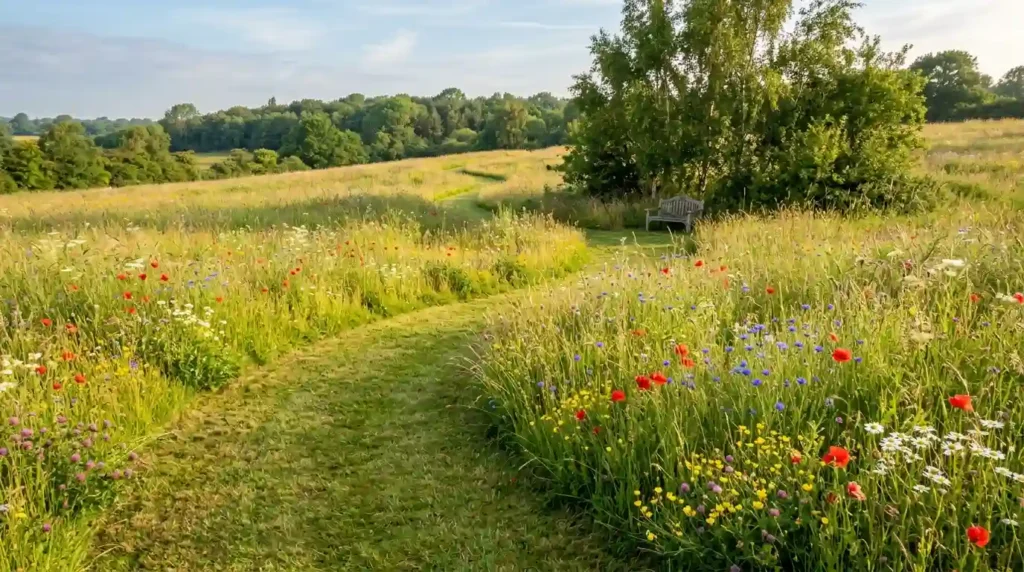
A winding path gives you a reason to walk through the planting instead of viewing it from a distance.
The path should lead somewhere useful. It could connect the patio to a bench, shed, birdbath, vegetable bed, or back gate.
Use a gentle curve. Sharp turns can feel forced and may be hard to mow.
The path should also be wide enough for safe walking. A narrow track can close quickly when flowers lean over it.
You can create the path with:
- Short mown grass
- Wood chips
- Gravel
- Flat stepping stones
- Compacted soil
A mown path is often the easiest choice. It costs little and clearly shows that the surrounding tall grass is there by choice.
Best for: Medium and large backyards.
Try this: Lead the path to a small seat hidden behind taller grasses.
Add a Circular Seating Clearing
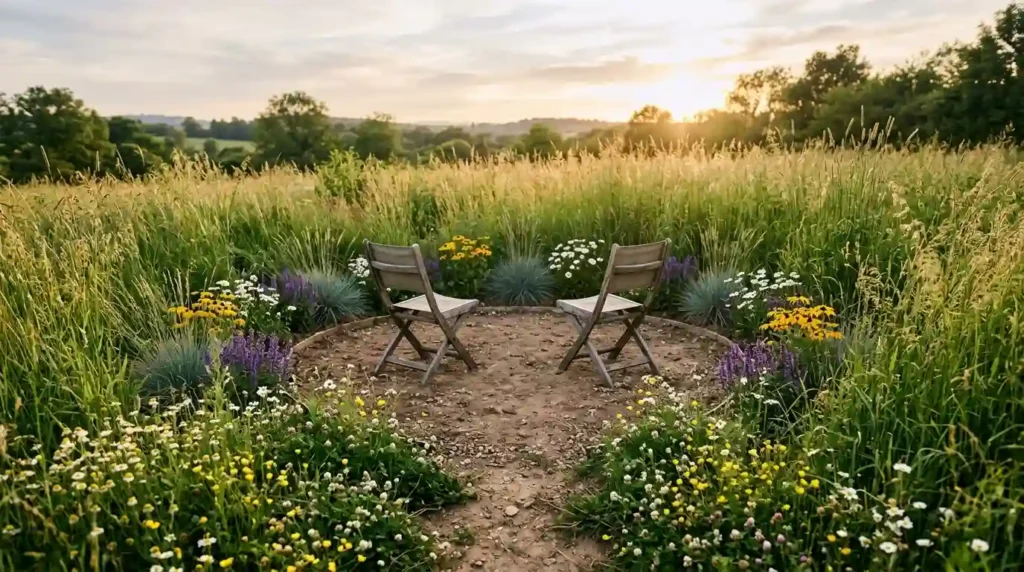
A seating space inside the meadow lets you enjoy the movement, insects, scent, and birds at close range.
Cut or pave a round clearing within the planting. A circle feels soft and works well with natural garden shapes.
A space about six feet wide can hold two chairs or one small bench. Larger spaces can fit a table.
Place taller plants behind the seats. Keep shorter flowers near the entrance so they do not brush against your legs.
Think about the sun before choosing the location. Morning sun works well for breakfast seating. Evening sun is better for relaxing after work.
You may also want shade during the hottest part of the day.
Best for: Backyards with one unused corner.
Try this: Surround the clearing with one grass and three flowering plants repeated in loose groups.
Frame the Meadow With a Crisp Mown Edge
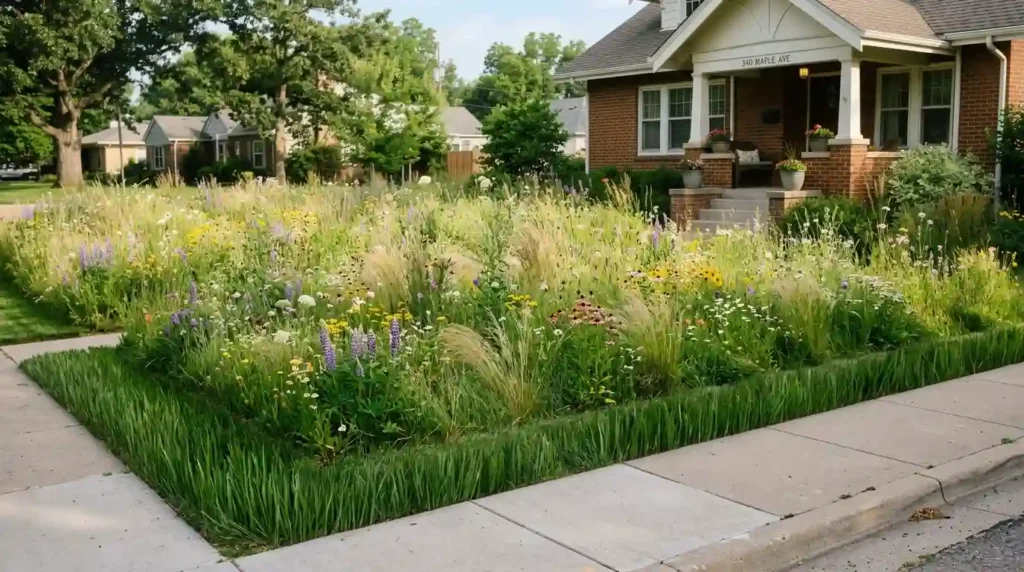
One of the easiest ways to make a meadow look neat is to add a short strip of cut grass around it.
The short grass acts like a picture frame. It separates the loose planting from the rest of the lawn.
Keep the strip close to the same width around the meadow. A width of one mower pass is often enough.
You can also use brick, stone, steel, or timber edging. However, a mown edge looks softer and costs less.
Avoid mixing several edge materials in one small yard. Too many materials can make the design feel busy.
Best for: Front yards and spaces that can be seen from the street.
Quick win: Mow the edge before visitors arrive. The whole planting will look more cared for.
Create a Meadow Island Inside the Lawn
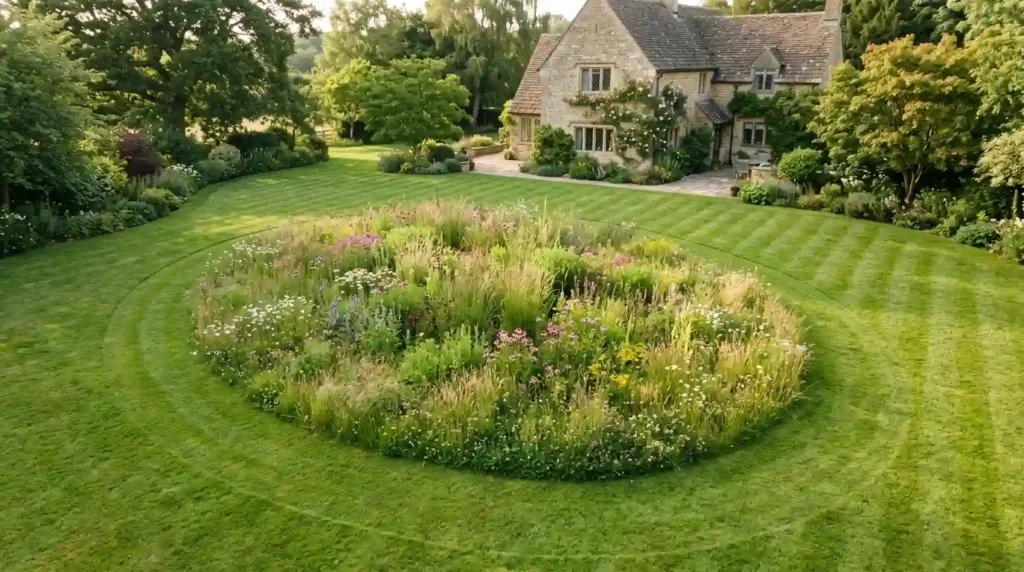
You do not have to remove your full lawn.
A meadow island lets you test the idea while keeping open grass for children, pets, games, or outdoor meals.
Use a simple shape such as:
- An oval
- A circle
- A soft rectangle
- A kidney shape
Place taller plants near the middle. Use shorter flowers and grasses near the outer edge.
Leave enough lawn around the island for easy mowing. Tight gaps will create extra work.
Repeat one main grass or flower across the island. This helps tie the planting together.
Best for: Homeowners who are unsure about replacing a full lawn.
Example: Turn one-third of a front lawn into an oval meadow while keeping a wide grass path around it.
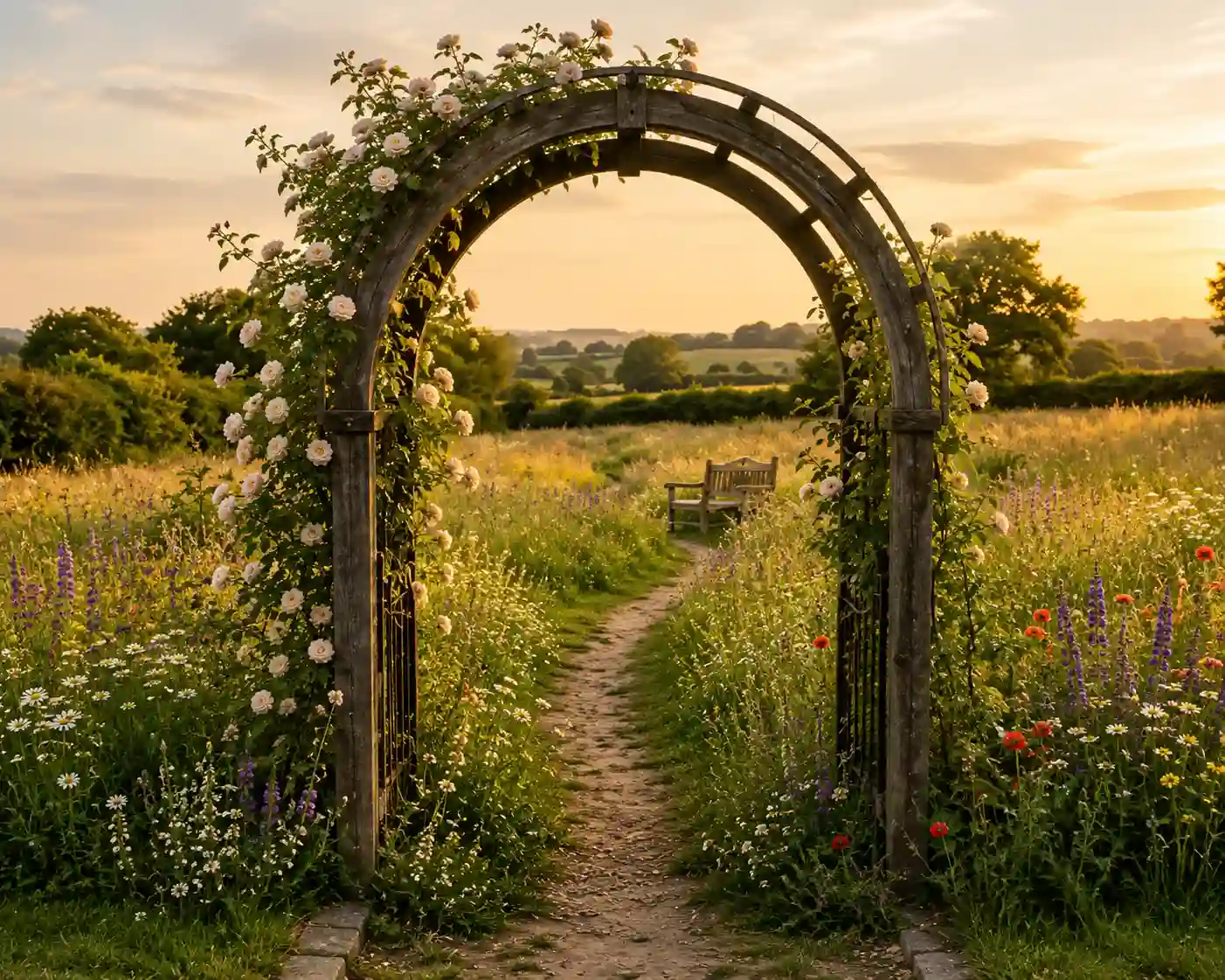
Mark the Entrance With a Gate or Arch
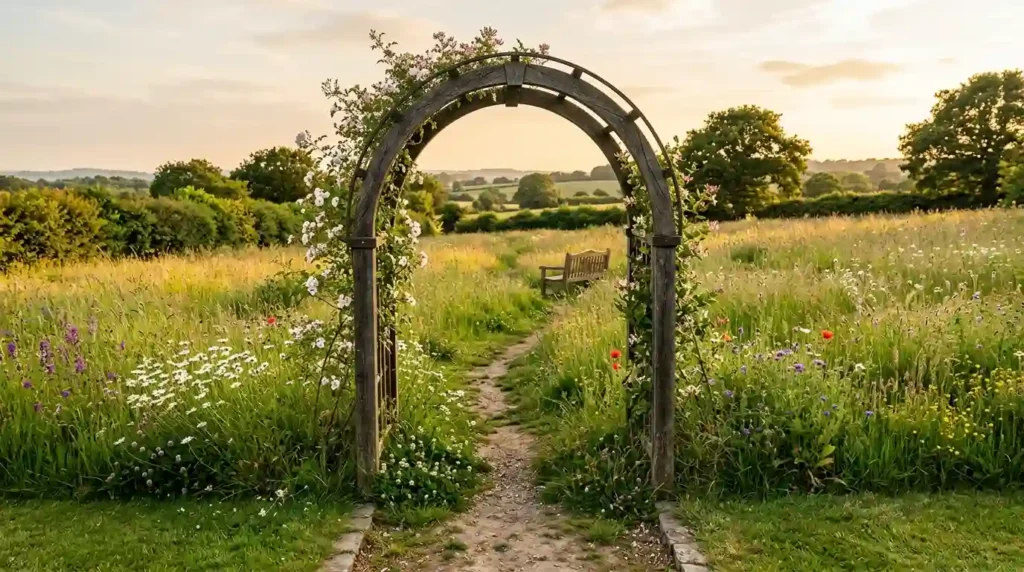
A simple gate, arch, or pair of posts can make a meadow feel like its own garden room.
The structure tells visitors that they are entering a different kind of space.
Choose a light design that does not overpower the plants. Plain timber, dark metal, or natural branches can all work.
You can leave the arch open or grow a light climbing plant over it. Avoid heavy vines on a weak frame.
Repeat the same material elsewhere. For example, match a timber arch with a timber bench.
Best for: Larger gardens with separate zones.
Try this: Place the entrance where the meadow path begins.
Once the layout feels clear, you can use plants to add color, height, texture, and movement.
5 Meadow Planting Ideas for Richer Color and Texture
Random plants can look confusing, especially in a small garden. Strong meadow planting ideas use repeated shapes, controlled colors, and several plant heights.
Plant Repeated Drifts Instead of Random Singles
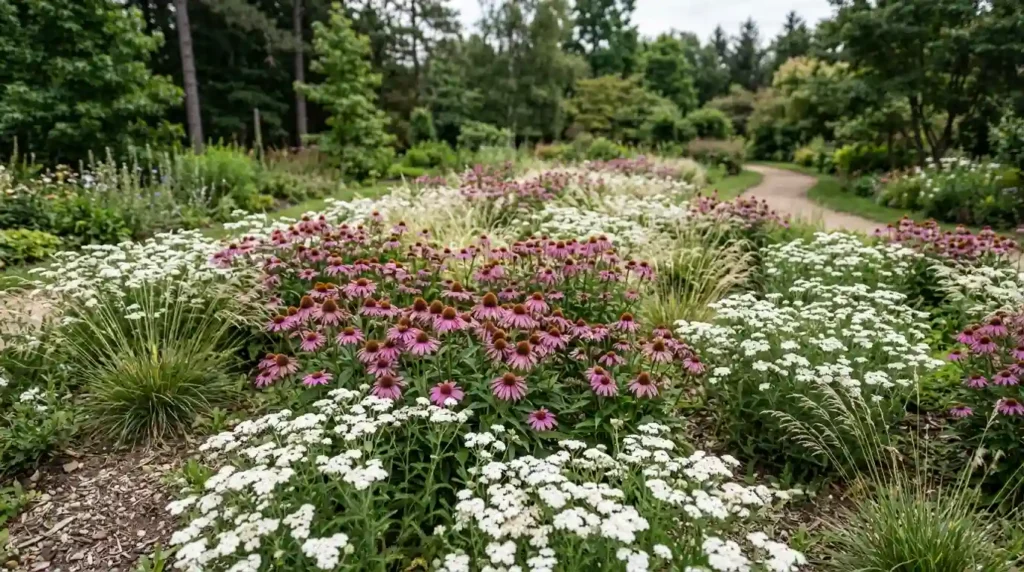
A drift is a loose group of the same plant.
Drifts make the planting easier for your eyes to read. They also create a stronger show of color than single plants scattered across the yard.
Choose a few main flowers and repeat each one in several places.
For example, plant purple coneflowers in three loose groups. Link them with repeated grasses or white flowers.
The groups should not be perfect circles. Use uneven shapes for a softer look.
Small meadows need fewer plant types. Four to seven main plants may create a stronger design than twenty unrelated plants.
Best for: Small yards and narrow planting strips.
Avoid this mistake: Buying one plant of every flower you like.
Layer Short, Medium, and Tall Plants
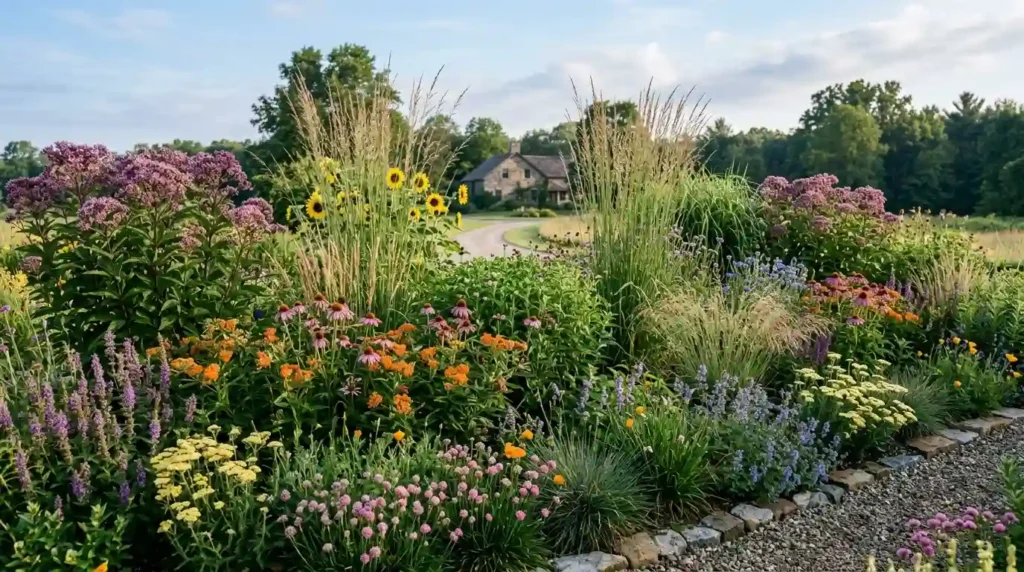
Plant height can guide the eye and keep paths clear.
Place shorter plants beside edges, paths, seats, and windows. Medium plants can fill the center of a border. Taller plants work well at the back or in the middle of an island bed.
A simple height plan could be:
- Front layer: 8 to 18 inches
- Middle layer: 18 to 36 inches
- Back or center layer: 3 to 5 feet
These are sample ranges. Always check the mature size of each plant.
Wind, soil, and water can affect height. A plant may also lean after heavy rain.
Give tall flowers and grasses enough support from nearby plants. Dense planting can help stems stay upright.
Best for: Meadows viewed from one main side.
Safety tip: Keep tall plants away from road exits and driveway sightlines.
Limit the Main Color Palette
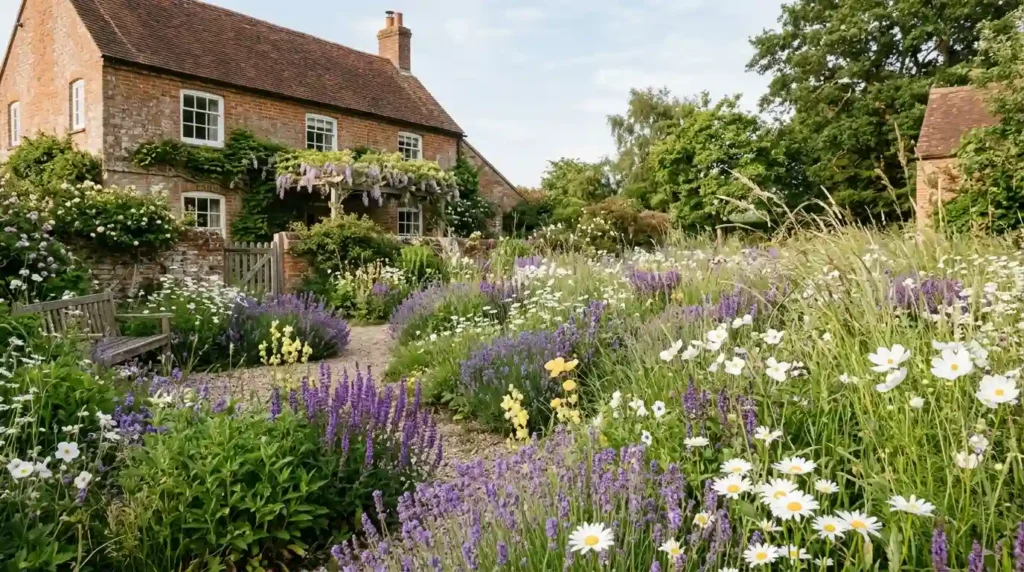
Too many bright colors can make a meadow feel busy.
Choose two main flower colors. Then add one accent color in smaller amounts.
The green leaves and grass will act as a calm background.
Color groups that work well include:
- Purple, white, and soft yellow
- Blue, pale pink, and white
- Rust, gold, and deep red
- White, silver, and pale green
Look at your house before choosing colors. Warm brick may work well with gold, purple, and rust. A gray or white house may suit blue, white, and pale pink.
You can still include other colors. Just keep them in small amounts.
Best for: Front yards and modern homes.
Try this: Take a photo of your house and place flower photos beside it before buying plants.
Use Grasses for Movement and Winter Texture
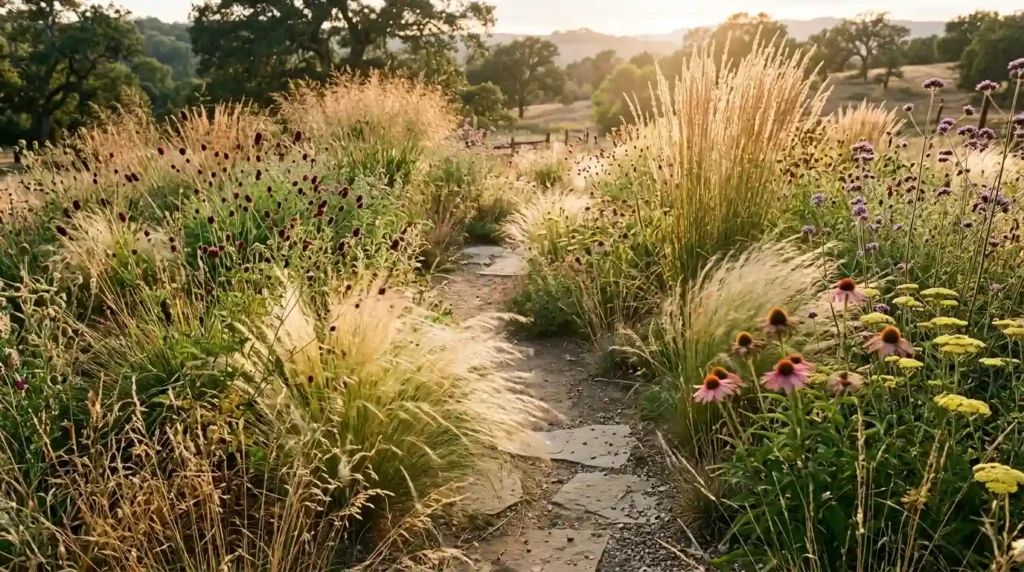
Flowers may provide color, but grasses give the meadow its shape.
Their leaves move in the wind. Their seed heads catch low light. Many also stay attractive after summer flowers fade.
Mix fine grasses with a few stronger upright forms.
Choose clump-forming types that suit your climate and soil. Some grasses spread fast, so check local invasive plant lists before planting.
Leave some dry stems and seed heads through winter. They can add texture and may provide food or shelter for wildlife.
Cut them back when local conditions and plant types require it.
Best for: Four-season gardens.
Try this: Pair one upright grass with rounded flowers and light, airy seed heads.
Add Spring Bulbs Below Summer Plants
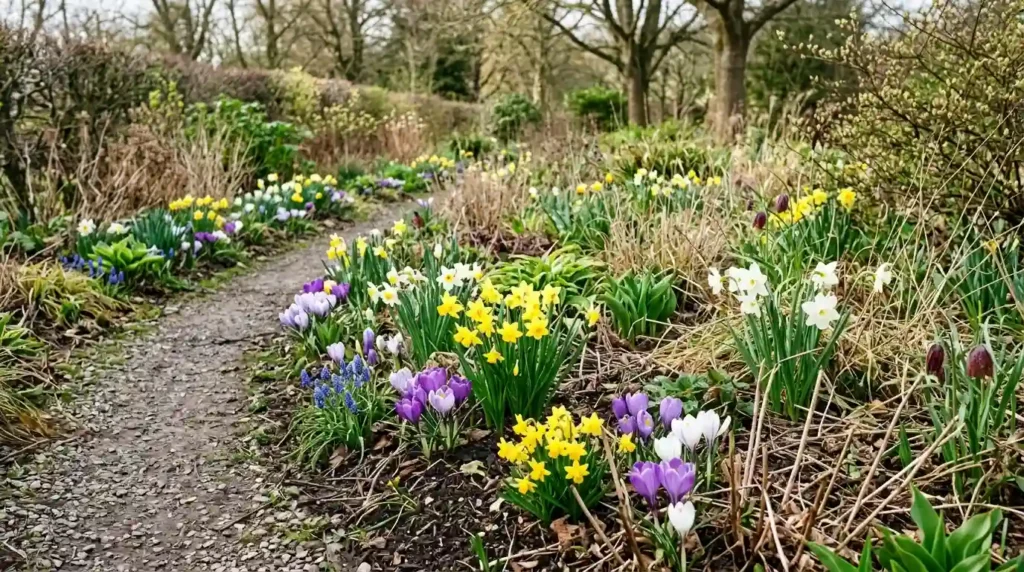
Many meadow gardens look bare in early spring. Bulbs can fill this gap before summer plants grow tall.
Plant bulbs in loose groups instead of straight rows.
Choose types that can return and spread in your climate. Local garden centers or extension services can help you find good options.
Place bulbs between grasses and perennial flowers. As the bulb leaves start to fade, new meadow growth will hide them.
Avoid cutting the leaves too early. They need time to feed the bulb for next year.
Best for: Perennial meadows that peak in summer.
Try this: Place several small bulb groups near the path where you can see them up close.
5 Wildflower Meadow Garden Ideas That Help Wildlife
A packet marked “wildflower” does not always provide food or shelter for local insects. Wildlife value depends on the plant species, bloom times, and growing conditions.
Create a White Moon Meadow
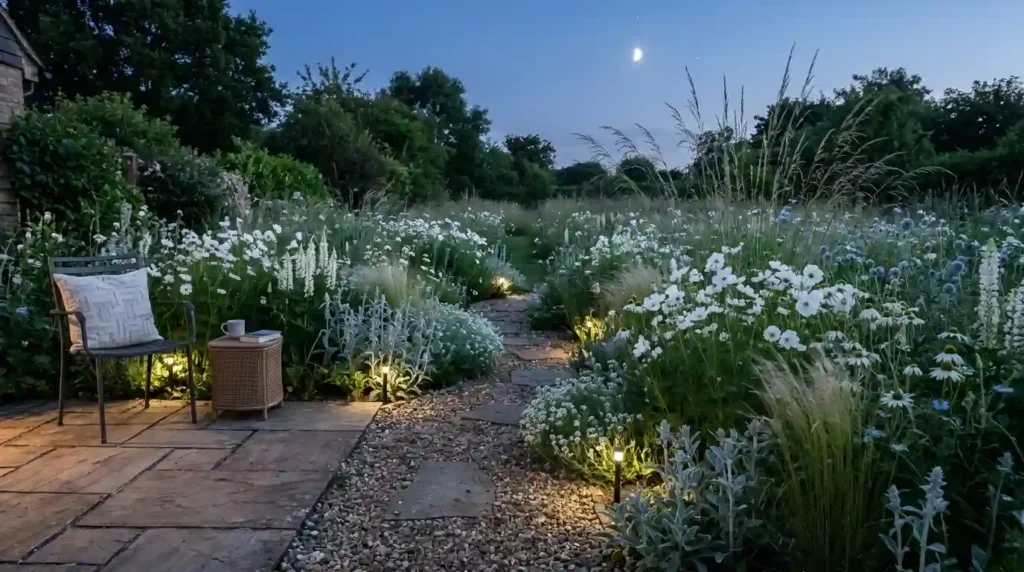
A moon meadow uses pale flowers and grasses that remain easy to see after sunset.
Choose white flowers, silver leaves, and light seed heads. Repeat them near a patio, window, or evening seating area.
Pale plants can reflect soft moonlight and low garden light. They also create a calm mood.
Keep outdoor lights low and point them at paths instead of the whole meadow. Bright lights can disturb insects and other wildlife.
You can mix in a small amount of pale blue or soft pink.
Best for: Gardens used in the evening.
Try this: Place white flowers near the path and pale grasses behind them.
Plan a Pollinator Bloom Relay
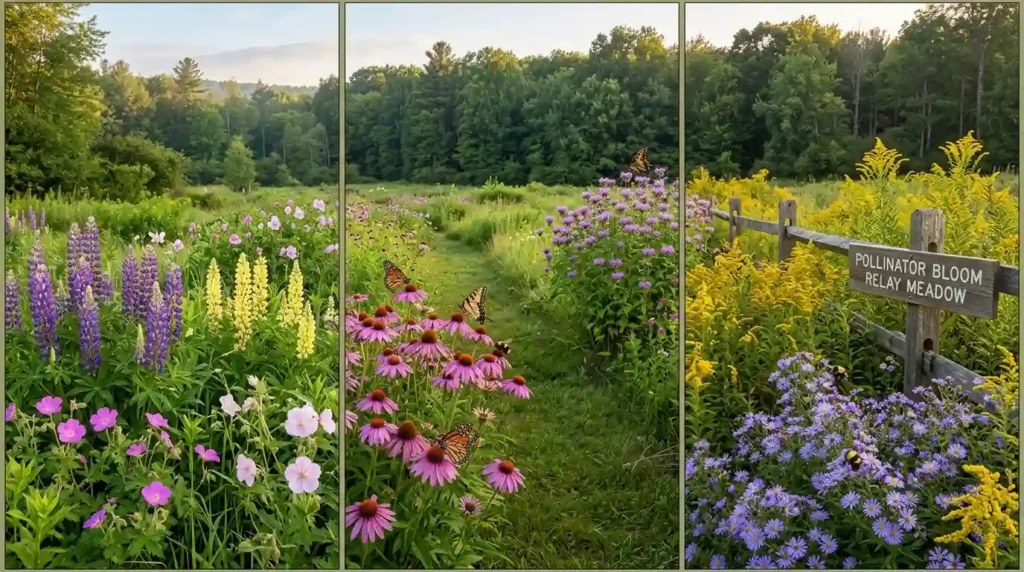
A pollinator meadow should provide flowers across several seasons.
Choose some plants that bloom early. Add others for the middle and end of the growing season.
This creates a bloom relay. As one group fades, another begins.
Include several flower shapes. Flat flowers, tubes, bells, and open cups can serve different insects.
Native plants are often useful because local insects may already depend on them. Still, each plant must suit your sun, soil, and moisture.
Ask nurseries whether plants were treated with pesticides that may harm insects.
The Xerces Society provides regional plant lists for pollinators. Local extension offices and native plant groups may also offer lists for your area.
Best for: Anyone who wants more bees, butterflies, and other insects.
Quick check: Make sure your plan includes flowers in spring, summer, and fall.
Add Butterfly Host-Plant Pockets
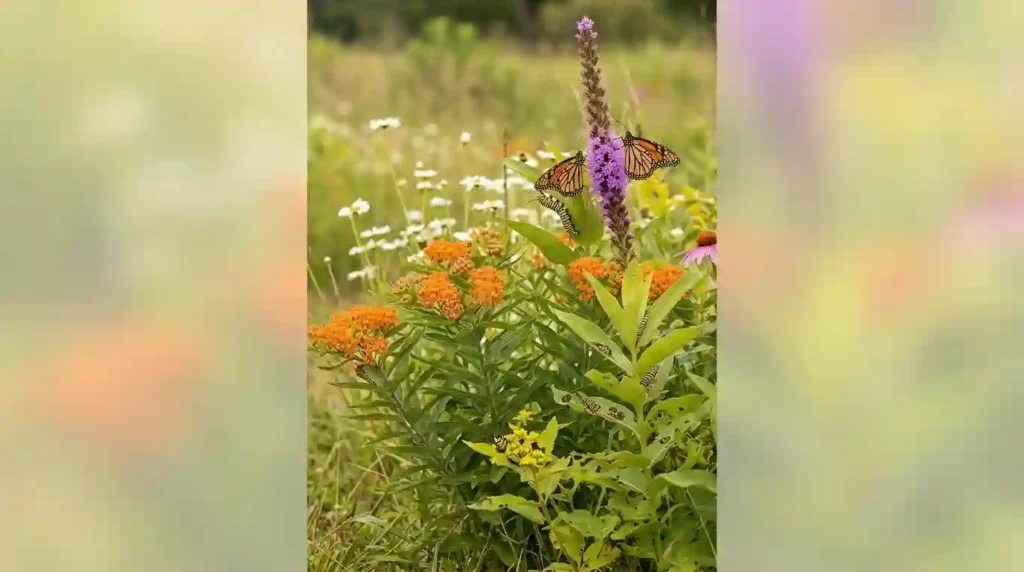
Adult butterflies feed on flower nectar. Their caterpillars often need certain host plants.
A flower-only meadow may feed adult butterflies but provide no place for the next generation.
Research butterflies found in your region. Then learn which plants their caterpillars eat.
Plant host species in small groups within the meadow. Grouping them makes the plants easier for butterflies to find.
Expect some chewed leaves. That damage is a sign that the habitat is being used.
Do not spray caterpillars without identifying them first.
Best for: Wildlife gardens and family gardens used for nature study.
Try this: Pair one local host plant with two long-flowering nectar plants.
Turn a Wet Spot Into a Rain-Fed Meadow
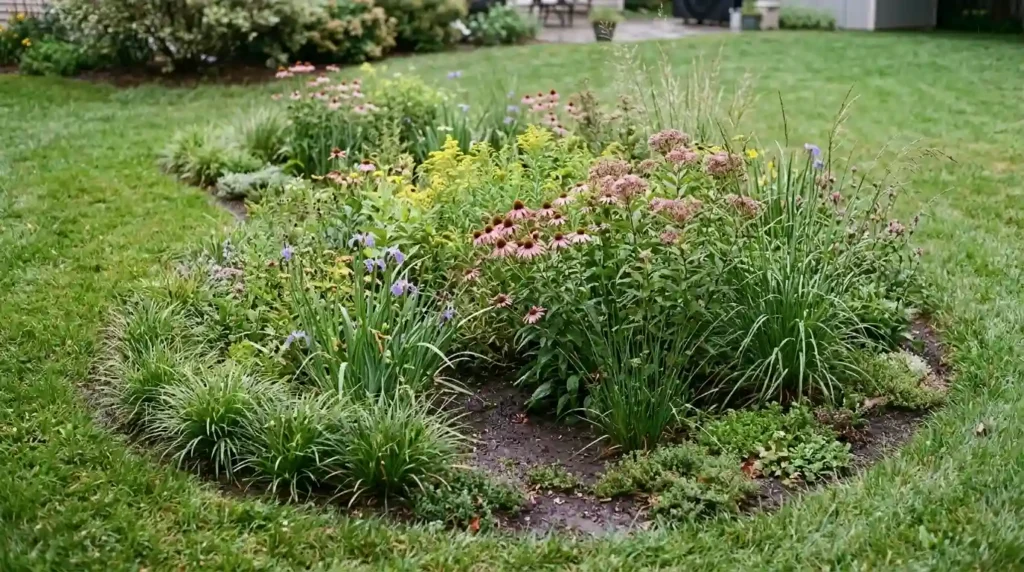
A low, damp part of the yard can become a useful feature instead of a problem.
Choose plants that can handle short periods of wet soil. Do not place dry-meadow plants in an area that stays damp after rain.
A shallow planted basin can also slow water moving across the yard.
Keep standing water and major drainage work away from the house foundation. Ask a drainage expert for help when water collects close to a building.
Do not assume every wet spot is safe to plant. First check where the water comes from and how long it remains.
Best for: Low lawn areas and spaces near a safe downspout outlet.
Try this: Use shorter plants around the edge and taller moisture-loving plants near the center.
Grow a Meadow Around Small Orchard Trees
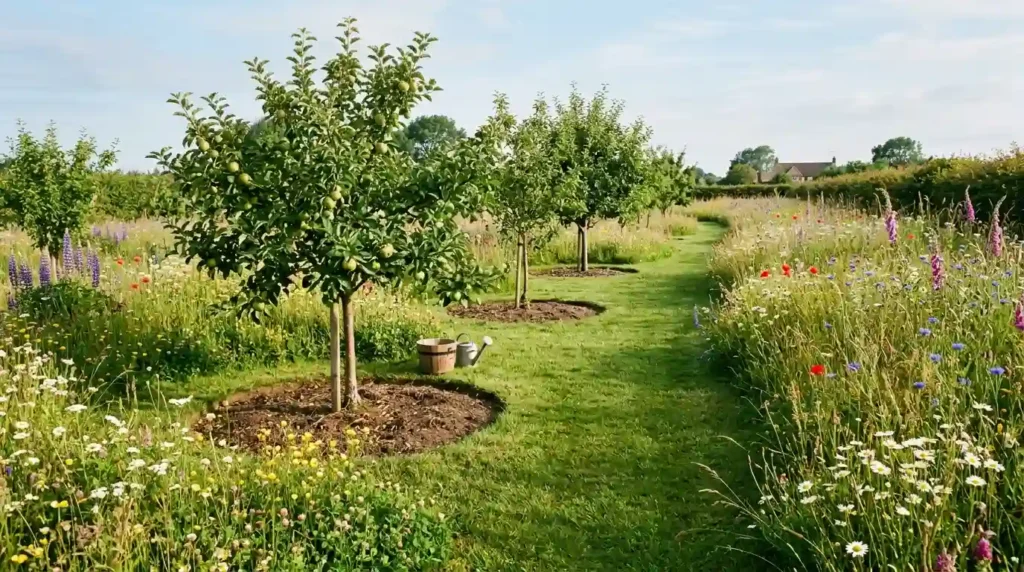
Flowers and grasses can soften the ground below fruit trees.
Keep plants away from the trunk. A clear ring makes it easier to inspect the bark and reduces trapped moisture.
Create mown routes so you can prune, water, and collect fruit.
Use shorter plants close to the harvest area. Tall stems can make fallen fruit hard to find.
Young trees need water and root space. Avoid plants that spread fast or compete strongly.
Light levels may also change as the tree canopy grows.
Best for: Small home orchards and open tree groups.
Try this: Use a wide grass path that links each tree.
Wildflower meadow garden ideas work best when they match local wildlife and local growing conditions. Check regional plant lists before making your final choice.
3 Small and Modern Meadow Garden Design Ideas
A meadow does not need acres of open land. Strong repetition and clear edges can create the same soft feel in small spaces.
Plant a Narrow Meadow Strip
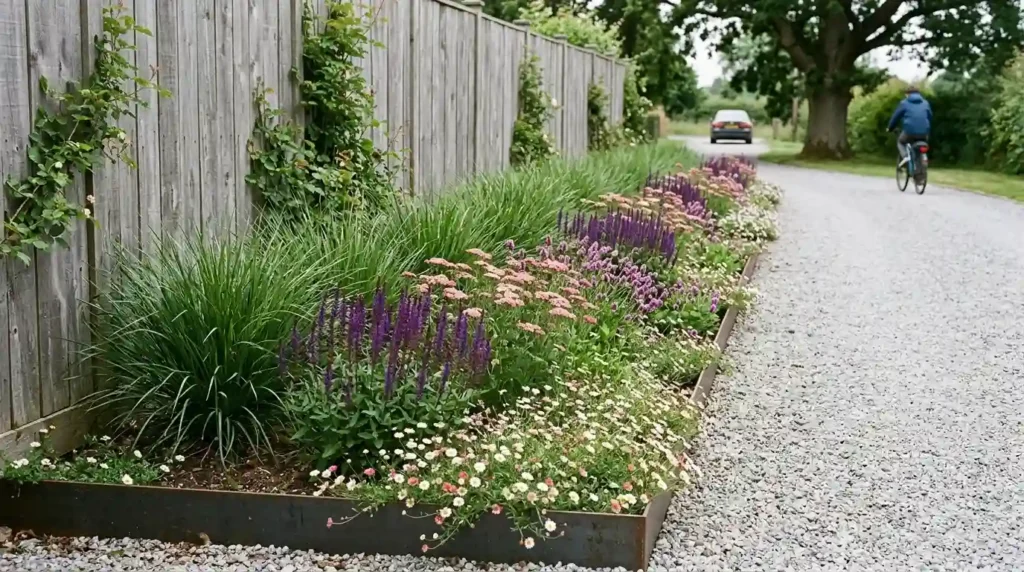
A strip beside a fence, wall, driveway, or path can hold a surprising mix of grasses and flowers.
Keep the plant list simple. Choose four to seven dependable plants and repeat them along the full strip.
Use shorter types in narrow beds. Tall plants can lean into paths and make the space feel cramped.
A clean edge will help control spreading and make the strip look planned.
Near a driveway, keep plants low enough for clear views of cars, bikes, and people.
Best for: Side yards and small front gardens.
Example: Plant a three-foot-wide strip with one grass, three flowers, and one low edge plant.
Build a Meadow in Raised Beds or Containers
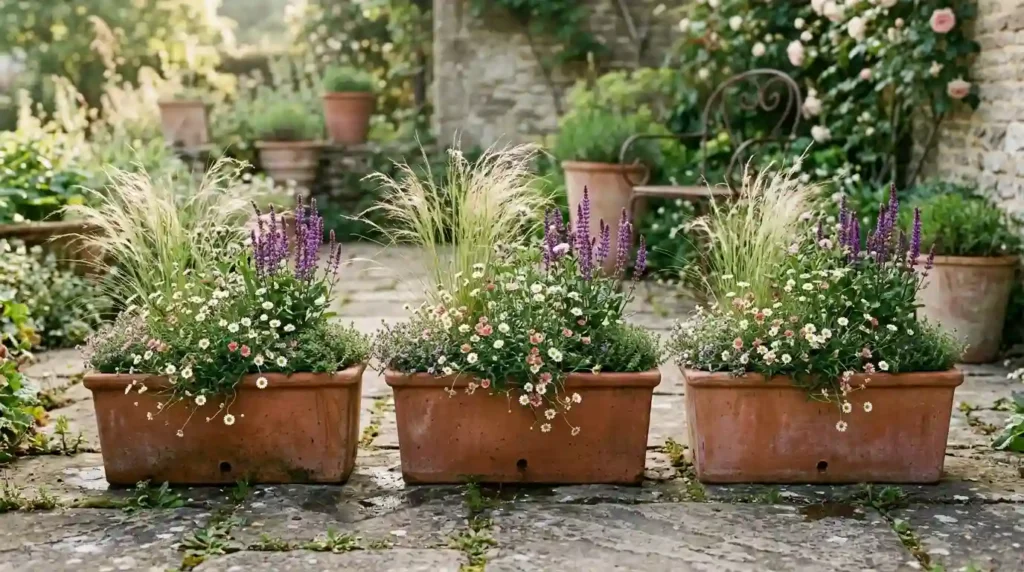
Renters and patio owners can create a small meadow effect in large containers.
Use one large pot or raised bed instead of many tiny pots. A bigger space holds moisture longer and gives roots more room.
A simple container recipe includes:
- One fine grass
- One long-flowering plant
- One low edge plant
- One seasonal accent
Choose plants with similar water and sun needs. Add drainage holes and use a suitable potting mix.
Container plants may need more water than plants in the ground. Some may also need dividing or replacing after a few years.
Best for: Patios, balconies, courtyards, and rental homes.
Try this: Repeat the same container recipe in two or three large pots.
Frame Loose Planting With Modern Hardscape
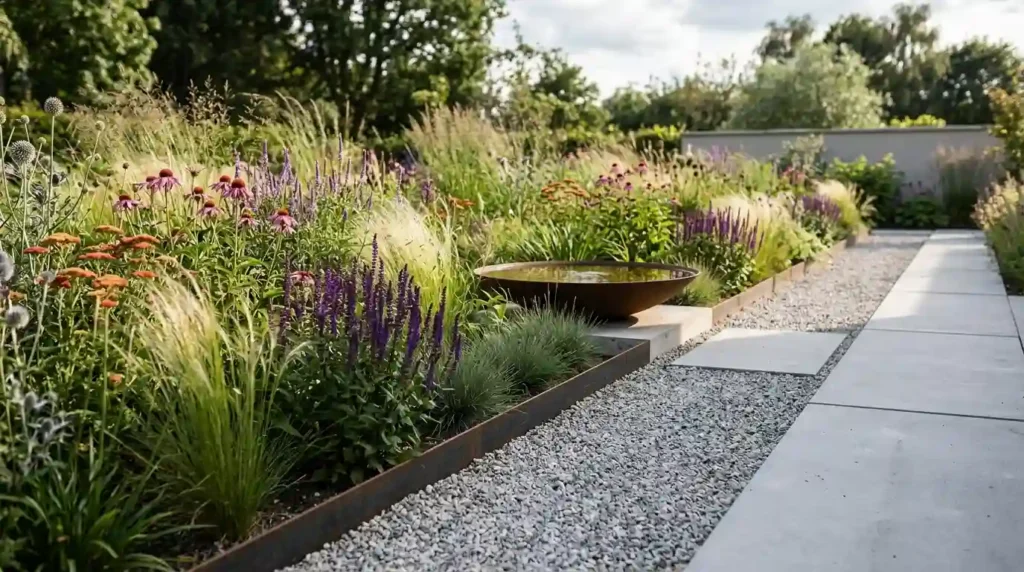
Soft meadow planting can look striking beside straight lines and simple materials.
Use gravel, stone, concrete, timber, or steel to create a clear frame.
Keep the material list short. One paving type and one edging material may be enough.
Repeat a strong grass or upright flower through the bed. This creates order beside the loose planting.
You can add one simple focal point, such as a bench, water bowl, or plain sculpture.
Give the plants enough depth. A strip that is too thin may look like a normal border instead of a meadow.
Best for: Modern homes and simple courtyards.
Try this: Place soft grasses beside a straight gravel path with a dark metal edge.
Even a small meadow can feel rich when the planting is dense, repeated, and clearly framed.
How to Choose Meadow Plants That Will Survive
Do not choose plants by color alone.
Start with your region and climate. Then check sunlight, soil type, drainage, and moisture.
A plant suited to dry sandy soil may rot in a damp yard. A shade plant may burn in strong afternoon sun.
Use these site clues:
- Dry and sunny: Look for deep roots and strong drought tolerance.
- Moist soil: Choose plants that can handle regular moisture.
- Windy space: Look for flexible stems and firm root systems.
- Partial shade: Search for woodland-edge meadow plants.
- Small yard: Use shorter plants with controlled spreading.
- Modern garden: Choose strong shapes and a limited color range.
Include plants that bloom at different times. You should also mix flower forms and leaf textures.
Grasses or grass-like plants help support the design after flowers fade.
Avoid seed mixes that do not list every species. Some cheap mixes contain plants that do not suit your climate or spread too fast.
Regional native plant nurseries are often a good starting point. You can also use local plant databases and invasive species lists.
Seed is useful for covering a large area at a lower cost. Plugs give you more control over plant placement and spacing.
For a small designed meadow, you may use plugs for the main plants and seed for softer gaps.
Create a simple plant chart before buying anything. Add columns for:
- Plant name
- Mature height
- Bloom time
- Flower color
- Sun needs
- Soil moisture
- Wildlife value
This step will show you where the plan has gaps.
How to Install a Meadow Without Wasting Seed
Poor ground preparation cannot be fixed by adding more seed.
Start by marking the shape with a hose, rope, or spray marker. View it from your main window or patio before removing any grass.
Next, identify strong weeds. Remove or control them before planting. Do not let them set fresh seed.
Then choose your planting method.
Seed
Seed works well for larger areas and smaller budgets. However, you have less control over where each plant grows.
Plugs
Plug plants are useful in small gardens and planned drifts. They cost more and take longer to place.
Wildflower Turf
Wildflower turf can create quicker cover. It is often the most costly option.
Lawn Conversion
You may improve an existing lawn by reducing mowing and adding suitable plants. Results depend on the grass, soil, and weeds already present.
Use this basic order:
- Inspect the site.
- Mark the boundary.
- Identify weeds.
- Remove or weaken thick turf.
- Choose regional plants or seed.
- Prepare the soil for the chosen method.
- Sow seed or install plants.
- Water during early growth when needed.
- Remove problem weeds before they seed.
- Record which plants grow well.
Seeds need firm contact with the soil. They may fail if they sit on thick grass, loose mulch, or dead leaves.
Do not add rich compost or fertilizer without a clear reason. Many meadow plants do well in soil that is less rich than a vegetable bed.
Sowing time depends on your climate and the plant species. Check with a regional seed supplier or extension service.
A perennial meadow may look thin during its first year. Some plants spend more time growing roots than flowers.
Be patient, but keep watching for weeds.
How to Maintain a Meadow Through Every Season
A meadow may need less regular cutting than a lawn, but it is not free from care.
The first year often needs the most attention. Young plants are small, and weeds can grow fast.
Cutting times depend on the meadow type, plant mix, and climate. Do not follow one fixed mowing date for every garden.
Spring Tasks
- Check for bare areas.
- Identify weeds while they are small.
- Add plugs where plant variety is low.
- Keep people and pets off weak new growth.
- Repair damaged edges and paths.
Summer Tasks
- Keep paths open.
- Remove invasive weeds before they seed.
- Note which flowers attract insects.
- Check whether tall plants block windows or paths.
- Record gaps in summer color.
Late Summer and Fall Tasks
- Let chosen plants set seed when suitable.
- Follow the correct cutting plan for your meadow.
- Remove excess cut material when advised.
- Add suitable seed to thin areas.
- Divide or move plants that have spread too far.
Winter Tasks
- Leave some strong seed heads and dry stems.
- Take photos of the meadow structure.
- Review which plants failed.
- Plan replacements.
- Repair paths, seats, and edging.
Do not leave every plant standing if the area becomes flat, wet, or unsafe. Keep routes clear and remove damaged material when needed.
A meadow changes from year to year. Some plants will spread. Others may disappear.
Your job is to guide that change.
How to Fix Meadow Garden Mistakes Before They Spread
Most meadow problems begin with weak planning or the wrong plants.
Here are the most common mistakes and how to fix them.
Buying an Unclear Seed Mix
Read the full species list before buying. Avoid packets that use broad names without details.
Ignoring the Site
Do not force sun-loving plants into shade or dry plants into wet soil. Replace failing plants with types that suit the area.
Using Too Many Plant Types
Reduce the number of main plants. Repeat the strongest performers in several groups.
Forgetting Paths and Edges
Add one mown path, clear border, or seating point. This can make the whole space look planned.
Letting Weeds Set Seed
Check the meadow often during its first growing seasons. Remove problem weeds before they spread.
Adding Too Much Fertilizer
Test the soil before feeding the area. Rich soil can cause fast grass growth that pushes out flowers.
Expecting Fast Results
Annual flowers may bloom quickly. Perennial meadows often need more time.
Cutting at the Wrong Time
Learn which plants need to set seed and which meadow system you have. Use local care advice.
Blocking Important Views
Move or cut back tall plants near roads, paths, doors, and windows.
Treating Every New Plant the Same
Identify volunteer plants before keeping or removing them. Some may be useful. Others may spread fast.
Here is the difference a few clear choices can make:
Weak design: Twenty unrelated flowers, no visible edge, and no clear route.
Better design: Five repeated plant groups, one mown path, one seating point, and a clean border.
A successful meadow can change and spread, but it still needs regular care.
Start With One Small Meadow Area
You do not need to replace your full lawn this year.
Start with one corner, narrow strip, island bed, or large container. Check its sun, soil, and moisture before choosing plants.
Give the space a clear edge. Repeat a small group of flowers and grasses. Add a path or seat when space allows.
Then watch how the plants grow through each season.
Some choices will work well. Others may need to be moved or replaced. That is normal.
The best meadow garden design ideas grow from careful observation and simple choices. Mark one small area this week, sketch its shape, and choose six plants that suit your local conditions.