19 Woodland Garden Design Ideas for Shady Yards
A shady yard can be hard to landscape. Grass may grow in thin patches. Sun-loving flowers may fade, and bare soil can make the whole space feel unfinished.
These woodland garden design ideas can help you turn that problem area into a calm and useful garden. Instead of fighting the shade, you can use it as part of the design.
A woodland garden uses trees, shrubs, ferns, groundcovers, paths, and natural materials. The goal is to create layers that feel soft and relaxed. You can also add seating, water, and plants that support birds and helpful insects.
You do not need a large forest or a huge budget. Many of these ideas work in a small backyard, narrow side yard, or shaded corner.
The key is to study your space before you start planting. Once you know where the light, roots, and moisture are, you can choose woodland garden plants that have a better chance of growing well.
How to Plan a Woodland Garden That Fits Your Yard
Do not buy plants until you know how much light and moisture your garden receives. A good shade garden design starts with the conditions you already have.
Check the garden at different times of the day. Look at it around 9 a.m., noon, and 3 p.m. Take a few photos or mark the sunny spots on a simple sketch.
Some areas may receive direct morning sun. Other parts may stay dark all day. Light may also change through the seasons as trees lose and grow their leaves.
You should also check the soil.
Shade beneath large trees is often dry because tree roots take up much of the water. Other shaded areas may stay damp after rain. This difference will affect which plants can grow there.
Look for these four common conditions:
- Full shade: The area receives very little direct sun.
- Partial shade: The area receives a few hours of sun or filtered light.
- Dry shade: The area is shaded, but the soil loses moisture quickly.
- Moist shade: The soil stays cool and damp for longer periods.
Next, study the tree roots. Do not cut large roots or dig deep holes beside mature trees. This can harm the tree and make it less stable.
You can often plant small plants between visible roots. Another option is to add containers where digging is difficult.
Decide how neat you want the garden to look. Some people like a loose garden with fallen leaves and spreading plants. Others want clear paths, shaped edges, and more control.
Both styles can work. Your woodland garden layout should match your home and the time you have for care.
Before choosing woodland garden plants, draw a basic plan. Mark the trees, roots, wet areas, dry areas, paths, windows, and garden views.
This small step can save you money and prevent planting mistakes.
Woodland Garden Design Ideas for Natural Structure
A natural woodland garden needs different levels of growth. This includes tall trees, smaller trees, shrubs, ferns, and low plants.
When every plant has the same height, the garden can feel flat. Layers make the space look deeper and help each part connect.
Build a Layered Tree Canopy
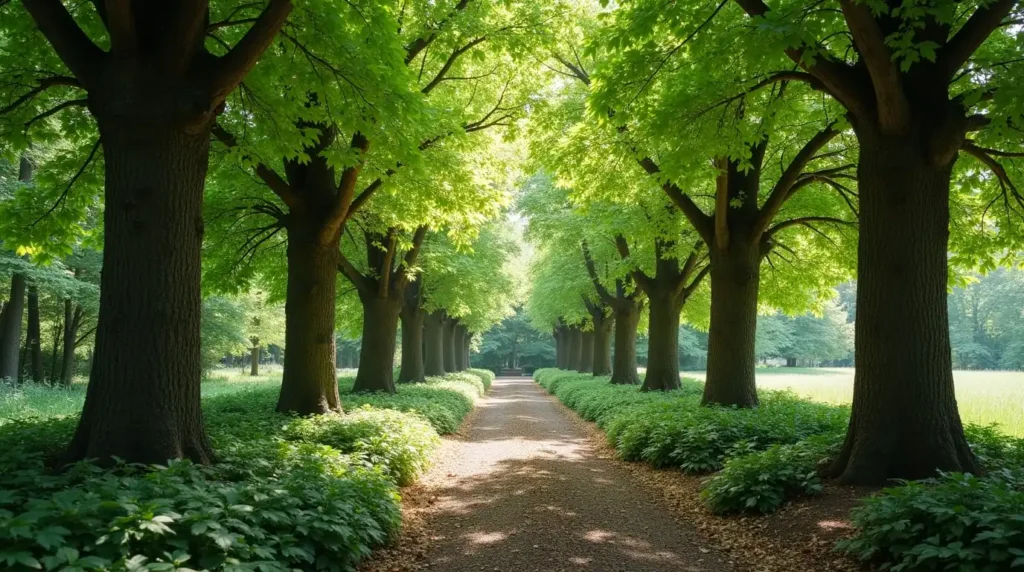
The tallest trees form the canopy. This is the upper layer that creates most of the shade.
Use the mature trees that are already in your yard. They may provide the main shape of your garden, so you may not need to plant more large trees.
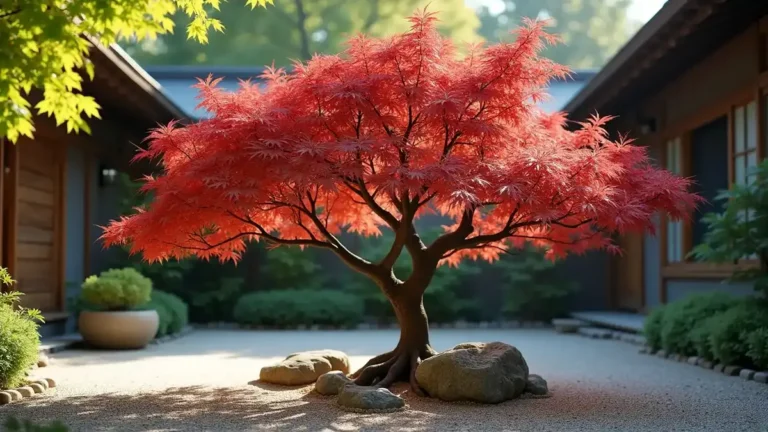
If the canopy has wide gaps, you can add a smaller tree. Good choices may include birch, serviceberry, dogwood, Japanese maple, hazel, or redbud.
Always check which trees grow well in your local climate.
Avoid placing trees in straight lines or at equal distances. Natural woods have open areas, uneven groups, and space for light to reach the ground.
Do not fill every gap. Small openings in the canopy can help flowers, shrubs, and groundcovers grow.
Think about the mature size of each tree before planting. A small young tree can become wide and tall within a few years.
Best for: Large yards, gardens with mature trees, and spaces that need more shade.
Add Understory Trees for Color and Height
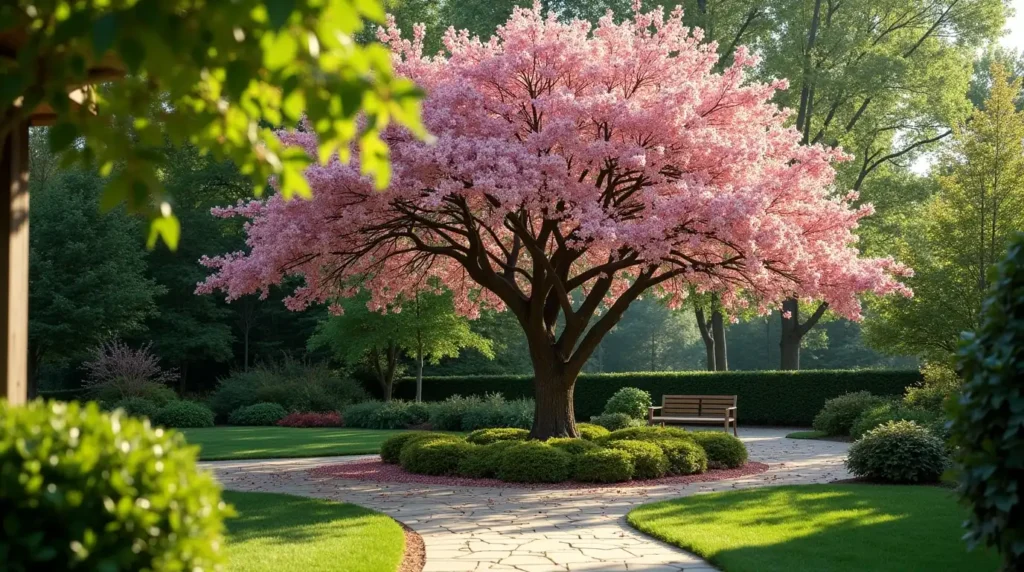
Understory trees grow below the tallest canopy. They help connect the high branches with the shrubs and plants near the ground.
These smaller trees can bring spring flowers, berries, bright fall leaves, or colorful bark.
Flowering dogwood, serviceberry, witch hazel, redbud, and vine maple are common examples. Plant choice will depend on your area.
Choose one main tree as a focal point. Too many special trees in a small space can compete for attention.
Place the tree where you can see it from a window, path, patio, or bench. This gives you a reason to enjoy it during each season.
Leave enough space around the tree. Crowding it with large shrubs can hide its shape.
Quick tip: Check the tree’s full height and width before buying it.
Plant Shrubs in Loose Natural Groups
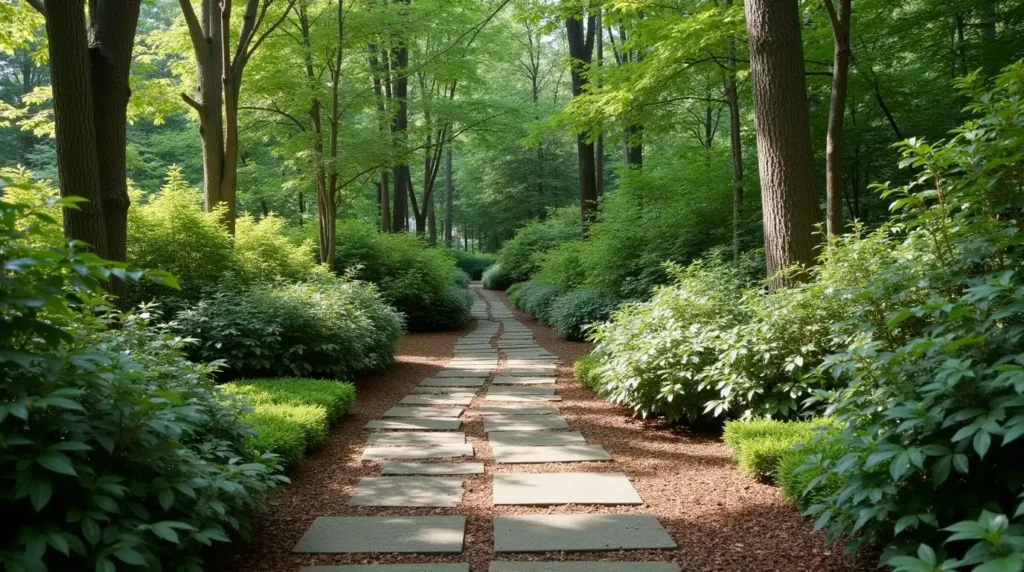
Straight rows of shrubs can look too formal in a woodland garden. Loose groups create a softer effect.
Use groups of three, five, or seven where space allows. The plants do not need to form a perfect shape.
You can mix evergreen shrubs with plants that lose their leaves in winter. This gives the garden some year-round color while still allowing seasonal change.
Possible shrub choices include:
- Viburnum
- Hydrangea
- Rhododendron
- Mountain laurel
- Elderberry
- Native holly
Choose shrubs that suit your soil and light.
Place taller shrubs near the back of a bed or along a fence. Keep shorter shrubs near paths and open areas.
Repeat one shrub in two or three parts of the garden. This makes the space feel linked without making it look strict.
Avoid this mistake: Do not plant shrubs too close together. Check their mature width and give them room to grow.
Soften the Edge Between Lawn and Woodland
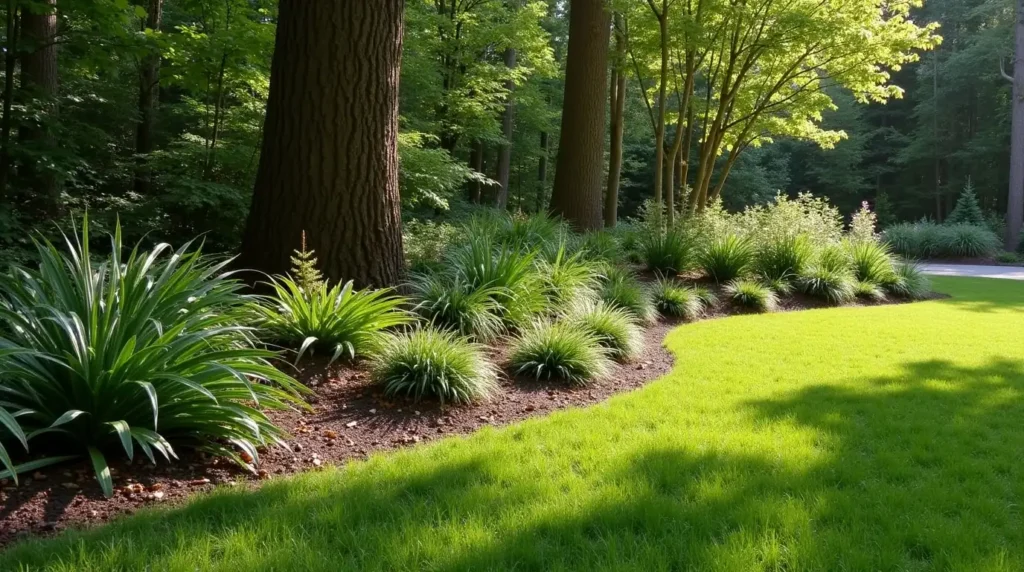
A straight line between lawn and woodland can look harsh. A soft, curved edge feels more natural.
Start with low groundcovers beside the lawn. Add ferns and small shrubs behind them. Place taller shrubs and trees at the back.
This creates a simple three-level edge:
- Groundcovers near the grass
- Ferns and low shrubs in the middle
- Tall shrubs and trees behind them
You can let fallen leaves stay in the planted area. Leaves help cover bare soil and give the garden a more natural look.
Keep leaves away from paths, patios, drains, and the trunks of young trees.
A curved bed also reduces narrow lawn corners that are hard to mow.
This form of natural woodland landscaping works well when you want the garden to feel connected to the rest of the yard.
Build the main structure first. Add small flowers and decorations after the trees and shrubs are in the right places.
Shade-Loving Woodland Garden Plants for Color and Texture
A shade garden does not have to feel dark or dull. Leaves can add as much interest as flowers.
Plant shape, height, and texture become very important in low light. A mix of broad leaves, fine ferns, soft groundcovers, and seasonal flowers can keep the garden attractive for months.
Plant Ferns in Large Drifts
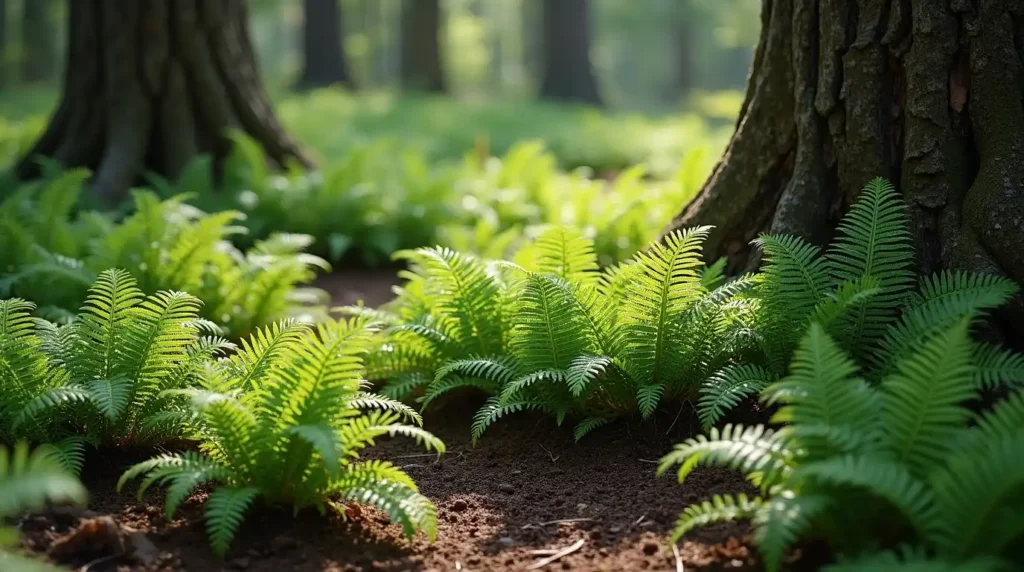
Ferns bring soft shape and fresh green color to dark areas. They also look natural beside trees, logs, stones, and woodland paths.
Plant several ferns of the same type together. A group has more impact than one fern placed by itself.
You can use ferns:
- Along curved paths
- Beneath shrubs
- Around tree roots
- On shaded slopes
- Beside a bench or water feature
Lady fern, autumn fern, Christmas fern, Japanese painted fern, and maidenhair fern are popular choices.
Some ferns like moist soil. Others can handle drier shade. Check the plant label before buying.
You should also find out how the fern spreads. Some grow in neat clumps. Others spread through roots below the soil and may cover a large area.
Use spreading types where you want fast coverage. Use clumping ferns near paths and small garden beds.
Best for: Filling large shaded areas with less visual clutter.
Replace Thin Grass With Groundcovers
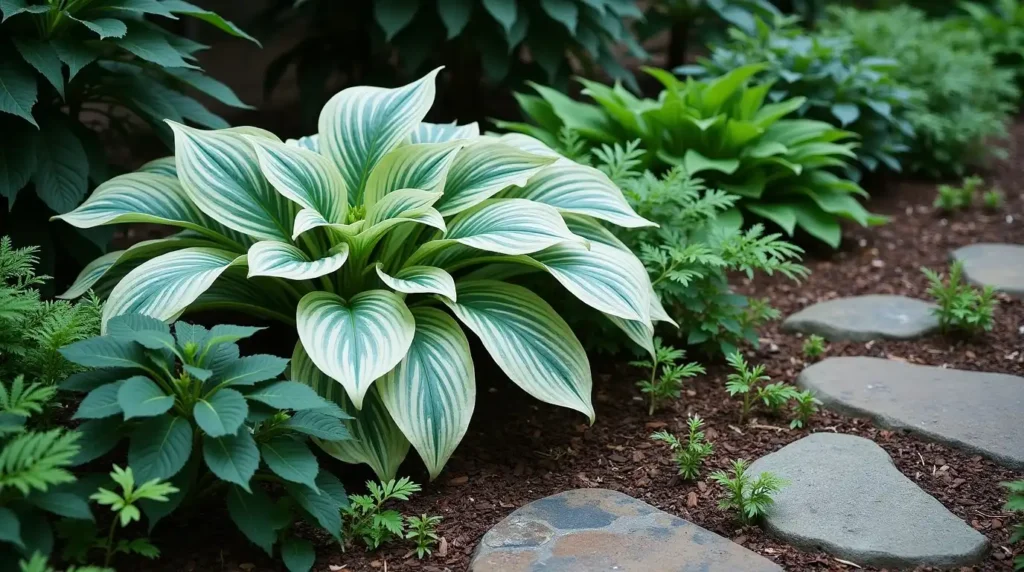
Grass often struggles beneath mature trees. It may stay thin even when you water and reseed it.
Shade-tolerant groundcovers can cover the soil, reduce weeds, and create a softer look.
Useful woodland garden plants may include:
- Wild ginger
- Foamflower
- Bunchberry
- Woodland phlox
- Sweet woodruff
- Native violets
- Allegheny spurge
Some plants may spread too quickly in certain areas. Check local garden guides before using them near natural land.
Plant small plugs close enough to grow into a carpet over time. The spacing will depend on how wide each plant becomes.
Use one main groundcover across a larger space. You can add a second type near paths or rocks for variety.
Do not pile thick mulch over exposed tree roots. Low plants can cover the soil without burying the roots.
Quick win: Replace one weak patch of grass instead of removing the whole lawn at once.
Add Spring Flowers Before the Trees Leaf Out
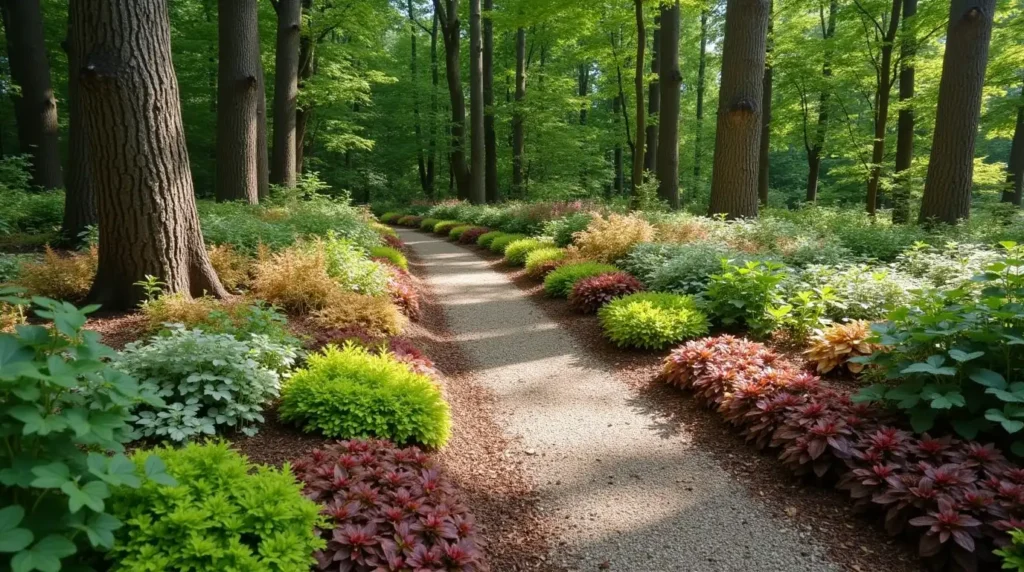
Spring flowers can brighten the garden before the upper tree branches fill with leaves.
Many woodland flowers grow and bloom early. They use the spring light, then slow down as the shade becomes deeper.
These plants are sometimes called spring ephemerals. This means they appear for a short part of the growing season.
Good examples may include:
- Snowdrops
- Crocuses
- Virginia bluebells
- Trillium
- Bloodroot
- Wood anemone
- Daffodils
Place small flowers near a path or seating area. They can be easy to miss when planted far from view.
Let the leaves fade on their own after flowering. The plant uses those leaves to store energy for the next year.
Mark the planting area with a small label. This helps you avoid digging into the roots when the plant is no longer visible.
Mix early bulbs with native woodland flowers for a longer spring display.
Mix Bold Leaves With Fine Textures
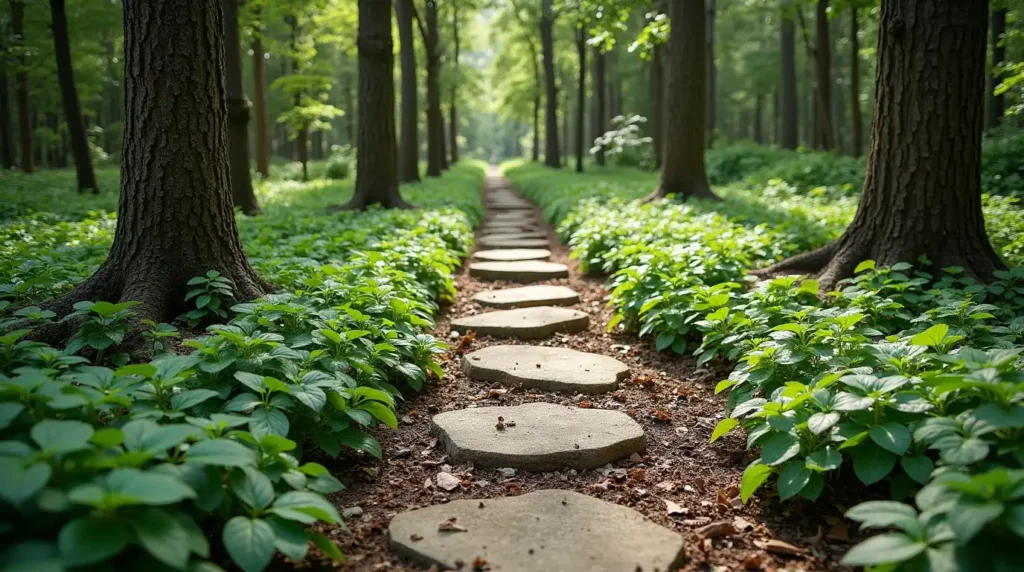
Flowers come and go. Leaves often stay for much longer.
Mixing leaf shapes can make a shade garden feel rich even when few plants are in bloom.
Pair large leaves with fine leaves. For example:
- Hosta with maidenhair fern
- Heuchera with sedges
- Brunnera with Japanese forest grass
- Ligularia with fine-leaved ferns
Use pale green, silver, gold, or lightly marked leaves in dark corners. They can reflect light and make the area feel brighter.
Do not fill a small bed with too many marked or striped plants. A few are enough.
Repeat the same leaf colors in several spots. This helps the planting feel planned.
Here is a simple shade garden design trick. Take a black-and-white photo of the planting area. If the plants still look different, the textures are strong enough.
Create a Quiet Moss or Moss-Like Area
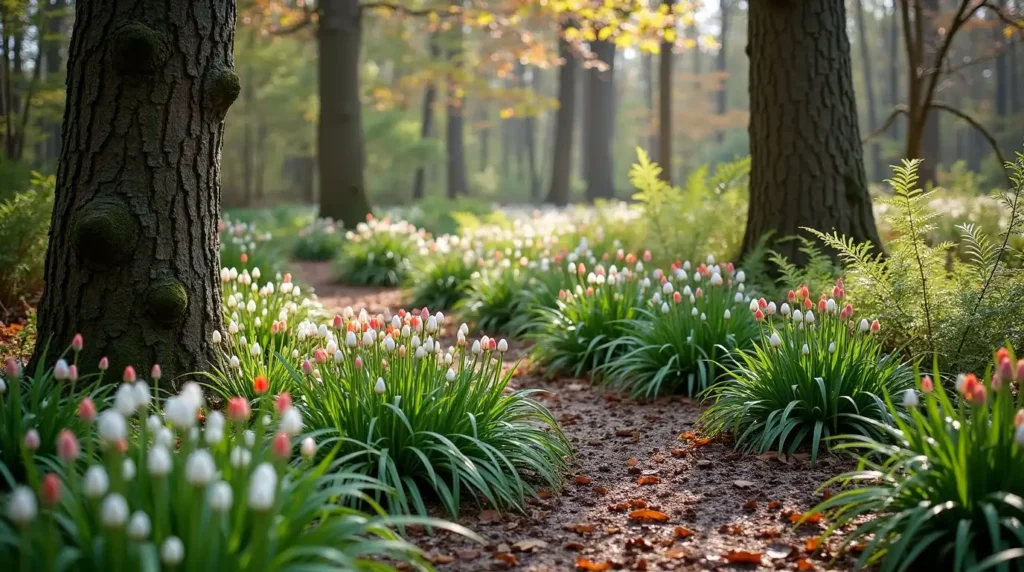
Moss can make stones, soil, and logs feel old and settled. It works best in naturally cool and damp spaces.
Do not try to force moss into hot or dry soil. It may turn brown or disappear.
Good moss areas often have:
- Deep shade
- Damp air
- Firm or compact soil
- Regular moisture
- Protection from heavy foot traffic
Place a few stones or an old log nearby. A shallow water bowl can also suit the look.
Irish moss and Scotch moss are often sold for this style. They are low plants, but they are not true mosses.
Other choices may include Corsican mint, low sedges, or creeping woodland groundcovers.
Choose plants based on the site, not on a photo you saw online. A plant that looks perfect in one climate may fail in another.
Use fewer plant types and repeat them in larger groups. This creates a calm and natural result.
Natural Woodland Paths and Features That Feel Useful
A path turns a shaded planting area into a space you can enter and enjoy.
It can guide you around roots, lead to a bench, and make the garden feel larger. The best paths follow the shape of the land instead of cutting across it.
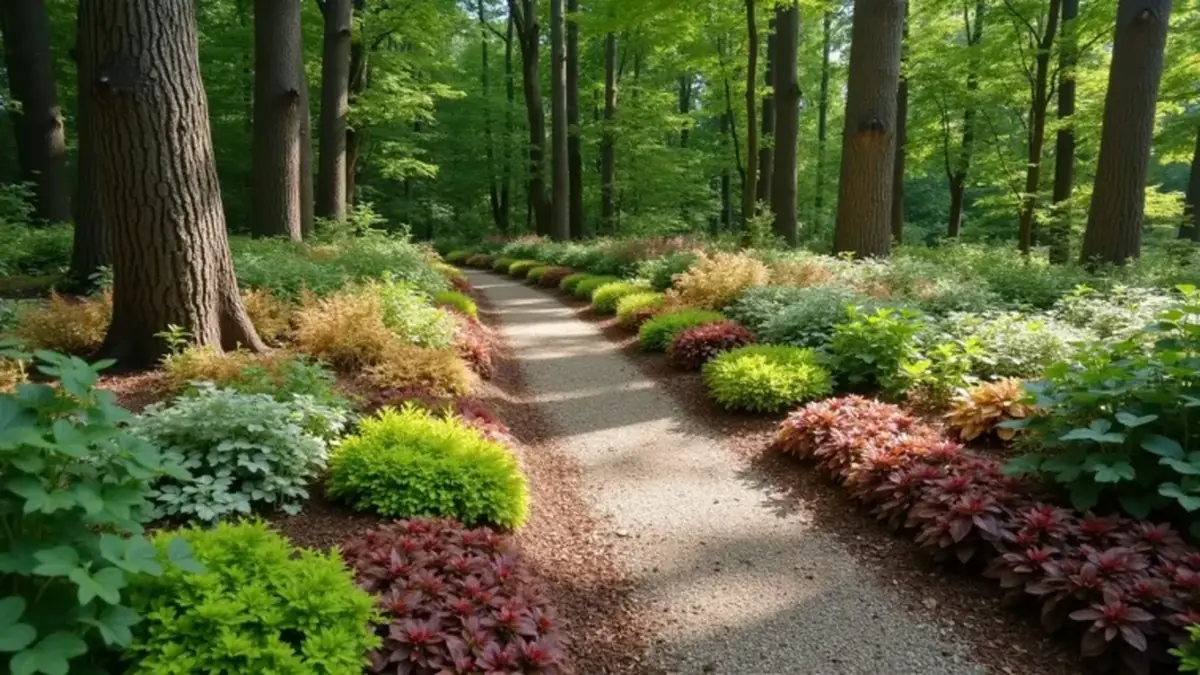
Create a Curved Mulch Path
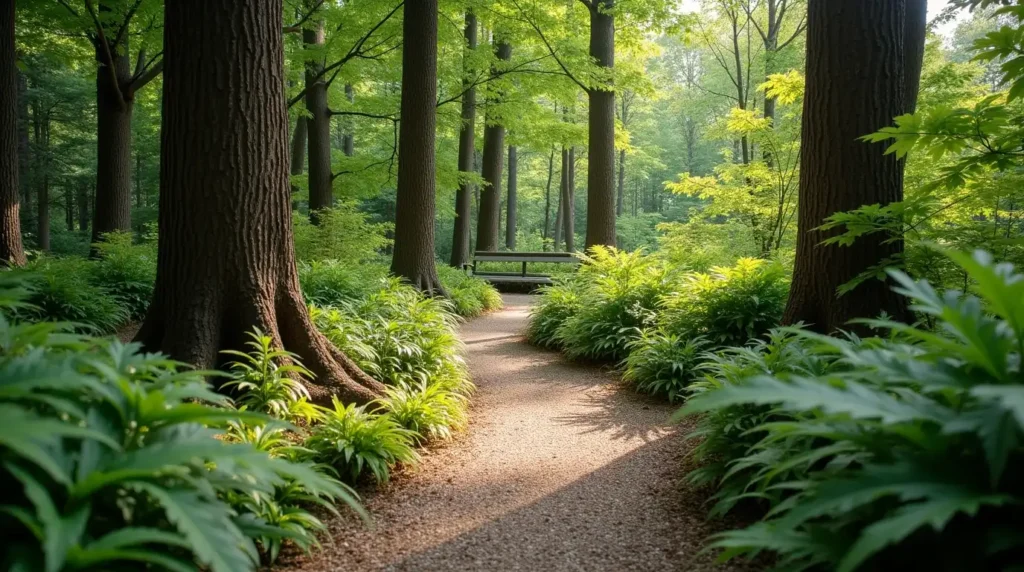
A curved path can lead the eye through the garden. It also gives you a clear route without making the space feel formal.
Follow the natural slope of the yard. Curve around large roots and tree trunks.
Wood chips, shredded bark, and pine needles can work well. Choose one material and use it across the main path.
A main path can be about 3 to 4 feet wide. This gives one person room to walk with ease.
A small side path can be about 2 feet wide. Adjust the size to fit your yard.
Edging is not always needed. Add it where mulch spreads into lawn or planting beds.
Check the path after heavy rain. Fix low areas where water collects.
Avoid this mistake: Do not cover the base of a tree trunk with deep mulch.
Use Stepping Stones in Planted Areas
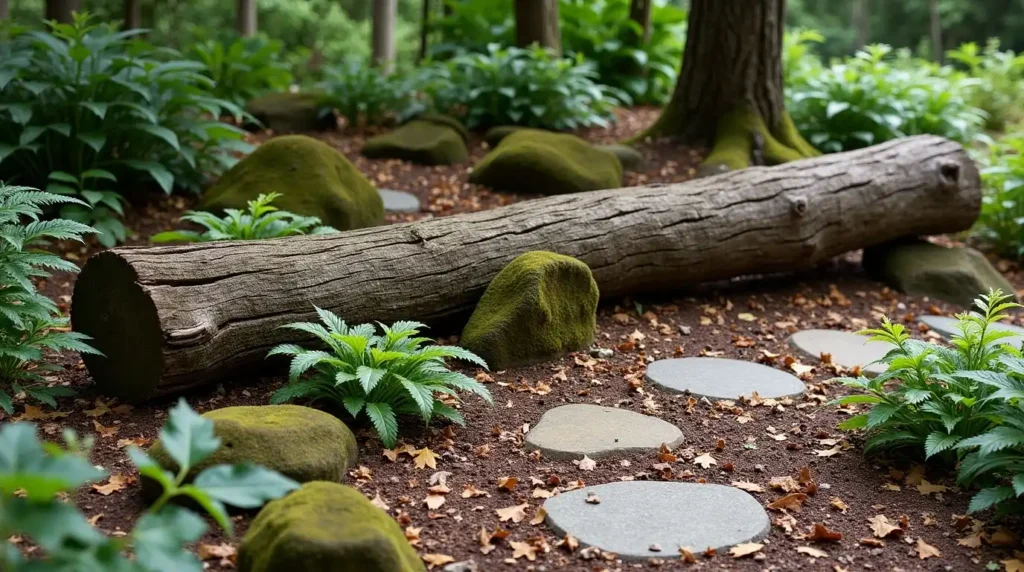
Stepping stones work well for short routes and small gardens. They allow plants to grow close to the walking area.
Choose large stones with a rough surface. Smooth stones may become slippery when wet.
Before setting them in place, walk the route several times. Notice where your feet land.
You can cut cardboard shapes and place them on the ground first. Move them until the spacing feels easy.
Set each stone on a firm base so it does not rock. The top should sit level with the soil or slightly above it.
Use fewer large stones instead of many small pieces. Large stones often look calmer and are easier to walk on.
Keep spreading plants away from the center of each stone. Wet leaves can make the surface unsafe.
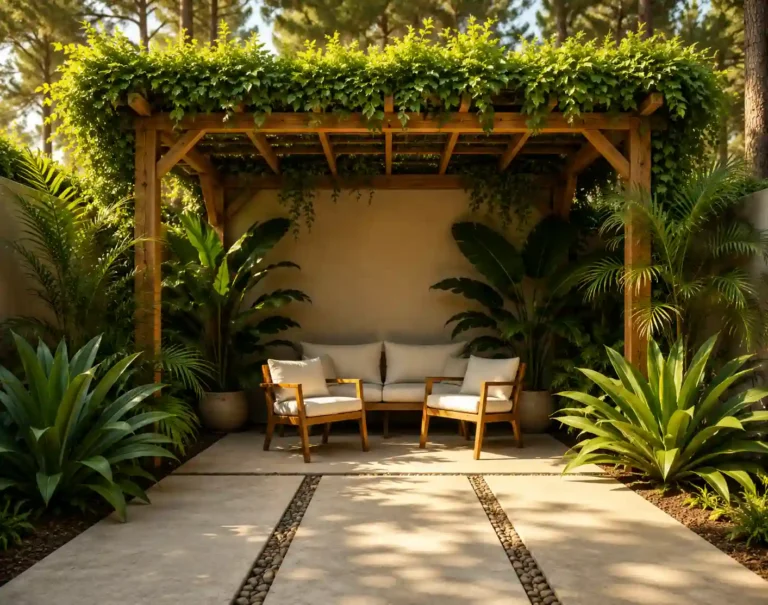
Add a Hidden Seating Nook
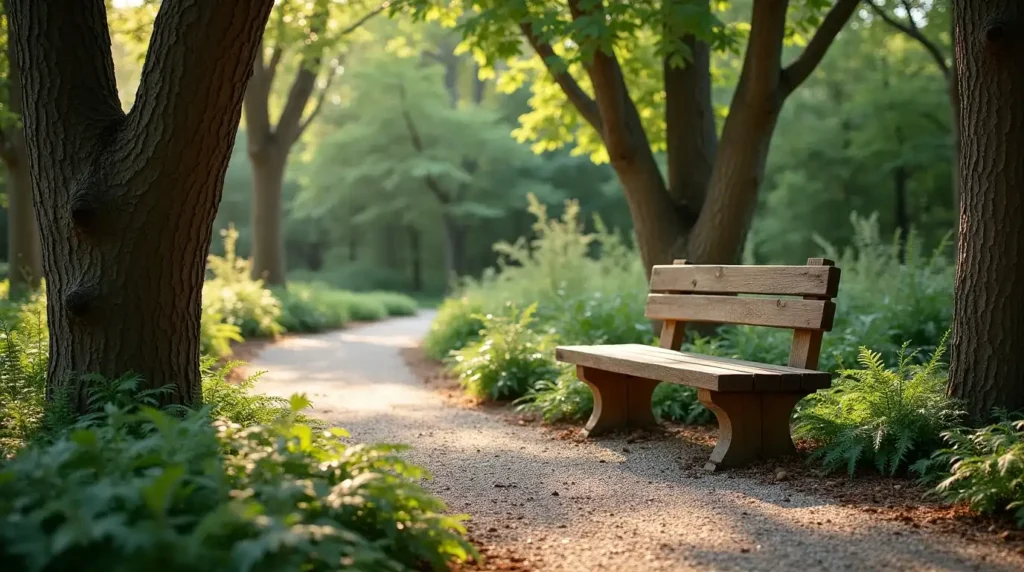
A small bench can turn a shaded corner into a place you use each day.
Choose a spot with a good view. It may face a group of ferns, a flowering tree, or a birdbath.
Use shrubs or tall plants to give the area some privacy. Keep part of the view open so the seat does not feel closed in.
A woodland seating area could include:
- A wooden bench
- A stone seat
- A small bistro chair
- A log-style bench
- A single reading chair
The ground should be level and firm. Mulch, stone, or packed gravel can create a simple base.
Check the branches above the seat. Do not place furniture beneath dead or damaged limbs.
Look at the seating area from inside the house before you build it. The bench should add to the view even when no one is sitting there.
Use Logs, Stumps, and Stones as Natural Features
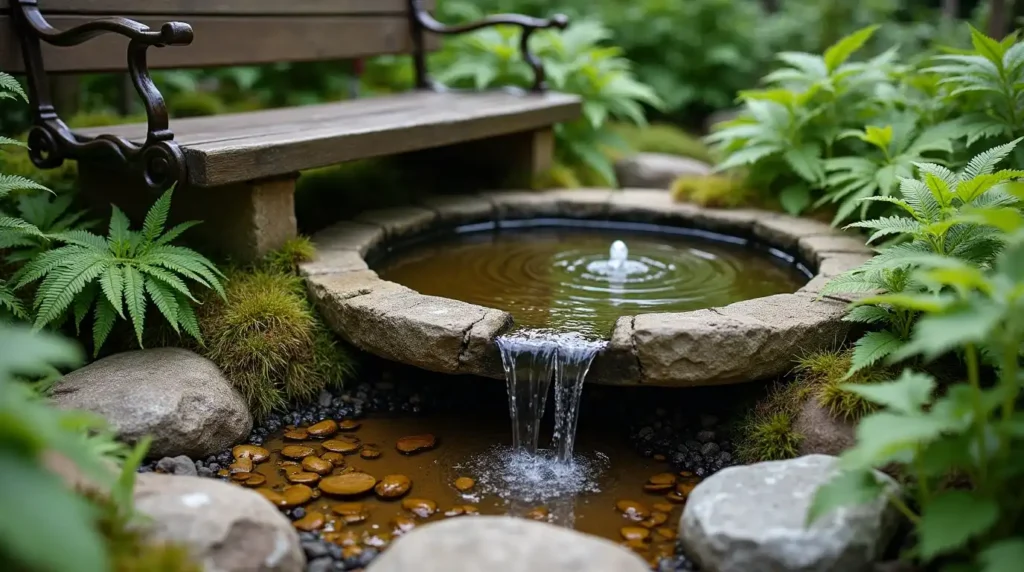
Natural materials can add shape without making the garden feel crowded.
A fallen log can become edging, a low seat, or a home for insects and fungi. A sturdy stump can hold a pot or small water bowl.
Group stones in one area instead of placing single rocks across the whole garden. Partly bury them so they look settled into the soil.
You could create:
- A fern bed around an old stump
- A mossy log beside a path
- A stone group around a birdbath
- A low log edge beside mulch
- A small pile of wood in a habitat corner
Check old wood before using it as a seat. Soft or rotting wood may break.
Hard materials should support the garden. They should not become the main focus.
These features work best when the same wood or stone appears in more than one place.
Wildlife-Friendly Woodland Garden Ideas
A woodland garden can give birds, insects, and small animals food, water, and shelter.
You do not need to leave the whole yard wild. A few planned features can make a big difference.
Add a Shallow Water Feature
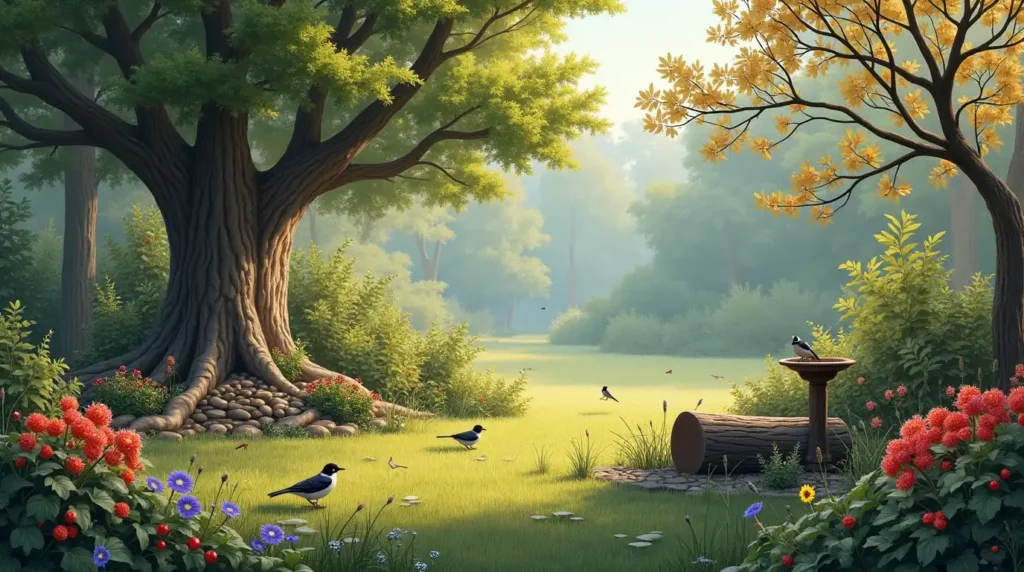
Birds and insects need clean water, especially during hot and dry weather.
A shallow birdbath or bowl is one of the easiest features to add. Place stones inside so insects have safe landing spots.
You could use:
- A stone birdbath
- A glazed water bowl
- A small wildlife pond
- A simple fountain with moving water
Place the water where you can see it from a window or bench.
Avoid putting it under a tree that drops many leaves or seeds. This will make it harder to keep clean.
Change the water often. Scrub the bowl when a slippery layer starts to form.
A small pond can support more wildlife, but it needs more planning. Homes with young children may need safety barriers around deeper water.
Plant Native Shrubs That Produce Berries
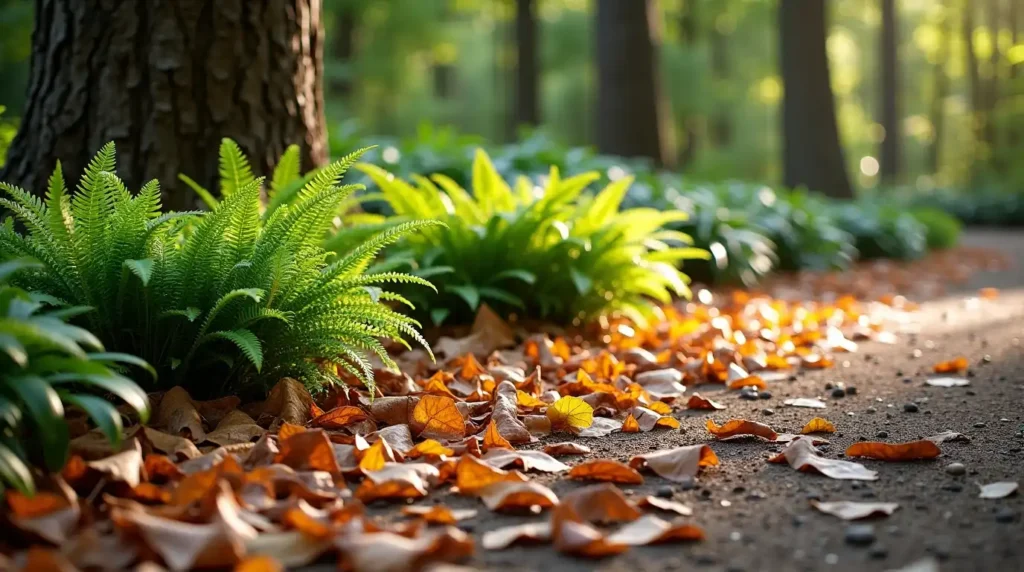
Berry-producing shrubs can feed birds and add seasonal color.
Choose plants that grow naturally or safely in your region. Local plants are often better suited to the soil and weather.
Possible choices include:
- Serviceberry
- Elderberry
- Viburnum
- Winterberry
- Native dogwood
- Oregon grape
Some shrubs need a second plant nearby to produce berries. Check this before buying.
Try to include plants that fruit at different times. One shrub may feed birds in summer, while another holds berries into winter.
Avoid invasive berry plants. Birds may spread their seeds into nearby parks and natural areas.
Shrubs can also provide nesting cover. A loose group of plants gives birds more shelter than one plant standing alone.
Leave a Small Habitat Zone
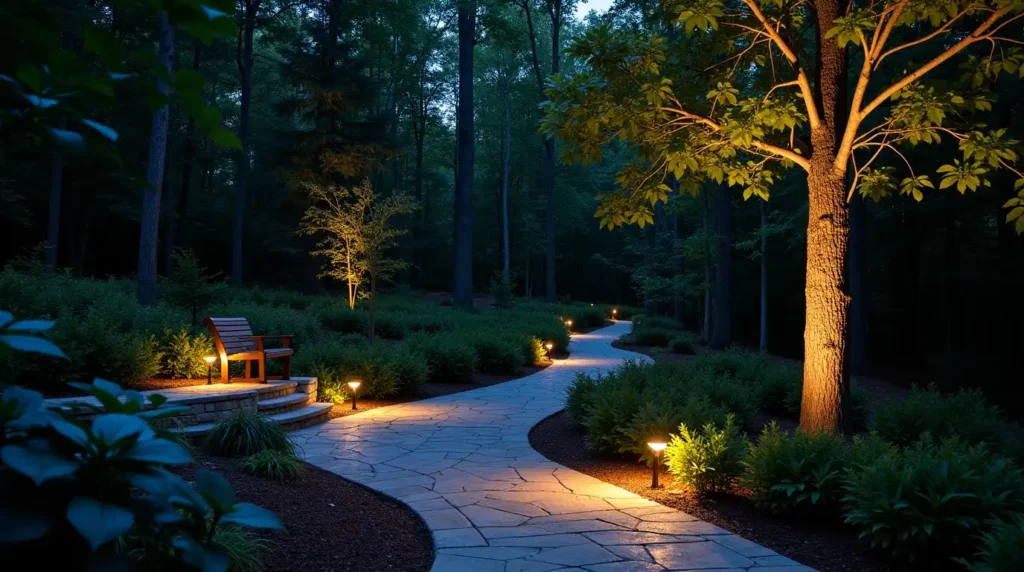
Cleaning every leaf and stem can remove useful shelter.
Choose one quiet corner where leaves, hollow stems, and a few branches can remain.
Leaf litter protects the soil and gives small insects a place to live. Birds may search through it for food.
Old stems can also provide winter shelter for insects. Leave them standing until late winter or early spring where possible.
Keep the habitat area away from doors, main paths, and building walls.
Make it look planned by using a low log border or a clear groundcover edge. You could also add a small sign or plant marker.
A wildlife-friendly garden can still look neat. The goal is to keep one part less disturbed, not to leave the full yard unmanaged.
Small and Low-Maintenance Woodland Garden Ideas
You do not need a large yard to create a woodland feeling.
A shaded corner, side yard, or paved area can still support layers of plants and natural materials.
Start small. You can add more features after you see what grows well.
Create a Mini Woodland Corner
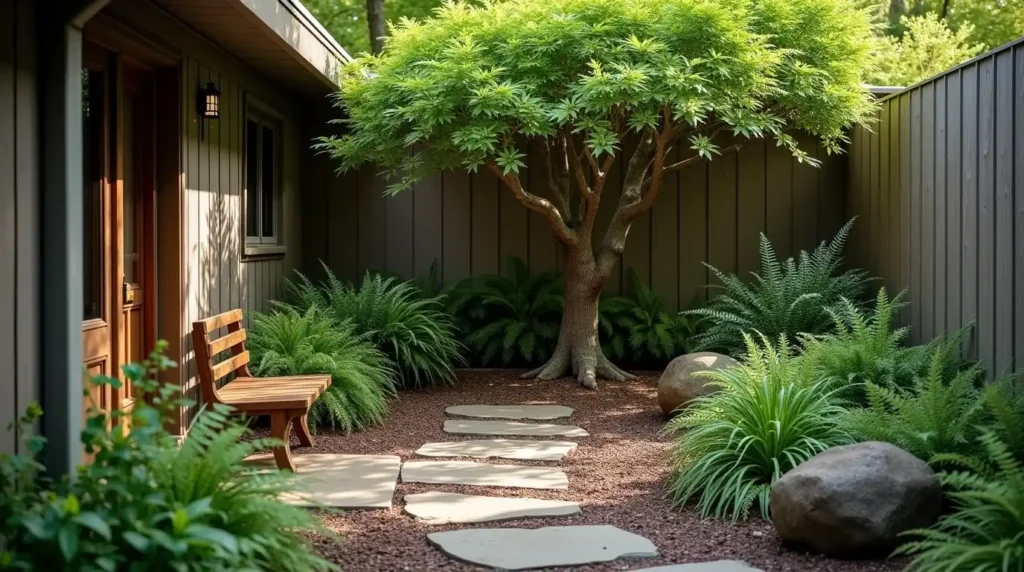
Choose one shaded part of the yard instead of changing everything at once.
Use one small tree or tall shrub as the main anchor. Add medium plants around it, then cover the soil with ferns or groundcovers.
A simple starter plan could include:
- One small understory tree
- Three medium shrubs
- Five to seven ferns
- One repeating groundcover
- One stone or wooden feature
Keep the number of plant types low. Repeating plants can make a small area feel larger and more organized.
Add one stepping stone or a short path if you need access.
This plan can also work for renters. Use large containers for the main plants if you cannot dig into the ground.
Build the area over time. You do not need to buy everything in one season.
Use Containers Where Digging Is Difficult
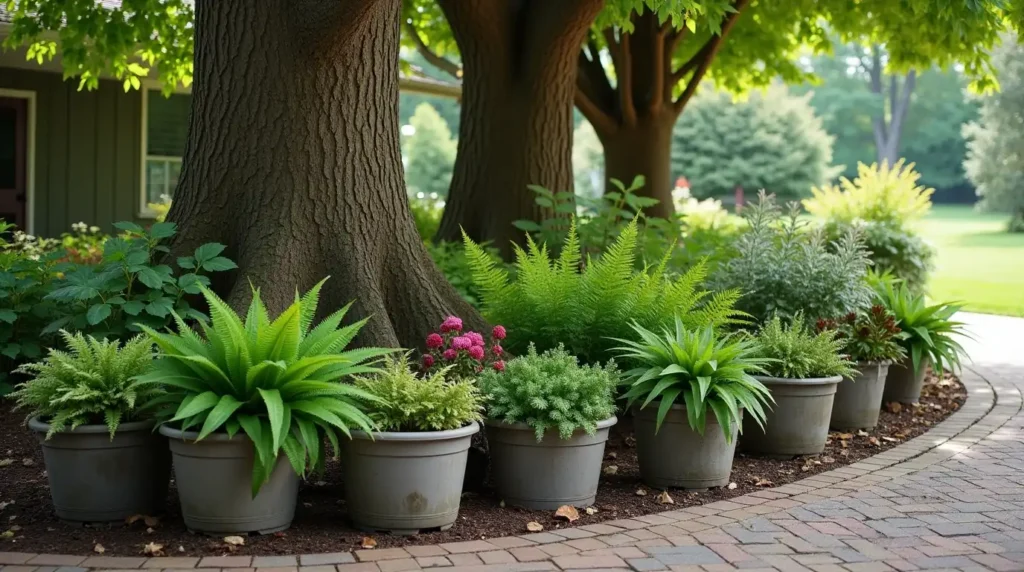
Large tree roots can make digging hard. Containers let you add plants without cutting through roots.
They also work well on patios, near steps, or in narrow side yards.
Choose pots with drainage holes. Water must be able to leave the container after rain.
Group pots in different heights. This creates the layered look found in a woodland garden.
You could try these plant groups:
- Fern, heuchera, and trailing groundcover
- Dwarf Japanese maple with low green plants
- Hosta with sedge and spring bulbs
- Brunnera with compact ferns
Use stone, dark ceramic, aged terracotta, or wood-look pots. Bright plastic may stand out too much in a natural setting.
Containers dry out faster than garden soil. Check them often during warm weather.
Move delicate pots into shelter during harsh winter weather if needed.
Plan for Every Season, Not Just Flowers
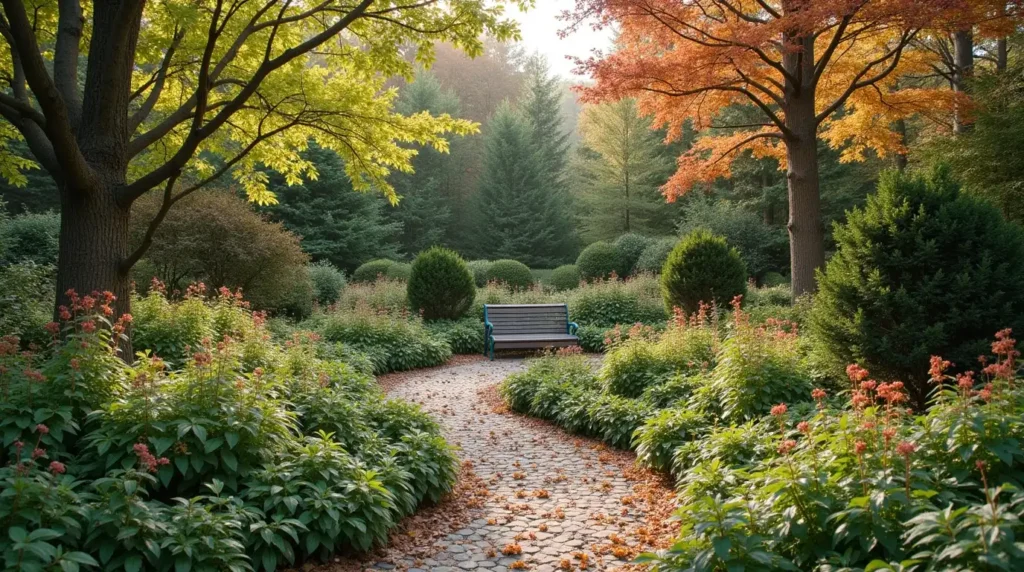
A garden based only on flowers may look empty when the blooms fade.
Plan for spring flowers, summer leaves, fall color, and winter shape.
Here is a simple seasonal plan:
- Spring: Bulbs, woodland flowers, and blooming understory trees
- Summer: Ferns, hostas, hydrangeas, and groundcovers
- Fall: Bright leaves, berries, and seed heads
- Winter: Bark, evergreen shrubs, stones, logs, and strong branch shapes
Repeat plants that stay attractive for several months.
Take photos of the garden in each season. The pictures will help you see bare areas and weak color periods.
You can then add one plant or feature to fix each problem.
Keep care simple:
- Leave clean leaves beneath shrubs as light mulch.
- Water new plants deeply while roots are growing.
- Remove invasive plants before they spread.
- Avoid digging around large tree roots.
- Divide crowded plants when needed.
- Prune damaged branches and plants blocking paths.
A low-maintenance shade garden will still need some care. But the work often becomes easier once the plants cover the soil and settle into place.
Start With Three Simple Changes
A good woodland garden begins with the yard you already have.
Study the light, soil, roots, and moisture before you plant. Build the garden in layers with trees, shrubs, ferns, and groundcovers. Add a clear path so the space feels useful.
You can also include one wildlife feature, such as a water bowl or native berry shrub.
Do not feel pressured to change the full yard at once. Start with one shaded corner and improve it over several seasons.
Choose three ideas from this list:
- One idea for structure
- One idea for planting
- One path, seat, or wildlife feature
Sketch these choices before you visit a garden center.
A few well-planned woodland garden design ideas can turn a bare shaded area into a calm and useful space. Start with the easiest change, then let your garden grow at a pace you can manage.