19 Ralph Lauren-Inspired Home & Garden Aesthetic Ideas
You may love the look of dark wood, aged leather, plaid fabric, and peaceful country gardens. Yet when you try to use these details at home, the result can feel too dark or too themed.
That is a common problem.
The classic Ralph Lauren look is not created by adding horse pictures to every wall. It comes from balance. Deep colors are paired with warm cream. Heavy wood sits beside soft linen. Formal garden shapes are softened with loose flowers and herbs.
You also do not need a large country house or a designer budget. A few well-chosen details can change the mood of a room, patio, or small balcony.
This guide shares 19 ways to create a Ralph Lauren-inspired home and garden aesthetic. You will learn how to choose colors, mix materials, style traditional rooms, and carry the same look outside.
Start with one idea. Then add more as your budget and space allow.
Build a Ralph Lauren-Inspired Home and Garden Aesthetic Palette
A clear color palette will stop your home from looking busy or random.
Begin with classic shades such as navy, forest green, warm cream, camel, burgundy, and rich brown. These colors feel warm and settled. They also work well with wood, leather, brass, and natural stone.
Choose three main colors and two smaller accent colors. For example:
- 50% cream or warm neutral
- 25% brown and dark wood
- 15% navy or forest green
- 10% burgundy, brass, or seasonal color
This formula is a guide, not a strict rule. Change it to match the light and size of your home.
A small room may need more cream and less brown. A sunny room can handle deeper walls or darker furniture.
Repeat one or two indoor colors outside. Navy cushions can appear on the patio. Burgundy can return through flowers or table linens.
Before buying anything, collect five color samples. Check them during the day and again after sunset.
Use Dark Wood Without Making the Room Feel Gloomy
Dark wood furniture brings warmth and history to a room. It can also make a small space feel heavy when used without balance.
Start with one main piece. Choose a walnut bookcase, mahogany-style table, dark oak cabinet, or deep brown console. Let that item become the visual anchor.
Then add lighter surfaces around it.
A cream sofa, pale rug, linen curtains, or warm white walls will keep the room open. Mirrors and glass can also reflect light. Brass lamps add a soft glow without fighting the wood tone.
Try mixing finishes instead of buying a matching furniture set. Place an aged side table beside a cleaner, polished cabinet. This makes the room feel collected over time.
For a simple traditional living room, use:
- One dark wood bookcase
- A cream or beige sofa
- A faded patterned rug
- Two brass lamps
- Navy and tartan cushions
Renters can use smaller pieces such as wood frames, trays, shelves, and side tables.
Add Aged Leather Without Filling the Room With Brown
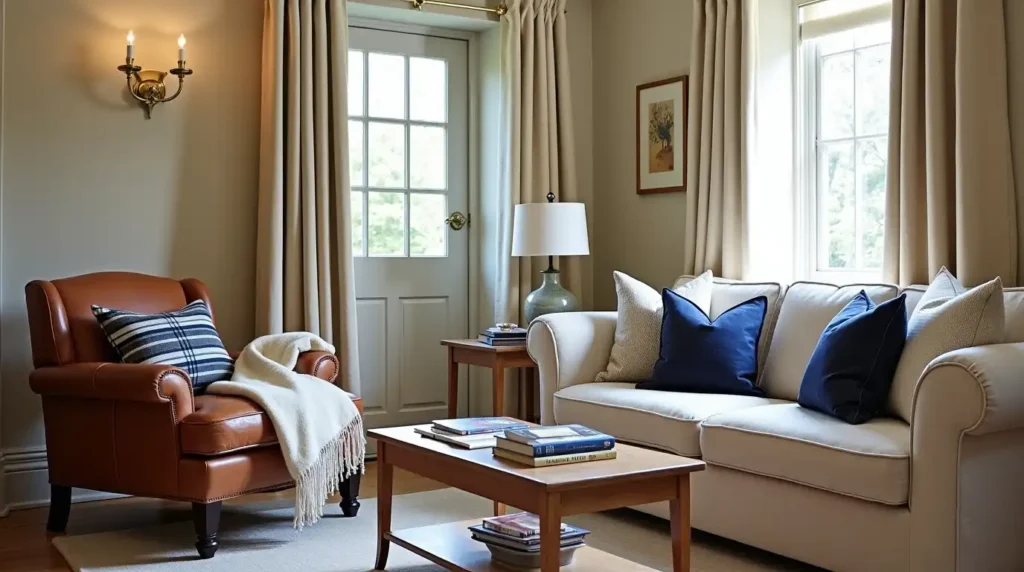
Leather adds character, but too much can make a room feel hard and cold.
Choose one main leather piece. A cognac chair, tobacco-colored sofa, oxblood footstool, or deep brown bench is often enough.
Pair it with softer fabrics. Wool, linen, velvet, and cotton will break up the smooth leather surface.
For example, place a brown leather chair beside a wooden floor lamp. Add a cream wool throw and one tartan cushion. A small table with two or three books completes the corner.
Look for leather with gentle creases and natural color changes. These marks can add charm. Avoid pieces with deep cracks, weak seams, strong smells, or damaged support.
Real leather is not the only option. Good faux leather can work in homes with children, pets, or smaller budgets.
Secondhand furniture is also worth checking. Measure the item before buying. Sit on it and test the frame.
The goal is to add warmth, not to create a room made from one material.
Mix Tartan, Stripes, Herringbone, and Linen
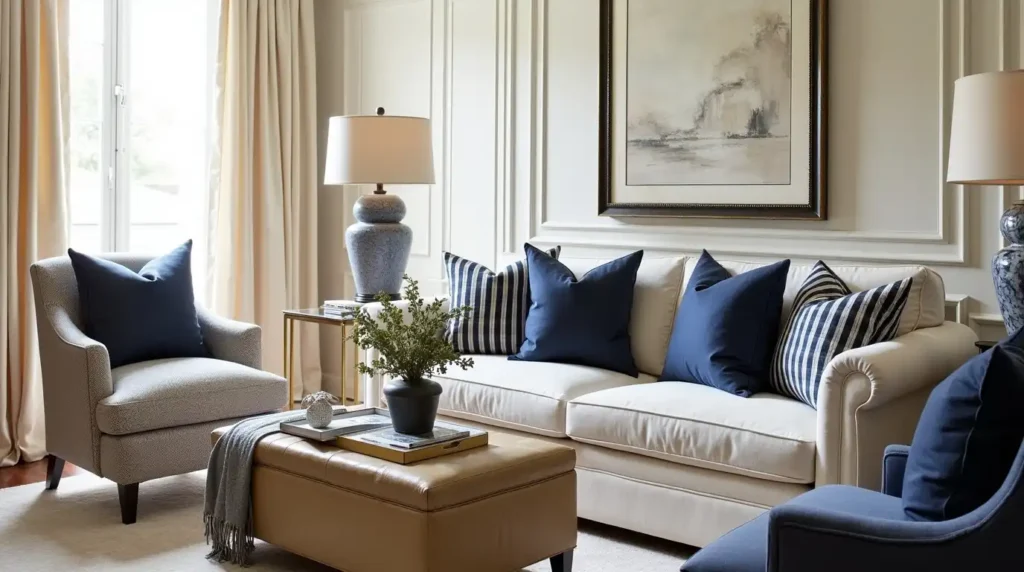
Patterns bring life to Ralph Lauren-inspired home decor. The key is to control their size and color.
Start with one strong pattern. This may be a tartan throw, plaid curtain, striped rug, or patterned chair.
Add one medium pattern and one small pattern. Keep at least one color the same across all three.
A simple combination could include:
- A large tartan throw
- Medium navy-striped cushions
- Small herringbone fabric on a chair
The shared navy color will hold the mix together.
Plain fabrics are just as important. Linen curtains, cream cushions, and a solid sofa give the patterns space to breathe.
Change some fabrics by season. Use linen and cotton in warm weather. Bring in wool, velvet, and heavier plaid when the weather cools.
Avoid placing several large patterns beside each other. They may compete for attention.
Stand at the room entrance and look at the full space. Remove one patterned item when your eye has nowhere to rest.
Style Blue-and-White Ceramics With Warm Metals
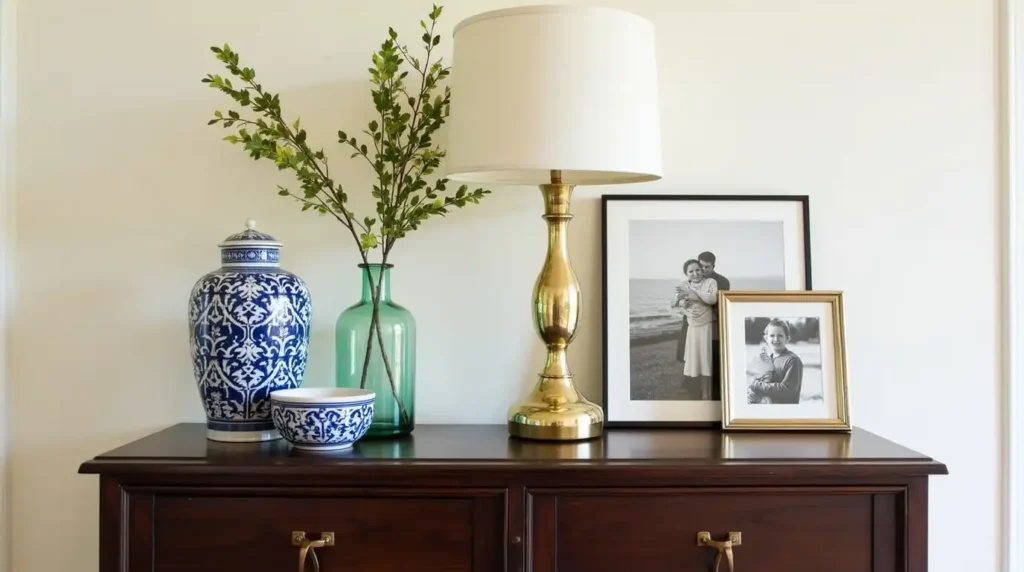
Blue-and-white ceramics can brighten dark wood and deep wall colors.
Use them through bowls, jars, plates, lamps, or garden pots. You do not need a large collection. Three or five pieces can have more impact than a crowded shelf.
Mix different heights and shapes. Place one tall jar beside a shorter bowl. Add a framed photo or a small plant to break up the display.
Warm metals stop blue-and-white pieces from feeling cold. Aged brass, bronze, silver, or pewter can work well.
Try this five-piece entryway display:
- One tall blue-and-white jar
- One brass table lamp
- Two framed family photographs
- One small bowl for keys
- A few fresh branches or leaves
Repeat the blue-and-white idea outdoors. Use matching planters near a door or fill a container with white and blue flowers.
Keep some empty space on the table or shelf. If the display feels crowded, remove one object.
Good styling often depends on what you leave out.
Use Equestrian Home Decor Without Creating a Theme Room
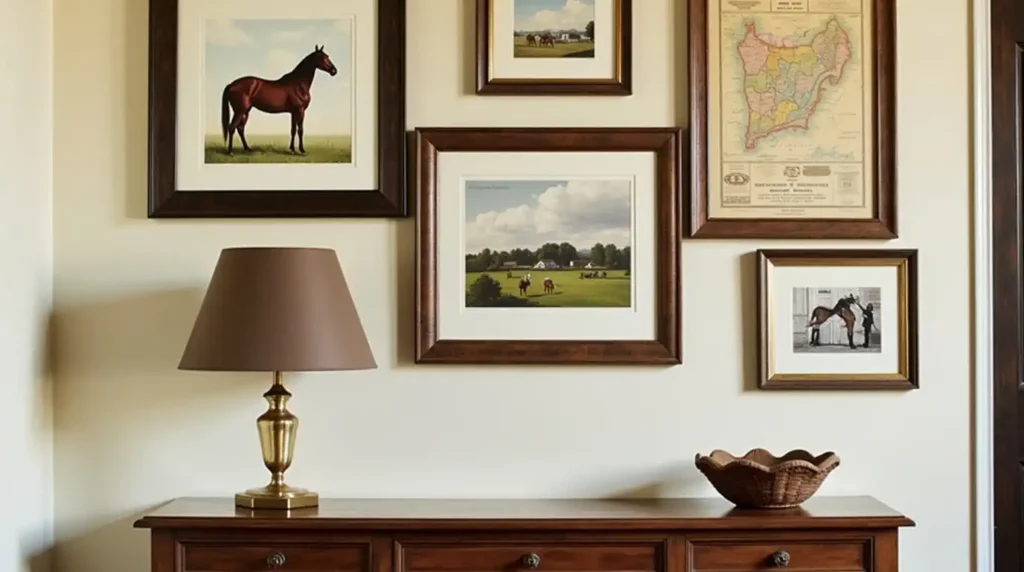
Horse art can support this look, but it should not appear on every wall and cushion.
Use one or two direct equestrian details in each area. Then mix them with landscapes, maps, family photos, and simple objects.
A balanced gallery wall may include:
- One horse print
- One countryside landscape
- Two family photographs
- One vintage map
- One small brass object on the table below
Choose frames in dark wood, black, or aged gold. They do not need to match, but their colors should feel related.
You can also use less direct details. Leather straps, old trophies, stable-style lanterns, and countryside scenes can suggest the look without making it obvious.
Leave some empty wall space around the art. This gives each piece more value.
Avoid buying several novelty horse items at once. One strong print will often look better than many small decorations.
Think of equestrian home decor as one layer within the room, not the full theme.
Create a Library-Style Reading Corner in a Small Space
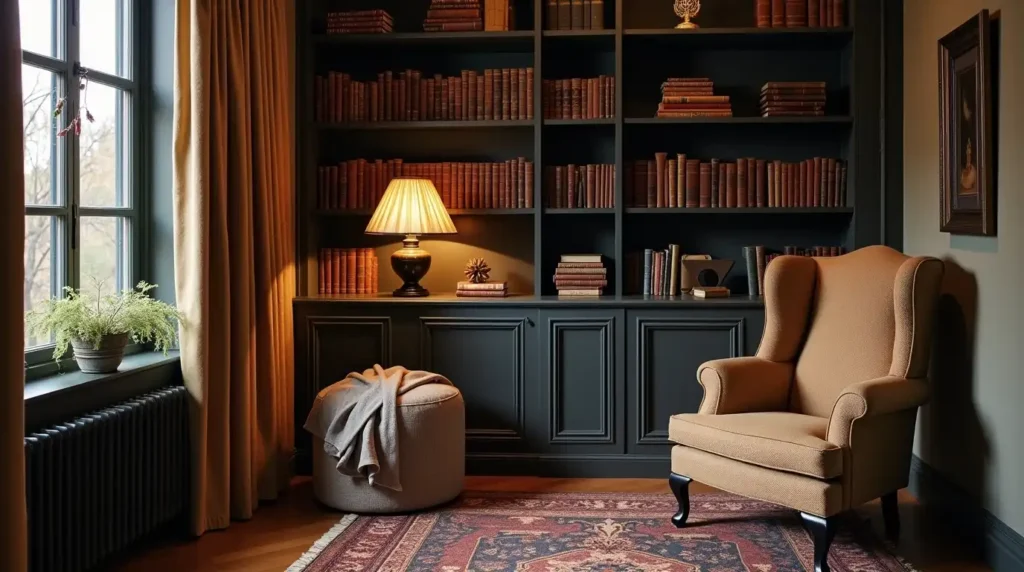
A reading corner can give your home the quiet, settled mood linked with an old country house.
You do not need a separate library. One corner of a living room, bedroom, or hallway can work.
Start with a comfortable chair. Add a floor lamp, side table, small rug, and easy access to books.
A simple setup may include:
- A secondhand wingback chair
- A lamp with a pleated shade
- A narrow dark bookcase
- A plaid footstool
- A soft wool throw
Arrange most books upright. Add a few small horizontal stacks for variety. Place one framed photo or small object between groups of books.
Do not style every shelf. Leave room for future books and personal items.
Renters can use a slim freestanding shelf instead of built-in storage. A dark removable wallpaper panel behind the shelf can add depth.
Keep the reading light close to shoulder height. The chair should also have good back support.
A beautiful corner will not help if it is uncomfortable to use.
Add Layered Lighting for a Warm Evening Mood
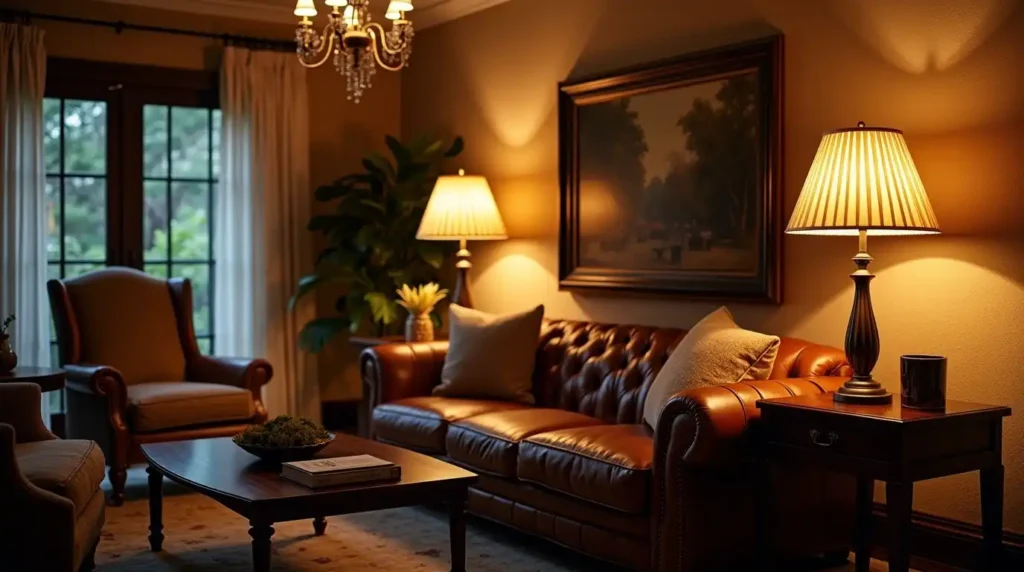
One bright ceiling light can flatten a traditional room. It may also create harsh shadows.
Use several smaller light sources instead.
Start with a central pendant or chandelier. Add table lamps, a reading lamp, and wall lights where possible. Picture lights can draw attention to art or bookshelves.
A simple living room plan may include:
- One central ceiling light
- Two table lamps
- One floor or reading lamp
- One picture light
- Candles for special evenings
Choose warm bulbs rather than bright white ones. Warm light works well with leather, wood, brass, and deep paint colors.
Pleated shades can soften the light. Library lamps and shaded chandeliers can add a classic touch without taking over the room.
Switch off the main ceiling light one evening. Look for corners that feel dark or empty. Add small lamps where you read, talk, or serve drinks.
Place lighting where it supports an activity. Do not add lamps only for decoration.
Set a Dining Table That Feels Formal but Relaxed
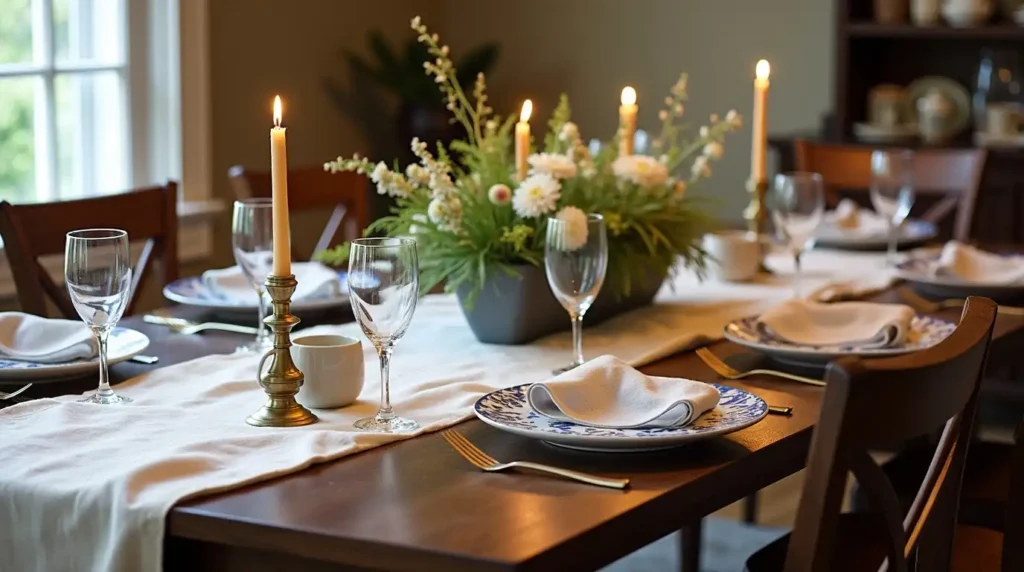
A country-house dining area should feel special without becoming stiff.
Begin with a solid wood table. It can be dark, painted, old, or new. The table does not need to match every chair.
Use white or cream dishes as your base. Add patterned plates, clear glasses, and simple metal candleholders.
A useful five-part table formula is:
- White or cream table linen
- Blue-and-white dishes
- Clear drinking glasses
- Brass or silver candleholders
- Fresh garden flowers in a small jar
For a casual meal, skip the full tablecloth. Use linen napkins and a small bowl of herbs or flowers.
For a more formal setting, add placemats, tall candles, and a second glass for each person.
Keep flower arrangements low. Guests should be able to see each other across the table.
A small apartment table can create the same mood. Use two candleholders, cloth napkins, and one ceramic bowl.
You do not need a formal dining room to enjoy country house entertaining.
Give Your Entryway a Polished Country-House Look
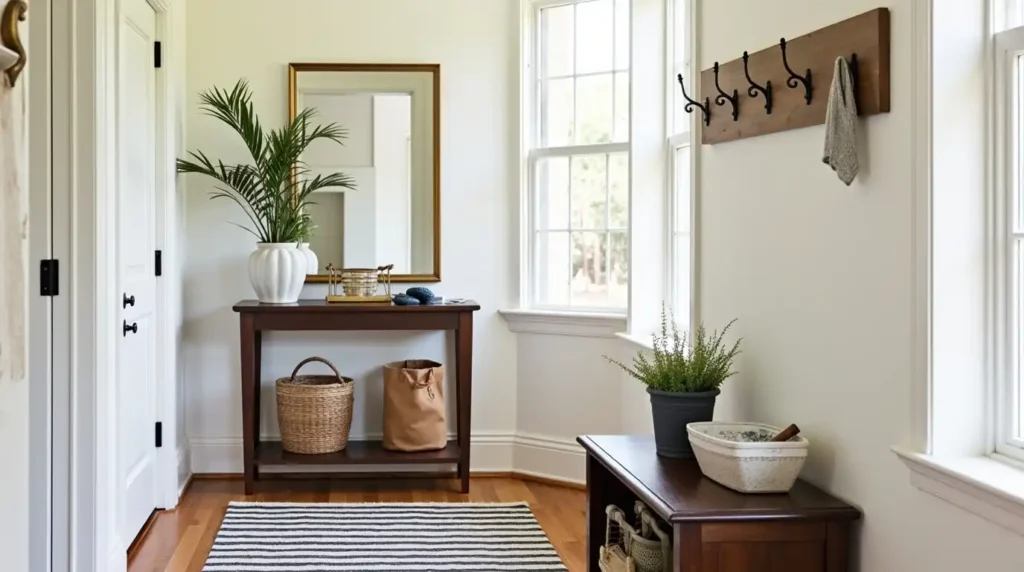
Your entryway sets the mood for the rest of the home.
Use it to introduce your main colors and materials. Dark wood, brass, stripes, and greenery can all work well here.
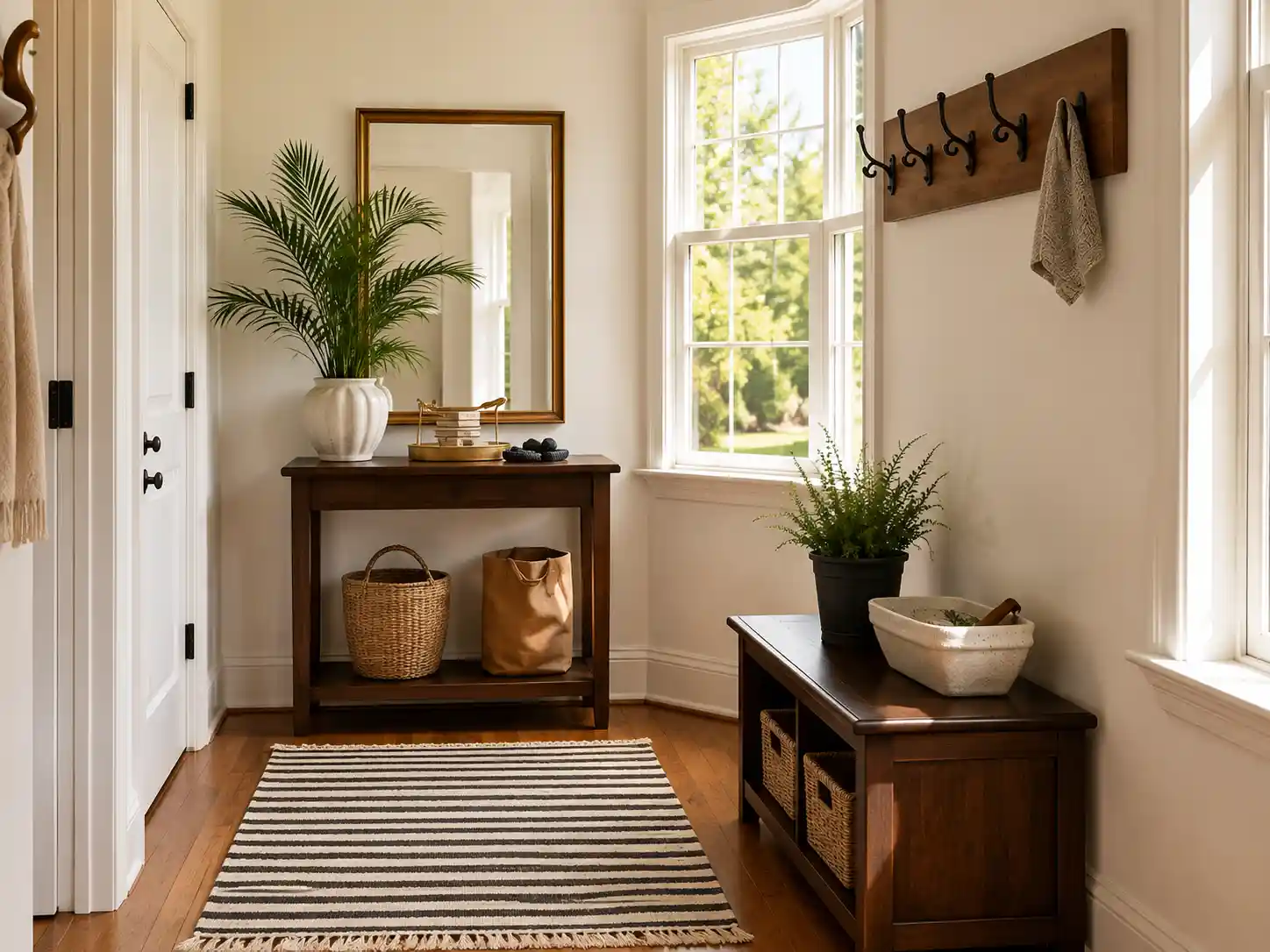
A small entry may include:
- A narrow wood console
- A brass-framed mirror
- A vintage-style tray
- A striped runner
- One large ceramic planter
Storage still matters. Add a basket for shoes, hooks for coats, or a tray for keys. A bench can offer both seating and hidden storage.
In a narrow hallway, avoid deep furniture. Choose a slim console or floating shelf.
One mirror can make the space feel larger. It will also reflect light from a lamp or nearby window.
Keep one clear focal point. This may be a large mirror, a lamp, or a piece of art.
Do not cover the entry table with small decorations. Guests need space to place a bag, parcel, or keys.
A useful entryway will always feel more welcoming than a crowded one.
Connect Your Indoor and Outdoor Spaces With Repeated Details
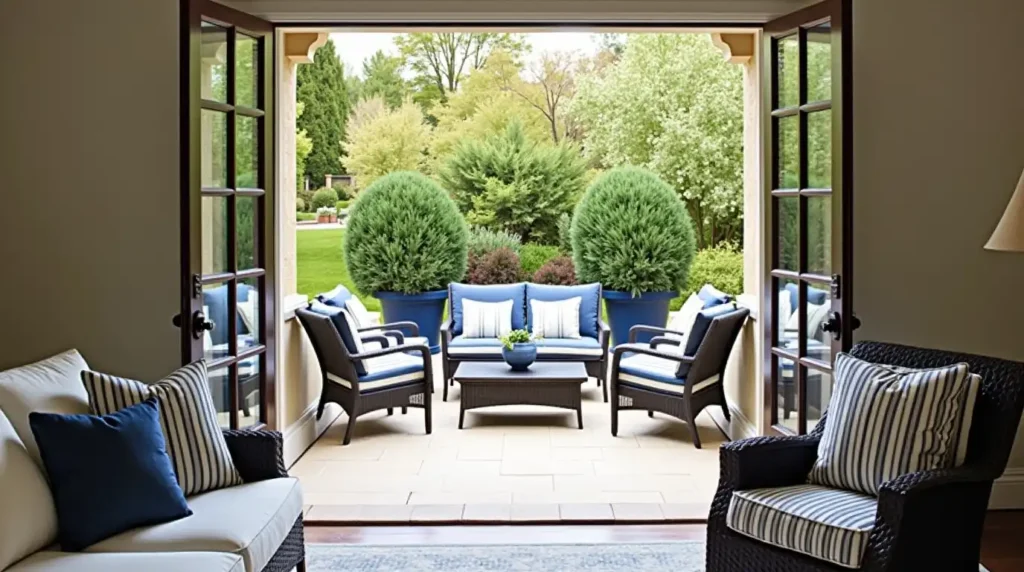
Your garden should not feel like a separate project with no link to the house.
Stand inside and look through the nearest door or window. Notice which colors and materials are already visible.
Repeat one indoor color outdoors. A navy living room cushion could appear again through:
- Navy-striped patio cushions
- Blue-and-white planters
- Blue flowers
- Dark painted garden furniture
You can also repeat materials. Wood, stone, black iron, linen, and wicker can move between both areas.
Place indoor chairs where they face the best garden view. Outside, position planters or a bench where they can be seen from the room.
Matching everything is not required. The spaces simply need a few shared details.
Take one photo from inside the house and another from the patio. Compare the colors. Add or remove items until the two areas feel connected.
This small step can make the full property look larger and more planned.
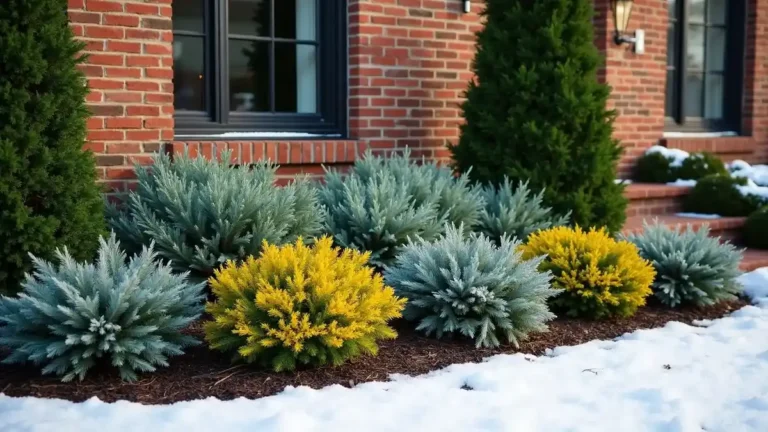
Shape the Garden With Evergreen Structure
Flowers can look beautiful for a short time. Evergreen plants give the garden shape throughout the year.
Use clipped shrubs, low hedges, rounded plants, or matching containers to form a clear base. Add flowers after the main structure is in place.
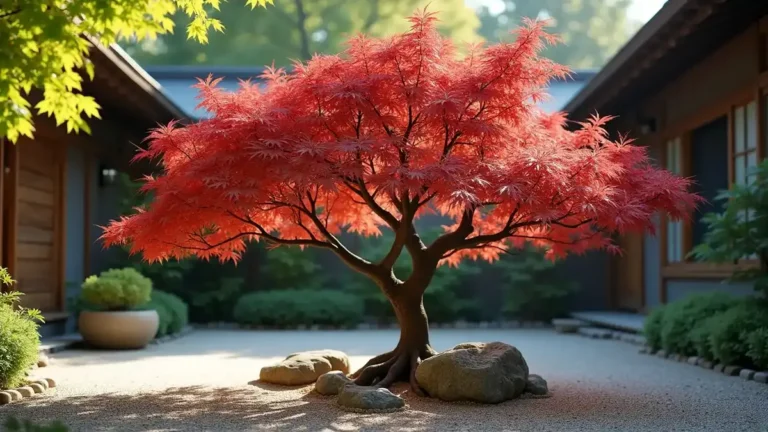
Formal garden design often uses balance and repeated shapes. Matching pots beside a door can create order. A straight path with low edging can make a small garden feel longer.
Try this simple entrance plan:
- Two matching evergreen planters
- One clear path
- Low clipped plants along the edge
- Softer flowers behind the green structure
Boxwood is a common choice, but it may not suit every climate. Ask a local nursery for plants that grow well in your area and can handle regular trimming.
Small gardens can use containers instead of hedges. Two or four similar pots can create the same sense of order.
Draw the main shapes on paper before buying plants. Start with paths, beds, and evergreen forms.
Seasonal flowers should decorate the plan, not control it.
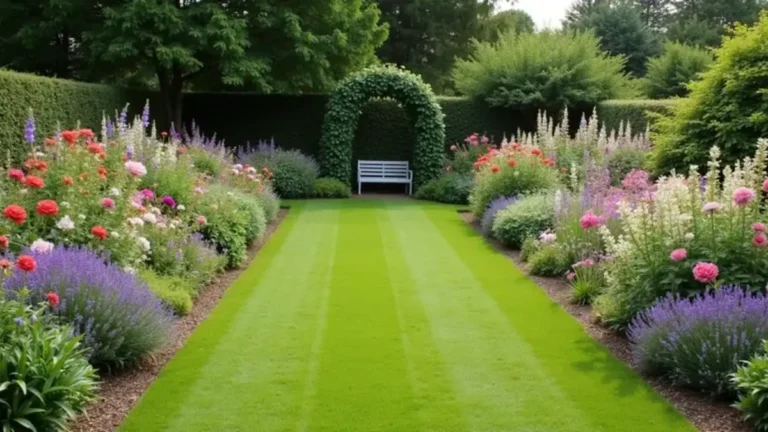
Soften Formal Planting With Hydrangeas, Roses, and Herbs
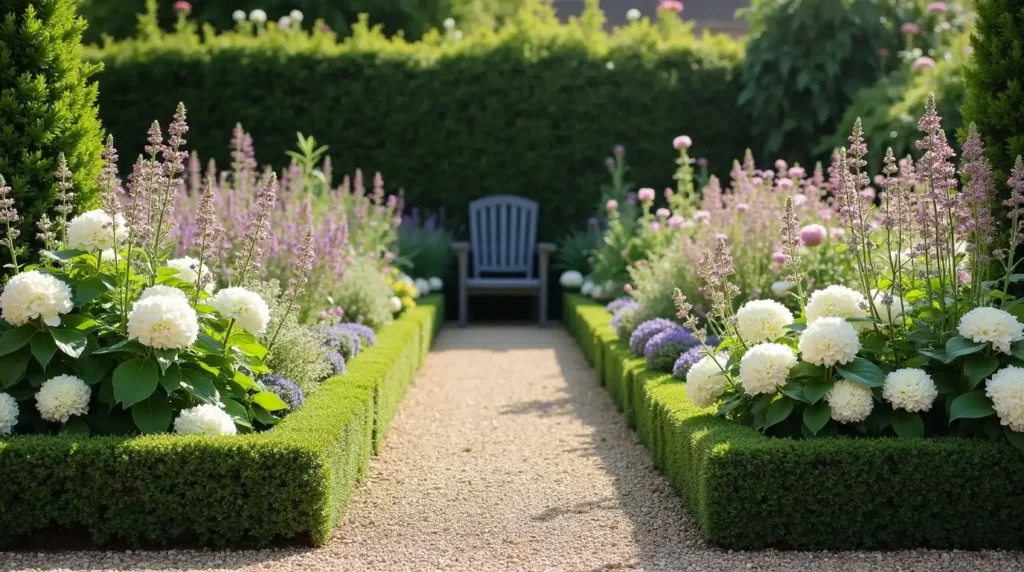
A garden filled with clipped plants can feel too stiff. Soft flowers bring movement and color.
Hydrangeas, roses, lavender, catmint, and herbs often suit English country garden ideas. Still, each plant must match your local weather, soil, and sunlight.
Choose a simple color group. White, blue, cream, dusty pink, and deep burgundy work well with green shrubs and dark outdoor furniture.
A sample border may include:
- Low evergreen plants at the front
- White hydrangeas or a local substitute
- Climbing roses on a wall or arch
- Lavender or catmint near the path
- Spring bulbs between larger plants
Herbs can also add scent and texture. Rosemary, thyme, sage, and lavender are useful near seating and paths.
Do not buy plants based on photos alone. Check how much sun the area receives. Look at the soil after heavy rain.
Ask whether each plant will fit the space when fully grown.
A smaller plant in the right place will perform better than a popular plant in poor conditions.
Use Gravel, Brick, or Stone Paths to Give the Garden Direction
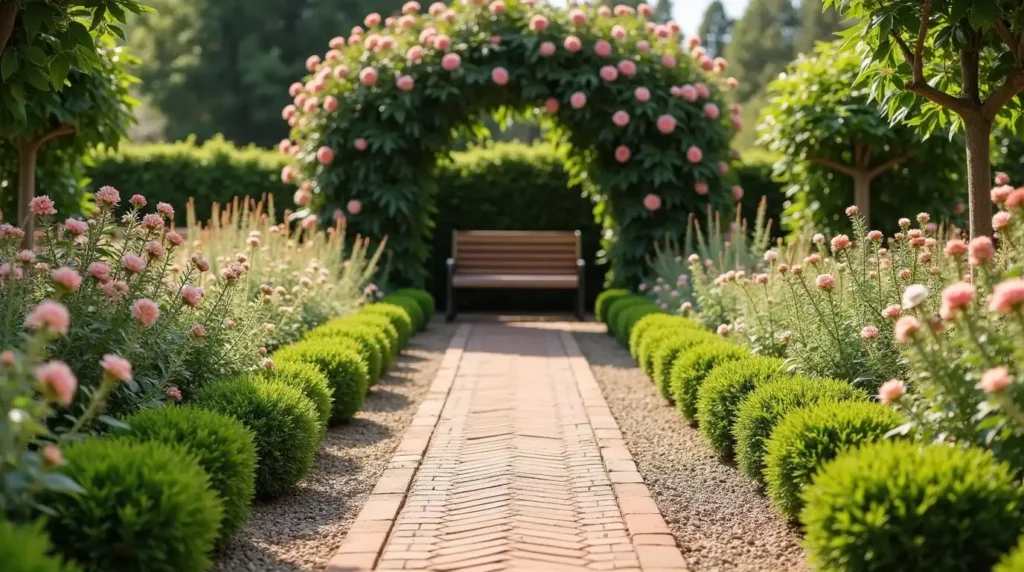
A path should lead the eye and help people move through the garden.
Gravel can create a relaxed country look. Brick feels warm and traditional. Natural stone offers a more solid surface.
Before choosing a material, think about drainage, cleaning, cost, and access. Loose gravel may be hard for wheelchairs, strollers, or people with weak balance.
Use edging to keep the path neat. Low plants, metal strips, bricks, or clipped shrubs can all define the sides.
Give the path a clear destination. It may lead to:
- A small dining area
- A shaded garden bench
- A rose-covered arch
- A birdbath
- One large planter
Avoid adding a winding path when the area is very small. It can waste space and feel forced.
Mark the route with rope before building it. Walk along the line several times.
Check that the path feels natural and wide enough for daily use.
Create a Country-House Outdoor Dining Area
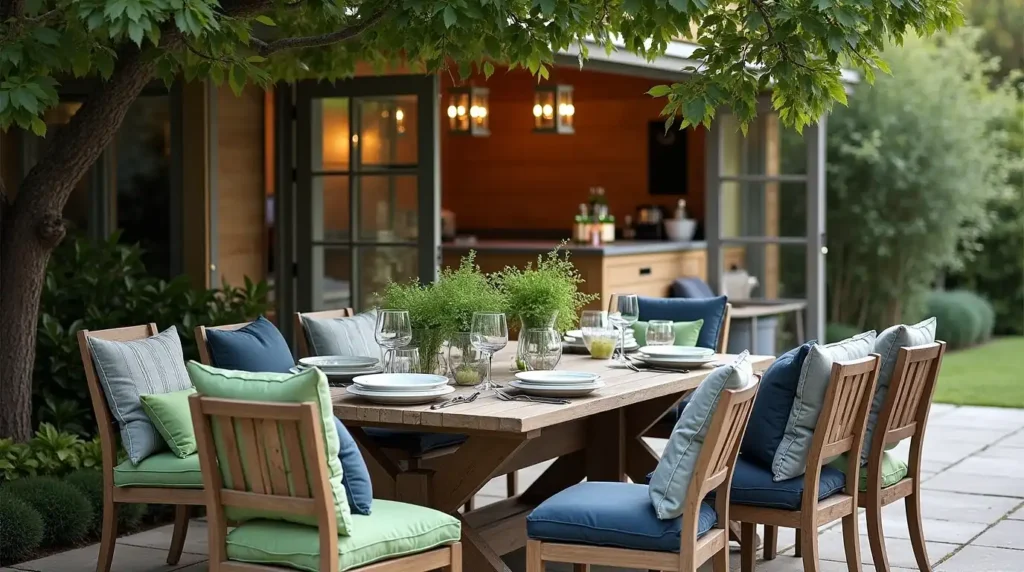
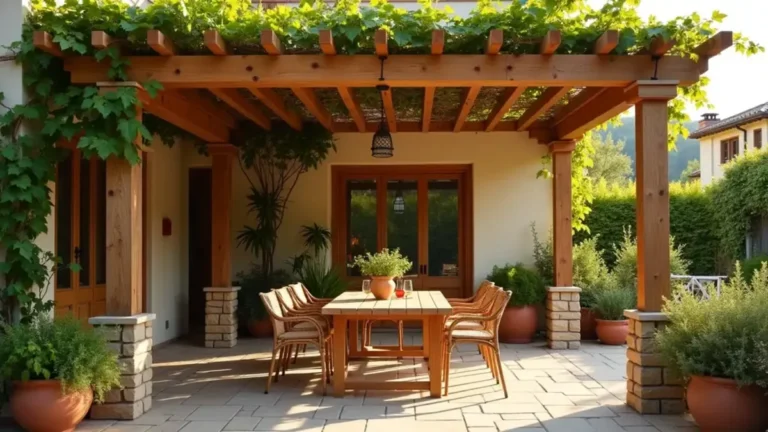
Outdoor dining feels more welcoming when it is planned around comfort.
Choose a level spot near the kitchen or back door. A sheltered area will make carrying food and dishes easier.
Use wood, wrought iron, wicker, or simple metal furniture. Add seat cushions in navy, cream, or green.
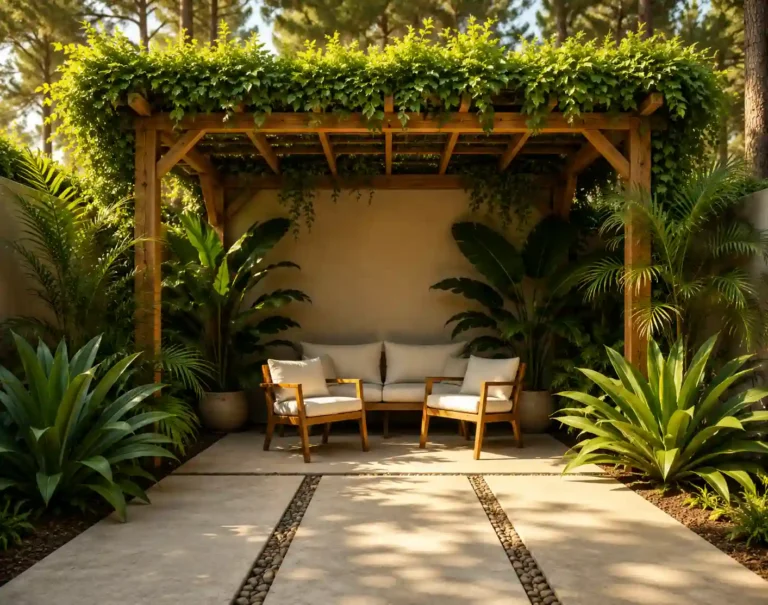
Shade is important. Use an umbrella, pergola, covered patio, or mature tree.
A weekend table may include:
- A weathered wood table
- Green or navy cushions
- White dishes
- Clear glasses
- Herb or flower cuttings
- Lanterns for evening light
Store cushions in a waterproof box when they are not in use. Keep a tray nearby for moving plates and glasses.
For a small patio, use a round table and folding chairs. One large planter can create more impact than several tiny pots.
Place the table where guests can see the best part of the garden.
The area should feel easy to use, not like a display that must remain perfect.
Mix Vintage Garden Furniture With Classic Planters
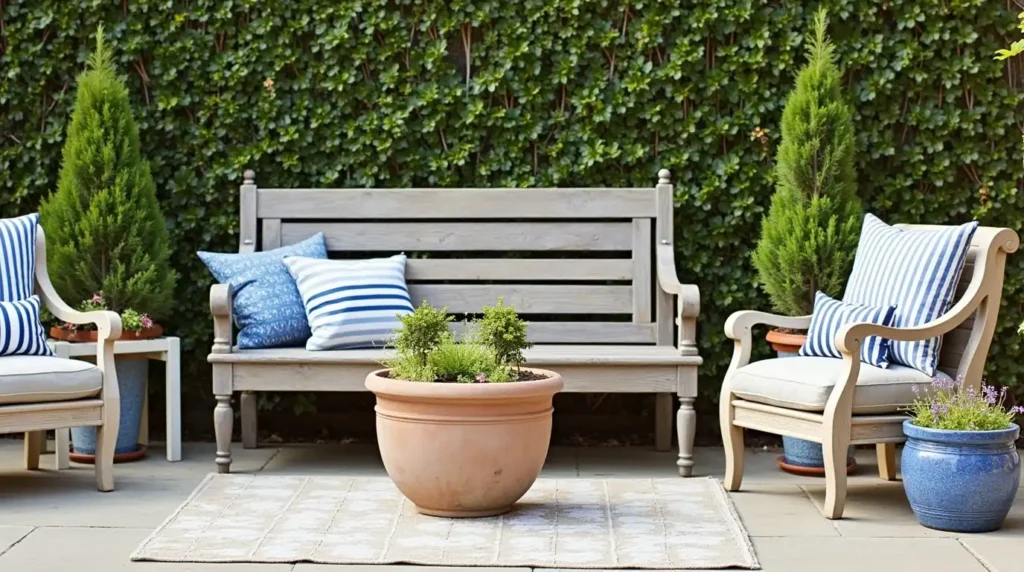
Vintage furniture can give an outdoor area more character. It should still be safe and comfortable.
Start with one older-looking piece. This may be a weathered bench, metal table, or wooden chair.
Mix it with modern seating if needed. A new chair can sit beside an old bench when the colors and materials work together.
Use planters to create order. Terracotta, stone, lead-effect, and blue-and-white pots all suit a traditional outdoor space.
Repeat one or two container shapes. This looks calmer than using many unrelated pots.
Before buying secondhand furniture, check for:
- Loose joints
- Deep rust
- Rot or soft wood
- Sharp edges
- Missing parts
- High repair costs
A faded finish can be charming. Weak legs are not.
Try pairing a garden bench with two simple chairs, matching evergreen pots, and one large flowering planter.
Add a striped outdoor blanket when the weather is cool. Store it inside after use.
Add Equestrian Garden Details With Restraint
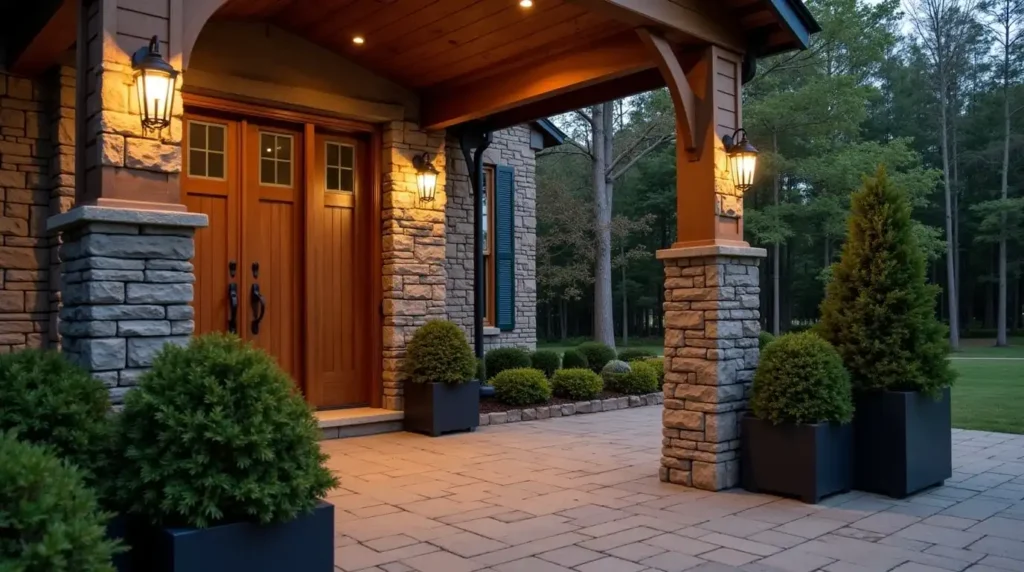
Subtle equestrian garden decor will look more refined than a large group of horse-themed objects.
Choose one main detail. A stable-style lantern, dark iron gate, bronze horse figure, or trophy-shaped planter may be enough.
You could also hang one vintage horse print in a covered patio. Keep it protected from rain and direct sunlight.
Pair the themed item with natural materials and simple planting. Wood, stone, leather-look handles, and deep green plants can support the mood.
Try this:
- Use one stable-style wall lantern beside a door.
- Add a dark planter below it.
- Fill the pot with one neat evergreen plant.
Avoid this:
- Horseshoes on every wall
- Several horse statues in one bed
- Horse prints on cushions, signs, pots, and rugs
- Novelty objects that do not serve a purpose
The best equestrian details often feel like part of the building or garden.
Choose one feature, then let the rest of the space stay simple.
Layer Outdoor Lighting, Cushions, and Throws
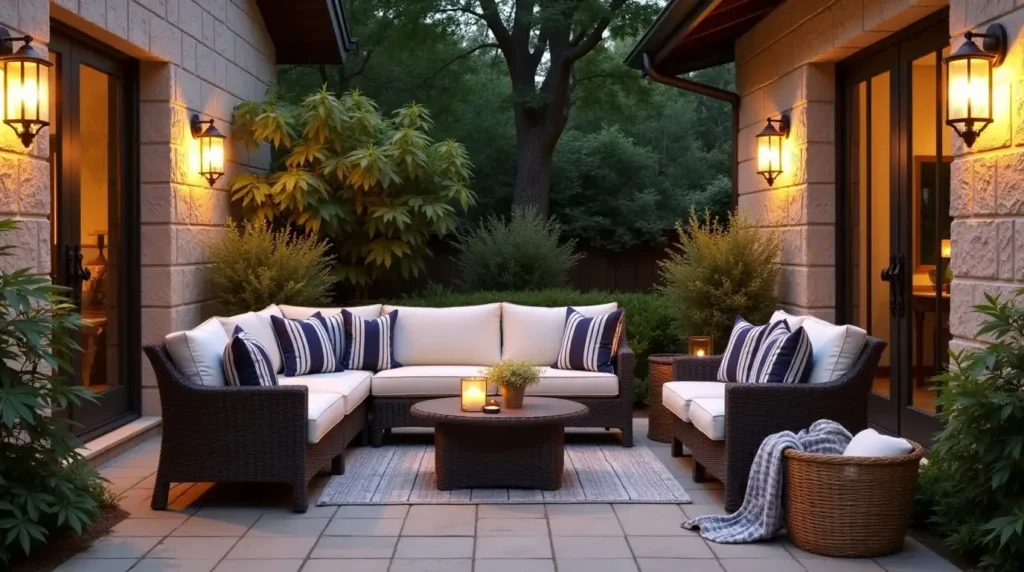
Your outdoor space should still feel welcoming after sunset.
Use three levels of lighting:
- Wall lights for doors and main areas
- Low lights for paths and steps
- Lanterns or candles for the table
Stable-style wall lights can add a traditional feel. Small path lights improve safety. Portable lamps are useful when permanent wiring is not possible.
Use outdoor-safe cushions in navy, cream, green, stripes, or soft plaid. Choose washable covers that can handle sun and light rain.
Throws can add warmth on cool evenings. Keep them in a basket indoors or in a dry storage box.
Do not leave soft fabrics outside during long periods of bad weather. Damp cushions can develop stains and smells.
Place lights where people walk, sit, and serve food. Avoid bright lights aimed directly at faces.
The goal is a warm glow that helps people relax and move safely.
Test the area at night before adding more fixtures.
Refresh the Look With Simple Seasonal Layers
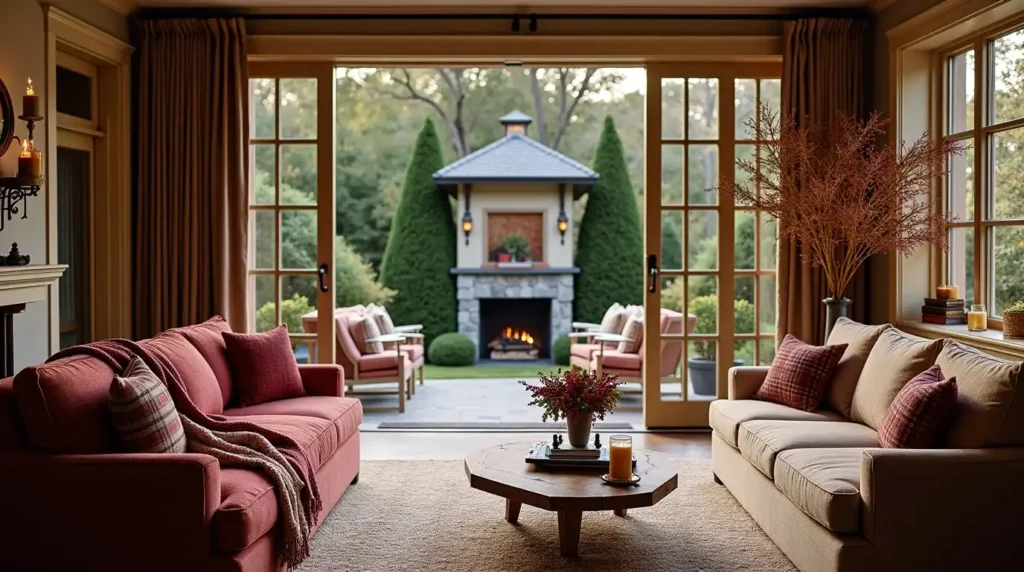
A strong base should work in every season.
Keep the main furniture, rugs, lighting, and garden structure simple. Change smaller details as the weather shifts.
Use this seasonal plan:
Spring
Add pale blue fabric, fresh greenery, flowering branches, and spring bulbs.
Summer
Use linen napkins, striped cushions, blue-and-white dishes, and light outdoor throws.
Autumn
Bring in burgundy, wool, dry branches, dark berries, and brass candleholders.
Winter
Use tartan, evergreen cuttings, cream candles, and deep red details.
Store seasonal items in labeled boxes. Cushion covers and table linens take less room than full decorations.
Do not add new items before checking what you already own. Remove pieces that no longer fit the color plan.
Seasonal traditional decor works best when it changes the mood without changing the full room.
Keep the base calm. Let flowers, fabrics, and table settings mark the season.
Create a Home That Feels Collected, Not Copied
You do not need to replace everything you own.
Begin with a clear color palette. Add one strong piece of dark wood or leather. Use plaid, linen, warm lamps, books, and aged metal to build depth.
Outside, start with evergreen structure and a clear path. Then soften the garden with flowers, herbs, comfortable seating, and gentle light.
Repeat a few colors and materials between the house and garden. This simple step will connect the full space.
Choose one indoor anchor and one outdoor anchor first. A leather chair and two matching planters could be enough.
With a few carefully repeated colors and materials, you can create a Ralph Lauren-inspired home and garden aesthetic that feels personal, warm, and settled.
Start with the room or garden area you use most. Build the rest slowly.