19 Garden Design Styles and Layout Ideas
A garden can look full of plants and still feel unfinished. The usual problem is not a lack of flowers. It is a lack of direction.
The best garden design styles give every part of the yard a clear role. Paths guide movement. Beds frame views. Seating sits where people will use it. Plants match the light, soil, climate, and time you can give them.
This guide covers 19 popular styles, from formal and cottage gardens to modern, tropical, and small-space layouts. You will learn what each style looks like, who it suits, which plants and materials fit, and what mistakes to avoid.
You do not need a huge yard or a large budget. You need one clear plan. Use these garden layout ideas to pick a look that fits your home and helps your outdoor space work better.
How to Choose Between Garden Design Styles
Saving garden photos is easy. Choosing one style that fits your real yard is harder.
Start with how you want to use the space. Do you need a dining area, a safe place for children, a quiet corner, food beds, or room for pets? A garden that looks good but fails to support daily life will soon feel frustrating.
Next, look at your house. A modern home often works well with straight paths, simple planting blocks, and clean materials. An older cottage may suit curved paths, mixed borders, climbing plants, and softer edges.
Your site matters just as much. Check where the sun falls during the day. Look for wet spots after rain. Notice strong wind, deep shade, poor soil, and steep slopes. These facts should guide your plant choices and layout.
Be honest about upkeep. Formal hedges need clipping. Containers dry out fast. Meadow planting needs weed control during its first years. A low-care yard still needs some work.
Set a budget before you choose paving, walls, mature trees, or water features. Hard materials often cost more than plants. You can save money by keeping the layout simple and adding plants over time.
Ask yourself these five questions:
- Do you prefer straight lines or curved ones?
- Do you like neat planting or a softer look?
- How much time can you spend on care each month?
- Will you use the garden for meals, play, food, or rest?
- Which colors and materials already appear on your home?
Your answers will point you to the right group. Straight lines fit formal, modern, and minimalist gardens. Curves fit cottage, English, and woodland styles. Dry yards suit Mediterranean or xeriscape plans. Small enclosed spaces often work best as courtyards.
Quick Garden Style Comparison
| Style | Best for | Layout | Care level | Main feature |
| Formal | Traditional homes | Straight and balanced | High | Symmetry |
| Cottage | Flower lovers | Curved and full | Medium to high | Mixed borders |
| Woodland | Shady yards | Loose and layered | Medium | Trees and shade plants |
| Modern | Newer homes | Geometric | Medium | Clean lines |
| Mediterranean | Hot, dry areas | Open and gravel-based | Low to medium | Herbs and stone |
| Tropical | Warm climates | Dense and layered | Medium to high | Large leaves |
| Xeriscape | Low-water yards | Zoned by water needs | Low to medium | Drought-tolerant plants |
| Courtyard | Small enclosed spaces | Edge planting | Medium | One strong focal point |
Classic and Formal Garden Design Styles for a Neat Look
Classic gardens rely on balance, repeated shapes, and strong focal points. They often suit traditional homes, but you can also use their rules in smaller yards.
Formal Garden
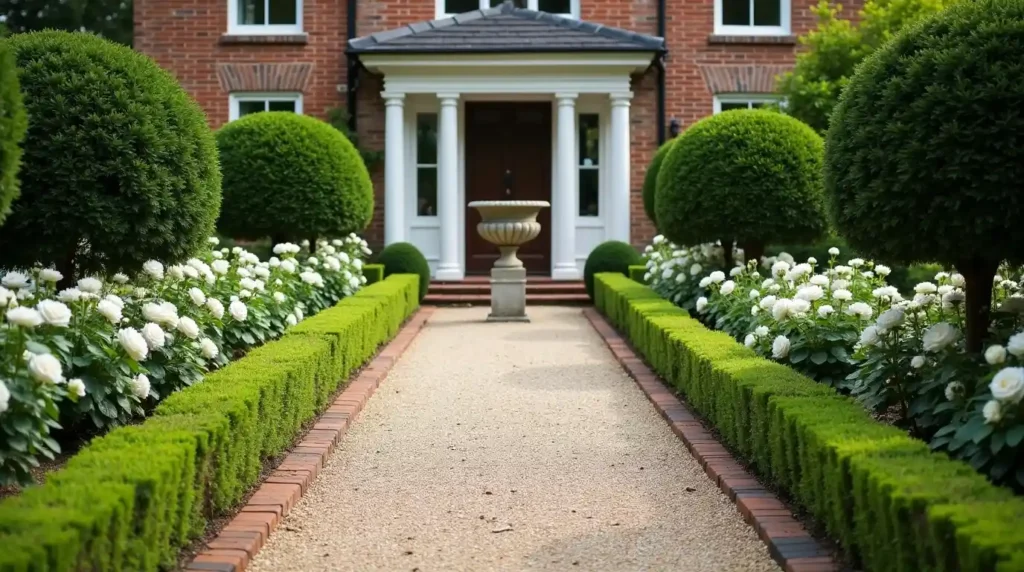
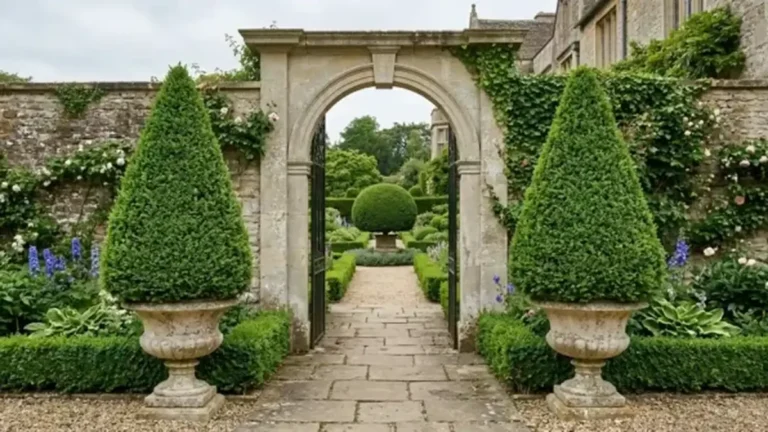
A formal garden uses straight lines, matched beds, clipped plants, and clear views. It feels calm because both sides often mirror each other.
Best for: Traditional homes, wide entrances, and people who enjoy regular trimming.
Layout idea: Run a straight path from the house to a fountain, bench, tree, or urn. Place equal beds on both sides. Keep the path width and bed shape the same from end to end.
Good plant choices include yew, privet, roses, and region-safe boxwood substitutes. Gravel, brick, and cut stone support the neat look.
This style needs steady care. Hedges lose their shape without clipping. Weeds stand out in gravel. Uneven edges can make the full garden look untidy.
Mistake to avoid: Do not add random curved beds or many plant colors. They can break the strong visual order.
French Garden
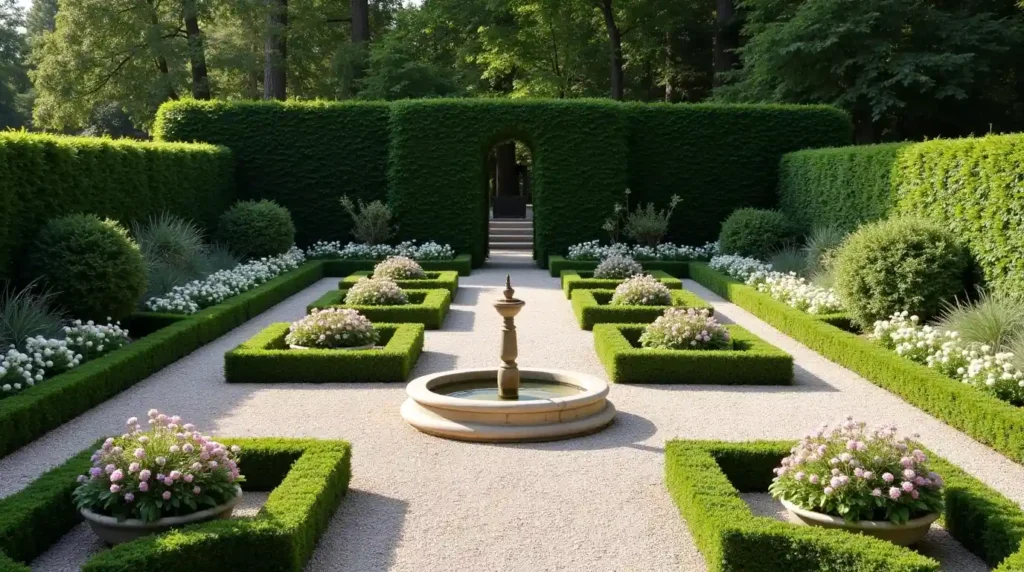
French gardens take formal design further. They use long views, repeated patterns, balanced beds, and a strong central line.
The gardens at Versailles show this style on a huge scale. Your yard does not need palace-sized paths. You can copy the basic rules in a small space.
Best for: Large front yards, period homes, and homeowners who like polished details.
Layout idea: Create a cross-shaped path with one feature in the center. Use four matching beds around it. Fill them with clipped plants, simple flowers, or gravel patterns.
Keep the color range small. Green, white, soft pink, and purple often work well. Stone pots, low hedges, and gravel add structure.
Mistake to avoid: Do not fill every bed with a different pattern. Two or four matching areas are enough for most homes.
Italian Garden
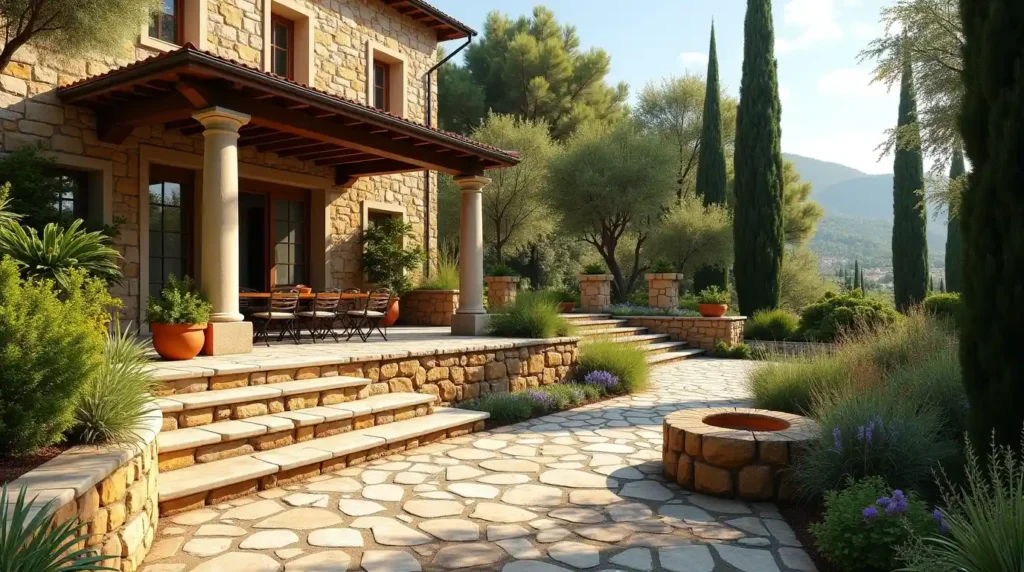
Italian gardens combine structure with shade, stone, terraces, and water. They work especially well on sloped land.
Best for: Sunny yards, hillsides, patios, and homes with warm stone or stucco finishes.
Layout idea: Divide a slope into two levels. Put dining or seating on the upper terrace. Use steps to lead to a lower garden with planting, a fountain, or a small pool.
Tall, narrow evergreens can frame a view. Olive trees work where the climate allows. Rosemary, lavender, and other scented herbs soften stone walls and paths.
Terracotta pots, natural stone, and simple water bowls fit the style. Shaded seating is also important in hot areas.
Mistake to avoid: Do not use plants that cannot handle your winters. Grow tender plants in pots so you can protect them when needed.
English Garden
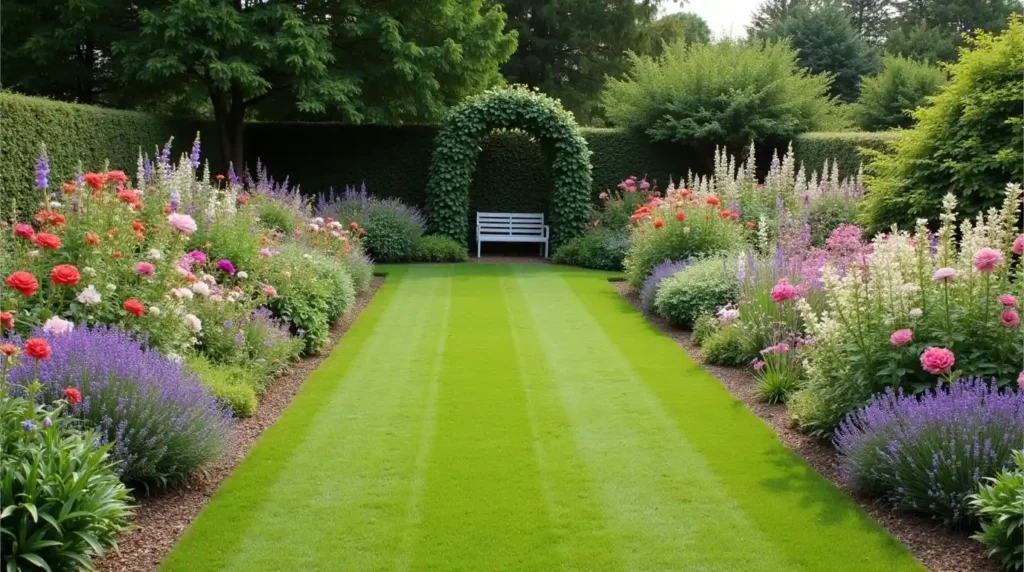
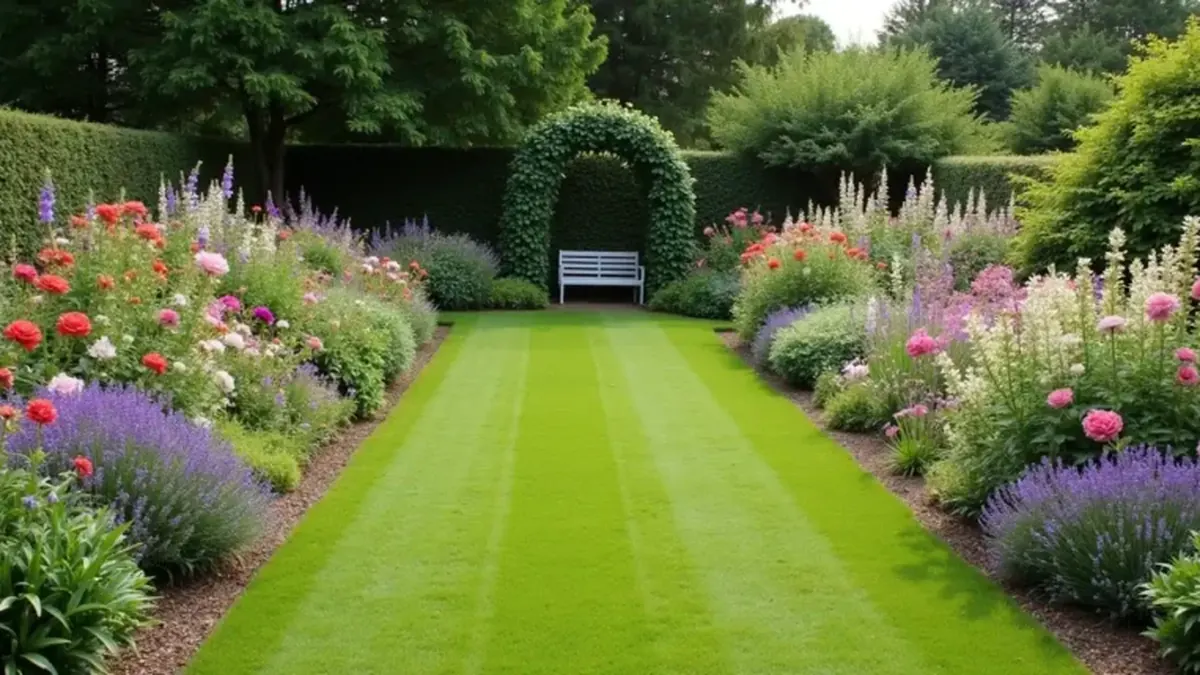
An English garden feels softer than a French or formal garden. It still has a plan, but flowers and shrubs fill the space in a more relaxed way.
Best for: Traditional homes, medium or large yards, and gardeners who enjoy seasonal flowers.
Layout idea: Keep an open lawn in the center. Add deep mixed borders around the edges. Use a curved path to lead to a bench, arch, or hidden corner.
Roses, foxgloves, peonies, lavender, hardy geraniums, and delphiniums suit the look. Mix tall, medium, and low plants so the beds feel full from front to back.
Repeat key plants across the garden. This keeps the design connected even when many flowers are used.
Mistake to avoid: Do not confuse a full border with random planting. Repeated colors and plant groups help it feel planned.
Classic styles work best when you enjoy clear structure and regular care. Crisp edges, balanced beds, and repeated plants are what make them look right.
Relaxed Garden Styles That Still Look Planned
A natural-looking garden is not an unplanned garden. Paths, edges, and repeated plants still matter. The structure is simply less strict.
Cottage Garden
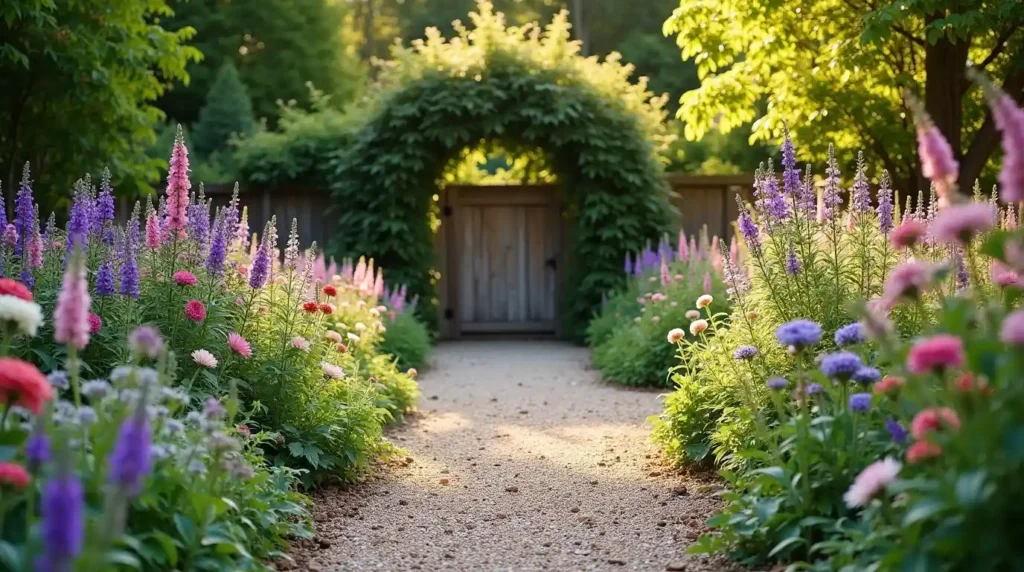
A cottage garden mixes flowers, herbs, shrubs, and sometimes vegetables. The beds look full, and the paths often curve through the planting.
Best for: Flower lovers, older homes, small front yards, and people who like a warm, informal look.
Layout idea: Build one winding path from the gate to the door. Place full borders on both sides. Add a bench, arch, or rustic gate as a focal point.
Roses, salvia, catmint, lavender, hollyhocks, herbs, and hardy geraniums fit well. Choose three to five key plants and repeat them in several spots.
A cottage garden can need more care than it seems. Dense planting can hide weeds, but it can also create crowding and poor airflow.
Mistake to avoid: Do not buy one of every plant you like. A smaller repeated plant list creates a stronger design.
Woodland Garden
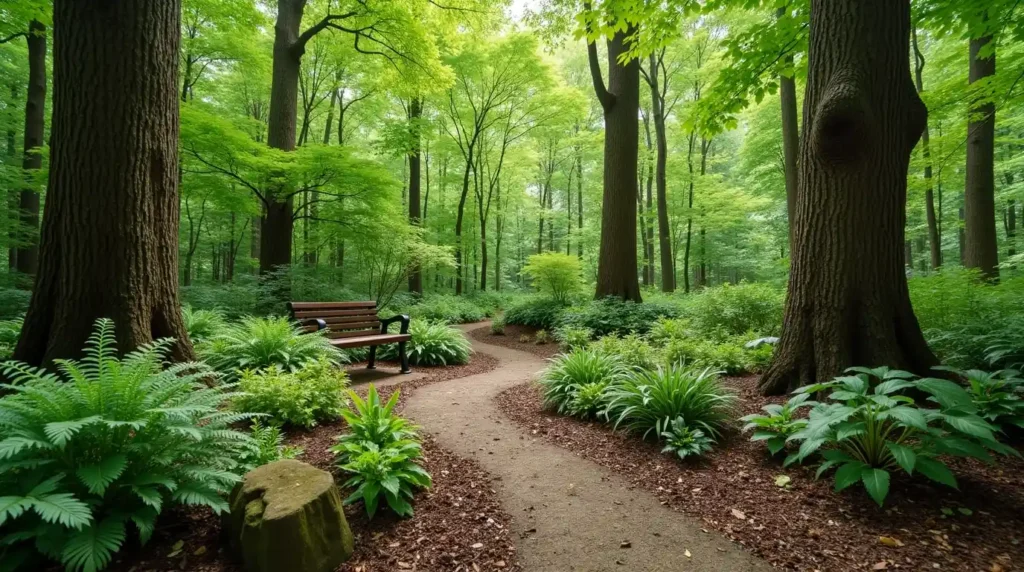
A woodland garden turns shade into a benefit. It uses layered planting, natural paths, leaf mulch, logs, rocks, and quiet seating.
Best for: Yards with mature trees, deep shade, or a cool and private feel.
Layout idea: Add a curved path between existing trees. Create small planting pockets along the route. Put a bench at the calmest point.
Use ferns, hostas, heuchera, native sedges, woodland bulbs, and shade-tolerant shrubs. Pick plants that suit the moisture level under your trees.
Work carefully around roots. Do not add deep soil or thick mulch against tree trunks. This can trap moisture and damage the tree.
Mistake to avoid: Do not force sun-loving flowers into deep shade. Use foliage, bark, and leaf shape for interest.
Meadow or Prairie Garden
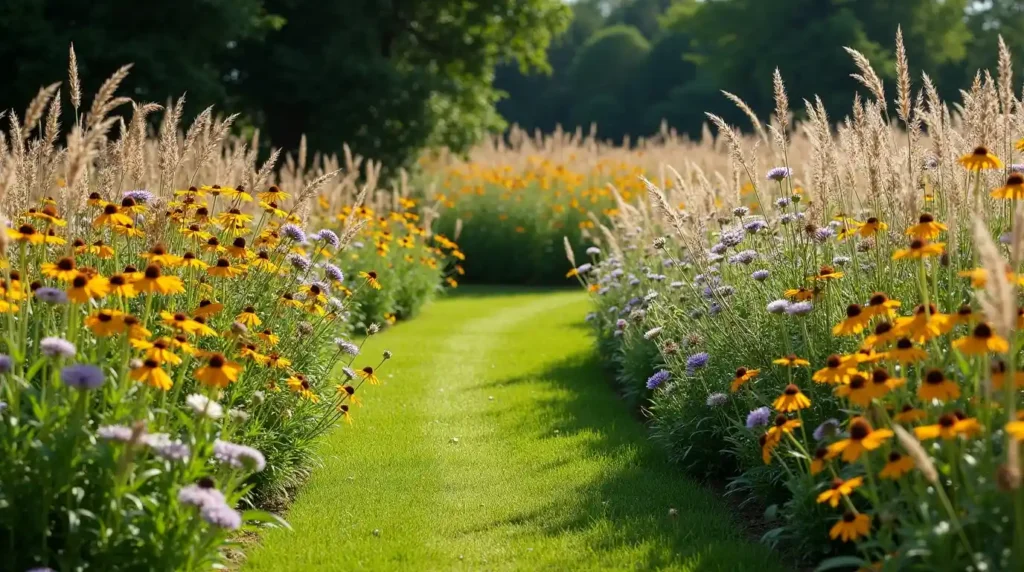
A meadow garden uses grasses and long-flowering plants in broad groups. It brings movement, seed heads, and seasonal change to the yard.
Best for: Sunny spaces, larger yards, pollinator gardens, and people who want less mowing.
Layout idea: Run one mown, gravel, or paved path through the planting. Keep the edge clear so the garden looks cared for.
Coneflowers, black-eyed Susans, asters, yarrow, switchgrass, and little bluestem are common choices in suitable areas. Local native plants are often the best option.
This style is not care-free. Young meadow areas need watering, weeding, and close checks during the first seasons. Many also need a yearly cut.
Mistake to avoid: Do not scatter seed and ignore the area. Good soil preparation and weed control make a major difference.
Wildlife Garden
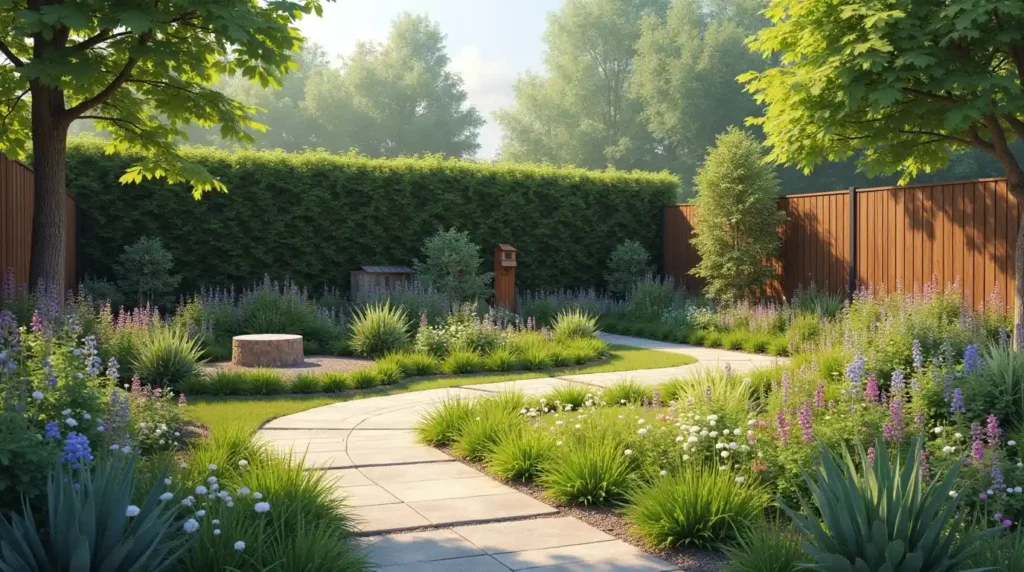
A wildlife garden gives birds, insects, and other small animals food, water, shelter, and safe nesting spaces.
Best for: Families, nature lovers, schools, and yards near green spaces.
Layout idea: Place dense shelter planting along a fence or boundary. Add flowering plants in sunny areas. Put a shallow water source where you can see and clean it.
Useful features include a small native tree, pollinator plants, a birdbath, a log pile, and one quiet corner. Try to include flowers from spring through fall.
Avoid heavy pesticide use. It can harm the insects that birds and other animals need for food.
Place feeders and nesting boxes away from spots where cats or other predators can hide.
Mistake to avoid: Do not treat one bird feeder as a complete wildlife plan. Habitat needs layers and variety.
Three simple choices keep loose planting from looking neglected:
- Repeat key plants.
- Keep paths and bed edges clear.
- Use one strong feature, such as a tree, bench, or arch.
Modern Garden Design Styles That Feel Calm
Modern gardens feel calm because they use fewer materials and stronger shapes. Every plant and surface needs a clear purpose.
Modern Garden
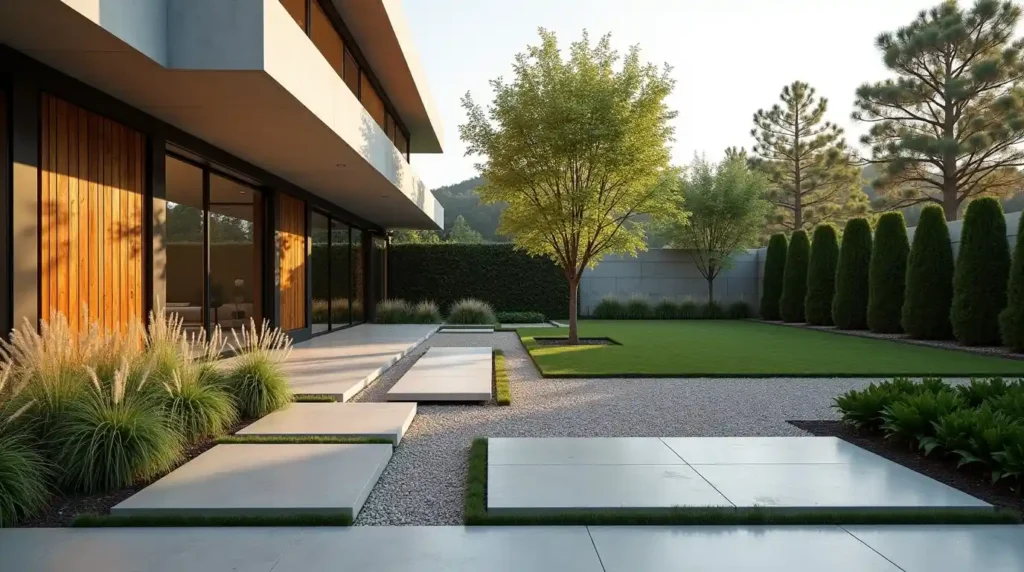
A modern garden uses straight lines, large planting blocks, simple colors, and materials that connect to the house.
Best for: New homes, flat yards, and people who prefer a clean look.
Layout idea: Extend the lines of the patio or house into the yard. Use rectangular beds, a simple lawn or gravel area, and one feature tree.
Ornamental grasses, multi-stem trees, and clipped evergreens fit the style. Concrete, steel, timber screens, and large paving slabs work well.
Repeat one paving color from the house or patio. This helps the indoor and outdoor areas feel connected.
Mistake to avoid: Do not add many small plant groups. Larger repeated blocks create a stronger result.
Contemporary Garden
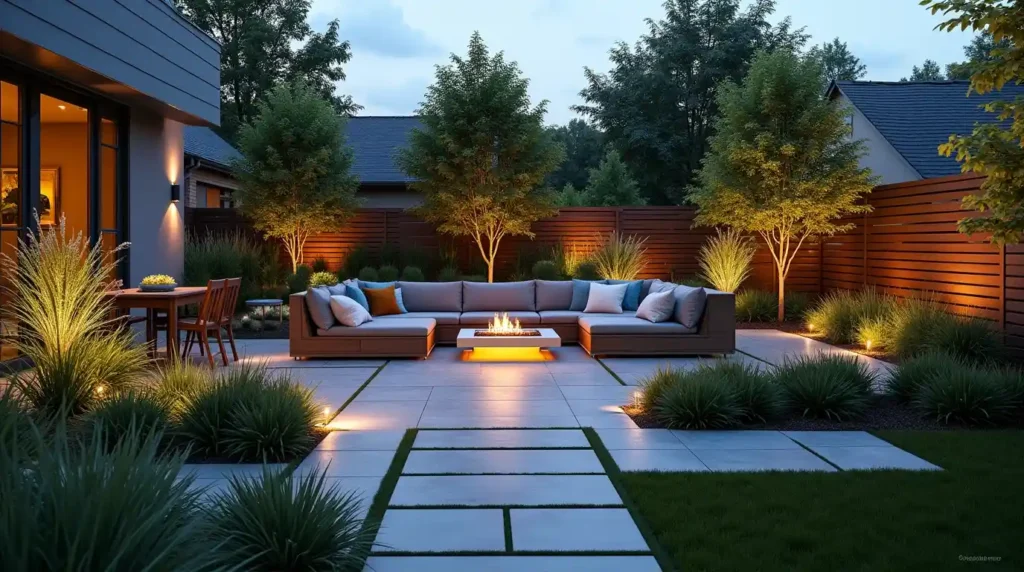
A contemporary garden reflects current outdoor living habits. It may include built-in seating, a fire area, an outdoor kitchen, mixed shapes, and layered lighting.
Best for: People who entertain, families who use the yard often, and homes with open living areas.
Layout idea: Divide the yard into clear zones for dining, relaxing, cooking, and planting. Keep the walking route simple and direct.
Contemporary design can mix hard lines with softer planting. It is often warmer and more flexible than strict modern design.
Use lighting to guide movement and make seating areas useful after dark. Keep bright lights away from windows and neighboring homes.
Mistake to avoid: Do not add every popular feature. A small garden can feel cramped when it holds a grill, fire pit, dining table, lounge set, and water feature.
Minimalist Garden
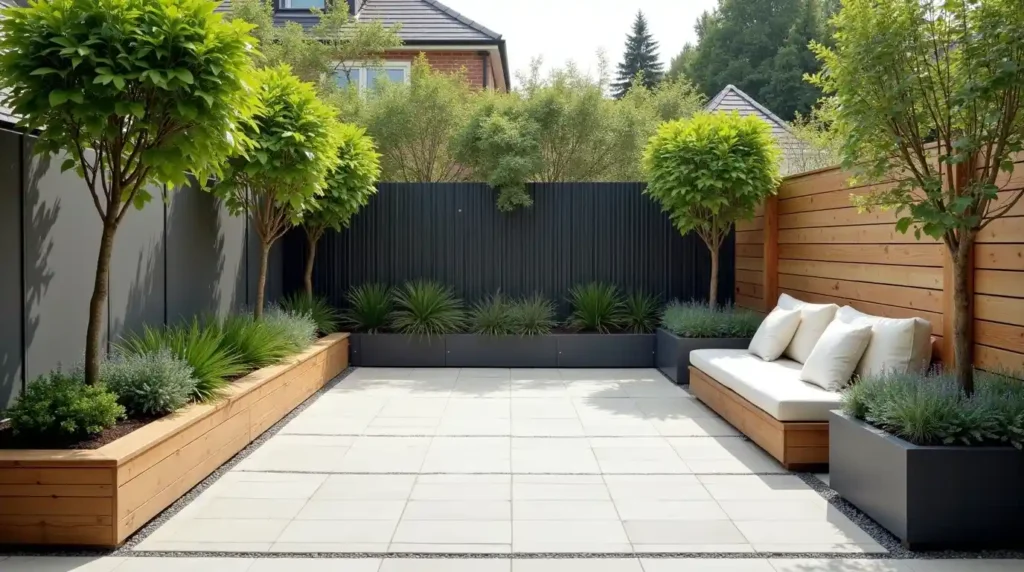
A minimalist garden uses open space, a short plant list, repeated shapes, and hidden storage. It looks simple, but the details need care.
Best for: Small yards, busy homeowners, and people who dislike visual clutter.
Layout idea: Use one main ground surface, one feature tree, one low plant group, and one seating area.
Choose a calm color range. Repeat the same pots, paving, or timber finish. Store hoses, tools, bins, and cushions out of sight.
This style is less forgiving than it looks. Weeds, poor edging, uneven paving, and crowded storage are easy to see.
Mistake to avoid: Do not assume fewer plants mean no care. Each visible detail needs to stay neat.
Japanese Zen Garden
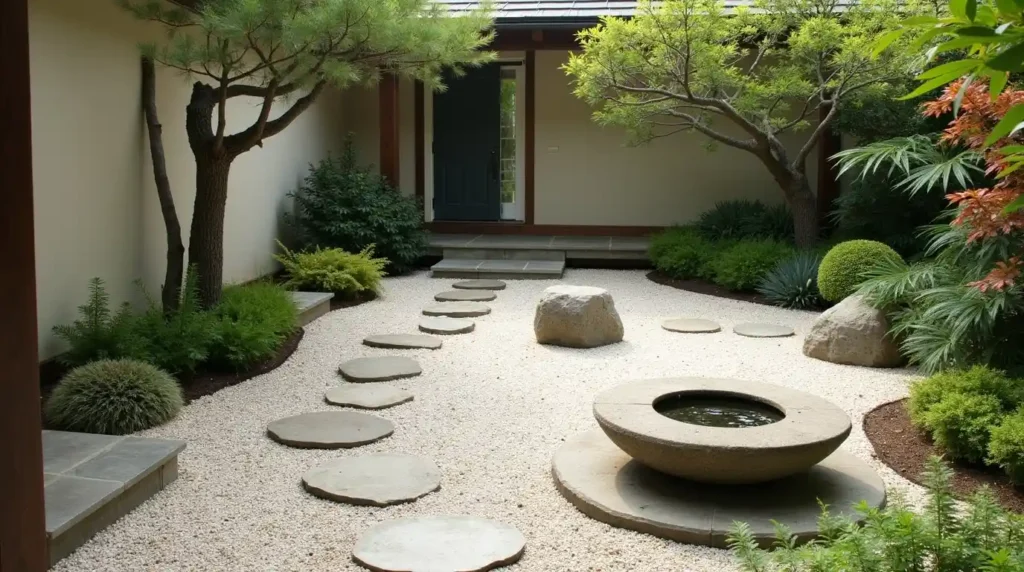
A Japanese Zen garden uses stone, gravel, plants, space, and carefully framed views. The layout often feels quiet and balanced without using perfect symmetry.
Best for: Courtyards, quiet corners, shaded spaces, and people who want a simple place to sit.
Layout idea: Use stepping stones to slow the walk through the space. Place a small tree or stone group where it can be viewed from a window or bench.
Possible plants include pines, ferns, Japanese maples where suitable, and non-invasive bamboo-like plants. Gravel can suggest water, while stone basins add a calm focal point.
Study the design ideas behind Japanese gardens before adding objects. A lantern, bamboo screen, or raked gravel area will not create the full style by itself.
Mistake to avoid: Do not crowd the space with decorations. Empty space is part of the design.
Before adding a new material to any modern garden, ask whether an existing one can do the same job. Fewer finishes often make the space feel larger and calmer.
Climate-Based Garden Styles That Work With the Site
A garden is easier to care for when it fits local heat, rain, wind, and soil. Copy the main look, but choose plants that can live well in your area.
Mediterranean Garden
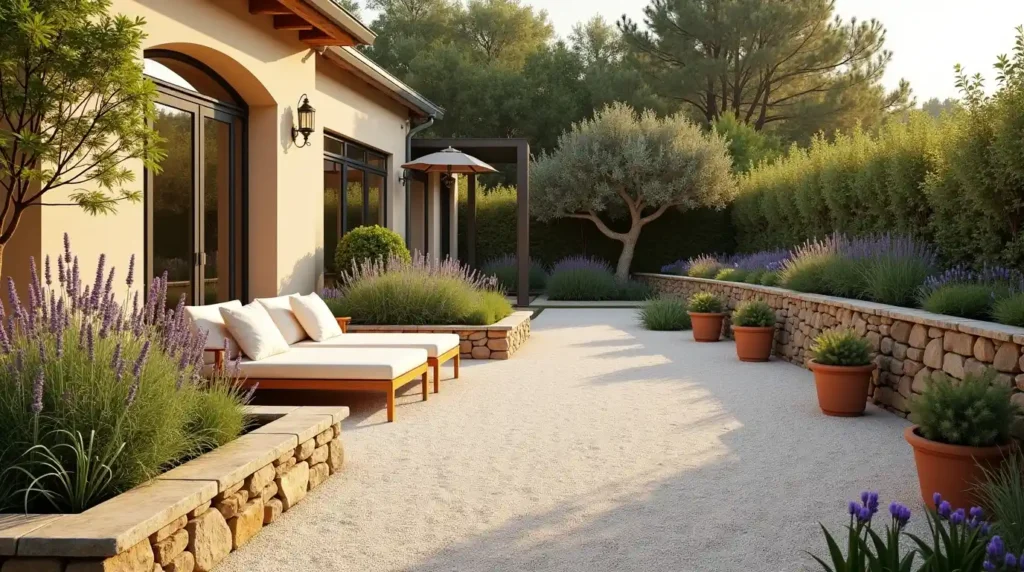
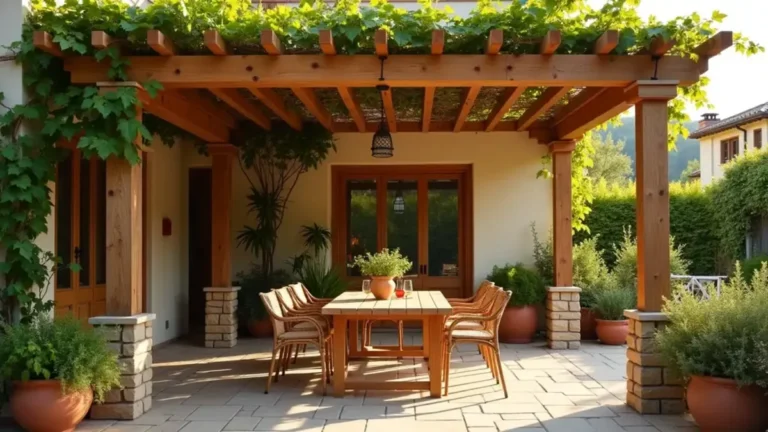
A Mediterranean garden uses drought-tolerant plants, gravel, stone, herbs, terracotta, and shaded seating.
Best for: Hot, dry summers, sunny courtyards, and low-water yards.
Layout idea: Place a gravel seating area near the house. Frame it with raised beds, large pots, or low stone walls.
Lavender, rosemary, thyme, sage, olive trees, and dry-climate grasses suit the style where conditions allow. Scented herbs near a path or table add extra value.
Use pots for plants that cannot survive your winter. You can move them into shelter when cold weather arrives.
Mistake to avoid: Do not plant dry-climate plants in wet soil. Good drainage is a key part of this style.
Tropical Garden
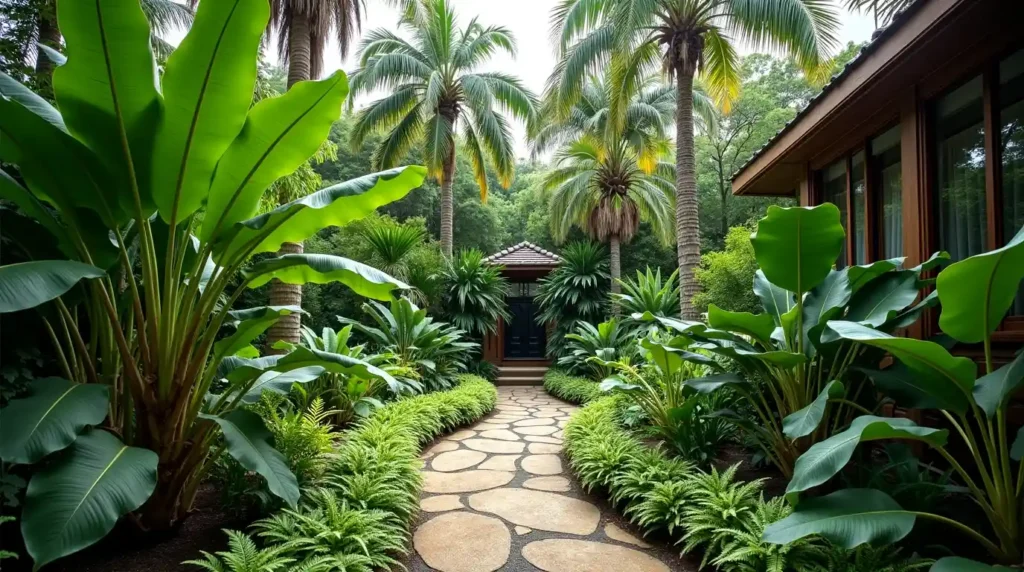
A tropical garden uses large leaves, dense layers, rich greens, and a few bright flowers. The goal is a lush, enclosed feel.
Best for: Warm and humid climates, sheltered patios, and gardeners who like bold foliage.
Layout idea: Put the tallest plants at the back. Add medium shrubs in the middle. Use low foliage and ground covers beside paths.
Bananas, cannas, elephant ears, palms, ferns, and gingers may fit warm areas. In cooler climates, use hardy plants with a similar leaf shape.
Check mature size before planting. Large tropical plants can block windows, close paths, and reduce airflow faster than expected.
Mistake to avoid: Do not depend on flowers alone. Leaf size, color, and shape create most of the tropical effect.
Coastal Garden
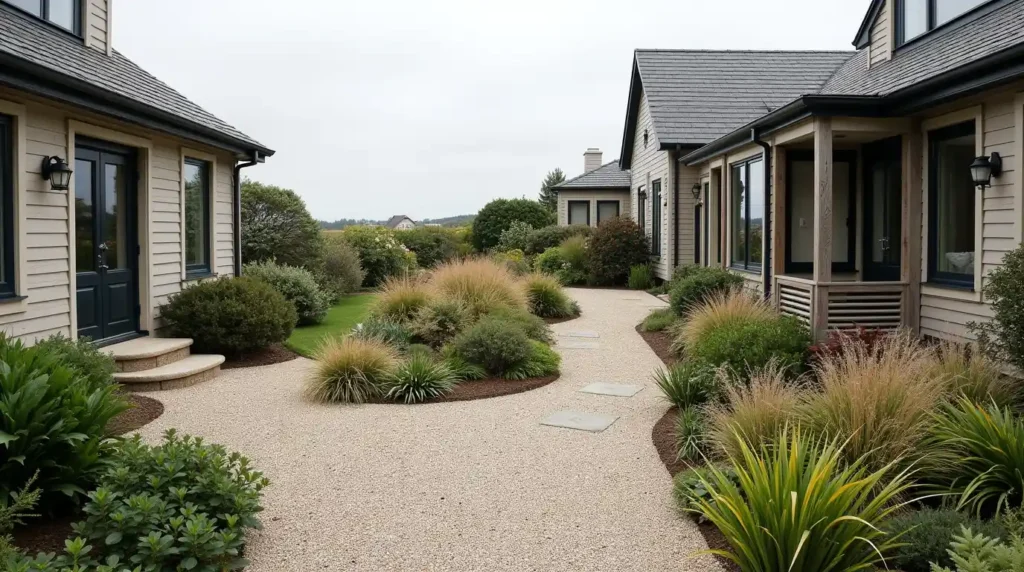
A coastal garden deals with wind, salt, sandy soil, and fast drainage. Its plants and materials should feel sturdy rather than delicate.
Best for: Seaside homes, windy yards, sandy soil, and exposed sites.
Layout idea: Use low plants on the wind-facing side. Place taller shelter plants behind the main seating area. Keep paths wide and surfaces firm.
Gravel, stone, weathered timber, and other natural materials fit well. Use rope or nautical details with care. The garden should not depend on signs, shells, or anchors for its identity.
Choose plants that can handle local salt and wind levels. Ask a nearby nursery or local extension service for proven options.
Mistake to avoid: Do not place fragile tall plants in the most exposed area. They may lean, break, or dry out.
Desert or Xeriscape Garden
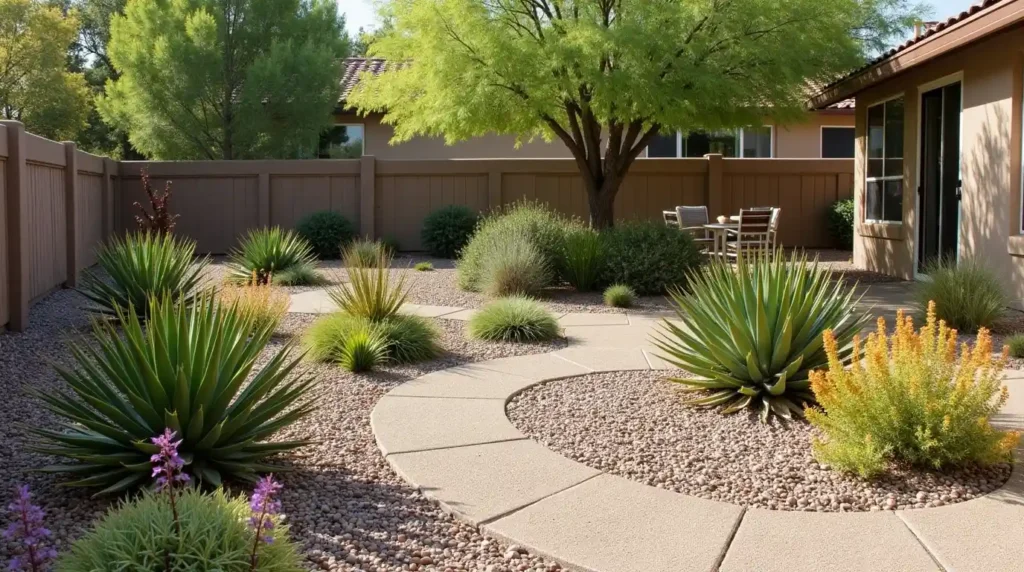
A xeriscape garden reduces water use through smart plant groups, soil care, mulch, and efficient watering. It does not mean covering the full yard with rocks.
Best for: Dry climates, water limits, hot front yards, and sunny slopes.
Layout idea: Group plants by water needs. Put plants that need more water close to the house or tap. Place tougher plants farther away.
Agave, yucca, penstemon, sage, sedum, native shrubs, and dry-climate grasses may work in suitable areas. Use gravel or mineral mulch where it supports drainage and weed control.
New plants still need water while roots develop. Drip lines can place water close to the soil and reduce waste.
Mistake to avoid: Do not create a hot rock field with a few lonely plants. Trees, shrubs, and shade help cool the space.
The best climate-based garden works with the site. It does not force plants to survive in conditions they cannot handle.
Small Garden Layout Ideas That Use Every Foot Well
In a small garden, every chair, pot, path, and bed competes for space. One clear purpose often works better than several cramped uses.
Courtyard Garden
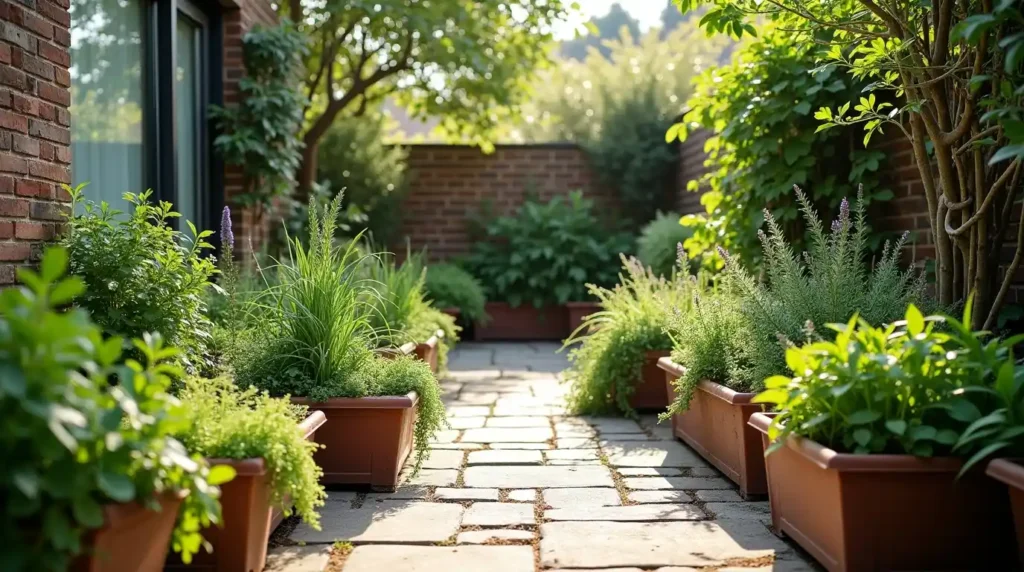
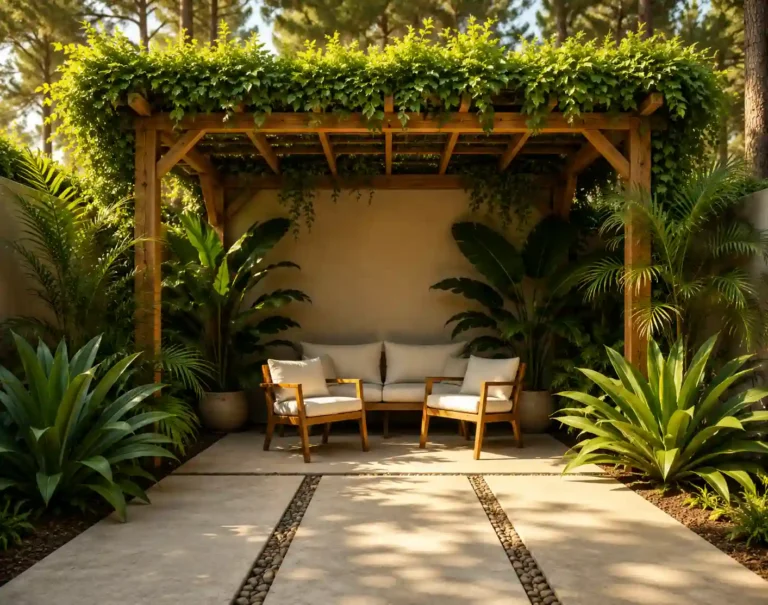
A courtyard garden turns an enclosed area into a private outdoor room. It often uses vertical planting, built-in seating, and one strong focal point.
Best for: Townhomes, narrow yards, walled spaces, and paved areas.
Layout idea: Place a bench or built-in seat along one wall. Put a small tree, water bowl, or large pot across from it. Use narrow beds around the edges.
Wall planters, espalier trees, folding furniture, and tall narrow pots can save floor space. Mirrors can reflect light, but place them carefully so birds do not fly into them.
Leave part of the wall or floor open. Empty space helps the courtyard feel larger.
Mistake to avoid: Do not fill every corner. Too many pots and decorations can make the area hard to use.
Kitchen or Edible Garden
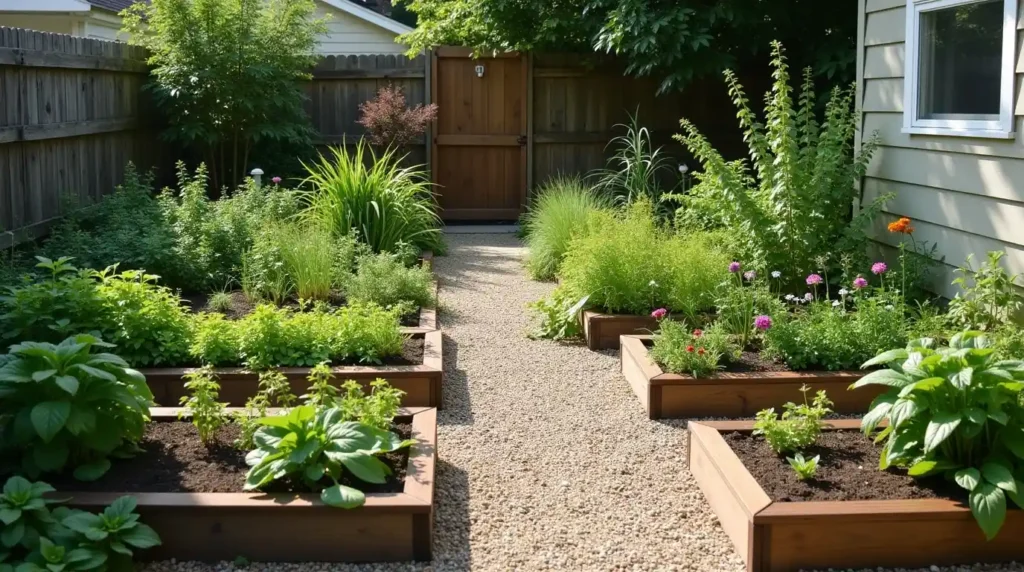
A kitchen garden makes fresh food easy to grow and harvest. It can also look neat when beds and paths follow one clear pattern.
Best for: Home cooks, families, schools, and sunny yards near the kitchen.
Layout idea: Use four raised beds around a central path. Another option is a set of parallel beds with one main working aisle.
Put herbs and quick-harvest greens near the entrance. Place tall crops where they will not shade smaller plants. Mix flowers among vegetables to add color and support pollinators.
Keep a water source close. Leave enough room for a wheelbarrow, tools, and safe movement between beds.
Repeat the same bed material and edge the paths. This helps an edible garden look like part of the main yard.
Mistake to avoid: Do not place the garden so far from the house that daily care becomes a chore.
Container or Balcony Garden
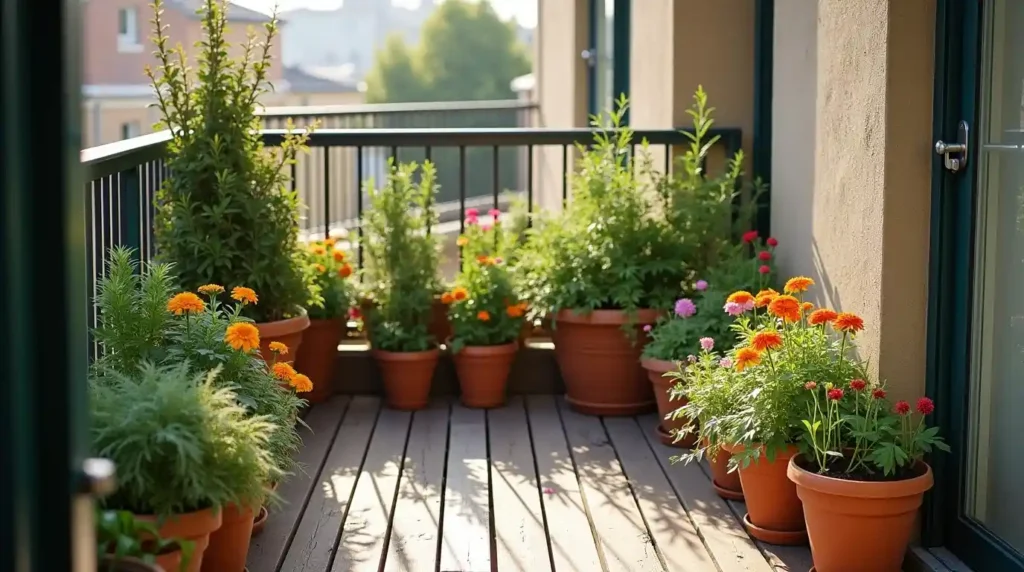
A container garden gives you a flexible layout when ground space is limited. Pots can hold flowers, herbs, small shrubs, and even some fruit trees.
Best for: Balconies, rented homes, patios, paved yards, and people who like seasonal changes.
Layout idea: Put tall pots at the back. Place medium pots in front. Use trailing plants near edges or railings. Keep one clear walking route.
Group plants with similar water needs. Use fewer large pots instead of many tiny ones. Large containers dry out more slowly and create less clutter.
Check balcony weight limits before adding heavy pots, wet soil, or stone. Make sure water can drain without damaging the floor or bothering neighbors below.
Mistake to avoid: Do not block doors, drains, or emergency access with containers.
A small garden feels more open when the layout has one main use, a short material list, and a clear route from one end to the other.
How to Turn Your Favorite Style Into a Working Layout
Once you choose a style, stop collecting more ideas and start mapping the yard. A simple plan can prevent costly mistakes.
Step 1: Draw What Cannot Move
Mark the house, doors, windows, fences, gates, trees, drains, utility covers, slopes, and sheds. These fixed parts set the limits of your plan.
Step 2: List the Main Uses
Write down what the garden must support. Keep the list realistic. Dining, play, food growing, pets, storage, and quiet seating all need space.
Step 3: Create Clear Zones
Place the areas you use most near the house. Dining and cooking spaces often work best close to a door. Storage and bins can sit away from main views.
Step 4: Plan How People Will Move
Connect doors, gates, seating, sheds, and work areas with paths. Keep the main route direct. Curved side paths can add interest in larger gardens.
Step 5: Pick One Focal Point
A focal point gives the eye a place to rest. It could be a tree, bench, sculpture, arbor, water bowl, or a good view beyond the yard.
Step 6: Build the Planting in Layers
Choose trees and structural shrubs first. Add repeated plant groups next. Finish with seasonal flowers and smaller accents.
Use this one-page layout recipe:
- One main style
- One focal point
- Two hardscape materials
- Three to five repeated plants
- One main path shape
- One clear care limit
These simple rules help keep backyard garden design ideas from becoming a mix of unrelated features.
Garden Design Mistakes That Can Ruin the Plan
Most garden problems begin before the first plant goes into the soil. A few early checks can save money and work.
Mixing Too Many Styles
A Japanese gravel area, bright plastic furniture, cottage borders, and formal hedges may all look good alone. Together, they can feel disconnected.
Choose one main style. Use ideas from another style only when the shape, color, or material fits your main plan.
Buying Plants Before Checking Their Size
A small nursery plant may become a wide shrub or tall tree. Check its mature height and spread before you choose a spot.
Leave room around paths, windows, doors, and seating.
Making Paths Too Narrow
Plants often lean into paths as they grow. A route that feels fine on day one may become hard to use later.
Plan for full-grown plants, tools, bins, and wheelbarrows.
Ignoring Views From Inside
Your garden is seen through windows for much of the year. Place trees, focal points, and seasonal color where they improve those views.
Avoid blocking useful light or an important sightline.
Using Too Many Materials
Five types of paving can make a small yard feel busy. Choose one main material and one supporting finish.
Repeat them across paths, steps, walls, or seating areas.
Calling a Garden Maintenance-Free
Every garden needs some care. Even gravel needs weeding. Native plants need help while they settle. Containers need regular water.
Set a care level you can manage and choose the style around it.
Before adding any feature, ask one question: Does it support the garden’s style, its use, or both? If the answer is no, leave it out.
Choose One Garden Style and Build It in Layers
The right garden depends on your home, climate, soil, yard size, budget, and free time. It should also support the way you live.
You do not need to copy a famous garden exactly. Take the main rules that fit your space. Keep the lines, materials, plant groups, and focal points consistent.
Start by choosing your three favorite styles. Compare their care needs and climate fit. Pick one main direction. Then sketch the zones, paths, seating, and focal point before buying plants.
Start with one of these garden design styles, create a simple layout, and build the space one well-planned layer at a time.