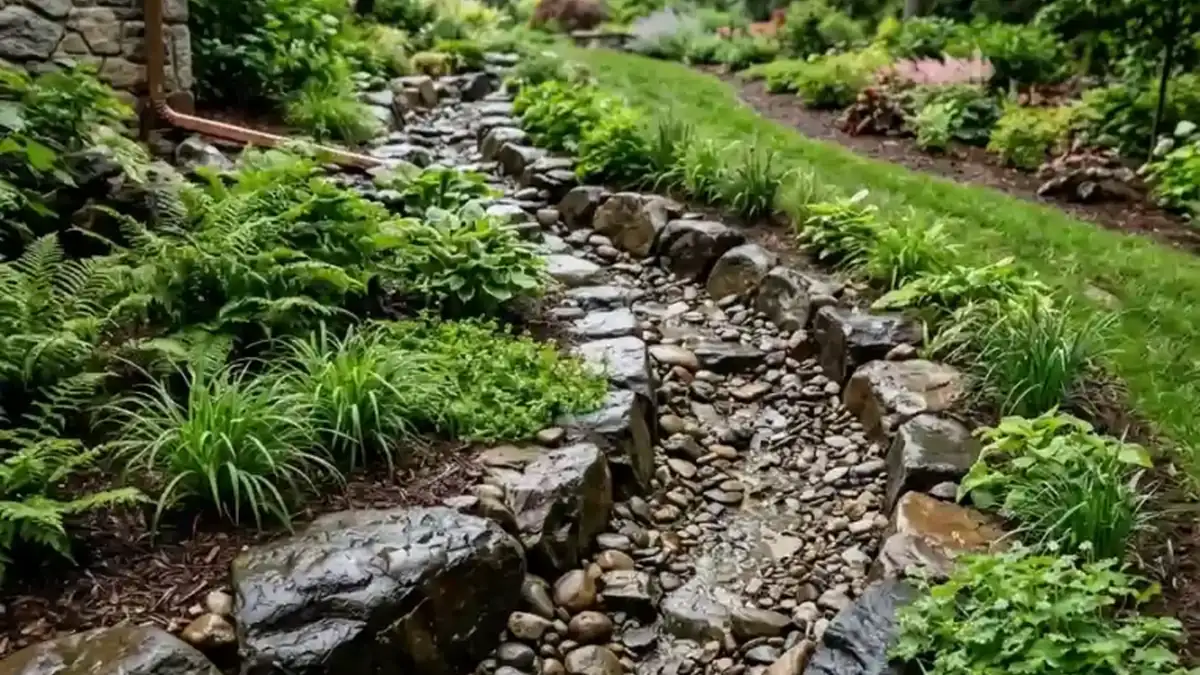
18 Sloped Backyard Landscaping Ideas That Work
A sloped backyard can cause more problems than you may expect. Rain can wash away soil. Mulch can slide downhill. Mowing can feel unsafe. You may also struggle to find a flat place for chairs, a grill, or a play area.
The good news is that you do not need to flatten the whole yard. The right sloped backyard landscaping ideas can help you control water, protect the soil, and create useful outdoor space.
Some projects are simple. You can add plants, stones, mulch, or a basic path. Other projects, such as tall retaining walls and raised decks, may need a skilled contractor.
Start by finding the main problem in your yard. Is water cutting through the soil? Is the hill hard to walk on? Do you need a level seating area? Your answer will help you choose the best design.
These 18 backyard slope ideas include options for small budgets, steep hills, drainage problems, and outdoor living.
What to Check Before You Change Your Backyard Slope
Do not start with plants or decorative stones. First, watch what happens in your yard after it rains.
Water often shows you where the real problem is. Look for small channels in the soil. Check for wet spots at the bottom of the hill. Notice where mulch, gravel, or loose dirt has moved.
You should also check the steepness of the land. A gentle slope may only need plants and ground cover. A steep slope may need steps, terraces, or a professionally built wall.
Walk around the yard and note these five things:
- Where water enters the yard
- Where water flows during heavy rain
- Where soil or mulch washes away
- Which areas receive sun or shade
- Which parts are hard to reach or maintain
Check for tree roots before digging. Cutting large roots can weaken or kill a tree. You should also locate pipes, cables, drains, and property lines.
Take photos from several angles. Use a measuring tape, stakes, and string to mark possible paths or walls. A garden hose also works well for testing curved shapes.
Short garden borders may be a DIY task. Tall walls holding back large amounts of soil are different. They may need drainage, deep footings, permits, or an engineer.
The best sloped yard design works with the land. It should not force water into a worse location.
Turn One Steep Hill Into Useful Tiered Terraces
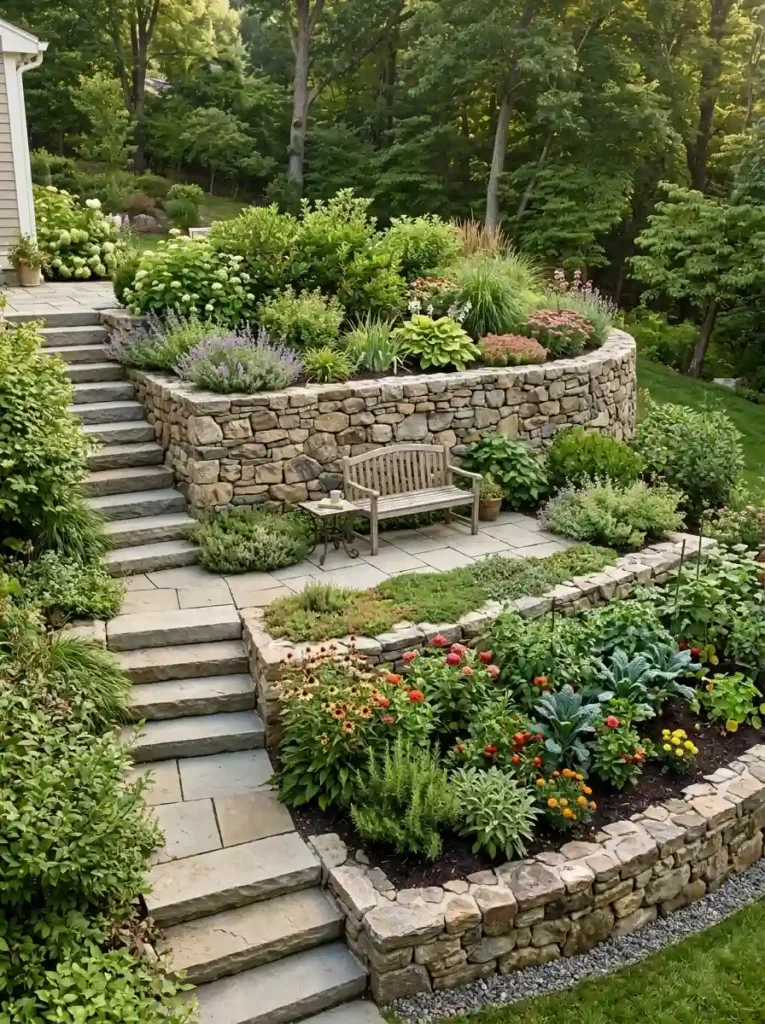
A large slope can feel like wasted space. Tiered terraces break that hill into smaller, level areas.
Each level can serve a different purpose. You may use the top terrace for shrubs. The middle area can hold a bench or small patio. The bottom section can become a lawn, garden, or play space.
Terraces also make planting and maintenance easier. You will not have to climb one long, steep hill to reach every plant.
Use the same wall material across all levels. This makes the full design look connected. Stone offers a natural look. Concrete blocks often create a cleaner and more even finish.
Every terrace needs a safe way for water to escape. Water trapped behind a wall creates pressure. That pressure can push the wall forward or cause cracks.
Add steps or a sloped path between each level. Long stairs may also need a landing and railing.
Best for: Medium or steep slopes
Main benefit: Creates several useful areas
DIY difficulty: High
Make the Yard Look Softer With Curved Stone Walls
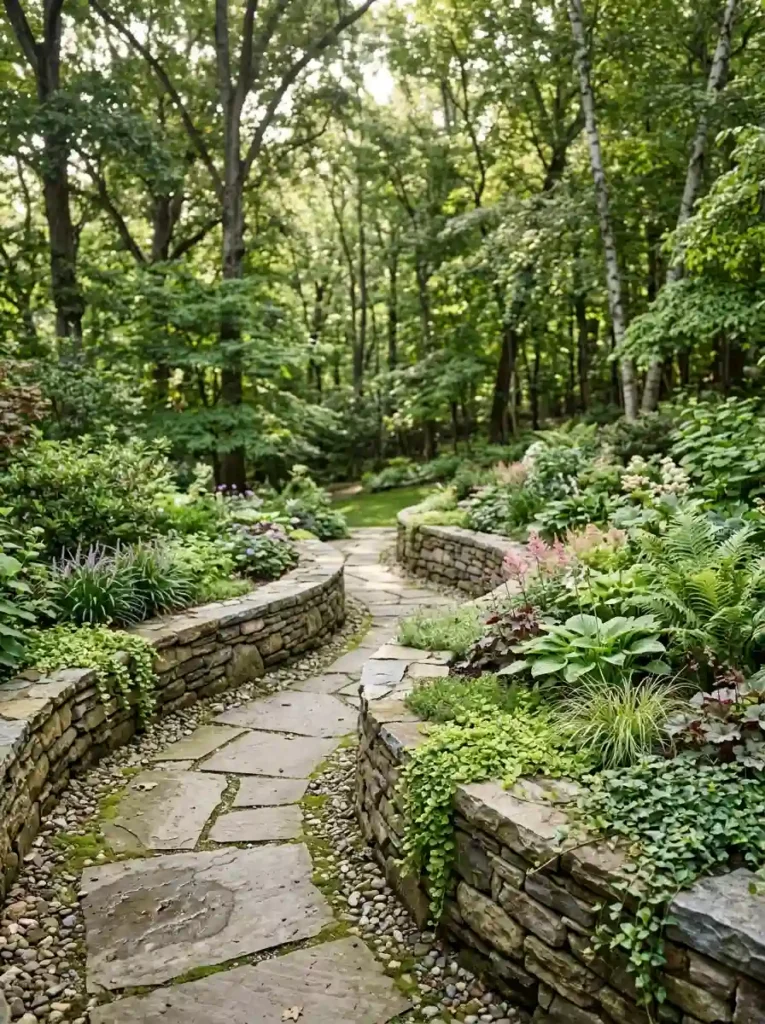
Long straight walls can make a small backyard look hard and narrow. Curved stone walls create a softer shape.
A curved wall can follow the natural line of the hill. It can also form rounded planting beds around a path or seating area.
Try building two crescent-shaped beds on each side of a central walkway. Fill the beds with shrubs, flowers, and low-growing plants. Let a few plants hang over the wall edges.
Natural stone works well in cottage gardens and woodland yards. It also blends with mature trees and older homes.
Keep curves wide and simple. Too many small bends can make the design look busy. Sharp curves may also be harder to build.
Do not use a decorative stone wall to hold back a large or unstable slope. A structural wall needs the right base, drainage, and support.
Best for: Gentle or medium slopes
Main benefit: Adds planting space without harsh lines
DIY difficulty: Medium to high
Add a Modern Look With Gabion Wall Terraces
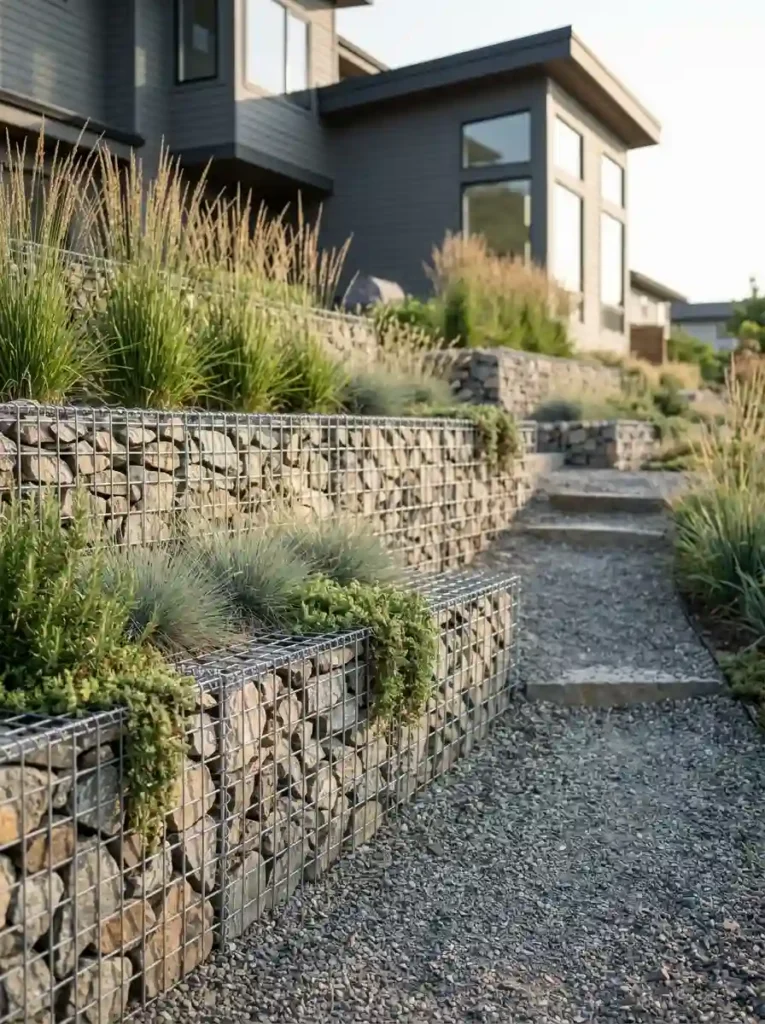
Gabion walls are wire baskets filled with rocks. They can form low borders, raised beds, or strong-looking terraces.
This option works well with modern homes. It also suits dry yards and simple landscape designs.
The rocks allow some water to pass through the wall. However, this does not mean you can skip drainage planning. Water still needs a safe route behind and below the structure.
The rock size should match the openings in the wire basket. Stones that are too small may fall out. Uneven filling can also make the wall look messy.
You can save money by using stone found near your area. Local rock may also match the natural setting better than imported material.
Plant grasses or trailing plants near the top. Their soft shape can balance the hard metal and stone.
Large gabion walls are heavy. Get professional advice before using them to hold back a tall slope.
Best for: Modern or dry landscapes
Main benefit: Creates strong visual texture
DIY difficulty: Medium to high
Make a Steep Yard Safer With Wide Landscape Steps
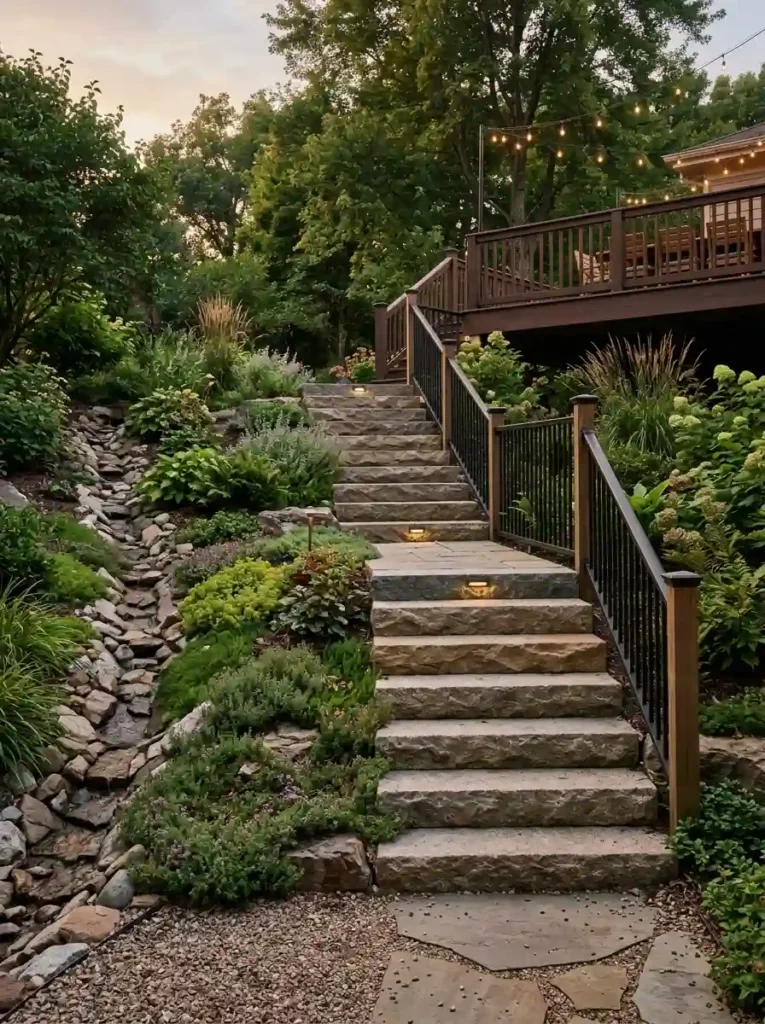
A slope may look attractive, but it is not useful when you cannot walk across it safely.
Wide steps make the yard easier to use. They can connect a deck, patio, vegetable garden, shed, or lower gate.
Stone, concrete, timber, and gravel-filled frames are common choices. Pick a surface that provides grip during rain.
Keep the step height even. One step that is much taller than the others can cause a fall. Long stairways should include level resting points.
Avoid placing the steps in the main path of flowing water. Rainwater can wash out gravel and make stone surfaces slippery.
Use low plants along each side. Ground covers can soften the edges without blocking the walking area.
Add a handrail when the slope is steep or the stairs are long. Good lighting will also help people see each change in level at night.
Best for: Slopes that need regular access
Main benefit: Makes walking safer
DIY difficulty: Medium to high
Guide Runoff With a Dry Creek Bed
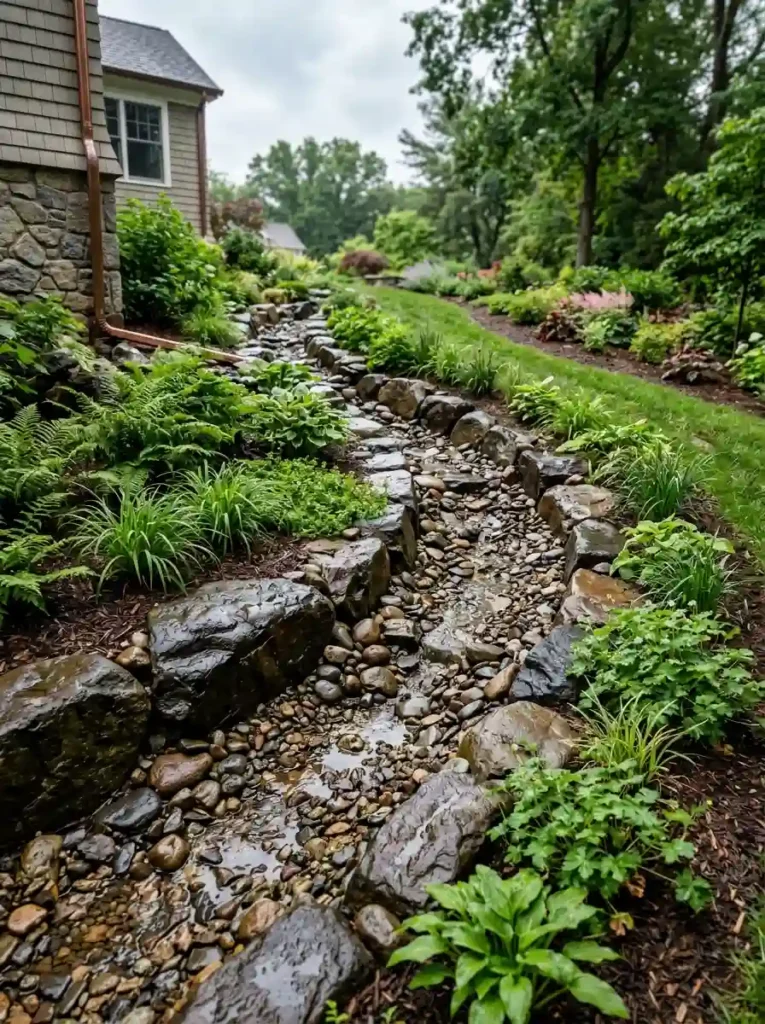
Does rain cut the same channel through your yard after every storm? A dry creek bed can guide that water through a planned route.
Follow the natural low point in the land. Do not force the creek across a high area.
Use several rock sizes. Place larger stones along the sides and at bends. Add medium rocks and gravel through the middle.
A perfectly straight creek often looks artificial. A gentle curve creates a more natural shape. Make the creek slightly wider where it bends.
You can begin the creek near a downspout. It may then cross the slope and end in a rain garden or another approved drainage area.
Plants along the edges can help slow water and hold soil. Choose plants that can handle short wet periods.
A dry creek bed should not send water onto another property. It should also stay away from building foundations.
Best for: Visible runoff channels
Main benefit: Moves water while adding a landscape feature
DIY difficulty: Medium
Slow Water With a Planted Drainage Swale
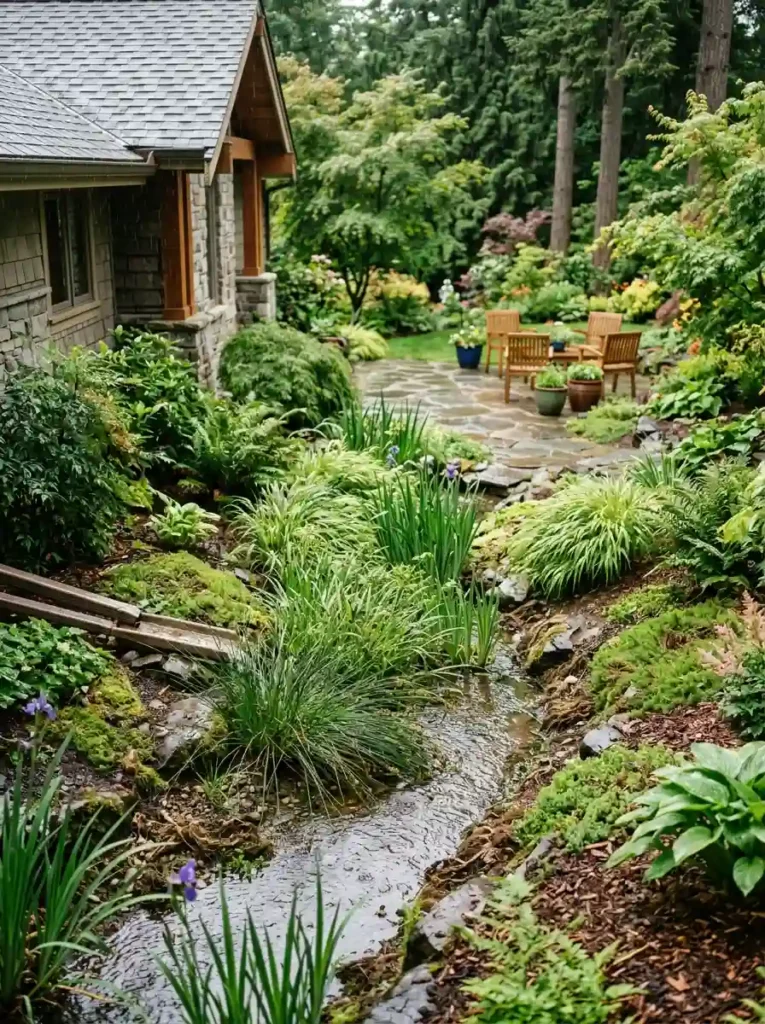
A swale is a wide and shallow channel. It carries or slows surface water without looking like a deep ditch.
A planted swale can curve across a slope and guide water around a patio, garden bed, or building.
Use grass, sedges, or low plants that can handle wet soil for short periods. Their roots help protect the channel from washing away.
The swale should have a gentle shape. A narrow and steep channel may cause water to move faster.
You can connect a downspout extension to the swale. This keeps roof water from flowing straight down the hill.
Do not place a swale where it will keep a foundation wet. You should also avoid sending water to a neighbour’s yard or public walkway.
A drainage expert can help when the yard collects a large amount of water. This is also wise when runoff comes from several nearby properties.
Best for: Wide areas of surface runoff
Main benefit: Slows and redirects water
DIY difficulty: Medium
Collect Extra Water in a Rain Garden
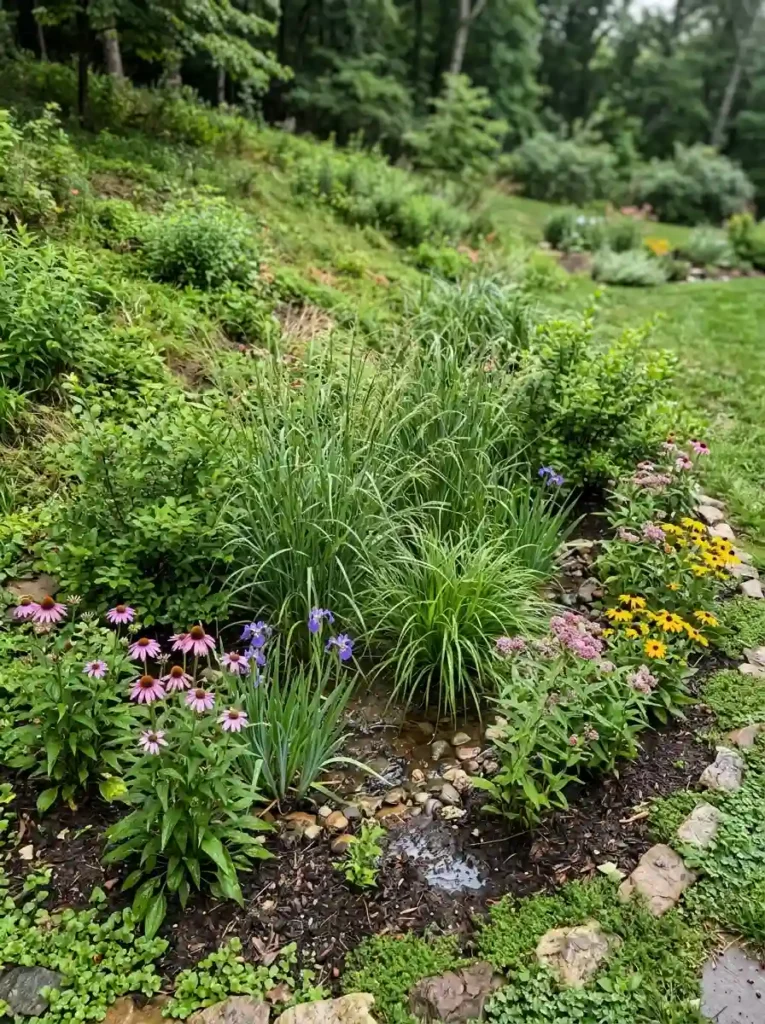
The bottom of a slope often stays wet long after the rest of the yard dries. A rain garden can turn that problem spot into a planted feature.
A rain garden is a shallow planting area. It holds runoff for a short time and lets it soak into the soil.
Choose plants that can handle both wet and dry periods. Native grasses, sedges, flowers, and shrubs are often good choices.
Test the soil before planting. Water should drain within a reasonable period. A rain garden should not remain like a permanent pond unless it was designed for that purpose.
Keep the garden away from foundations, septic systems, and unstable slopes. Check local drainage rules before starting.
Use a clear edge around the garden. Stone, plants, or a neat strip of lawn can make it look planned.
Add plants with different heights. Taller grasses can go in the centre. Shorter flowers can soften the outer edge.
Best for: Wet areas at the bottom of a hill
Main benefit: Holds and absorbs runoff
DIY difficulty: Medium
Create Level Space With an Elevated Deck
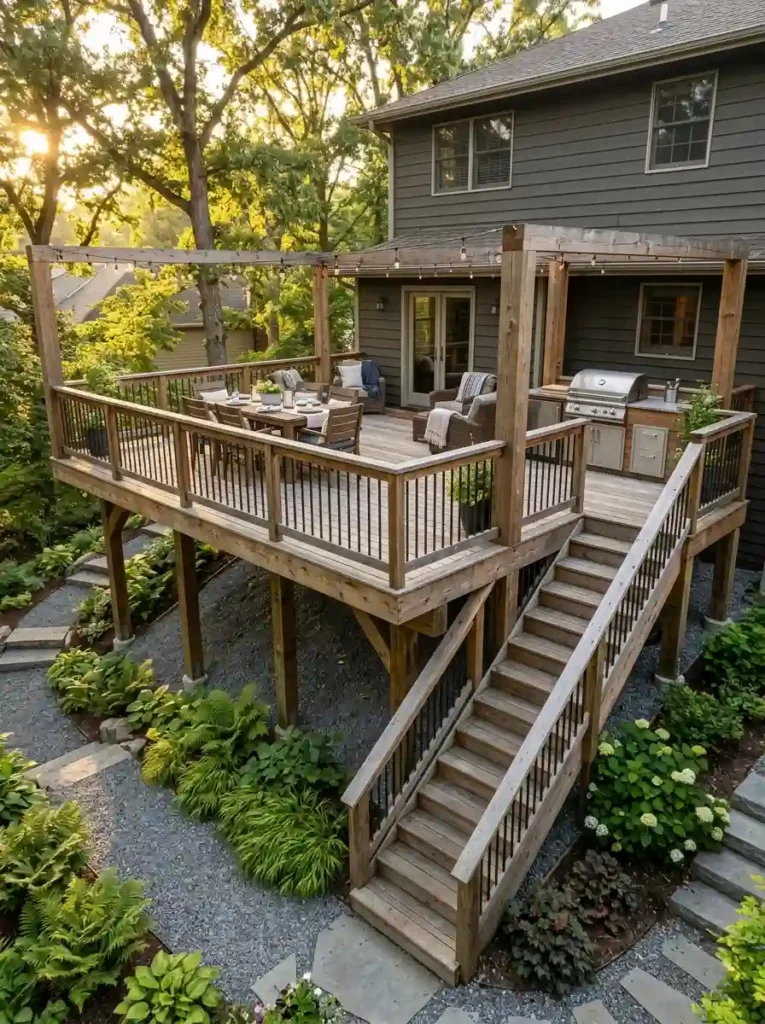
A steep backyard may not have enough level ground for a patio. An elevated deck can create outdoor space above the slope.
A deck near the back door gives you room for dining, seating, or cooking. It can also provide a wide view of the lower garden.
The area below the deck may offer shade, storage, or another sitting area. Add gravel or plants below to prevent mud.
Deck footings must suit the soil and slope. Weak soil or poor drainage can cause movement over time.
Stairs, guardrails, and supports must follow local building rules. These parts affect safety, so this is usually not the place to guess or cut costs.
A raised deck can cost more than a simple patio. However, it may require less major grading on very steep land.
Connect the deck to a lower garden with safe stairs or a switchback path.
Best for: Steep land close to the house
Main benefit: Adds level outdoor living space
DIY difficulty: Professional project
Cut a Small Patio Into the Hill
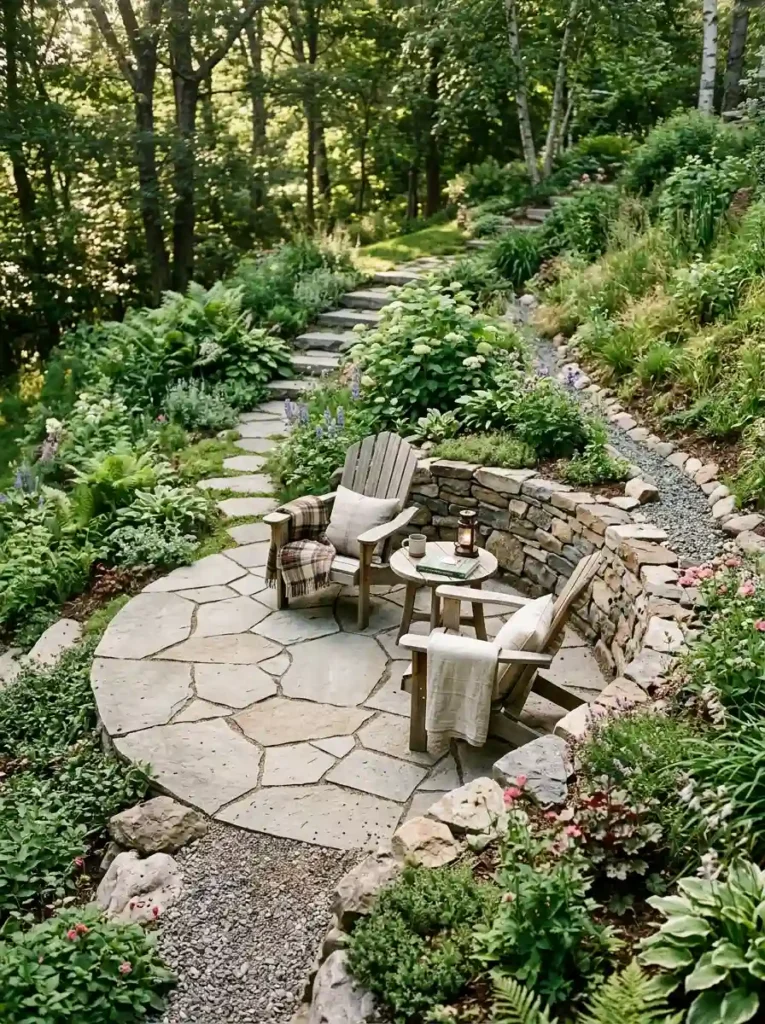
You do not need to flatten the whole backyard to create a place for chairs.
A small patio can fit into one part of the slope. This reduces digging and keeps more of the natural land in place.
Use gravel, pavers, flagstone, or concrete. Gravel is often affordable, but it needs strong edging to stop it from moving downhill.
The uphill side may need a short retaining edge. The downhill side needs a firm base.
Guide runoff around the patio instead of across it. Water flowing over the surface can carry dirt, stain pavers, and weaken the base.
A round patio works well in small yards. Add two chairs, a table, and a few plants around the edge.
Keep fire pits and fire bowls away from plants, walls, and buildings. Check local fire rules before adding one.
Best for: Small seating areas
Main benefit: Creates useful space without major grading
DIY difficulty: Medium to high
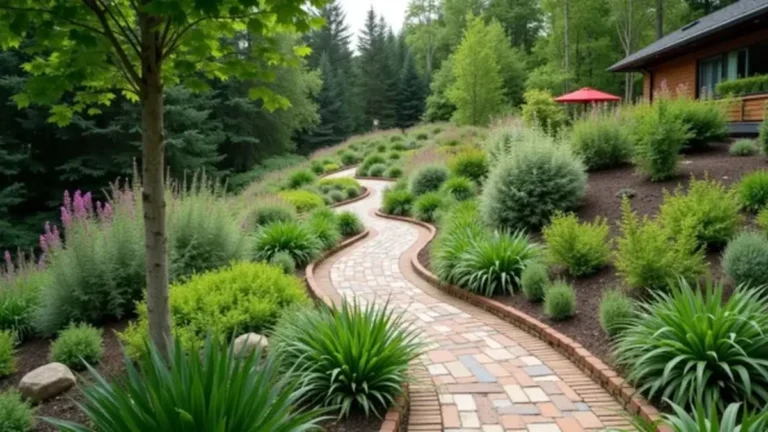
Make Walking Easier With a Switchback Path
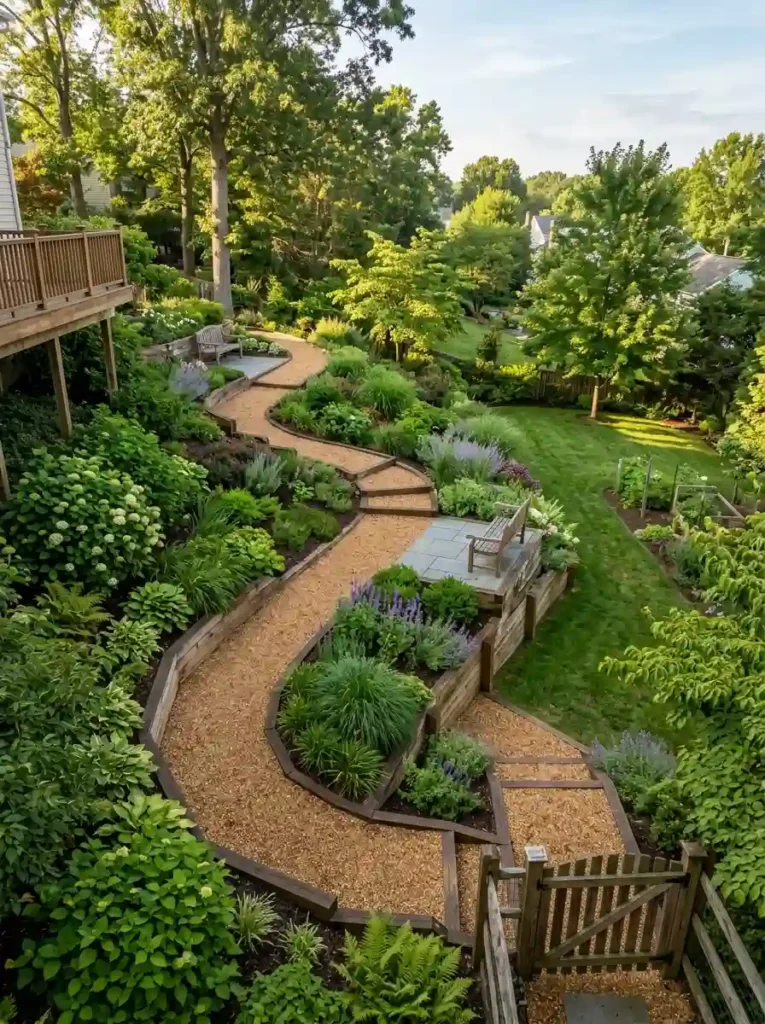
A path that climbs straight up a hill can feel tiring and unsafe. A switchback path moves across the slope in a zigzag shape.
This makes the climb less steep. It can also create room for planting beds between each section.
Use compacted gravel, textured pavers, or rough stone. Smooth surfaces may become slippery when wet.
Loose gravel needs edging. Without it, the stones may slide downhill after rain or heavy use.
Add flat landings where the path changes direction. These areas give people a place to stop and rest.
A switchback path can connect several useful parts of the yard. It may begin at the deck, pass a seating nook, and end near a lower gate.
Keep plants away from the path edge if they spread quickly. Overgrown plants can hide loose stones or changes in height.
Best for: Long or steep slopes
Main benefit: Makes climbing easier
DIY difficulty: Medium
Build a Quiet Seating Nook Into the Hillside
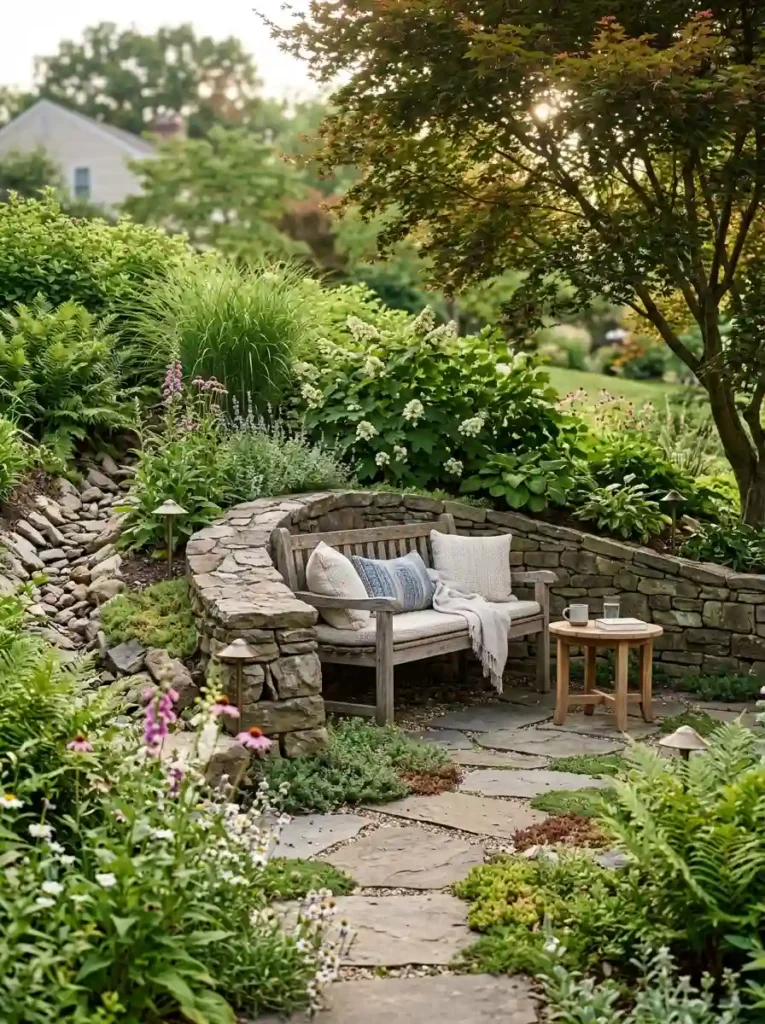
You may not need a large deck or patio. A small seating nook can make an unused corner feel special.
Look for a naturally flatter section of the slope. You can also create a small supported platform.
Build a bench into a low retaining wall. This saves space and reduces the need to carry furniture up and down the hill.
Add shade with a tree, pergola, or outdoor umbrella. Place tall plants behind the seat for privacy.
Keep the nook away from active runoff channels. Water should flow around the area, not through it.
Use gravel or pavers under the bench. This keeps the area cleaner after rain.
A simple design may include one bench, a small side table, and a few flowering plants. Solar or low-voltage lights can make the space easier to use in the evening.
Best for: Small yards and quiet corners
Main benefit: Adds a useful resting place
DIY difficulty: Medium
Reduce Yard Work With a Rock Garden
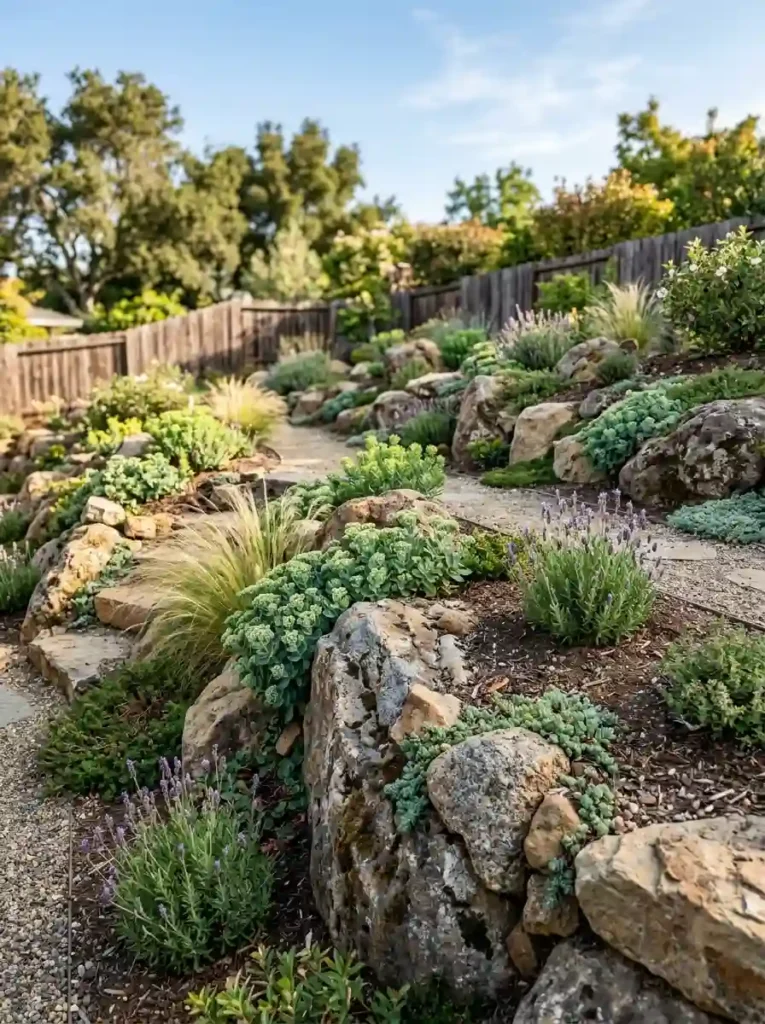
A sunny slope can dry out quickly. A low-maintenance rock garden may work better than thirsty plants or lawn.
Use several large rocks to create planting pockets. Bury part of each rock so it looks settled into the ground.
Do not scatter many small stones across the whole hill. They can look messy and may move during heavy rain.
Choose plants that match the site. Drought-tolerant shrubs, ornamental grasses, sedums, and creeping plants often work well on dry slopes.
Repeat the same plants in several spots. Repetition makes the garden feel calm and planned.
Leave enough soil around each plant for healthy root growth. Rocks placed too close to the base can trap heat.
A rock garden still needs some care. Weeds may grow between stones, and young plants need water while their roots develop.
Best for: Sunny and fast-draining slopes
Main benefit: Reduces mowing and watering
DIY difficulty: Medium
Soften Hard Walls With Cascading Plants
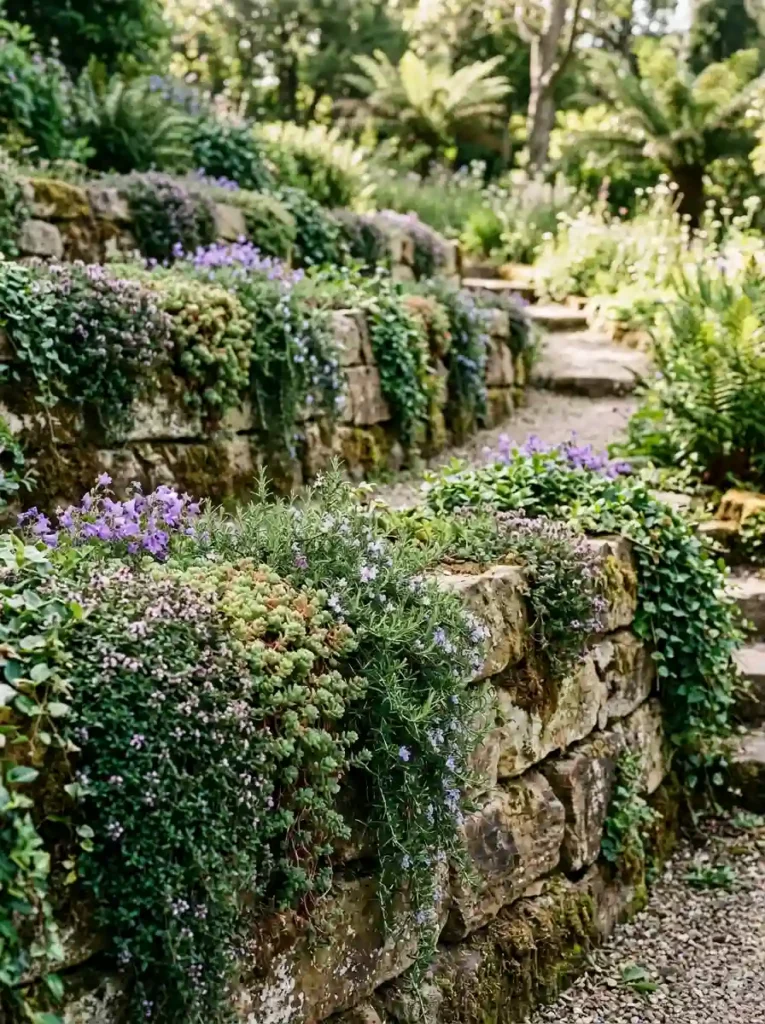
Retaining walls can look bare when they cover a large part of the yard. Cascading plants help soften those hard edges.
Plant trailing flowers and ground covers along the top of the wall. Their stems can spill over the face as they grow.
Creeping thyme, sedum, and trailing rosemary may work in some climates. Always check which plants suit your sun, soil, and winter weather.
Mix evergreen plants with seasonal flowers. The evergreen plants provide cover all year. Flowers add colour during warmer months.
Do not choose plants with roots that may damage the wall. You should also avoid heavy plants that block drains or wall openings.
Repeat one or two plant types across several terraces. This connects the levels and prevents a crowded look.
Leave enough space for each plant’s mature width. Small nursery plants can spread much farther than expected.
Best for: Terraces and low retaining walls
Main benefit: Makes hard surfaces look softer
DIY difficulty: Easy
Replace Hard-to-Mow Grass With a Native Meadow
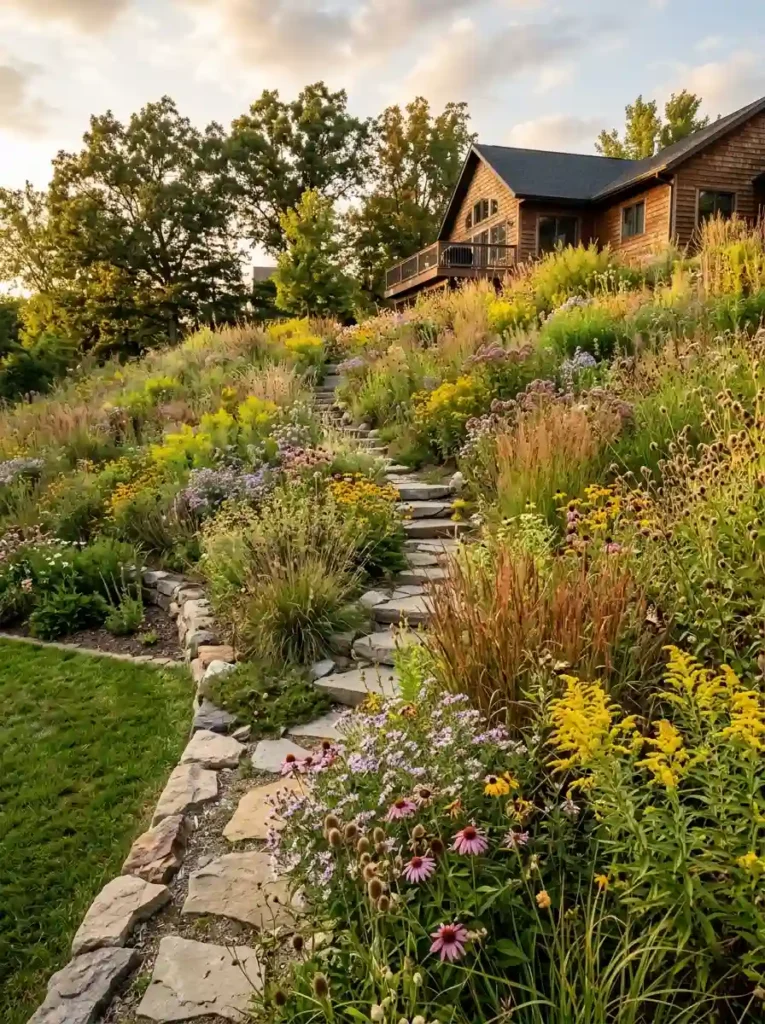
Mowing a steep slope can be tiring and unsafe. A native meadow can remove the need for regular mowing.
Choose grasses and flowering plants that naturally grow in your area. Local plants are more likely to handle your soil and weather.
Pick plants with different bloom times. This provides colour across several seasons and supports bees and butterflies for longer periods.
A new meadow is not free from work. Weeds can take over during the first few growing seasons. You may need to cut, pull, or manage them until the desired plants fill the area.
Create a clean border around the meadow. A narrow mown strip, stone edge, or simple path can make the planting look planned.
Do not add a wild seed mix without checking its contents. Some mixes include plants that spread too fast or do not suit your region.
Best for: Large slopes that are hard to mow
Main benefit: Cuts long-term lawn care
DIY difficulty: Medium
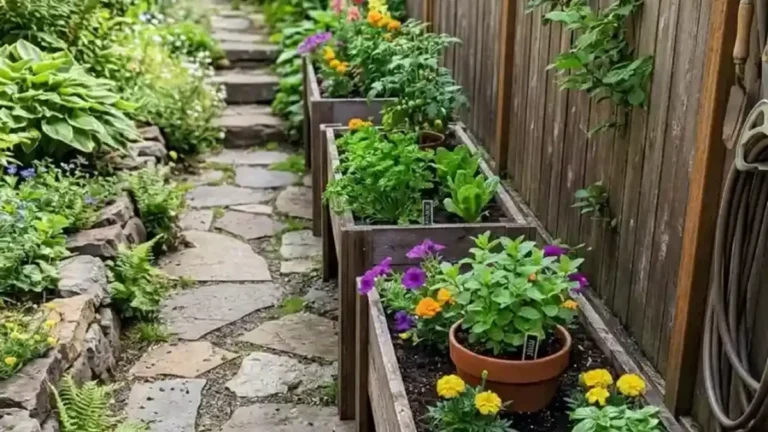
Grow Food in an Edible Hillside Garden
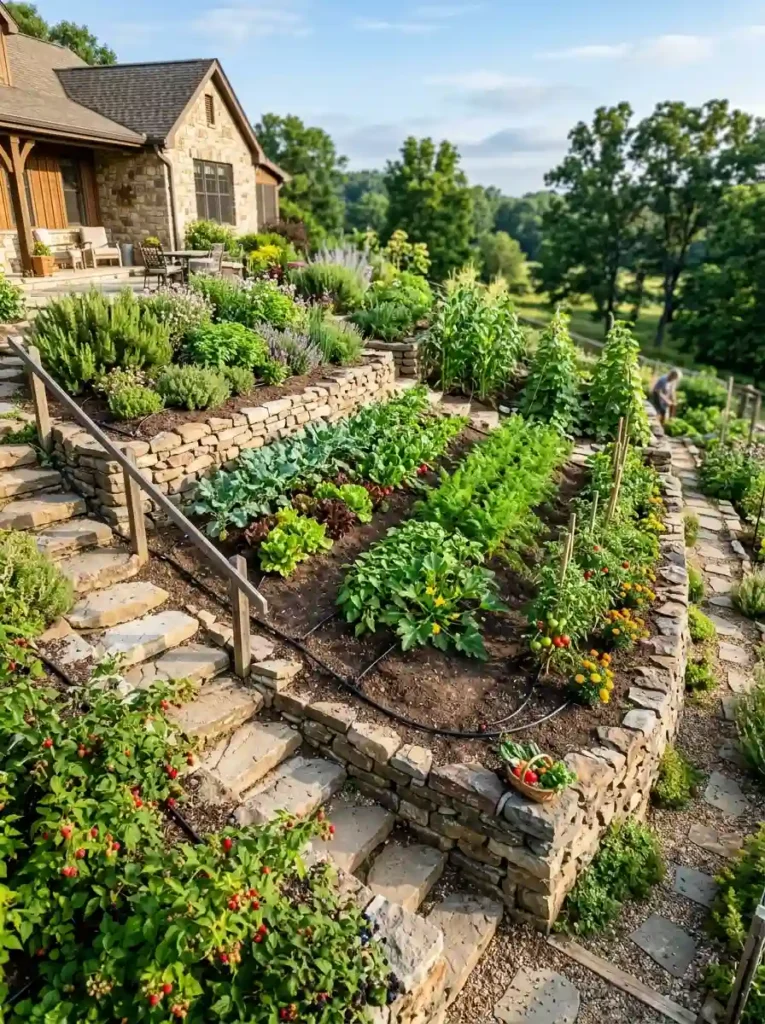
A sunny slope can become a productive garden. Small terraces can hold herbs, vegetables, fruit, and berry shrubs.
Place herbs close to the house. You will use them more often when they are easy to reach.
Use the middle levels for vegetables that need regular care. Place taller plants where they will not block the sun from shorter crops.
Berry shrubs may work well on a lower level. Choose types that suit your climate and soil.
Safe access is important. Add stable paths or steps so you can water, weed, and harvest without slipping.
Drip irrigation works better than spraying water from the top of the hill. It delivers water near the roots and reduces runoff.
Protect young plants from deer, rabbits, and other animals found in your area.
An edible slope needs more care than a rock garden. It can still provide fresh food while making the space useful.
Best for: Sunny slopes with safe access
Main benefit: Produces herbs, fruit, or vegetables
DIY difficulty: Medium
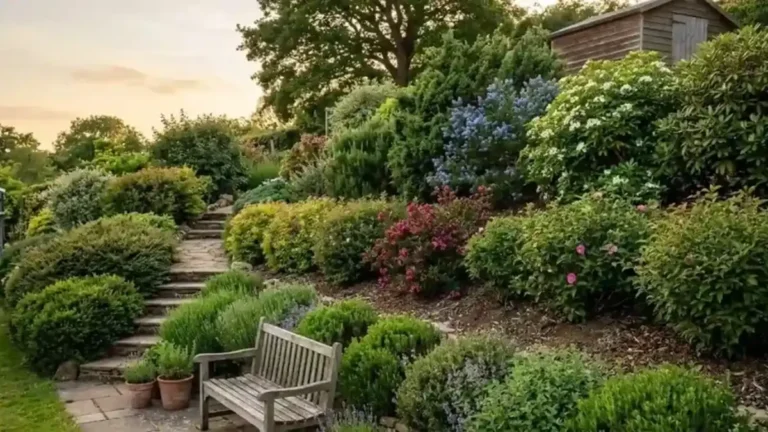
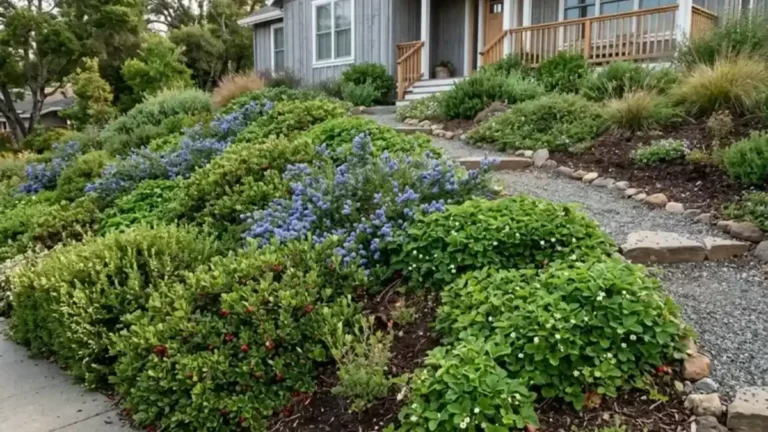
Protect Bare Soil With Mulched Planting Bands
Large projects can be expensive. Mulched planting bands offer a simpler way to cover bare soil.
Run the bands across the slope. Do not create long beds that point straight downhill. Water may follow those lines and carry mulch away.
Use shrubs, grasses, and ground covers to help hold the mulch in place. Plant roots will provide more support as they grow.
Choose coarse mulch for sloped areas. Fine mulch and light wood chips may wash away faster.
Do not pile mulch against tree trunks or plant stems. This can trap moisture and cause damage.
Edging may help on a gentle slope. On a steep hill, loose edging can move or block water.
Start with one section of the yard. Add more planting bands as your budget allows.
This is one of the most practical low-cost sloped backyard landscaping ideas when the land is stable and drainage is already managed.
Best for: Gentle and medium slopes
Main benefit: Covers exposed soil at a lower cost
DIY difficulty: Easy to medium
Create Strong Focal Points With Boulder Groups
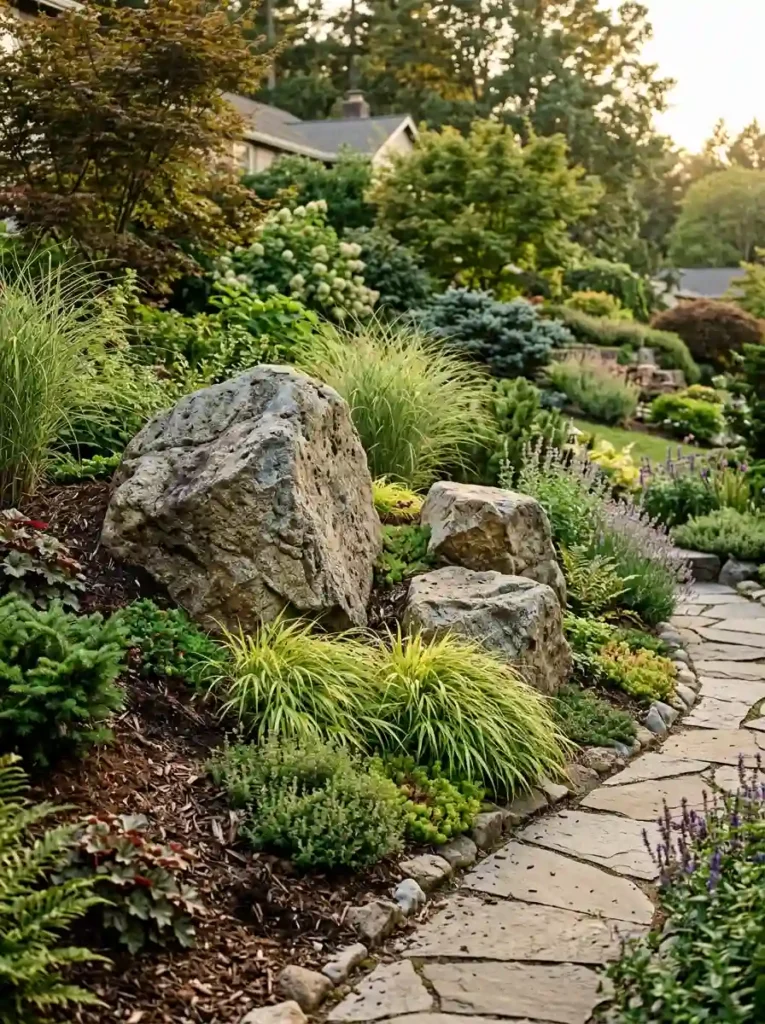
A few large boulders can make a plain slope look more natural. They can also help define planting areas.
Do not line the rocks across the hill like a fence. Group them in uneven sets.
Use one large boulder with two smaller stones nearby. Bury part of each rock so it appears fixed in the ground.
Add grasses, ground covers, or small shrubs around the base. Keep some open soil or mulch visible.
Boulders can guide the eye through the yard. They work well near a path, dry creek, or seating area.
Loose boulders should not be used as a wall holding back a large amount of soil. Heavy stones can shift when they lack a stable base.
Think about access before ordering. Large rocks may need a machine to move them into place. That equipment can damage lawns, paths, or plants.
Best for: Natural and low-maintenance designs
Main benefit: Adds impact with fewer materials
DIY difficulty: Medium
Add a Safe Evening Route With a Lit Hillside Trail
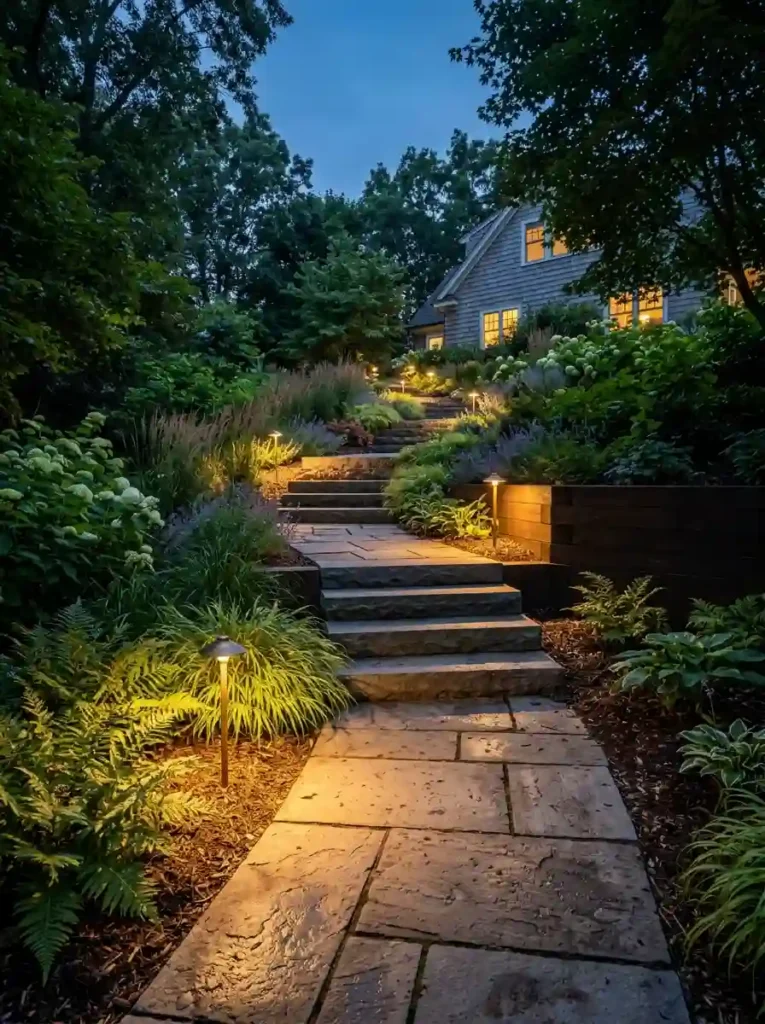
A simple path can make a slope more useful during the day. Lighting helps you use it after sunset.
Build the trail with compacted gravel, rough pavers, or stable stepping stones. Keep each step or change in height easy to see.
Place lights near stairs, landings, turns, and path edges. Do not spread lights at random.
Solar lights are easy to install. However, shaded areas may not receive enough sun to charge them well.
Low-voltage lights often give more reliable results. They may need wiring and professional installation.
Aim lights at the ground. Bright lights shining into windows can bother your family and neighbours.
Remember that lighting does not fix an unsafe path. Loose stones, uneven steps, and missing railings still need repair.
Add repeated plants along the trail. This ties the route into the rest of the landscape.
Best for: Paths used in the evening
Main benefit: Improves visibility and adds atmosphere
DIY difficulty: Easy to medium
How to Pick the Best Idea for Your Yard
The prettiest design photo may not show the right choice for your property.
Start with the problem that causes the most trouble.
Choose a drainage feature when water cuts through the yard. A dry creek, swale, or rain garden may help.
Choose plants when the main issue is bare soil. Ground covers, shrubs, grasses, and meadow plants can protect the surface.
Choose steps or a switchback path when access is the problem.
Choose a patio, deck, or terrace when you need level outdoor space.
Use this guide to compare the main choices:
| Solution | Best for | Difficulty | Main benefit |
| Ground-cover plants | Gentle slopes | Easy to medium | Covers bare soil |
| Dry creek bed | Runoff channels | Medium | Guides surface water |
| Small patio | One seating area | Medium to high | Creates level space |
| Tiered terraces | Medium or steep slopes | High | Creates several levels |
| Elevated deck | Steep land near the house | Professional | Adds outdoor living space |
| Retaining wall | Major height changes | Professional | Holds back soil |
| Native meadow | Hard-to-mow hills | Medium | Reduces mowing |
| Switchback path | Slopes needing access | Medium | Makes walking easier |
Ask yourself three questions before choosing:
- What problem must this project fix?
- Can the slope support the added weight and soil changes?
- Can I maintain the finished area safely?
Choose the simplest option that solves the real problem. Do not add a costly wall when plants and drainage will do the job.
10 Mistakes That Can Make a Sloped Yard Worse
Most slope problems become expensive when water and soil pressure are ignored.
1. Building a Wall Without Drainage
Water trapped behind a wall creates pressure. That pressure can cause cracks, leaning, or failure.
2. Sending Water Into a Neighbour’s Yard
A drainage project should not move your problem onto someone else’s land.
3. Using Loose Mulch on a Very Steep Hill
Light mulch can wash downhill during heavy rain. Use plants, coarse mulch, and secure planting pockets instead.
4. Cutting Large Tree Roots
Large roots help support trees. Cutting them can weaken the tree and affect the soil.
5. Building Uneven Steps
Different step heights increase the risk of trips and falls.
6. Choosing Smooth Materials
Polished stone and smooth tile may become slippery when wet.
7. Picking the Wrong Plants
A sun-loving plant will struggle in shade. A dry-climate plant may rot in wet soil.
8. Flattening Too Much Land
Removing large amounts of soil can change water flow and weaken the slope.
9. Blocking Water With Garden Edging
Poorly placed edging can trap runoff or send it through a new area.
10. Skipping Local Rules
Walls, decks, stairs, and major grading may need permits. Check before you build.
Start With Water, Safety, and the Way You Use the Yard
A successful slope design should solve a real problem. It should control water, protect the soil, provide safe access, or create space you can use.
Start by checking the yard after rain. Mark the places where water collects or soil moves. Then choose one project that deals with the biggest issue.
You may begin with a small path, a planted bed, or a dry creek. Larger projects can follow later.
The best sloped backyard landscaping ideas work with the shape of your land. They make the yard safer, easier to care for, and more useful without changing more ground than needed.