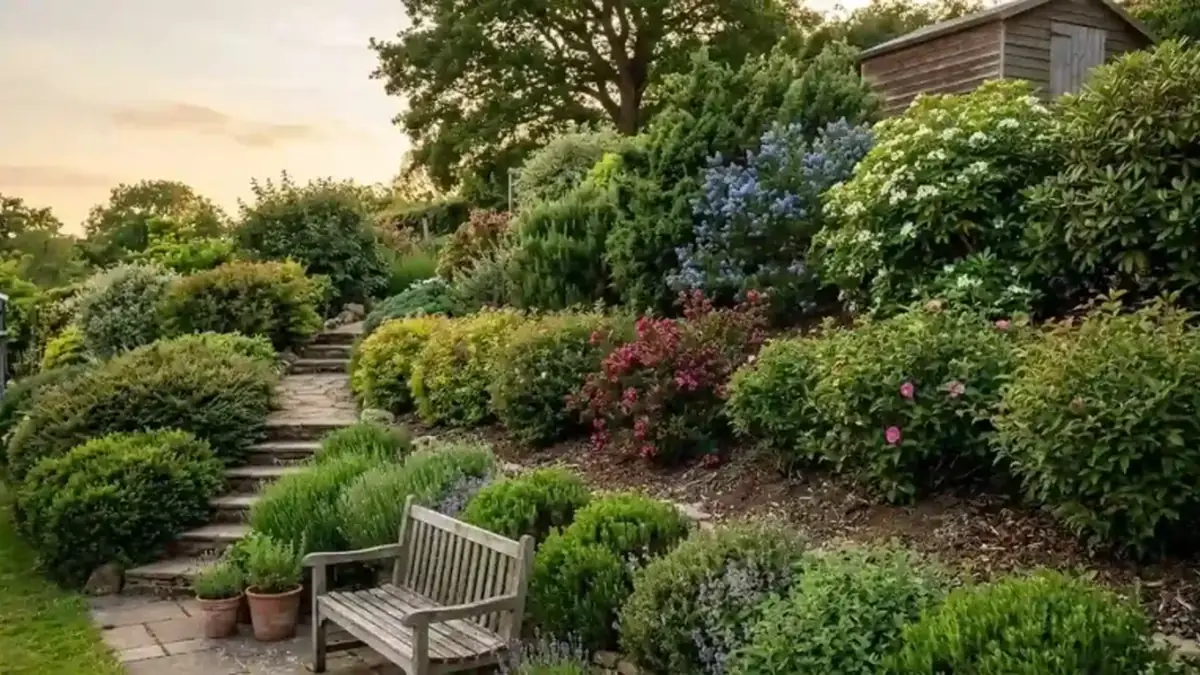
18 Slope Garden Ideas for a Beautiful, Usable Yard
A sloped garden can cause more problems than you first expect. Soil may wash away after heavy rain. Water may rush downhill before plants can absorb it. Mowing the lawn can also become difficult or unsafe.
The good news is that you do not need to flatten the whole yard. The best slope garden ideas work with the natural shape of the land. You can add terraces, paths, plants, drainage channels, or seating areas. Each choice can make the space safer and easier to use.
Your final design will depend on the steepness of the slope, the amount of sunlight, your soil, and your budget. Some jobs are simple enough for a weekend project. Others need skilled help.
These 18 sloped garden ideas will help you control runoff, protect the soil, and make better use of uneven ground.
How to Choose the Right Slope Garden Ideas
Before you buy plants or start digging, take time to study your garden. A good plan can save money and prevent drainage problems later.
First, check how steep the slope is. A gentle slope may only need ground cover plants and a curved path. A medium slope may work better with small terraces. A steep or unstable slope may need retaining walls designed by a skilled contractor or engineer.
Next, watch what happens when it rains. Look for channels in the soil, muddy areas, exposed roots, and water collecting at the bottom. These signs show where runoff is causing trouble.
Check the sunlight at different points. The top of the slope may be sunny and dry. The bottom may stay damp and shaded. This means one plant type may not work across the whole area.
You should also think about access. Ask yourself how you will carry soil, trim plants, pull weeds, and water the garden.
Use these five questions before choosing garden ideas for a slope:
- How steep is the land?
- Where does rainwater flow?
- How much sun does each area receive?
- Can you reach every planting bed safely?
- How much time and money can you spend?
Solve drainage and safety problems first. Add decorative features after the basics are in place.
Build Terraces to Create Level Planting Areas
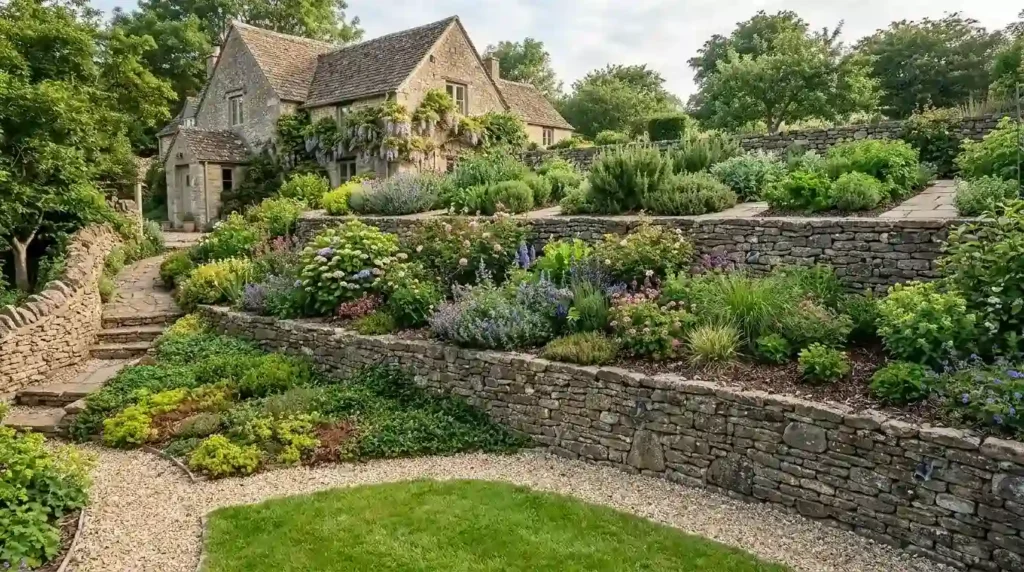
Terraces can turn one difficult slope into several flat garden beds. They make planting, watering, and maintenance much easier.
A terraced garden can use natural stone, brick, concrete blocks, timber, or rendered walls. Choose a material that fits the style of your home. Stone works well in cottage and country gardens. Smooth concrete blocks suit modern spaces.
Each terrace needs a way to release trapped water. Without drainage, wet soil can push against the wall and cause damage.
You can use each level for a different purpose. Plant herbs near the house. Add shrubs and flowers on the middle level. Use the lower level for ground covers or a small lawn.
Best for: Medium and steep slopes
Difficulty: High
Maintenance: Medium
Main benefit: Creates level and usable space
Large retaining walls are not a simple do-it-yourself job. Check local rules and hire skilled help when needed.
Add Wide Steps for Safer Access
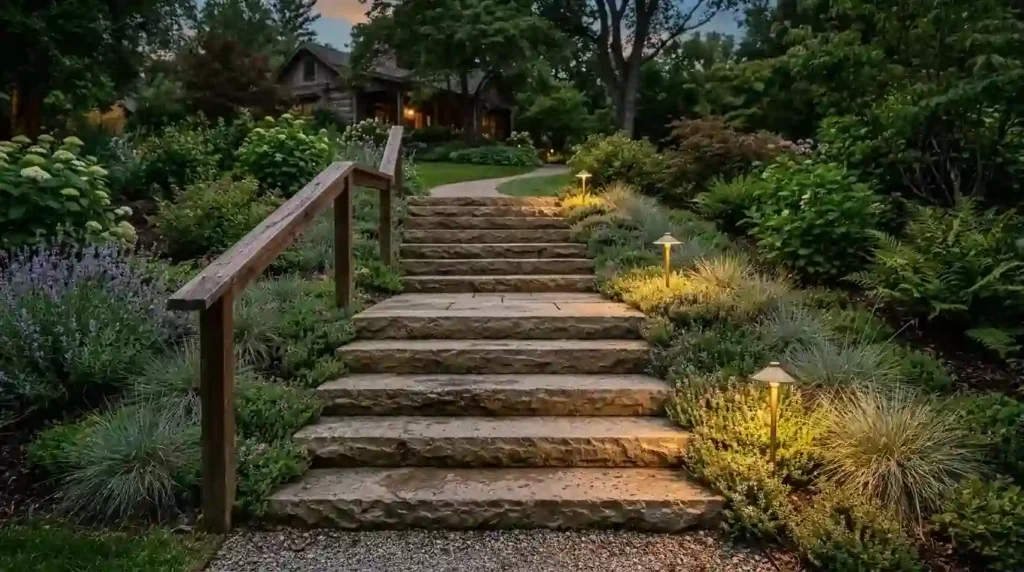
Walking straight up wet soil can be tiring and dangerous. Wide garden steps give you a safer route through the slope.
Keep each step the same height and depth. Uneven steps can cause trips, especially when they are wet. Long stairways should include flat landing areas where you can stop and rest.
You can build steps from stone slabs, brick, concrete, timber, or compacted gravel. Choose a surface that does not become slippery after rain.
Low plants can soften the hard edges. Creeping thyme, small grasses, or other compact plants can work well. Keep plants away from the walking area so they do not become a trip risk.
Add low garden lights if you use the steps at night.
Best for: Slopes used every day
Difficulty: Medium to high
Maintenance: Low
Main benefit: Makes the garden safer and easier to reach
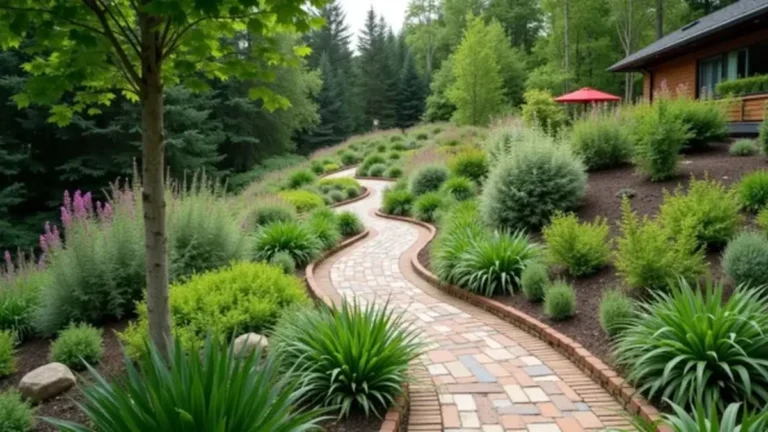
Use a Curving Path to Make the Climb Easier
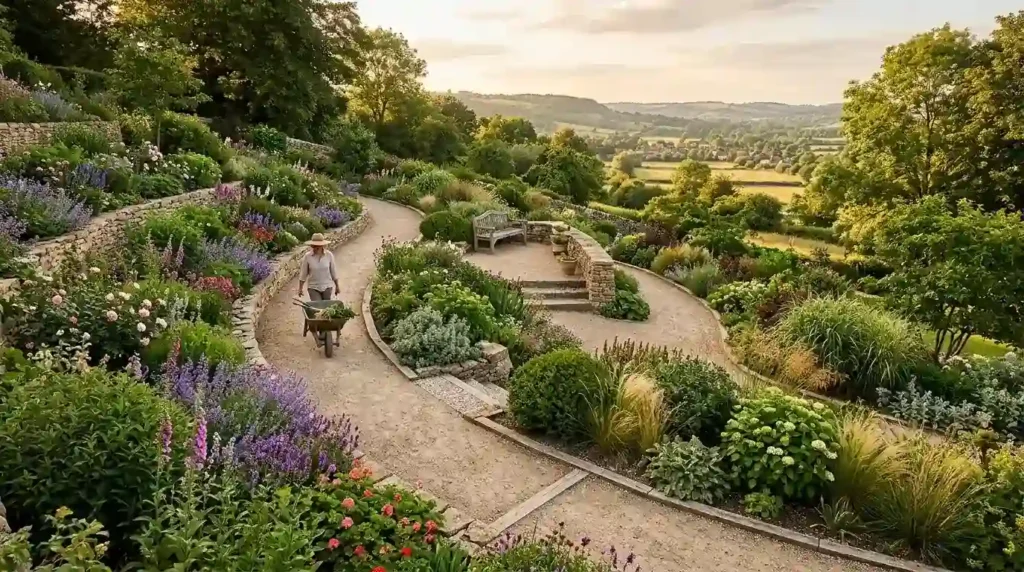
A straight path can make a steep slope feel even harder to climb. A curving or zigzag path spreads the rise across a longer route.
This type of path is often called a switchback path. It changes direction as it moves up the slope. Each turn can include a bench, a large plant, or a small viewing area.
Gravel, bark, stepping stones, and compacted stone are common choices. Loose materials need strong edging so they do not slide downhill.
Make the path wide enough for a wheelbarrow. This will make planting and future maintenance much easier.
You can also use the curves to create separate planting zones. One side may hold flowers. The other may hold shrubs or grasses.
Best for: Long or wide slopes
Difficulty: Medium
Maintenance: Low to medium
Main benefit: Creates gentle access without a long stairway
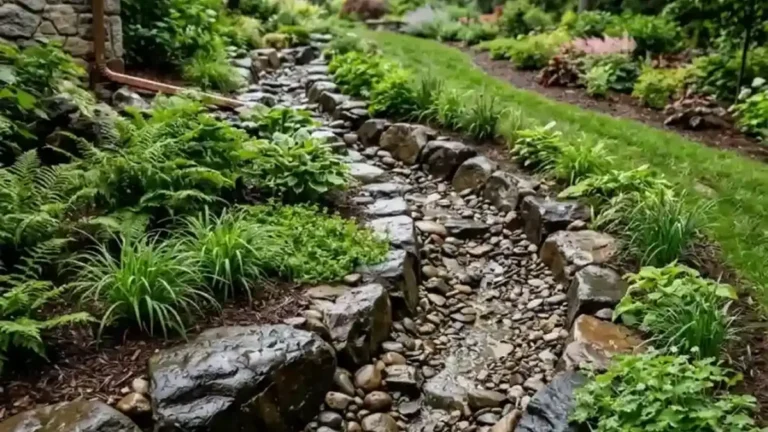
Control Runoff With a Dry Creek Bed
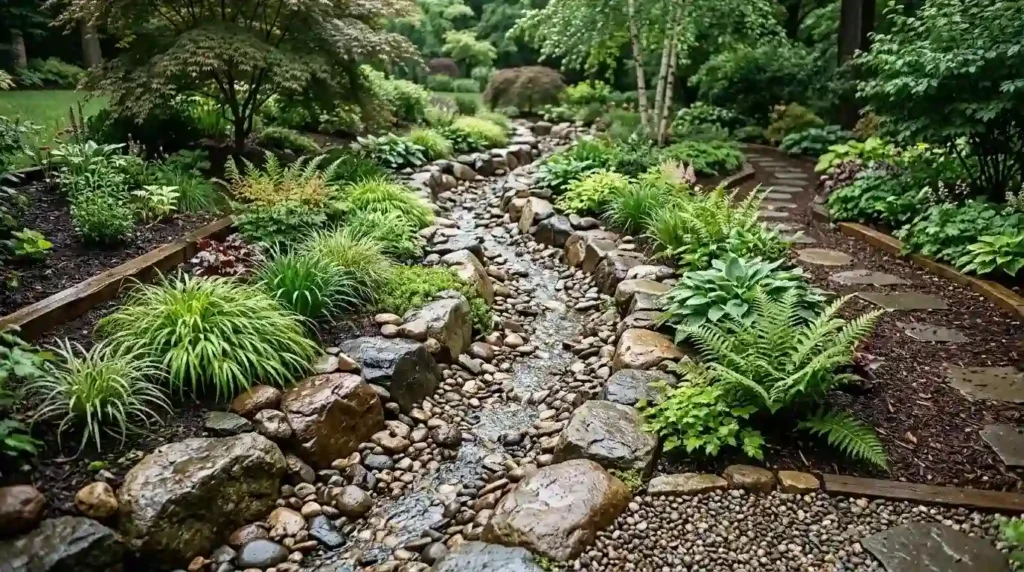
Heavy rain may cut narrow channels through a slope. A dry creek bed can guide this water through a planned route.
Start by watching where the water already flows. The creek bed should follow that natural line instead of forcing water in the opposite direction.
Use larger stones along the edges. Place smaller stones and gravel through the centre. The mix of sizes makes the feature look more natural.
Add grasses, sedges, or moisture-tolerant plants beside the channel. Their roots can help hold the nearby soil.
A dry creek bed must lead to a safe outlet. It should not send water against your house or into a neighbour’s property.
Best for: Slopes with visible water channels
Difficulty: Medium
Maintenance: Low
Main benefit: Controls runoff while adding a natural feature
Clear leaves and dirt from the channel when they block the flow.
Catch Extra Water in a Rain Garden
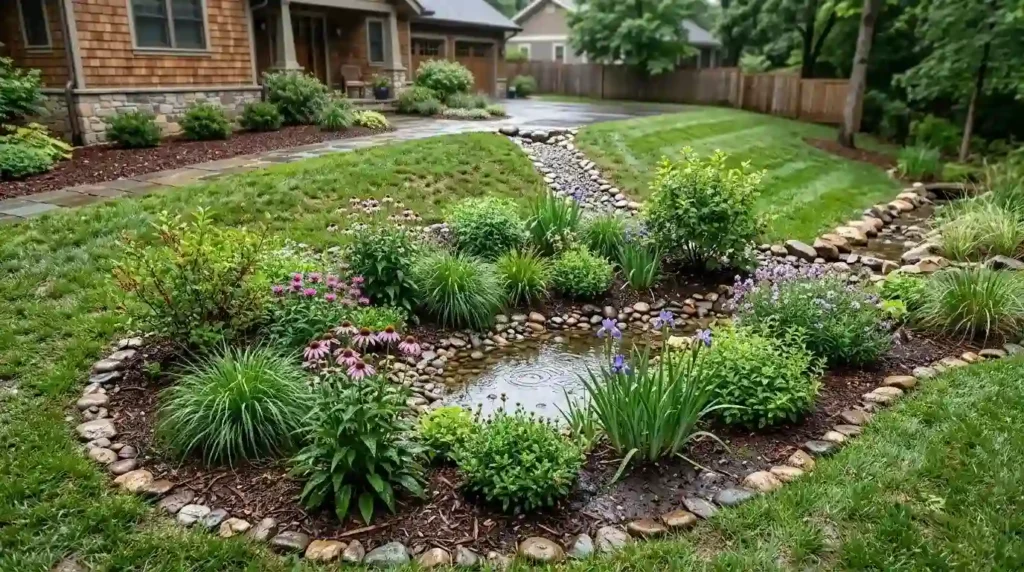
Does water collect at the bottom of your slope? A rain garden may help you use that wet area instead of fighting it.
A rain garden is a shallow planted area that holds runoff for a short time. The water then soaks into the soil instead of rushing into drains or across hard surfaces.
Choose plants that can handle both wet and dry periods. Sedges, flowering perennials, and small shrubs are often useful. The best choices will depend on your local climate.
Place the garden away from the house foundation. You should also check for buried pipes and cables before digging.
Plan an overflow route for very heavy rain. A rain garden cannot safely hold an endless amount of water.
Best for: The lower part of a wet slope
Difficulty: Medium
Maintenance: Medium
Main benefit: Slows water and supports healthy plants
Create a Rock Garden for a Dry, Sunny Slope
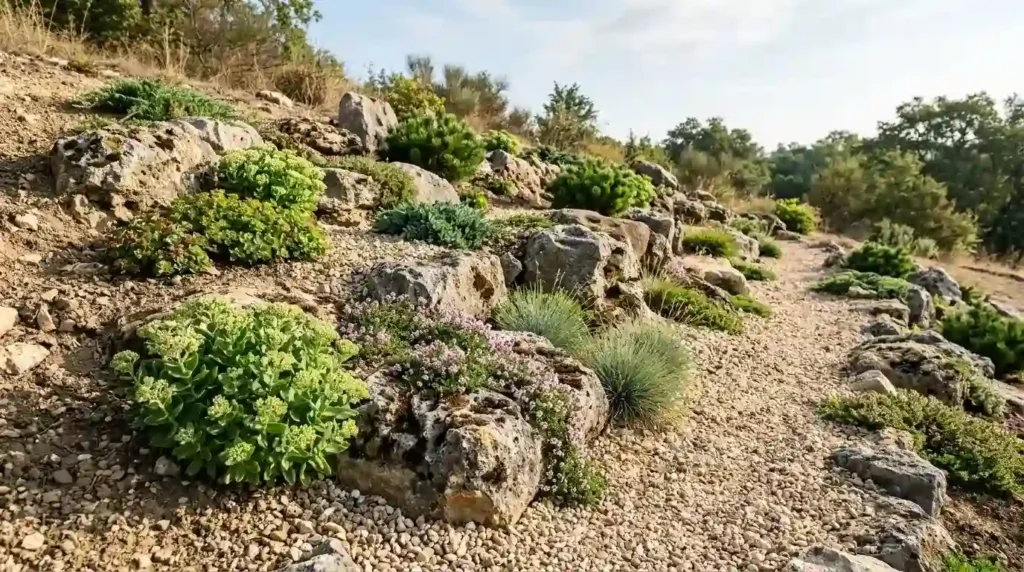
A hot slope can dry out fast. Grass may turn brown, and thirsty plants may need constant watering. A rock garden can be a better fit.
Place large rocks partly below the soil. This makes them look settled and natural. Use smaller stones to connect the larger pieces.
Create planting pockets between the rocks. Fill them with soil that drains well.
Sedums, creeping thyme, dwarf conifers, and small grasses can work in many sunny gardens. Always check whether a plant suits your climate before buying it.
Use one or two types of stone. Too many colours and shapes can make the slope look messy.
A layer of gravel can cover bare soil and reduce splashing during rain.
Best for: Dry and sunny slopes
Difficulty: Medium
Maintenance: Low
Main benefit: Reduces watering and covers poor soil
Use Boulders to Hold Small Planting Pockets
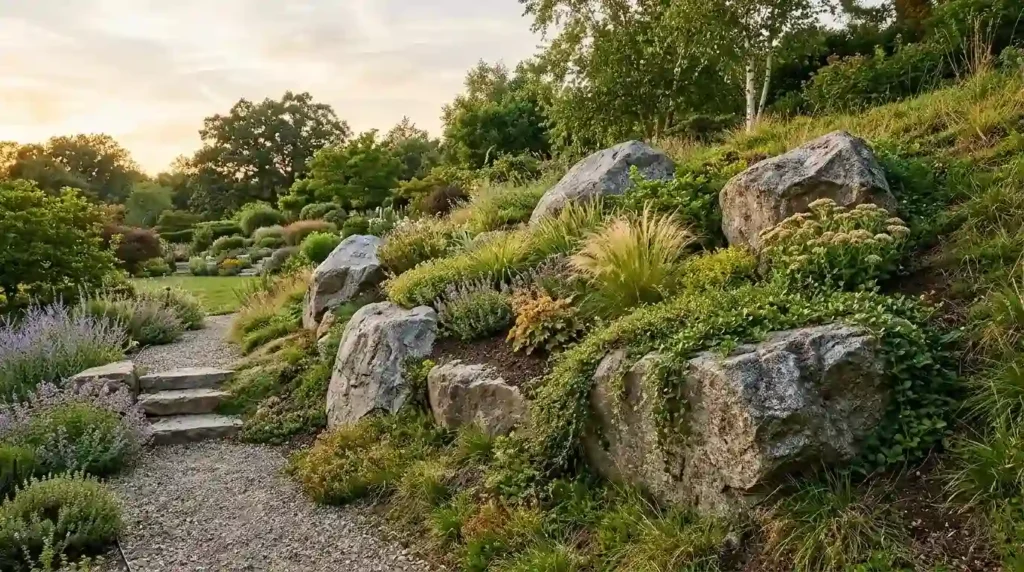
A long bare bank can look flat and unfinished. Groups of boulders can break up the space and create useful planting pockets.
Place the boulders in uneven groups. Rows of matching stones can look too stiff. Groups of three or five often feel more natural.
Pack soil behind and between the rocks. Add grasses, low shrubs, or plants that trail over the edges.
Choose stone that matches nearby walls, paths, or the colour of your house. This helps the full garden feel connected.
Large boulders are very heavy. Poor placement can damage the garden or create a safety risk. Machinery may also be needed.
Best for: Wide slopes with open areas
Difficulty: High
Maintenance: Low
Main benefit: Adds structure and reduces large areas of exposed soil
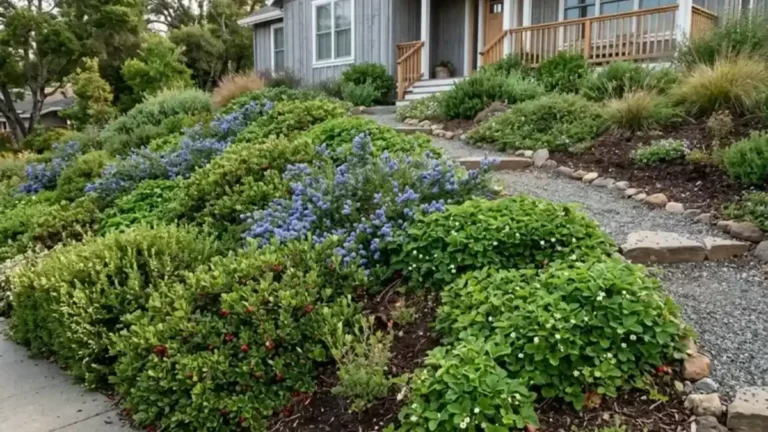
Cover Bare Soil With Spreading Plants
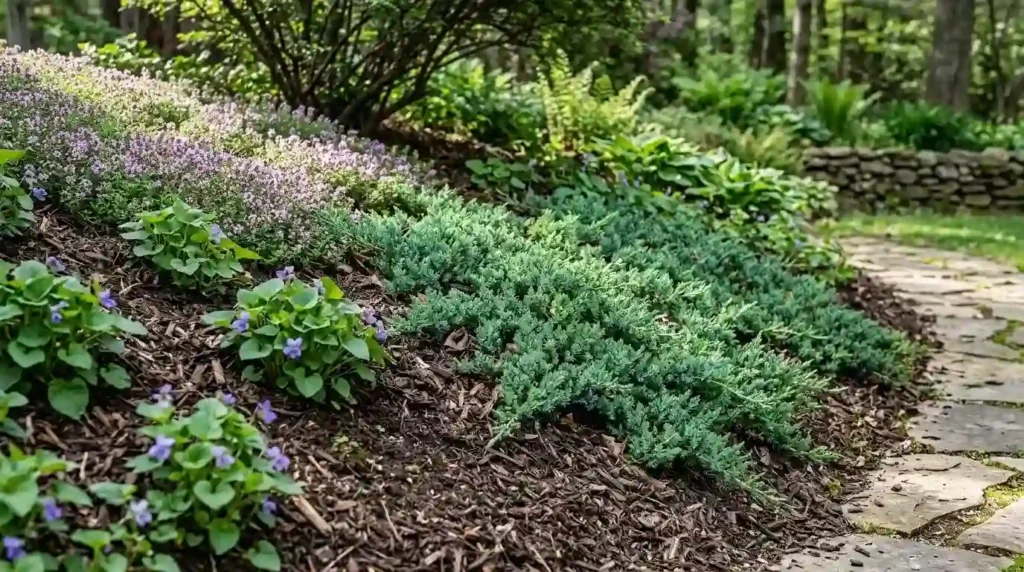
Bare soil is easy for rain to wash away. Spreading ground cover plants can protect the surface and reduce weeds.
Choose plants based on sunlight and moisture. Creeping thyme may suit a sunny, dry area. Sedges or native violets may suit a shaded area. Low-growing junipers can cover larger sunny banks.
Mix two or three plant types instead of relying on one. A mixed planting gives you different colours and shapes. It also reduces the risk of losing the whole area if one plant fails.
New plants need regular watering while their roots grow. Mulch can protect the gaps during this first stage.
Avoid plants that spread too fast in your area. Some ground covers can escape into lawns or natural spaces.
Best for: Gentle and medium slopes
Difficulty: Easy to medium
Maintenance: Low after growth fills in
Main benefit: Protects soil and reduces weeds
Plant Native Grasses to Hold the Soil
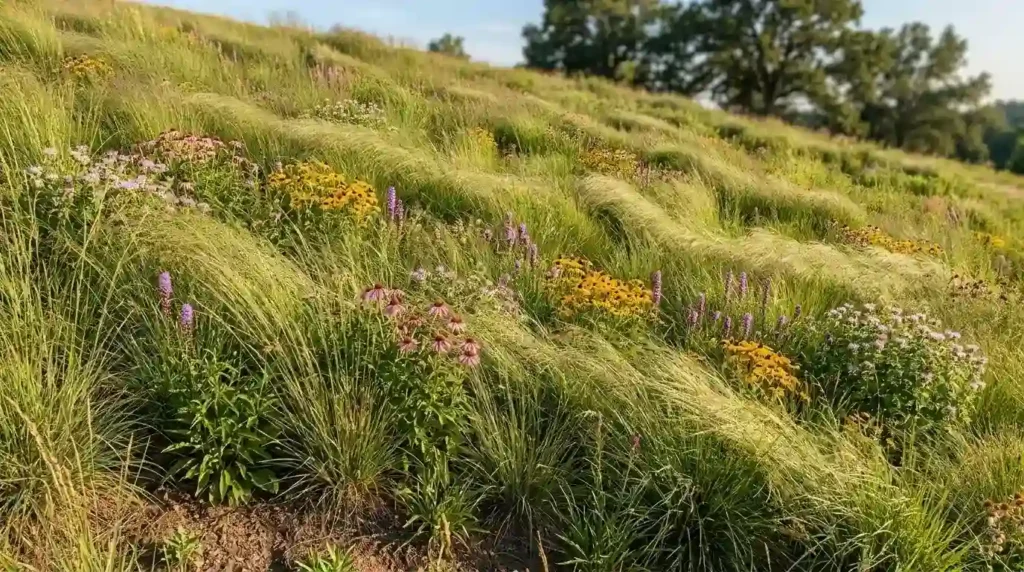
Traditional lawn grass has shallow roots and needs frequent mowing. Native grasses can be a safer and easier choice for a slope.
Many native grasses form thick root systems. These roots help hold soil during rain and wind. They can also cope better with local weather.
Plant grasses in wide groups that follow the shape of the land. Small single clumps may look lost on a large slope.
Mix grasses with native flowers for more colour. Choose plants that bloom at different times so the area stays attractive for longer.
Some grasses need cutting back once a year. Others may need very little care.
Best for: Large, sunny slopes
Difficulty: Easy to medium
Maintenance: Low
Main benefit: Supports soil and reduces mowing
Ask a local nursery which grasses grow naturally in your region.
Layer Shrubs Across the Slope
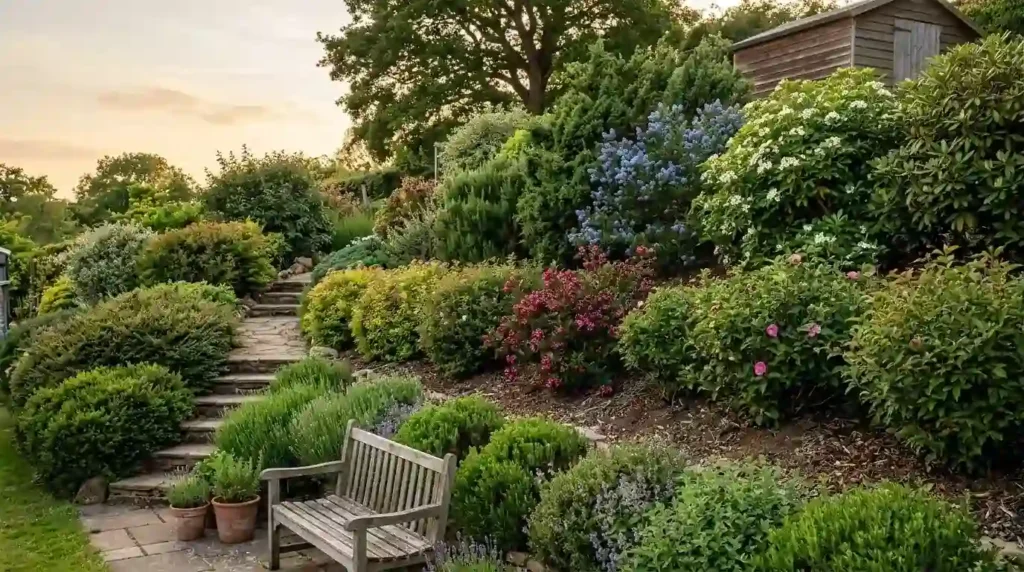
Shrubs can hide bare soil and give the garden a strong shape. They also help reduce the amount of land that needs regular weeding.
Plant shrubs in loose horizontal groups across the slope. Avoid straight lines that run from the top to the bottom. Water can follow those lines and carry soil downhill.
Use taller shrubs near the upper or back area. Place shorter plants near steps, paths, and seating spaces.
Mix evergreen shrubs with flowering types. Evergreens give the slope colour in every season. Flowering shrubs add colour at set times of the year.
Check the mature size before planting. A small nursery plant may become much wider within a few years.
Best for: Medium and large slopes
Difficulty: Medium
Maintenance: Low to medium
Main benefit: Adds privacy, colour, and long-term structure
Add Cascading Flowers for More Colour
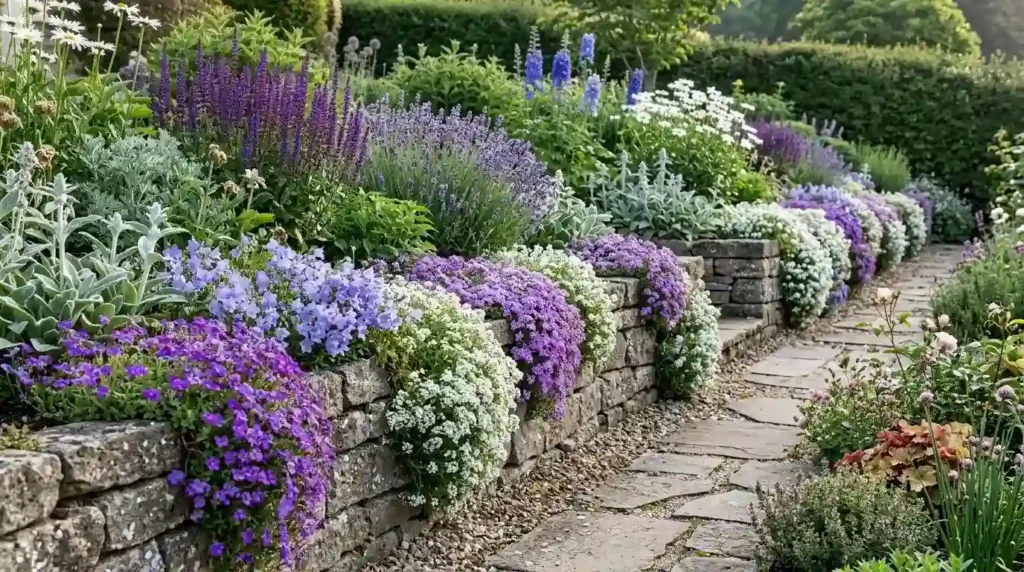
Low walls and terrace edges can look harsh when they are left bare. Trailing flowers can soften these lines.
Plant spreading flowers near the edge so their stems hang slightly over the wall. Combine them with upright plants placed farther back.
Repeat the same colours at different levels. This connects the top and bottom of the garden. A mix of white, blue, purple, and silver foliage can create a calm look.
Choose plants with different bloom times. This helps you avoid a garden that looks bright for two weeks and empty for the rest of the year.
Place plants that need regular care near paths. Hard-to-reach areas should hold stronger, lower-care plants.
Best for: Terraces and low retaining walls
Difficulty: Easy
Maintenance: Medium
Main benefit: Softens hard materials and adds seasonal colour
Turn a Shaded Slope Into a Woodland Garden
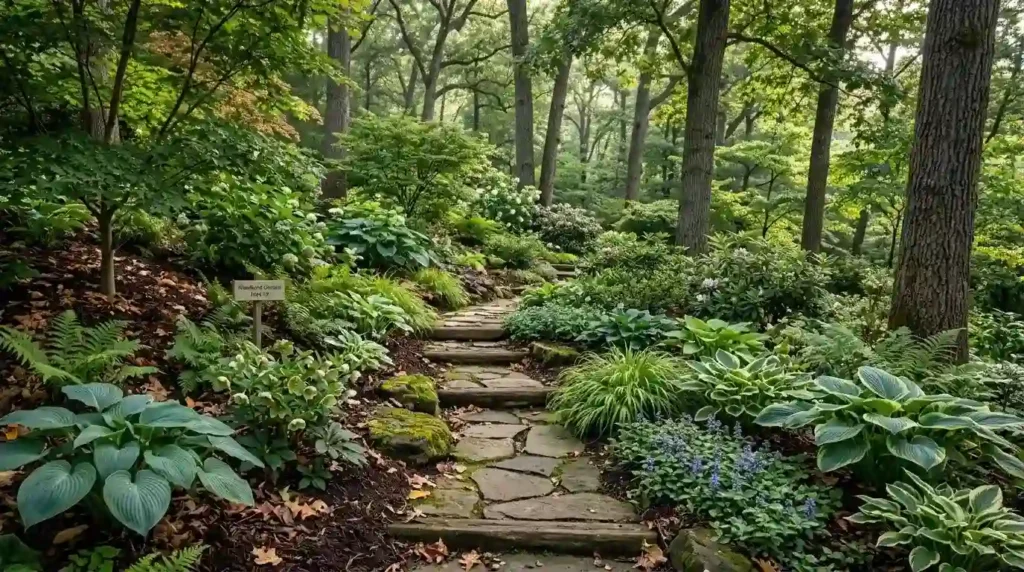
Grass often struggles beneath large trees. The ground may be shaded, dry, and full of roots. A woodland garden can work better.
Use several plant layers to copy the look of a woodland edge. Start with existing trees or tall shrubs. Add ferns, shade-loving flowers, bulbs, and low ground covers below them.
Hostas, hellebores, ferns, and woodland grasses are common choices. Some plants may not suit your region, so check local growing advice.
Use bark mulch or fallen leaves to cover bare soil. These materials help hold moisture and improve the soil as they break down.
Add a narrow stone or bark path through the area. Keep digging shallow near large trees so you do not damage major roots.
Best for: Shaded banks beneath trees
Difficulty: Medium
Maintenance: Low to medium
Main benefit: Solves poor lawn growth in shade
Replace Hard-to-Mow Lawn With a Pollinator Garden
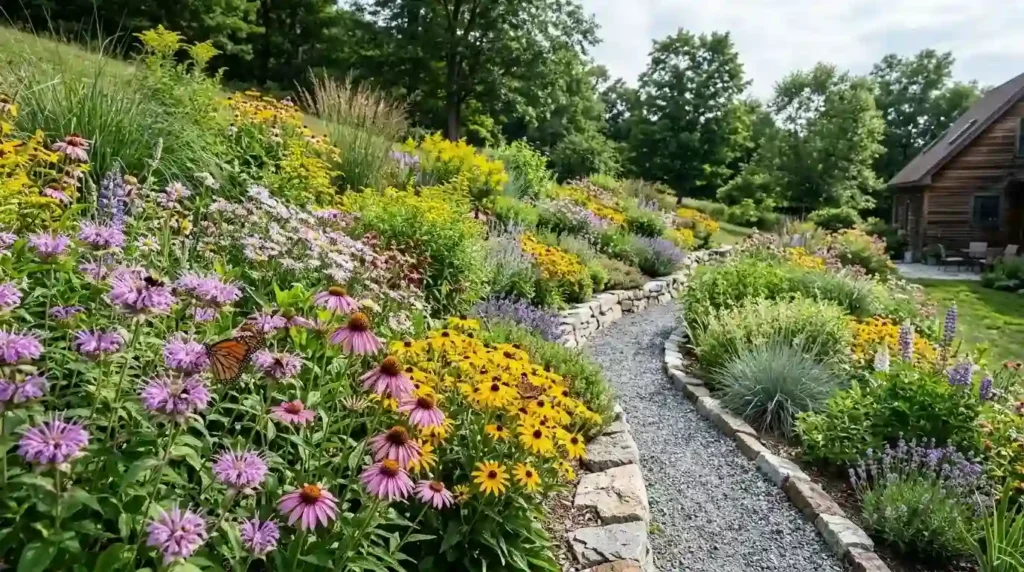
A steep lawn may take a lot of work without giving you much value. A pollinator garden can replace it with flowers, grasses, and useful habitat.
Choose local native plants when possible. They are often better suited to local rain, heat, and soil. They may also support local bees, butterflies, and other insects.
Include flowers with different shapes and bloom times. Early flowers provide food in spring. Summer and fall flowers keep the area active later in the year.
The first year may require weeding and watering. Be honest about this. A wild-looking garden is not free from care.
Use a neat edge, short path, or small sign to show that the planting is planned.
Best for: Sunny slopes with unwanted lawn
Difficulty: Medium
Maintenance: Medium at first, then lower
Main benefit: Reduces mowing and supports wildlife
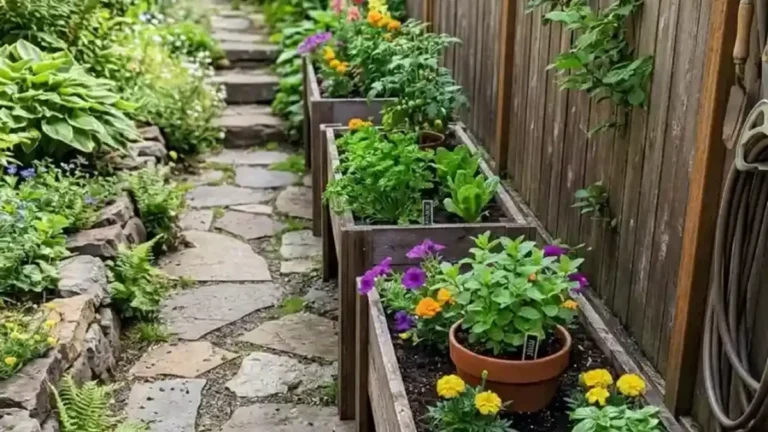
Grow Food in Tiered Raised Beds
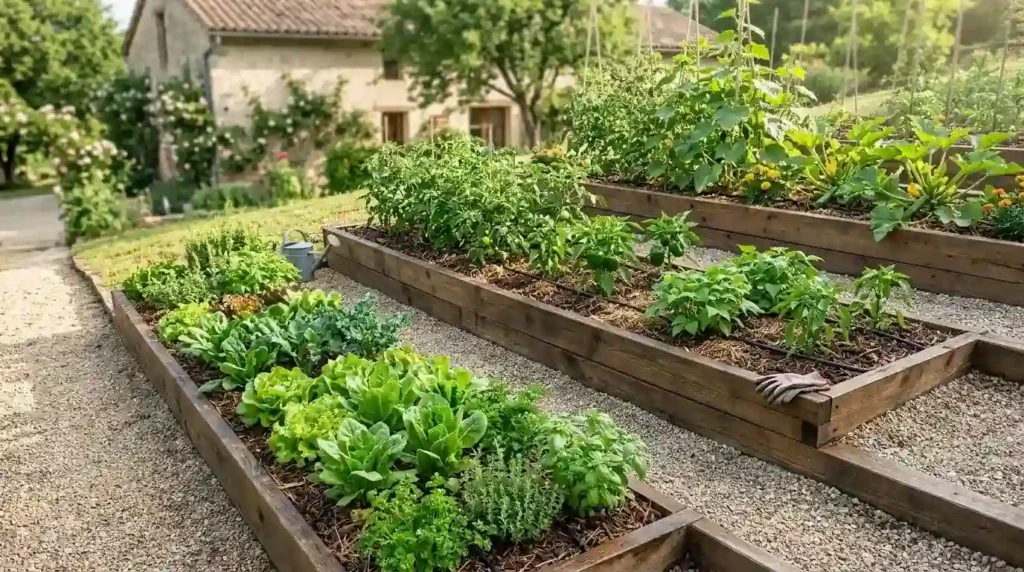
Water and soil can run out of a vegetable bed built directly on a slope. Level raised beds give crops a more stable place to grow.
Build two or three flat beds instead of one long bed. Leave safe paths between each level.
Place sun-loving crops where they will receive at least several hours of direct light. Keep herbs and leafy greens near the easiest path. You will harvest them more often.
Drip lines or soaker hoses can water the roots without washing soil downhill. Mulch can also help keep the beds moist.
Do not make the beds so wide that you need to step inside them. Reaching from the path protects the soil from being packed down.
Best for: Sunny slopes near the house
Difficulty: Medium to high
Maintenance: High during the growing season
Main benefit: Turns unused ground into food-growing space
Add a Level Seating Area With a View
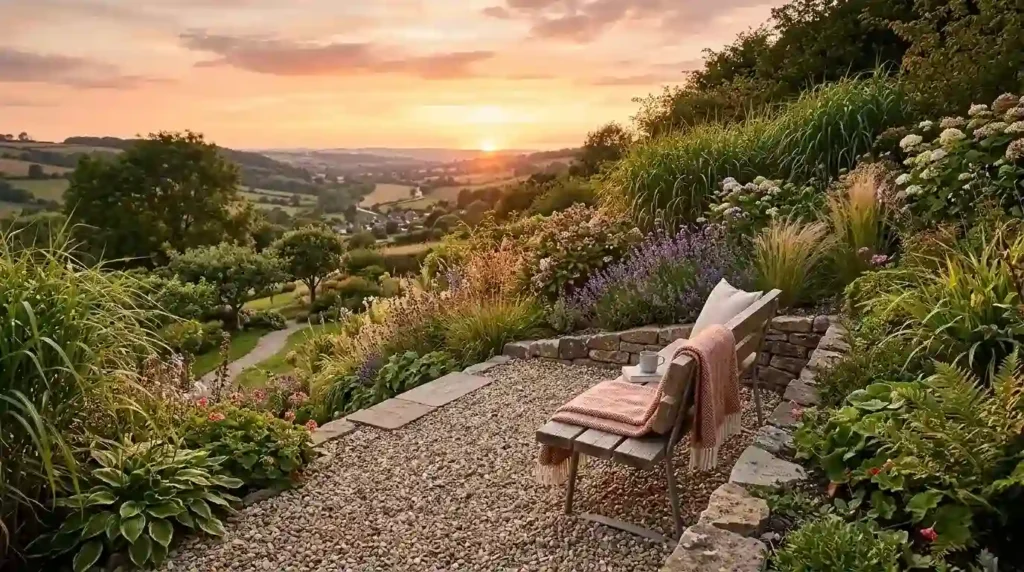
A slope does not have to be used only for plants. A small level terrace can become a quiet place to sit.
Choose a spot with the best view. It may face the house, a flower bed, or the rest of the yard.
Mark the area with stakes before building. Place temporary chairs inside the marked space. This simple test helps you check the size and view.
A bench needs less room than a table and chairs. A gravel base can be cheaper than a paved area.
Add shrubs or tall grasses for privacy. Make sure the plants will not block the view as they grow.
Best for: Medium slopes with a good view
Difficulty: Medium to high
Maintenance: Low
Main benefit: Creates a useful destination in the garden
Good drainage is still needed below and behind the terrace.
Use the Slope for a Cascading Water Feature
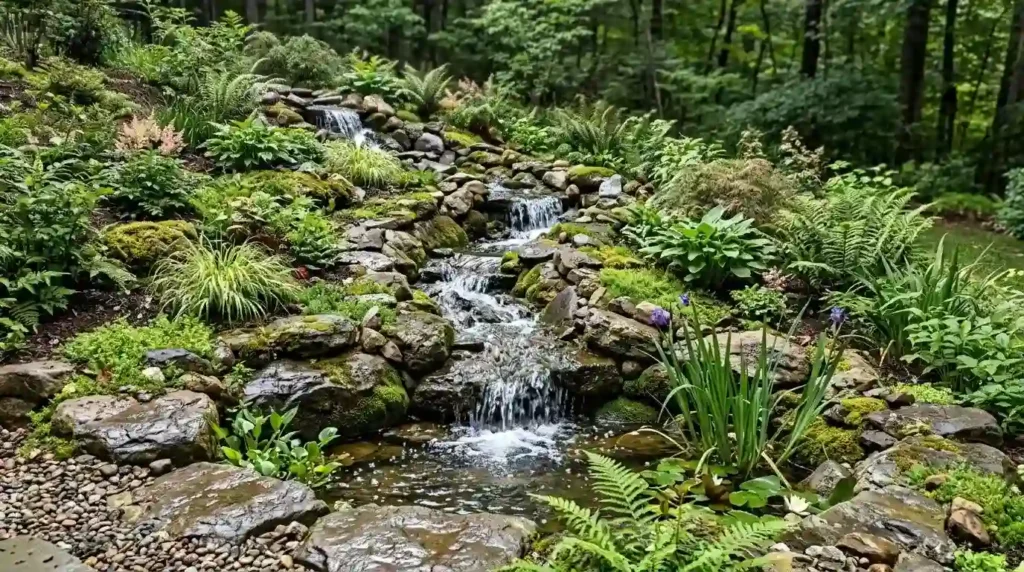
A change in ground level can make a small water feature look natural. Water can move down a short channel into a lower basin.
A recirculating pump sends the same water back to the top. This limits the amount of new water needed.
Hide the pipe between rocks and plants. Keep the pump easy to reach because it will need cleaning.
You can choose a formal design with straight steps or a natural design with uneven stone. The style should match the rest of the garden.
Leaks can soften soil and create damage. Use a proper liner and check the area often.
Best for: Decorative garden slopes
Difficulty: High
Maintenance: Medium to high
Main benefit: Uses the height change as a visual feature
This idea may not suit homes with young children unless strong safety steps are added.
Build Gabion Walls for a Modern Look
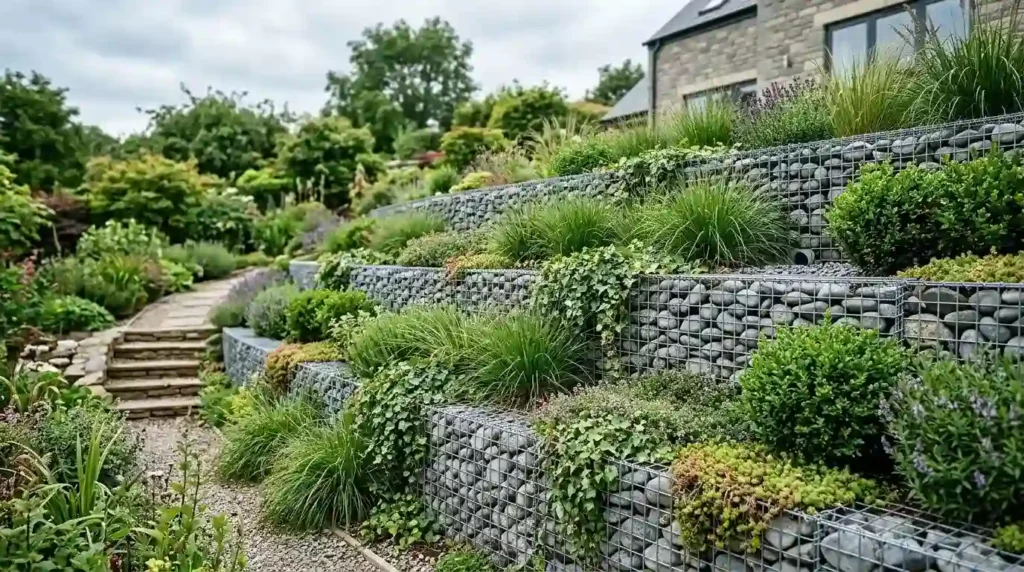
Gabion walls are wire cages filled with stone. They can form low terraces, boundaries, and retaining features.
The stone stays visible through the metal cage. You can use smooth grey stone for a modern design. Local rough stone can create a softer look.
Gabions can feel heavy when used alone. Add grasses, trailing plants, or shrubs around them to soften the metal and stone.
These walls need a stable base. They also need proper drainage and strong cages made for outdoor use.
Low gabions may work as garden edging. Taller walls may need professional design and local approval.
Best for: Modern homes and large gardens
Difficulty: High
Maintenance: Low
Main benefit: Creates strong structure with a clean look
Build Small Terraces on a Limited Budget
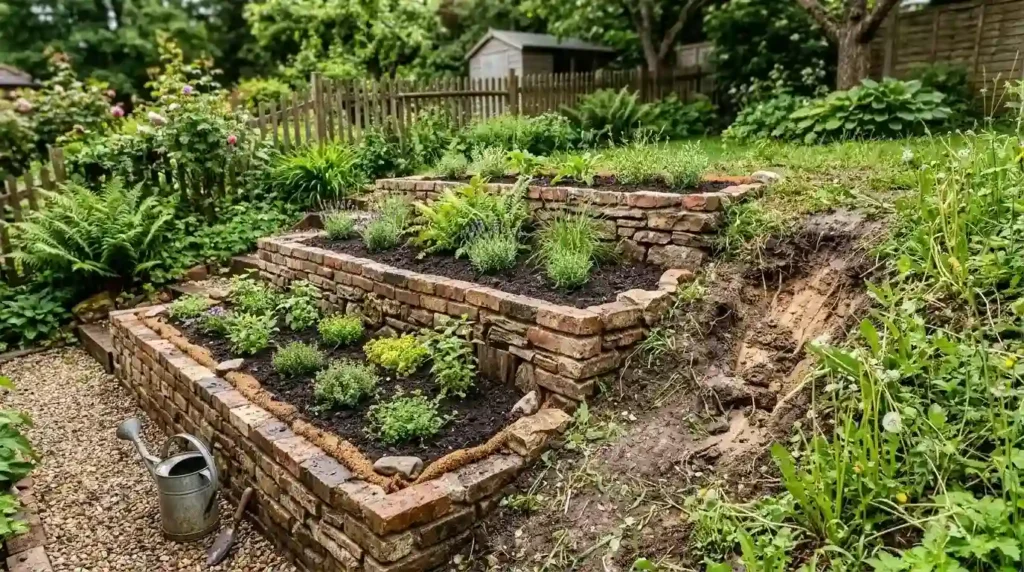
You do not need to rebuild the whole slope at one time. Small planting shelves can improve the area in stages.
Start with the section causing the biggest problem. This may be a muddy path, a washed-out patch, or a bare bank near the house.
Use stable reclaimed bricks, local stone, or suitable landscape timber for low edges. Do not use weak or damaged materials.
Temporary erosion-control rolls may help hold soil while new plants grow. They are not a replacement for a strong wall on a steep slope.
Complete one level before starting the next. This makes the cost easier to manage. It also gives you time to see how water moves through the new design.
Best for: Gentle and medium slopes
Difficulty: Medium
Maintenance: Medium
Main benefit: Spreads the work and cost over time
How to Combine Sloped Garden Ideas That Work Together
One idea may not fix every problem. Most successful slopes use a mix of drainage, access, structure, and planting.
For a small urban garden, combine wide steps with low walls, cascading flowers, and a compact seating area. This gives you safe access without filling the yard with large structures.
For a steep backyard, use strong terraces, a switchback path, deep-rooted shrubs, and a dry creek bed. The walls create level areas. The path improves access. The plants and drainage channel help control soil and water.
For a low-maintenance slope, combine boulders, native grasses, spreading ground covers, and gravel mulch. This design can reduce mowing and cover exposed soil.
For a budget project, build small terraces over time. Add divided ground cover plants, a mulched path, and reused stone that is still safe and strong.
Start with water control. Then improve access. Add plants after the ground is stable. Decorative features should come last.
Common Slope Garden Mistakes to Avoid
A good idea can fail when the basic plan is wrong. Watch for these common mistakes:
- Building a wall without drainage behind it
- Sending runoff near the house
- Using loose gravel without strong edging
- Planting one species across the whole slope
- Choosing plants based only on their current size
- Placing high-care plants in hard-to-reach areas
- Leaving new soil bare during rainy weather
- Starting a large project without checking buried utilities
- Building tall walls without skilled advice
- Ignoring water that enters from nearby land
Take photos during heavy rain. These images can help you plan drainage or explain the problem to a contractor.
Choose Ideas That Solve Your Main Slope Problem
Start with the problem that causes the most trouble. If soil is washing away, focus on drainage and planting. If the slope is hard to reach, add steps or a curved path. If the area feels wasted, build a terrace, vegetable bed, or seating space.
You do not need to use all 18 ideas. Choose two or three that fit the land, your budget, and the amount of care you can provide.
Watch the slope during rain. Check the sunlight. Measure the space before buying materials.
With a clear plan, these slope garden ideas can turn difficult ground into a safer, greener, and more useful part of your yard.