19 Low-Maintenance Hillside Landscaping Ideas
A steep hillside can become the hardest part of your yard to manage. Grass may be unsafe to mow. Mulch can wash away after heavy rain. Plants may dry out because water runs downhill before it reaches their roots.
The good news is that you do not need to fight the slope every weekend.
These low-maintenance hillside landscaping ideas can help you control erosion, reduce watering, remove hard-to-mow grass, and make the hill look like a planned part of your yard.
The right choice depends on your sunlight, soil, water flow, budget, and slope size. A sunny hill may work well with grasses and rock gardens. A shaded hill may need ferns, woodland plants, and organic mulch.
Start by finding the biggest problem. It may be mowing, weeds, runoff, poor access, or bare soil. Then choose ideas that fix that problem first.
Replace Hard-to-Mow Grass With Native Ground Covers
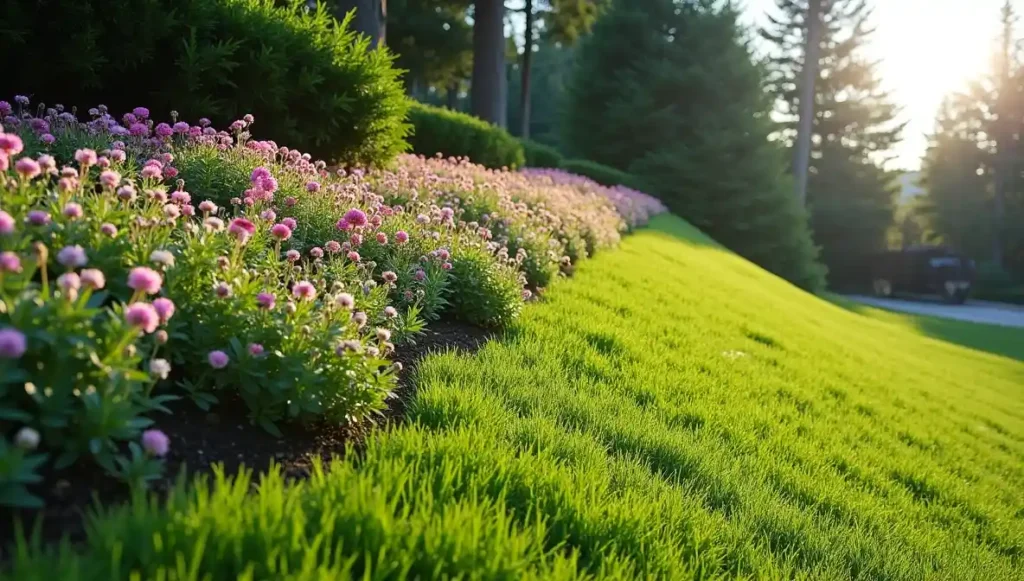
Grass often creates more work on a slope than it does on flat ground. It needs mowing, feeding, watering, and edging. It may also become thin when the soil is dry or shaded.
Native ground covers can create a low layer of plants that spreads across exposed soil. Their roots help hold the top layer of soil in place. Once the plants fill in, they can also reduce open spaces where weeds grow.
Choose plants that match your local weather and growing conditions. Good choices may include creeping phlox, wild strawberry, bearberry, native sedges, and low-growing juniper.
Do not depend on one plant for the whole hill. A mix of two or three suitable plants gives you better texture and lowers the risk of losing the full planting area to one pest or disease.
Best for: Large slopes where you want to remove grass
Maintenance level: Low after the plants spread
Main benefit: Less mowing and less bare soil
Watch out for: Fast-spreading plants that are invasive in your area
Use Deep-Rooted Grasses to Hold Loose Soil
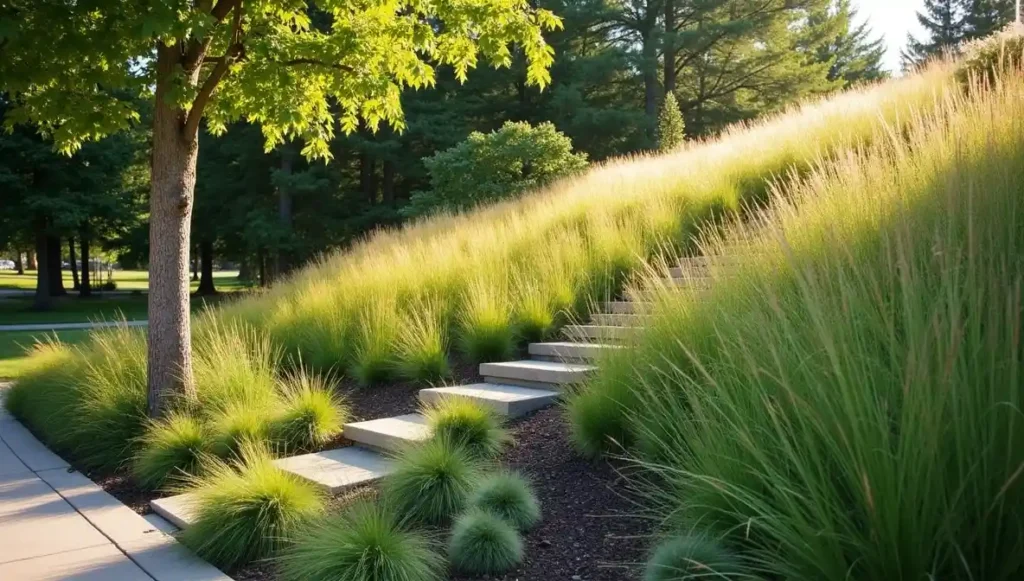
Ornamental grasses can cover large spaces without looking heavy. Their narrow leaves move in the wind and add soft texture to a plain hillside.
Many grasses grow in clumps. This makes them easier to control than plants that spread through underground roots.
The dense root systems can help hold surface soil. They also allow water to enter the ground instead of rushing across bare areas.
Possible choices include little bluestem, prairie dropseed, blue fescue, and switchgrass. Plant choice depends on your region, soil, and moisture level.
Place the grasses in broad groups rather than single plants spread far apart. Repeated groups look cleaner and are easier to care for.
Most ornamental grasses need to be cut back once a year. That is still less work than mowing a steep lawn every week.
Best for: Sunny or partly sunny slopes
Maintenance level: Low, with one seasonal cut
Main benefit: Soil coverage with little watering
Watch out for: Grasses that spread too fast
Build a Dry-Climate Slope With Succulents
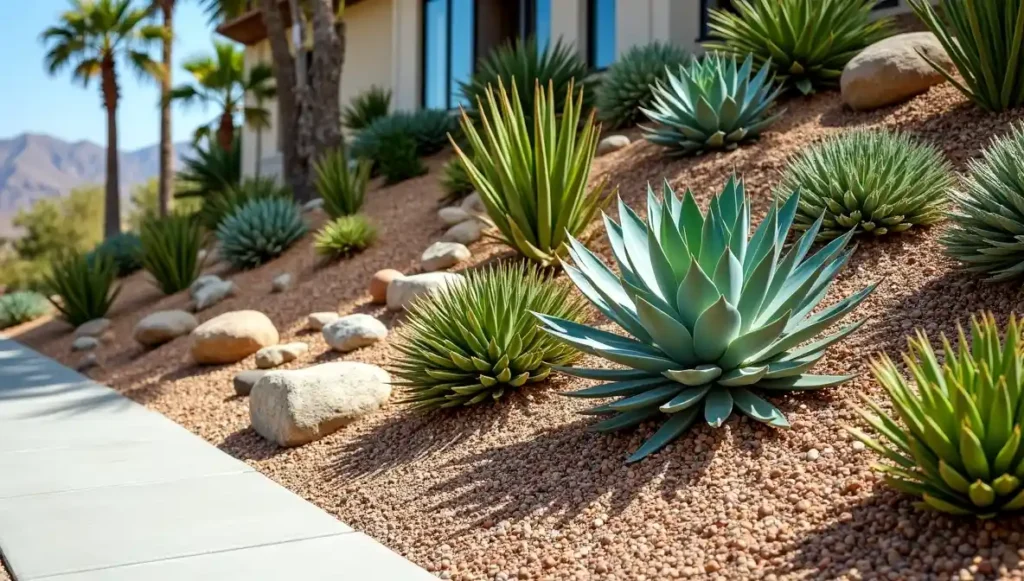
A hot, sunny hillside can be a hard place for plants. Water drains quickly. The soil may dry out within hours during summer.
Succulents store water in their leaves and stems. This makes them useful for dry slopes with fast-draining soil.
Sedum and sempervivum work well in many cooler areas. Agave and some yucca types may suit warmer regions. Ice plant can add strong color, but it should only be used where it is not invasive.
Mix low-growing plants with a few larger shapes. This keeps the design from looking flat.
Gravel mulch can work well in a dry planting area. It does not wash away as easily as light wood mulch. It also matches the look of succulents and rocks.
Drought-tolerant hillside plants still need water while their roots grow. “Drought tolerant” does not mean “never water.”
Best for: Hot, sunny, well-drained hills
Maintenance level: Low after the first growing season
Main benefit: Lower water use
Watch out for: Wet soil, poor drainage, and winter cold
Plant Shrubs That Need Little Pruning
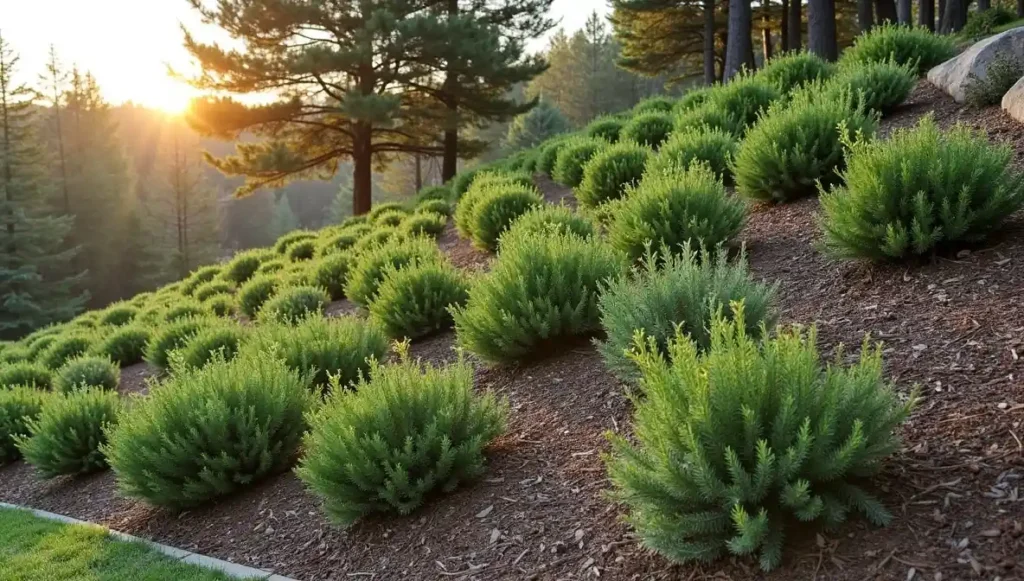
Shrubs can cover more space than small flowers. They can also give the hill a strong shape throughout the year.
The key is to choose shrubs that stay close to their natural size. A large shrub planted in a tight space will need regular cutting. A compact shrub can grow for years with very little pruning.
Low-growing junipers work well on many sunny slopes. Dwarf ninebark can add darker leaves and seasonal flowers. Summersweet may suit moist areas. Manzanita may work in dry western regions.
Check the plant’s mature height and width before buying it. A small nursery plant may become several feet wide.
Leave enough space between shrubs. Fill the gaps with ground covers or mulch while the shrubs grow.
Use the same shrub in groups of three, five, or seven. This creates a calmer design and makes future care simpler.
Best for: Medium and large hills that need year-round structure
Maintenance level: Low when plants fit the space
Main benefit: Large coverage from fewer plants
Watch out for: Shrubs planted too close together
Turn the Hill Into a No-Mow Meadow
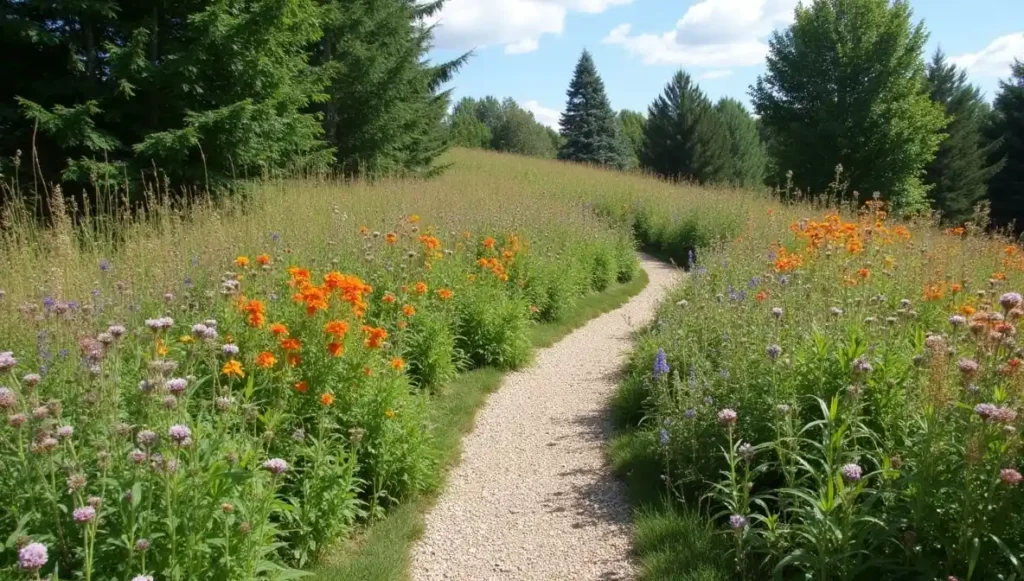
A wildflower or meadow slope can replace grass with a softer, more natural look. It can also provide food and cover for bees, butterflies, and other wildlife.
Use a native seed mix made for your area. Avoid cheap general seed packs that may contain plants unsuited to your climate.
A meadow is not maintenance-free from the first day. Young plants may need regular watering. Weeds must be removed before they drop seeds. Some meadow areas also need one cut each year.
A clear border helps the planting look planned. Add a gravel strip, mowed edge, low stone border, or simple path.
You can also place a small sign near the area. It can explain that the slope is a pollinator meadow rather than an overgrown lawn.
This form of no-mow hillside landscaping works best on broad slopes where a relaxed look fits the home.
Best for: Large open hills with good sunlight
Maintenance level: Medium at first and low later
Main benefit: No weekly mowing
Watch out for: Weeds during the first year
Layer Ground Covers, Shrubs, and Evergreens
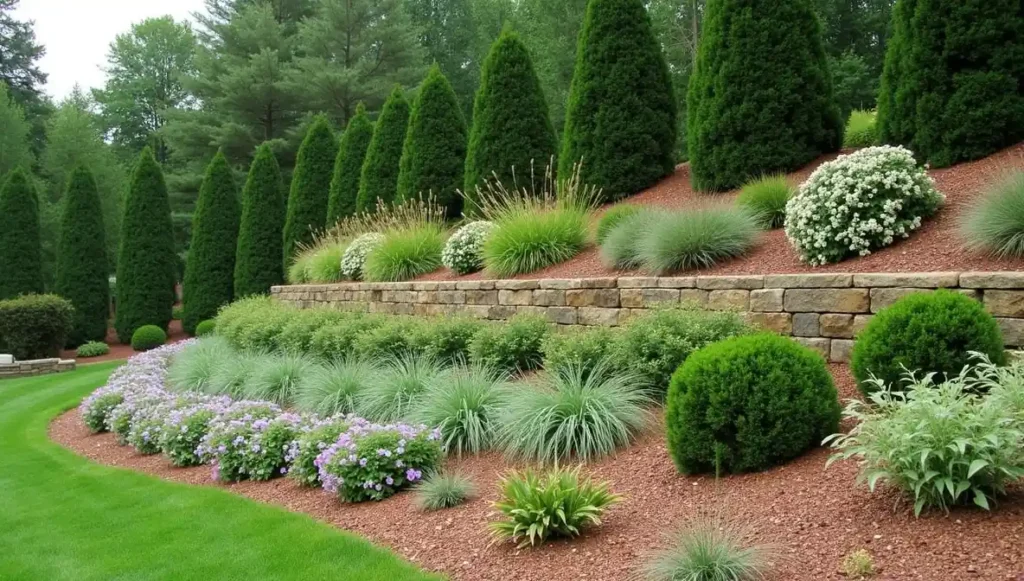
A hill planted with one type of plant can look plain. A hill filled with too many unrelated plants can look messy.
A simple layered design gives you color, height, and year-round structure without adding too much work.
Use three basic layers:
- Evergreen shrubs as the main anchors
- Medium shrubs or grasses for seasonal interest
- Ground covers to protect open soil
Place taller plants near the top or back of the hill. Place shorter plants closer to paths and lower edges.
Repeat the same plants in several areas. Repeated shapes help the slope look connected.
Choose plants with similar water needs. A dry-climate shrub should not share the same irrigation zone with a plant that needs wet soil.
Layered planting is one of the easiest ways to make a slope look full without using dozens of plant types.
Best for: Hills that need color in every season
Maintenance level: Low to medium
Main benefit: Full coverage with a planned look
Watch out for: Mixing plants with very different water needs
Divide a Steep Hill Into Smaller Terraces
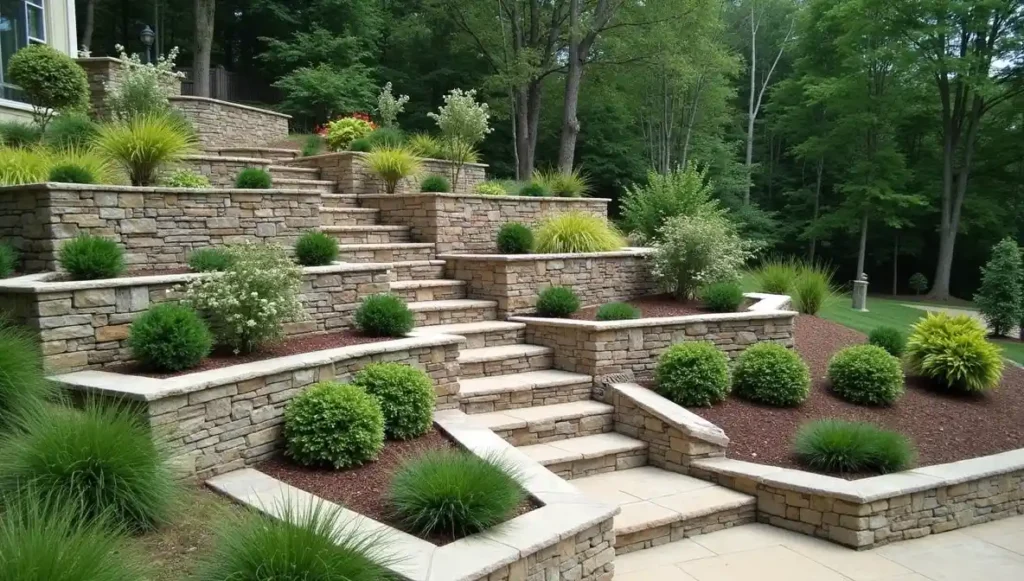
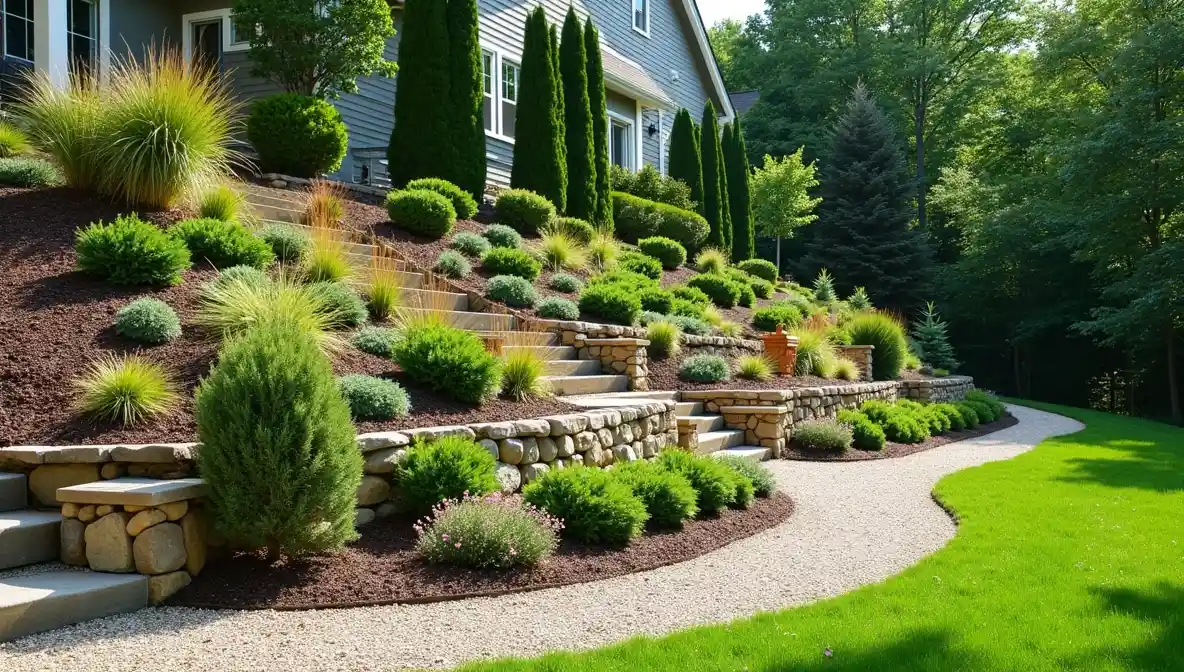
A steep hill may be too hard to use as one large planting bed. Small terraces can break the area into flatter levels.
Each level is easier to plant, water, and reach. Terraces may also create space for shrubs, small trees, seating, or paths.
You can use natural stone, concrete blocks, or other approved retaining materials. Match the wall color to your home, patio, or other hard surfaces.
Several low walls may look softer than one tall wall. They can also create more planting space.
Retaining walls must handle soil pressure and water. Poor drainage behind a wall can cause movement, cracking, or failure.
Small decorative walls may be suitable for an experienced DIY homeowner. Tall walls or walls holding a major slope need professional design and installation.
Terraced hillside landscaping costs more at the start. Yet it can lower long-term work by making the hill safer and easier to reach.
Best for: Steep slopes that need usable levels
Maintenance level: Low after proper installation
Main benefit: Better access and flatter planting beds
Watch out for: Drainage and structural safety
Create a Rock Garden for a Sunny Slope
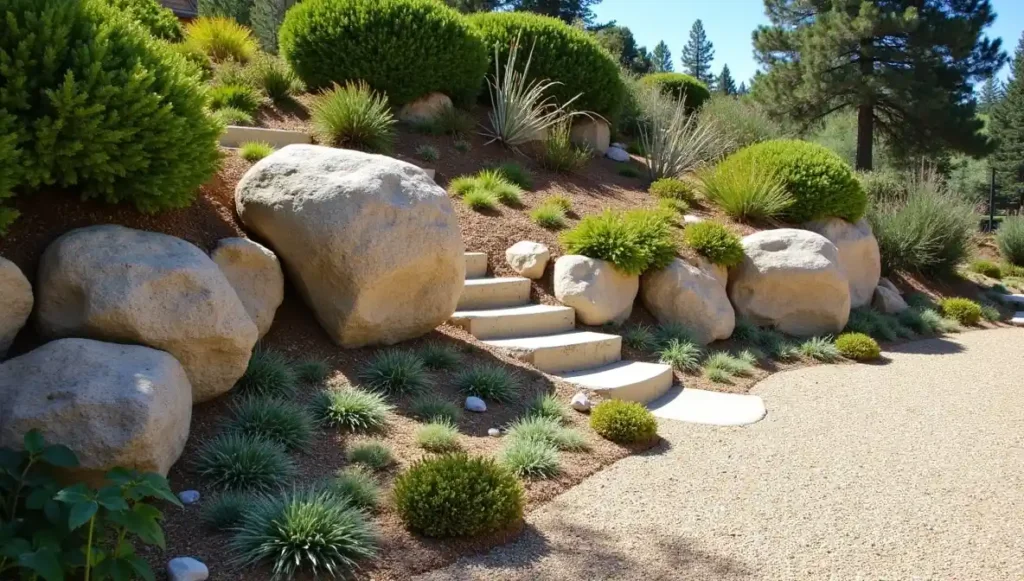
A rock garden adds permanent shape without needing water, trimming, or fertilizer.
Use a few large stones rather than covering the whole slope with small loose rocks. Larger stones look more natural and are less likely to slide downhill.
Partly bury each rock. This makes it look like the stone belongs in the ground instead of sitting on top of it.
Leave planting pockets between the rocks. Fill them with compact plants that suit dry soil.
Good choices may include sedum, small grasses, thyme, low-growing shrubs, and local dryland plants.
Place stones in groups with different sizes. Avoid straight rows or even spacing. Natural hills rarely have rocks arranged like fence posts.
A hillside rock garden works best when the stones and plants match the local setting.
Best for: Sunny, rocky, or dry slopes
Maintenance level: Low
Main benefit: Permanent structure with little watering
Watch out for: Loose rocks on steep ground
Guide Runoff With a Dry Creek Bed
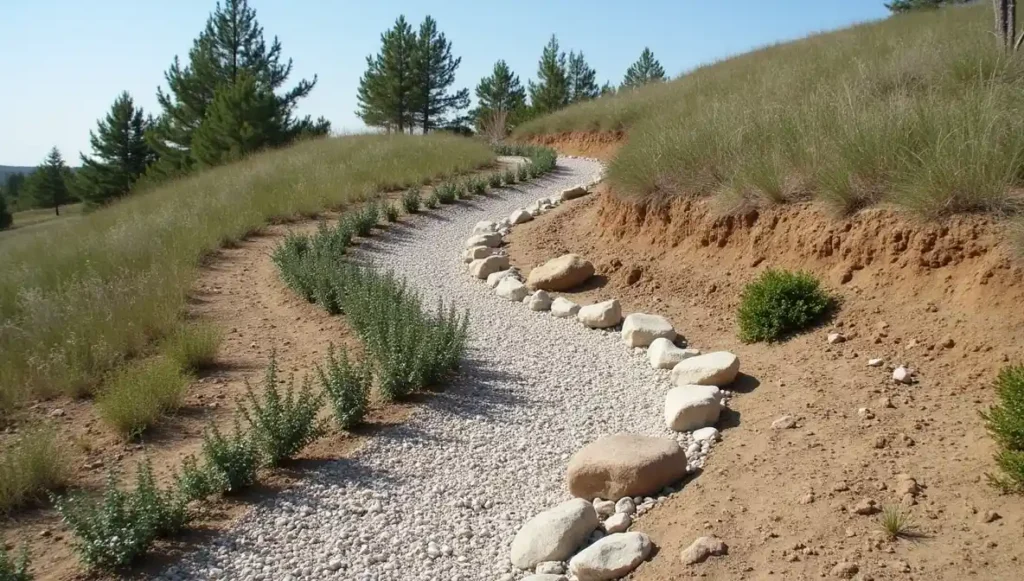
A dry creek bed can turn a wet problem area into a useful landscape feature.
The channel can follow a natural low point where water already runs. It can help direct runoff when the bed has the right slope, depth, and exit point.
Use a mix of gravel, small stones, and larger rocks. Place larger stones along bends and edges. This makes the channel look more like a natural stream.
Add moisture-tolerant plants near the lower part of the creek bed. Sedges and other local rain-garden plants may work well.
A dry creek is not a simple fix for every drainage problem. It must lead water to a safe area. It should never send water toward a house, road, or nearby property.
Ask a drainage expert for help when the channel handles heavy stormwater.
Best for: Slopes with a clear runoff path
Maintenance level: Low with regular checks
Main benefit: Better-looking water control
Watch out for: Sending water to the wrong place
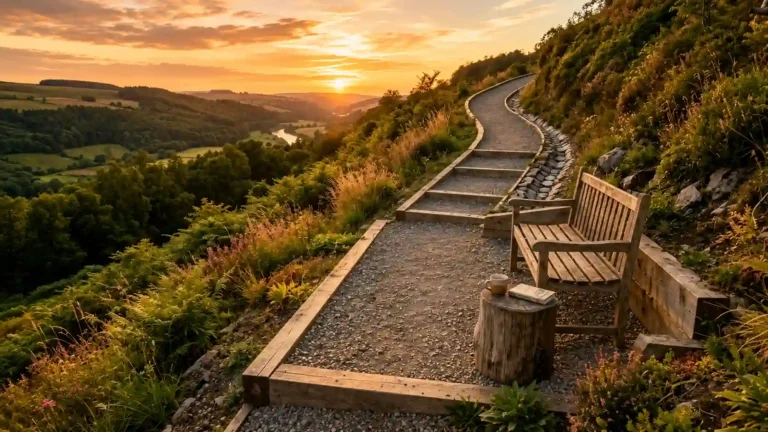
Add a Switchback Path for Safer Access
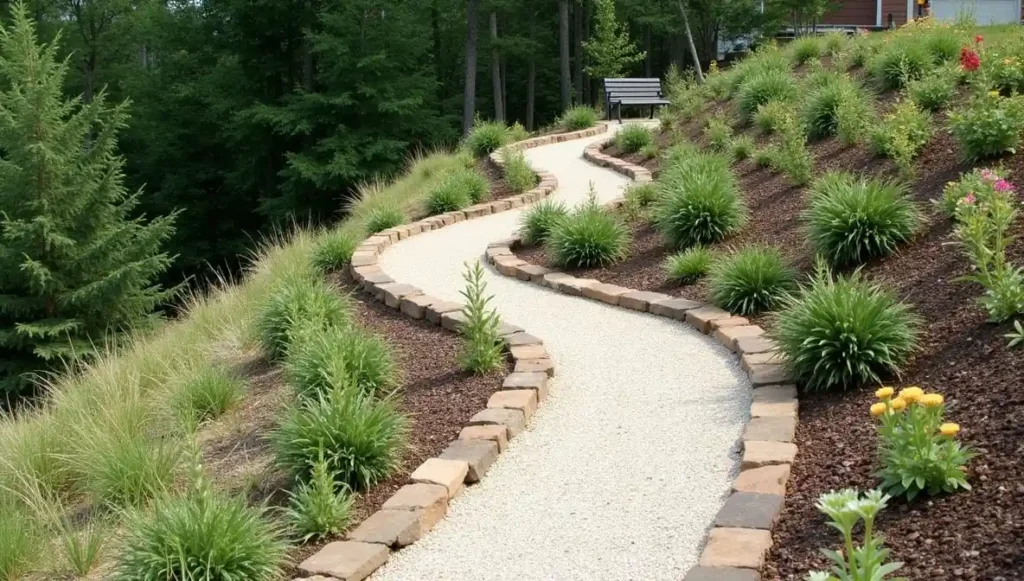
Walking straight up a steep hill can be tiring and unsafe. A switchback path moves across the slope in gentle turns.
This lowers the climb at each point. It also gives you safe access for watering, pruning, and checking drainage.
Compacted gravel and crushed stone can create a simple path. Add firm edging to keep the material from moving downhill.
Do not let the path become a water channel. Give water a safe way to cross or leave the path.
Place a small landing or bench at a turn when space allows. This creates a useful viewing point and breaks up a long climb.
Keep the path wide enough for the tools you use. A narrow path may look good but become hard to use with a wheelbarrow or garden cart.
Best for: Long slopes that need regular access
Maintenance level: Low to medium
Main benefit: Safer movement across the hill
Watch out for: Gravel movement and runoff
Install Stone Steps Where You Need Direct Access
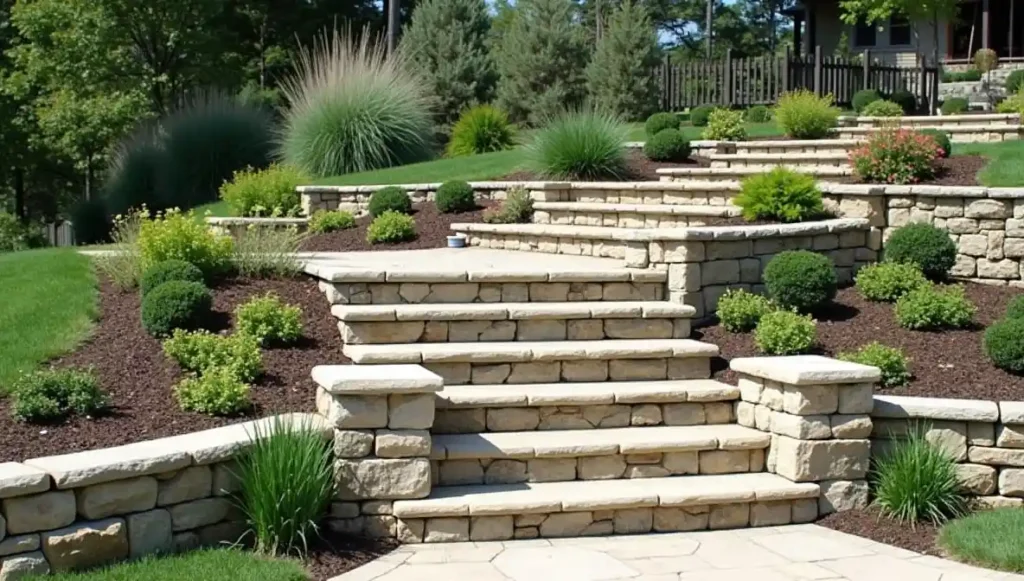
Some slopes do not have enough space for a turning path. Stone or concrete steps can offer a more direct route.
Use wide, stable steps with even spacing. Uneven steps are hard to use and can become unsafe when wet.
Add landings where the hill changes direction or where you need to stop and work.
Low-growing plants can soften the sides of the steps. Keep leaves and stems away from the walking surface.
Small lights can make the steps easier to see at night. Place fixtures where they will not be hit by tools or hidden by plants.
Natural stone gives a softer garden look. Large concrete steps often suit modern homes.
Steps should feel like part of the full design. Connect them to paths, terraces, seating areas, or useful parts of the yard.
Best for: Small hills and direct routes
Maintenance level: Low
Main benefit: Safe access in a small space
Watch out for: Slippery surfaces and uneven step heights
Use Drip Irrigation Instead of Sprinklers
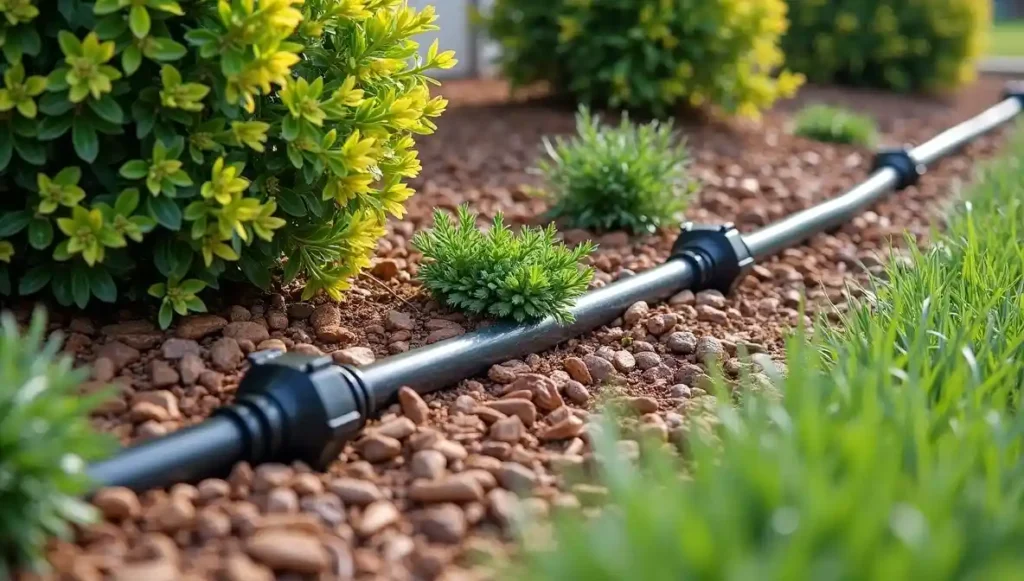
Sprinklers often waste water on a hillside. Water may run downhill before it sinks into the soil. Wind can also carry spray away from the plants.
Drip irrigation sends water near the root zone. This gives the soil more time to absorb it.
Create separate watering zones when the hill has both sunny and shaded areas. Plants at the top may dry faster than plants at the bottom.
Secure the tubing with strong pins. Loose lines can move downhill or rise above the mulch.
Pressure-compensating emitters may help deliver a more even flow on changing ground levels.
Check each emitter during the growing season. Small parts can become blocked by dirt or mineral buildup.
Drip lines are useful for many low-maintenance landscaping for slopes projects. They lower water waste and keep paths and plant leaves dry.
Best for: Planted slopes with regular irrigation
Maintenance level: Low with seasonal checks
Main benefit: Water reaches the roots slowly
Watch out for: Blocked or loose emitters
Plant in Curved Bands Across the Hill
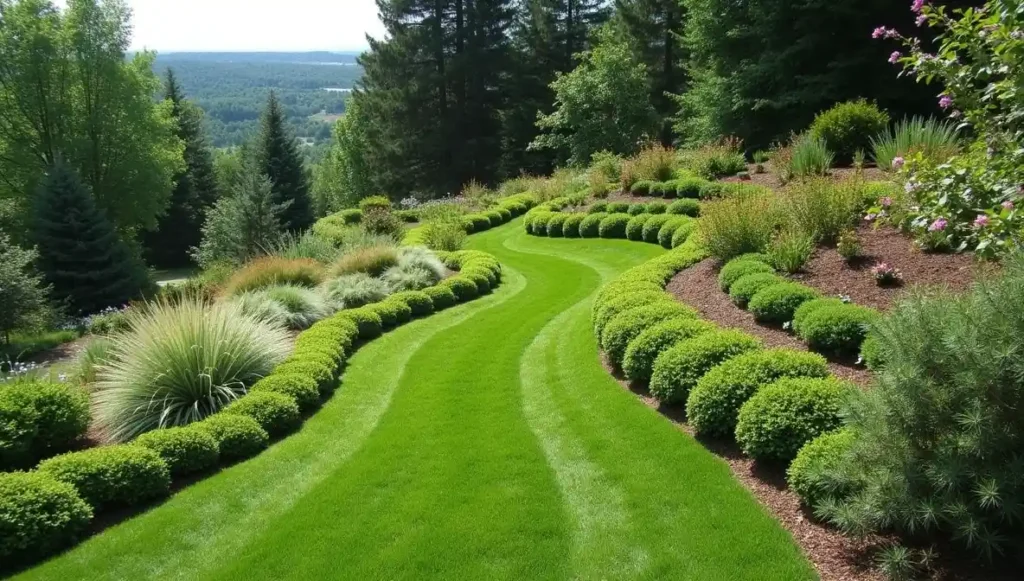
Plants placed in straight lines running downhill can make water move faster through open gaps.
Instead, arrange plants in wide, curved bands that follow the shape of the hill.
Use one band of grasses, another of shrubs, and another of ground covers. The bands do not need to be perfectly even.
This pattern gives the hill a wider look. It can also break up long areas of exposed soil.
Planting bands are not the same as engineered drainage channels. Their main role is to organize plants and reduce open areas.
Use repeated curves instead of many small shapes. Large plant groups are easier to water and maintain.
This style works well when you want erosion-control landscaping that still feels soft and natural.
Best for: Wide slopes with mixed plants
Maintenance level: Low
Main benefit: Cleaner planting groups and less exposed soil
Watch out for: Creating gaps that send water downhill
Protect New Soil With Temporary Erosion Material
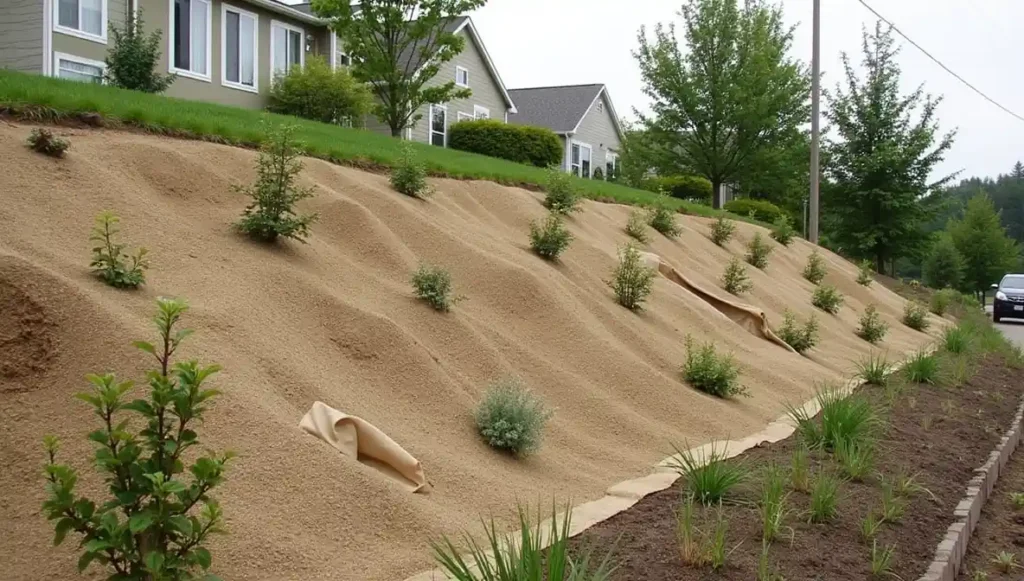
A newly planted hill stays at risk until roots spread through the soil.
Heavy rain can move soil, seeds, and small plants before they become established. Temporary erosion-control material can help protect the area.
Common choices include jute netting, coir products, straw wattles, and biodegradable erosion blankets.
The material must be fixed firmly to the ground. Loose netting can lift, move downhill, or trap small animals.
Cut openings for plants instead of laying the material over leaves and stems.
Choose a product made for your slope, soil, and rainfall. Some materials break down quickly. Others last longer.
Temporary protection works best when paired with plants, proper drainage, and regular checks after storms. It should not be treated as a permanent fix for a serious water problem.
Best for: Newly planted or seeded hills
Maintenance level: Low after installation
Main benefit: Holds soil while roots grow
Watch out for: Loose netting and poor pinning
Build a Rain Garden at the Bottom of the Slope
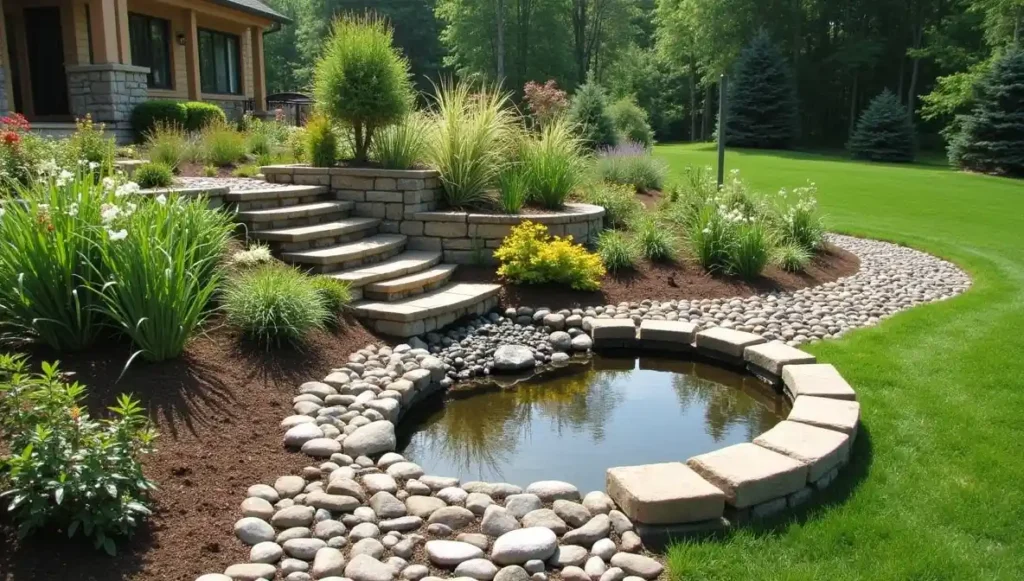
Water often collects at the base of a hill. A planted rain garden may help hold and filter some of that runoff.
The area should be set away from foundations and other places where standing water can cause damage.
Choose plants that can handle short wet periods and later dry conditions. Native sedges, rushes, and rain-garden flowers may work well.
Add a safe overflow route for large storms. A rain garden should not trap more water than the site can handle.
Check how quickly water drains before planting. Soil that stays wet for long periods may need another solution.
This form of hillside erosion control landscaping works best when runoff is already moving to a safe low point.
Get professional advice when the slope sends a large amount of water into one area.
Best for: Lower areas that receive light or medium runoff
Maintenance level: Low to medium
Main benefit: Uses wet ground as a planting feature
Watch out for: Water near foundations
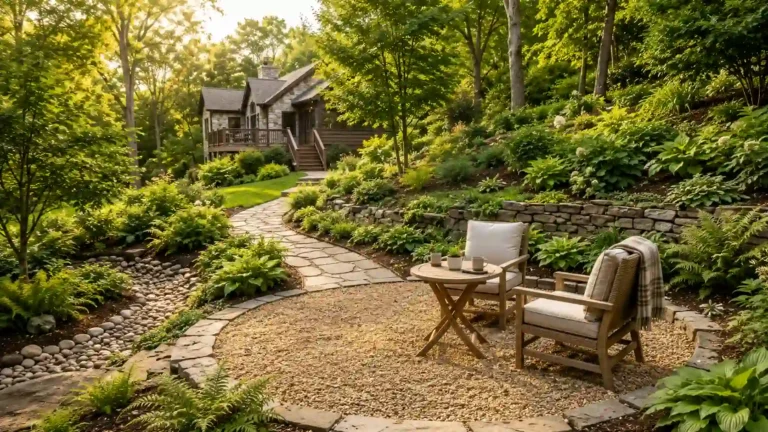
Create a Small Seating Area on One Level Spot
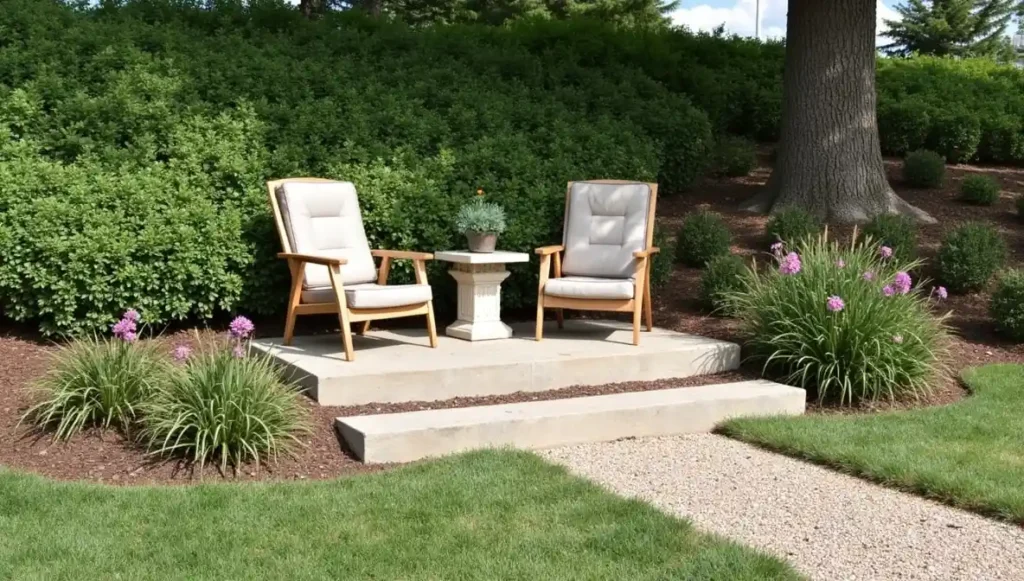
You do not need to flatten the whole hill to make it useful.
One small level pad can hold two chairs, a bench, or a compact outdoor table. This gives the slope a clear purpose.
Choose a spot with a good view. Make sure it connects to a safe path or set of steps.
Gravel can create a simple base. Stone or concrete may give you a firmer surface.
Use low-care plants around the seating area. Keep tall plants away from the main view.
Avoid open flames in dry areas unless local rules and site safety allow them.
A small seating nook costs less than a large patio. It can also make an unused corner of the yard feel calm and planned.
Best for: Hills with one stable, accessible level
Maintenance level: Low
Main benefit: Adds useful outdoor space
Watch out for: Unstable soil and unsafe access
Use Large Boulders as Permanent Focal Points
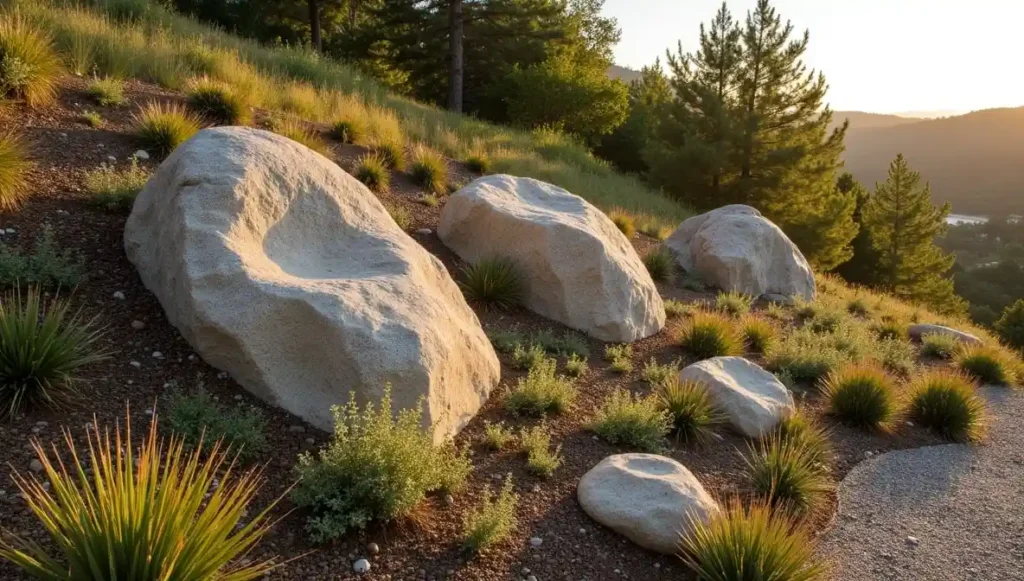
A hillside does not need flowers in every open space.
Large boulders add shape and interest without watering, feeding, or pruning. They also help connect a planted hill to the natural land around it.
Use three or five stones in different sizes. Partly bury each one so it looks settled into the slope.
Place grasses or low shrubs near the base. This softens the edge between stone and soil.
Boulders can mark a path turn, frame a seating area, or fill a spot where plants struggle.
Very large stones need heavy equipment. They must be placed so they cannot shift or roll.
Do not place boulders in a way that blocks drainage. Water still needs a safe path through the slope.
Best for: Large hills that need simple visual structure
Maintenance level: Very low
Main benefit: Long-lasting interest
Watch out for: Unsafe placement and blocked water flow
Put Raised Planters on Stable, Level Areas
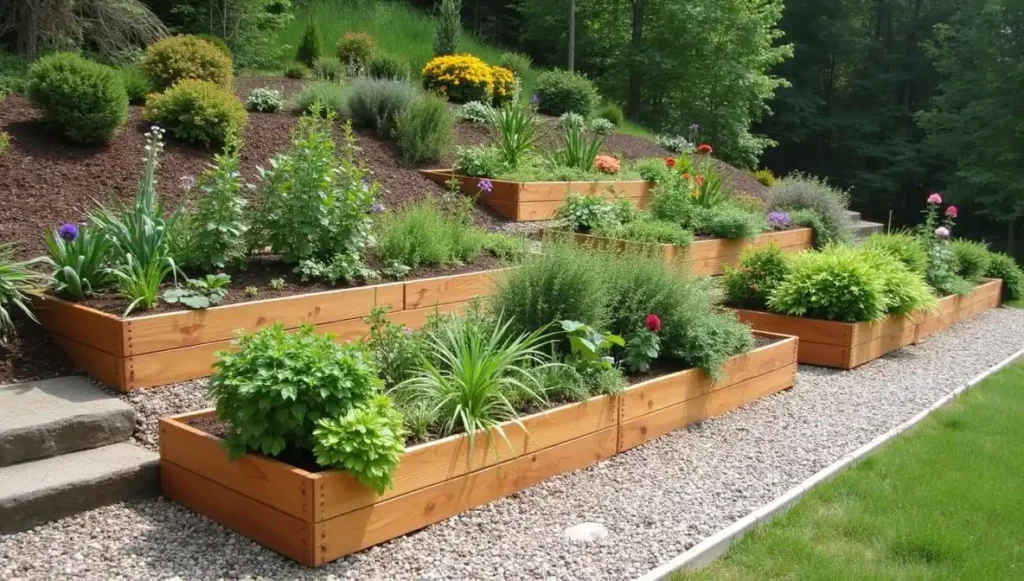
Raised beds make gardening easier to reach. Yet they should not sit directly on unstable sloped ground.
Place them on a level terrace, landing, or flat area near the top or bottom of the hill.
Use the beds for herbs, vegetables, or flowers that need more care. Keep the main slope filled with lower-maintenance plants.
This puts your regular gardening tasks in one easy-to-reach place.
Choose strong materials that can handle moisture and soil pressure. Make sure water can leave the bed without washing down the hill.
Self-watering planters may help lower watering work. They still need checks during hot weather.
Connect the raised area to a safe path. A garden bed is not useful when you cannot reach it with tools or soil.
Best for: Gardeners who want one easy-care growing area
Maintenance level: Medium inside the bed and low around it
Main benefit: Keeps high-care plants off the main hill
Watch out for: Heavy beds on weak ground
Create a Woodland Slope for Shaded Areas
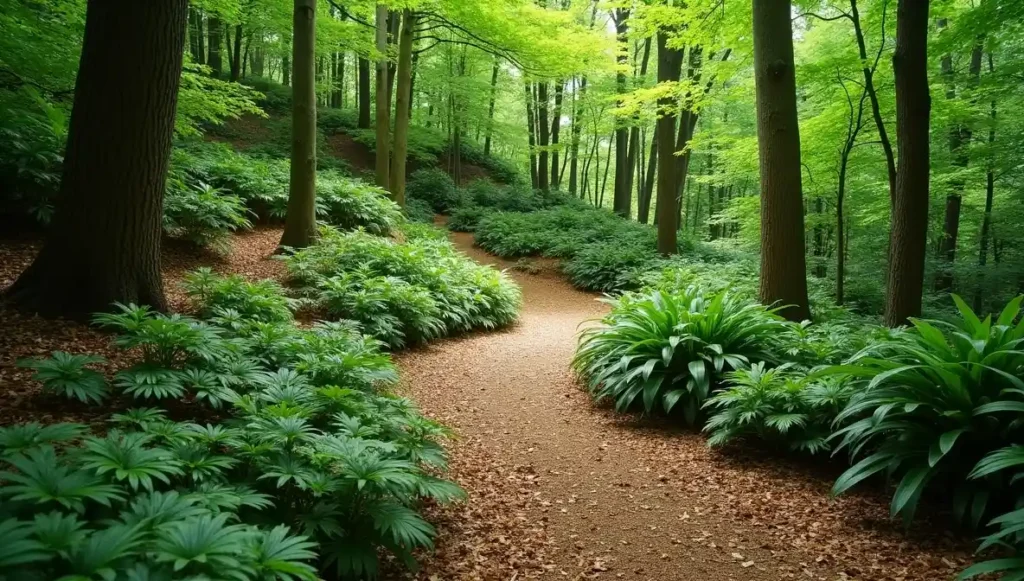
A shaded hillside may not support thick grass. It may also stay damp under trees and large shrubs.
A woodland-style garden works with those conditions.
Keep healthy existing trees when they are safe. Add shade-tolerant shrubs, ferns, sedges, and low ground covers below them.
Use fallen leaves as part of the mulch layer. Leaves feed the soil and protect plant roots as they break down.
Avoid covering tree trunks or root flares with deep mulch. Keep the base of each tree open.
Add a curved path if you need access through the area. Natural stone or wood-chip paths often fit the setting.
A fallen log can remain as a habitat feature when it is safe and does not block the path.
A woodland-style design is one of the most natural low-maintenance hillside landscaping ideas for shaded properties.
Best for: Shaded hills beneath trees
Maintenance level: Low
Main benefit: Works with natural shade and leaf cover
Watch out for: Deep mulch against tree trunks
Which Hillside Idea Fits Your Yard?
The best choice depends on the problem you need to solve.
| Idea | Starting Cost | Long-Term Care | Water Needs | Best Use |
| Native ground covers | Medium | Low | Low to medium | Replacing grass |
| Ornamental grasses | Medium | Low | Low | Sunny open slopes |
| Succulent planting | Medium | Low | Low | Hot, dry hills |
| Shrub planting | Medium | Low | Low to medium | Large planting areas |
| Meadow slope | Low to medium | Low after setup | Low | Broad sunny hills |
| Small terraces | High | Low | Varies | Steep slopes |
| Rock garden | Medium to high | Low | Low | Dry rocky sites |
| Dry creek bed | Medium to high | Low | None | Runoff paths |
| Gravel path | Medium | Low to medium | None | Safe access |
| Woodland slope | Medium | Low | Low to medium | Shaded hills |
Cost can change based on the slope, material, labor, and local prices.
Start with safety and drainage. Then look at sunlight, soil, budget, and the amount of care you can give during the first year.
A cheap idea that fails may cost more to repair later. A well-planned project may cost more at first but save work for years.
Follow These 10 Steps for a Lower-Care Hillside
Low maintenance starts before the first plant goes into the soil.
- Watch the hill during heavy rain.
- Mark runoff paths and damaged soil.
- Check sunlight in each part of the slope.
- Test the soil when plant growth is poor.
- Plan steps, paths, and work areas.
- Fix major drainage problems.
- Install walls, stones, and other hard surfaces.
- Add drip irrigation where needed.
- Plant shrubs, grasses, and ground covers.
- Check the site after each major storm.
Space plants for their mature size. Crowded plants may need more trimming and may suffer from poor airflow.
Plant during a mild part of the year. Spring and fall often give roots more time to grow before extreme heat or cold.
Use temporary erosion protection when the soil is loose. Replace washed-out plants quickly so weeds do not take over the open area.
The First Year Will Need More Work
A low-care landscape is rarely low care on the first day.
New plants need water while their roots grow. Weeds may appear between young plants. Drip lines may need adjustment. Mulch and erosion material may shift after storms.
Check the hill often during the first growing season. Early repairs are easier than fixing a large bare patch later.
Once plants fill in and the water system works well, your weekly work should drop.
Avoid These 8 Hillside Landscaping Mistakes
Planting Regular Lawn Grass
Grass may look simple, but mowing a steep hill can be tiring and unsafe. Use ground covers, meadow plants, shrubs, or grasses instead.
Using Loose Mulch on a Steep Slope
Light wood chips can wash downhill. Use plants, heavier mulch, pinned erosion material, or stable gravel where suitable.
Ignoring Water Flow
Water can damage walls, paths, beds, and plants. Fix drainage before adding decoration.
Using Invasive Ground Covers
Fast growth may look helpful at first. It can later spread into lawns, woods, and nearby gardens.
Planting Thirsty Plants at the Top
The top of a hill often dries first. Use plants that can handle lower moisture.
Placing Shrubs Too Close Together
Small nursery shrubs grow wider with time. Crowded shrubs need more pruning and may block paths.
Building Walls Without Proper Drainage
Water trapped behind a wall can create serious damage. Structural walls need the right base, materials, and drainage.
Forgetting Future Access
A fully planted hill still needs checks and repairs. Add steps or a path before the slope becomes hard to reach.
Create a Hillside That Works With Your Yard
You do not need to use all 19 ideas. Pick the options that fix your biggest problems.
Start with water, soil, and safe access. Then remove grass that is hard to mow. Add plants that match your sunlight and local weather.
Ground covers and grasses work well for broad planting areas. Terraces and steps can make steep land easier to use. Dry creek beds and rain gardens may help with safe runoff when they are placed correctly.
The best low-maintenance hillside landscaping ideas work with the shape of the land. They protect the soil, reduce watering, and lower the time you spend mowing, trimming, and pulling weeds.
Begin with one problem area. Fix it well, then use the same plan across the rest of the hill.