17 Garden Room Ideas for Work, Rest, and Play
Your home may feel too small, but moving or building an extension is not always practical. These garden room ideas can help you create useful space without changing the main house.
A garden room can become an office, gym, art studio, guest space, or quiet retreat. Yet choosing the right design takes more than finding a pretty photo online. You must think about size, sunlight, storage, power, comfort, and cost.
The best garden room design ideas solve a real problem. They should make daily life easier and fit the space you already have.
This guide focuses on detached backyard structures rather than garden areas divided by hedges or planting. You will find options for large yards, tight corners, and modest budgets.
Use these backyard garden room ideas to choose a purpose, plan the layout, and avoid expensive mistakes.
How to Choose the Right Garden Room Idea
Before choosing windows, paint, or furniture, ask one simple question:
What will you do in the room on a normal weekday?
Your answer should guide every other choice.
A remote worker may need reliable internet, a desk, storage, and a quiet background for video calls. Someone planning a yoga room may care more about open floor space, fresh air, and a peaceful view.
The same structure will not work well for both people.
Use the 5-Part Garden Room Fit Test
Check these five points before you request quotes or buy materials:
- Purpose: What is the room’s main job?
- Footprint: How much yard space can you use?
- Sun and views: Where does the light come from?
- Services: Do you need power, water, heating, or internet?
- Local rules: Are there limits on height, size, use, or placement?
Measure the full site, including fences, trees, slopes, drains, and paths. Check how much room builders will have to carry materials into the yard.
Watch the sunlight during the morning, afternoon, and evening. A bright south-facing room may become too hot. A shaded corner may feel cold and dark during winter.
Plan your budget in four parts:
- The main structure
- Power, internet, heating, and plumbing
- Furniture and interior finishes
- Paths, decks, lighting, and planting
Do not spend your full budget on the building shell. A room is not useful if you cannot afford the wiring, insulation, or furniture needed to use it.
Write a one-sentence brief before comparing garden room ideas.
For example:
“I need a quiet, year-round office for one person, with storage and a clear background for video calls.”
That sentence will keep your project focused.
Frame Your Best View with a Glass-Fronted Room
Best for: Modern yards, home offices, lounges, and reading spaces
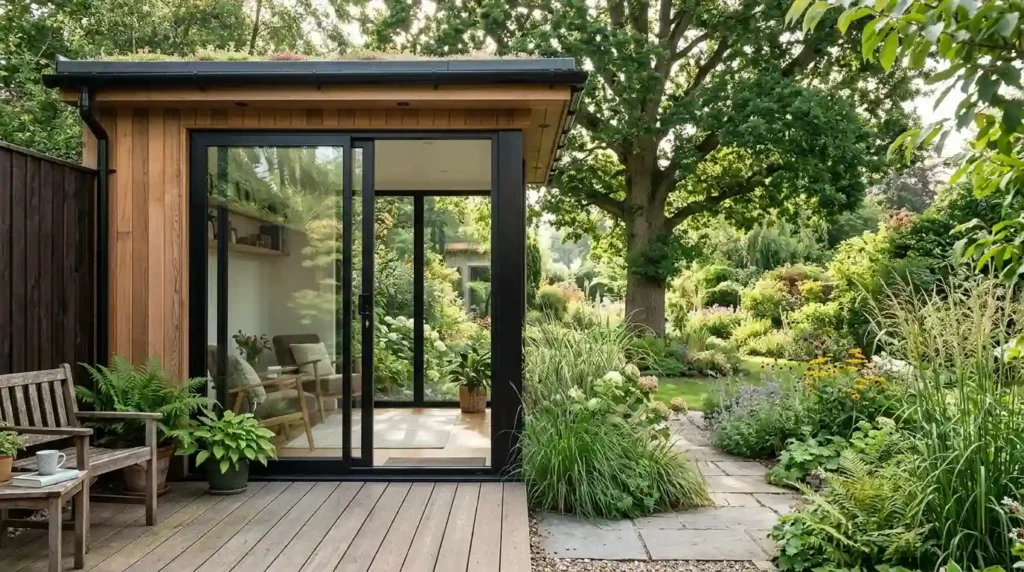
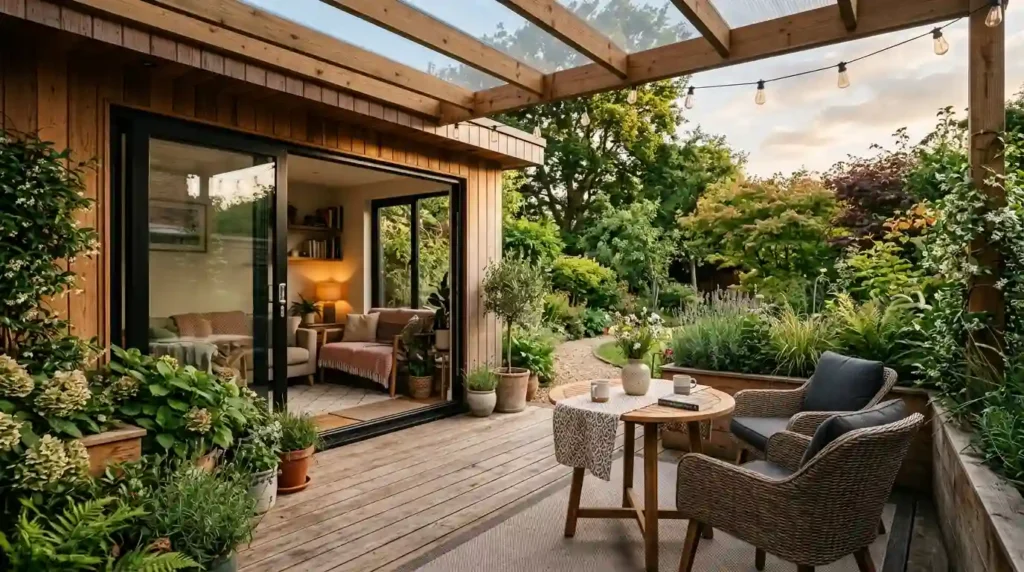
A glass-fronted room lets you enjoy the garden in every season. Large doors or windows can also make a small structure feel more open.
Choose one view worth framing. It may be a tree, flower bed, pond, or private section of the yard.
You do not need glass on every wall. Solid side walls give you more privacy, storage space, and control over temperature.
A modern garden room could have black window frames, timber side panels, sliding doors, and a low deck. Add grasses or low shrubs around the base to soften the hard edges.
Repeat one or two materials from the house. Matching the window-frame color or exterior wood tone can help both buildings feel connected.
Watch out for: Too much glass may cause glare, heat, and privacy problems. Use roof overhangs, blinds, outdoor screens, or small trees for shade.
Turn an Empty Corner into a Small Garden Room
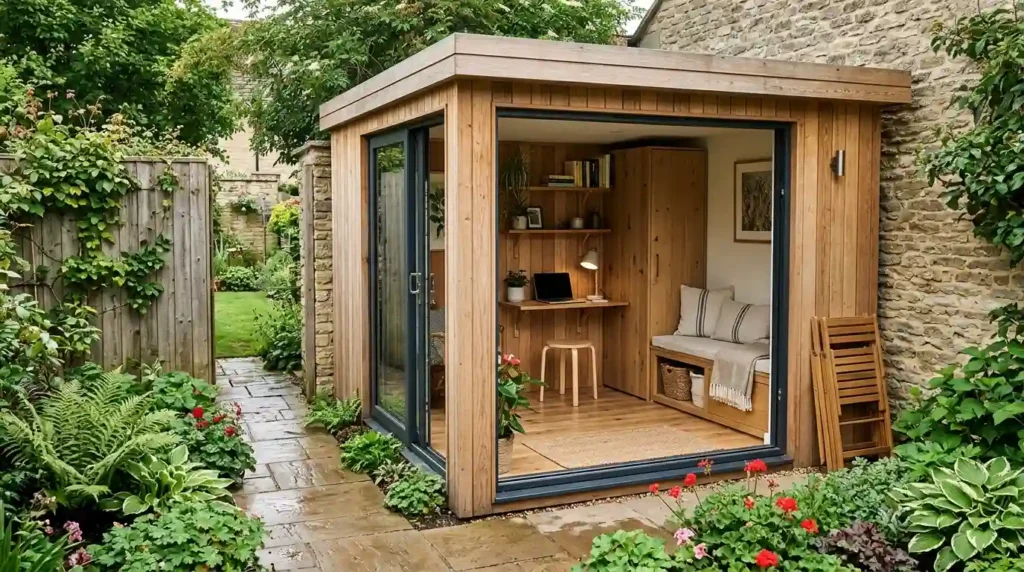
Best for: Small yards, side gardens, and unused boundary areas
You do not need a huge yard to create useful extra space. Some of the best small garden room ideas make use of a forgotten corner.
An 8-by-10-foot room can hold more than you may expect. It could include:
- A wall-mounted desk
- A storage bench
- A tall cabinet
- Two folding chairs
- A sliding entrance
Built-in furniture is often better than large freestanding pieces. A storage bench gives you seating and hides supplies. A folding desk can free the wall when it is not in use.
Use one large window instead of several small ones. This creates a cleaner view and leaves more wall space for shelves.
Think about the path as well. The room will feel more welcoming when it is easy to reach in wet or dark weather.
Watch out for: Do not place the structure so close to a fence that you cannot paint, clean, or repair the outside walls.
Create a Garden Office That Helps You Focus
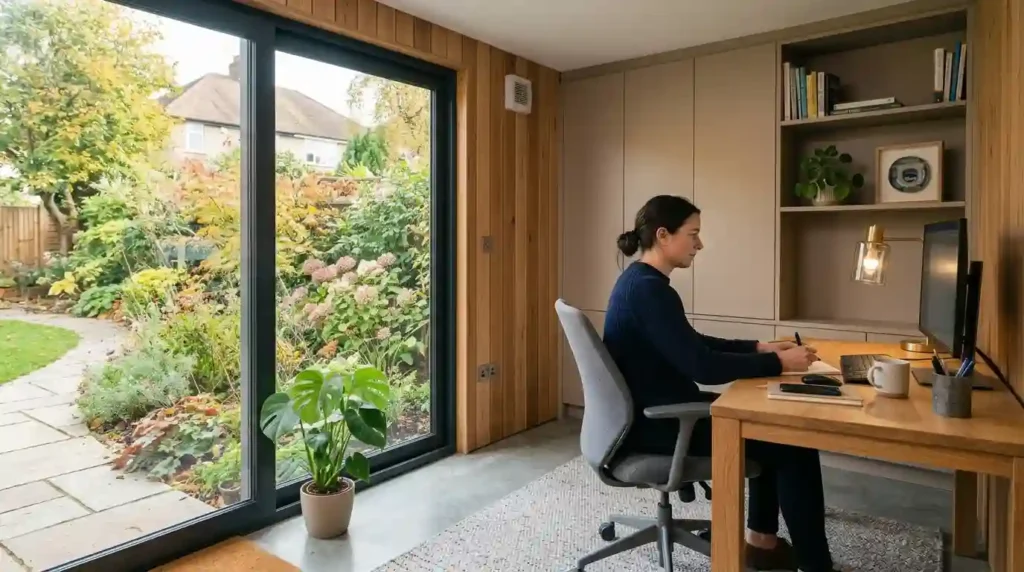
Best for: Remote workers, business owners, and students
Working at the kitchen table can make it hard to focus. Noise, family activity, and household chores can pull your attention away from work.
A separate backyard office gives you a clear place to start and end the working day.
Place your desk sideways to the main window. This often reduces screen glare while still giving you natural light.
Plan the video-call background before installing shelves. Closed storage can hide cables, files, printers, and office supplies.
Your office may also need:
- Several power sockets
- Strong internet access
- A task light
- Heating and cooling
- Curtains or sound-softening panels
- A small coffee shelf
Test the Wi-Fi signal at the planned site. A wired connection may be more reliable than trying to improve a weak signal later.
Create an end-of-work cue. Close the laptop cabinet, switch off the desk lamp, and shut the door. This small habit can help work stay outside the main house.
Watch out for: A large window behind your desk may cause glare and make your face look dark on video calls.
Build a Quiet Reading Room and Mini Library
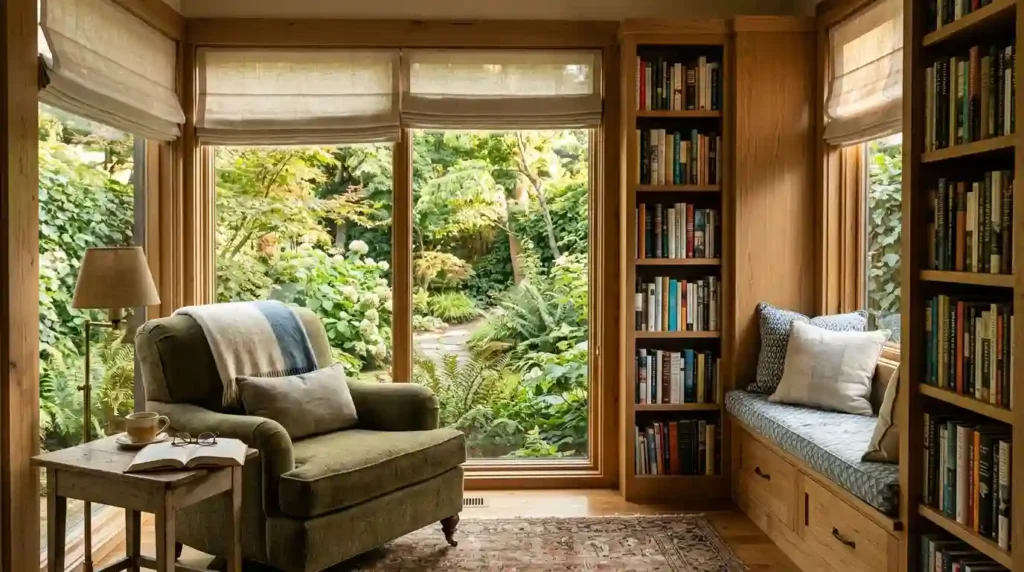
Best for: Book lovers, writers, and anyone who needs a calm retreat
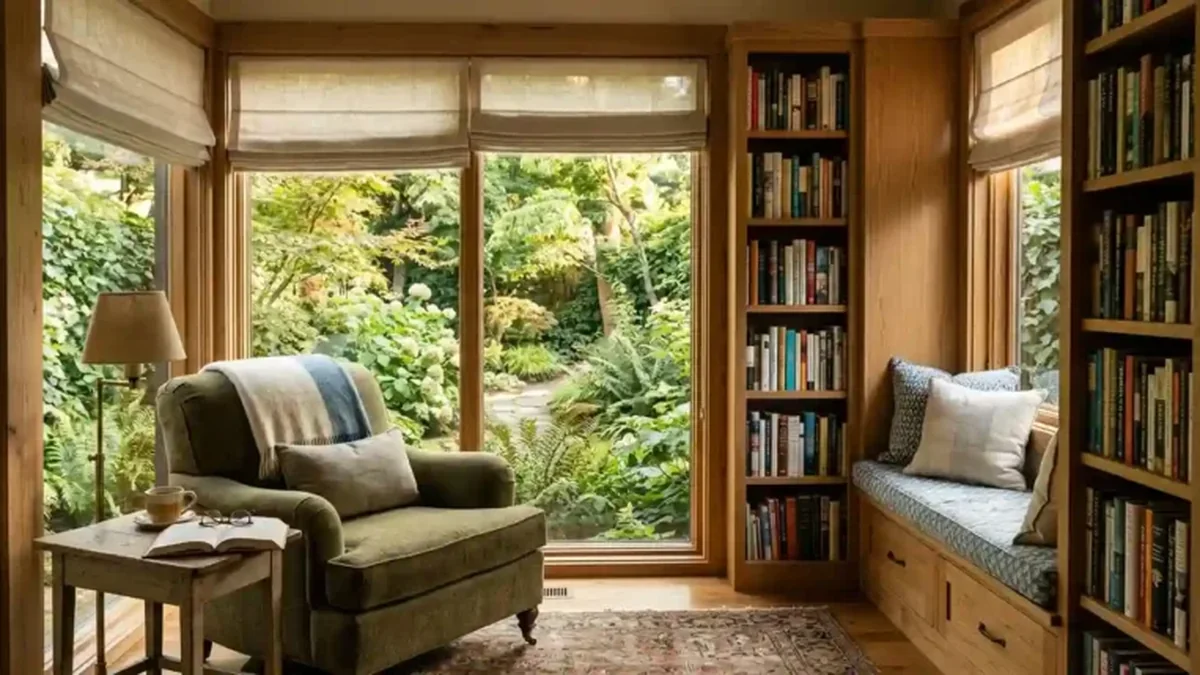
A reading room does not need much furniture. One great chair is more useful than several uncomfortable seats.
Place your main chair near a garden view, but keep it out of harsh direct sunlight. Add a small table for tea, glasses, or a notebook.
Use solid walls for book storage. Strong sunlight may fade covers and damage some materials over time.
A simple layout could include:
- A window seat with drawers
- Two narrow bookcases
- A wall-mounted reading lamp
- A small side table
- Soft curtains or blinds
Layer the lighting. Use general ceiling light for cleaning, a focused lamp for reading, and a softer light for evenings.
The room should also stay dry. Books do not do well in damp spaces with large temperature changes.
Watch out for: Do not fill every wall with shelves. Leave breathing room so the space still feels restful.
Design an Art or Craft Studio That Handles Mess
Best for: Painters, sewers, crafters, photographers, and hobby makers
A creative studio should support the work you actually do. It should not be planned only as a place to display finished pieces.
Start with your largest project. A person painting large canvases needs a different layout from someone making greeting cards or sewing clothes.
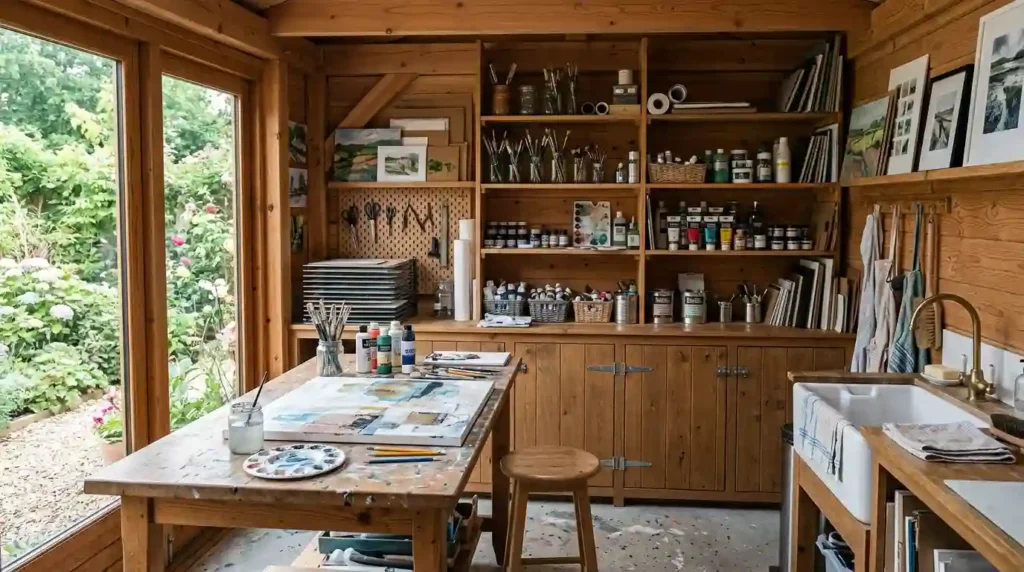
Choose a deep work surface. A normal office desk may be too narrow for fabric, cutting mats, or large sheets of paper.
Use walls for storage. Pegboards, shallow cabinets, rails, and tall shelves keep tools visible without taking up much floor space.
Before planning the room, complete this simple mess test:
- What is the largest item you use?
- Which task creates the most mess?
- Which supplies must remain within reach?
Choose washable floors and easy-clean wall finishes. A sink can be helpful, but plumbing may add a large cost.
Watch out for: Open shelves look attractive, but they can collect dust and make the room feel busy. Mix open storage with closed cabinets.
Make a Calm Yoga and Meditation Room
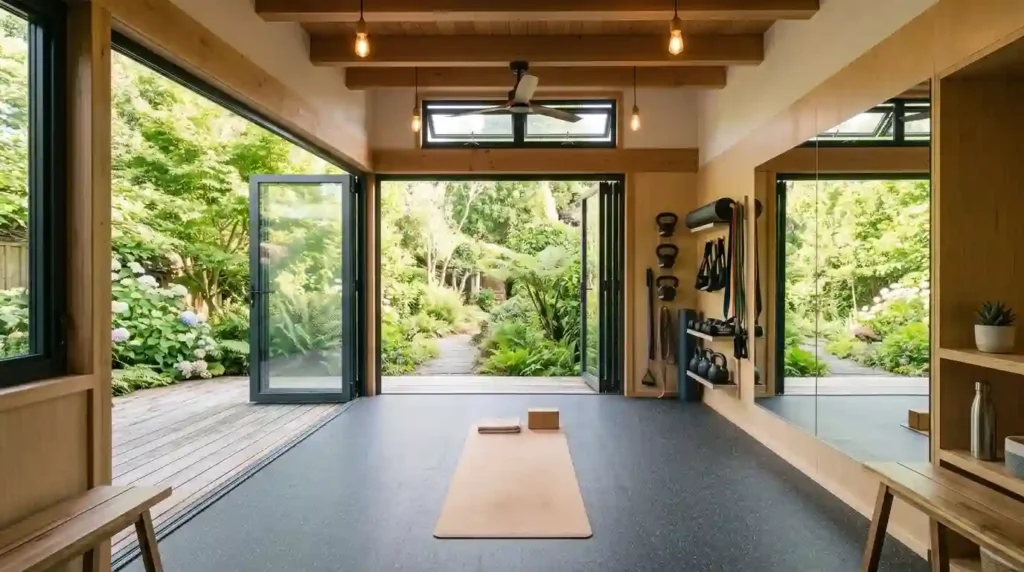
Best for: Yoga, stretching, breathing exercises, and quiet breaks
A wellness room works best when the floor stays clear. Large chairs, tables, and decorative items can quickly take away useful movement space.
Measure your full reach while standing and lying down. Make sure you can stretch without hitting a wall, lamp, or cabinet.
Use warm, soft lighting instead of one bright ceiling light. Natural materials such as timber, cork, linen, and woven baskets can make the room feel comfortable.
Add hidden storage for:
- Yoga mats
- Blocks
- Blankets
- Towels
- Speakers
- Exercise bands
A low storage bench can hold these items while also giving you a place to sit.
Frame one calm garden view. Use planting or outdoor screens to block nearby windows, roads, or bins.
Watch out for: A sealed room can become hot and stuffy. Plan windows, vents, or quiet cooling before finishing the interior.
Plan a Garden Gym for Your Real Workout
Best for: Home workouts, strength training, yoga, and cardio
Do not choose the room size before listing your equipment.
A treadmill needs floor length and ventilation. Free weights need a strong floor and safe clearance. Yoga and resistance bands need open space with fewer fixed items.
Check the ceiling height as well. You should be able to raise your arms or lift equipment without touching lights or beams.
Use durable flooring that is easy to clean. Heavy rubber mats may protect the surface and reduce noise, but the base below them must still be strong enough.
Plan storage for smaller items such as weights, bands, towels, and cleaning supplies.
Mirrors can help you check your form. Place them where they will not reflect direct sun into your eyes.
Watch out for: Do not assume a standard garden room floor can hold heavy gym equipment. Ask the supplier or a qualified building professional before adding large machines or weight racks.
Create a Lounge for Easy Backyard Entertaining
Best for: Family movie nights, parties, games, and relaxed weekends
A garden lounge should feel like a real living space, not a shed with a sofa inside.
Choose seating that can move when you have extra guests. A compact sofa, two light chairs, and nesting tables often work better than a large corner sofa.
Keep a clear path from the entrance to the seating area. This stops guests from stepping around furniture.
Connect the room to a deck, patio, or firepit area. This lets the gathering spread outdoors when the weather is good.
Use soft items such as curtains, rugs, cushions, and fabric chairs. They improve comfort and reduce echo.
Plan three lighting settings:
- Bright light for arrivals and cleaning
- Warm light for conversation
- Low light for movies or evenings
Among all the backyard garden room ideas, this one works well for families who want more social space without changing the house.
Watch out for: Check screen glare before installing a television or projector.
Add a Garden Bar and Dining Area
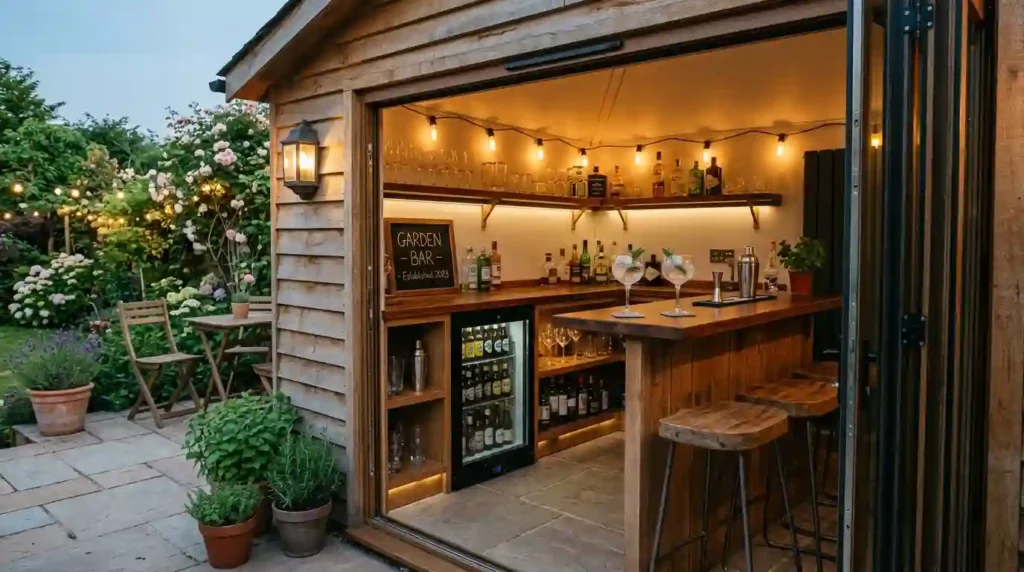
Best for: Outdoor meals, parties, and summer hosting
A garden bar can reduce trips between the main kitchen and the patio. Place it close enough to the house so carrying food and dishes does not become tiring.
A serving window is often more useful than a full indoor bar. It lets you pass drinks and food directly to guests outside.
Use easy-clean surfaces around the counter. Add focused lighting so you can prepare drinks safely after dark.
A compact fridge may be useful, but it needs proper power and ventilation. Lockable storage can protect glassware and other items when the room is empty.
Keep most seating outside if the room is small. A sheltered deck with stools and a dining table can serve more guests than a crowded indoor layout.
Watch out for: Plumbing can raise the total cost. Think about how often you will use a sink before adding water and drainage.
Build a Guest Retreat That Feels Comfortable
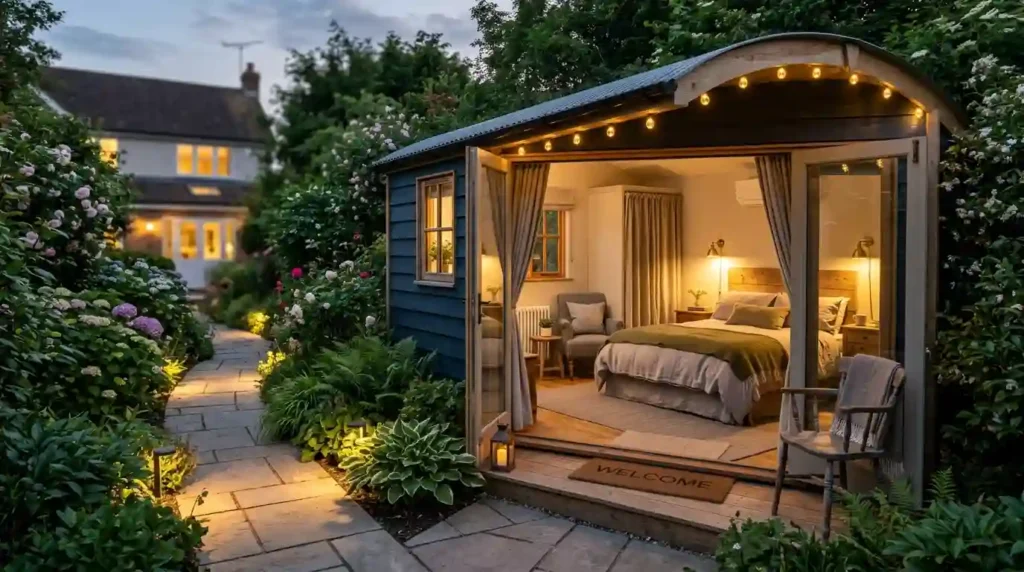
Best for: Visiting family, occasional guests, and private overnight stays
A bed alone does not make a room comfortable for guests.
People also need privacy, storage, fresh air, temperature control, and a safe route to the main house.
Use a wall bed or sofa bed when the room has more than one purpose. Add a small luggage surface so guests do not have to place bags on the floor.
Include closed storage, window coverings, reading lights, and charging points. In warm areas, insect screens may also be useful.
An en suite bathroom may sound appealing, but plumbing and drainage can change the cost and approval needs. A nearby main-house bathroom may be enough for occasional use.
Check local rules before using the room for sleeping. Overnight use may face different building, fire, zoning, or permit requirements.
Watch out for: Make sure the garden path has safe lighting and a stable surface for night use.
Create a Playroom That Grows with Your Children
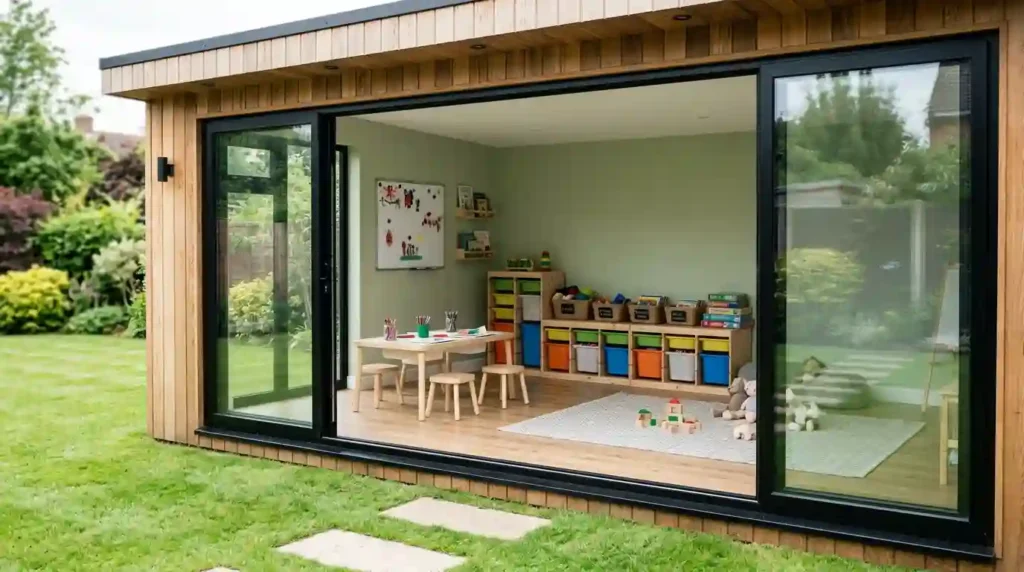
Best for: Toys, games, study, hobbies, and teen hangouts
Children’s needs change quickly. A room designed around one cartoon theme may feel outdated within a few years.
Choose simple walls, durable floors, and furniture that can change with age.
Low bins work well for young children. Later, the same storage can hold books, sports gear, gaming equipment, or school supplies.
Keep the entrance visible from the house when young children will use the room. Add path lighting and easy-to-use door locks.
Older children may need strong internet access, charging points, a desk, and comfortable seating.
Avoid filling the room with fixed furniture. A clear center area gives children room to play now and makes future changes easier.
Watch out for: Outdoor rooms may feel separate from the house. Set clear rules for supervision, heating, food, and locking up.
Set Up a Music, Podcast, or Gaming Studio
Best for: Recording, music practice, gaming, streaming, and content creation
Foam panels can reduce echo inside a room. They do not fully stop sound from reaching neighbors or the main house.
Sound isolation often needs sealed gaps, improved doors, layered walls, and careful construction. Speak with an acoustic expert when noise control is a major concern.
For a basic podcast room, add soft finishes such as curtains, rugs, fabric chairs, and wall panels. These can reduce harsh echoes.
Plan the desk around the equipment. Leave room for monitors, microphones, speakers, lighting, and cable storage.
Ventilation matters as well. A loud fan or air unit may be heard during recording.
Use adjustable lighting if the room will appear on camera. A simple wall with a few neat shelves often makes a better background than a busy display.
Watch out for: Do not cover vents or electrical equipment with acoustic materials.
Combine a Greenhouse with a Sitting Room
Best for: Plant lovers, gardeners, and year-round garden views
A greenhouse garden room gives you a place to sit among plants. However, people and plants may need different conditions.
Separate the growing zone from the relaxing zone. Plants may need more water, heat, humidity, and washable surfaces.
One end of the room could hold planting benches, pots, tools, and a water-resistant floor. The other end could have an insulated wall, a reading chair, and a small table.
Add opening windows or roof vents. A glass room can become extremely hot during sunny weather.
Use blinds, shade cloth, or nearby planting to control strong summer light.
Choose plants based on the room’s real temperature during the hottest and coldest months. Do not assume it will stay warm all year.
Watch out for: Keep wooden furniture, books, and electronics away from wet growing areas.
Match the Garden Room to Your Home’s Style
Best for: Homeowners who want the new room to feel settled and planned
The room does not need to copy your house. It should share a few clear details.
A rustic garden room may use timber cladding, warm lights, a small porch, and relaxed planting.
A Scandinavian-style room may use pale wood, light walls, clean lines, and simple furniture.
An industrial modern room may use dark cladding, thin window frames, metal fixtures, and structured planting.
Look at your home before choosing between these garden room design ideas.
Repeat two or three features, such as:
- The window-frame color
- One exterior material
- The roof shape
- A paving material
- A repeated plant form
Copying every detail may make the structure look forced. A smaller connection often feels more natural.
Watch out for: Do not choose a style that needs more care than you can provide. Some timber finishes need regular cleaning and treatment.
Make One Room Work in Two Different Ways
Best for: Small yards and households with changing needs
A room designed for every possible activity can quickly become a storage area.
Choose one main use and one secondary use. For example, the room may work as an office during the week and a craft or movie space on weekends.
Use furniture that moves or folds away:
- A fold-down desk
- Stackable chairs
- A storage bench
- A wheeled table
- A pull-down screen
Keep one wall clear so the room can change without moving every item.
Use lighting or rugs to mark different zones. Permanent dividing walls can make a small structure feel cramped.
The strongest small garden room ideas give every item a storage place. Before buying furniture, ask where it will go when the room changes purpose.
Watch out for: Too many uses can weaken the room’s main purpose. Keep the plan simple.
Add Eco-Friendly Features That Reduce Waste
Best for: Low-energy spaces and gardens with a natural style
A greener garden room starts with size and placement. A small, well-planned room often needs fewer materials and less energy than a large one.
Use roof overhangs, blinds, and nearby trees to reduce summer heat. Good insulation can help keep the room warmer in winter and cooler in summer.
Choose long-lasting materials that suit your local weather. Reclaimed timber may work well when it is dry, sound, and safe to reuse.
You could also add:
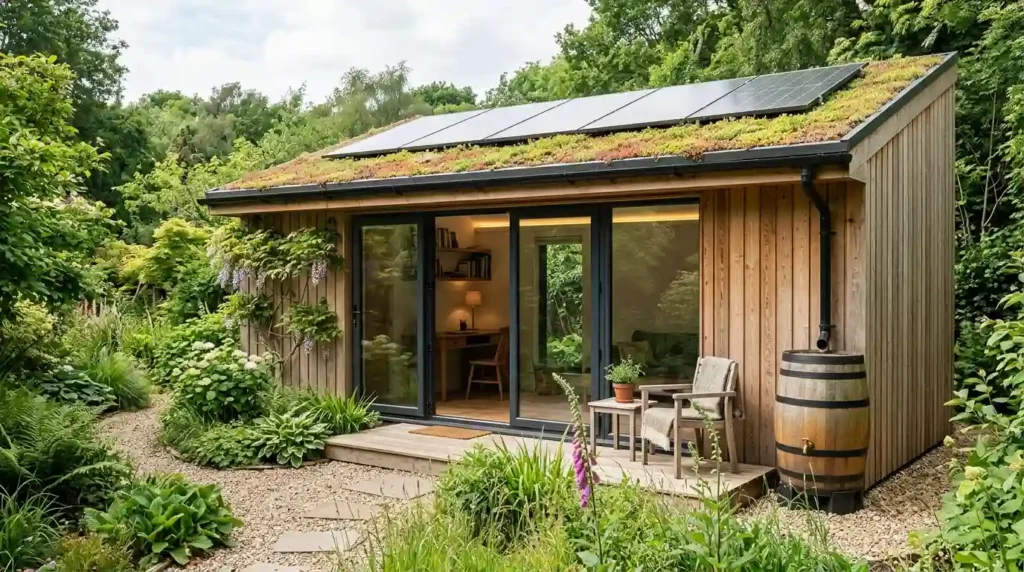
- Solar panels
- A water collection barrel
- A rain chain
- A permeable path
- Native plants
- A living roof
A planted roof can look beautiful and support insects. It also adds the weight of soil, plants, and stored rainwater.
Watch out for: A living roof must be included in the structural plan. Do not add one later without checking the roof strength.
Convert an Old Shed Without Wasting Money
Best for: Tight budgets and yards with an existing sound structure
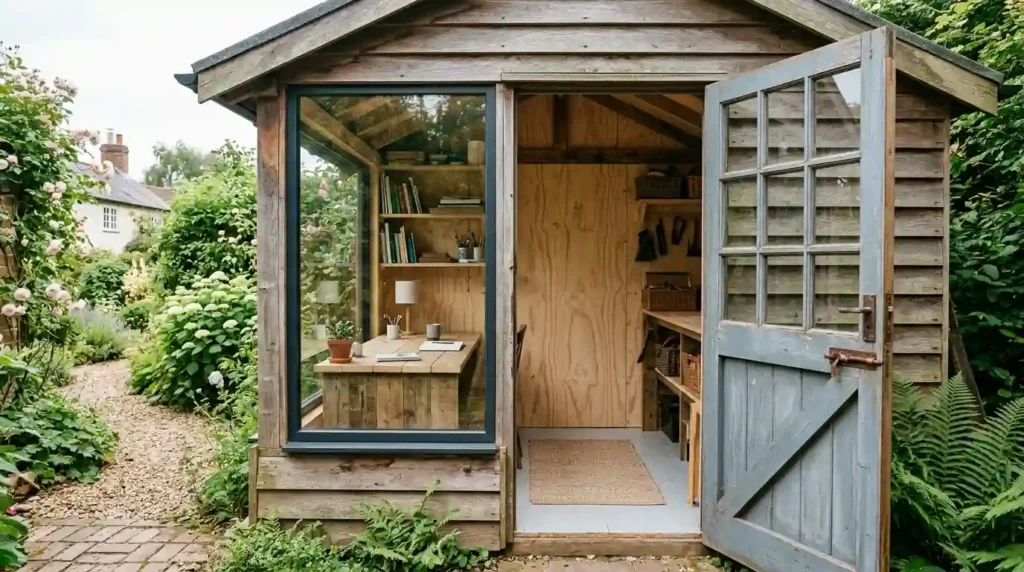
It is tempting to begin a shed conversion with paint, flooring, and furniture. Start with the structure instead.
Check the roof, walls, floor, doors, frame, and base. Look for damp patches, rot, cracks, leaks, and movement.
Fix moisture before adding insulation or wall panels. Covering a damp problem may hide it for a short time, but it will not remove it.
Plan the project in three stages.
Stage 1: Make It Safe and Dry
Repair the roof, frame, floor, doors, and leaks.
Stage 2: Make It Comfortable
Add insulation, ventilation, safe electrical work, heating, and suitable flooring.
Stage 3: Finish the Room
Paint the walls, add furniture, install storage, and improve the path and planting.
Budget garden room ideas work best when money goes to the structure first.
Watch out for: Compare the full conversion price with the cost of a new prefabricated room. A badly damaged shed may not be worth saving.
Choose a Garden Room That Solves a Real Problem
The best design starts with purpose.
Decide how you will use the room, then plan its size, windows, storage, services, and furniture. Check sunlight and privacy before choosing its final location.
You should also leave room in the budget for power, heating, paths, and landscaping. These details can decide whether the room becomes part of daily life or sits empty.
Choose your top two backyard garden room ideas. Measure the site and sketch the main furniture before requesting prices.
With careful planning, these garden room ideas can give you useful space that looks good and works well for years.