
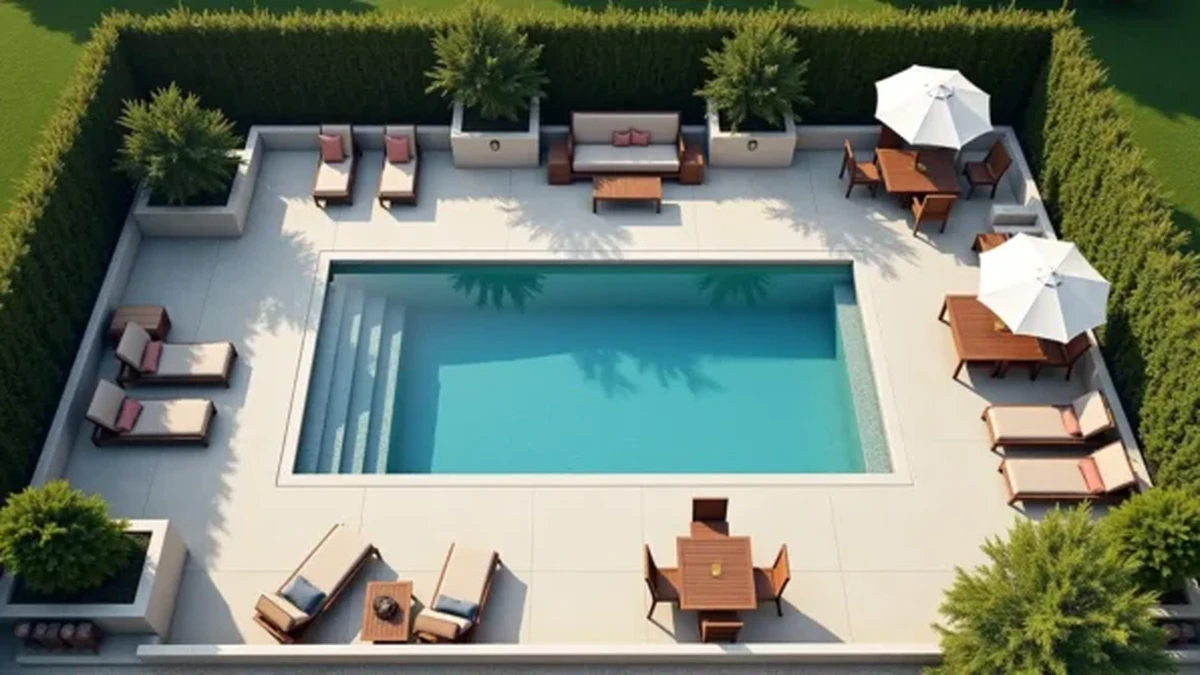
18 Inground Pool Landscaping Ideas for Any Yard
An inground pool can be the best part of your backyard. But bare concrete, poor drainage, and the wrong plants can make the space feel unfinished. They can also create more work each week.
These inground pool landscaping ideas will help you create a safer, cleaner, and more private place to swim. You will find ideas for pool decks, plants, shade, lighting, seating, storage, and privacy.
Good landscaping around an inground pool should do more than look nice. It should keep mud out of the water. It should give you a comfortable place to sit. It should also make daily pool care easier.
You do not need a large yard or a huge budget. Many small changes can improve the space. Start with the problems that affect safety and daily use. Then add plants and design features over time.
Here are 18 practical backyard pool landscaping ideas to help you get started.
Choose Slip-Resistant Deck Materials for Safer Steps
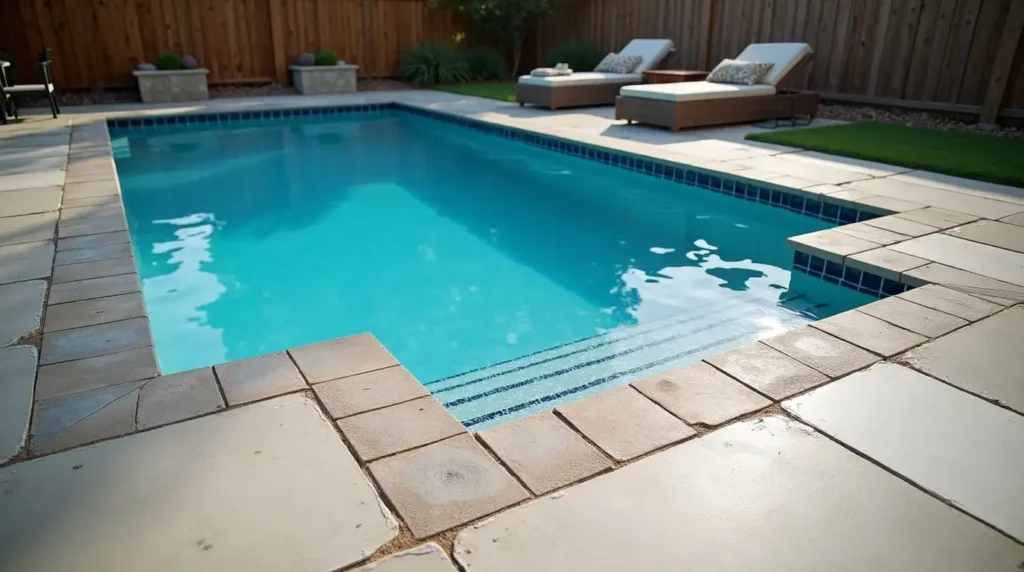
Start with the surface people walk on most. A wet pool deck can become slippery, so appearance should never be your only concern.
Broom-finished concrete is often one of the more affordable choices. Its light texture gives bare feet more grip than smooth concrete. Concrete can still crack over time, but small repairs may be possible.
Concrete pavers are another useful choice. You can replace one damaged paver without removing the entire deck. They also come in many shapes and sizes.
Outdoor porcelain pavers can create a clean, modern look. Choose products made for outdoor wet areas. Indoor tile may be too slippery for pool deck landscaping.
Natural stone, including travertine, can look warm and inviting. However, each stone type handles water, heat, and freezing weather in a different way.
Dark materials may become hot under direct sun. Place a sample outside for several hours before you buy it. Pour water over it and test the grip with care.
Check the maker’s wet slip rating when comparing poolside materials. A safe surface should provide grip, stay comfortable in your climate, and fit your care routine.
Best budget choice: Textured concrete
Best for simple repairs: Concrete pavers
Best high-end choice: Outdoor porcelain or suitable natural stone
Fix Drainage Before It Damages Your Pool Area
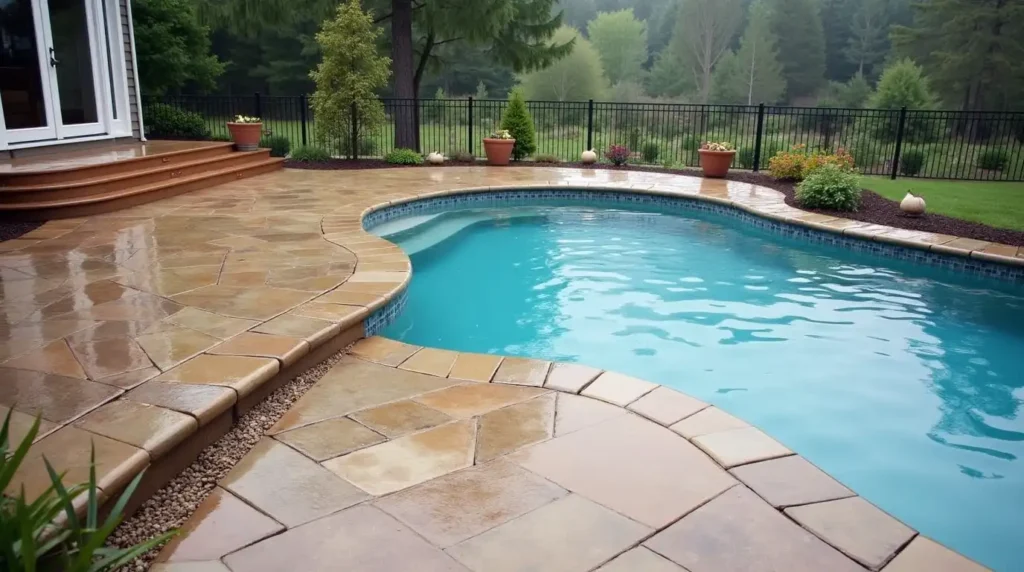
A beautiful pool area will not stay attractive if rainwater collects around it. Standing water can lead to mud, green growth, damaged beds, and slippery spots.
Watch your pool area during heavy rain. Mark every spot where water sits for more than a few minutes. This quick check can show you where the main problems are.
The land around the pool should guide water away from the pool shell and nearby buildings. A gentle slope may be enough for a small problem. Larger problems may need deck drains or channel drains.
A channel drain can help where the deck meets a patio or the side of the house. It collects surface water and sends it to a safer outlet.
A narrow gravel strip may also help between a garden bed and the deck. It can catch loose soil and reduce muddy runoff. However, gravel alone will not fix serious grading problems.
Do not add expensive plants or new furniture until you have fixed the water flow. They may hide the problem for a short time, but they will not solve it.
Call a drainage or landscape professional if water flows back toward the pool, enters the house, or causes deep erosion.
Use Curved Beds to Soften Hard Pool Edges
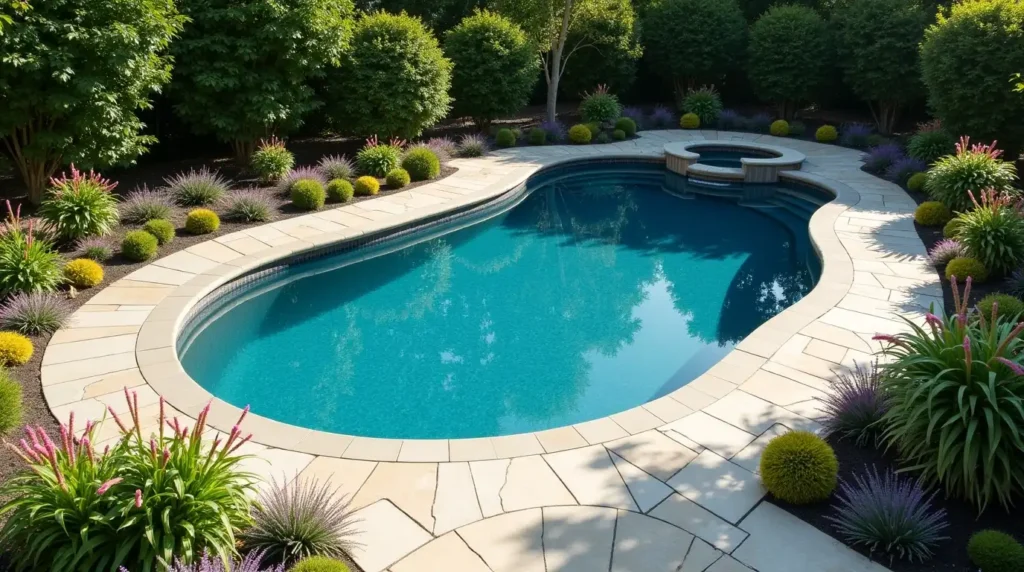
Straight pool edges can make a backyard feel hard and unfinished. Curved planting beds add softer shapes and help connect the pool to the rest of the yard.
This works well around a rectangular pool. A few gentle curves can balance the strong lines without making the design feel busy.
For a freeform pool, use bed shapes that follow part of the pool’s outline. Do not copy every curve. Too many small bends can make mowing and edging harder.
Plan each bed in layers. Place one tall anchor plant near the back. Add three to five medium plants in front. Finish with low plants or groundcover near the edge.
Repeat the same plant groups in more than one bed. Repetition creates a calm look. Using one different plant in every open space can make the area look crowded.
Leave a wide, clear route around the pool. Plants should not lean over the deck or brush against swimmers.
Before digging, lay a garden hose or rope on the ground. Test the shape from the house, pool, and seating area. This simple step can prevent an awkward layout.
Pick Low-Litter Plants for Less Pool Cleaning
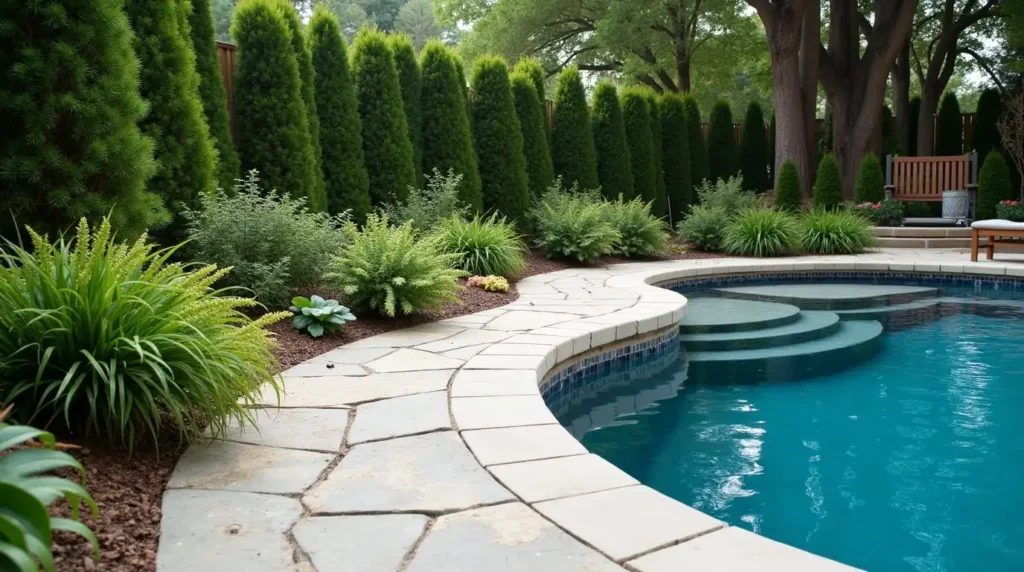
The wrong plants can turn a relaxing pool area into a daily cleaning job. Fine leaves, flowers, fruit, and seed pods can land in the pool and fill the filter.
Look for plants that keep their leaves for long periods. Slow-growing evergreen plants may need less trimming and create less waste than fast-growing choices.
Avoid plants that drop messy fruit near the water. Fruit can stain the deck, attract insects, and create slippery spots.
Keep thorny plants away from walking paths and seating. Bare skin can easily brush against sharp leaves or branches.
You should also check the mature size of each plant. A small plant at the garden center may become a wide shrub within a few years. Crowded plants need more trimming and can block your view of the pool.
Plant roots also matter. Avoid trees with large or aggressive root systems close to the pool shell, pipes, and paving.
Plant needs vary by climate, so ask a local garden center or extension office for help. Choose plants that can handle sun, poolside heat, and your local winters.
Use This Poolside Plant Test
Before buying a plant, ask:
- Does it drop fruit, pods, or fine leaves?
- Does it have thorns or sharp edges?
- Will its roots spread far?
- Can it handle heat from the pool deck?
- How wide will it become?
- Will it attract many stinging insects?
Quick Pool Landscaping Comparison
| Feature | Best For | Care Level | Cost Level | Main Concern |
| Textured concrete | Simple pool decks | Low | Low to medium | Heat and cracks |
| Concrete pavers | Easy repairs | Low to medium | Medium | Weeds in joints |
| Privacy hedge | Natural screening | Medium | Medium | Mature width |
| Privacy panels | Narrow yards | Low | Medium | Wind exposure |
| Large containers | Flexible planting | Medium | Low to medium | Regular watering |
Add Ornamental Grasses Without Crowding the Deck
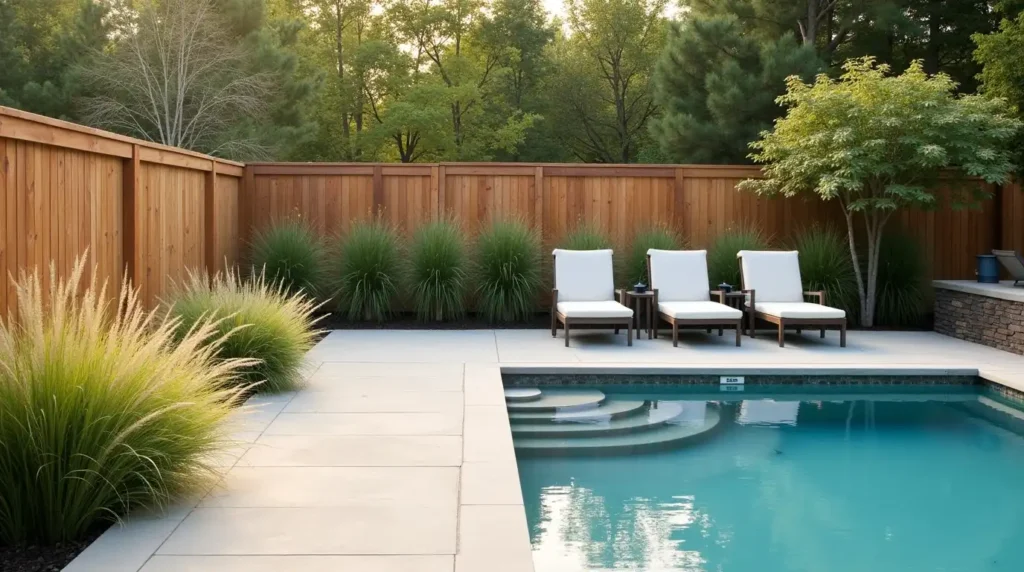
Ornamental grasses add movement without making the pool area feel crowded. Their narrow leaves can soften large areas of concrete and stone.
Use clumping grasses instead of spreading types. Clumping plants stay in a more controlled area. Spreading grasses may move into nearby beds or paths.
Plant them in groups of three or five for a stronger look. A single grass may seem lost beside a large pool deck.
Good places for ornamental grasses include:
- Along a plain fence
- Behind lounge chairs
- Near a privacy screen
- At the corners of a rectangular pool
- Beside a raised planter
Leave space between the grass and the water. Some types release fine blades or seed heads that can blow into the pool.
The deck can also reflect heat onto nearby plants. A grass that grows well in the middle of your yard may struggle beside hot paving.
Check the mature height and width before planting. A tall grass may block your view of children in the pool. A wide one may lean into the walkway.
Choose a type that fits your local climate and the amount of sun in the area.
Use Large Containers for Fast Poolside Color
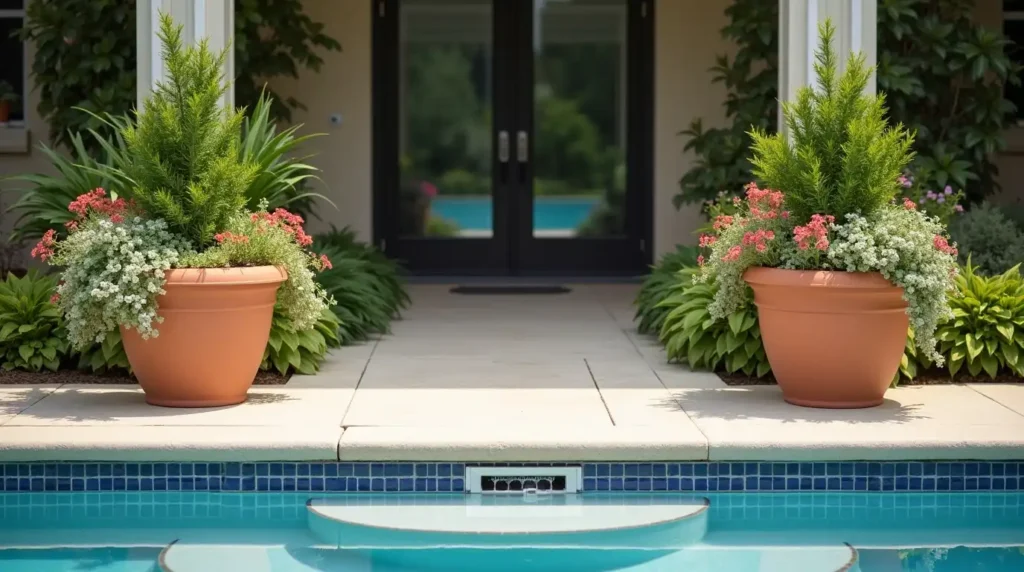
Large containers are useful when you want greenery without changing the whole yard. They add color and shape, but you can move them when your needs change.
Two matching pots can frame a pool entrance or seating area. Matching containers often look cleaner than many small pots in different styles.
Use a simple three-part planting plan:
- Add one tall plant as the main feature.
- Place a medium plant around it for fullness.
- Add a trailing plant near the edge.
Fiberglass containers are lighter and easier to move. Concrete and ceramic pots feel more solid, but they are much heavier.
Large pots are also less likely to tip over than small ones. Still, keep breakable pots away from places where children run or people enter the pool.
Every container needs drainage holes. Water should leave the pot without flowing across a busy walking path.
Container plants may dry out faster than plants in the ground. Check the soil often during hot weather. A drip line can make watering easier.
Start with two large pots instead of buying many at once. You can add more after you see how the first pair fits the space.
Create a Tropical Look With Plants That Suit Your Climate
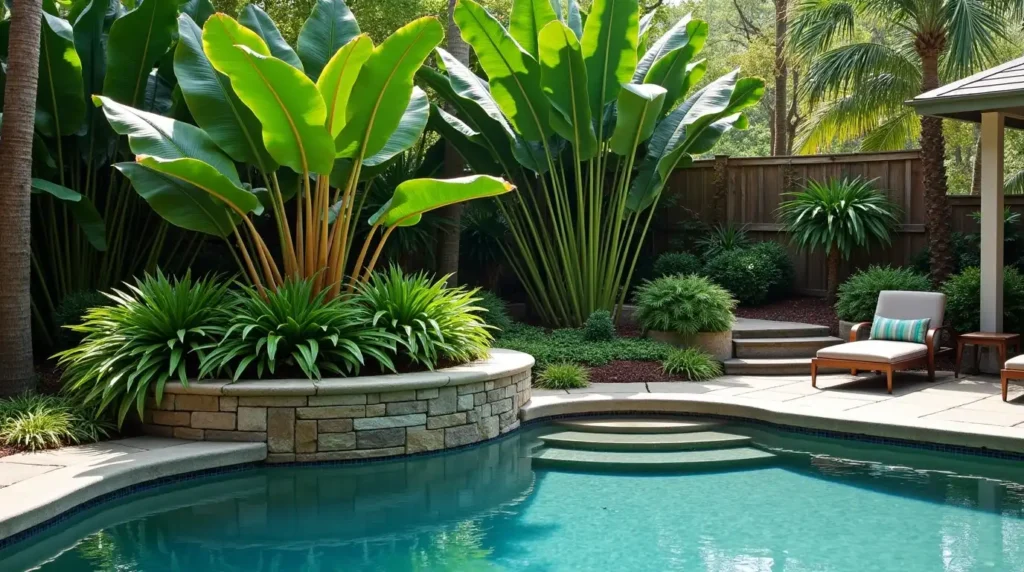
You can create a resort-style feeling without filling the yard with hard-to-care-for plants. The key is to use bold leaf shapes, layered heights, and rich green color.
Start with one tall plant that creates a strong shape. Add broad-leaf plants around it. Then use a smaller plant with fine leaves to create contrast.
A flowering plant can add color, but you do not need flowers in every bed. Too many colors may make the pool area look busy.
In warm climates, you may be able to grow tropical plants in the ground. In cold climates, use large containers for tender plants. You can move them indoors before freezing weather arrives.
Do not plant large tropical trees close to the pool without checking their root habits. Some roots can lift paving or grow near buried lines.
Use mulch or contained decorative gravel to finish the bed. Keep loose material away from the pool edge.
These inground pool landscaping ideas work best when you repeat a few plant types. Focus on leaf shape and size instead of filling the bed with many plant kinds.
Block Unwanted Views With a Layered Evergreen Hedge
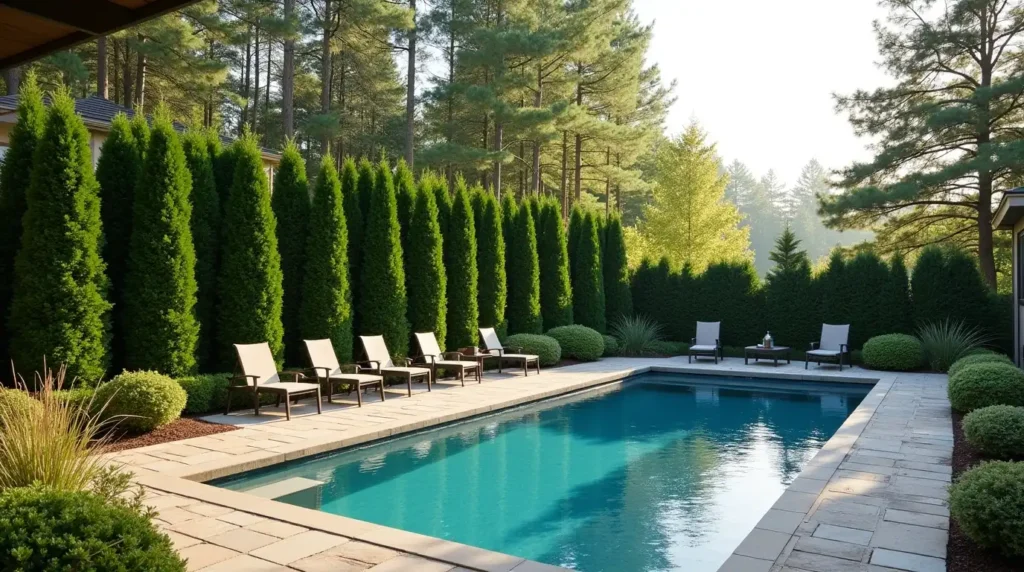
A pool feels more relaxing when swimmers are not exposed to every nearby window. Evergreen plants can provide privacy throughout the year.
Before planting, find the exact view you need to block. Sit in the lounge chairs. Stand near the shallow end. Look toward nearby homes and streets.
You may find that only one small area needs extra screening. This can save money and protect open views across the rest of the yard.
A layered hedge often looks more natural than one row of matching plants. Place taller evergreens at the back. Add medium shrubs in front. Use low plants near the bed edge.
Check the mature width before you plant. A hedge that is narrow today may grow several feet wider. Leave space for pruning and fence repairs.
Do not place tall plants where they block the view from the house to the pool. Clear sightlines are important for families with children.
Your town may limit hedge and fence height. Check current local rules before planting a tall screen.
Good pool privacy landscaping should block unwanted views without making the whole yard feel closed.
Add Privacy Screens Where Hedges Will Not Fit
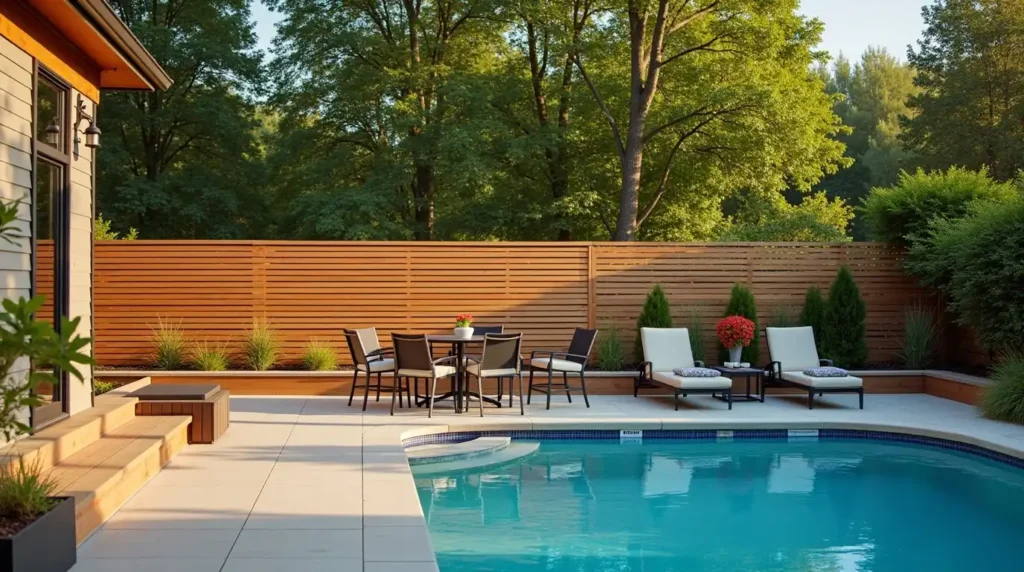
A hedge is not always practical when the pool sits close to a fence or property line. Plants may grow too wide and take away needed deck space.
A privacy screen gives you a thinner option. You can install it only where you need it.
Common choices include:
- Horizontal wood slats
- Composite panels
- Metal screens with cutout patterns
- Trellises with controlled climbing plants
- Frosted outdoor panels
Wood screens can feel warm and natural. They may need staining or sealing over time.
Composite panels often need less care. They can also match modern decking and fencing.
Metal screens can create an attractive focal point. Make sure the panel does not have sharp edges near a walkway.
A trellis may cost less, but climbing plants can create extra leaves and trimming. Choose a slow-growing plant that suits your climate.
Match the screen to the house trim, fence, or pool deck. This helps it feel like part of the yard instead of a last-minute addition.
Check wind exposure before installing a solid panel. A tall screen may need strong posts and a proper base.
Add Shade Where You Actually Sit
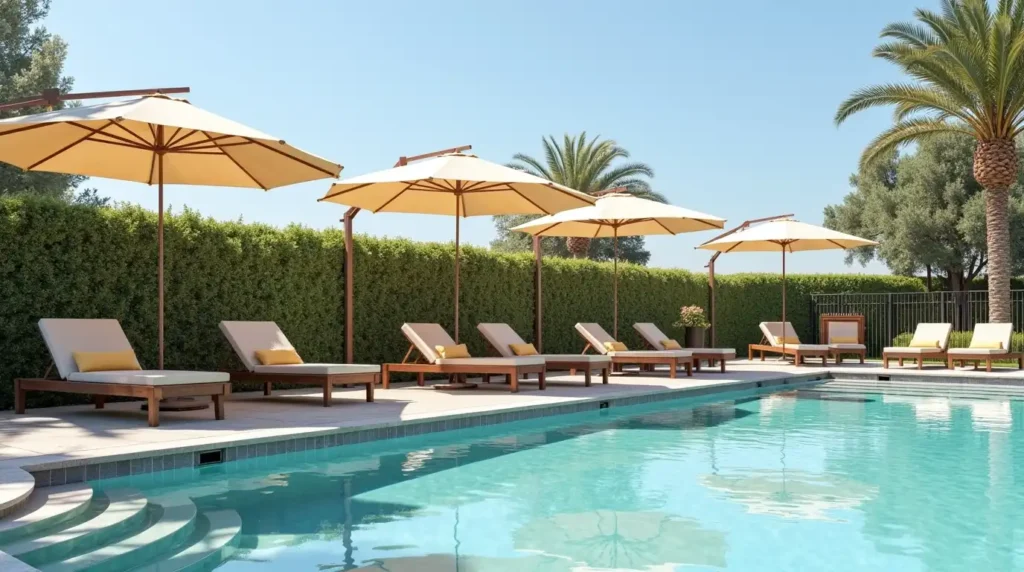
A pool deck can become too hot to enjoy when there is nowhere to escape the sun. Shade makes the area more comfortable for eating, resting, and watching children.
Do not guess where the shade should go. Take photos of the yard at 10 a.m., 1 p.m., and 4 p.m. This will show how the sun moves across the deck.
Place shade over seating and dining areas first. The whole pool does not need to be covered.
A cantilever umbrella is a flexible choice. You can turn or move it as the sun shifts. Use a heavy base that suits the umbrella size.
A shade sail can cover a larger area without using much floor space. It needs strong support points and the correct angle for rainwater.
A pergola creates a clear outdoor room. An open roof gives light shade. A solid or covered roof gives more protection from sun and rain.
A retractable awning works well when the pool is close to the house. You can close it when strong winds are expected.
Choose a shade option that fits your weather. Permanent structures may need permits and professional installation.
Create Separate Zones for Lounging and Dining
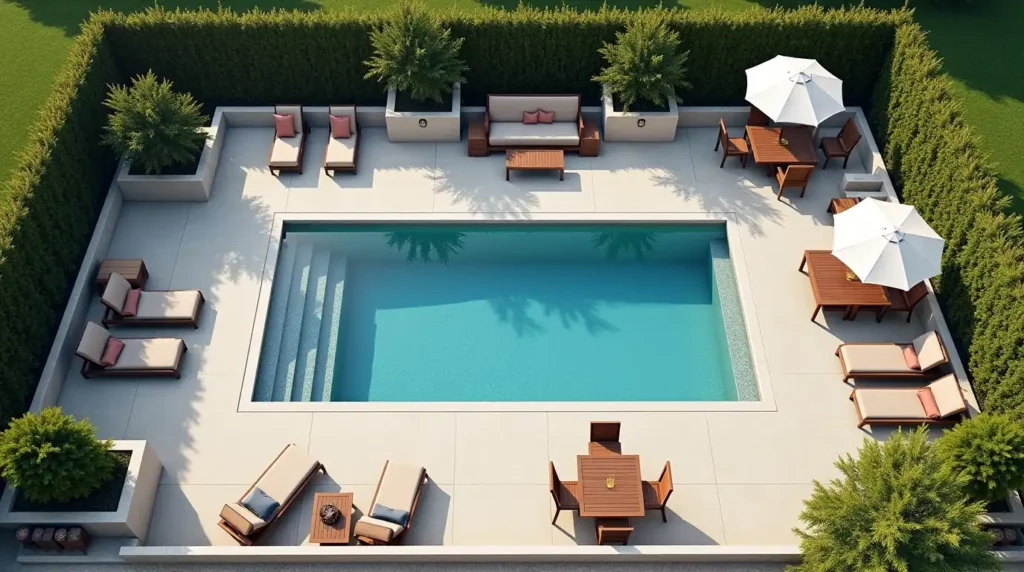
A pool deck works better when every part has a clear purpose. Without a plan, chairs, tables, toys, and towels can take over the walking space.
Start by listing how your family uses the pool. You may need space for sunbathing, eating, watching children, drying off, and storing supplies.
Place lounge chairs on the sunny side if you enjoy sunbathing. Keep a shaded chair nearby for anyone who wants a cooler spot.
Put the dining table away from the main splash area. Wet seats and food do not mix well.
Use large planters, furniture direction, or a change in paving to mark each zone. You do not need walls between them.
Keep a clear path from the house to the pool. People should not have to walk between chairs or around a table while carrying drinks.
Measure furniture before you buy it. Use painter’s tape or pieces of cardboard to mark the size on the deck.
This gives you a true view of the space. A table that looks small in a store may block an important walkway at home.
Use Several Soft Lights Instead of One Bright Floodlight
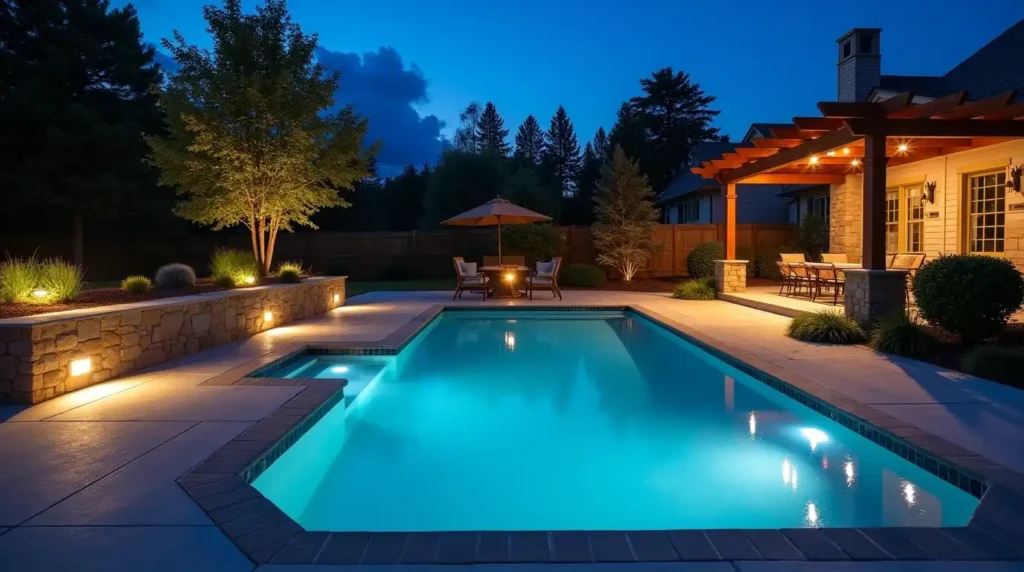
The pool area should remain easy to use after the sun goes down. Good lighting can show steps, paths, seating, and changes in ground level.
One strong floodlight often creates glare and deep shadows. Several soft lights usually work better.
Use path lights along the route from the house to the pool. Add step lights near stairs and raised areas.
Lights under the cap of a low wall can provide a soft glow. Downlights on a pergola can light a dining table without shining into people’s eyes.
You can also place a light behind a plant to show its shape at night. Keep the effect simple. Too many bright fixtures can make the yard feel harsh.
Timers can switch the lights on each evening. Motion controls may work well near gates or storage areas.
Before installing permanent lights, test the plan with battery-powered fixtures. View them from the pool deck and from inside the house.
Water and electricity are a serious mix. Hire a licensed electrician for wiring near the pool. The work should meet current local safety rules.
Use Contained Rock and Gravel to Control Mud
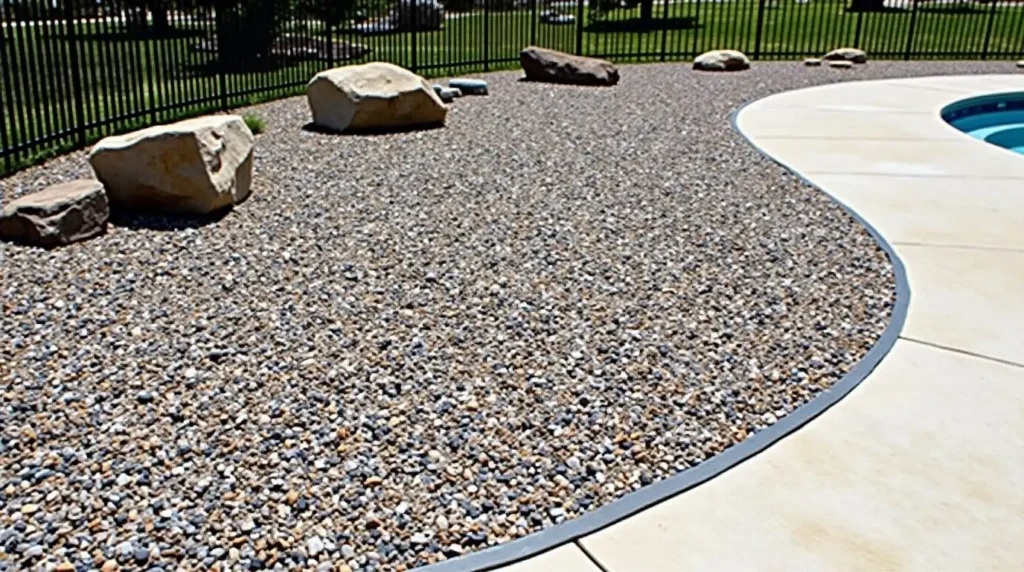
Rock and gravel can solve muddy areas, but they need careful placement near a pool. Loose stones can end up on the deck or inside the water.
Use edging to hold the material in place. Metal, stone, or strong plastic edging can separate gravel from the lawn and walkway.
Pea gravel has a soft, rounded shape. It may move underfoot and should not be used where people need a firm walking surface.
Crushed stone locks together more firmly. It works well in narrow side areas and around equipment pads.
River rock can add a smooth, natural look. Larger pieces are less likely to scatter, but they may be harder to clean.
One or two large boulders can create a focal point in a dry planting bed. Do not place them where they narrow a path.
Dark stones can become very hot in full sun. Test a sample before placing rock beside a barefoot area.
Low-maintenance pool landscaping still needs balance. Use rock as an accent. A yard filled with stone may feel harsh and reflect extra heat.
Add Raised Planters or Seat Walls for More Structure
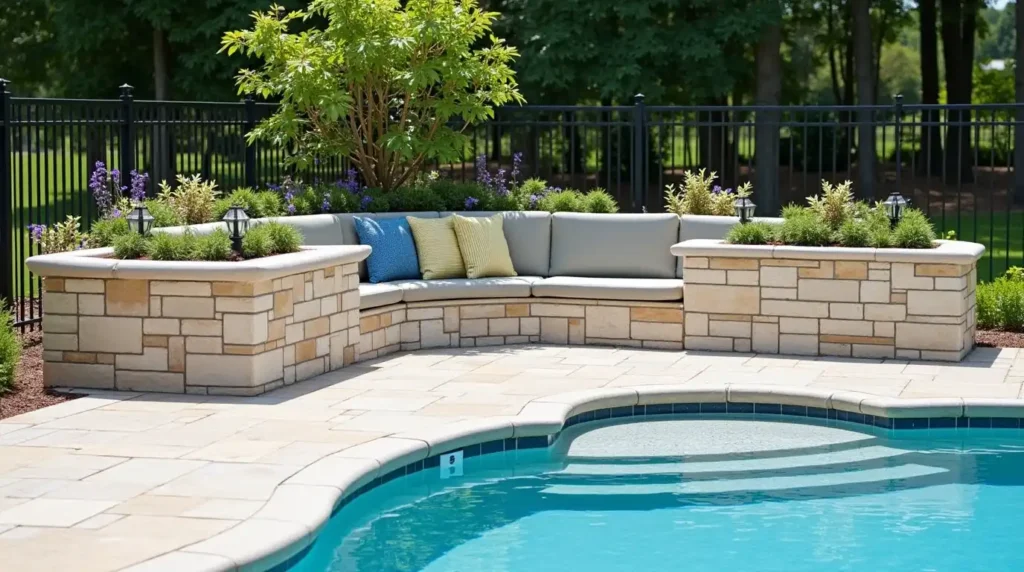
Raised features add depth when the pool area feels flat. They can also separate the deck from plants without using a fence.
A raised planter works well behind lounge chairs or along the edge of a dining area. It brings plants closer to eye level and creates a clear border.
Low seat walls can provide extra places to sit during parties. Use a wide, smooth wall cap if the wall will serve as a seat.
Common materials include concrete block, brick, natural stone, and stone veneer. Choose a finish that repeats a material from the house or deck.
Every raised planter needs a way to drain. Trapped water can harm plants and damage the wall.
Keep soil and irrigation water inside the planter. A raised edge or gravel strip can stop dirt from washing onto the pool deck.
Do not build a tall wall where it blocks the view of the water. Low walls usually keep the space more open.
If the yard has a slight slope, a planter wall may also help manage the change in ground height.
Add One Water Feature That Fits the Pool
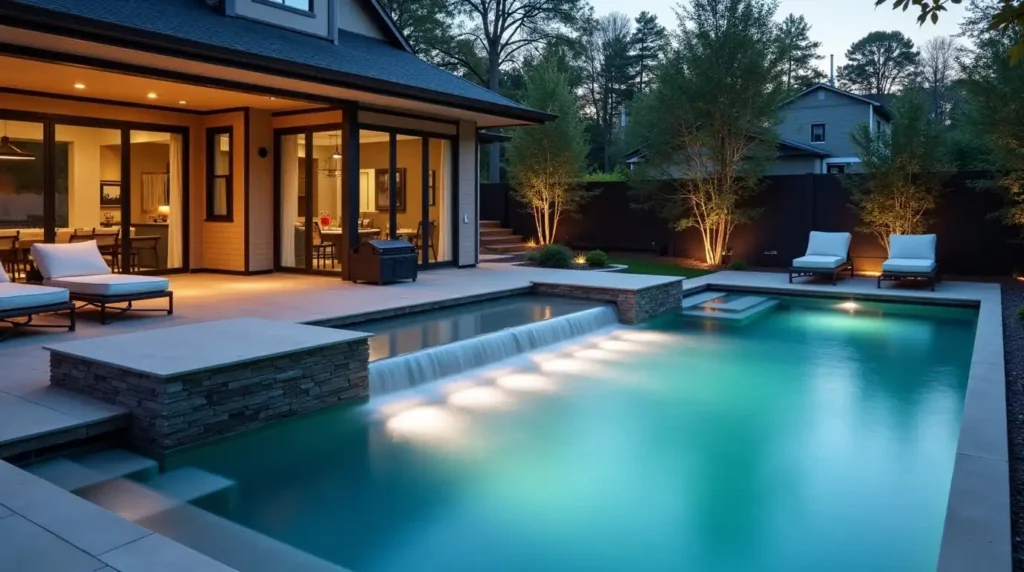
A well-placed water feature can make a simple pool feel more complete. It adds movement and may help cover sounds from a nearby road.
Choose a feature that matches the size and style of the pool.
A narrow spillway can suit a modern pool with clean lines. A small fountain may fit a more traditional yard.
Deck jets create curved streams of water. Children may enjoy them, but they can increase splash and water loss.
A raised wall with one centered outlet can create a strong focal point. It may also serve as a background for seating or plants.
Think about sound before you choose the water flow. A loud feature may feel relaxing during the day but become annoying near a bedroom or neighbor’s yard.
Wind can push spray onto the deck. It may also increase evaporation.
Water features need cleaning and pump care. Adding one to an existing pool may require plumbing and electrical work.
Choose a feature you plan to use often. A simple design that runs every week has more value than a large feature that stays switched off.
Hide Pool Equipment Without Making Repairs Hard
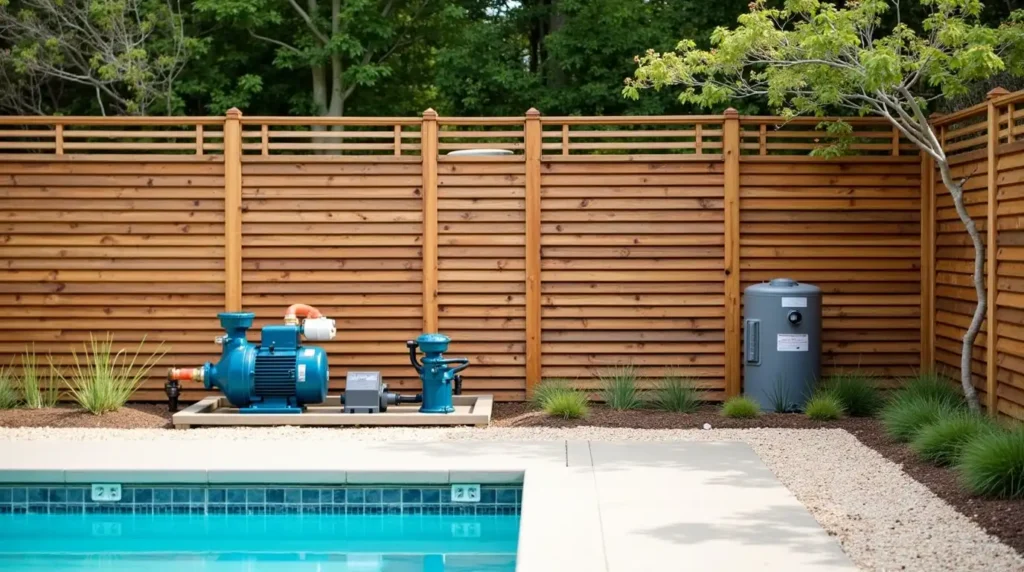
Pool equipment is necessary, but it does not need to become the main view from your patio. A screen can hide pumps, filters, pipes, and heaters.
Slatted wood panels allow more airflow than a solid wall. They can also match a wood fence or pergola.
Composite screens need less painting and sealing. Masonry walls can block more sound, but they take up more space.
Evergreen plants may soften the view. Keep them far enough away so branches and roots do not block the equipment.
Pool equipment needs airflow, drainage, and room for service. Never build a tight box around a heater or pump.
A technician may need to remove a large filter or replace a pump. Leave a wide gate or removable panel.
Follow the equipment maker’s clearance instructions. Different heaters and pumps may need different amounts of open space.
Take photos of pipe labels, valves, and controls before adding the screen. Keep the photos with your pool records.
The best pool equipment landscaping hides the view while keeping every part easy to reach.
Build a Clear Path From the House to the Pool
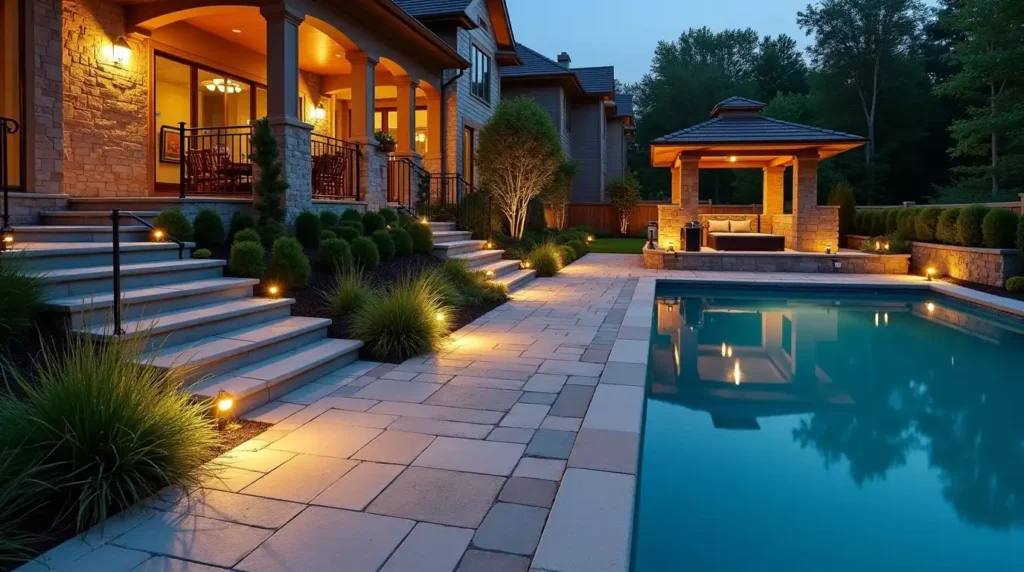
A clear path makes the pool easier to reach and helps keep the water cleaner. Without one, people may carry grass, soil, and mud onto the deck.
Connect the house, pool gate, seating area, and storage space with a direct route. Follow the path people already use.
A continuous paver path gives a firm walking surface. It works well for busy family yards.
Large stepping stones can cost less and keep more grass visible. Place them close enough for a natural step.
Textured concrete can match the pool deck. Pavers set in gravel or low groundcover can create a softer look.
Use materials that provide grip when wet. Smooth stone may look attractive but become unsafe after rain.
Add low path lighting if people swim at night. Fixtures should show the walkway without shining into their eyes.
Avoid sharp turns and narrow gaps between plants. A person carrying towels or pool toys needs enough room to pass.
Watch how your family moves through the yard for several days. Build the path where people naturally walk.
Add a Shower and Towel Station to Keep the House Dry
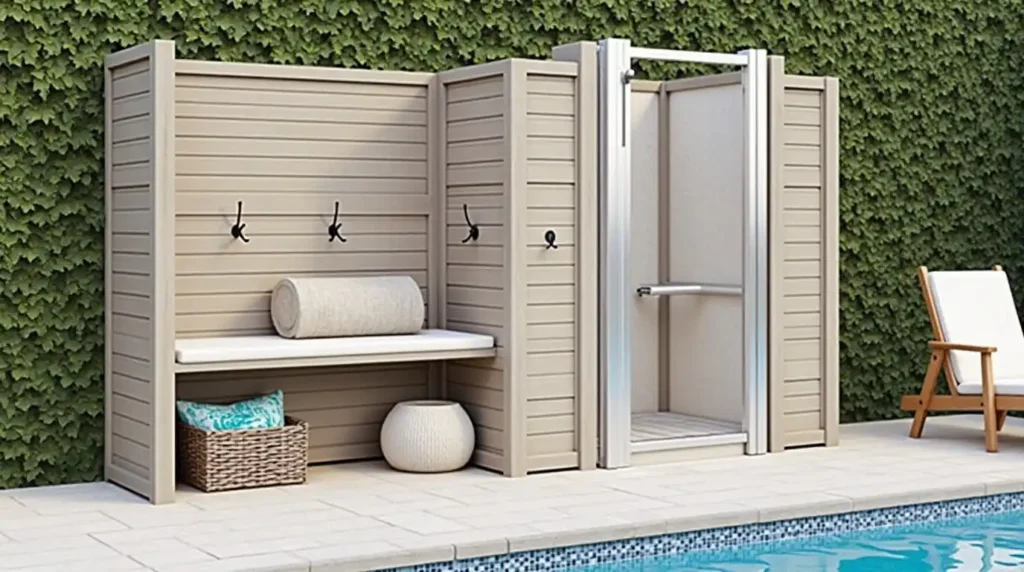
Small practical features often improve daily pool use more than expensive decorations. A poolside shower and towel station can keep dirt, grass, and wet feet out of the house.
Place the shower close to the pool entrance, but away from the main seating area. Add a small privacy panel where needed.
Make sure the water drains away from the deck and nearby structures. Do not allow it to form a puddle beside the pool.
Add three or four strong hooks for towels and clothing. Use materials that can handle sun and rain.
A weather-resistant bench can give swimmers a place to sit. Choose one with storage for goggles, toys, and clean towels.
A covered basket or storage box can keep fresh towels dry. Keep wet items in an open basket so air can reach them.
For a lower-cost setup, install hooks, a covered storage box, and a simple foot-washing station. This can still reduce mess inside the house.
A well-planned station makes swimming easier and keeps the pool area more organized.
Which Pool Landscaping Project Should You Start First?
You do not need to complete all 18 ideas at once. Start with the issue that causes the most trouble.
Use this order:
- Fix unsafe or slippery surfaces.
- Correct standing water and drainage.
- Clear important walking paths.
- Plan seating, shade, and privacy.
- Choose low-litter plants.
- Add lighting and storage.
- Finish with decorative features.
Measure the space before buying plants, furniture, or materials. Mark large items on the ground with tape, rope, or cardboard.
Set a budget for each stage. This helps you avoid spending too much on decorations while safety problems remain.
Check local rules before adding fences, tall screens, electrical work, plumbing, or permanent shade structures.
Final Thoughts on Inground Pool Landscaping
A good pool area should feel safe, comfortable, and easy to care for. Start with deck grip, drainage, and clear walking paths. Then add shade, privacy, simple plants, and useful storage.
You do not need to copy every idea. Choose two or three changes that fix your biggest problems. A small privacy screen, better path, or pair of large containers may be enough to improve the whole area.
The best inground pool landscaping ideas are the ones that make your backyard safer, easier to maintain, and more enjoyable every day.