18 Outdoor Fire Pit Ideas for a Cozy Backyard
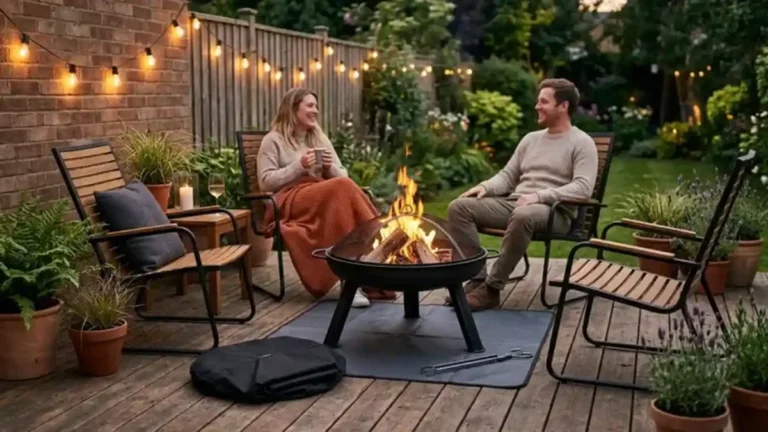
Looking for outdoor fire pit ideas that fit your yard, budget, and style? A fire pit can turn an unused outdoor space into a warm place for family dinners, quiet evenings, and weekend gatherings.
But picking a design is not always easy.
A large stone fire pit may look great in a photo but take up too much room in your yard. A wood-burning model may create more smoke than your neighbors will like. A built-in gas fire pit may also cost more than you planned.
The right choice depends on your space, fuel choice, seating needs, local rules, and budget.
This guide shares 18 backyard fire pit ideas for small patios, large lawns, modern homes, and low-cost projects. You will also learn how to plan the seating, choose safe materials, and make the area feel complete.
Start with the ideas that fit the way you use your yard. Then check local fire rules before you buy or build anything.
What Should You Check Before Choosing a Fire Pit?
The best-looking fire pit can still be wrong for your yard. It may block a path, sit too close to plants, or leave too little room for chairs.
Start by measuring the space. Mark the planned fire pit and seating area with rope, chalk, or garden stakes. Walk around the layout before you make a final choice. This simple test can show whether the design feels too crowded.
Next, choose a fuel type.
A wood-burning fire pit gives you a classic fire with crackling sounds. However, it can create smoke, sparks, ash, and extra cleanup.
A propane fire pit is easier to start and control. Many portable models hide the tank inside the base. Natural gas works well for a permanent fire feature, but a licensed professional may need to install the gas line.
Smokeless fire pits can reduce visible smoke when used with dry wood. They still produce heat, flames, and some smoke.
You should also check:
- Local fire and building rules
- Seasonal burn bans
- The product’s placement guide
- Nearby fences, branches, sheds, and walls
- Wind direction
- Drainage after rain
- Space for chairs and walking
- Fuel storage
- Child and pet safety
Do not use one online distance rule for every fire pit. Safe placement can change based on the product, fuel type, surface, and local law.
Once you have these details, you can choose a design that works in real life.
18 Outdoor Fire Pit Ideas for Different Yards and Budgets
Create a Simple Gravel Fire Pit Area
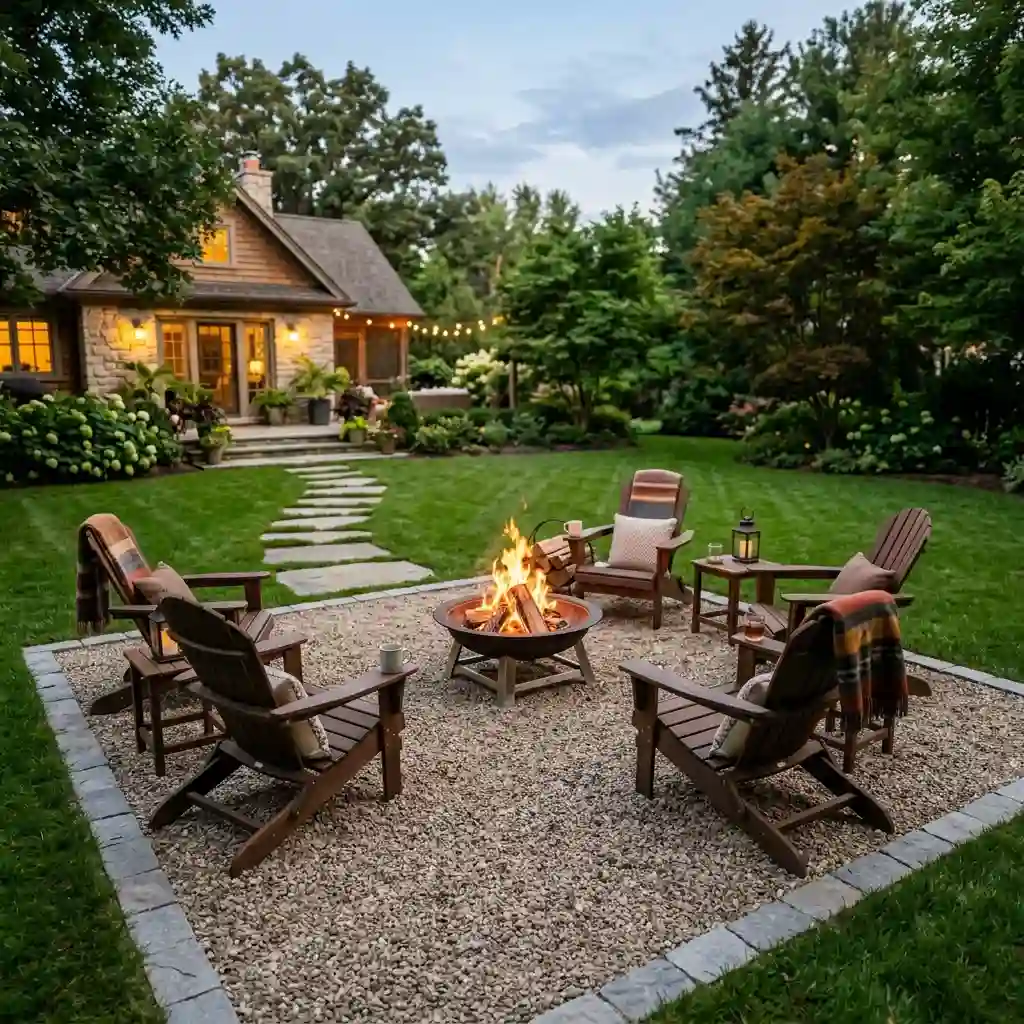
A gravel fire pit area is one of the easiest ways to turn an empty part of your yard into a useful seating space.
Start with a firm, level base. Add edging around the area to keep the gravel in place. Metal, stone, or concrete edging can give the space a neat finish.
Do not place chairs on a deep layer of loose gravel. The legs may sink or tilt. A compacted base with a thinner top layer will feel more stable.
Arrange four to six chairs in a loose circle. Leave enough room for people to move their chairs when the heat or smoke changes.
Add large stepping stones between the house and the seating area. This keeps shoes cleaner and makes the fire pit easier to reach after rain.
Best for: Medium and large yards
Fuel: Wood, propane, or smokeless fire pit
Cost level: Low to medium
Main benefit: Easy to build and expand
Watch out for: Loose gravel under chair legs
Build a Round Paver Fire Pit
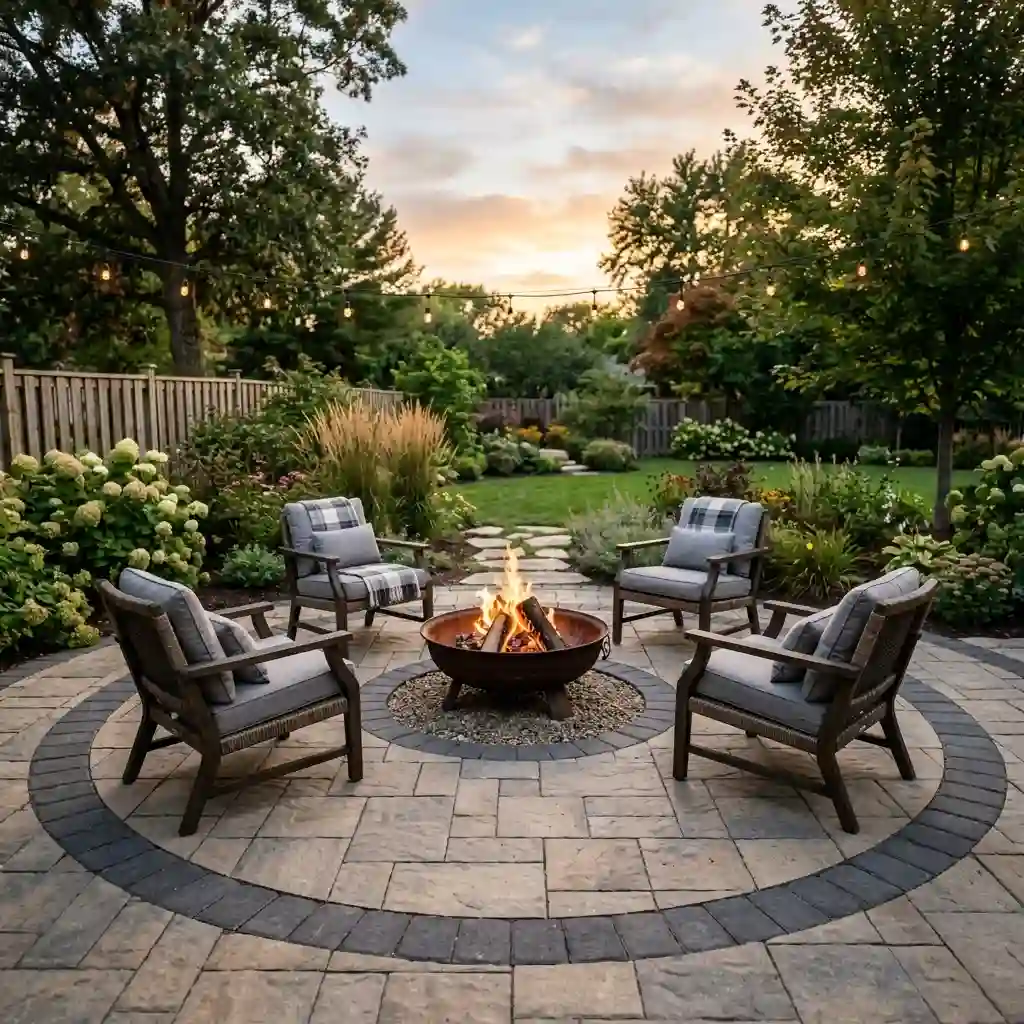
A round paver design gives your backyard a clear center. The circle also helps people face each other while they talk.
Use concrete pavers to create the main floor. Add a darker or lighter border around the edge for a more finished look.
Before you install the pavers, place them on the ground without fixing them. Add the chairs and test the layout. You may find that your first circle is too small.
Make sure the base drains well. Water trapped under pavers can cause movement, low spots, or cracks over time.
You can place a portable fire bowl in the center or build a fire feature with materials made for high heat. Do not use random landscape blocks close to direct flames.
Best for: Traditional yards and DIY projects
Fuel: Wood, propane, or gas
Cost level: Medium
Main benefit: Neat shape and stable seating area
Watch out for: Poor base work and drainage
Add a Modern Concrete Fire Bowl
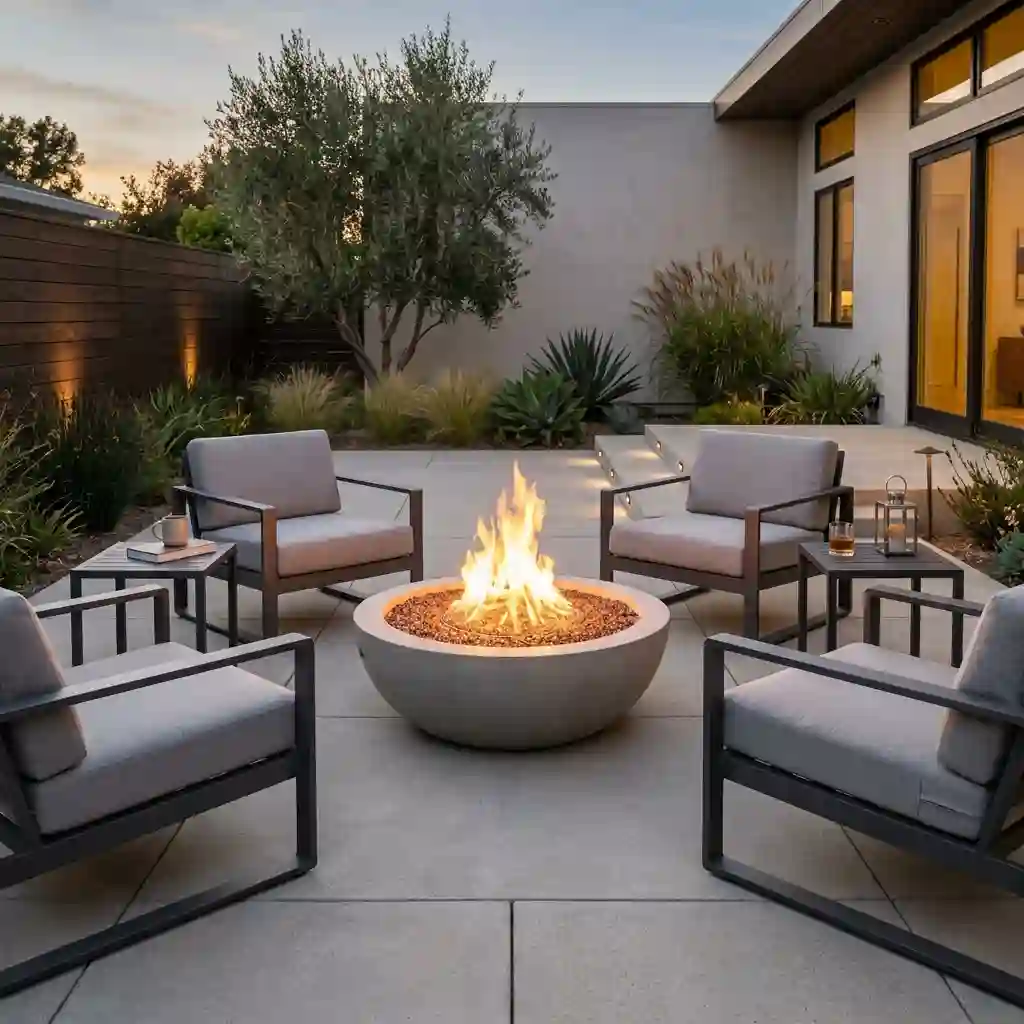
A low concrete fire bowl gives a patio a simple, modern look. Its clean shape works well with large pavers, smooth concrete, metal chairs, and plain cushions.
Choose a bowl that fits the size of your seating area. A wide bowl can take over a small patio. A tiny model may look lost in a large open space.
Propane and natural gas models give the cleanest look because you do not need to store logs nearby. Fire glass or approved lava rock can add texture without making the design feel busy.
Concrete bowls can be very heavy. Pick the final location before you add the rest of the furniture.
Place four low lounge chairs around the bowl. Add a small side table between each pair of chairs for drinks and snacks.
Best for: Modern patios and simple garden designs
Fuel: Propane or natural gas
Cost level: Medium to high
Main benefit: Clean and stylish appearance
Watch out for: Heavy weight and difficult moving
Use a Portable Fire Pit in a Small Yard
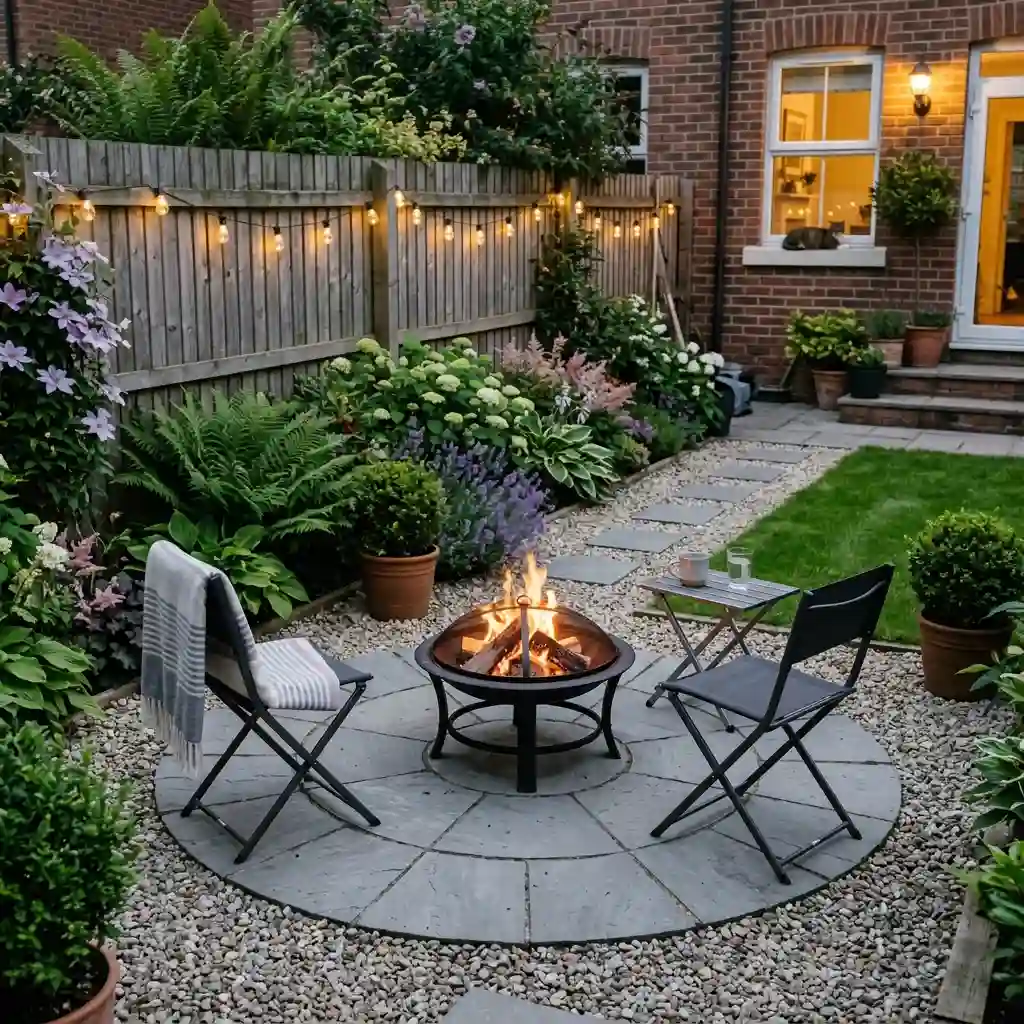
A portable model gives you warmth without taking over a small backyard. You can move it when you need more room for children, pets, gardening, or outdoor meals.
Choose a compact metal bowl, propane unit, or smokeless fire pit. Follow the product guide for the right surface and placement.
Folding or stackable chairs work well in small spaces. You can store them when the fire pit is not in use.
Mark the best setup spot with a few pavers. This helps you place the fire pit in the same safe area each time.
A portable fire pit is also useful for renters. You can take it with you when you move. However, you still need permission if your lease, building, or local rules limit outdoor fires.
Best for: Small yards, renters, and flexible patios
Fuel: Wood or propane
Cost level: Low to medium
Main benefit: Easy to move and store
Watch out for: Using it on an unapproved surface
Build a Sunken Conversation Pit
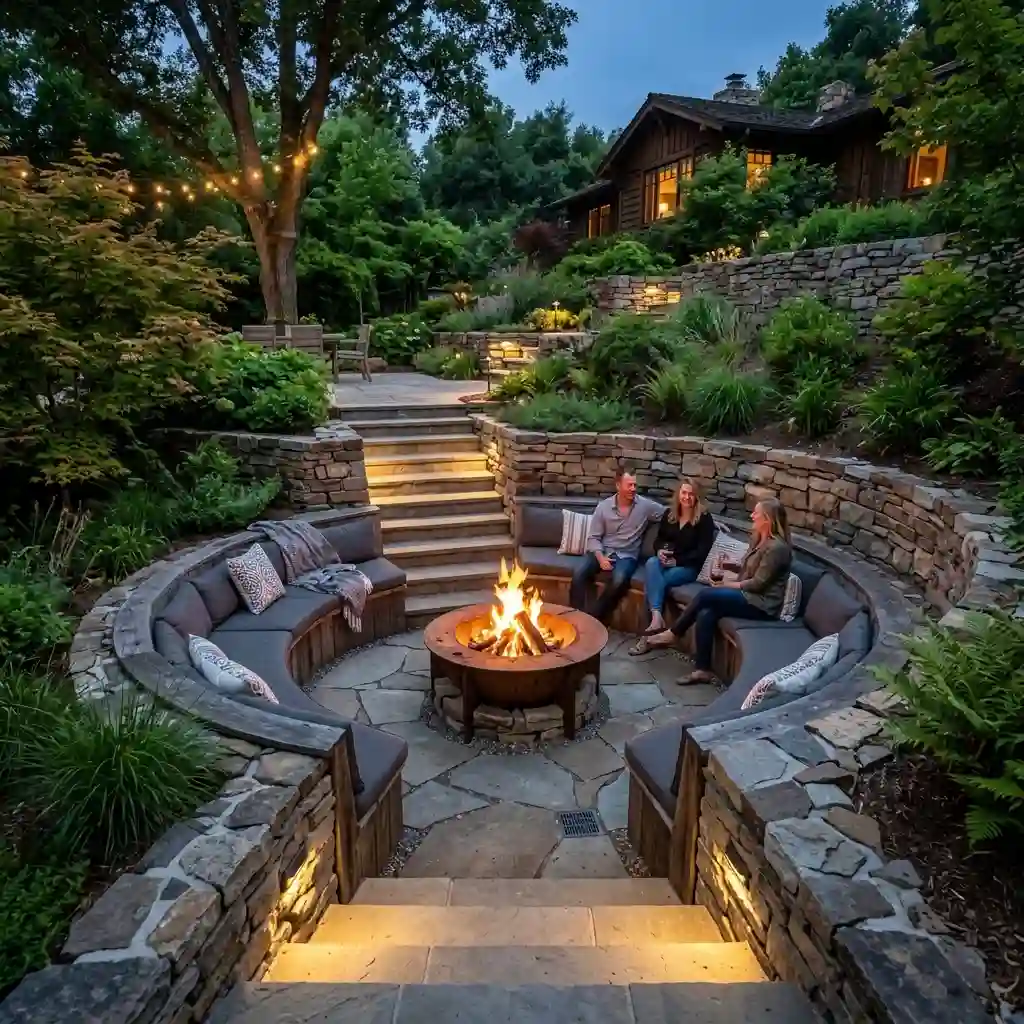
A sunken fire pit can make a large yard feel more private. The lower seating area creates a clear outdoor room and helps separate it from the lawn.
This design works well on sloped land. Retaining walls can hold the soil and form the backs of built-in benches.
Drainage must come first. Rainwater will move to the lowest point in the yard. Without a proper drain, your seating area may fill with water.
Add wide steps with visible edges. Small path lights can make the steps safer at night.
Use outdoor cushions that dry quickly. You should also include a storage area for cushions during wet weather.
This is a major project. A landscape designer, drainage expert, or qualified contractor can help you plan it correctly.
Best for: Large yards and sloped properties
Fuel: Wood, propane, or natural gas
Cost level: High
Main benefit: Private and impressive seating area
Watch out for: Water collecting after rain
Add a Rectangular Gas Fire Table
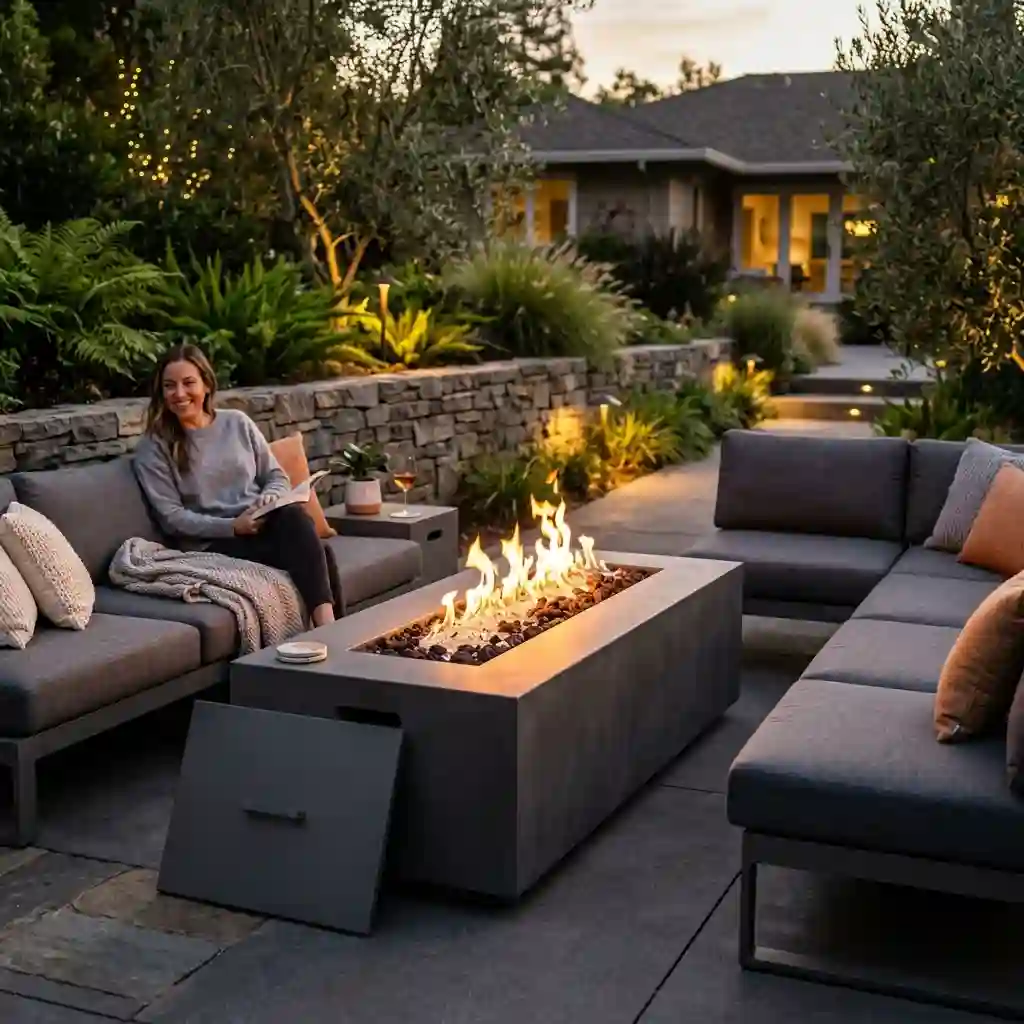
A rectangular fire table is a smart choice when you want heat and a useful surface in one feature.
Place sofas, benches, or lounge chairs along the long sides. This setup gives everyone a clear view of the flame and makes conversation easier.
Choose a model with a lid. When the fire is off and fully cool, the covered top can hold drinks, games, or small plates.
A narrow table can fit on a small patio. A longer model works well between two outdoor sofas.
Check where the propane tank will sit. Some fire tables hide it inside the base. Others need a separate tank cover connected by a hose.
A gas fire table is easy to start, but it does not give you the smell and sound of a wood fire.
Best for: Modern patios and outdoor living rooms
Fuel: Propane or natural gas
Cost level: Medium to high
Main benefit: Easy control and useful table space
Watch out for: Visible hoses or tank storage
Add Built-In Benches Around the Fire Pit
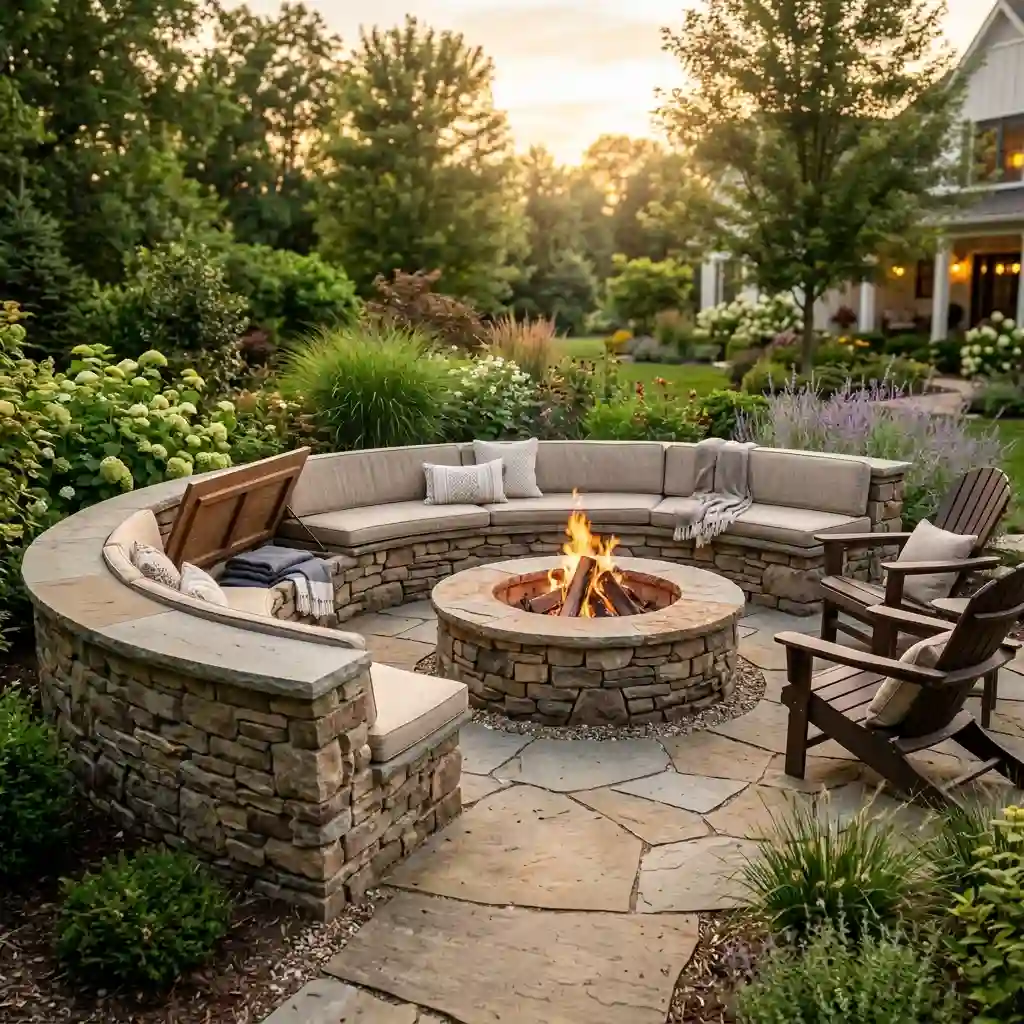
Built-in benches give a fire pit area a clean, finished shape. They also provide plenty of seating without filling the space with many chairs.
You can use curved benches around a round pit. Straight or L-shaped benches fit square and rectangular patios.
Do not close the whole fire pit with fixed seating. Leave wide gaps so people can enter, leave, and move away from the heat.
Mix the benches with two or three movable chairs. Guests can adjust their position when the wind changes.
Add outdoor cushions for comfort. Choose covers that resist fading and dry fast after rain.
Storage under the seats can hold blankets, games, or cushion covers. Make sure the storage area stays dry and is kept away from heat.
Best for: Permanent gathering areas
Fuel: Wood, propane, or natural gas
Cost level: Medium to high
Main benefit: Lots of neat, built-in seating
Watch out for: Seats that cannot be moved
Create a Rustic Stone Fire Pit
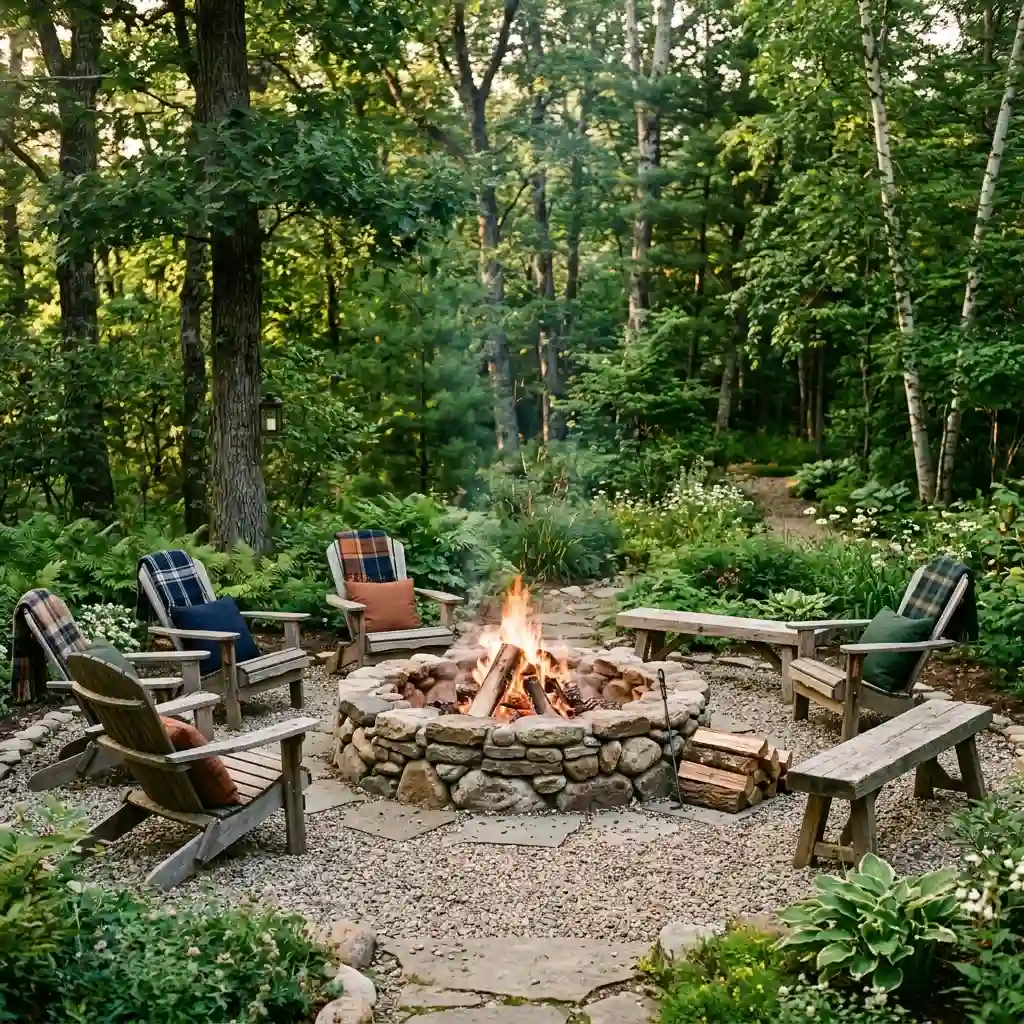
A rustic stone fire pit can blend into a cottage garden, woodland yard, or country-style home.
Choose stone that matches nearby walls, paths, or garden borders. Mixed shapes and rough surfaces give the space a relaxed look.
Do not assume every natural stone can handle direct heat. Some stones may crack or break when they become hot. Use materials approved for fire pit construction.
Pair the pit with wooden Adirondack chairs or simple benches. Add native plants around the outer part of the seating area.
Keep mulch, dry leaves, and grasses away from the fire zone. These materials can catch sparks.
A rustic wood-burning fire pit creates a warm mood, but it also needs ash cleanup and dry firewood storage.
Best for: Cottage, woodland, and country yards
Fuel: Wood
Cost level: Medium to high
Main benefit: Natural look that ages well
Watch out for: Using stone that is not heat-safe
Place a Fire Pit Beside an Outdoor Kitchen
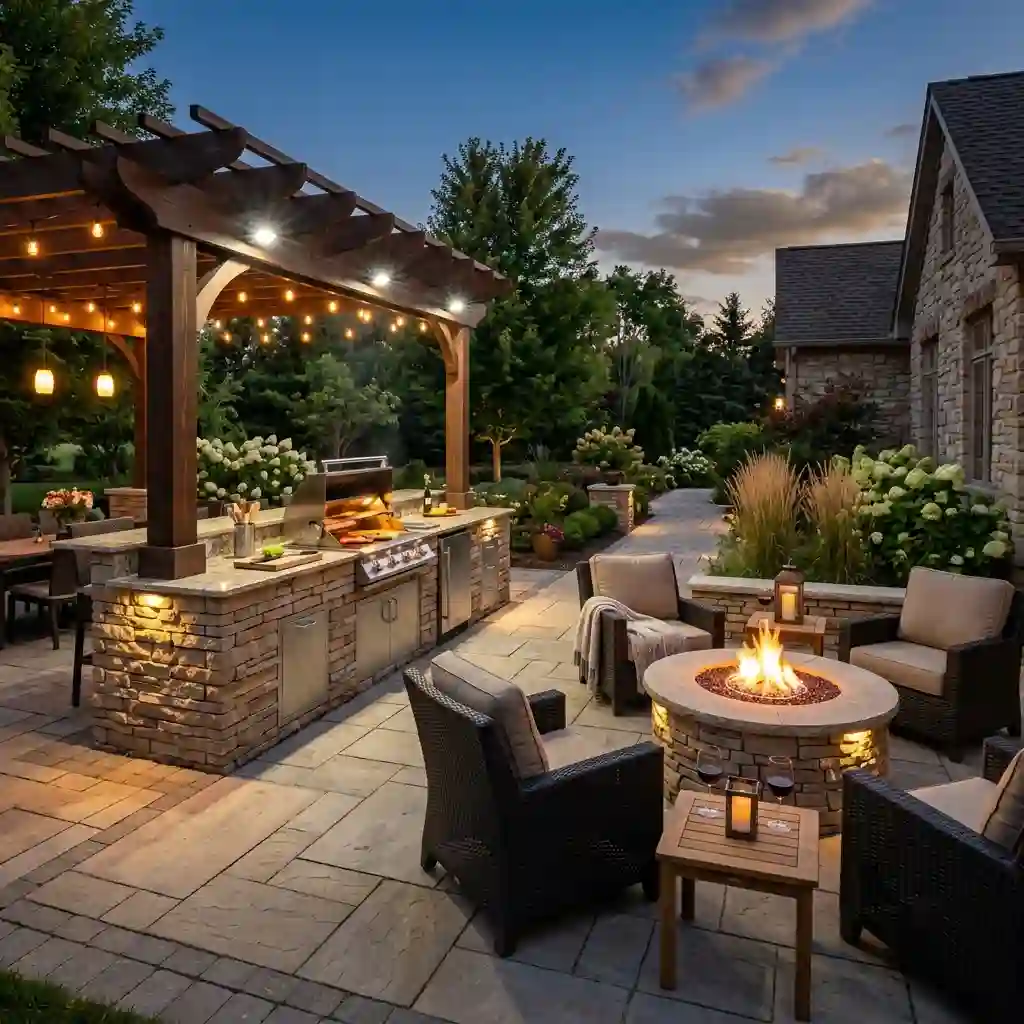
A fire pit near an outdoor kitchen gives guests a place to relax while food is being prepared.
Keep the cooking zone and seating zone separate. People sitting near the fire should not block the grill, refrigerator, sink, or serving counter.
Repeat one or two materials in both areas. For example, use the same stone on the fire pit and kitchen island. This makes the full patio feel planned.
Add side tables near the chairs. Guests need a stable place for drinks and plates.
Plan the lighting in layers. Bright work lights help with cooking. Softer path and seat lighting work better around the fire.
This setup needs more space than a simple patio. Draw the walking paths before you install anything.
Best for: Large patios and people who host often
Fuel: Propane or natural gas
Cost level: High
Main benefit: Creates separate spaces for cooking and relaxing
Watch out for: Crowded paths between the two areas
Use a Chiminea in a Patio Corner
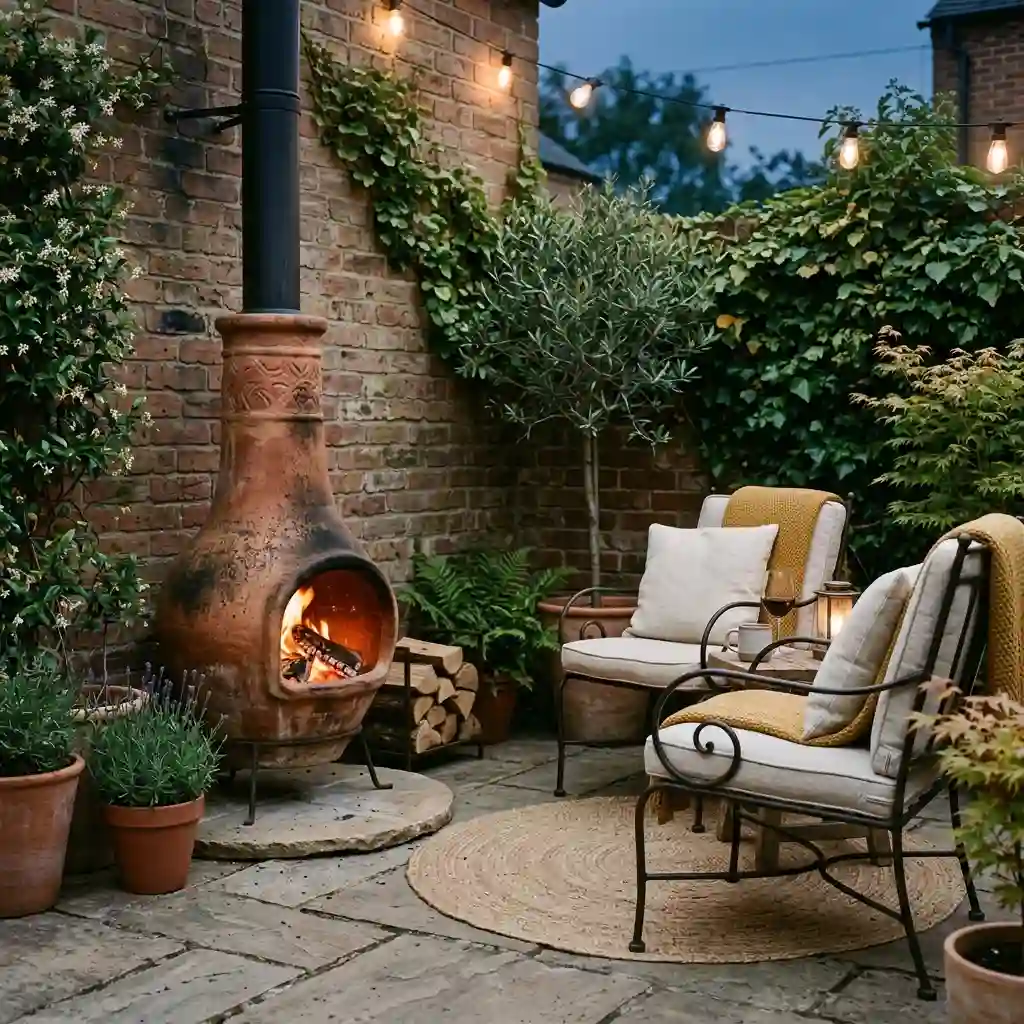
A chiminea has a tall, narrow shape that can fit where a wide fire bowl cannot. It works well in a small courtyard or the corner of a compact patio.
Face the open side toward the seating area. The shape sends much of the heat in one direction, so the chair layout matters.
Clay chimineas have a classic look but can crack if used or stored the wrong way. Cast iron models hold heat well, but they are very heavy. Steel models are often lighter, though they may need care to prevent rust.
Place the chiminea on a level, approved base. Follow the product guide for fuel, lighting, and weather protection.
A chiminea saves floor space, but it may not warm a large group evenly.
Best for: Narrow patios and courtyards
Fuel: Wood
Cost level: Low to medium
Main benefit: Small footprint
Watch out for: Heat facing mainly one direction
Build the Fire Pit Into a Retaining Wall
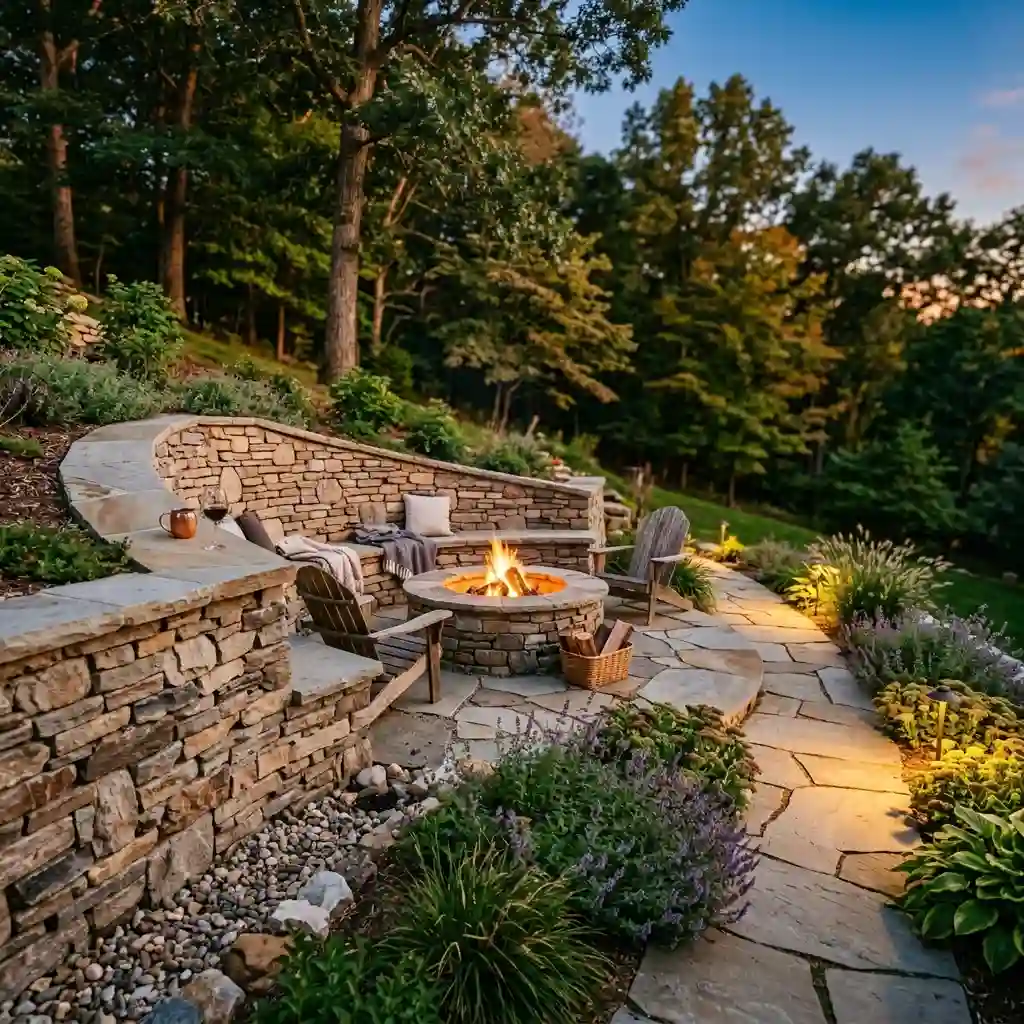
A retaining wall can help you create a fire pit area on a sloped yard. It can hold back soil, mark the edge of the seating zone, and provide extra seats.
Match the wall and fire pit materials for a joined design. Add flat stone caps if part of the wall will be used as seating.
Plan drainage behind the wall. Trapped water can place pressure on the structure and damage it over time.
Add a safe path from the house to the lower area. Steps should be easy to see after dark.
Use low plants to soften the wall without blocking views or growing too close to the heat.
Retaining walls can support a large amount of soil. Hire a qualified contractor when the wall is tall, close to a boundary, or part of a major slope.
Best for: Sloped and terraced yards
Fuel: Wood, propane, or natural gas
Cost level: High
Main benefit: Makes difficult land more useful
Watch out for: Weak drainage or poor wall support
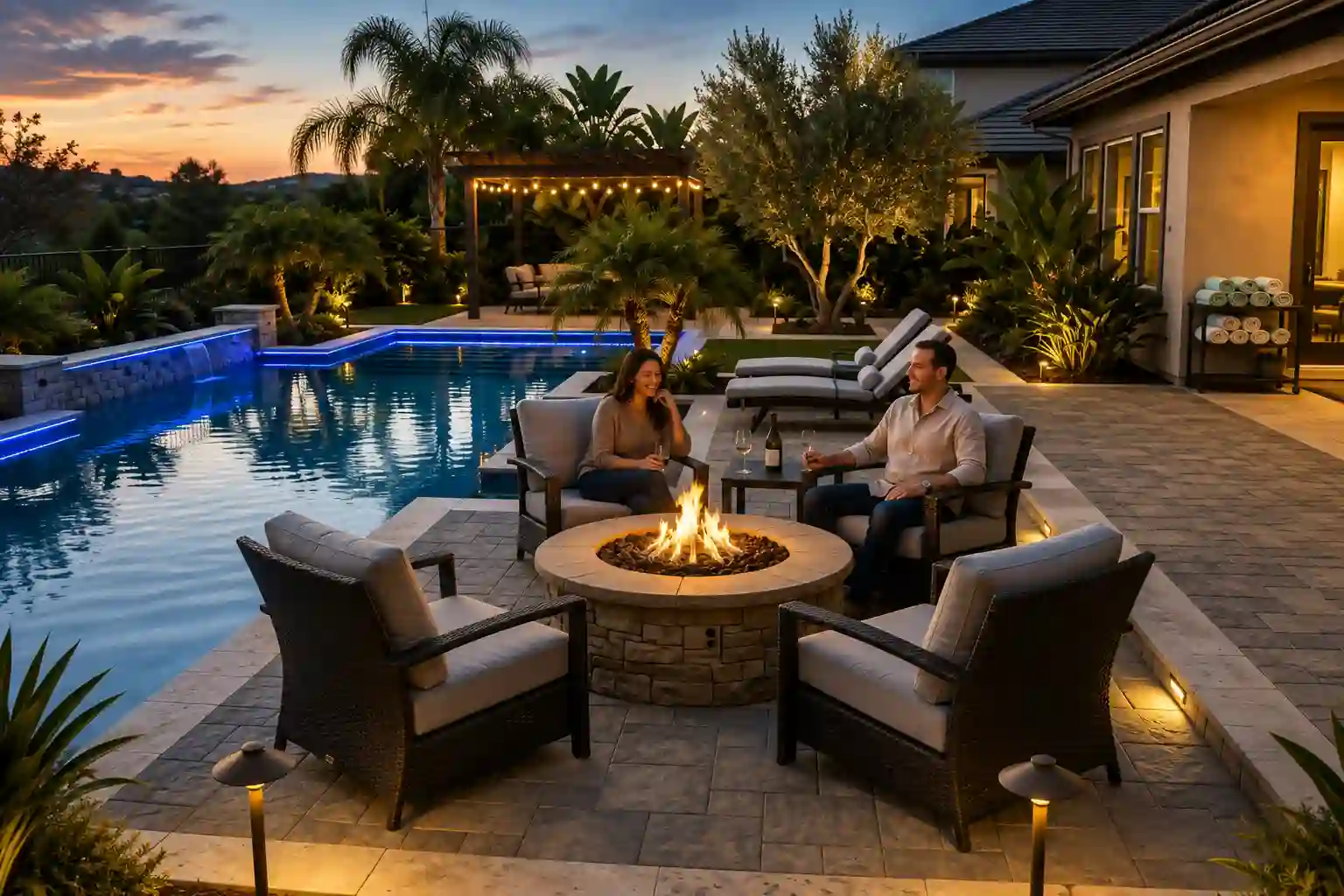
Create a Poolside Fire Pit Lounge
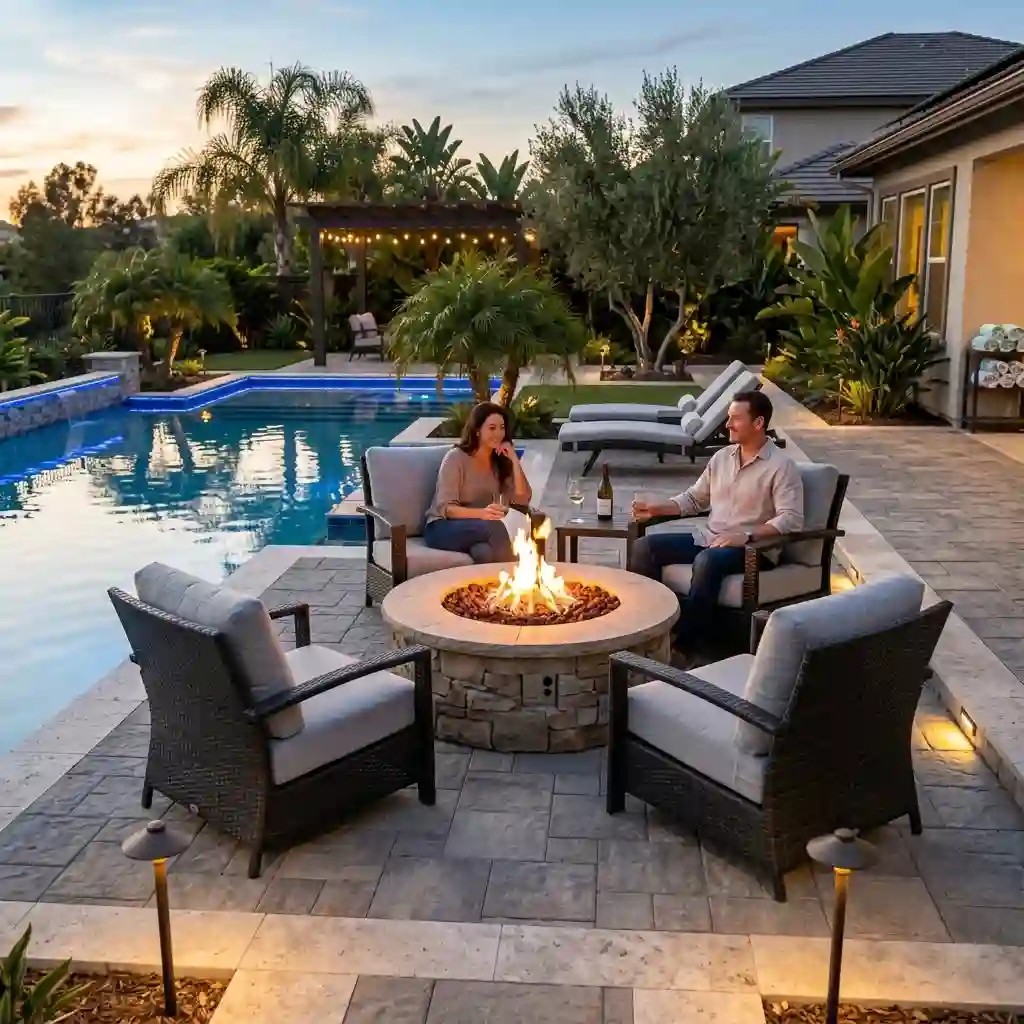
A fire pit near a pool can make the area useful after swimming ends. It also adds warmth on cooler evenings.
Place the seating away from splash zones. Wet paving can become slippery, and water may damage cushions or fire pit parts.
Use non-slip flooring and outdoor furniture that handles moisture. Store towels away from flames and hot surfaces.
Add low lights near steps, pool edges, and changes in floor height. Guests may be moving between bright and dark areas.
A gas fire feature often works well near a pool because there is no ash or wood storage. The exact setup still needs to follow product and local rules.
Leave clear walking paths between the pool, house, and seating area.
Best for: Large pool decks and outdoor lounges
Fuel: Propane or natural gas
Cost level: High
Main benefit: Extends the use of the pool area
Watch out for: Wet floors and loose towels
Design a Boho Fire Pit Lounge
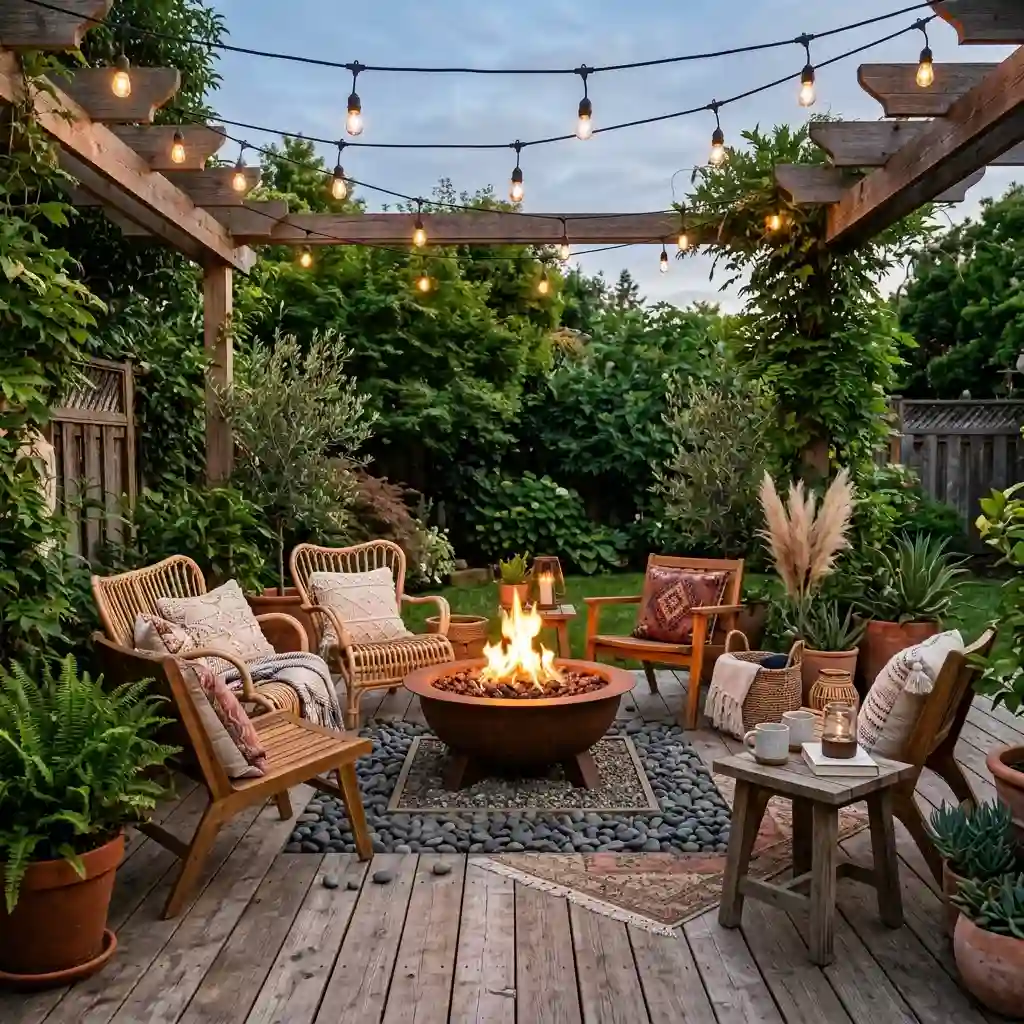
A boho fire pit area can feel warm and relaxed without looking too formal.
Use low outdoor chairs, woven textures, warm wood, and washable cushions. Large planters can frame the seating area and make it feel more private.
Outdoor rugs can help define the space, but keep all fabric and lightweight items far from sparks and heat. Check the fire pit guide before adding any rug near it.
String lights can make the space feel softer at night. Place them well above and away from the fire feature.
Choose a few strong textures instead of filling the area with too many small decorations. This keeps the space easy to clean and safer to use.
Best for: Casual patios and garden lounges
Fuel: Propane or controlled wood fire
Cost level: Medium
Main benefit: Comfortable and personal style
Watch out for: Fabrics placed too close to flames
Add a Fire Pit Under a Pergola
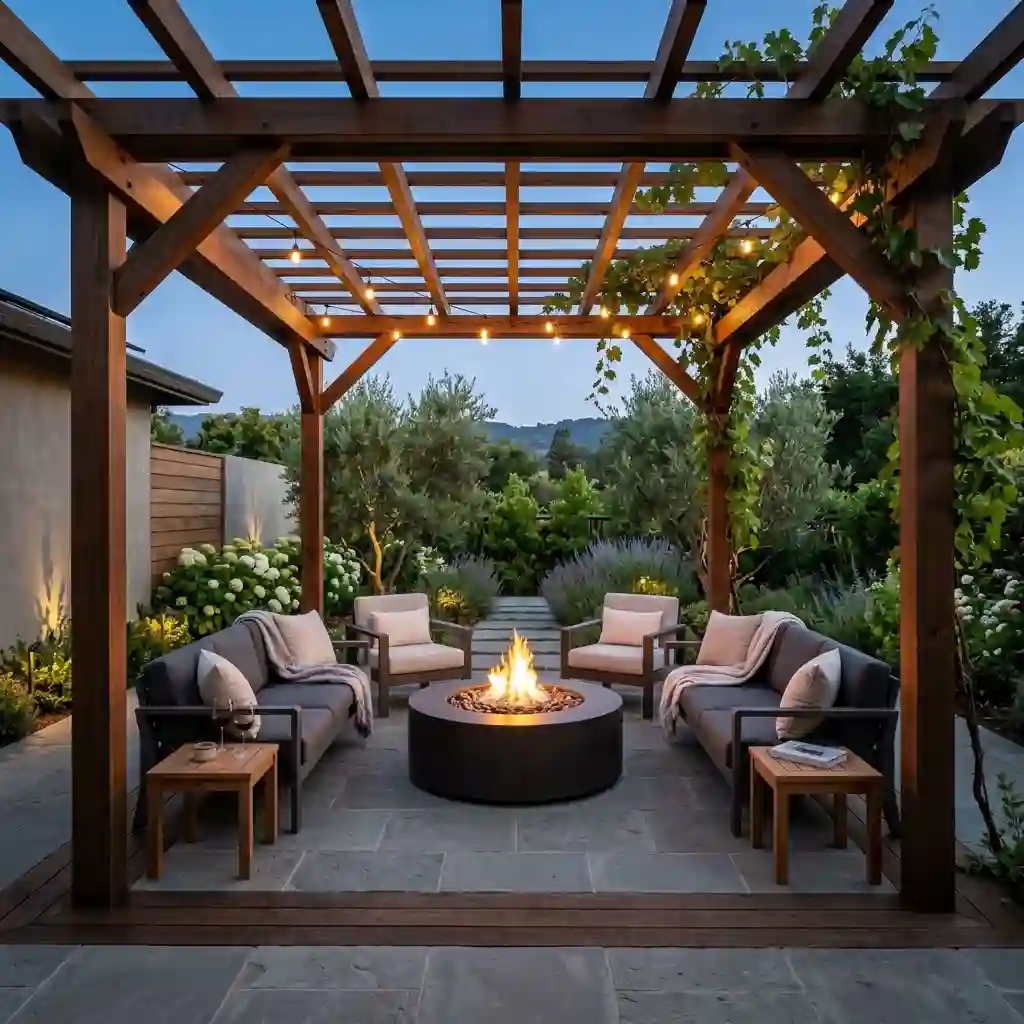
A fire pit under a pergola can create an outdoor room that feels warm and protected. However, this setup needs careful planning.
Do not assume any fire pit can go under a roof or overhead frame. Check the product guide for covered use, ventilation, and overhead space.
Open wood fires may produce sparks and rising heat. A gas fire table made for the planned setting may be a better choice.
Use a level, nonburning floor around the feature. Keep lights, fans, curtains, plants, and decorations away from heat.
Local rules may limit fire features under covered areas. Contact your local fire or building office before installation.
A pergola can make the area feel complete, but safety must guide every design choice.
Best for: Structured patios and outdoor rooms
Fuel: Approved propane or natural gas unit
Cost level: High
Main benefit: Defined seating area with overhead structure
Watch out for: Poor airflow and unsafe overhead clearance
Create a Coastal Fire Pit Area
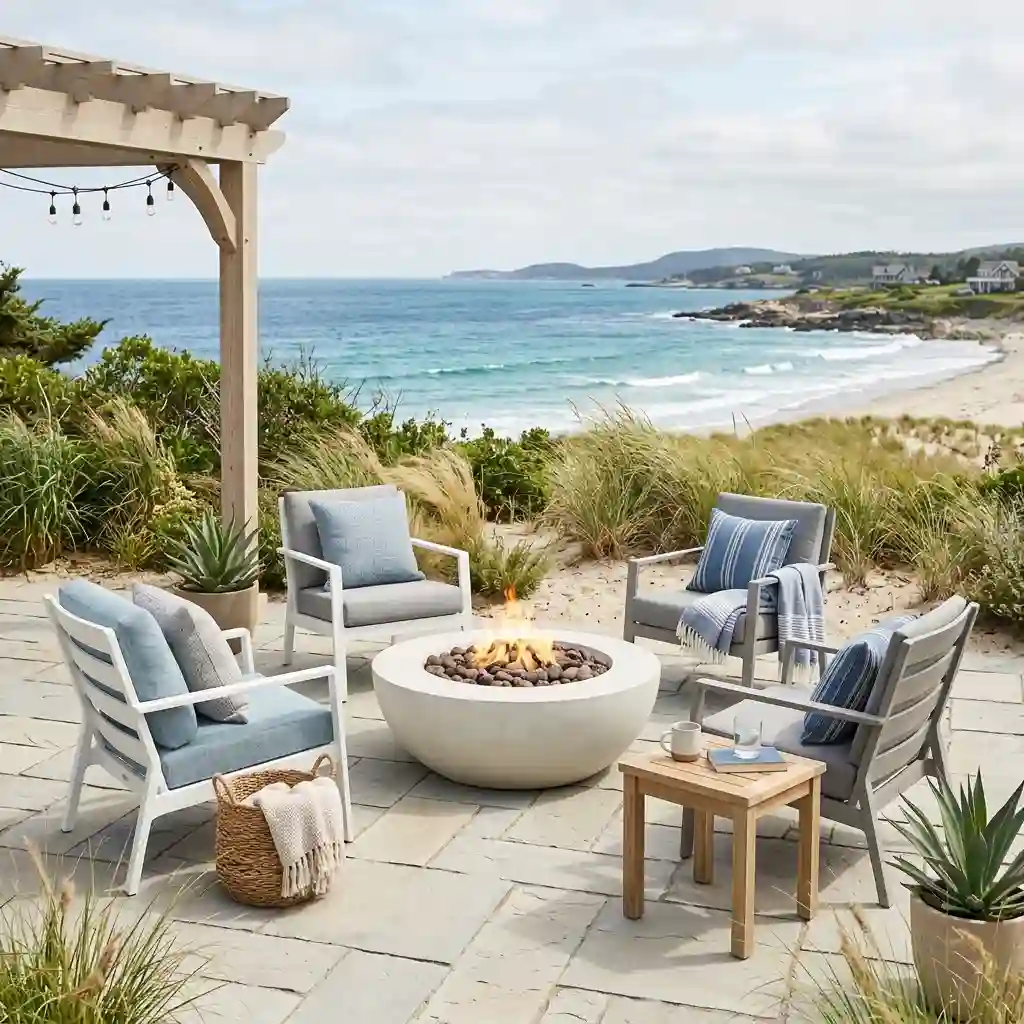
A coastal fire pit design uses light colors, simple shapes, and weather-ready materials.
Start with pale pavers or gravel. Add light wood, white, gray, or soft blue furniture. Ornamental grasses can bring movement without making the area feel crowded.
Salt air can damage metal parts. Look for corrosion-resistant frames, fasteners, burners, and covers.
A propane fire bowl gives the space a clean look and removes the need for a woodpile. Choose a cover that protects the burner from rain and salty air.
Keep the color plan simple. Two or three main colors will make the area feel calm.
This style also works far from the coast if you want a light and open backyard.
Best for: Coastal homes and bright patios
Fuel: Propane or natural gas
Cost level: Medium to high
Main benefit: Fresh and relaxed appearance
Watch out for: Rust caused by salt and moisture
Add a Fire Pit to a Desert Landscape
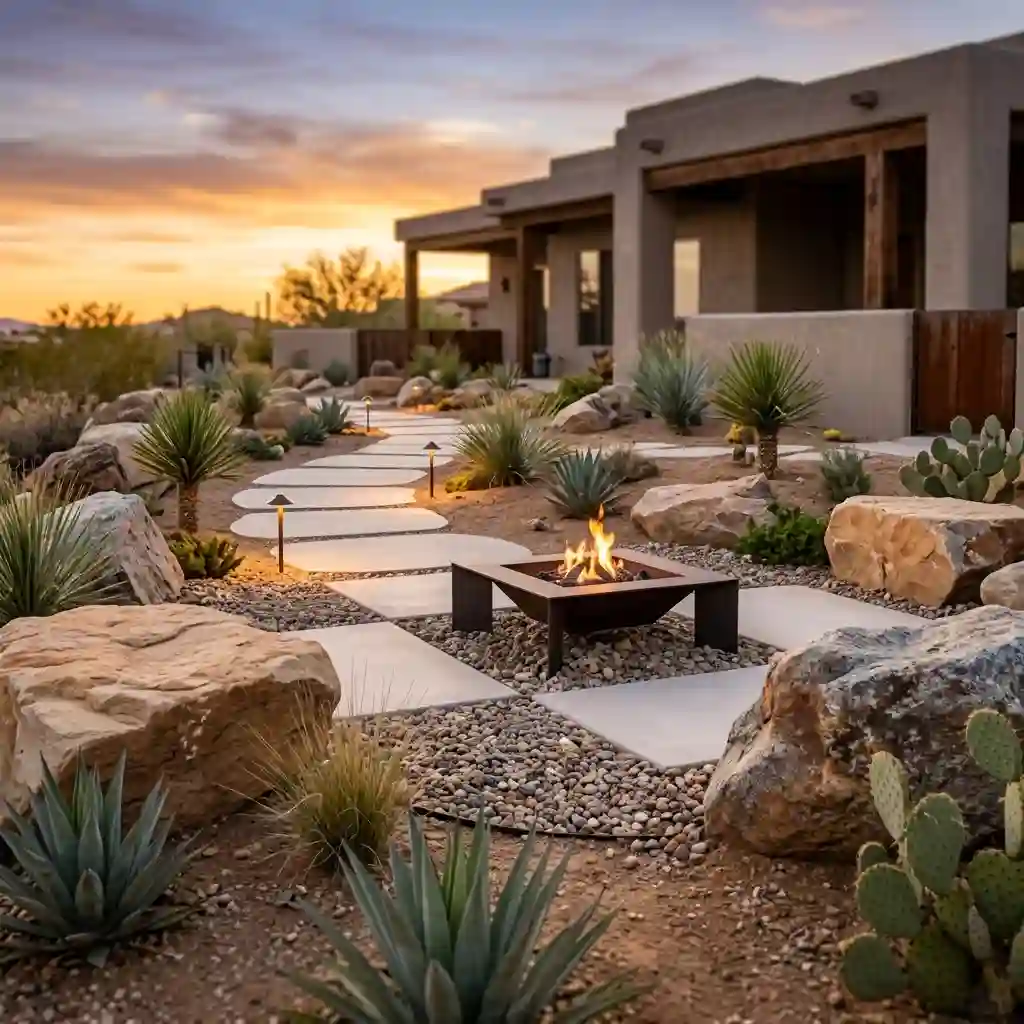
A desert-style fire pit can fit well with gravel, boulders, concrete, and low-water plants.
Choose a simple bowl or square fire feature that matches the strong shapes in the landscape. Use warm earth colors, dark metal, or pale concrete.
Add shade close to the seating area for daytime use. Keep the shade structure at a safe distance from the fire feature.
Dry-climate gardens still need fire care. Dry grass, leaves, and strong wind can increase risk.
Check burn bans before using any wood fire. Local rules may change during hot or dry seasons.
Add low path lights between the house and fire pit. The rough ground and dark garden areas can be hard to see at night.
Best for: Dry gardens and low-water landscapes
Fuel: Propane, natural gas, or approved wood fire
Cost level: Medium to high
Main benefit: Fits well with simple desert planting
Watch out for: Wind and very dry plant material
Build a Low-Cost Block Fire Pit Area
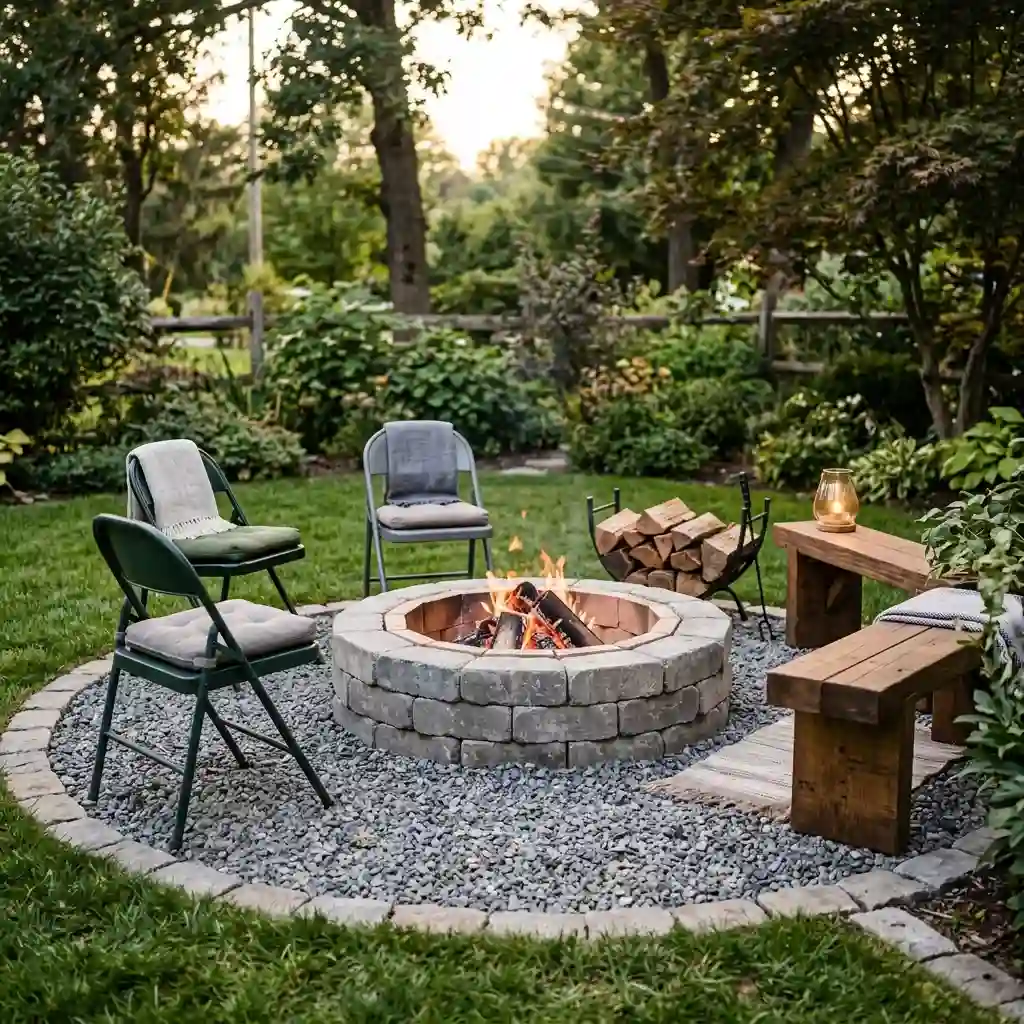
A simple block fire pit area can help you improve your backyard on a small budget. But you need to use the right materials.
Do not build a fire pit from random blocks unless they are approved for that use. Some masonry products can crack when exposed to high heat.
Follow a tested building plan. Use a proper base and any required fire-rated inner layer.
Keep the seating simple. Folding chairs, secondhand outdoor chairs, and low-cost benches can work well.
Gravel or basic pavers can help define the ground area. Add a straight border to make the project look clean.
A low-cost fire pit may not have the polished look of custom stonework. Good spacing and neat ground work can still make it attractive.
Best for: Budget yard updates
Fuel: Wood, when the design is approved for it
Cost level: Low
Main benefit: Lower starting cost
Watch out for: Unsafe blocks and poor building plans
Choose a Smokeless Fire Pit
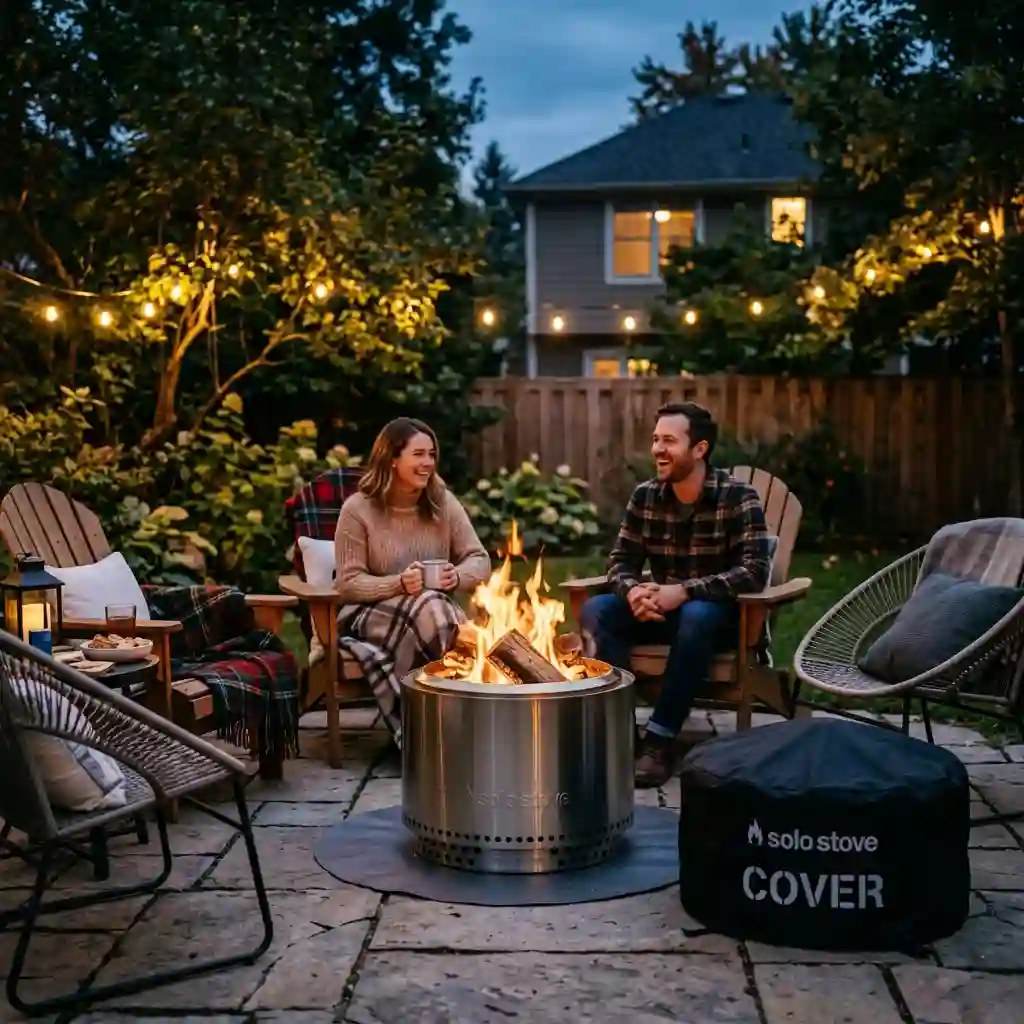
A smokeless fire pit is a good choice when you enjoy wood fires but dislike heavy smoke.
These pits use airflow to help the wood burn more fully. They can reduce visible smoke when the fire is hot and the fuel is dry.
The word “smokeless” does not mean there will be no smoke. Damp wood, poor airflow, or a weak fire can still create it.
Choose a size that matches your group. A very small model may not provide enough warmth for six or eight people.
Use movable chairs so guests can adjust for heat and wind. Add a cover to protect the fire pit when it is stored outside.
These models are often portable, which makes them useful in small or flexible yards.
Best for: Small gatherings and smoke-sensitive users
Fuel: Dry wood
Cost level: Medium
Main benefit: Less visible smoke during proper use
Watch out for: Expecting a fully smoke-free fire
How Do You Choose the Right Fire Pit for Your Yard?
Saving photos is easy. Choosing the right design takes more thought.
Start with your space.
A small patio may work best with a chiminea, portable bowl, or narrow gas table. A medium yard can hold a gravel seating zone, paver circle, or built-in bench. A large yard gives you more room for a sunken lounge, poolside fire pit, or outdoor kitchen setup.
Next, compare fuel types.
Wood gives you a classic fire, but you need storage, ash cleanup, and smoke control. Propane is simple to start and works well for portable models. Natural gas is useful for a fixed fire feature, though installation can add to the cost.
Then set your budget.
A portable fire bowl and basic chairs may be enough for a low-cost setup. A paver patio or quality fire table will cost more. Custom walls, gas lines, sunken seating, and major drainage work sit at the high end.
Think about maintenance as well. Ask yourself:
- Where will I store fuel?
- Who will remove the ash?
- Will the fire pit need a cover?
- Can the chairs stay outside?
- Will the area collect water?
- Can I move the feature later?
Use this quick comparison:
| Fire Pit Type | Best For | Fuel | Cost | Main Benefit | Main Drawback |
| Portable bowl | Small yards | Wood or propane | Low | Easy to move | Less permanent |
| Fire table | Patios | Propane or gas | Medium | Easy to use | Less wood-fire charm |
| Masonry pit | Large yards | Wood or gas | High | Custom look | Hard to change |
| Chiminea | Tight spaces | Wood | Low to medium | Small footprint | Heat faces one side |
| Smokeless pit | Gatherings | Wood | Medium | Less smoke | Needs dry fuel |
Choose the safest design that fits your regular group. Do not choose the largest fire pit your yard can hold.
How Can You Make a Fire Pit Area More Comfortable?
A fire pit becomes useful when people can sit, walk, eat, and move away from the heat with ease.
Start with movable chairs. Guests can pull closer on a cold night or move back when the flames become strong.
Add stable side tables. People need a safe place for drinks, plates, phones, and flashlights.
Plan a clear path from the house. Gravel, stepping stones, or pavers can stop guests from walking through wet grass.
Low path lights make the area easier to use after dark. Aim the lights at the ground. Bright lights near eye level can make it harder to enjoy the fire.
Choose outdoor cushions that dry quickly. Store them in a deck box when they are not being used.
For wood fires, add a raised firewood rack in a dry spot. Do not stack wood close to the flames.
Plants can soften the edge of the seating area. Keep them outside the fire zone and choose types that will not drop lots of dry leaves.
Small upgrades can make a big difference:
- Two or three side tables
- Moveable chairs
- Low path lights
- A cushion storage box
- A clear walkway
- A fire pit cover
- A safe place for firewood
- Washable outdoor blankets
A few useful items will help more than a large amount of decoration.
What Fire Pit Safety Checks Should You Make?
Fire pit safety should guide the design from the start. Do not wait until the furniture and plants are already in place.
First, check your local laws. Your city, county, rental agreement, or homeowners association may limit outdoor fires. Rules may also change during dry weather.
Read the product guide before choosing the location. Follow its rules for the base, open space, overhead area, fuel, and lighting.
Place the fire pit on a firm, approved surface. Keep it away from dry plants, stored items, low branches, fences, and walls.
Do not use the fire pit during strong wind. Sparks and flames can move in a new direction without warning.
Keep children and pets under close watch. A raised edge may still become very hot.
Store propane tanks and firewood as directed. Hire a licensed professional for a permanent natural gas connection.
Keep a suitable way to put out the fire close by. The right method can depend on the fire pit and fuel.
Allow ash to cool fully before you move or throw it away. Hot material can remain hidden under a cool top layer.
Stop and check with a professional if:
- The fire pit will sit under a pergola or roof
- The area is close to a wooden fence
- You need a new gas line
- The yard has poor drainage
- The property is on a steep slope
- Dry grass or trees sit nearby
- Local burn bans are active
When online advice conflicts with local rules or the product guide, follow the official instructions.
Choose the Fire Pit That Fits Your Real Life
The best fire pit is not always the largest or most costly one. It is the design that fits your space, budget, seating needs, and local rules.
Measure the yard before you shop. Decide whether you want wood, propane, or natural gas. Think about smoke, storage, cleaning, and weather.
Then choose two or three outdoor fire pit ideas that match the way you use your backyard. Compare their costs and care needs before you buy materials.
A simple, safe setup with comfortable chairs can give you more value than a large design that is hard to use.