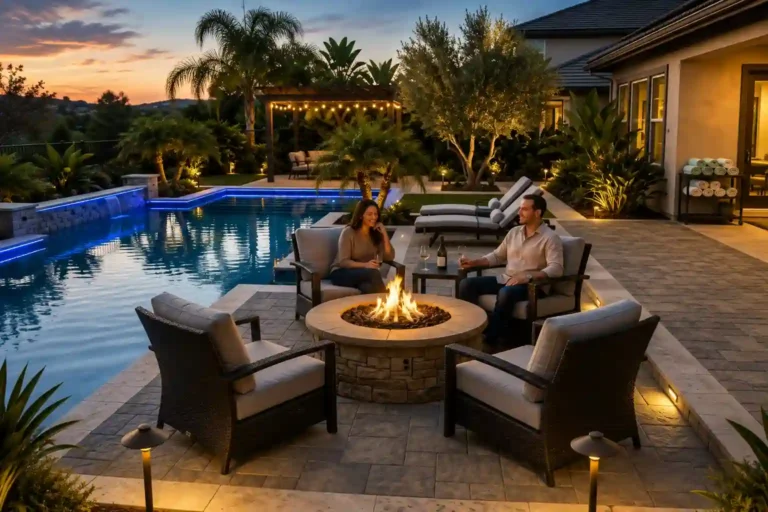
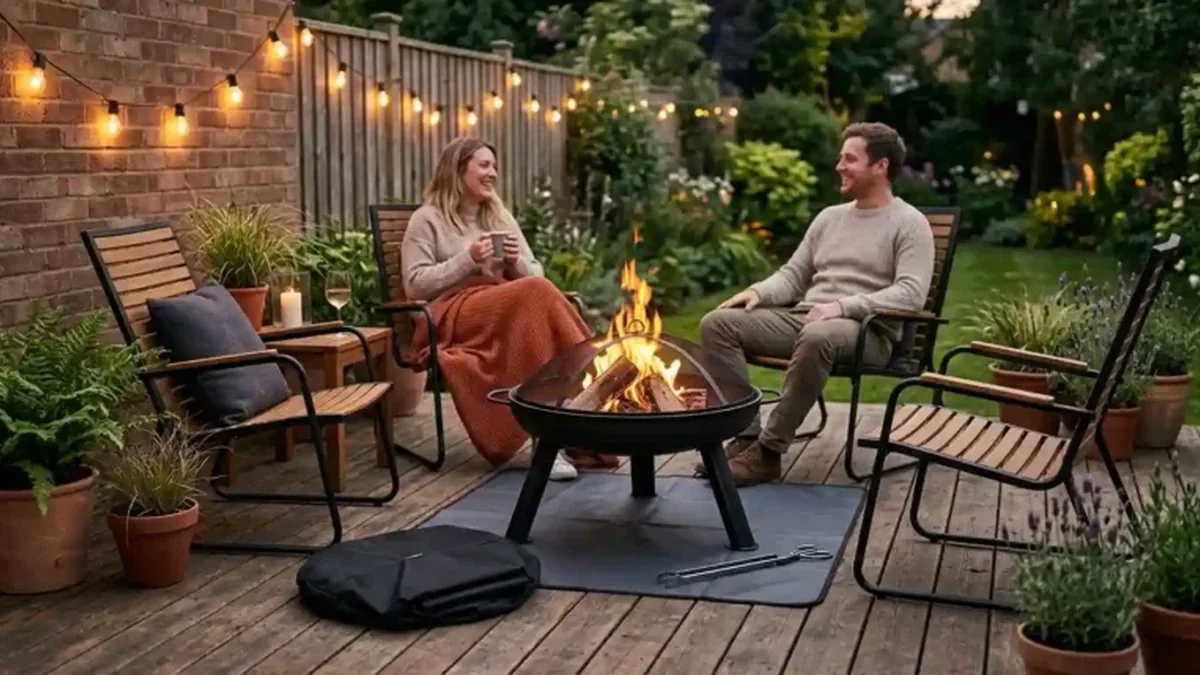
18 Fire Feature Ideas for a Warm, Stylish Yard
Your yard may have comfortable chairs, healthy plants, and a nice patio. Yet it can still feel like something is missing. A fire feature may be the finishing touch.
The best fire feature ideas do more than produce heat. They give people a natural place to sit, talk, and relax. A flame can also create a clear focal point in a large or plain outdoor space.
Still, you cannot choose a fire feature based on looks alone. You need to consider space, fuel, smoke, wind, maintenance, and local fire rules. A large wood-burning pit may suit an open yard. It may be a poor fit for a small covered patio.
The ideas below cover built-in fireplaces, portable bowls, fire tables, and small tabletop units. You will also find options for pools, gravel gardens, retaining walls, and modern patios.
Use these ideas as a starting point. Then measure your space and check local rules before you buy or build anything.
What to Check Before You Choose a Fire Feature
Start with the rules that apply where you live. Your city, county, building authority, landlord, or homeowners association may limit outdoor fires. Some areas also ban wood fires during dry or windy weather.
Next, measure the space around the proposed location. Check the distance from the house, fence, trees, furniture, roof, and other items that may burn. Follow the clearance rules supplied by the product maker. Local codes may require more space.
You also need to choose a fuel.
| Fuel | Main benefit | Main drawback | Best use |
| Wood | Strong heat and classic feel | Smoke, ash, and sparks | Large open yards |
| Propane | Easy to start and control | Tank needs storage or screening | Patios and movable units |
| Natural gas | Steady fuel supply | Fixed location and professional work | Permanent features |
| Ethanol | Small, decorative flame | Limited heat and fuel limits | Approved tabletop units |
Think about how you want to use the feature. A decorative flame is different from a strong heat source. A cooking fire also needs a unit made for cooking.
Keep a suitable extinguisher or water source nearby. Never leave an active flame without adult care.
Build a Stone Fire Pit That Encourages Conversation
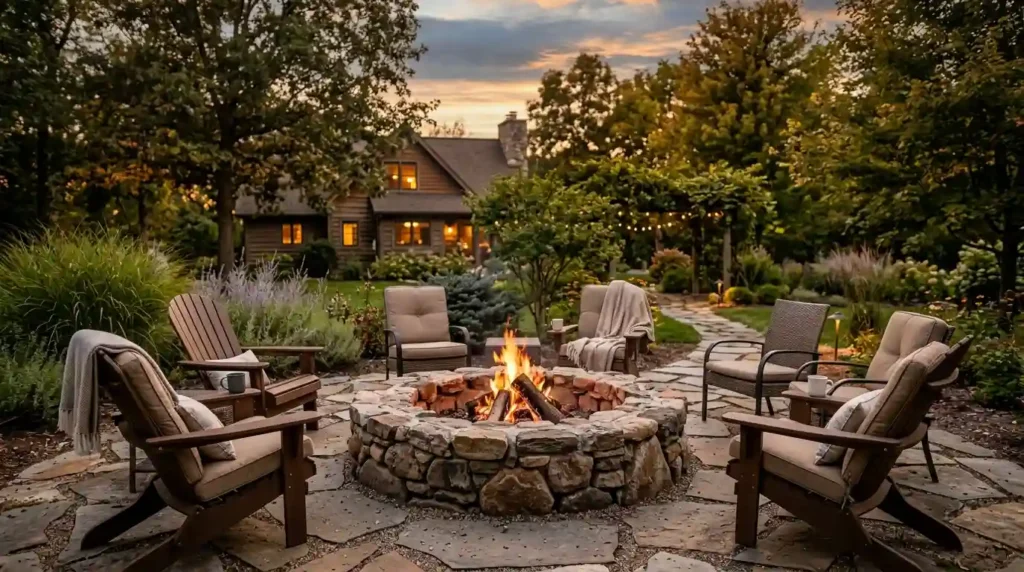
A circular stone pit is one of the most social backyard fire feature ideas. Its shape lets everyone face the flame and see each other.
Natural stone works well in rustic, woodland, and cottage-style yards. Smooth concrete blocks create a cleaner look. Whatever material you choose, confirm that it is approved for high-heat use. Ordinary stones can crack or hold moisture.
Place chairs around the pit with enough room for people to stand and walk behind them. Movable chairs give you more control than permanent seats. You can pull them closer on cool nights and move them back when the fire feels hot.
A gathering area about 10 to 12 feet wide may provide room for a pit and several chairs. Treat this as a planning example. The correct size will depend on the pit, its fuel, and its required clearances.
Best for: Open family yards
Watch for: Smoke direction, sparks, and unsuitable stone
Save Space with a Low Concrete Fire Bowl
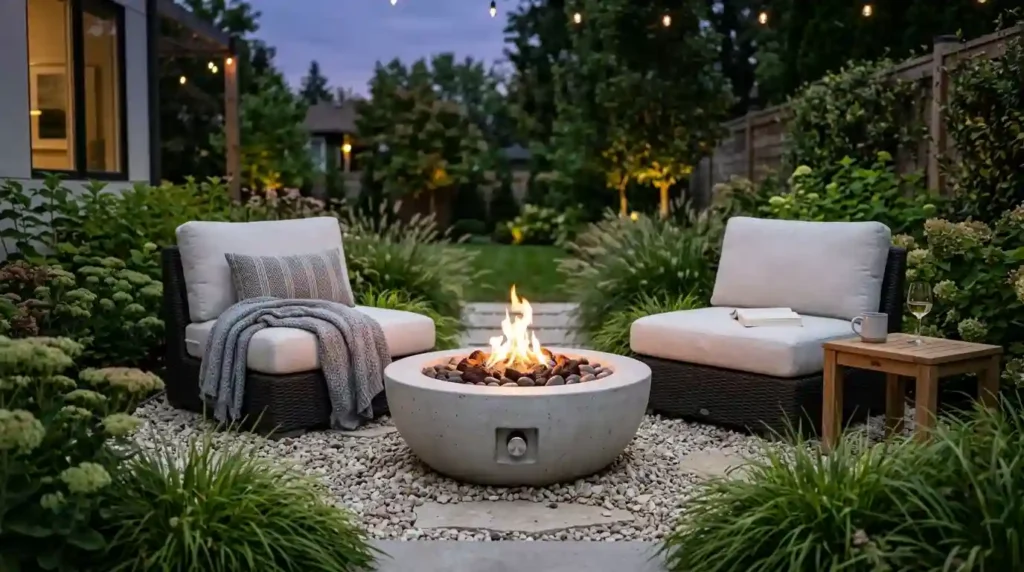
A low concrete bowl gives you a flame without adding a tall or heavy structure. It works well on a compact modern patio because it does not block views across the yard.
Place the bowl between lounge chairs or in front of an outdoor sofa. A model about 30 to 36 inches wide can create a visible focal point without filling the whole seating zone. Check the exact product measurements before arranging the furniture.
Pale concrete looks good with light gravel and soft green plants. Charcoal concrete feels bolder beside black furniture or dark paving. Ornamental grasses can soften the hard shape, but they must stay outside the required clearance area.
Many concrete bowls use propane or natural gas. Gas offers a controlled flame and creates no wood ash. However, you may need a safe place for the tank or a professionally installed gas line.
Best for: Small modern patios
Watch for: Weight, drainage, and winter protection
Make a Fire Table the Center of Your Seating Area
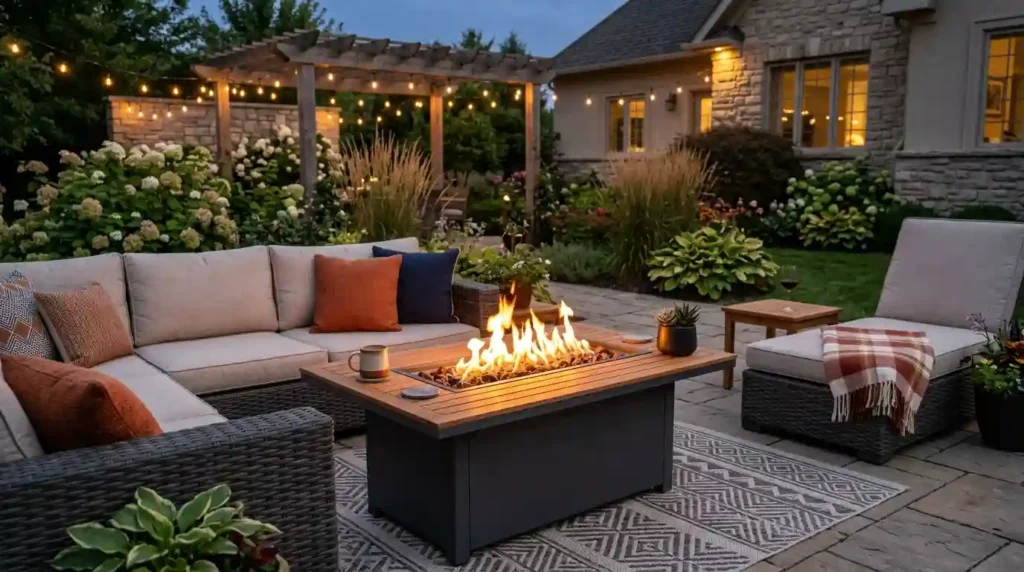
A fire table combines a flame with a useful surface. This makes it a smart choice when you have limited room for extra furniture.
Coffee-table models fit well with sofas and deep lounge chairs. Dining-height tables let guests sit upright for food and conversation. Bar-height models work in casual entertainment spaces.
Check how much usable ledge surrounds the burner. Some tables hold drinks and small plates with ease. Others have a narrow edge that is mainly decorative. You should also find out how hot the ledge becomes during use.
A propane table may hide its tank inside the base. This keeps the seating area neat. Natural gas removes the need for a tank, but it fixes the table in one location.
Cover the burner when it is cool and unused. This helps keep water, leaves, and dirt out of the working parts.
Best for: Patios used for social gatherings
Watch for: Hot surfaces and poor tank access
Give Your Yard a Strong Focal Point with a Fireplace
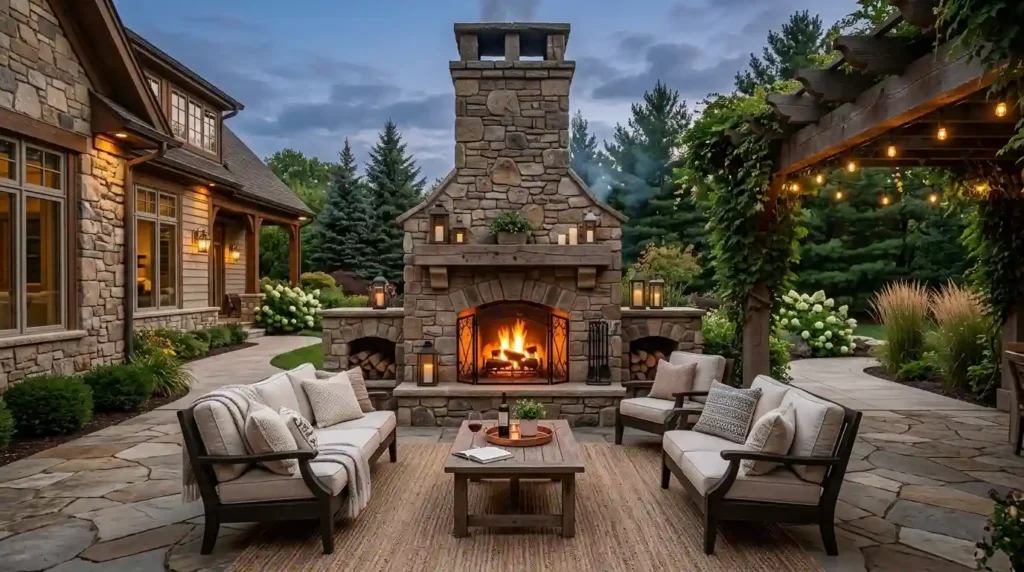
A built-in outdoor fireplace can make a plain patio feel like a complete outdoor room. Its height draws the eye and gives the seating area a clear direction.
Match the fireplace material to the house when possible. Brick may suit a traditional home. Cut stone can work with rustic architecture. Smooth stucco or concrete often fits a modern property.
Place the furniture where guests can enjoy the view and heat without blocking walkways. Remember that a fireplace sends heat in one main direction. This makes furniture placement more important than it is around a round pit.
A masonry fireplace needs a stable base, proper drainage, and safe venting. Gas lines and electrical parts may also require licensed workers. A covered patio brings extra clearance and venting concerns.
This is rarely a quick weekend project. Professional planning costs more, but it can prevent structural and fire-safety problems.
Best for: Large patios and permanent outdoor rooms
Watch for: Footings, venting, permits, and overhead structures
Create a Cozy Sunken Fire Pit Lounge
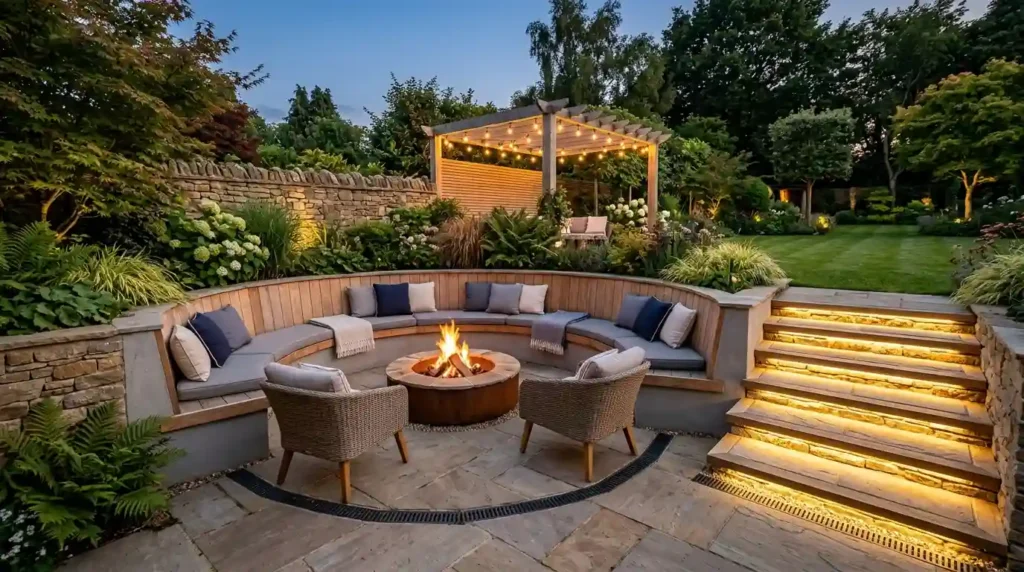
A sunken lounge can make an open yard feel private and sheltered. Lowering the seating area also separates it from nearby dining or play zones.
Start with drainage. Rainwater will naturally collect in a low space unless it has a safe route out. A designer or drainage professional can help if the yard already holds water.
Add wide, visible steps. Low-level lighting can make each change in height easier to see after dark. Built-in seat backs or a raised border can also help people notice the edge.
Curved benches fit naturally around a round pit. Straight benches suit a square or linear flame. Add a few loose chairs so guests can change their distance from the heat.
Sunken spaces can be hard for some people to enter. Think about children, older guests, and anyone with limited movement before you excavate.
Best for: Sloped or spacious yards
Watch for: Drainage, falls, and limited access
Divide a Modern Patio with a Linear Fire Pit
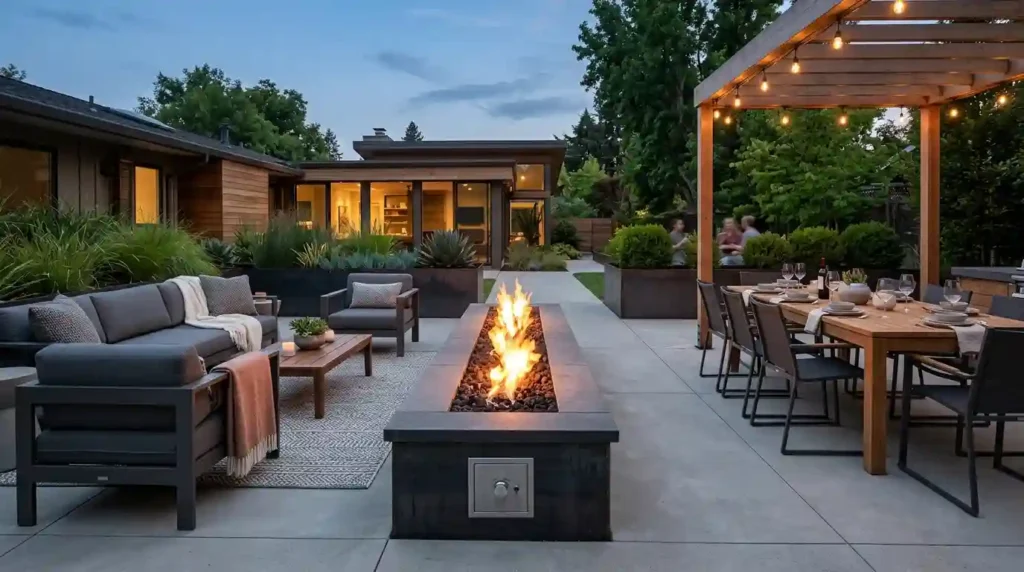
A linear fire pit adds a clean horizontal line to the landscape. Its shape works well beside a long sofa, pool, wall, or rectangular patio.
You can use it to separate two outdoor zones. For example, place a long flame between a dining area and a lower lounge. The feature creates a visual border without building a solid wall.
Keep the furniture simple. One long sofa and two chairs may look better than a group of small, unrelated pieces. Repeat the same straight lines in the paving or planting beds.
A gas burner is common in this design because it produces an even row of flames. The surround must still be wide enough for the appliance and nearby materials. Do not guess these measurements.
Choose a model with easy service access. A beautiful built-in unit can become frustrating if workers cannot reach the controls.
Best for: Modern patios and pool areas
Watch for: Restricted service access
Add Poolside Fire Bowls for Evening Drama
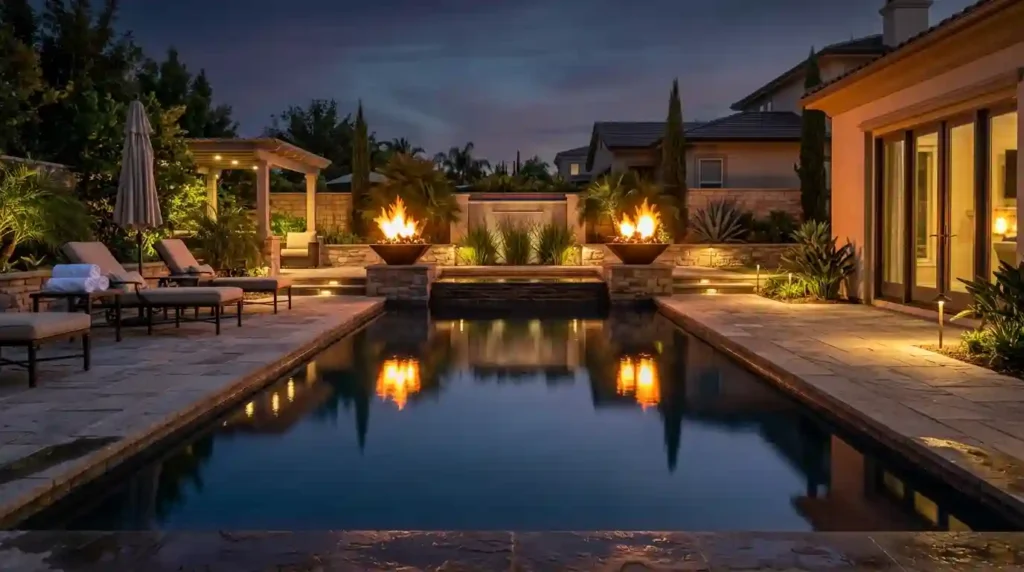
Fire beside water creates a bold evening view. A pair of matching fire bowls can frame the far end of a pool and make the whole yard feel balanced.
Place the bowls where they do not narrow the walking path. Guests should be able to move around the pool without passing too close to a flame. Keep towels, floats, umbrellas, and loose furniture away from the units.
Pool water can splash into burners and controls. Choose products made for exposed outdoor locations. Ask how the drainage system handles water inside the bowl.
Materials also matter. Stone, concrete, and metal may all react differently to pool chemicals and constant moisture. Check the maker’s care instructions before choosing a finish.
Symmetry works well in a formal yard. A single bowl may be better beside a small plunge pool or spa.
Best for: Pools viewed from the house
Watch for: Splashing, wet surfaces, and blocked paths
Combine Fire and Water in One Feature
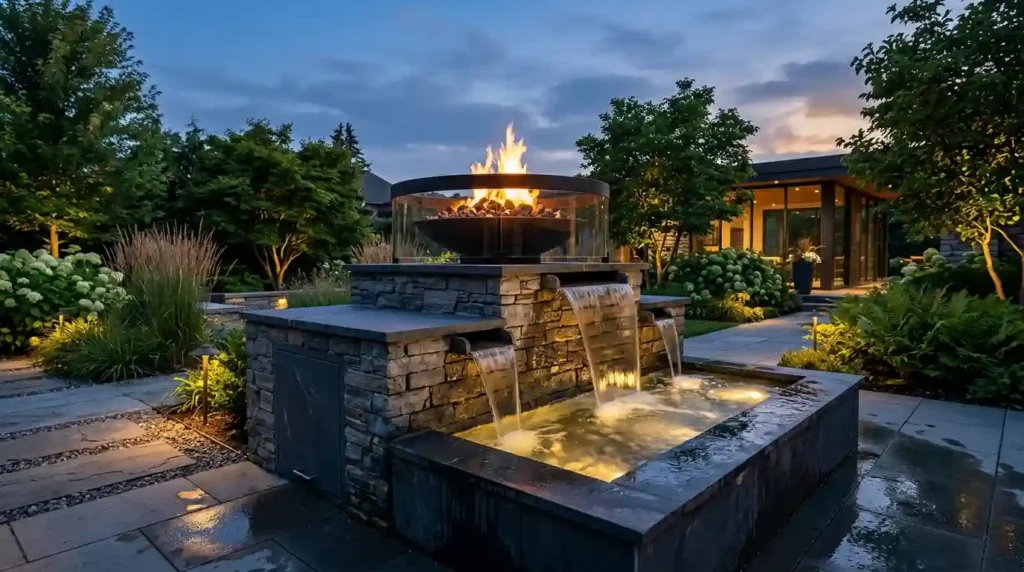
A fire-and-water feature brings sound, movement, and light into one focal point. It can mark a pool edge, garden entrance, or central viewing line.
The systems should remain separate. The water needs a pump, filter, drain, and service area. The flame needs an approved burner, controls, and fuel supply. A trained installer should plan how these parts fit together.
Keep access panels easy to reach. Pumps and burners need cleaning or repair over time. Hiding every working part behind heavy stone may create a costly problem later.
Lighting should support the feature without fighting the flame. Soft light below the water can reveal movement. Bright lights aimed at eye level may create glare.
This design can look impressive, but it has more parts than a basic pit. Expect higher installation and care costs.
Best for: Large statement landscapes
Watch for: Difficult repairs and mixed utility systems
Choose a Portable Pit When You Need Flexibility
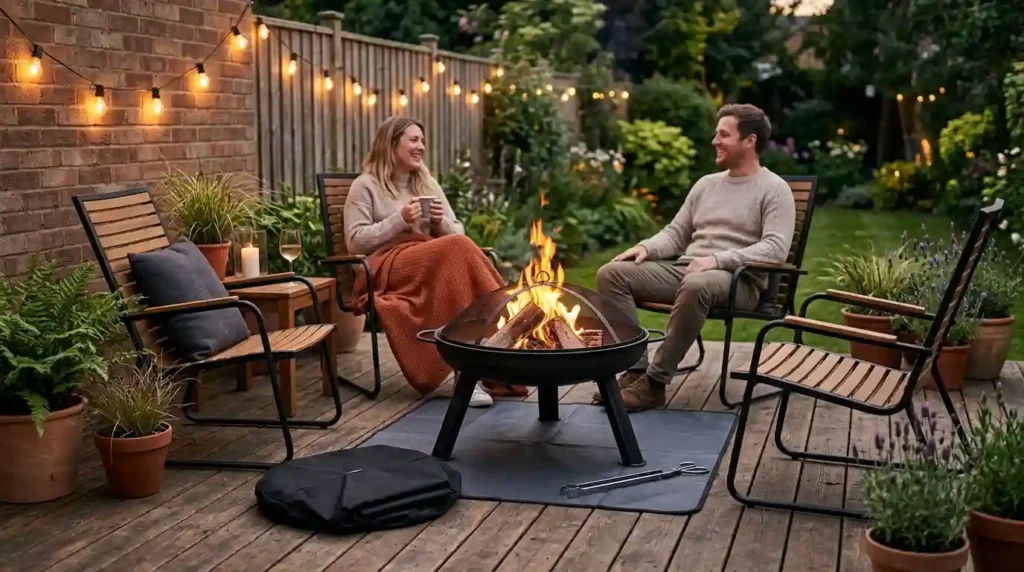
A portable pit lets you change the layout as your needs change. It may suit renters, small households, or anyone who does not want a permanent structure.
Look for a wide, stable base. Thin legs and a top-heavy bowl can feel unsafe on uneven ground. Weight matters too. A pit is not truly portable if you cannot move it without help.
Confirm which surfaces the unit can sit on. A portable label does not mean it is safe for every deck, lawn, or patio. Use any required heat shield or protective base.
A cover protects the pit from rain and debris. If severe weather is common, choose a model you can move into a safe storage area.
Portable wood pits still produce smoke, sparks, and ash. Gas models reduce those issues, but the tank adds weight.
Best for: Renters and flexible seating plans
Watch for: Unstable bases and unsafe surfaces
Use a Corten Steel Pit as Outdoor Art
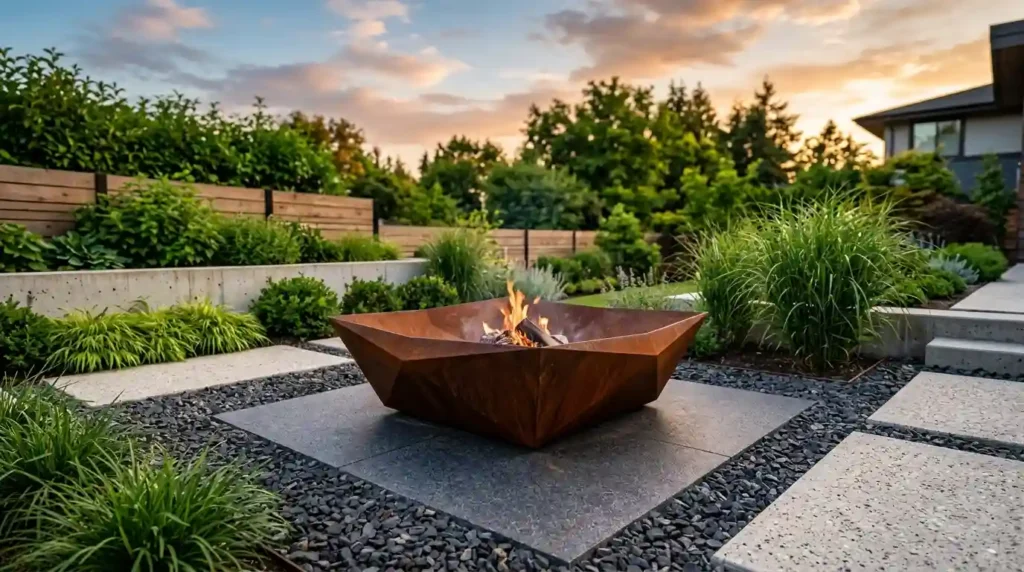
Corten steel develops a rust-colored surface as it ages. This warm finish works well with dark gravel, pale concrete, and simple green planting.
Choose a pit with an attractive form even when the fire is off. A deep bowl can look like outdoor sculpture during the day. Angular designs can support a more industrial style.
Weathering steel may release rust-colored water during its early aging period. That runoff can stain pale paving. Place the pit on a suitable surface or ask the supplier how to manage the first stage of weathering.
The metal can become very hot. Keep people, pets, furniture, and plants at the safe distances listed by the maker.
A Corten steel fire pit has a strong visual character. It may feel out of place in a soft, formal garden unless you repeat its color elsewhere.
Best for: Modern and industrial yards
Watch for: Surface staining and hot metal
Match a Brick Fire Pit to a Traditional Home
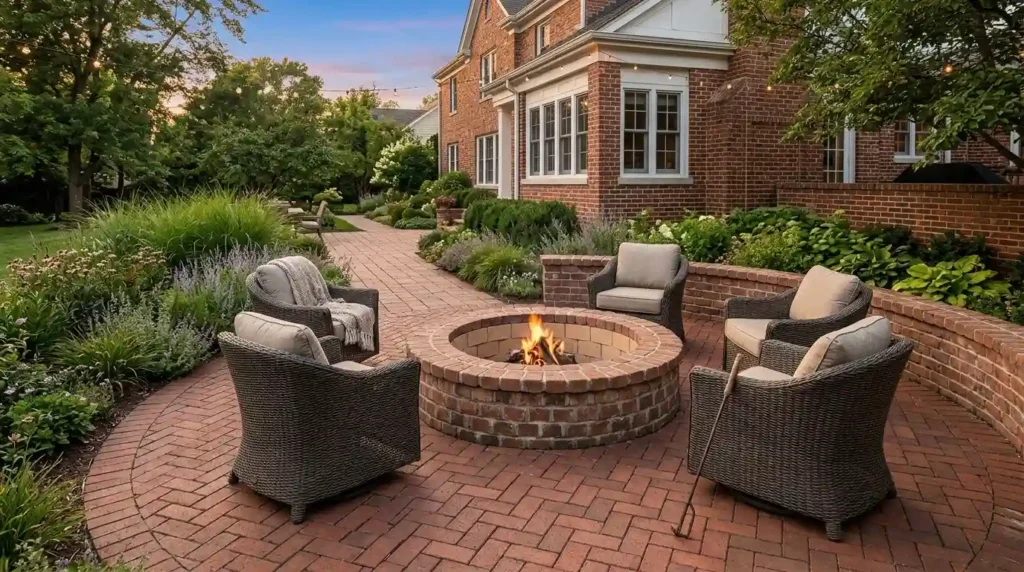
Brick can help a new fire pit feel connected to an older house. Repeat the color used on the home, path, chimney, or garden wall.
The inside of the pit may require fire-rated brick or a proper insert. Standard decorative brick is not always made for repeated high heat. Ask a qualified builder which materials the design needs.
Continue the brick theme across the seating area. A herringbone or basket-weave paving pattern can add detail without introducing another material.
Curved chairs or a rounded bench can soften a square brick patio. Add simple planting around the outer edge to stop the area from feeling too hard.
Reclaimed-looking brick creates age and texture. New, evenly colored brick produces a cleaner result. Both can work if they relate to the house.
Best for: Traditional and cottage-style homes
Watch for: Brick that is not rated for the job
Use a Retaining Wall to Hold a Built-In Flame
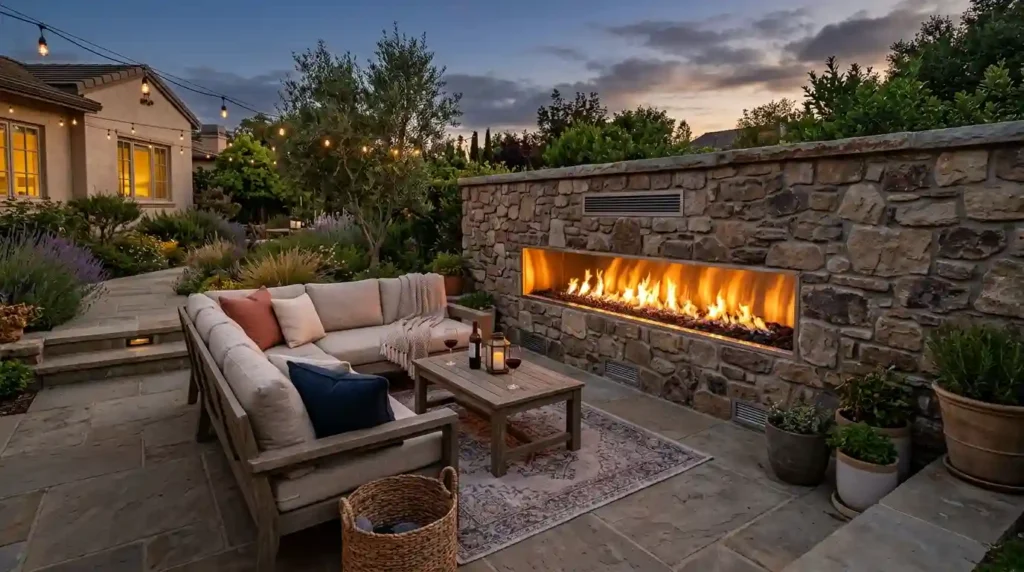
A fire feature built into a retaining wall saves floor space. It can also turn a plain wall into the main view from your patio.
This works best when the wall already faces a seating area. A narrow gas flame can sit above the wall base and send light across the lounge.
The design needs more than an open space for a burner. The wall must remain strong. Fuel lines, ventilation, drainage, and controls need safe locations. Workers also need a way to reach those parts later.
Do not block steps or narrow paths with the seating. People should be able to leave the area without passing directly beside the flame.
Have the retaining wall and fuel system checked by qualified professionals. Cutting into a structural wall without a plan can create serious damage.
Best for: Sloped yards with limited patio space
Watch for: Structural changes and hidden controls
Warm a Small Patio with a Fire Column
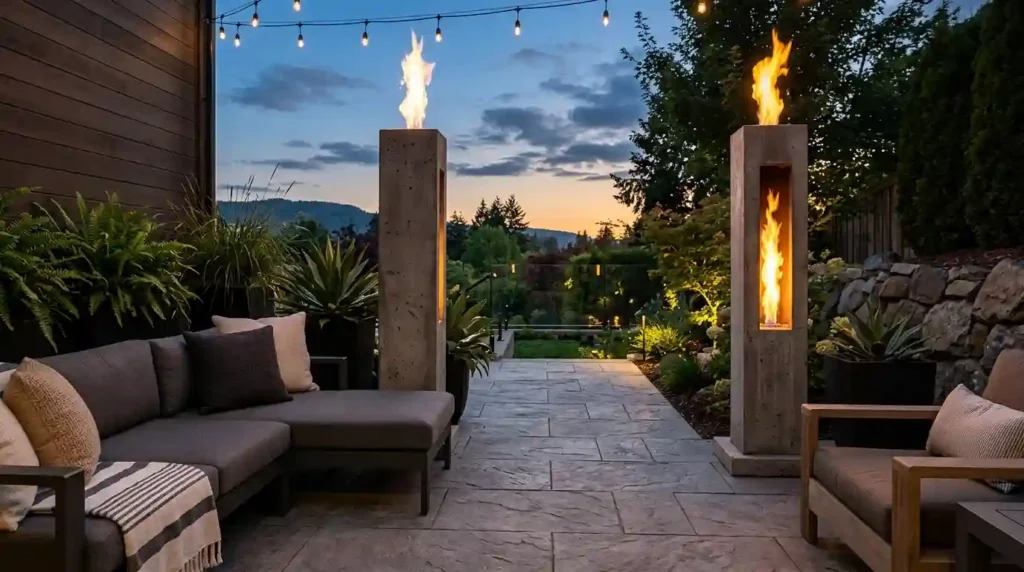
A fire column uses height instead of width. This makes it useful when a large pit would take up too much floor space.
Place one column at the end of a sofa to create an accent. Use two matching columns if you want a balanced layout. Avoid placing them where guests must squeeze past.
Check the base before buying. The column should feel stable and resist tipping. Its height can make poor balance more dangerous than it would be with a low bowl.
Most columns create mood and some nearby warmth. They may not heat a full patio. Set realistic goals before choosing one.
A simple concrete column fits a modern space. A stone-look model can feel softer in a traditional yard.
Best for: Courtyards and narrow patios
Watch for: Tipping and blocked walkways
Make a Quiet Corner Feel Cozy with a Chiminea
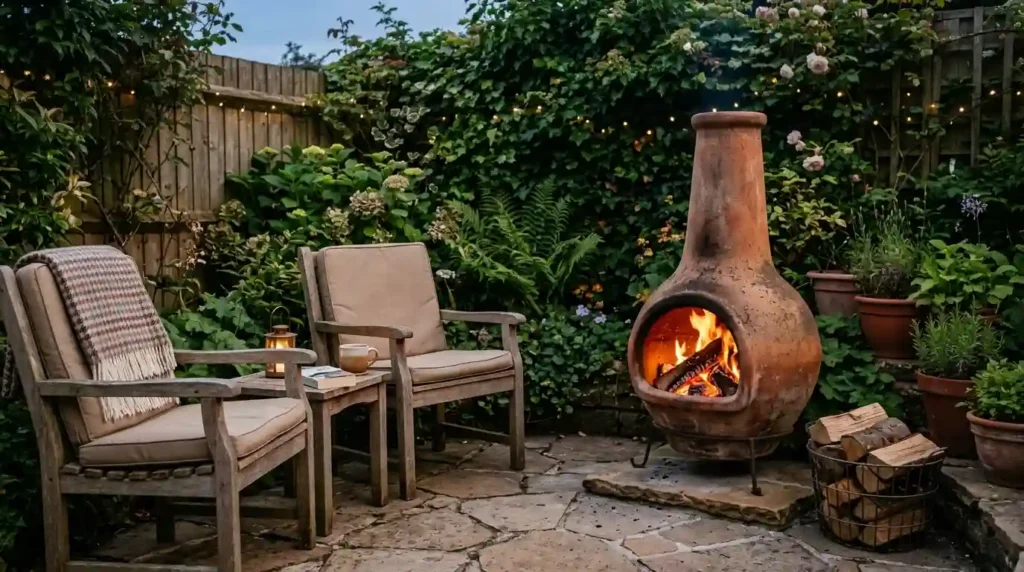
A chiminea has a small footprint and a tall chimney. Its upright shape fits well in a corner where a wide pit would feel crowded.
Clay models have a warm, handmade look. Cast iron holds heat well but can be very heavy. Steel is often easier to move, though it may need care to control rust.
Aim the opening away from busy paths. Sparks, smoke, and direct heat should not face people as they enter the seating area.
Place the chiminea on the surface approved by its maker. Follow all rules for clearance, curing, fuel, and weather care. Clay may crack if it heats too quickly or stays wet in freezing weather.
Pair it with two chairs and a small side table. That is often enough to turn an unused corner into a useful retreat.
Best for: Small garden corners
Watch for: Cracked clay, smoke, and hot surfaces
Shape the Space with Built-In Benches
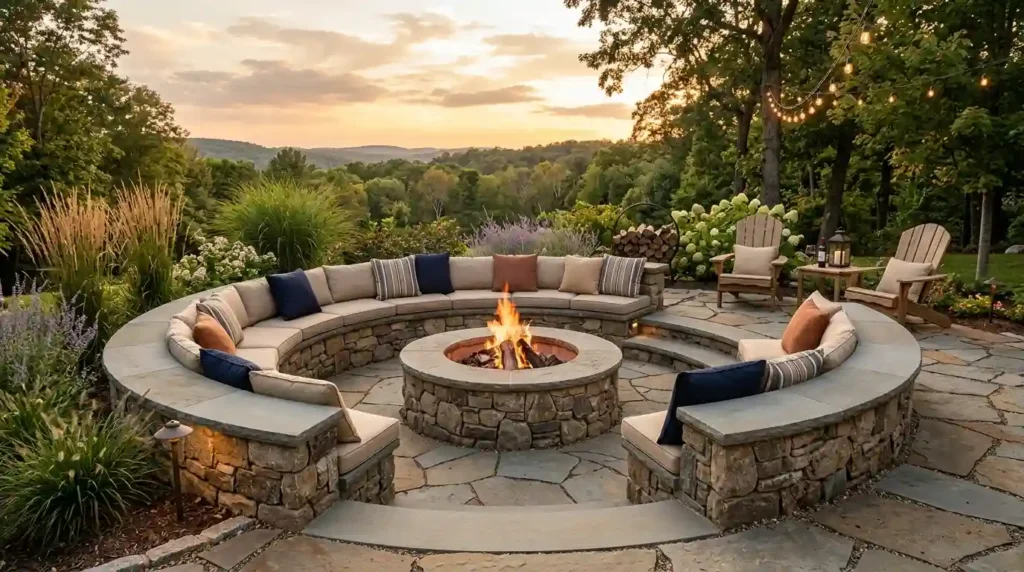
Built-in benches can make a fire pit area feel planned and complete. They also reduce the number of loose chairs you need to store.
An L-shaped bench works beside a square or rectangular pit. A curved bench fits a round one. Leave open gaps so guests can enter and leave without stepping between the seats and flame.
Permanent seats cannot move when the heat feels strong. Set them at a safe and comfortable distance based on the fire feature’s instructions. Add a few loose chairs for guests who want more control.
Use outdoor cushions to improve comfort. Store them away from sparks, rain, and active flames.
The bench base can repeat stone, brick, or concrete from the pit. This creates a clear connection between the two elements.
Best for: Defined outdoor gathering areas
Watch for: Seats fixed too close to the heat
Set a Black Fire Bowl in a Gravel Garden
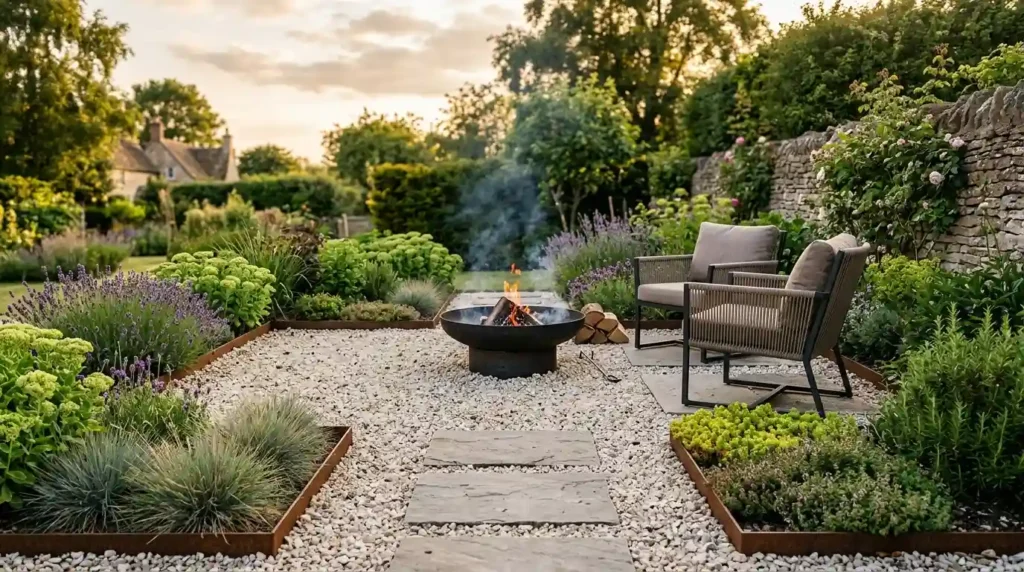
A dark steel bowl can stand out against pale gravel. The contrast gives a simple gravel garden a strong center without using many materials.
Define the sitting area with edging. Metal, brick, or stone can stop loose gravel from spreading into the lawn or planting beds.
Use a small group of plants around the outside. Drought-tolerant grasses, lavender, sedum, and thyme may suit some climates. Check which plants grow well in your area. Keep all plants outside the required clearance zone.
Gravel can help define the space, but the full base still needs to suit the fire unit. Loose gravel alone does not prove that the setup is safe.
Use large stepping stones if chairs become unstable on the gravel.
Best for: Dry and low-care gardens
Watch for: Unstable furniture and spreading gravel
Place the Fire Feature Safely Near a Pergola
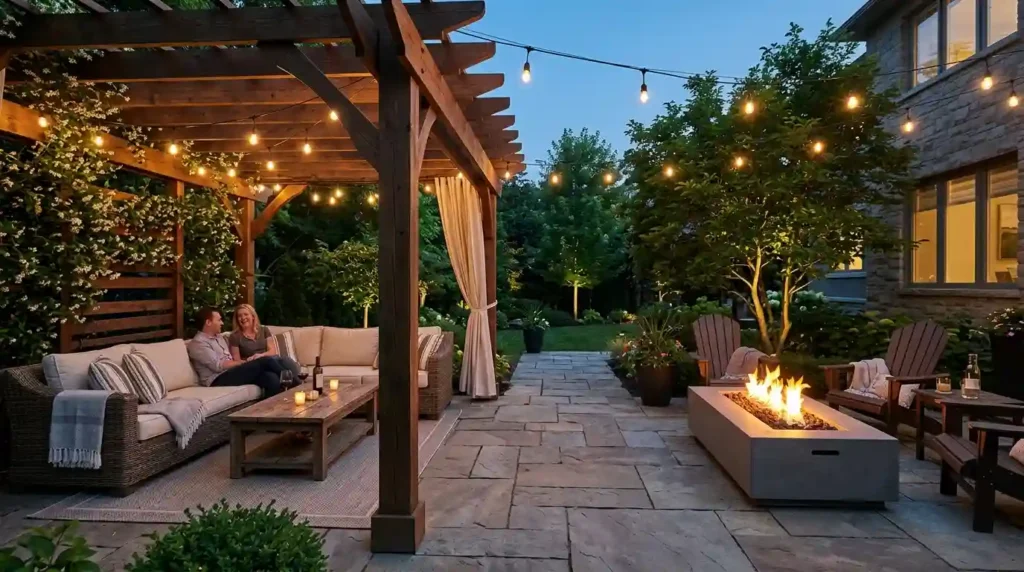
A pergola can frame an outdoor lounge, but an overhead structure creates added fire concerns. Heat and smoke need room to escape.
Choose a fire unit approved for the exact location. A product that works in an open yard may be unsafe beneath wood beams, fabric covers, vines, or hanging lights.
A safer layout may place the flame just outside the covered area. The pergola can shelter the main seats while the fire remains in an open zone.
Keep curtains, cushions, hanging plants, and climbing vines away from heat. Wind can move these items closer to the flame without warning.
Do not rely on a photo from social media as proof of safe placement. Use local code, professional advice, and the product manual.
Best for: Open-air entertainment areas
Watch for: Roofs, vines, fabric, and trapped heat
Add a Small Tabletop Flame to a Tiny Space
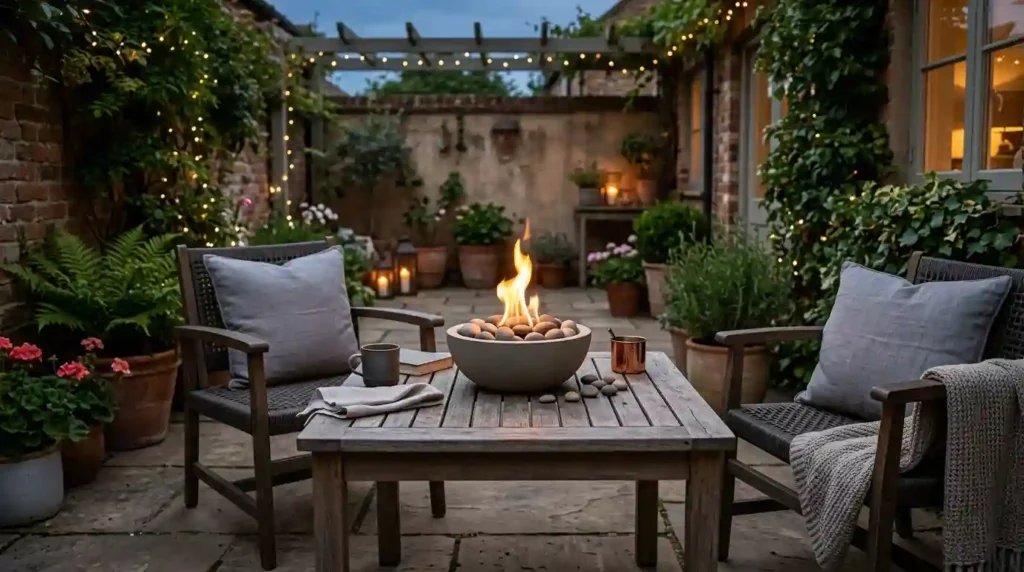
A tabletop unit can add gentle light where a full fire pit will not fit. It works best as decoration rather than a major heat source.
Choose a certified outdoor product. Place it on a stable, suitable table away from tablecloths, cushions, plants, and other loose items. Never refill a burner while it is hot or active.
Check the rules for apartments, balconies, rentals, and shared buildings. Many properties restrict every form of open flame, including small units.
Think about scale. A compact burner should leave enough table space for safe use. If guests must reach across the flame to pick up a drink, the setup is too tight.
Small flames can still cause burns or fires. Give the unit the same care you would give a larger feature.
Best for: Tiny approved courtyards
Watch for: Fuel handling and rental restrictions
How to Choose the Right Fire Feature for Your Yard
Start with your main goal. Do you want strong heat, soft light, a cooking area, or a place for conversation? One feature may support several uses, but each design has a main strength.
Next, measure the space after adding the required clearance area. Do not buy the feature first and hope it fits later.
Use this quick guide:
- Choose a tabletop unit, column, or small bowl for a compact approved patio.
- Choose a portable pit if you often change the furniture layout.
- Choose a stone or brick pit for a classic gathering area.
- Choose a linear flame or concrete bowl for a modern yard.
- Choose a built-in fireplace for a permanent outdoor room.
- Choose fire and water when visual effect matters more than a low budget.
Count the full cost. This may include the appliance, base, fuel line, permits, furniture, cover, drainage, and professional work.
Finally, check how much care the feature needs. Wood creates ash and smoke. Metal may rust. Gas burners need clean openings and protected controls.
Build for Comfort, but Put Safety First
The best fire feature ideas fit your yard instead of fighting it. A small bowl may work better than a large fireplace. A portable pit may be more useful than a costly built-in design.
Choose your preferred fuel and decide how much heat you need. Then measure the full area, including furniture and walking space. Check local rules and the maker’s instructions before you spend money.
Shortlist three designs that match your space and budget. Compare their fuel, installation, care, and safety needs. This simple step can help you choose a feature you will use for years.