18 Cottage Garden Design Ideas for a Charming Yard
A cottage garden should feel relaxed, colorful, and full of life. But without a basic plan, it can quickly become crowded and hard to care for.
The best cottage garden design ideas mix loose planting with clear structure. Flowers can spill over paths, roses can climb above gates, and herbs can grow beside bright blooms. Yet each part still needs a purpose.
You do not need a large country yard to get this look. A small front garden, narrow side yard, or city backyard can work just as well. The key is to choose plants that fit your local weather and the amount of space you have.
This guide will help you plan paths, layer plants, select colors, and add useful features. You will also find English cottage garden ideas for shady, dry, small, and low-maintenance spaces.
Check Your Sun and Soil Before Buying Plants
Buying flowers before checking your yard often leads to weak plants and wasted money. Start by learning what your space can support.
Watch the sunlight for at least three days. Check the garden in the morning, around noon, and later in the afternoon. Mark each area as full sun, part shade, or full shade.
Next, test the soil drainage. Dig a hole about 12 inches deep and fill it with water. After it drains, fill it again. Soil that stays wet for a long time may need compost, raised beds, or plants that like damp ground.
Measure your beds, paths, walls, and fences. Mark trees, pipes, doors, and other fixed features.
Use this simple plan:
| Garden Area | Main Condition | Plant Ideas |
| Sunny border | Six or more hours of sun | Roses, lavender, catmint |
| Side path | Part shade | Ferns, geraniums, foxgloves |
| Fence line | Full sun | Clematis, honeysuckle, climbing roses |
A quick site map will help you create a cottage garden layout that works from the start.
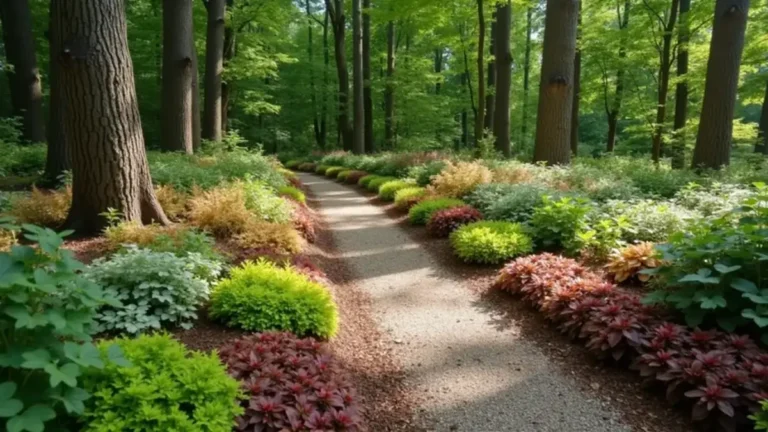
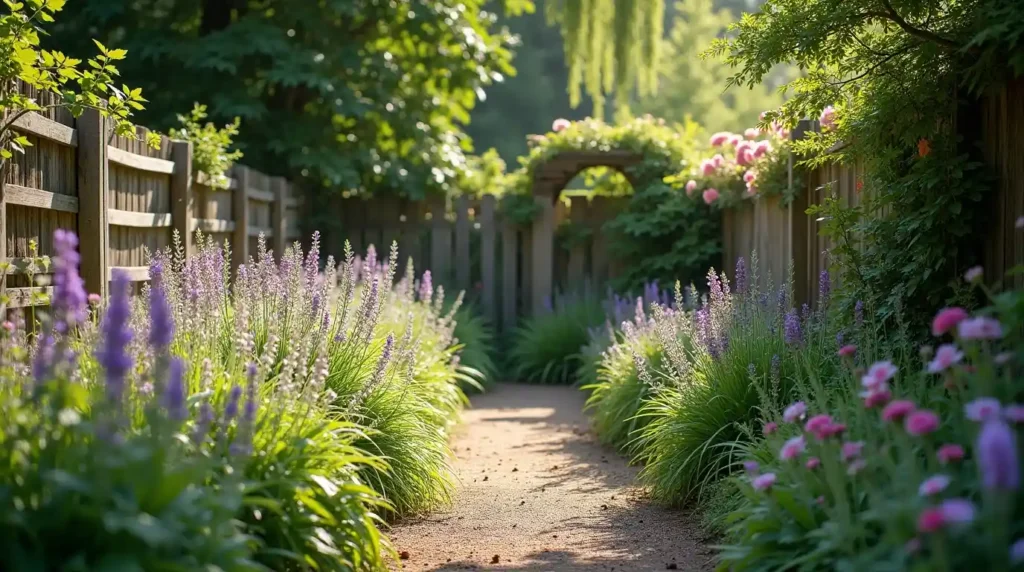
Use Curved Paths to Make the Garden Feel Larger
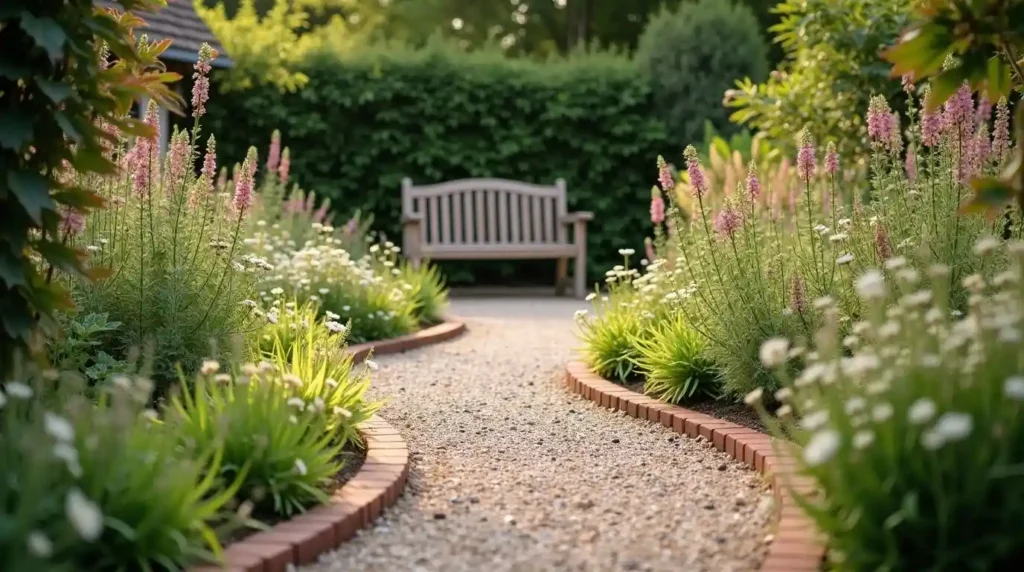
A straight path shows the whole garden at once. A curved path hides parts of the view and makes the space feel deeper.
Lay a garden hose on the ground to test different shapes. Use soft curves rather than tight bends. Walk along the planned route before adding gravel or stones.
Your main path should be wide enough for daily use. A width of about 3 to 4 feet works well in many gardens. Narrow stepping-stone paths can lead to less-used areas.
Good path materials include:
- Gravel for a soft, traditional look
- Brick for warmth and age
- Natural stone for an informal style
- Reclaimed pavers for a lower-cost option
- Stepping stones for small garden corners
A small cottage garden design often works best with one main path. Too many paths can break the space into tiny sections.
Let low plants soften the edges, but keep the walking area clear. Lead the path to a bench, gate, arbor, or birdbath so it has a clear purpose.
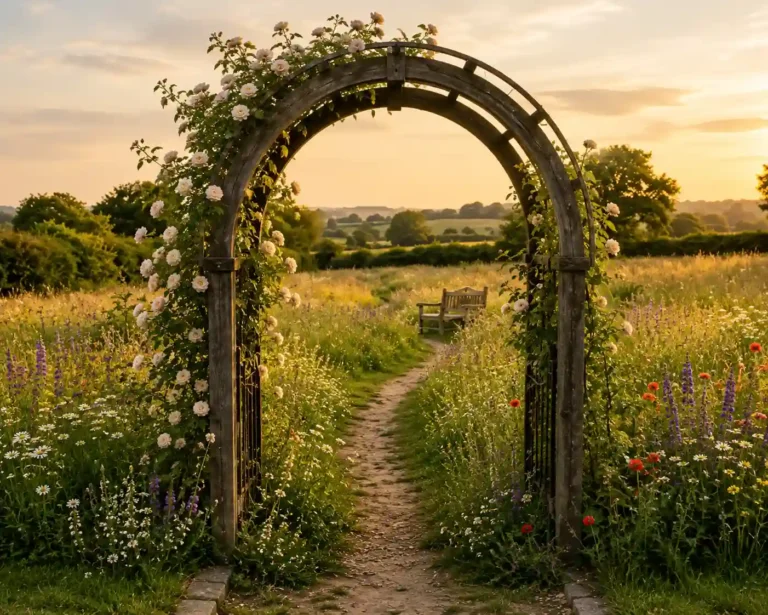
Add an Arbor or Gate to Create a Strong Entrance
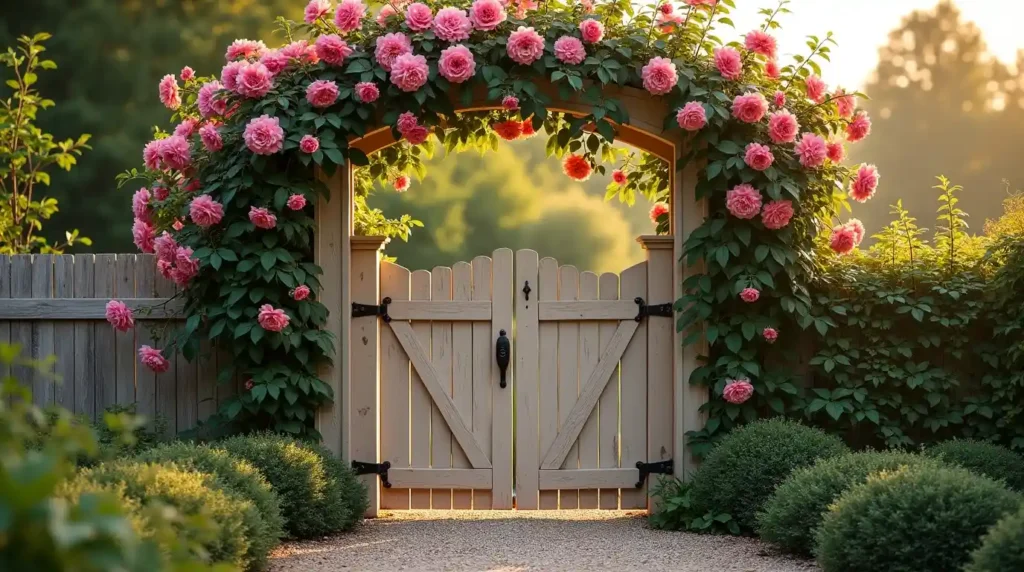
A clear entrance makes your garden feel like a special place. It also gives visitors a natural point to pause before they enter.
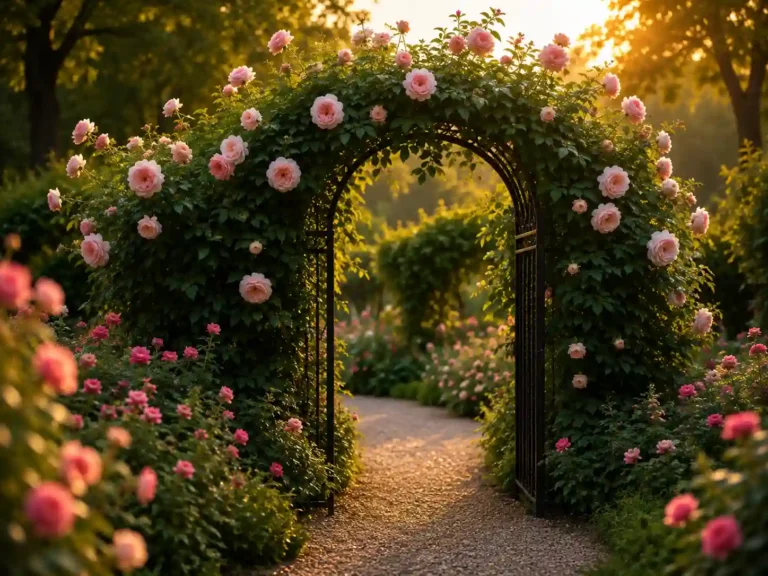
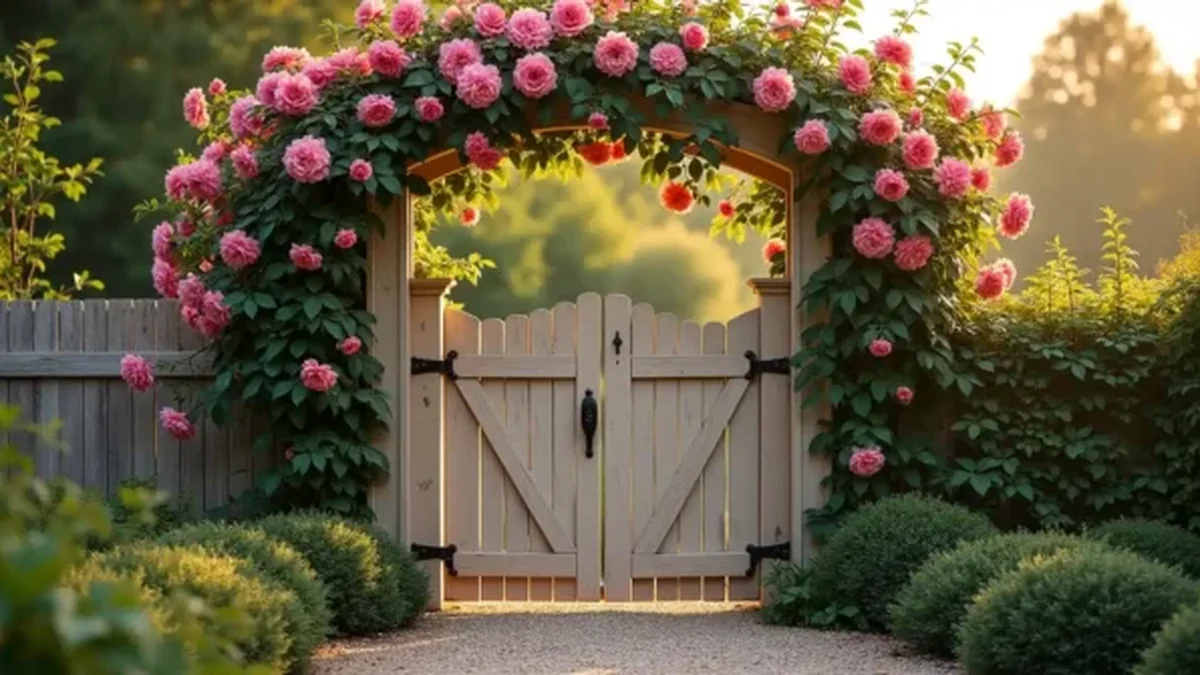
Use a wooden arbor, simple gate, metal arch, or opening in a low fence. Match the material to your house when possible. A painted wood gate may suit a cottage home, while black metal can work well with brick or stone.
Add a climbing plant to soften the structure. Good choices may include:
- Climbing roses
- Clematis
- Honeysuckle
- Sweet peas
- Star jasmine in warm areas
Check the plant’s mature size before you buy it. A large vine can bend a weak arch or cover a small gate within a few years.
Secure the structure firmly before planting. Mature vines can become heavy after rain or strong growth.
Keep the opening wide enough for a wheelbarrow, mower, or garden cart. A pretty entrance should still be easy to use.
Layer Plants to Get a Full Look Without Crowding
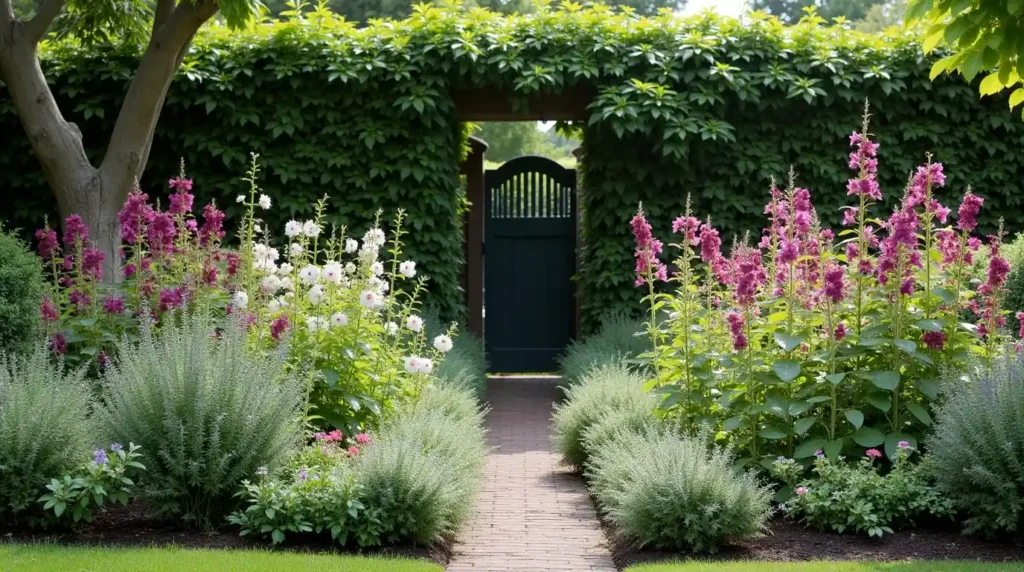
A full cottage border needs different plant heights. It does not need plants packed into every inch of soil.
Place low plants near the front of the bed. Use medium-height flowers through the center. Add tall flowers, shrubs, and climbers at the back.
A simple layered planting plan could include:
- Front: Creeping thyme, sweet alyssum, or lady’s mantle
- Middle: Catmint, hardy geraniums, or coneflowers
- Back: Hollyhocks, delphiniums, or shrub roses
- Vertical layer: Clematis or a climbing rose
These cottage garden plants create depth because your eye moves from the low edge to the taller background.
Check the mature width of each plant. A small nursery plant may spread two or three feet once grown. Leave enough space for air to move between plants.
Some overlap looks natural. Too much overlap can trap moisture and make pruning difficult.
Plant in groups of three, five, or seven when you have enough room. Groups create a stronger effect than single plants scattered across the bed.
Repeat the Same Plants to Make the Garden Feel Calm
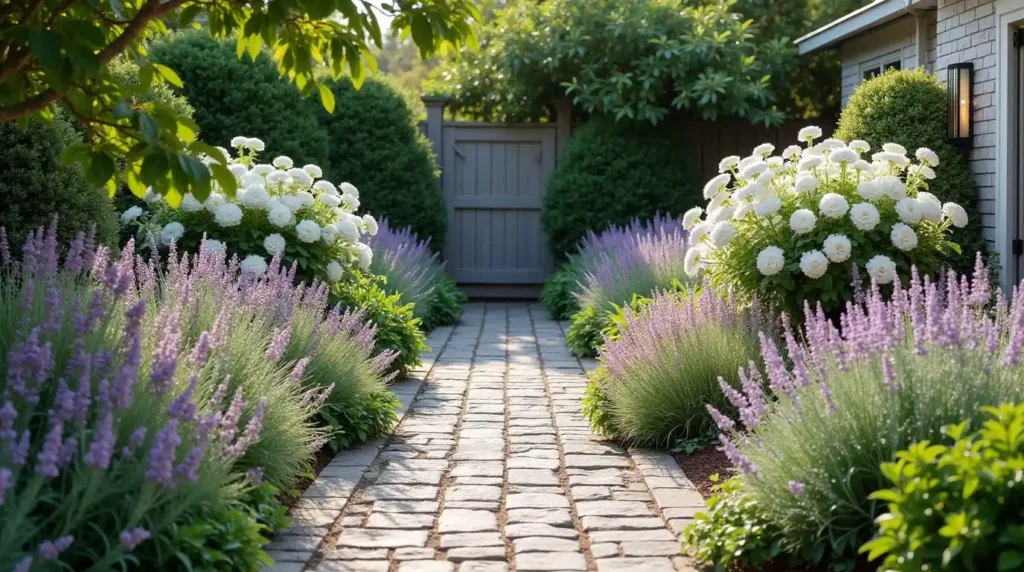
Many people buy one plant of every type they like. The result can feel busy, even when each flower is beautiful.
Choose three to five main plants and repeat them through the garden. You can change the smaller filler plants around them, but keep the main group steady.
For example, you could repeat:
- White shrub roses
- Purple salvia
- Soft pink geraniums
- Lavender
- Silver-leaved plants
Use the same plants near the path, beside the seating area, and close to the gate. This helps separate beds feel like one garden.
Try the three-repeat rule. Place each main plant in at least three areas that can be seen from one spot.
You can repeat colors as well. A soft pink flower near the entrance can appear again beside the bench and at the back of the border.
This simple step gives your cottage garden layout order without making it look formal or stiff.
Choose Three Main Colors Before You Shop
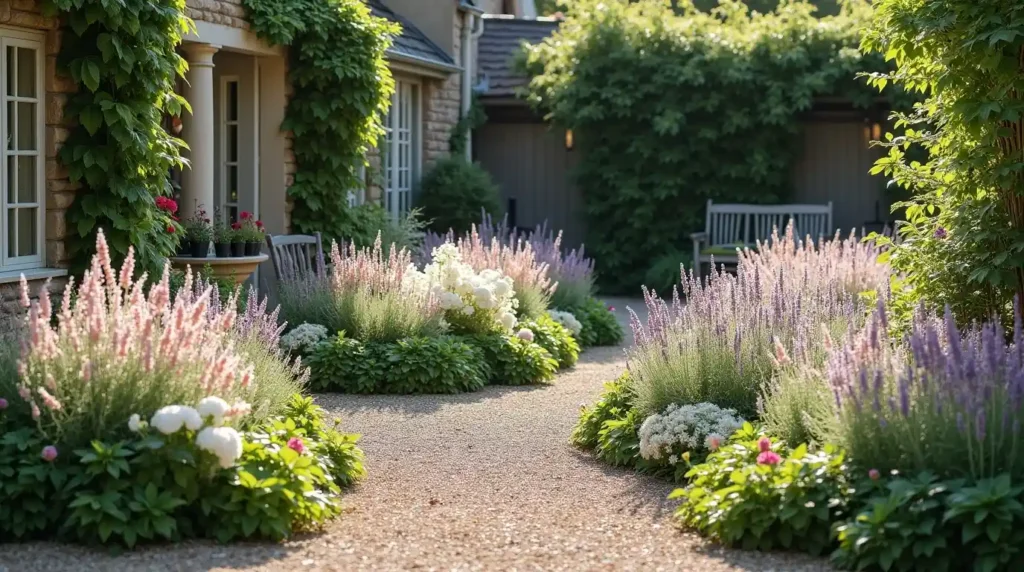
A garden full of bright colors can look cheerful. But too many strong shades can make a small space feel restless.
Choose three main flower colors before buying plants. Then add green, white, or silver foliage to give your eyes a place to rest.
Here are five simple cottage garden color palettes:
- Soft and romantic: Blush pink, white, and lavender
- Calm and cool: Blue, purple, and silver
- Warm and rich: Peach, cream, and burgundy
- Bright and cheerful: Yellow, blue, and soft orange
- Classic: Red, white, and deep green
Look at your home before making the final choice. Cream walls may work well with pink, blue, and purple flowers. Red brick can pair nicely with white, lavender, and deep red.
Repeat the colors across several beds. This keeps the garden connected even when you use many plant types.
You can still add a surprise color. Use it in a small amount, such as one bright pot or a few seasonal flowers.
Pick Classic Flowers That Suit Your Climate
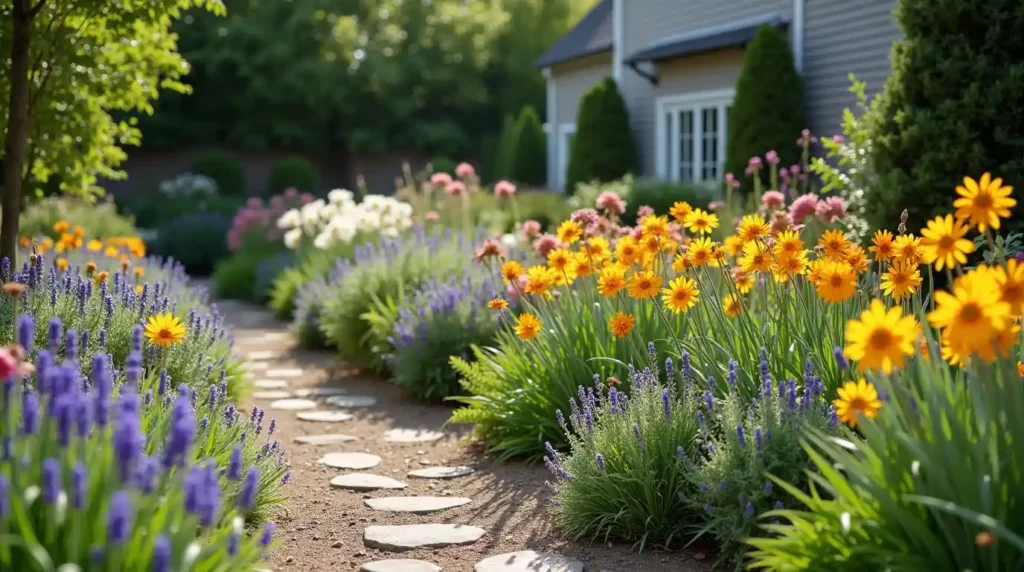
Roses, hollyhocks, foxgloves, and delphiniums often appear in English cottage garden ideas. But the exact plant list should change based on your weather, soil, and growing season.
Start with plants that are known to grow well in your area. Then use flower shape, height, and color to create the cottage look.
For spring, consider:
- Daffodils
- Tulips
- Alliums
- Peonies
- Forget-me-nots
For summer, try:
- Roses
- Lavender
- Catmint
- Daisies
- Cosmos
- Snapdragons
For late summer and fall, add:
- Asters
- Coneflowers
- Japanese anemones
- Sedum
- Ornamental grasses
Mix bulbs, annuals, perennials, and flowering shrubs. This helps the garden stay colorful for more than a few weeks.
Check safety before planting. Foxgloves and some other popular cottage flowers can be toxic if eaten. Keep them away from places where young children or pets may chew plants.
Copy the soft, layered style. Do not force a plant to grow where the conditions are wrong.
Mix Flowers With Herbs and Edible Plants
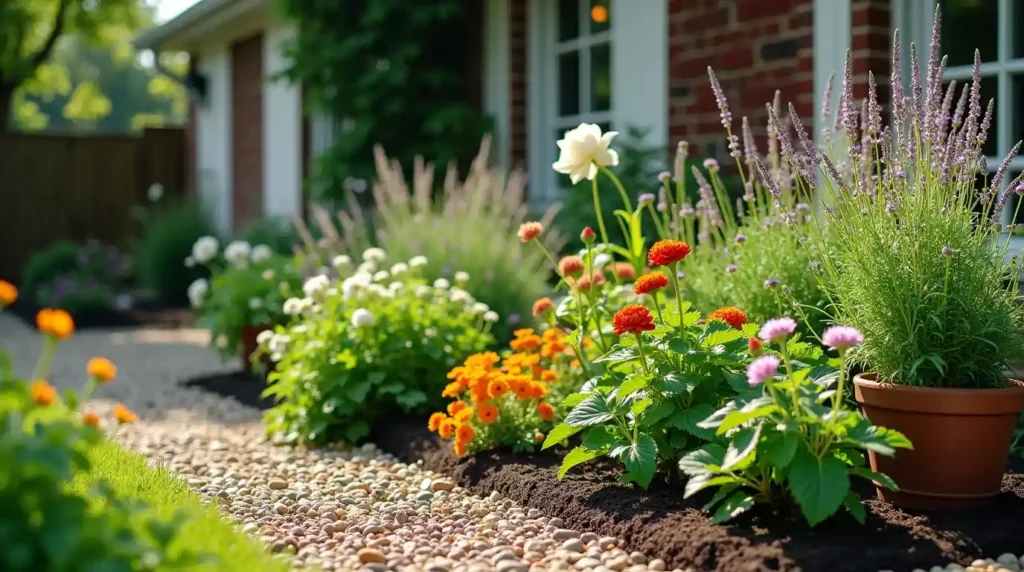
A cottage garden can look beautiful and still produce food. Herbs and vegetables add texture, scent, and useful harvests.
Place herbs near paths or the kitchen door. You will be more likely to use them when they are easy to reach.
Try these flower and food pairings:
- Lavender with roses
- Chives beside hardy geraniums
- Rosemary near a sunny path
- Kale between flowering annuals
- Strawberries along a bed edge
- Nasturtiums spilling from a pot
- Parsley mixed with white flowers
Chives produce round purple flowers that fit well in a cottage border. Kale adds bold leaves that can fill gaps. Strawberries create low ground cover and may spread along a sunny edge.
Keep edible plants away from areas treated with chemicals that are not approved for food crops.
Do not hide all your herbs at the back of the garden. Place them where you can cut, water, and check them with ease.
A useful garden often becomes a garden you visit more often.
Grow Climbing Roses and Vines Without Damaging Walls
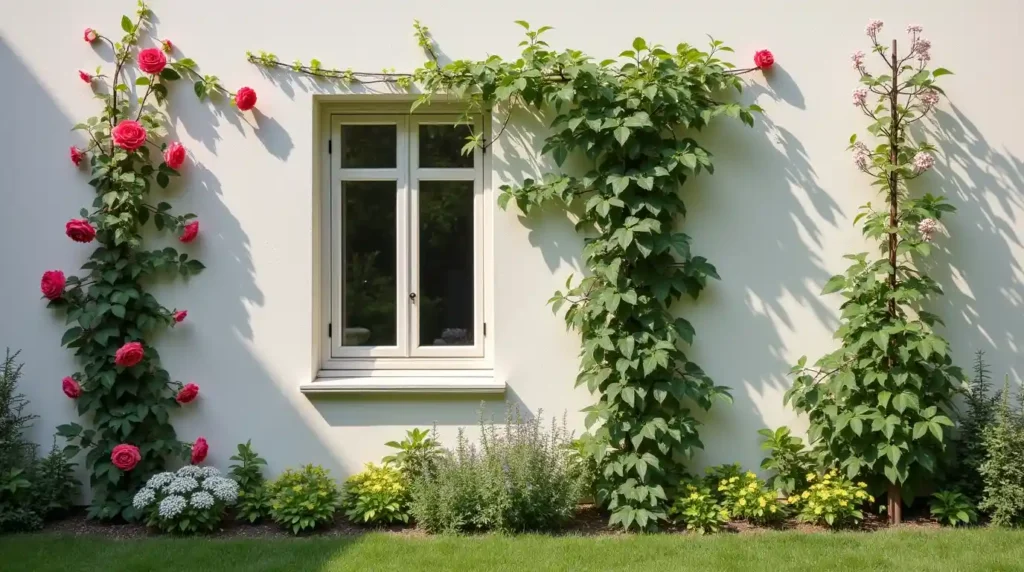
Climbing plants add height without using much ground space. They can cover a plain fence, frame a gate, or soften a bare wall.
Install the support before planting. This protects the roots and saves you from moving a large plant later.
Use the right support for the vine:
- A strong arbor for a climbing rose
- A narrow trellis for clematis
- Wire supports for a wall-trained rose
- An obelisk for sweet peas
- A fence for honeysuckle
Leave some air between the support and the wall. This gives the plant room to grow and helps moisture dry after rain.
Tie new stems with soft garden ties. Do not use thin wire that may cut into the plant.
Many English cottage garden ideas show roses covering doors and windows. The look is lovely, but large plants need regular pruning.
Choose a smaller variety for tight spaces. Some vines grow quickly and can spread beyond the area you planned.
Place Fragrant Plants Beside Paths and Seats
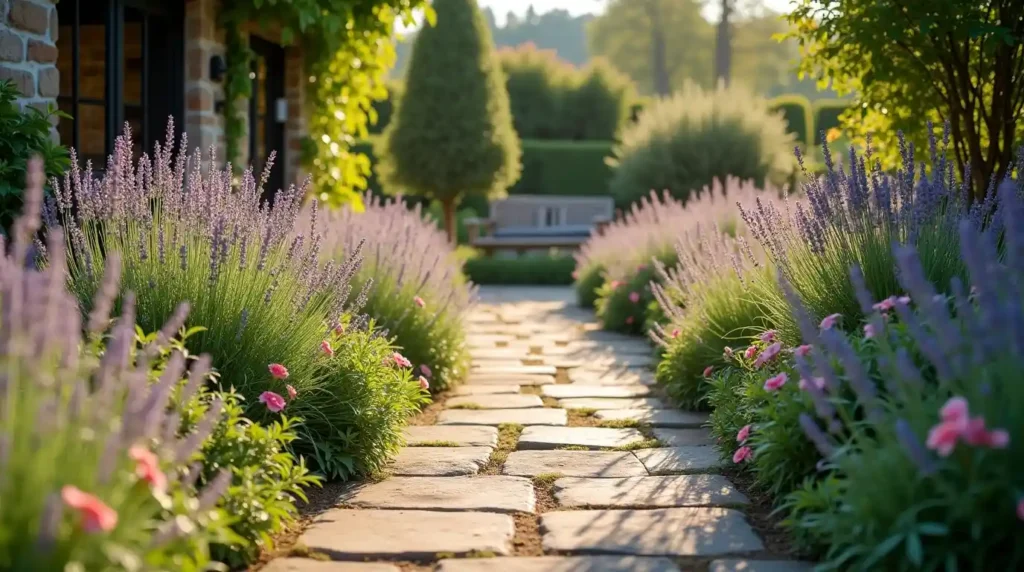
Scent makes a garden feel more personal. You notice it when you brush against lavender, crush a thyme leaf, or sit near a flowering rose.
Place fragrant plants where you walk or rest. Good spots include path edges, gates, doorways, and seating areas.
Try these scented plants:
- Lavender
- Creeping thyme
- Catmint
- Dianthus
- Sweet alyssum
- Chamomile
- Scented geraniums
- Roses
- Honeysuckle
Keep low plants beside narrow paths. Taller plants can lean into the route and make it hard to walk after rain.
Avoid thorny plants where people may brush against them. Place roses a little farther back from the path.
Warm stone and sunny walls can make some scents seem stronger. A lavender border beside a sunny brick path can smell richer on a warm afternoon.
Do not choose plants by scent alone. Check their sun, water, and soil needs first.
Use two or three fragrant plants that bloom at different times. This will give you scent across more of the year.
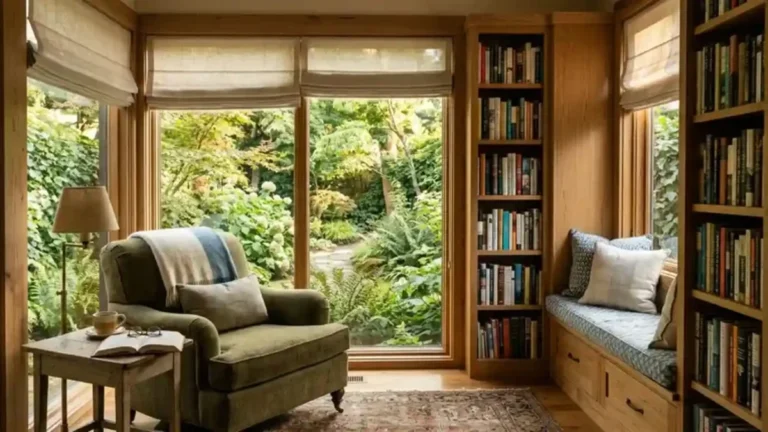
Create a Seating Nook You Will Use
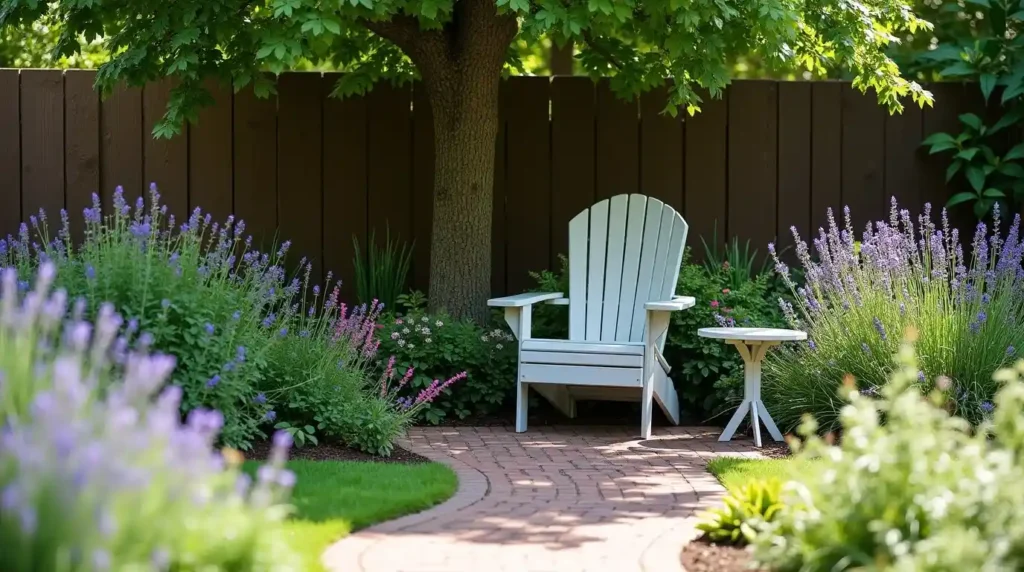
A garden seat should offer more than a pretty photo. It needs shade, a good view, and a firm place to stand.
Before adding a bench, place a simple chair in the planned spot. Sit there in the morning and afternoon. Check the sun, wind, noise, privacy, and view.
A seat at the end of a curved path can make the garden feel larger. A bench under a small tree can create a cool rest area. A bistro table near the house may work better if you enjoy outdoor meals.
Use gravel, brick, or flat stones beneath furniture. Chairs can sink or wobble on loose soil.
Surround the area with plants that add scent and texture. Lavender, catmint, ferns, roses, and soft grasses can make the space feel private.
Leave enough room to sit without crushing nearby plants.
Your cottage garden seating area can be simple. One old chair with a fresh coat of paint may feel more inviting than an expensive set you rarely use.
Use a Fence or Hedge to Frame Loose Planting
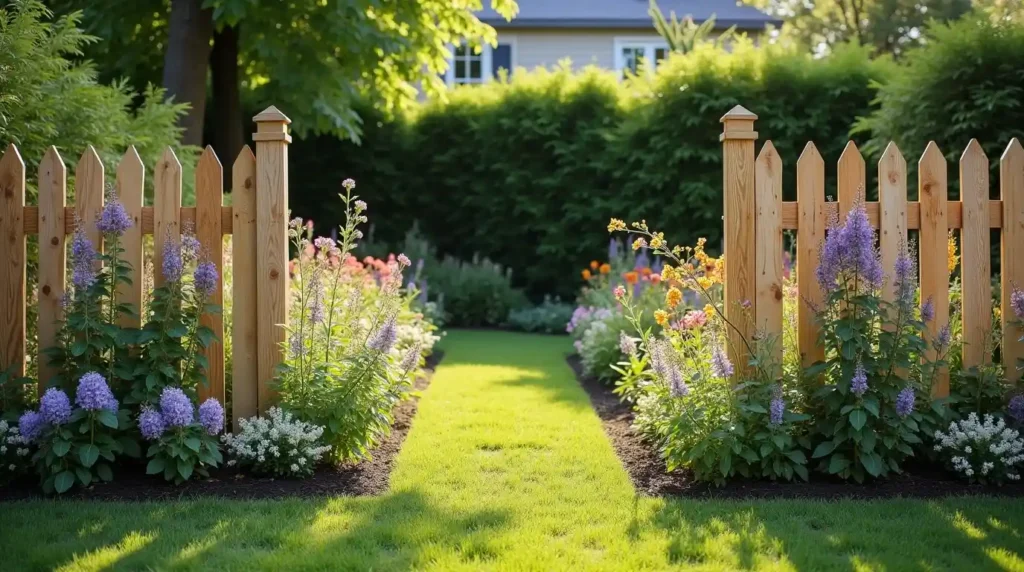
Cottage planting can look untidy when it has no clear edge. A low fence, hedge, or woven border gives the flowers a frame.
Use a picket fence when you want a friendly, open look. White paint feels classic, but natural wood may need less care.
A hedge can offer more privacy and wind protection. Choose a type that fits the width of your garden. Some hedges grow very wide and need regular trimming.
Other boundary ideas include:
- Woven willow edging
- Low brick walls
- Mixed native shrubs
- Flowering hedges
- Simple metal fencing
- Low evergreen borders
Allow some flowers to lean through a fence. This softens the straight lines and keeps the garden relaxed.
Check local rules before adding a front-yard fence. Some areas limit fence height or require space near roads and paths.
Choose the boundary before filling the nearby bed. You need enough room to paint, trim, or repair it later.
Add One Vintage Feature Instead of Many Decorations
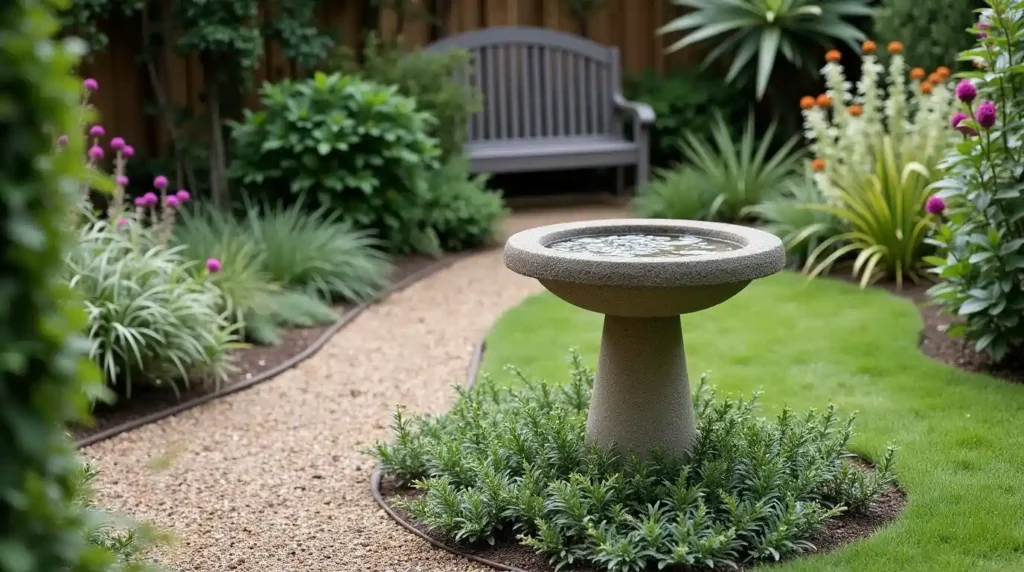
Vintage garden items can add charm. Too many can make the yard look like a storage area.
Choose one main feature and give it enough space to stand out. Place it at the end of a path, near a seating nook, or where two views meet.
Good cottage garden decor ideas include:
- A stone birdbath
- A sundial
- A weathered urn
- A reclaimed bench
- A stone trough
- An old watering can
- A small wall fountain
Let plants grow around the base, but do not hide the whole object. Low flowers, thyme, or small ferns can help it feel part of the garden.
Use weather-safe items. Wood may need sealing, while metal can rust or become hot in strong sun.
Empty containers that collect standing water. This helps reduce mosquitoes and keeps the area cleaner.
One large feature often has more impact than ten small decorations. A group of three related pots can also work when one large object feels too heavy.
Add Flowers That Feed Bees and Butterflies
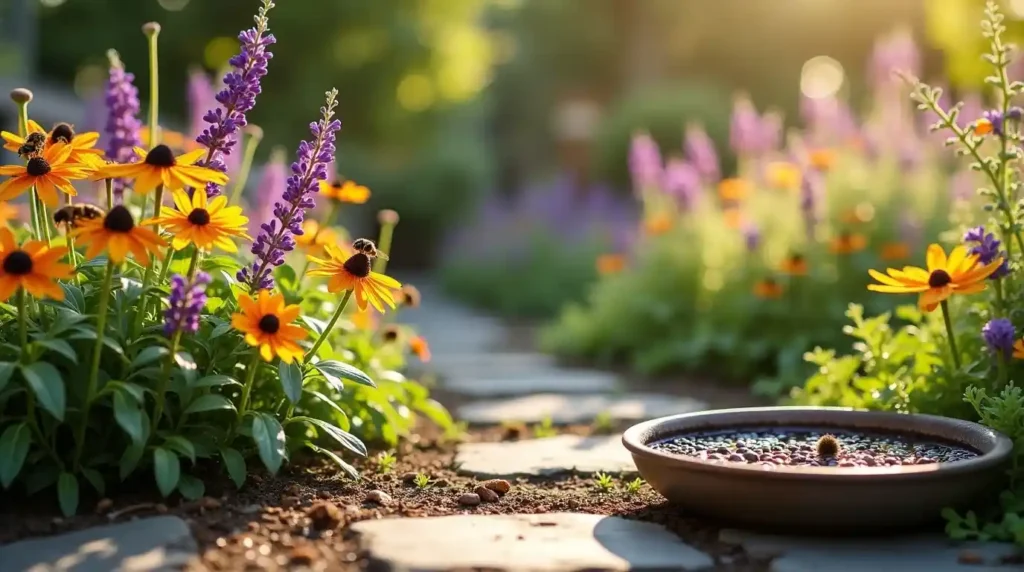
A cottage garden can support bees, butterflies, and other useful insects. The full planting style gives you many places to add food and shelter.
Choose flowers with different shapes. Flat flowers provide easy landing areas. Tubular flowers may suit insects with longer tongues.
Plant in groups instead of adding one flower of each type. A group is easier for pollinators to find.
Try to provide blooms across several seasons:
- Spring bulbs and early flowering shrubs
- Summer lavender, salvia, and coneflowers
- Fall asters, sedum, and late daisies
Include native plants that suit your area. Local insects often use them for food and shelter.
Avoid spraying pesticides when plants are flowering. Even products sold for garden use can harm useful insects if used at the wrong time.
Add a shallow water dish with clean stones. The stones give insects a safe place to land.
Leave a few hollow stems or quiet corners through winter. Small insects may use them for shelter.
A pollinator-friendly cottage garden can be neat, colorful, and full of movement.
Plan Something Attractive for Every Season
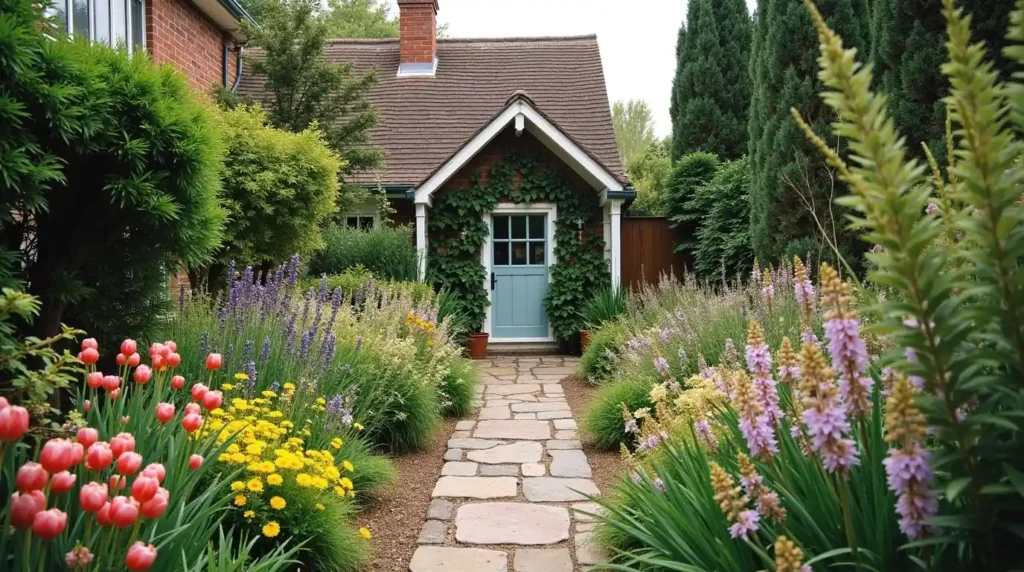
Many cottage gardens look their best in summer. Then winter arrives, and the whole space feels empty.
Plan at least one useful feature for each season.
For spring, add bulbs such as daffodils, tulips, and alliums. Plant them between perennials that will cover the fading leaves later.
For summer, use roses, daisies, lavender, salvia, and flowering herbs.
For fall, keep asters, seed heads, berries, and ornamental grasses. Their shapes can stay attractive after the flowers fade.
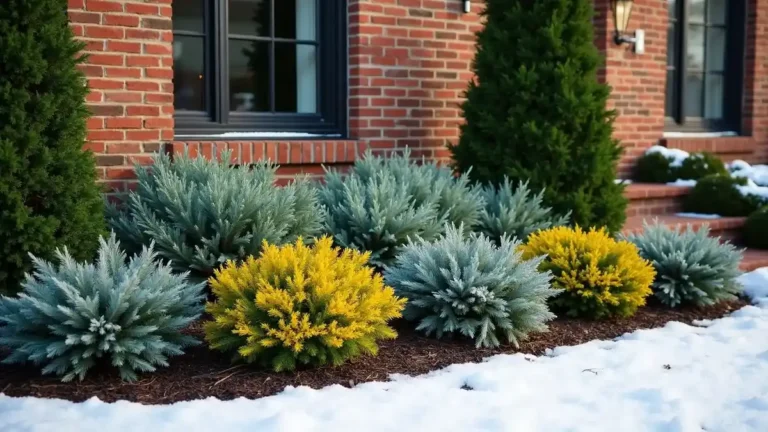
For winter, depend on structure. Evergreen shrubs, arches, stone paths, bark, fences, and pots can hold the design together.
Do not cut every plant to the ground in fall. Leave healthy seed heads where they will not block paths. They can add texture and provide food or shelter for wildlife.
Check your garden from a window during winter. The best view from inside may show you where to place an evergreen shrub, urn, or small tree.
Four-season cottage garden plants make the yard feel planned all year.
Use Walls and Containers in a Small Garden
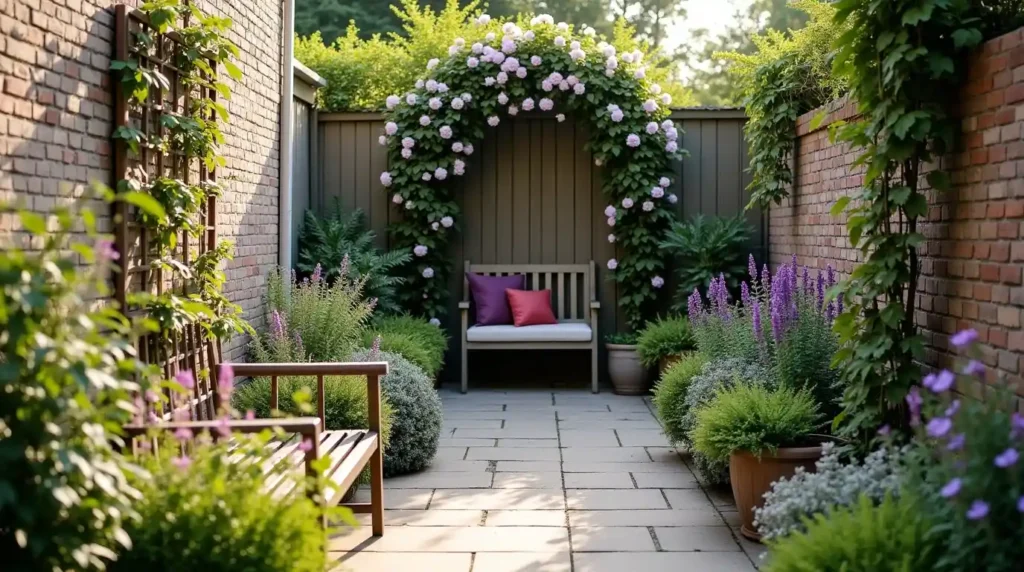
Small cottage garden design works best when every surface has a clear job. Use walls, fences, arches, and pots to grow more plants without filling the ground.
Add clematis to a wall trellis. Grow a climbing rose over a narrow arch. Use an obelisk for sweet peas or a tall container for herbs.
Window boxes can hold trailing flowers, small herbs, and seasonal plants. Repeat the same box style or pot color to keep the space calm.
Choose narrow plants instead of wide shrubs. Tall foxgloves, salvias, and upright grasses can add height without taking over the bed.
Keep one clear path through the garden. Several tiny routes can make the space feel smaller.
Use one main focal point, such as a small bench, birdbath, or gate. Too many features will compete for attention.
A narrow side yard may need only:
- One path
- One climber
- Two repeated flower types
- A few herbs
- One small seat or focal point
Small spaces need careful choices, but they can still feel full and welcoming.
Change the Plant List for Shade, Heat, or Dry Soil
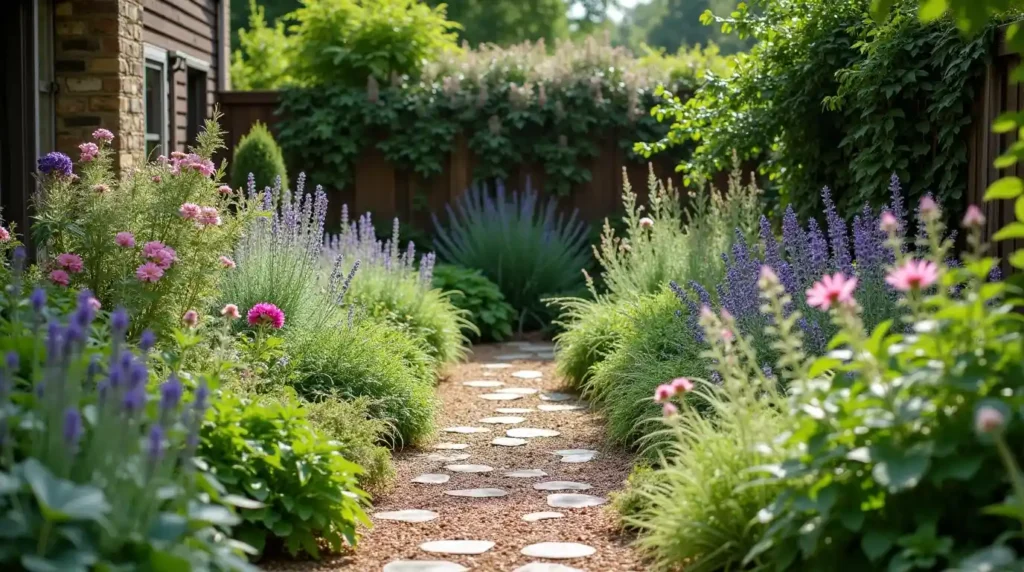
Cottage style is based on layers, color, texture, and informal planting. It does not depend on one fixed list of English flowers.
For shade, try ferns, hardy geraniums, heuchera, brunnera, and shade-friendly foxgloves. Add pale flowers and silver leaves to brighten dark corners.
For hot or dry areas, consider lavender, yarrow, salvia, catmint, coneflowers, and drought-tolerant grasses. Group plants with similar water needs.
Use mulch to protect the soil and reduce weeds. Keep mulch a few inches away from plant stems and tree trunks.
Replace plants that struggle in your climate. For example:
- Use yarrow instead of a flower that needs constant water.
- Use shrub roses instead of delicate rose types.
- Use local grasses instead of plants that fail in summer heat.
- Use ferns instead of sun-loving lavender in deep shade.
Check winter cold as well as summer heat. A plant may survive summer but fail during a hard freeze.
Your garden will look better when the plants are healthy. Copy the cottage style, not every plant in a photo.
Cut Maintenance With Smarter Plant Choices
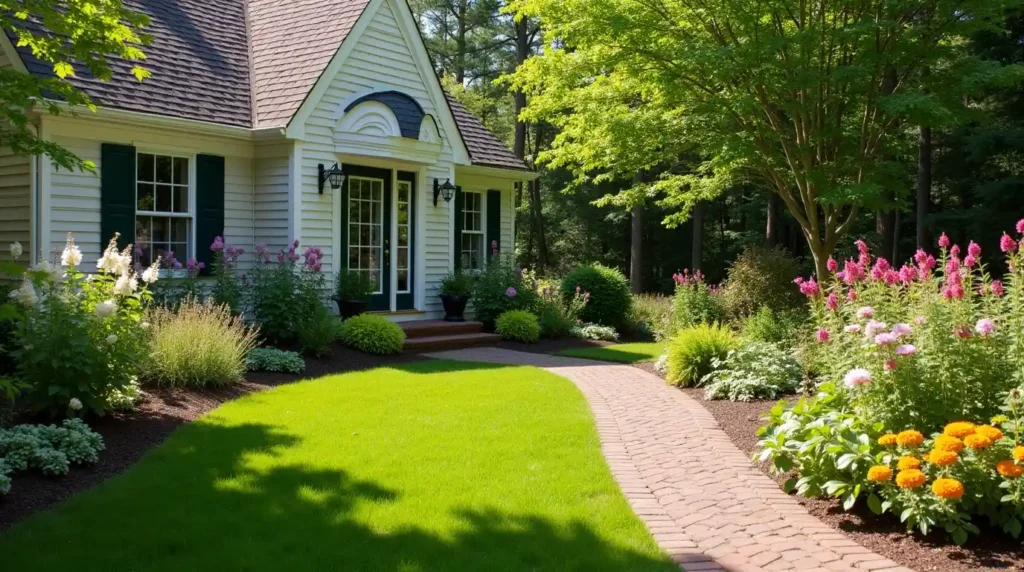
A full flower garden can require a lot of work. Smart planning can reduce watering, staking, weeding, and repeated pruning.
Start with long-lived perennials and shrubs. Use annual flowers for small areas where you want quick seasonal color.
Group plants with similar light and water needs. This prevents one plant from getting too much water while another stays dry.
Cover bare soil with mulch or ground-cover plants. Bare soil often leads to more weeds and faster water loss.
Choose sturdy plants that can support themselves. Catmint, coneflowers, shrub roses, and many hardy geraniums often need less care than tall flowers that fall after rain.
Use gravel or brick paths instead of narrow strips of lawn between beds. Small lawn areas can be hard to mow.
Allow self-seeding in one planned space. Cosmos, poppies, and other flowers may return from dropped seed. Remove extra seedlings before they spread too far.
The most useful cottage garden design ideas reduce repeat work while keeping the yard colorful. Low maintenance does not mean no work. It means each task gives you a better result.
Create Your Cottage Garden One Area at a Time
These cottage garden design ideas can help you create a yard that feels relaxed, colorful, and personal. The best results come from mixing informal planting with a clear layout.
Start with your site conditions. Plan one path, choose three main plants, and add one strong feature. You can then build the garden in small stages.
Do not worry if your first planting plan is not perfect. Some plants will grow faster than expected. Others may need a new location. Gardens change, and small edits are a normal part of caring for them.
Begin with one flower bed, gate, seating corner, or container group. Learn what grows well in that spot. Then expand your cottage-style garden as your time, space, and budget allow.